
Call Us
+86 136 6007 9809
Call Us
+86 136 6007 9809

Apr. 14, 2026
CD Weld Stud Quality Control: Why 100% Inspection Matters for Automated Welding and OEM Production
In high-volume manufacturing, the reliability of a capacitor discharge (CD) stud welding process depends on more than welding equipment and process settings.
The dimensional and physical consistency of the weld studs themselves can influence feeding, positioning, welding initiation and finished joint quality.
A small variation in stud straightness, ignition-tip geometry or overall dimensions may appear insignificant during manual inspection.
However, the same variation can create problems in an automated welding system operating at high production volumes.
Potential consequences include:
Stud feeding interruptions
Incorrect positioning
Welding misalignment
Inconsistent weld initiation
Increased rejection rates
Production downtime
Additional sorting and rework
Higher total assembly costs
For automotive OEMs, Tier-1/Tier-2 suppliers, electrical enclosure manufacturers and industrial equipment producers,
CD weld stud quality control is an important part of production reliability and supplier qualification.
This guide explains how inspection planning, dimensional consistency and welding validation contribute to stable manufacturing.
It also clarifies what 100% inspection can and cannot establish.
What Are CD Weld Studs?
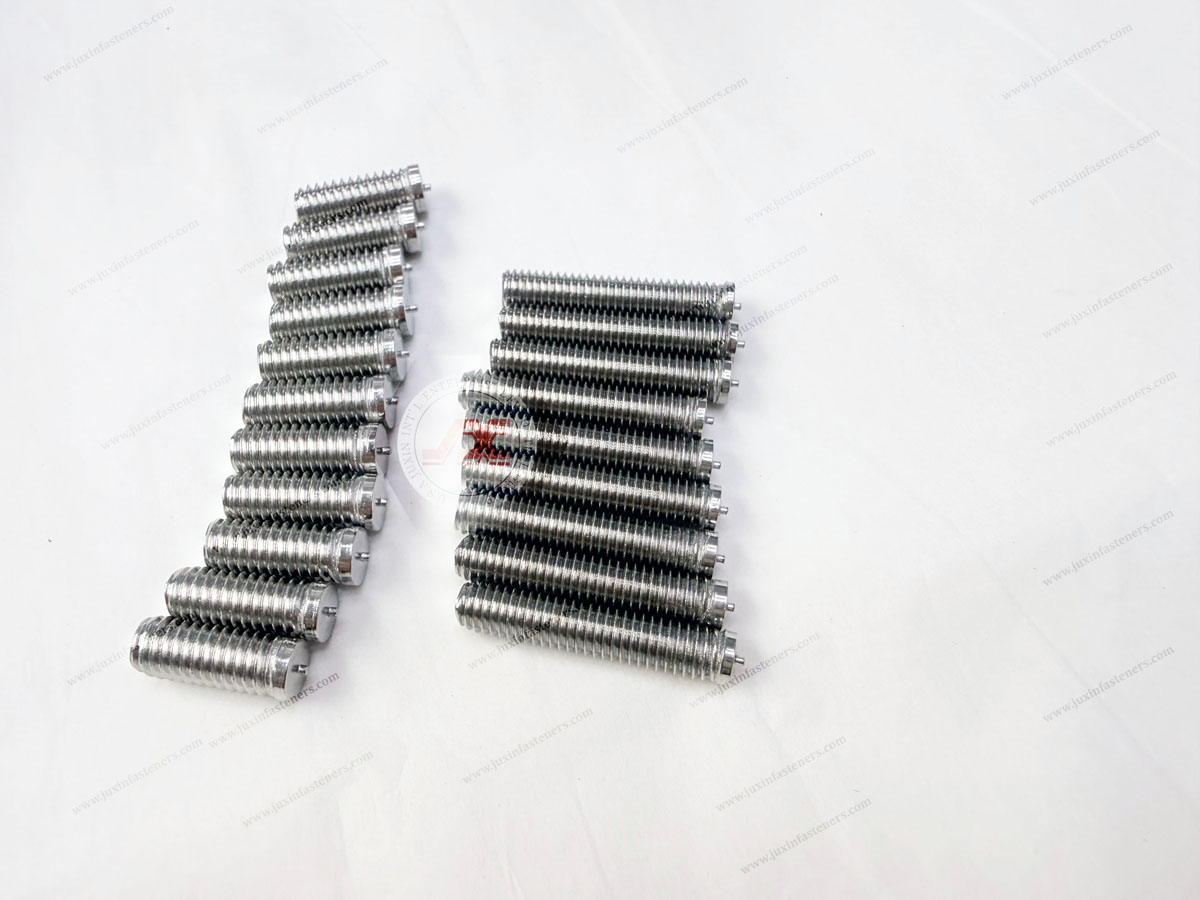
CD weld studs are fastening components designed for capacitor discharge stud welding.
In this process, stored electrical energy is discharged over a short period to create a welded connection between the stud and a suitable base material.
CD stud welding is used in selected sheet-metal and industrial assembly applications where a welded threaded attachment is required.
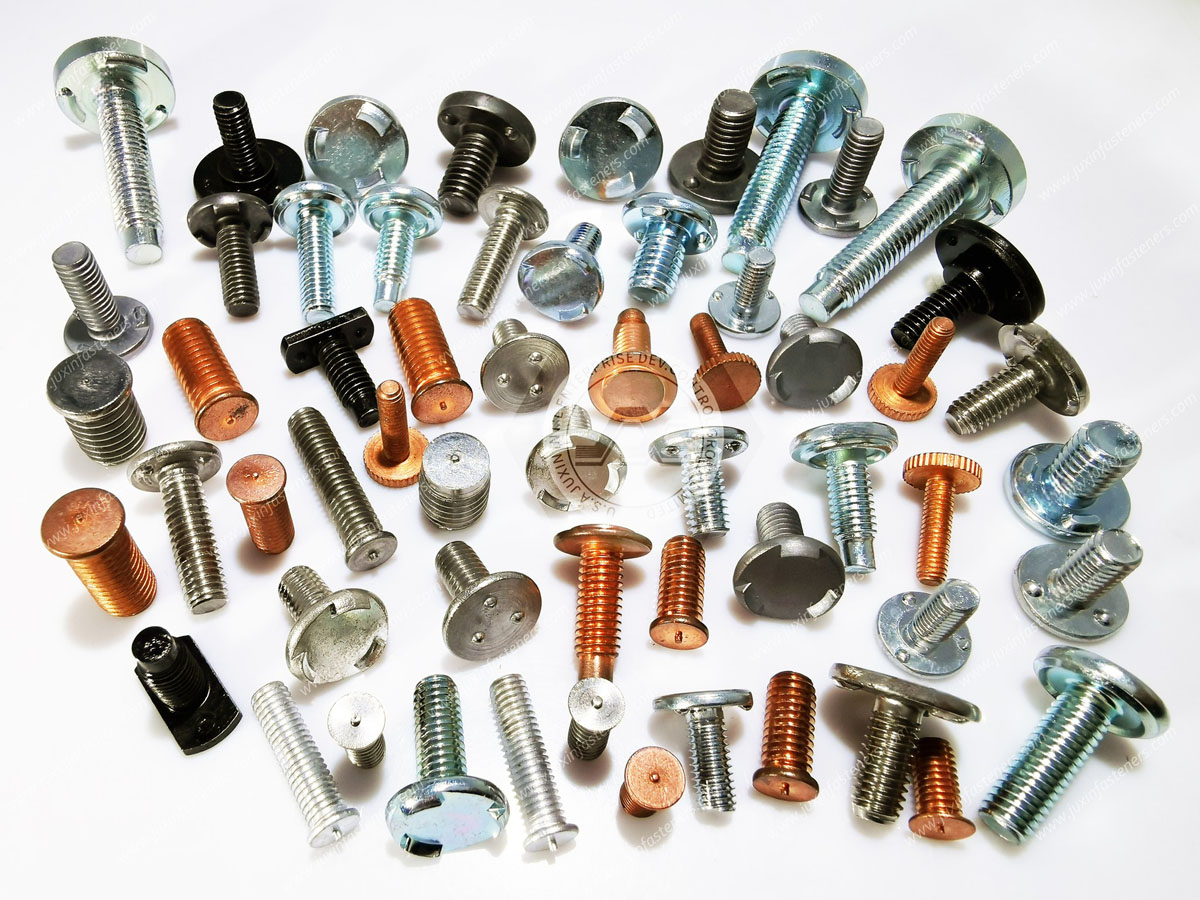
Common CD weld stud configurations may include:
Externally threaded weld studs
Internally threaded weld studs
Other application-specific stud configurations
The correct design depends on the welding process, material, stud geometry and customer specification.
Typical Industrial Applications
CD weld studs may be used in:
Automotive sheet-metal components
Electrical enclosures
Industrial control cabinets
Equipment housings
Sheet-metal fabrication
Industrial machinery
Selected appliance assemblies
OEM mounting and fastening applications
The suitability of a particular stud must be confirmed against the intended base material, sheet thickness, loading conditions and welding process.
Engineering Recommendation
Do not select a CD weld stud solely by thread diameter and length.
The welding interface, base material and equipment compatibility are equally important.
Why CD Weld Stud Quality Consistency Matters
A welding system is designed to operate within defined process and component tolerances.
If incoming studs vary significantly, the welding process may become less repeatable.
Potential variations include:
Stud bending
Incorrect overall length
Thread damage
Incorrect ignition-tip geometry
Surface contamination
Forming defects
Material inconsistency
Packaging damage
These issues may affect different stages of the production process.
Stud Feeding
Bent or dimensionally inconsistent studs may interfere with automatic feeding equipment.
Stud Positioning
Incorrect geometry may prevent the stud from seating or aligning as intended.
Welding Initiation
Variations in the welding tip or contact condition may affect the initial welding behavior.
Finished Joint Quality
Material, geometry and process variation may contribute to inconsistent weld results.
Engineering Information Gain: Component Quality and Welding Process Quality Are Different
A dimensionally conforming stud does not guarantee a satisfactory weld.
Likewise, a weld failure does not automatically mean the stud itself is defective.
The final result depends on the interaction between:
Weld stud
Base material
Surface condition
Welding equipment
Welding parameters
Fixturing
Operator or automated process
Engineering Recommendation
Evaluate incoming stud quality and welding process capability as related but separate quality-control responsibilities.
What Does 100% Inspection Mean for CD Weld Studs?
100% inspection means that every component in a defined production or delivery population is checked for specified characteristics.
However, the term does not identify which characteristics are inspected or which inspection methods are used.
For example, a project may specify 100% screening for:
Visible bending
Major forming defects
Presence of a required welding feature
Certain dimensional characteristics
Detectable thread damage
Other characteristics may require different inspection approaches.
100% Inspection Is Not the Same as 100% Testing of Every Property
It is important to distinguish:
Individual-Part Screening
Every stud is checked for defined defects using an agreed method.
Sampling Inspection
A representative sample is inspected for specified dimensions or properties.
Material Verification
Material identity or properties are verified according to the agreed quality plan.
Welding Validation
Representative studs are welded under controlled conditions and evaluated using suitable test methods.
Destructive Testing
Selected welded samples may undergo tests that cannot be performed on every production part without destroying the joint.
Engineering Recommendation
When requesting 100% inspection, specify the exact characteristics, inspection method, acceptance criteria and required records.
A statement such as 100% inspected should not be treated as proof that every property of every stud has been verified.
Critical Characteristics to Inspect in CD Weld Studs
The appropriate inspection plan depends on the stud design and customer drawing.
Stud Straightness and Alignment
A bent stud may create problems during feeding, positioning or welding.
Potential consequences include:
Feeding jams
Misalignment
Incorrect contact with the base material
Increased equipment adjustments
Rejected assemblies
Engineering Considerations
Stud length
Threaded shank geometry
Permissible straightness deviation
Feeding system sensitivity
Welding gun alignment
Engineering Recommendation
Define straightness acceptance criteria according to the drawing and production equipment requirements.
Overall Dimensions
Relevant dimensions may include:
Thread diameter
Thread length
Overall length
Shank diameter
Head or flange geometry, where applicable
Welding feature dimensions
Dimensional deviations may affect both assembly compatibility and welding performance.
Engineering Recommendation
Use the applicable product standard or approved drawing to define tolerances.
Thread Quality
Externally threaded CD weld studs may require inspection for:
Thread profile
Thread damage
Thread completeness
Dimensional conformity
Burrs
Depending on the specification, suitable thread gauges may be used.
Engineering Recommendation
Confirm the required thread standard, tolerance class and inspection method.
Metric and UNC/UNF thread systems must not be treated as interchangeable.
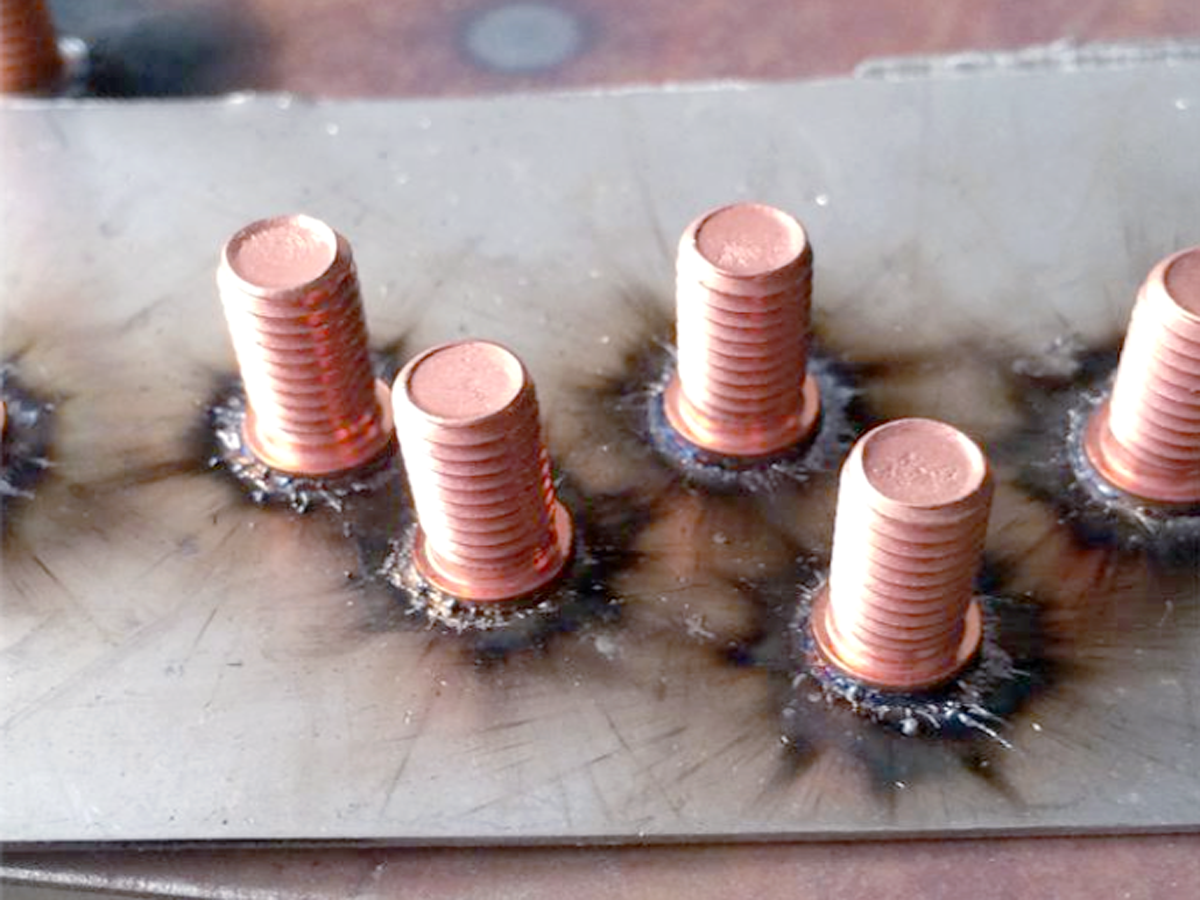
Ignition-Tip Geometry
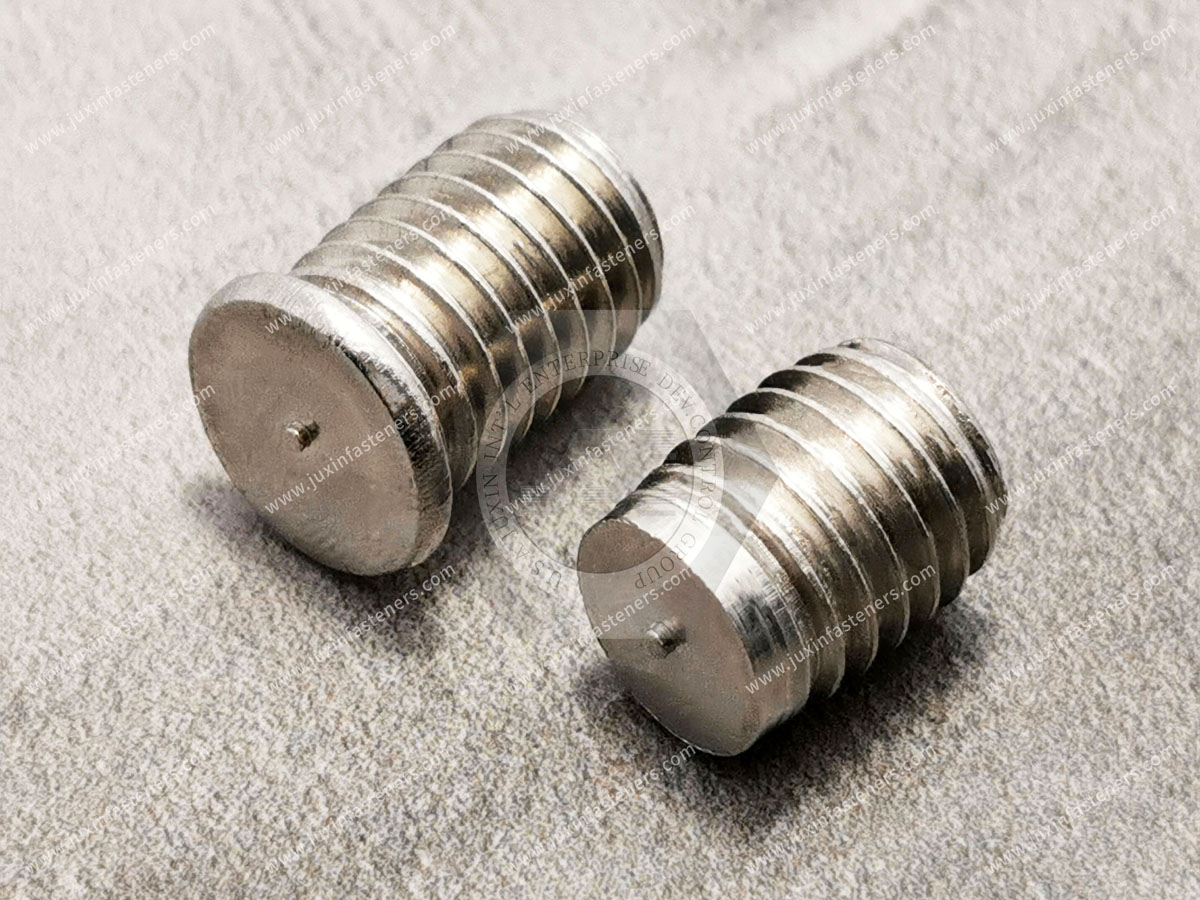
Certain CD weld studs use an ignition tip or similar welding feature.
The geometry of this feature may influence welding initiation.
Potential concerns include:
Missing tip
Damaged tip
Incorrect projection
Inconsistent shape
Contamination
Engineering Information Gain: The Welding Tip Is a Process Interface
The welding feature is not merely a cosmetic detail.
Its geometry can influence how the stud initially interacts with the base material during the welding cycle.
Engineering Recommendation
Where ignition-tip geometry is critical, define measurable acceptance criteria based on the approved stud design and welding procedure.
Surface Condition
Potential surface-related defects include:
Oil contamination
Excessive oxidation
Corrosion
Foreign material
Surface damage
Surface condition may influence welding behavior.
Engineering Recommendation
Define cleanliness and surface requirements according to the welding process and application.
Material Consistency
Material variation may affect welding behavior and finished joint properties.
Relevant considerations include:
Material grade
Chemical composition
Surface condition
Material documentation
Compatibility with the base material
Engineering Recommendation
Material verification should be defined separately from visual or dimensional inspection.
How Defective CD Weld Studs Affect Automated Welding
Automated stud welding systems depend on repeatable component geometry.
The effects of defects can appear at several stages.
| Stud defect or variation | Possible production effect | Recommended control |
|---|---|---|
| Bent stud | Feeding or positioning problems | Straightness screening |
| Incorrect length | Assembly interference | Dimensional inspection |
| Damaged thread | Mating fastener failure | Thread inspection |
| Incorrect ignition tip | Inconsistent welding initiation | Welding-feature inspection |
| Surface contamination | Variable welding behavior | Surface condition control |
| Incorrect material | Welding incompatibility | Material verification |
| Packaging damage | Feeding interruptions | Packaging and handling controls |
Engineering Information Gain: A Defect May Have a Larger Cost Than Its Unit Value
A low-cost weld stud can interrupt a high-value production operation.
The financial effect of a defective part may include:
Equipment stoppage
Operator intervention
Rework
Inspection
Scrap
Delayed production
Delivery disruption
This is why OEM sourcing decisions should consider process reliability in addition to unit price.
Why 100% Inspection Can Be Valuable in High-Volume Production
Individual-part inspection can help reduce the number of detectable nonconforming components entering the customer's production line.
Potential benefits may include:
Lower incoming defect exposure
Reduced manual sorting
Fewer feeding interruptions
More consistent component presentation
Improved production planning
However, these benefits depend on the effectiveness of the inspection method.
Engineering Limitation: Inspection Is Not a Guarantee of Zero Defects
Inspection systems have limitations.
Some defects may be difficult to detect because of:
Measurement uncertainty
Equipment capability
Part presentation
Inspection speed
Defect size
Human factors
Engineering Recommendation
Use a risk-based inspection plan supported by process controls and appropriate validation.
Do not rely on final inspection alone to establish manufacturing quality.
100% Sorting vs. Process Capability
A supplier may use 100% sorting to remove detectable nonconforming parts.
However, sorting and manufacturing process capability are different concepts.
Sorting
Identifies and removes components that fail defined criteria.
Process Capability
Evaluates whether the manufacturing process can consistently produce parts within specified requirements.
Engineering Information Gain: Sorting Does Not Correct an Unstable Process
If a manufacturing process produces frequent defects, final sorting may reduce the number of defective parts shipped.
However, it does not eliminate the underlying source of variation.
Engineering Recommendation
For long-term OEM programs, evaluate both outgoing inspection and the supplier's process-control approach.
Automotive-Grade CD Weld Studs: What Should Be Verified?
The term automotive-grade is often used in industrial purchasing.
However, it should not be treated as a universal technical certification.
Automotive programs may impose specific requirements for:
Dimensional control
Material verification
Production consistency
Traceability
Inspection records
Engineering change control
Process validation
Supplier approval
The exact requirements depend on the OEM or Tier-1 customer.
Engineering Recommendation
Request the applicable customer specification and required quality documentation.
Do not assume that a general-purpose CD weld stud is automatically approved for safety-critical automotive applications.
Relevant International Standards for CD Weld Studs
Applicable standards depend on the product design and welding process.
ISO 13918 — Studs and Ceramic Ferrules for Arc Stud Welding
ISO 13918 provides requirements for specified studs and related components used in arc stud welding applications.
It is a relevant reference when selecting standardized welding stud designs.
However, the actual stud configuration and applicable requirements must be checked against the standard and customer drawing.
ISO 14555 — Arc Stud Welding of Metallic Materials
ISO 14555 addresses requirements for arc stud welding of metallic materials.
It is relevant to welding procedure and process considerations.
Engineering Information Gain: Product Standards and Welding Standards Serve Different Purposes
A stud may conform to a product specification while the welding process still requires separate validation.
The finished welded joint depends on both component conformity and process control.
Engineering Recommendation
Confirm the applicable product specification, welding procedure requirements and customer acceptance criteria.
Welding Performance Validation
Inspection of the stud itself does not establish the final strength of a welded joint.
Welding performance depends on:
Stud material
Base material
Surface condition
Welding parameters
Equipment condition
Fixturing
Welding position
Joint geometry
Depending on the application and governing specification, validation may include:
Visual examination
Bend testing
Tensile or pull testing
Other approved mechanical tests
Process qualification activities
Engineering Recommendation
Define welding validation requirements before approving a stud for production use.
Test methods and acceptance criteria must follow the applicable welding specification and customer requirements.
Production-Line Reliability and Manufacturing Efficiency
For manufacturing engineers and production managers, CD weld stud selection affects the complete assembly process.
Relevant considerations include:
Automatic feeding
Stud orientation
Welding gun compatibility
Fixturing
Welding cycle consistency
Inspection
Rework
Maintenance
Automatic Feeding Compatibility
A stud may satisfy basic dimensional requirements but still perform poorly in a particular feeding system if the system is sensitive to geometry or presentation.
Engineering Recommendation
Evaluate sample studs using the intended feeding and welding equipment.
Welding Process Stability
Repeatable stud geometry supports consistent process setup.
However, process stability also depends on equipment maintenance and parameter control.
Engineering Recommendation
Separate component-related defects from welding-equipment or process-related defects during troubleshooting.
Production Cost and Total Cost of Ownership
The purchase price of a weld stud is only one element of total manufacturing cost.
Other cost drivers may include:
Incoming inspection
Sorting
Production downtime
Scrap
Rework
Maintenance
Equipment adjustment
Delayed deliveries
Engineering Information Gain: Compare Cost per Accepted Assembly, Not Only Cost per Stud
A lower-priced stud may create a higher total cost if it causes frequent interruptions or rejected welds.
Conversely, an inspection requirement should be justified by the actual production risk and cost.
Engineering Recommendation
For high-volume OEM programs, evaluate component price together with process yield, inspection cost and production reliability.
Inspection Planning for OEM CD Weld Stud Projects
An effective inspection plan should define:
Critical Characteristics
Which dimensions or features have the greatest effect on welding and assembly?
Inspection Method
Will the characteristic be checked visually, dimensionally, with a gauge or using another approved method?
Inspection Frequency
Is 100% screening required, or is a sampling approach appropriate?
Acceptance Criteria
What constitutes a conforming or nonconforming part?
Records
Which inspection results or documents must accompany the shipment?
Traceability
What batch identification and material records are required?
Engineering Recommendation
Agree on the inspection plan before mass production rather than relying on a general quality statement.
Packaging and Transportation Protection
Even conforming studs can be damaged during transportation or handling.
Potential problems include:
Bent studs
Thread damage
Damaged ignition tips
Mixed part numbers
Contamination
Engineering Recommendation
Define packaging requirements based on stud geometry, shipment quantity and the customer's feeding or handling process.
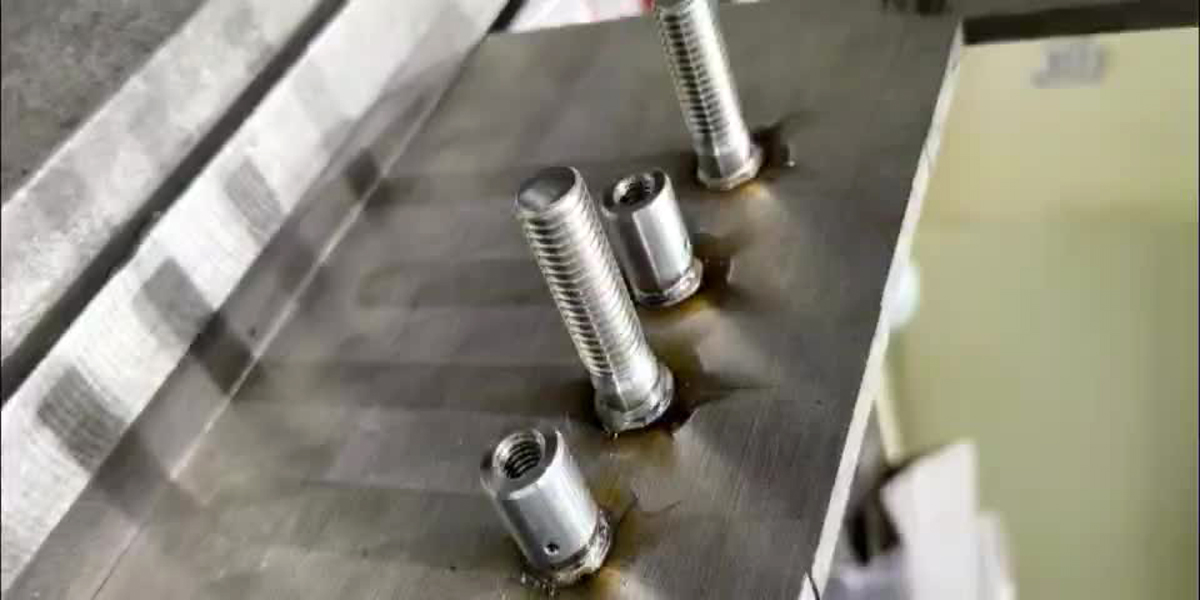
Common CD Weld Stud Quality Problems and Corrective Actions
| Quality problem | Potential cause | Engineering response |
|---|---|---|
| Bent studs | Forming or handling variation | Review straightness controls and packaging |
| Incorrect thread | Tooling or process variation | Verify thread inspection |
| Ignition-tip inconsistency | Forming variation | Define tip geometry and inspection |
| Poor weld repeatability | Component or process variation | Investigate both stud and welding process |
| Feeding jams | Geometry or packaging problems | Validate feeding compatibility |
| Unexpected weld failures | Material, surface or parameter issues | Conduct joint-level failure analysis |
| Mixed parts | Identification or packing error | Improve traceability and segregation |
Supplier Qualification for Automotive and Industrial CD Weld Studs
Supplier development and procurement teams should evaluate both technical capability and commercial requirements.
Technical Evaluation
Product drawing
Applicable standard
Material specification
Welding feature geometry
Dimensional tolerances
Inspection plan
Welding validation requirements
Quality Evaluation
Inspection coverage
Acceptance criteria
Traceability
Material documentation
Nonconforming product control
Engineering change management
Commercial Evaluation
Prototype requirements
MOQ
Annual demand
Unit price
Lead time
Packaging
Delivery schedule
Supply continuity
Engineering Recommendation
Request clear evidence for the quality characteristics that matter to the production process.
Avoid making supplier decisions based solely on generic claims such as automotive-grade or 100% inspected.
OEM RFQ Checklist for CD Weld Studs
| RFQ requirement | Information to provide |
|---|---|
| Stud type | CD weld stud configuration |
| Drawing | 2D/3D drawing and revision |
| Standard | Applicable ISO or customer specification |
| Thread | Metric or UNC/UNF specification |
| Dimensions | Diameter, length and tolerances |
| Welding feature | Ignition-tip geometry or other required feature |
| Material | Required grade |
| Base material | Sheet or component material |
| Sheet thickness | Applicable material thickness |
| Welding equipment | Equipment and process information |
| Welding requirements | Required weld performance and acceptance criteria |
| Inspection | 100% screening characteristics or sampling plan |
| Testing | Required welding or mechanical validation |
| Documentation | Material and inspection records |
| Packaging | Protection and labeling requirements |
| Samples | Prototype quantity |
| Annual demand | Estimated purchasing volume |
| Delivery | Required production schedule |
Frequently Asked Questions
What is a CD weld stud?
A CD weld stud is a fastening component designed for capacitor discharge stud welding.
Why does stud straightness matter?
Bent studs may interfere with automatic feeding, positioning or welding alignment.
Why is ignition-tip geometry important?
For applicable CD weld stud designs, the ignition tip influences the initial welding interaction with the base material.
Does 100% inspection mean every stud is fully tested?
No. It means every part is inspected for specified characteristics using defined methods.
Can 100% inspection guarantee zero defects?
No. Inspection effectiveness depends on the method, equipment, acceptance criteria and detectable defect types.
Does a dimensionally correct stud guarantee a strong weld?
No. Welding performance also depends on base material, surface condition, equipment and welding parameters.
Which standards are relevant to CD weld studs?
ISO 13918 and ISO 14555 may be relevant, depending on the stud design and welding process.
Can CD weld studs be used in automotive manufacturing?
They may be used in suitable automotive applications, subject to customer specifications and engineering validation.
How should OEMs qualify a CD weld stud supplier?
Evaluate product conformity, inspection controls, material documentation, process consistency, traceability and commercial supply requirements.
What should be included in a CD weld stud RFQ?
Provide the drawing, material, dimensions, welding feature, base material, welding process, inspection requirements, testing criteria and purchasing volume.
CD Weld Stud and Industrial Fastening Solutions from Juxin Fasteners
Juxin Fasteners has more than 20 years of experience serving international industrial fastening customers.
Our broader fastening product portfolio includes:
CD weld studs
DIN 34817 weld studs
Weld nuts
Self-clinching fasteners
Blind rivet nuts
Industrial nuts and threaded fasteners
Rivets
Custom drawing-based OEM fasteners
We welcome technical inquiries involving:
CD weld stud drawings
Material specifications
Dimensional requirements
Welding feature geometry
Inspection requirements
Sample evaluation
OEM supplier qualification
Bulk purchasing programs
Specific inspection coverage, manufacturing feasibility, testing, documentation, MOQ and lead times must be confirmed for each project.
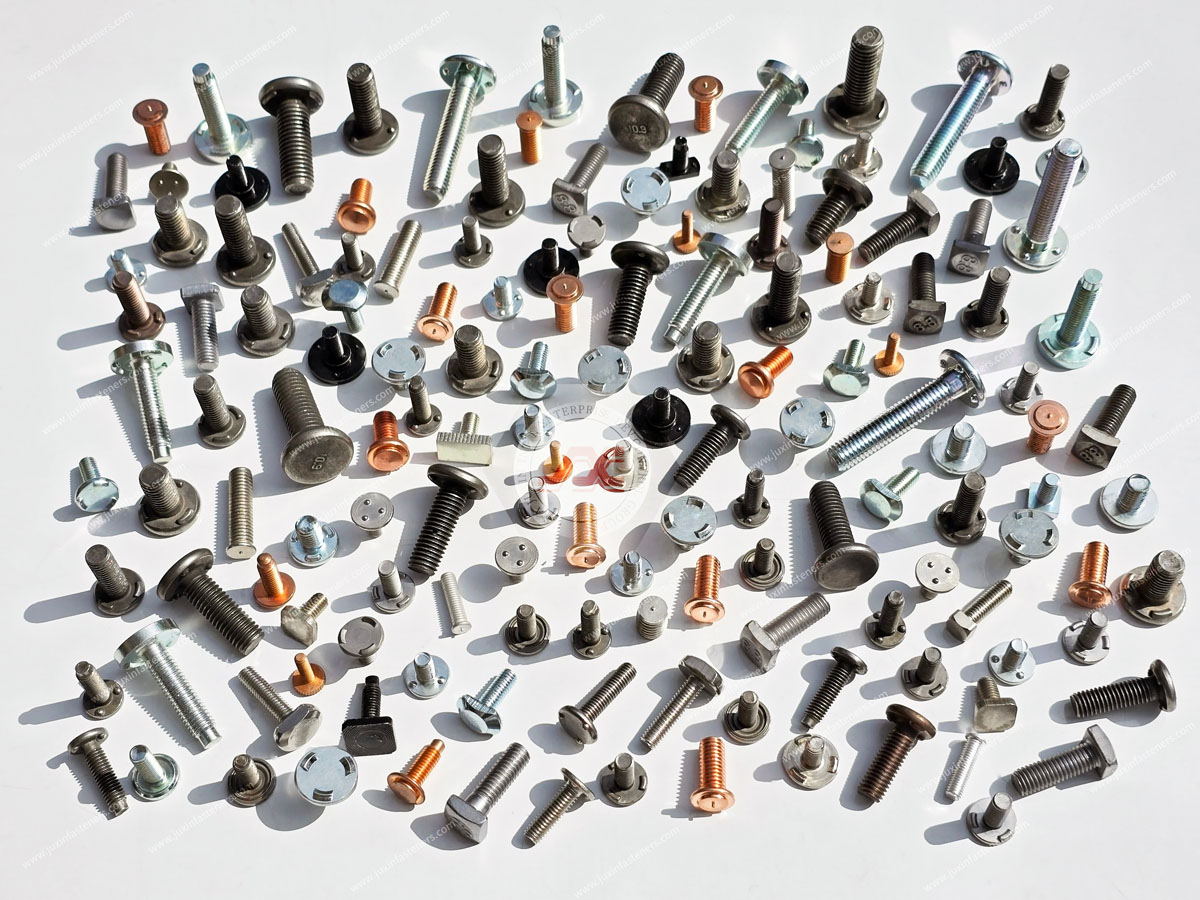
Request a Quotation for CD Weld Studs
Are you sourcing CD weld studs for automotive components, electrical enclosures, sheet-metal manufacturing or automated industrial assembly?
Juxin Fasteners welcomes inquiries from design engineers, mechanical engineers, welding engineers, manufacturing engineers,
production managers, purchasing specialists, procurement managers, supplier development teams and supply chain professionals.
For efficient technical review and quotation, please provide:
2D/3D drawings, applicable standard, material, thread specification, stud dimensions, welding-tip geometry, base material,
sheet thickness, welding equipment, welding requirements, inspection criteria, testing requirements, sample quantity, annual demand, packaging and delivery schedule.
Our team can review the project requirements and confirm suitable product options, inspection arrangements, technical feasibility and commercial quotation conditions.
Company: Juxin Fasteners
Website: https://www.juxinfasteners.com/
Email: info@juxinfasteners.com
Send your CD weld stud drawings, inspection requirements and OEM RFQ to Juxin Fasteners for technical review and quotation.
Contact Us
Tel.:
+86 020 8621 0320
+86 020 3121 6067
E-mail:
Technical Support:
Navigation
SEND INQUIREY



