
Call Us
+86 136 6007 9809
Call Us
+86 136 6007 9809

Oct. 22, 2023
Insulation weld pins and retaining washers provide a mechanical method for securing thermal or acoustic insulation to compatible metal substrates.
These fastening components are used in selected HVAC equipment, industrial machinery, ventilation systems,
commercial food-service equipment and thermal-management assemblies where insulation must remain in a defined position during manufacturing and service.
A typical welded insulation fastening system consists of:
Metal substrate → Weld joint → Insulation weld pin → Insulation material → Retaining washer or speed clip
Although the components appear simple, reliable insulation retention depends on several interacting engineering variables.
The welding process must be compatible with the base metal.
The pin must provide sufficient usable length for the insulation and retaining washer.
The washer must grip the pin correctly without causing unacceptable compression or damage to the insulation.
The fastening pattern must support the insulation under the intended operating conditions.
For design and mechanical engineers, the main questions concern substrate compatibility, insulation thickness, pin geometry, retention and service performance.
For manufacturing engineers and production managers, welding consistency, installation speed, washer feeding, inspection and rework are equally important.
For procurement and supplier-development teams, reliable sourcing requires a controlled specification for the pin, retaining washer, materials, packaging and production requirements.
JUXIN FASTENERS supplies insulation weld pins, weld studs, insulation retaining washers, self-locking washers and drawing-based fastening components for suitable industrial OEM applications.
This guide explains how to select and source these components as a complete insulation fastening system.
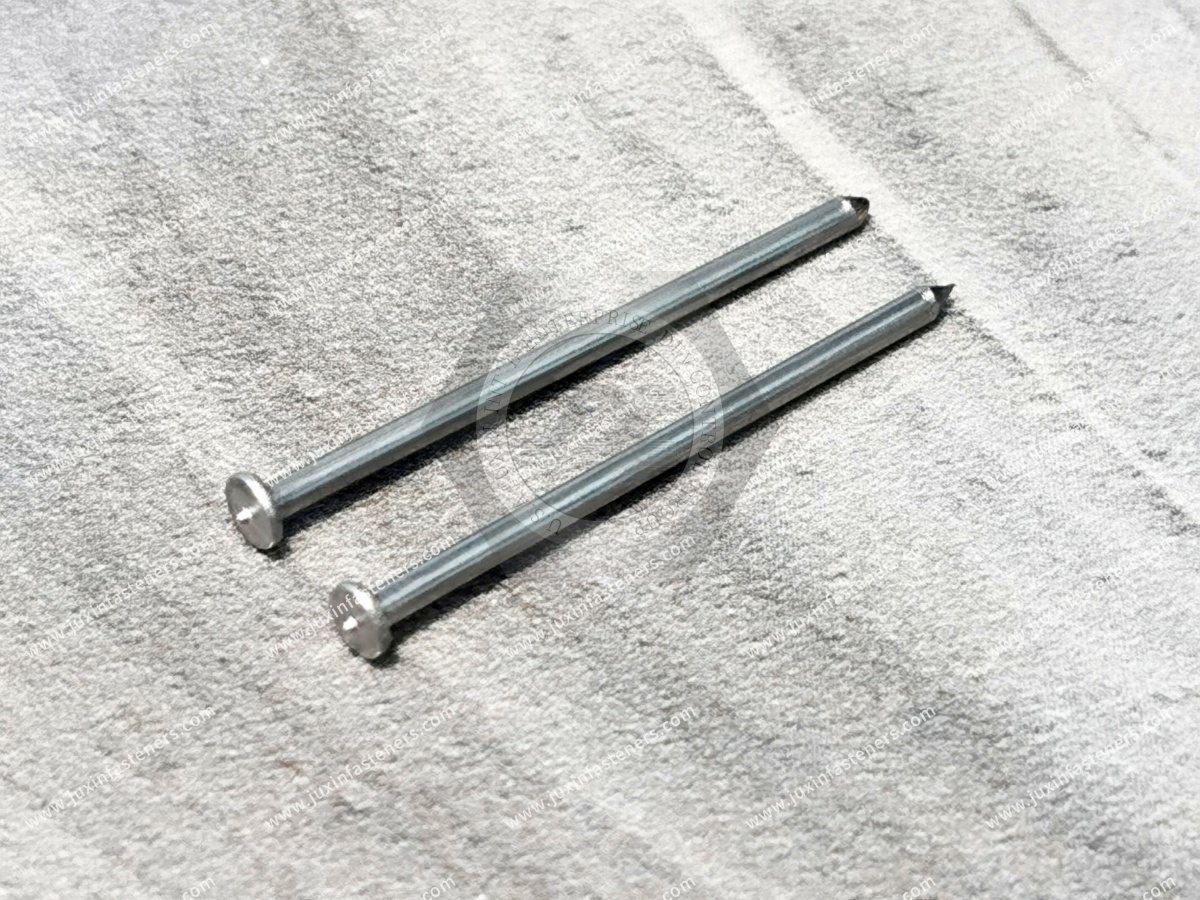
An insulation weld pin is a metal fastening pin designed to be welded to a compatible metallic substrate.
Once installed, the pin provides a mechanical anchoring point for an insulation layer.
A compatible retaining washer or speed clip is then installed over the pin to hold the insulation in position.
Unlike a conventional threaded screw, many insulation weld pins use a non-threaded stem and a push-on retaining component.
The fastening principle is based on two separate mechanical interfaces:
A welded connection between the pin and the substrate.
A mechanical retention interface between the pin and the washer.
Both interfaces must perform correctly.
These terms refer to different products.
Insulation weld pin: The fastening component that remains attached to the equipment.
Insulation welder: The installation equipment used to weld compatible pins to a metal substrate.
This distinction matters for purchasing.
An OEM sourcing insulation fastening components may require weld pins, retaining washers and related hardware without needing to purchase the welding equipment itself.
The system transfers retaining forces through several components.
The substrate provides the base surface to which the pin is welded.
Its material, thickness, coating and surface condition affect weld-process suitability.
The weld creates the connection between the insulation pin and the substrate.
Its performance depends on the pin, base material, welding process and production conditions.
The pin extends through the insulation and provides the attachment point for the retaining washer.
The insulation provides the required thermal or acoustic function.
Its thickness, density, stiffness and compressibility influence fastening selection.
The retaining washer grips the pin and applies retention over a defined area of the insulation.
The washer's geometry affects engagement, contact area and the risk of local insulation damage.
A reliable system requires the weld pin, washer and insulation to be selected together.
Capacitor discharge welding, commonly called CD stud welding, is one method used for suitable insulation pins and other stud-type fasteners.
In a CD welding system, electrical energy stored in capacitors is discharged over a short welding cycle.
The process creates a welded connection at the interface between the fastener and a compatible metal substrate.
The process is intended to create a controlled metallurgical connection at the fastener-to-substrate interface.
It does not require the entire pin to melt.
The relevant variables include:
Welding equipment
Pin design
Pin material
Substrate material
Substrate thickness
Surface condition
Welding energy
Contact conditions
Equipment settings
The correct parameters depend on the actual welding system.
A setting suitable for one pin and substrate combination may not be appropriate for another.
Changes in substrate thickness, material or surface condition can affect weld quality.
For production applications, the welding process should be qualified using representative components and actual production conditions.
International stud-welding standards may provide relevant guidance depending on the welding process and application.
ISO 14555 — Welding: Arc stud welding of metallic materials addresses requirements for applicable stud-welding processes.
ISO 13918 — Welding: Studs and ceramic ferrules for arc stud welding addresses specified welding studs and related components within its scope.
These standards should only be referenced where the actual welding process and product fall within their applicable scope.
A generic insulation pin should not automatically be claimed to comply with either standard.
For OEM programs, the drawing, welding procedure and customer qualification requirements should identify the applicable standards.
Not every insulation fastening system uses welding.
Two common approaches are welded insulation pins and adhesive-mounted insulation pins.
| Selection factor | Welded insulation pins | Adhesive-mounted insulation pins |
|---|---|---|
| Attachment method | Welded metal connection | Adhesive bond |
| Suitable substrate | Compatible weldable metal | Substrate compatible with adhesive |
| Installation equipment | Appropriate welding equipment | Adhesive installation process |
| Cure time | No adhesive curing stage | Depends on adhesive system |
| Surface preparation | Welding-process requirements | Adhesive bonding requirements |
| Temperature suitability | Depends on complete welded assembly | Depends on adhesive and assembly |
| Production integration | Can suit controlled metal manufacturing | Can suit selected nonwelded applications |
| Qualification | Weld and retention performance | Bond and retention performance |
Neither method is universally better.
The appropriate choice depends on the substrate, service conditions, installation volume and manufacturing process.
Welded insulation pins may be considered where:
The substrate is compatible with the welding process.
The equipment manufacturing process supports welding.
A permanent metal attachment is required.
Adhesive curing would complicate production.
A mechanical pin-and-washer arrangement is appropriate.
Adhesive-mounted pins may be useful where welding is unavailable or unsuitable.
However, adhesive performance must be evaluated for surface preparation, temperature, aging and environmental exposure.
Insulation weld pins and threaded weld studs are not the same product.
An insulation weld pin commonly provides a smooth or application-specific stem for use with a push-on retaining washer.
A threaded weld stud provides a threaded attachment point for a nut or another mating threaded component.
The two products may use related welding technologies but serve different downstream fastening functions.
For procurement purposes, the drawing should clearly distinguish between:
Non-threaded insulation weld pins
Threaded weld studs
Other specialized welded fastening components
Substitution should not be based solely on pin diameter or overall length.
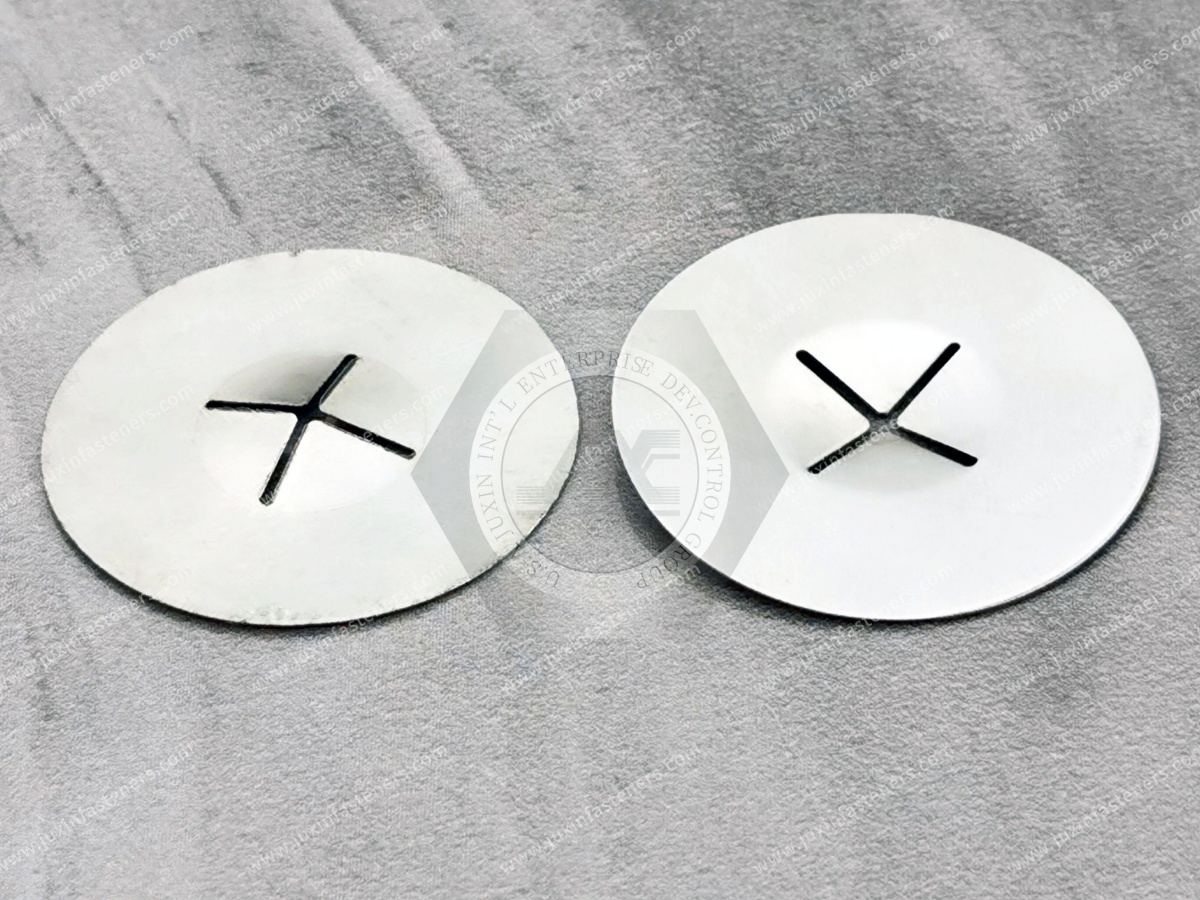
The retaining washer is a functional part of the insulation fastening system.
Its purpose is to engage the pin and provide a suitable retaining interface against the insulation.
The washer outside diameter influences the area over which retention is applied.
For soft or compressible insulation, a larger contact area may reduce local pressure.
A washer that is too small or unsuitable for the insulation may allow local damage or pull-through.
The internal gripping geometry must match the pin diameter and surface condition.
The washer must be installable without excessive force that could damage the pin, washer or insulation.
The washer material must be suitable for the operating environment and expected service conditions.
A retaining washer should therefore be selected according to the complete insulation assembly rather than its nominal diameter alone.
Self-locking insulation retaining washers typically use an internal gripping feature to engage the insulation pin.
The washer is pushed onto the pin until it reaches the required position.
Its internal geometry then resists movement in the reverse direction.
This provides a practical installation sequence:
Weld pin → Position insulation → Push retaining washer onto pin
Retention depends on several variables:
Pin diameter
Pin surface condition
Washer opening geometry
Washer material
Washer thickness
Manufacturing tolerances
Installation force
Installed position
Service environment
A washer that appears to fit the pin may not necessarily provide adequate retention.
For OEM programs, pin-and-washer compatibility should be established through the approved specification and any required functional evaluation.
Stainless steel retaining washers may be considered where corrosion resistance is important.
Potential applications include:
Commercial kitchen equipment
Food-service equipment
HVAC systems
Industrial enclosures
Humid environments
Equipment exposed to cleaning processes
The actual stainless steel grade should be specified where corrosion resistance or mechanical behavior is important.
Different grades may have different properties.
Self-locking washer performance depends on the geometry and material condition of the internal gripping features.
The material must provide the required engagement without unacceptable deformation or cracking.
The washer, pin and substrate should be evaluated as a material system.
Dissimilar-metal combinations may require additional consideration where moisture or other conductive environments are present.
The pin should be selected using a structured engineering process.
Identify the exact base material.
The selected pin material and welding process must be compatible with the substrate.
Do not assume that every insulation weld pin can be welded to every sheet-metal material.
Thin sheet metal can impose different welding constraints from thicker components.
The welding process and pin geometry must be suitable for the actual thickness.
For HVAC housings, equipment cabinets and thin-wall panels, this can be a critical design consideration.
The pin must provide sufficient usable length for the insulation and retaining washer.
A practical dimensional relationship is:
Required usable pin length = Installed insulation thickness + Retaining washer engagement allowance + Required projection or installation allowance
This is a selection framework, not a universal dimensional formula.
The actual allowance depends on the washer design and assembly requirements.
The pin diameter must be compatible with the retaining washer.
A loose washer may not provide adequate retention.
An excessively tight washer may require unacceptable installation force.
Material selection should consider:
Welding compatibility
Substrate compatibility
Corrosion
Temperature
Mechanical requirements
Customer specification
The pin design must be suitable for the selected welding process and insulation arrangement.
For custom components, the drawing may need to define the weld-end geometry, stem dimensions and other functional features.
Oil, oxidation, coatings and other surface conditions may affect welding consistency.
The production process should define the required surface preparation and acceptance criteria.
Pin length is one of the most important selection variables.
If the pin is too short, the retaining washer may not achieve the required engagement after the insulation is installed.
Potential consequences include:
Poor retention
Incomplete washer installation
Local insulation movement
Assembly rework
Excessive pin projection may interfere with:
Equipment covers
Adjacent components
Packaging
Service access
Downstream assembly
Longer pins may also create unnecessary handling or safety concerns.
Confirm the installed insulation thickness, washer engagement requirements and available clearance before releasing the pin length.
Where insulation compression is part of the design, use the intended installed thickness rather than relying only on the nominal uncompressed material thickness.
Different insulation materials respond differently to retaining forces.
Soft fibrous insulation may deform substantially under a small contact area.
Denser materials may behave differently.
The designer should evaluate:
Material density
Compressibility
Thickness
Contact pressure
Washer diameter
Required retention
Thermal or acoustic function
Excessive compression may reduce the installed insulation thickness.
Depending on the insulation material and system design, this may affect the intended thermal or acoustic performance.
Insufficient retention may allow insulation movement or separation from the intended mounting surface.
The correct installation should maintain the insulation in the required position without unacceptable damage or deformation.
A suitable retaining washer must match both the pin and insulation.
| Selection variable | Engineering question |
|---|---|
| Pin diameter | Does the washer grip the specified pin correctly? |
| Washer outside diameter | Is the contact area appropriate for the insulation? |
| Washer thickness | Is the washer sufficiently stable for the intended function? |
| Internal gripping geometry | Does it provide the required engagement? |
| Material | Is it suitable for forming, retention and service conditions? |
| Surface treatment | Is corrosion protection appropriate? |
| Installation force | Can the washer be installed consistently? |
| Insulation density | Will the washer damage or pull through the material? |
| Temperature | Will the assembly remain suitable in service? |
| Assembly clearance | Is there sufficient space for installation and inspection? |
For critical applications, the washer should be evaluated together with the specified pin rather than as an independent catalog item.
HVAC equipment frequently uses insulated sheet-metal structures.
Potential applications include:
Air-handling units
Ventilation equipment
Fan housings
Duct sections
Equipment cabinets
Insulated sheet-metal panels
Insulation may be required for thermal control, acoustic attenuation or other equipment-specific functions.
The welding process must be compatible with the sheet-metal thickness and material.
The fastening pattern must provide suitable retention across the insulation area.
Manufacturers should evaluate welding access, pin positioning, washer installation and inspection.
The final arrangement should be compatible with expected equipment maintenance and operating conditions.
Commercial kitchen and food-service equipment may contain insulated housings or temperature-controlled structures.
Fastening selection may involve:
Stainless steel construction
Elevated temperatures
Cleaning exposure
Corrosion resistance
Thermal cycling
Equipment serviceability
The pin and substrate must be compatible with the selected welding process.
The washer must maintain suitable engagement under the expected operating conditions.
Where moisture or cleaning chemicals are present, the actual material grade and environment should be evaluated.
No universal stainless steel grade should be assumed suitable for every cleaning or chemical exposure.
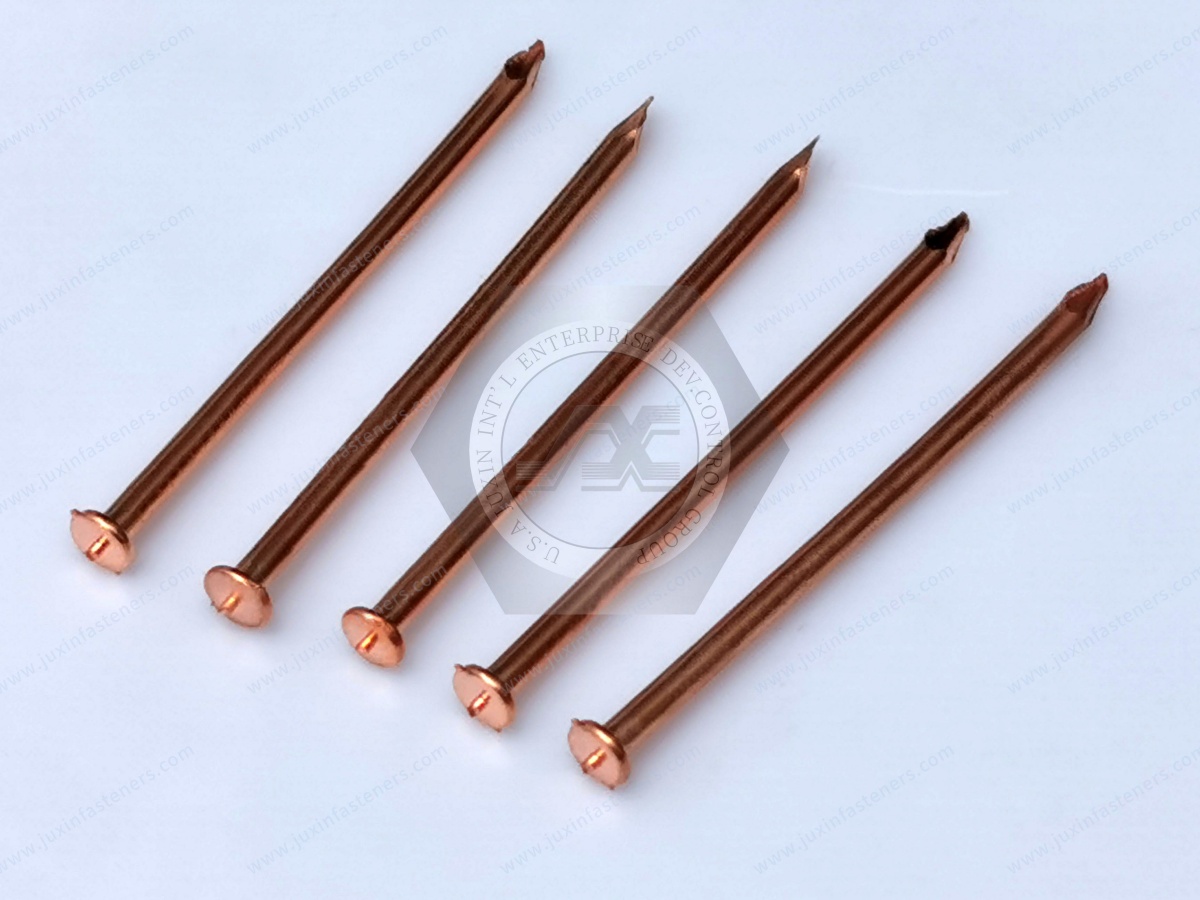
Industrial machinery may use insulation for:
Thermal control
Acoustic attenuation
Personnel protection
Process-temperature management
Equipment enclosure insulation
Welded insulation fastening systems may be suitable where the equipment uses compatible metal substrates.
Pins and washers can provide a mechanical retention arrangement for suitable insulation materials.
The fastening components should be selected as part of the complete thermal design.
Temperature exposure, vibration and service access may influence material and geometry selection.
Some thermal-management assemblies use insulated housings or associated equipment structures.
However, insulation weld pins should not automatically be presented as suitable for direct use in liquid-cooling circuits or pressure-containing components.
The actual application must be reviewed.
Insulation weld pins may also be used with suitable acoustic insulation materials.
For acoustic applications, engineers should consider:
Local insulation compression
Washer contact area
Mechanical hard points
Vibration
Material movement
Acoustic design requirements
A fastening system should retain the insulation without unnecessarily compromising the intended acoustic performance.
There is no universal pin-spacing rule appropriate for every insulation application.
The required number and arrangement depend on:
Insulation weight
Material stiffness
Panel orientation
Equipment geometry
Vibration
Washer dimensions
Service conditions
Customer specification
Different orientations may create different retention requirements.
Vibration may influence the fastening pattern and required retention performance.
Larger insulation areas may require a fastening pattern that controls local movement and maintains the intended insulation position.
The equipment designer or approved installation specification should establish the fastening layout.
Pin spacing should not be selected solely from a generic product description.
A controlled installation process supports consistent fastening quality.
Confirm:
Pin location
Pin spacing
Pin diameter
Pin length
Material
Substrate specification
Retaining washer
Insulation thickness
The welding surface should meet the requirements of the selected process.
Contamination that may affect weld quality should be controlled.
Use qualified parameters for the actual pin, substrate and equipment combination.
Position the pin according to the drawing and complete the welding operation using the specified process.
Inspection should follow the applicable customer or manufacturing requirements.
Position the insulation over the welded pins.
Push the compatible washer or clip onto each pin until the required retention position is reached.
Check:
Pin location
Weld condition
Insulation position
Washer engagement
Insulation damage
Excessive compression
Loose components
Assembly interference
The inspection criteria should be established before production release.
For OEM manufacturing, insulation fastening must be both technically suitable and repeatable.
Consistent positioning can help reduce assembly variation.
The welding operation should be integrated with the production sequence and validated equipment settings.
Washer feeding and installation should be practical for the required production volume.
The equipment design should allow sufficient access for welding and washer installation.
The manufacturing process should define how defective welds, damaged pins or incorrectly installed washers are identified and handled.
A meaningful cost comparison should consider:
Pin cost + washer cost + welding time + insulation installation + inspection + rework + logistics
This provides a more complete picture than comparing weld pin unit prices alone.
Weld strength depends on the complete combination of fastener, substrate and welding process.
Important variables include:
Pin design
Pin material
Substrate material
Substrate thickness
Surface condition
Welding equipment
Welding parameters
Process control
For critical OEM programs, weld performance should be evaluated using representative production conditions.
A pin diameter or material designation alone does not establish the strength of the welded connection.
The actual weld and substrate combination must be considered.
| Problem | Potential cause | Engineering review |
|---|---|---|
| Insulation moves after installation | Inadequate retention | Pin pattern and washer engagement |
| Retaining washer slips | Incorrect gripping geometry | Pin-to-washer compatibility |
| Washer pulls through insulation | Insufficient contact area | Washer diameter and insulation characteristics |
| Insulation is over-compressed | Incorrect installed position | Pin length and washer placement |
| Pin is too short | Insufficient usable projection | Installed insulation thickness |
| Pin is excessively long | Incorrect dimensional selection | Clearance and downstream assembly |
| Weld quality varies | Process or surface variation | Welding qualification and controls |
| Pin detaches | Unsuitable weld or loading conditions | Complete welded joint |
| Corrosion occurs | Material or finish incompatibility | Environment and material selection |
| Assembly time is excessive | Poor installation access or handling | Design for manufacturing |
Corrective action should be based on the actual failure mechanism.
Replacing a retaining washer or increasing pin length without understanding the problem may introduce additional assembly issues.
Standard components can be suitable where their dimensions and material meet the application requirements.
Custom components may be appropriate when an OEM requires:
Special pin length
Nonstandard diameter
Specific weld-end geometry
Special material
Defined surface finish
Drawing-controlled tolerances
Dedicated retaining washer compatibility
Special packaging
For OEM production, it can be useful to specify the pin and retaining washer as a matched fastening system.
This helps reduce ambiguity during supplier development and purchasing.
Custom requirements should be reviewed against the drawing, material, welding process and order quantity.
For procurement teams, a technically equivalent replacement must meet more than the nominal pin dimensions.
Two weld pins with the same length and diameter may differ in:
Weld-end geometry
Material
Surface condition
Dimensional tolerance
Welding-process compatibility
Two retaining washers may differ in:
Internal gripping geometry
Material
Thickness
Outside diameter
Retention behavior
Review:
Drawing conformity
Material specification
Dimensional consistency
Pin-to-washer compatibility
Sample evaluation
Inspection requirements
Packaging
Lot identification
Production planning
Change control
Where a replacement supplier is being considered, evaluate the proposed components against the approved specification.
Changes affecting weld performance or washer retention may require application-level validation.
A complete RFQ helps reduce technical ambiguity and quotation delays.
Drawing or reference part
Pin diameter
Pin length
Material
Surface finish
Weld-end geometry where applicable
Welding process
Dimensional tolerances
Material
Thickness
Surface condition
Relevant coating
Welding requirements
Insulation material
Nominal thickness
Installed thickness where relevant
Density or compressibility requirements
Operating temperature
Service environment
Washer type
Outside diameter
Material
Thickness
Internal gripping geometry
Required engagement
Surface treatment where applicable
Prototype quantity
Initial order quantity
Estimated annual volume
Packaging
Delivery destination
Required schedule
Inspection documentation
Material or compliance documentation
If an existing fastening system is being replaced, provide an unused pin sample and compatible retaining washer where possible.
This can help clarify the original configuration.
An insulation weld pin is a metal pin welded to a compatible substrate and used with a retaining washer or clip to secure insulation.
No. The weld pin is the fastening component, while the welder is the installation equipment.
Many insulation weld pins use non-threaded stems, although specialized designs may differ.
It is an insulation pin designed for a compatible capacitor-discharge stud-welding process.
No. The process creates a controlled welded connection at the fastener-to-substrate interface.
A compatible insulation retaining washer or speed clip is typically used.
Consider installed insulation thickness, retaining washer engagement and required installation clearance.
No. The washer's gripping geometry must be compatible with the specified pin.
No. Welding compatibility depends on the actual substrate, pin material, thickness and welding process.
Neither is universally better. The correct method depends on substrate, service conditions and manufacturing requirements.
They may be suitable for specified HVAC applications where their material and retention characteristics meet the requirements.
Provide pin dimensions, material, welding process, substrate details, insulation specification, retaining washer requirements and purchasing quantities.
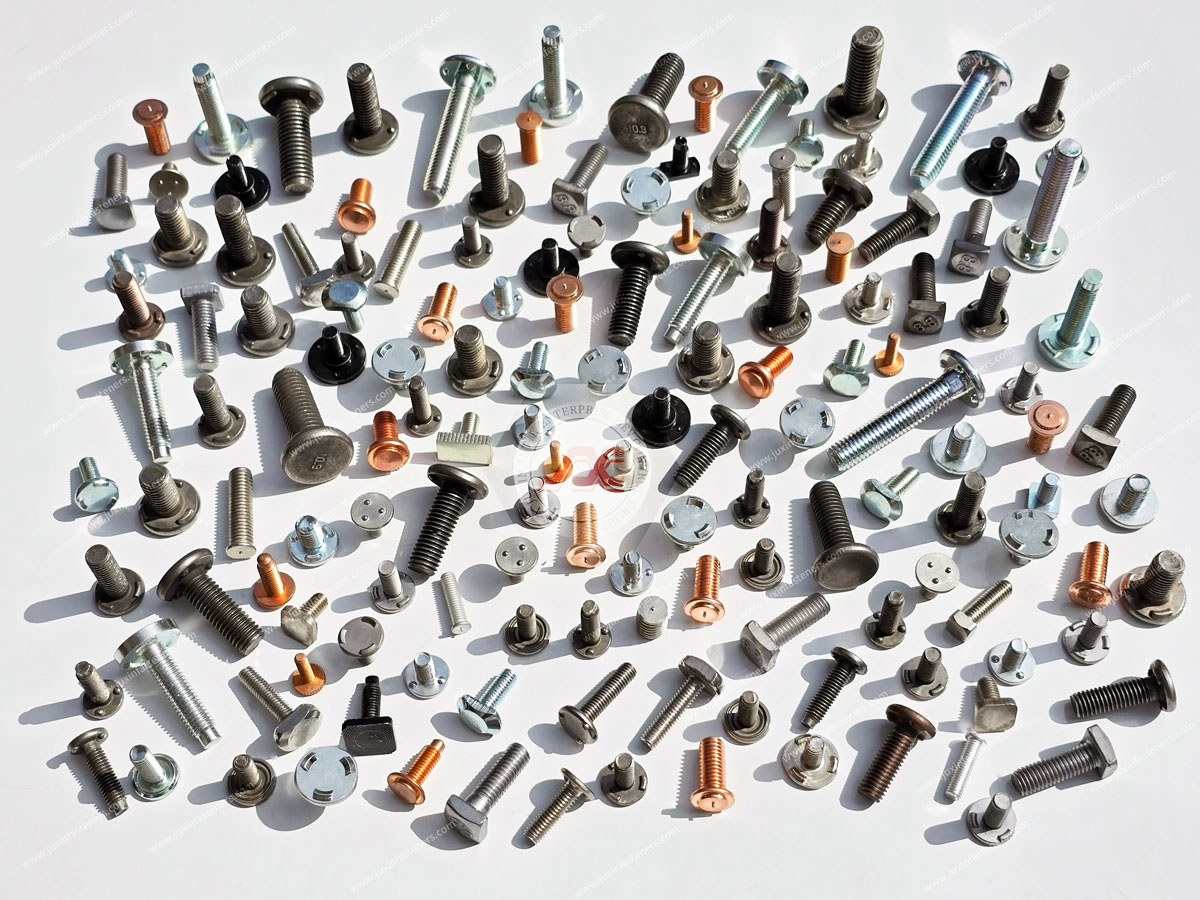
JUXIN FASTENERS supplies industrial fastening components for OEM equipment and production applications.
Relevant insulation fastening products include:
Insulation weld pins
CD insulation weld pins
Weld studs
Insulation retaining washers
Self-locking retaining washers
Stainless steel insulation washers
Drawing-based custom fastening components
Product suitability, material options, customization feasibility and commercial terms should be confirmed for the specific project.
For an efficient technical and commercial discussion, provide:
Pin drawing + substrate material and thickness + welding process + insulation thickness + retaining washer specification + required quantity
Where available, include the complete assembly drawing and operating conditions.
For replacement projects, an unused sample and matching retaining washer can also be useful.
JUXIN FASTENERS can review the supplied requirements to discuss product suitability, sample requirements, customization feasibility and OEM quotation arrangements.
Company: JUXIN FASTENERS
Website: https://www.juxinfasteners.com/
Email: info@juxinfasteners.com
Contact JUXIN FASTENERS to discuss insulation weld pins, retaining washers and custom insulation fastening requirements for your OEM project.
Previous: Insulation Welding Pins Guide
Contact Us
Tel.:
+86 020 8621 0320
+86 020 3121 6067
E-mail:
Technical Support:
Navigation
SEND INQUIREY



