
Call Us
+86 136 6007 9809
Call Us
+86 136 6007 9809

Oct. 22, 2023
Insulation welding pins are metal fastening components used to mechanically retain thermal or acoustic insulation on compatible metal substrates.
They are commonly used with an insulation retaining washer or speed clip to create a simple fastening architecture:
metal substrate → welded pin → insulation → retaining washer
Although these products are sometimes informally called insulation welding screws, many designs are not threaded screws at all.
For engineering and procurement purposes, terms such as insulation weld pins, insulation welding pins,
CD weld pins, insulation retaining pins and weld pins for insulation more accurately describe this product category.
JUXIN FASTENERS supplies insulation weld pins, weld studs, insulation retaining washers,
self-locking washers and custom fastening components for HVAC equipment, food-service equipment, thermal management systems, industrial machinery and other OEM applications.
An insulation welding pin is designed to create a permanent attachment point on a compatible metallic substrate.
Depending on the design, the pin may be installed using a specified stud-welding process such as capacitor discharge welding.
After welding:
the insulation is positioned over the pin;
the pin passes through the insulation;
a compatible retaining washer or speed clip is pushed onto the pin;
the washer retains the insulation against the substrate.
This is fundamentally different from a conventional threaded screw driven into a pre-drilled hole.
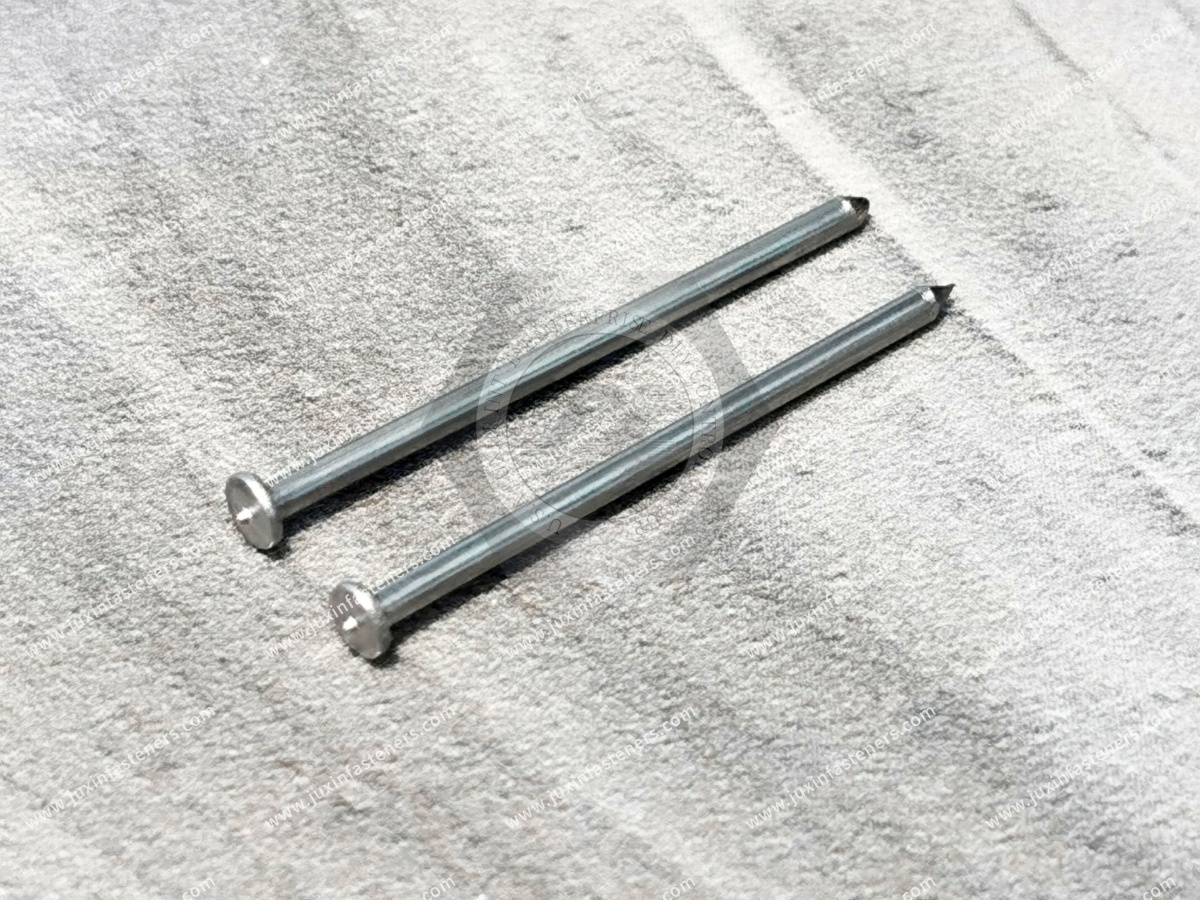
One of the most important distinctions for engineers and purchasing teams is the difference between several products that are often grouped together under the general term "insulation fasteners."
Welded directly to a compatible metal substrate and typically used with retaining washers.
Mechanically engage a substrate through drilling, expansion, threading or another anchoring mechanism.
Use an adhesive or bonded base rather than a welded connection.
Use threads to engage a suitable substrate or mating component.
These fastening technologies should not be treated as interchangeable.
The correct choice depends on:
substrate material;
substrate thickness;
insulation material;
insulation thickness;
manufacturing process;
environmental exposure;
required retention;
assembly volume.
The fastening system should be considered as several interacting components rather than as a single pin.
The metal panel, housing, duct or equipment surface provides the base for the welded connection.
The specified welding process joins the pin to the compatible substrate.
The pin provides the mechanical support through the insulation layer.
The thermal or acoustic insulation is positioned over the installed pin.
A retaining washer or speed clip engages the pin and holds the insulation in position.
The performance of the complete system therefore depends on compatibility between all five elements.
Capacitor discharge welding, often abbreviated as CD welding, is one process used for suitable weld pins and small weld studs.
Stored electrical energy is rapidly discharged to create the weld at the interface between the fastener and compatible base material.
CD welding can be attractive for suitable production applications because of its short welding cycle.
However, successful welding depends on the complete process combination, including:
weld-pin geometry;
pin material;
substrate material;
substrate thickness;
surface condition;
welding equipment;
welding parameters.
There is no universal CD welding setting appropriate for every weld pin and substrate.
Production parameters should be established and validated for the actual assembly.
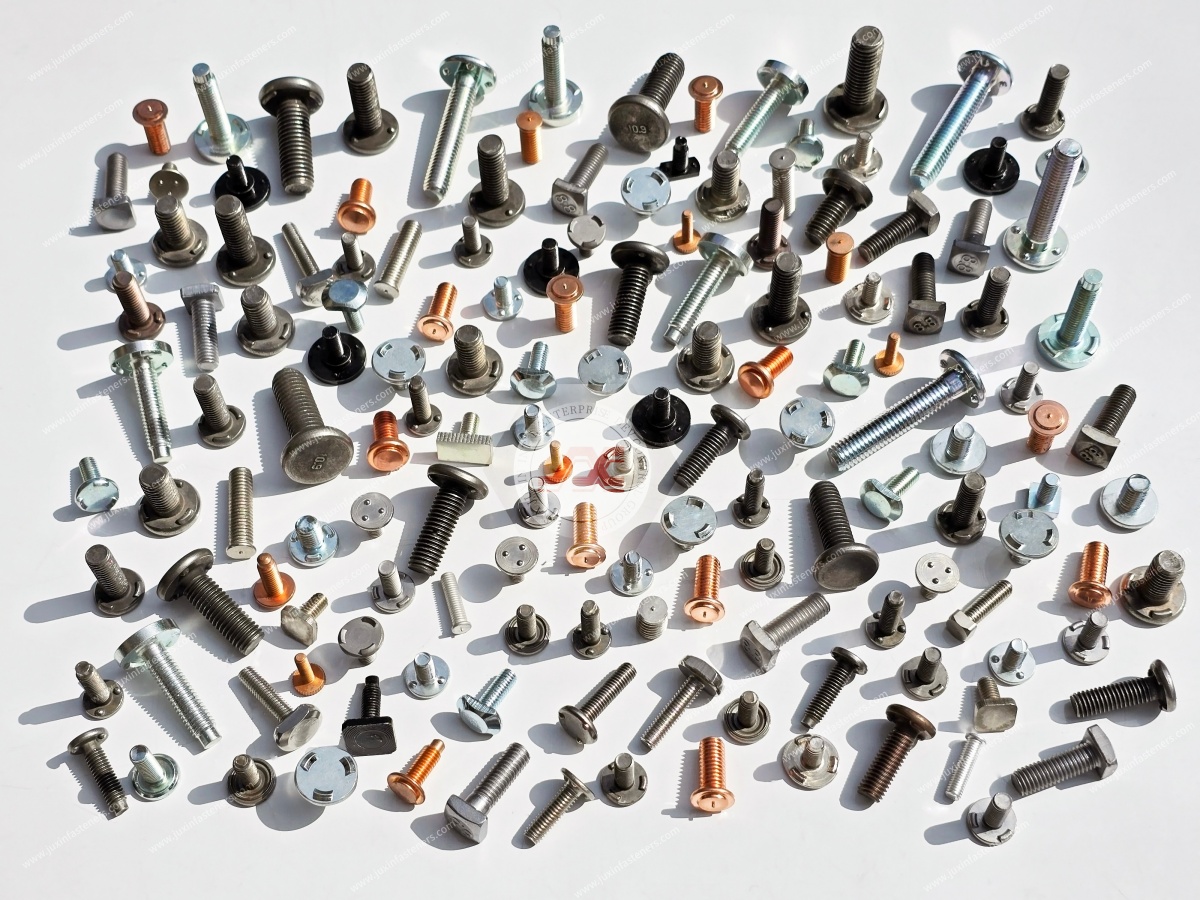
A common sourcing mistake is to begin with:
"What size insulation pin do I need?"
The better first question is:
"What material and thickness am I welding the pin to?"
The substrate determines whether the proposed welding process is appropriate.
Engineers should define:
base material;
material grade where relevant;
sheet thickness;
surface finish or coating;
accessible welding surface;
production condition.
Do not assume that every weld-pin material is compatible with every metal substrate.
After the substrate is understood, define the insulation system.
Important variables include:
insulation material;
nominal thickness;
density;
compressibility;
thermal requirements;
acoustic requirements;
operating temperature;
orientation of the insulated surface.
A soft fibrous insulation layer behaves differently from a dense rigid material.
This affects both pin selection and retaining-washer geometry.
Pin length should be selected from the actual assembly stack.
The required length depends on:
insulation thickness + retaining washer engagement + assembly allowance
However, there is no universal extra-length value that applies to every insulation system.
Why?
Because retaining washers differ in:
geometry;
thickness;
engagement position;
installation method.
Insulation materials also differ in compression.
For this reason, pin length should be determined from the complete assembly rather than from insulation thickness alone.
An undersized pin may:
provide insufficient washer engagement;
make washer installation difficult;
compress the insulation excessively;
prevent the intended final assembly.
Excessive projection can:
interfere with covers or panels;
create packaging problems;
interfere with adjacent components;
increase snagging or handling risk;
require an additional trimming operation.
For OEM production, correct pin length can therefore influence both fastening performance and assembly efficiency.
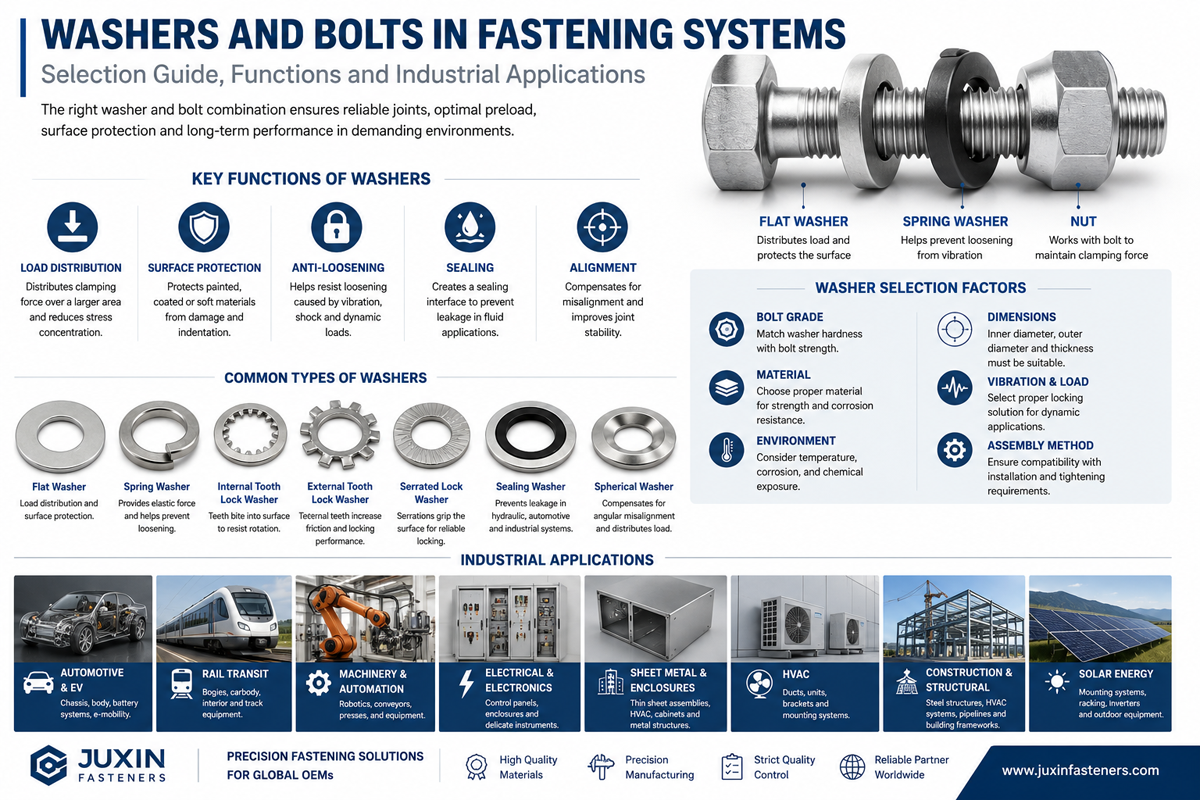
Pin diameter must be compatible with the retaining washer.
This is especially important for push-on self-locking washers.
The washer's internal gripping geometry is designed around a defined pin size and tolerance.
If the relationship is incorrect:
Too loose → insufficient retention
Too tight → excessive installation force or potential deformation
Therefore, the pin and retaining washer should be evaluated as a matched system.
The retaining washer transfers force from the pin into the insulation.
Selection should consider:
pin diameter;
washer outside diameter;
washer thickness;
internal gripping geometry;
washer material;
insulation density;
required contact area;
corrosion environment.
For soft insulation materials, a larger contact area may help distribute retaining force over a broader region.
However, washer diameter should be selected according to the actual insulation and assembly geometry rather than from a universal rule.
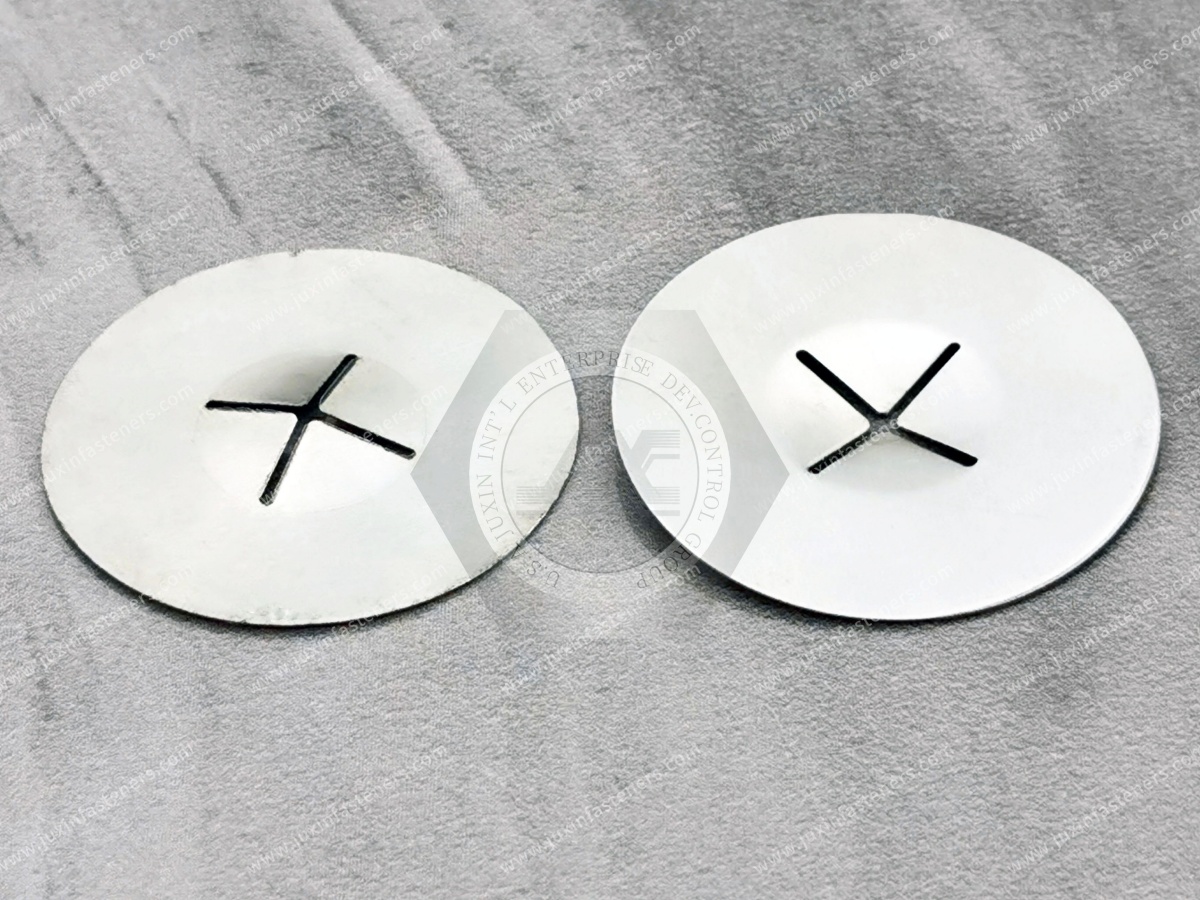
Self-locking insulation washers or speed clips use an internal gripping geometry to engage the pin.
A typical installation sequence is:
weld pin → position insulation → push washer onto pin
This makes them useful for production environments where simple installation is desirable.
The retention characteristics depend on the relationship between:
pin diameter;
washer opening;
washer material;
washer thickness;
gripping geometry;
dimensional tolerances.
The washer should therefore not be treated as a generic interchangeable component.
Stainless steel retaining washers can be selected for suitable equipment exposed to moisture, humidity, cleaning or other corrosive conditions.
Potential applications include:
commercial kitchen equipment;
food-service equipment;
HVAC equipment;
thermal equipment;
industrial enclosures;
process machinery.
The specific stainless steel grade and washer geometry should still be defined according to the operating environment and customer requirements.
Selecting a stainless steel washer does not automatically make the entire insulation fastening system corrosion resistant.
Engineers should consider:
pin material;
washer material;
substrate material;
coating;
moisture;
cleaning chemicals;
condensation;
galvanic interaction where relevant;
service temperature.
Material selection should therefore be performed at the assembly level.
The old approach of specifying one universal number of weld pins per square meter is not technically sound.
Required spacing can vary with:
insulation weight;
insulation stiffness;
equipment orientation;
vibration;
panel geometry;
retaining washer diameter;
service conditions;
OEM requirements.
For example, a horizontal overhead insulation assembly may behave differently from insulation supported on a vertical enclosure.
The fastening layout should therefore be established by the equipment design or an approved installation specification.
A fixed recommendation such as "X pins per square meter" ignores several engineering variables.
Two insulation systems with the same surface area may have very different:
weight;
density;
thickness;
vibration exposure;
orientation;
retaining washer size.
The correct question is not:
"How many pins per square meter?"
It is:
"What fastening pattern provides adequate retention for this specific insulation system and operating condition?"
More retaining force is not automatically better.
Over-compressing certain insulation materials may:
reduce the intended insulation thickness;
create local deformation;
affect thermal performance;
create visible surface depressions;
change acoustic behavior.
The washer should retain the insulation without unnecessarily crushing it.
This is especially important when engineers are optimizing both mechanical retention and thermal/acoustic performance.
HVAC assemblies commonly use thermal and acoustic insulation within sheet-metal structures.
Potential applications include:
air-handling equipment;
ventilation systems;
duct assemblies;
fan housings;
HVAC cabinets;
insulated equipment panels.
Where the substrate and production process support welding, weld pins and retaining washers can provide a production-oriented insulation attachment method.
Thermally insulated equipment used in commercial kitchens and food-service environments can require fastening components that tolerate:
moisture;
cleaning;
thermal cycling;
equipment vibration;
long production life.
Insulation retaining washers and weld pins may be used within suitable sheet-metal equipment designs.
Material selection should reflect the actual operating and sanitation environment.
Industrial equipment can require insulation for:
heat management;
personnel protection;
noise reduction;
process-temperature control.
Potential applications include insulated:
machine housings;
panels;
enclosures;
ducts;
equipment covers.
For OEM manufacturers, weld-pin fastening can be integrated into the sheet-metal fabrication and final assembly process.
Thermal management equipment can contain insulation around:
heated zones;
cooling zones;
ducts;
enclosures;
thermal barriers.
In these applications, the fastener is part of the thermal system.
Engineers should consider whether the selected pin and washer introduce unwanted:
thermal bridges;
compression points;
assembly interference;
corrosion risks.
Weld pins can also retain suitable sound-absorbing or acoustic insulation materials.
Important design considerations include:
material compression;
vibration;
washer contact area;
pin spacing;
local stiffness;
assembly orientation.
The objective is not simply to hold the material in place but to retain it without unnecessarily compromising its intended acoustic function.
Both methods can be appropriate depending on the application.
the substrate is weld-compatible;
mechanical attachment is preferred;
the process can be integrated into production;
adhesive curing is undesirable;
high-volume repeatability is required.
welding is unavailable;
the substrate should not be welded;
field installation is required;
the production environment supports the adhesive system.
The correct decision should be based on engineering and manufacturing requirements rather than assuming one method is universally superior.
Mechanical anchors and weld pins solve similar retention problems through different attachment mechanisms.
Mechanical anchors may require:
drilling;
substrate penetration;
expansion;
thread engagement.
Weld pins rely on a welded interface with a compatible metallic substrate.
This distinction affects:
installation equipment;
substrate preparation;
production speed;
substrate integrity;
assembly sequence.
Normally, a weld pin designed for stud welding should not be described as a fastener installed by drilling a hole and then welding it.
That would confuse two different fastening technologies.
For a welding-pin application, engineers should instead define:
weld location;
substrate preparation;
welding parameters;
pin positioning;
weld inspection.
If the application requires a drilled hole, it may belong to a different mechanical insulation fastening system.
A production process for a suitable insulation weld-pin assembly may include:
Review:
substrate;
pin dimensions;
pin material;
insulation thickness;
washer specification;
pin layout.
Control contamination or surface conditions that could affect welding consistency.
Use equipment and parameters qualified for the actual pin and substrate combination.
Position and weld each pin according to the drawing or manufacturing specification.
Inspection should follow the applicable customer or process requirements.
Place the insulation over the installed pins without unnecessary damage or compression.
Push the specified retaining washers onto the pins to the required position.
Confirm:
insulation position;
washer engagement;
pin condition;
damaged insulation;
missing fasteners;
other drawing requirements.
This can lead to incorrect installation instructions and sourcing specifications.
Washer engagement and insulation compression must also be considered.
A mismatched washer can compromise the entire retention system.
Fastening density depends on the actual insulation and operating conditions.
The base material is part of the welding process and must be considered during qualification.
The complete material combination and environment must be evaluated.
Insulation is not simply a structural material. Its thermal or acoustic function must be preserved.
For a new OEM project, engineers can use the following sequence:
What is the substrate?
↓
Is welding suitable for that substrate and manufacturing process?
↓
What insulation material and thickness are being retained?
↓
What pin diameter is compatible with the selected washer?
↓
What pin length is required for the complete assembly stack?
↓
What washer diameter and geometry suit the insulation?
↓
What materials are appropriate for the service environment?
↓
What fastening pattern is required by the design?
↓
How will the weld and completed assembly be validated?
This decision path reduces the risk of specifying individual components without considering the complete insulation fastening system.
Standard insulation weld pins and retaining washers can support many industrial applications.
However, OEM equipment manufacturers may require drawing-based components with:
custom pin length;
specific pin diameter;
custom washer OD;
controlled washer thickness;
specific material;
special gripping geometry;
application-specific packaging.
For volume production, JUXIN FASTENERS can evaluate the weld pin and retaining washer together as a fastening system.
Procurement teams often receive only a part number and quantity.
For a more reliable sourcing process, the RFQ should define the engineering requirements behind the part.
Important information includes:
drawing;
material;
dimensions;
tolerances;
surface finish;
application;
annual volume;
inspection requirements.
For insulation fastening components, additional assembly information can significantly reduce sourcing risk.
how to choose insulation weld pins;
insulation pin length selection;
CD weld pin applications;
insulation washer size;
weld pins vs adhesive pins;
HVAC insulation fastening methods;
speed clip for insulation pin.
They need to understand whether the system works.
insulation weld pin manufacturer;
insulation welding pin supplier;
CD weld pin supplier;
insulation retaining washer manufacturer;
stainless steel insulation washer supplier;
custom insulation fastener manufacturer;
HVAC fastener supplier.
They need to determine whether the supplier can manufacture the specified components consistently.
A strong supply program must satisfy both requirements.
For faster technical review and quotation, send:
2D drawing or product reference;
pin diameter;
pin length;
pin material;
surface finish if required;
welding process;
substrate material;
substrate thickness;
insulation material;
insulation thickness;
retaining washer dimensions;
retaining washer material;
operating environment;
order quantity;
estimated annual usage;
inspection requirements;
packaging requirements.
For an existing product replacement, an unused physical sample can also help verify dimensions and washer compatibility.
Not always. Many products described this way are smooth insulation weld pins rather than threaded screws.
It creates a welded attachment point for mechanically retaining thermal or acoustic insulation on a compatible metal substrate.
Stud-welded insulation pins normally rely on the specified welding process rather than conventional drilled-hole engagement.
Consider insulation thickness, insulation compression, retaining-washer engagement and the final assembly envelope.
There is no universal value suitable for every application. The required fastening pattern depends on insulation properties, orientation, vibration, equipment geometry and design requirements.
No. Pin material, substrate material, substrate thickness, surface condition and welding process must be evaluated together.
A speed clip is a push-on retaining component used with a compatible pin to hold insulation or another material in position.
Yes. Stainless steel insulation retaining washers can be supplied for suitable industrial and OEM applications.
Drawing-based dimensions, materials and geometries can be evaluated according to application and production requirements.
Insulation fastening should not be reduced to a single question such as:
"What pin length do I need?"
The correct fastening solution comes from understanding the complete assembly:
substrate + welding process + pin + insulation + retaining washer + operating environment
JUXIN FASTENERS supplies insulation weld pins, weld studs, insulation retaining washers, self-locking washers and custom fastening components for HVAC,
food-service equipment, thermal management systems, industrial machinery and other OEM applications.
For standard requirements, send the required dimensions, material and quantity.
For custom insulation fasteners, send your 2D drawing or 3D model together with application information.
For existing-product replacement, provide an unused sample where possible.
Our team can support technical review, manufacturing feasibility, sample development, qualification and volume production.
Email: info@juxinfasteners.com
Website: www.juxinfasteners.com
 MORE NEWS
Sep. 27, 2026
Sep. 27, 2026
Sep. 27, 2026
Contact Us
Tel.:
+86 020 8621 0320
+86 020 3121 6067
E-mail:
Technical Support:
Navigation
SEND INQUIREY