
Call Us
+86 136 6007 9809
Call Us
+86 136 6007 9809

Aug. 15, 2026
Expansion Bolt Solutions for Interior Renovation and Building Installation
Engineering Selection of Concrete Anchors, Hollow-Wall Fixings and Industrial Fasteners for Commercial Fit-Out and Building Services
Interior renovation and building installation projects require fastening solutions that accommodate different substrates, fixture geometries, loading conditions and installation procedures.
Unlike new construction, renovation work frequently involves existing concrete walls, brickwork, hollow masonry, gypsum board partitions and concealed structural elements.
The available substrate may not be obvious from the finished wall surface.
For commercial contractors, mechanical engineers, building-services designers, manufacturing engineers, production managers and procurement teams,
the main challenge is not simply selecting an expansion bolt of the correct diameter. It is identifying the actual load-bearing material and choosing a fixing system suitable for the complete connection.
Mechanical expansion anchors, concrete screws, masonry fixings, hollow-wall anchors, toggle bolts and specialized installation fasteners serve different engineering purposes.
Juxin Fasteners supplies industrial fastening components for construction, building installation and OEM applications, including expansion bolts,
concrete anchoring hardware, bolts, nuts, washers and drawing-based fastening components.
This guide examines practical fastening selection for interior renovation, HVAC installation, electrical and plumbing systems, cabinets, shelving, partitions and commercial building fit-out projects.
It also explains installation quality, common failure risks, product standardization and industrial procurement considerations.
What Are Expansion Bolts and Interior Building Anchors?
An expansion bolt is a mechanical anchor that develops engagement with a suitable base material through an expanding component.
Typical concrete expansion anchors may use a wedge, sleeve, cone or other product-specific expansion mechanism.
Interior building installation, however, involves a much wider range of fastening technologies.
Common international product terms include:
Concrete expansion bolts
Mechanical expansion anchors
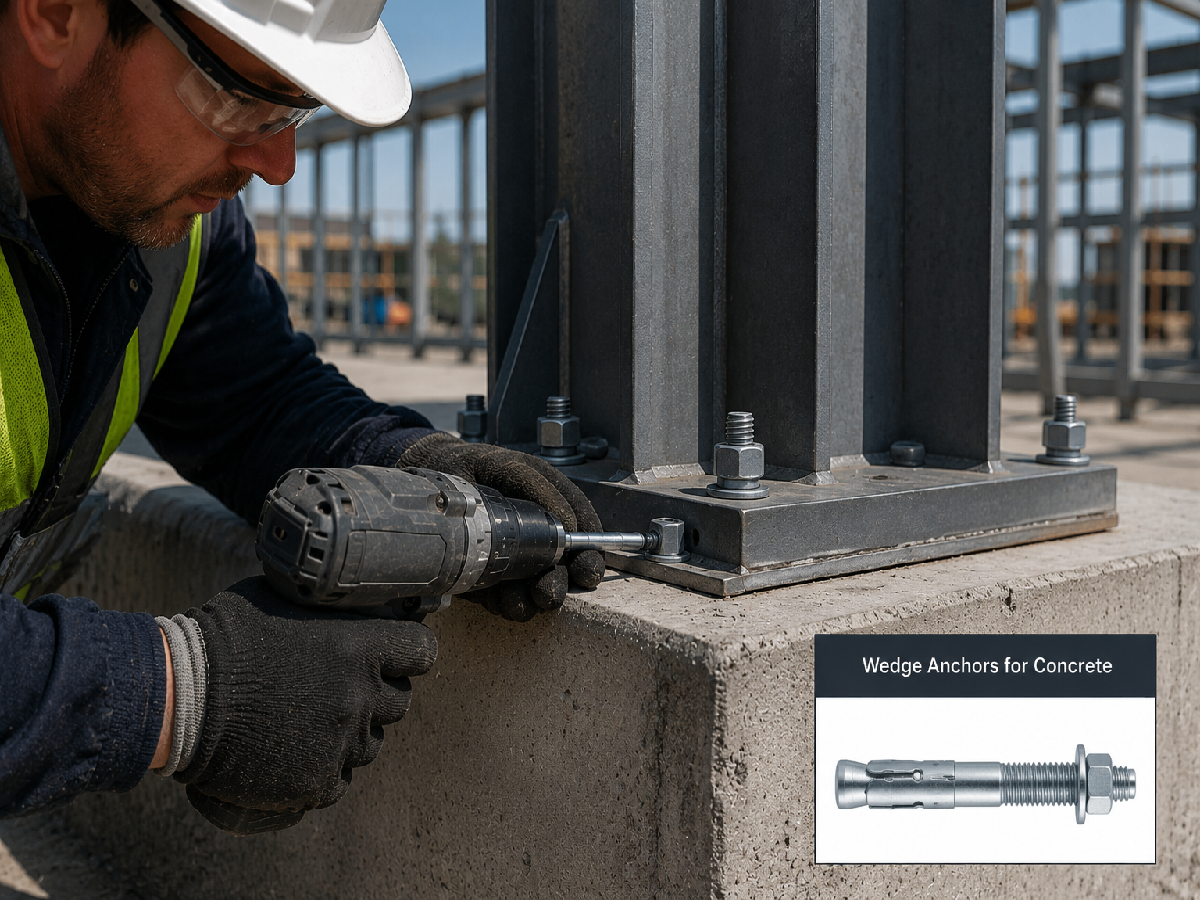
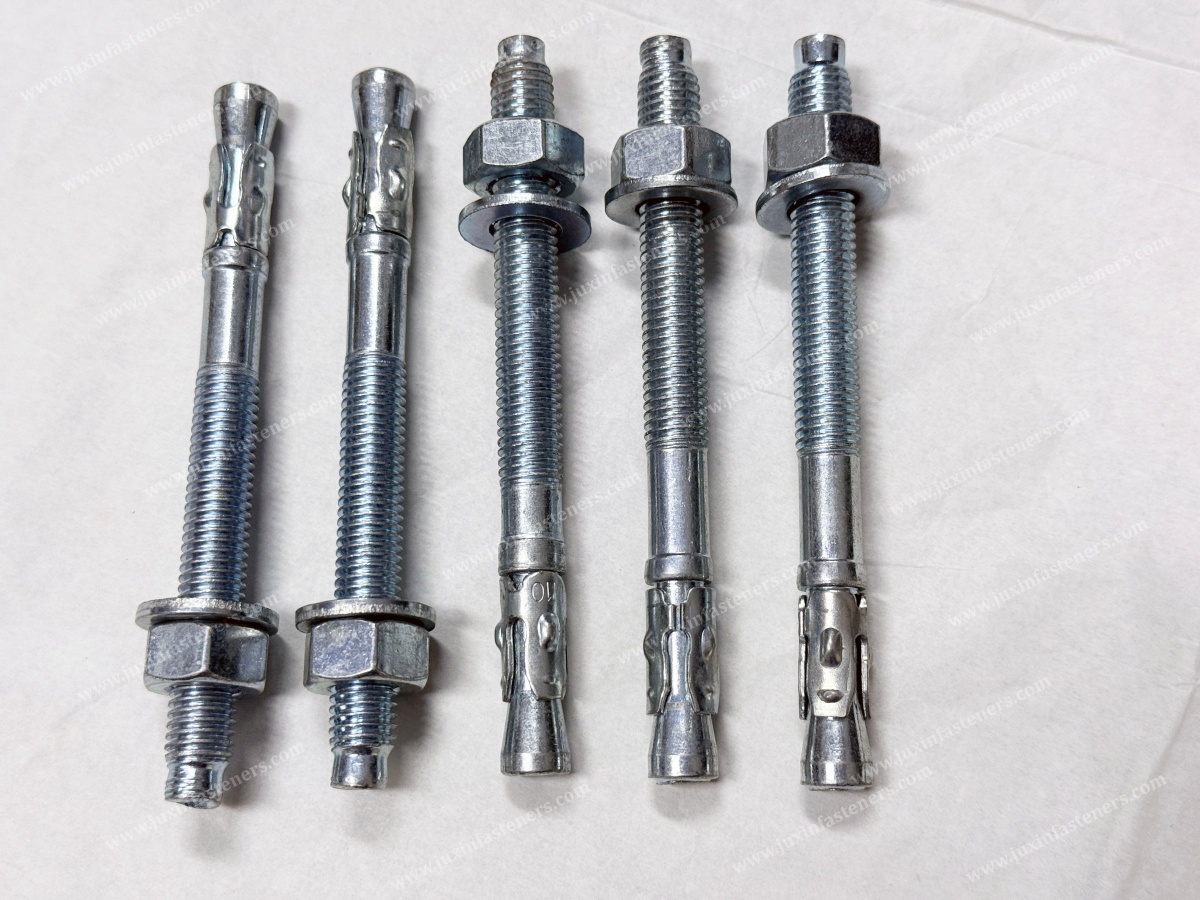
Wedge anchors
Sleeve anchors
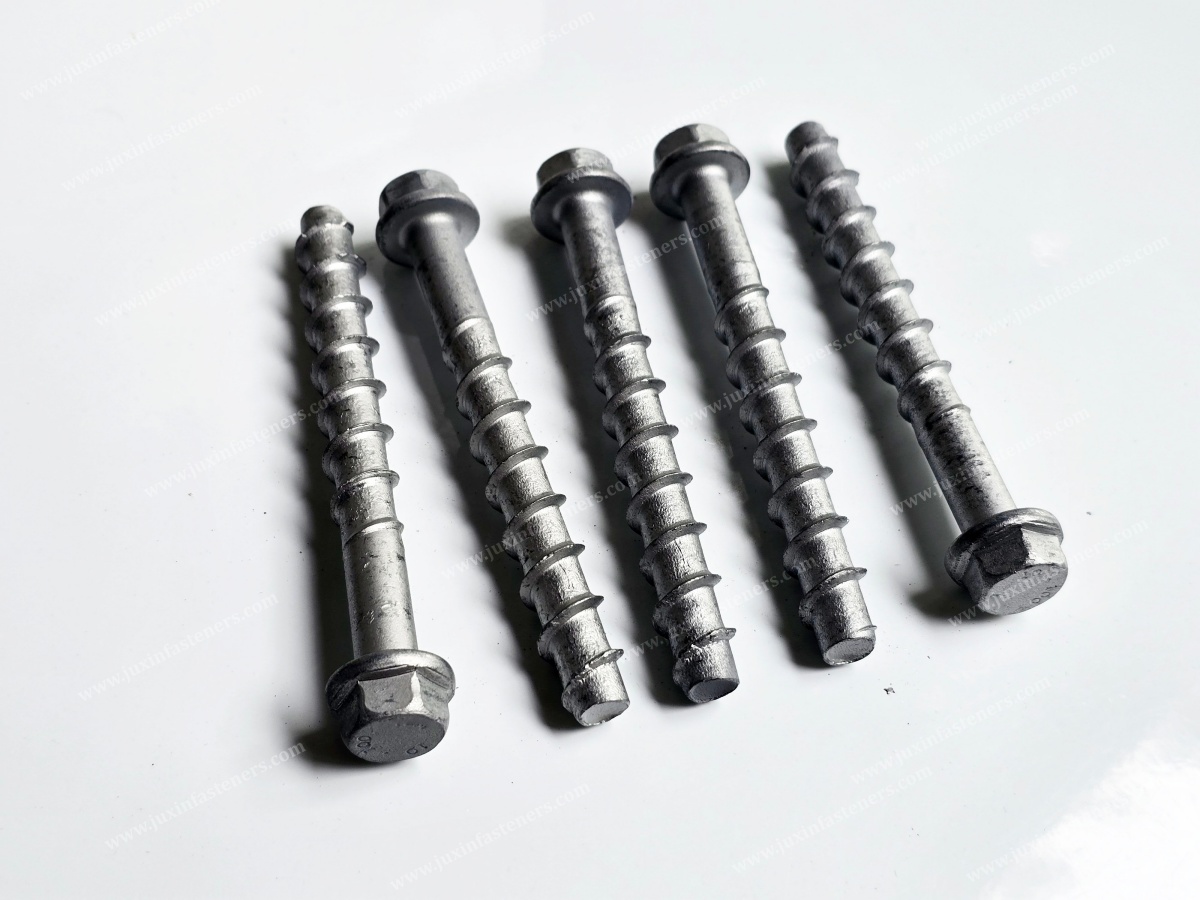
Concrete screw anchors
Masonry anchors
Wall plugs
Hollow-wall anchors
Cavity wall fixings
Toggle bolts
Metal cavity anchors
Drywall anchors
Self-drilling drywall anchors
Threaded-rod support anchors
Building installation fasteners
These products are not automatically interchangeable.
A concrete wedge anchor and a metal cavity wall anchor may both be described commercially as expansion fasteners,
but they rely on different engagement mechanisms and different substrates.
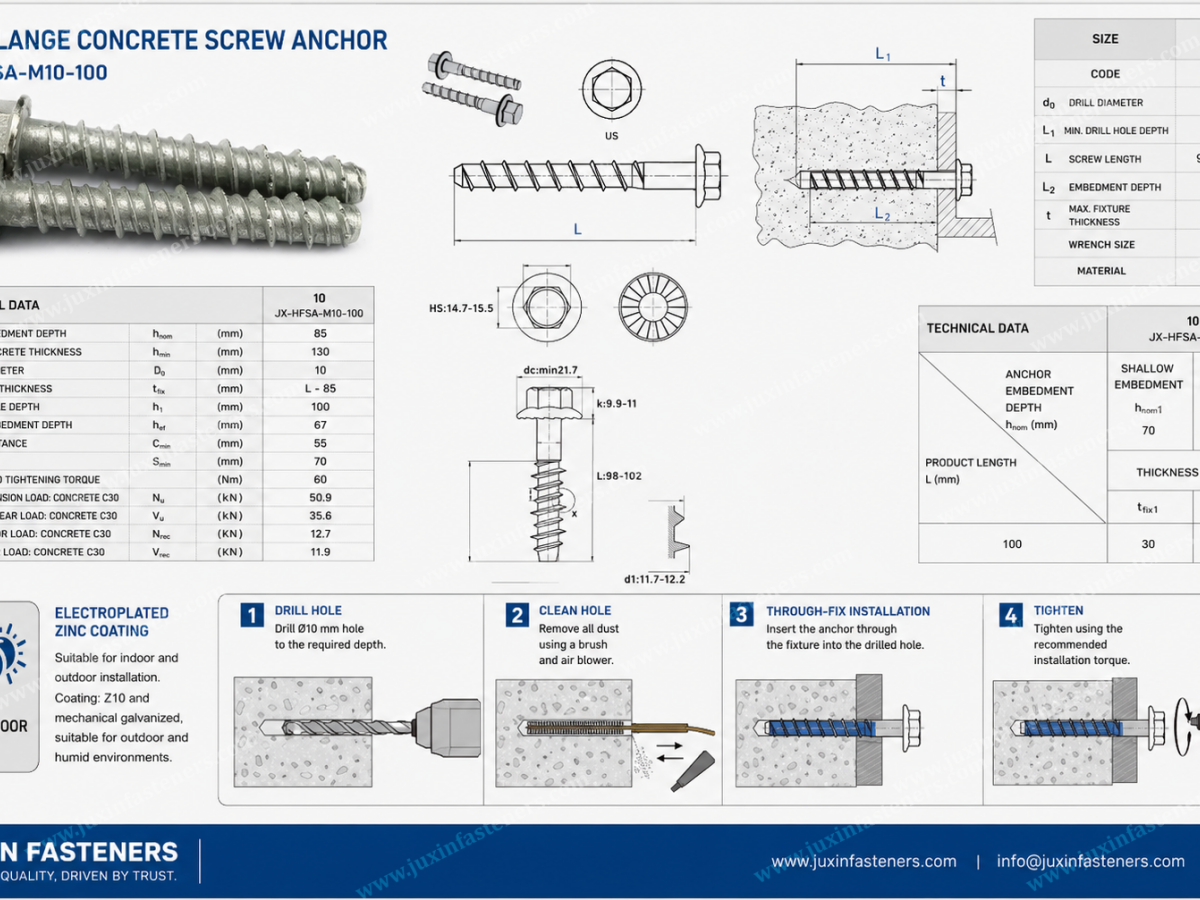
Engineering Principle: The Substrate Determines the Anchor Family
Before specifying a fastener, determine whether the connection is made into:
Structural concrete
Solid brick
Solid concrete masonry
Hollow brick
Hollow concrete masonry
Autoclaved aerated concrete
Gypsum plasterboard
Gypsum fiberboard
Timber or steel framing
A layered wall assembly
The finished wall surface alone may not reveal the load-bearing structure.
Why Interior Renovation Requires Different Fastening Solutions
Renovation projects introduce several conditions that differ from new construction.
Existing Substrates
The condition, strength and thickness of the underlying material may be uncertain.
Concealed Services
Electrical cables, water pipes, HVAC systems and reinforcement may restrict drilling locations.
Limited Installation Access
Finished ceilings, cabinets, ducts and partitions can restrict tool access.
Mixed Wall Construction
A single building may contain concrete cores, masonry walls and lightweight partitions.
Operational Buildings
Work may occur while adjacent offices, hotel rooms, hospital departments or industrial areas remain occupied.
Repeated Installation Points
Commercial fit-out and MEP projects may require large numbers of brackets, supports and fixtures.
Information Gain: A Universal Fastener Schedule Can Create Hidden Risks
Standardizing fasteners reduces purchasing complexity, but standardizing one anchor type across incompatible substrates can create installation failures.
A better approach is to standardize approved fixing systems by substrate, application and loading category.
Common Interior Installation Applications
Fastening systems may be required for:
HVAC equipment
Ventilation ducts
Electrical conduits
Cable trays
Pipe supports
Plumbing fixtures
Cabinets
Shelving systems
Handrails
Equipment brackets
Lighting systems
Wall-mounted equipment
Interior partitions
Commercial fixtures
Machinery accessories
Building-service components
The suitability of any particular anchor depends on the product, substrate and engineering requirements.
Fastener Selection for Different Wall Materials
Concrete Walls and Structural Concrete
Concrete provides a suitable base material for many qualified mechanical and screw-type anchors.
Potential applications include:
HVAC support brackets
Equipment frames
Electrical equipment
Pipe supports
Cable trays
Steel brackets
Selected wall-mounted machinery
Relevant engineering parameters include:
Concrete strength
Cracked or uncracked condition
Member thickness
Anchor diameter
Effective embedment
Edge distance
Anchor spacing
Tensile and shear forces
Installation procedure
Solid Brick and Solid Masonry
Suitable masonry fixings may be used where the product is intended for the specific masonry material.
Brick strength, mortar condition, fixing position and loading requirements must be considered.
A product qualified for concrete is not automatically suitable for solid brick.
Hollow Brick and Perforated Masonry
Hollow masonry contains voids and relatively thin webs.
Conventional expansion pressure can damage these webs or fail to provide sufficient engagement.
Depending on the project and product, suitable alternatives may include specialized masonry anchors, plugs or other systems specifically evaluated for hollow masonry.
Gypsum Board and Hollow-Wall Systems
Gypsum board partitions typically require specialized fixings.
Possible systems include:
Toggle bolts
Metal cavity anchors
Hollow-wall expansion anchors
Self-drilling drywall anchors
Fixings connected directly to structural studs or backing
For heavy cabinets, equipment or safety-related fixtures, the load may need to be transferred to structural framing or purpose-designed backing rather than relying on the gypsum board alone.
Aerated Concrete
Autoclaved aerated concrete has different mechanical characteristics from normal-weight concrete.
Use fasteners specifically suitable for this material.
Substrate Selection Matrix
| Substrate | Potential fixing family | Primary engineering concern |
|---|---|---|
| Structural concrete | Qualified expansion or screw anchor | Concrete strength, embedment and edge distance |
| Solid brick | Suitable masonry fixing | Brick strength and fixing position |
| Hollow brick | Specialized hollow-masonry fixing | Thin webs and internal voids |
| Gypsum plasterboard | Qualified cavity or drywall fixing | Panel thickness and load distribution |
| Framed partition | Stud or backing connection | Structural load path |
| Aerated concrete | Suitable aerated-concrete fixing | Low-density substrate |
| Existing deteriorated wall | Engineered repair or alternative support | Uncertain substrate resistance |
Information Gain: Wall Finish Thickness Is Not Anchor Embedment
Renovation walls may contain plaster, insulation, adhesive layers, tile or decorative panels.
These layers should not automatically be counted as effective structural embedment.
The anchor must engage the actual load-bearing substrate according to the product's specified installation geometry.
Heavy-Duty Wall Anchors for Interior Applications
Interior installations may involve relatively heavy fixtures, including:
Wall cabinets
Commercial storage systems
Large shelving assemblies
Electrical enclosures
Mechanical equipment
Sanitary fixtures
Wall-mounted machinery
Industrial utility brackets
The term "heavy-duty" is not a substitute for engineering verification.
Load Direction
A wall-mounted fixture may apply downward shear, outward tension or a combination of both.
Eccentric Loading
A deep cabinet or projecting shelf can create an overturning moment.
Fixture Geometry
The spacing and arrangement of fixing points influence the force distribution.
Substrate Resistance
The wall material may govern the connection before the steel fastener reaches its mechanical limit.
Service Conditions
Repeated opening, vibration, accidental impact or changing storage loads may affect the required design.
Information Gain: A Cabinet's Weight Is Not the Only Design Load
A loaded cabinet projects away from the wall.
The center of gravity may create a moment that increases tension in upper fixing points.
Selecting anchors solely from the cabinet's empty weight can therefore underestimate the connection demands.
Toggle Bolts and Hollow-Wall Anchors
Toggle bolts and other cavity fixings may be suitable for selected hollow-wall installations.
Toggle Bolt Mechanism
A toggle element opens behind a hollow panel and develops bearing against the rear surface.
Metal Cavity Anchor Mechanism
Some cavity anchors expand behind the panel to form a supporting structure.
Self-Drilling Drywall Anchors
Certain drywall anchors form engagement directly within the board.
Their suitability depends on the exact product, board thickness and loading.
Panel Thickness
The wallboard thickness and number of layers can affect fixing performance.
Cavity Depth
The available cavity must accommodate the anchor's setting mechanism.
Backing and Studs
Heavy fixtures may require direct attachment to studs or engineered backing.
Important Limitation
A toggle anchor with a published load value for a particular board configuration should not be assumed to provide the same resistance in another partition assembly.
Interior Partition Systems and Structural Load Paths
Interior partitions may consist of:
Gypsum board
Metal studs
Timber studs
Insulation
Reinforcement or backing
Decorative finishes
These components perform different functions.
Lightweight Fixtures
Some fixtures may be attached using suitable panel fixings.
Heavy Fixtures
Equipment or cabinets may require structural backing.
Safety-Critical Fixtures
Handrails, accessibility supports, barriers and other safety-related installations may require specifically designed connections.
Fire-Rated Assemblies
Drilling or modifying a fire-rated wall or ceiling assembly may affect its tested configuration.
Penetrations, supports and restoration details must follow the applicable assembly and project requirements.
Acoustic Partitions
Fixings may also affect acoustic separation where they create rigid bridges or compromise the wall assembly.
Engineering Information Gain: Anchor Selection Cannot Be Separated from Partition Design
A strong anchor does not make an inadequately reinforced partition suitable for a heavy fixture.
The engineer should verify the load path from the fixture through the fixing and partition framing to the building structure.
Expansion Bolts for HVAC Installation
HVAC systems require reliable fastening for equipment, ducts, supports and service accessories.
Potential applications include:
Air-handling equipment supports
Ventilation duct brackets
Pipe hangers
Equipment frames
Condenser support brackets
Mechanical service assemblies
Vibration-isolation support structures
Static Equipment Weight
The support system must carry the specified permanent loads.
Operational Vibration
Fans, pumps, compressors and other rotating equipment may generate vibration.
Dynamic Loading
Some equipment connections require assessment beyond ordinary static loading.
Thermal Movement
Ductwork and piping may expand or contract.
Maintenance Loads
Access and service activities may affect the support design.
Information Gain: Vibration Isolation and Anchor Selection Are Separate Design Tasks
A vibration isolator may reduce the transmission of operational vibration, but the supporting anchor connection still requires engineering verification.
The anchor must be suitable for the forces transferred through the isolation and support system.
HVAC Installation Matrix
| Installation | Typical fastening concern | Engineering consideration |
|---|---|---|
| Duct bracket | Distributed service loads | Support spacing and substrate |
| Pipe hanger | Tension and movement | Anchor qualification and support design |
| Equipment frame | Combined loading | Base plate and anchor group |
| Wall-mounted unit | Eccentric load | Wall structure and bracket geometry |
| Vibration-isolated equipment | Dynamic behavior | Complete equipment-support system |
Electrical Installation and Cable Tray Fastening
Electrical systems require many repeated fixing points throughout commercial and industrial buildings.
Typical applications include:
Cable tray supports
Electrical conduit brackets
Junction box mounting
Equipment cabinets
Cable management systems
Electrical service frames
Utility brackets
Cable Tray Supports
Support spacing, tray loading, installation orientation and the substrate must be considered.
Electrical Cabinets
Wall-mounted enclosures may create eccentric loads and require appropriate wall reinforcement.
Conduit Installation
Repeated small fixing points can make installation efficiency important.
Overhead Electrical Supports
Overhead installations may require product-specific qualification, design and inspection.
Information Gain: A Small Fastener Can Control a Large Installation Schedule
Electrical contractors may install hundreds of repeated supports.
Incorrect anchor selection or inconsistent drill sizes can cause delays across the entire project.
Standardizing approved fastener schedules and installation tools can reduce this risk.
Plumbing and Pipe Support Installation
Plumbing systems require support for pipes, valves and related components.
Typical applications include:
Pipe brackets
Plumbing supports
Mechanical service frames
Sanitary equipment supports
Utility pipe installations
Water-Filled Pipe Weight
Support design should consider the applicable operating condition, not merely the weight of an empty pipe.
Thermal Expansion
Some piping systems require sliding supports or expansion provisions.
Vibration and Pressure Effects
Equipment operation and transient forces may influence support requirements.
Corrosion and Moisture
Wet rooms and service areas may require suitable corrosion-resistant materials.
Fire Protection Systems
Fire sprinkler and other life-safety supports may be governed by specific codes and listed or approved fastening arrangements.
A general-purpose expansion bolt should not be substituted without verifying the applicable system requirements.
Commercial Interior Fit-Out Applications
Commercial fit-out projects include:
Office renovations
Hotels
Retail stores
Restaurants
Healthcare facilities
Educational buildings
Industrial offices
Commercial service spaces
Typical installation requirements include:
Furniture systems
Wall cabinets
Shelving
Signage
Interior partitions
Equipment brackets
Handrails
Lighting
Building services
Offices
Modular partitions and furniture systems may require different fixing strategies for solid walls and lightweight partitions.
Hotels
Renovation schedules may be constrained by room availability and occupancy.
Retail Facilities
Fixture changes and shelving layouts may create repeated installation and removal requirements.
Healthcare Facilities
Equipment installation may require additional attention to hygiene, access, safety and the integrity of existing building assemblies.
Industrial Facilities
Interior equipment and service supports may be exposed to vibration, cleaning chemicals or frequent maintenance.
Information Gain: Fastener Choice Influences Renovation Downtime
The purchase cost of an anchor may be small compared with the cost of reopening a finished wall, repairing a failed fixing or delaying a commercial installation.
The procurement decision should consider installation reliability and total installed cost.
Anchor Selection by Load and Fixture Geometry
A practical selection process should evaluate:
Substrate
Identify the actual load-bearing material.
Fixture Weight
Determine the relevant installed and operating loads.
Load Direction
Identify tension, shear and combined loading.
Fixture Projection
Check whether the fixture creates eccentric forces.
Fixing Pattern
Review the number and arrangement of anchors.
Wall Thickness
Confirm the available structural thickness or cavity geometry.
Installation Access
Ensure sufficient space for drilling, setting and inspection.
Environment
Consider moisture, corrosion, temperature and cleaning exposure.
Qualification
Determine whether product-specific technical evaluation or code approval is required.
Engineering Information Gain: More Fixing Points Do Not Automatically Mean Greater Capacity
Closely spaced concrete anchors may interact through the surrounding concrete.
Multiple hollow-wall fixings may load the same limited panel region.
The actual load distribution and substrate behavior must be evaluated.
Expansion Bolts vs. Concrete Screws vs. Wall Anchors
| Fastener type | General mechanism | Typical selection issue |
|---|---|---|
| Mechanical expansion bolt | Wedge or sleeve expansion | Concrete suitability and setting |
| Concrete screw | Direct thread engagement | Pilot hole and substrate |
| Masonry plug | Expansion or product-specific engagement | Masonry type and compatible screw |
| Toggle bolt | Rear-panel bearing | Cavity depth and panel strength |
| Metal cavity anchor | Expansion behind panel | Board thickness and setting |
| Self-drilling drywall anchor | Engagement in board | Board construction and load |
| Stud-mounted fixing | Mechanical connection to framing | Stud material and connection design |
Can One Anchor Be Used in Multiple Substrates?
Some products are specifically designed for multiple building materials.
However, suitability and load resistance remain dependent on the exact substrate and product configuration.
A multi-material fixing should not be treated as having identical performance in concrete, hollow brick and gypsum board.
Self-Drilling and Fast-Installation Technologies
Installation speed is an important consideration for commercial fit-out projects.
Certain fastening systems may reduce installation steps.
Examples include:
Self-drilling drywall anchors
Direct-thread concrete screw anchors
Specialized masonry fixings
Preassembled fastener systems
Application-specific setting tools
Self-Drilling vs. Self-Tapping vs. Self-Cutting
These terms describe different fastening or cutting functions.
A self-drilling drywall anchor should not be confused with a concrete screw or a self-drilling screw for sheet metal.
Installation Productivity
The appropriate technology depends on:
Substrate
Fixture
Required load
Tool availability
Access
Inspection
Installation quantity
Information Gain: Faster Installation Is Only Valuable When Rework Remains Controlled
Reducing drilling or setting steps can improve productivity, but an unsuitable fastener may increase rework and replacement costs.
Installation efficiency should be evaluated together with technical suitability.
Installation Procedure and Quality Control
The exact manufacturer's instructions govern the installation of each anchor.
A general process includes the following.
Identify the Substrate
Confirm whether the wall is concrete, masonry, gypsum board or a framed assembly.
Check the Fixing Location
Identify concealed services, reinforcement and structural restrictions.
Select the Approved Anchor
Verify the product and required configuration.
Check Fixture Thickness
Confirm that the selected length and geometry accommodate the fixture.
Prepare the Hole or Opening
Follow the specified drilling or installation procedure.
Install the Anchor
Use the required setting method and compatible components.
Apply the Required Setting Procedure
Where specified, use the correct torque or setting tool.
Inspect the Connection
Confirm the required installation and acceptance conditions.
Important Technical Distinction
Torque-controlled concrete expansion anchors and cavity wall anchors do not necessarily use the same setting procedure.
Generic bolt torque tables must not be used to determine anchor setting torque.
Common Installation Failures
| Problem | Possible cause | Recommended review |
|---|---|---|
| Anchor pulls from wall | Unsuitable substrate or load | Reassess fixing system |
| Gypsum board breaks | Excessive local panel loading | Review backing and load distribution |
| Concrete anchor rotates | Incorrect hole or setting | Check product instructions |
| Brick cracks | Unsuitable expansion or fixing location | Review masonry-specific system |
| Cabinet tilts | Eccentric load or inadequate connection | Review fixture and fixing pattern |
| Anchor cannot open | Insufficient cavity depth | Verify cavity geometry |
| Fastener corrodes | Unsuitable material or coating | Review exposure |
| Installation varies | Inconsistent tools or procedure | Standardize installation |
Engineering Information Gain: A Failed Anchor Hole Is Not Automatically Reusable
An enlarged, cracked or damaged fixing location may no longer meet the original product's installation requirements.
Relocation or repair must follow the appropriate engineering and product-specific procedure.
Materials and Surface Finishes for Interior Fasteners
Material selection should reflect both mechanical requirements and the service environment.
Carbon Steel
Carbon steel is commonly used for industrial fasteners and mechanical anchoring components.
Zinc-Plated Steel
Suitable zinc-plated components may be used in certain dry indoor environments.
Stainless Steel
Appropriate stainless steel components may be considered where corrosion resistance is important.
304 Stainless Steel
Suitable for some indoor and moderately exposed applications, subject to the actual environment and product requirements.
316 Stainless Steel
May provide improved resistance to some corrosive environments, but is not immune to all forms of corrosion.
Plastic and Composite Fixing Components
Some wall plugs and specialty anchors use polymeric components.
Their temperature, aging, fire and application limitations must be considered.
Material Selection Matrix
| Environment | Preliminary consideration | Verification needed |
|---|---|---|
| Dry office interior | Qualified coated steel or suitable wall fixing | Substrate and load |
| Bathroom or wet room | Corrosion-resistant components | Moisture and chemical exposure |
| Commercial kitchen | Suitable corrosion-resistant fasteners | Cleaning and humidity |
| Healthcare facility | Application-specific material | Cleaning, hygiene and maintenance |
| Industrial interior | Suitable material and coating | Vibration and chemical exposure |
| Fire-rated assembly | Approved fastening arrangement | Assembly and project requirements |
Applicable Material and Coating Standards
Depending on the product, relevant references may include:
ISO 898-1 for applicable carbon and alloy steel fastener mechanical properties
ISO 3506 for applicable stainless steel fastener mechanical properties
ISO 4042 for electroplated fastener coatings
ISO 9227 and ASTM B117 for laboratory salt spray testing
These standards do not independently establish wall-anchor load resistance.
Salt Spray Testing Limitation
Laboratory salt spray duration should not be interpreted as a direct prediction of installed service life.
International Technical Standards and Product Qualification
Different fixing systems are subject to different engineering requirements.
EN 1992-4
EN 1992-4 provides European design provisions for applicable fastenings in concrete.
It should not be applied indiscriminately to gypsum board or other non-concrete substrates.
ACI 318 Chapter 17
ACI 318 Chapter 17 addresses anchoring to concrete in applicable North American projects.
ACI 355.2
ACI 355.2 addresses qualification of post-installed mechanical anchors for concrete.
European Technical Assessments
An ETA may provide product-specific assessed characteristics for relevant construction fastening systems.
ICC-ES Evaluation Reports
An ICC-ES report may establish evaluated product performance and installation conditions within its stated scope.
Hollow-Wall and Partition Fixings
These products require evaluation appropriate to their actual wall assembly and application.
Concrete anchor qualifications do not automatically apply to hollow-wall fixings.
Fire Protection and Suspended Services
Fire-rated assemblies, sprinkler supports, overhead installations and other safety-related systems may have additional code, approval and inspection requirements.
Critical Qualification Boundary
A competitor's technical approval, ETA or ICC-ES report cannot be used as proof of performance for a different supplier's product.
The actual supplied fastener must meet the required specification and project conditions.
Metric and Inch-Based Fastener Specifications
Interior construction fasteners may use metric or inch-based dimensions.
The thread designation must be confirmed for the actual assembly.
Metric, UNC, UNF, BSW and BSF threads are not directly interchangeable.
Converted dimensions are reference values only.
Installation Efficiency for Production and Project Managers
Commercial installation often involves many repeated fastening operations.
Practical efficiency improvements may include:
Standardized approved anchor schedules
Clear part-number identification
Substrate-specific fastener selection
Consistent drill sizes
Appropriate installation tools
Defined inspection requirements
Installation-area packaging
Controlled replacement procedures
Documented product changes
Information Gain: Organize Fasteners by Installation Task, Not Only by Diameter
A project may use several fasteners with similar nominal dimensions but different substrates or setting methods.
Packaging by installation zone, fixture type or approved fixing schedule can reduce accidental substitutions.
Procurement Considerations for Interior Fasteners
Procurement and supplier-development teams should define both technical and commercial requirements.
Product Specification
Fastener type
Substrate compatibility
Diameter
Length
Thread specification
Material
Surface finish
Fixture thickness
Installation method
Quality Requirements
Dimensional tolerances
Thread inspection
Material verification
Coating requirements
Product identification
Batch consistency
Inspection documentation
Packaging Requirements
Bulk packaging
Carton packaging
Part-number labeling
Installation-zone packaging
Lot identification
Customer-specific packaging
Supply Requirements
Sample quantity
MOQ
Initial order quantity
Annual forecast
Required lead time
Delivery schedule
Repeat-order requirements
Supplier Qualification Matrix
| Requirement | Procurement purpose |
|---|---|
| Technical drawing | Verify product geometry |
| Substrate suitability | Prevent incorrect application |
| Material specification | Confirm component requirements |
| Coating specification | Address corrosion exposure |
| Installation instructions | Support field consistency |
| Required evaluation documents | Support engineering approval |
| Dimensional inspection | Support batch consistency |
| Packaging identification | Prevent part mixing |
| Change control | Protect approved configuration |
| MOQ and lead time | Support project planning |
Information Gain: Procurement Should Separate Standard Hardware from Safety-Critical Fixings
Standard nuts, washers and general industrial hardware may be sourced according to their applicable specifications.
Anchors used in structural, overhead or life-safety applications may require additional product-specific qualification and engineering approval.
The same purchasing checklist should not be applied without distinction to both categories.
OEM Customization and Drawing-Based Fastening Components
Industrial and construction OEM inquiries may involve:
Special fastener dimensions
Material requirements
Surface finishes
Thread configurations
Nut and washer assemblies
Installation hardware
Packaging requirements
Drawing-based components
The technical feasibility of each request must be reviewed.
Important Engineering Limitation
Changing the geometry, material, coating or setting mechanism of a qualified anchor may affect its evaluated performance.
A customized product should not be represented as retaining an existing technical approval without appropriate verification.
Why Source Industrial Fasteners from Juxin Fasteners?
Juxin Fasteners has more than 20 years of experience in international industrial fastener supply.
Our fastening portfolio includes:
Expansion bolts
Concrete anchoring hardware
Wall fastening components
Bolts and screws
Nuts and washers
Rivet nuts
Welding nuts
Self-clinching fasteners
Custom threaded components
Drawing-based OEM fasteners
We welcome technical and commercial inquiries involving:
Product drawings
Dimensions and tolerances
Material selection
Surface treatment
Installation requirements
Packaging
Inspection specifications
Bulk procurement
Delivery planning
Specific product availability, customization feasibility, MOQ, lead times and technical documentation must be confirmed for each inquiry.
For safety-critical applications, the required product qualification and engineering approval remain essential.
Frequently Asked Questions About Interior Renovation Anchors
What type of anchor should be used for interior walls?
The correct anchor depends on the actual wall construction, loading and fixture requirements.
Can expansion bolts be used in concrete walls?
Yes, when the specific expansion anchor is suitable for the concrete and design conditions.
Can concrete expansion bolts be used in drywall?
Conventional concrete expansion anchors should not be treated as drywall fixings. Appropriate cavity, panel or structural-frame connections are generally required.
Are expansion bolts suitable for cabinets?
They may be suitable for cabinets mounted to qualified solid substrates. Lightweight partitions may require backing or specialized fixing systems.
What are toggle bolts used for?
Toggle bolts are used for selected hollow-wall applications where the toggle element can develop bearing behind the panel.
Can toggle bolts support heavy cabinets?
Suitability depends on the product, panel assembly, load direction and fixture geometry. Structural backing may be necessary.
What anchors are suitable for hollow brick?
Use products specifically suitable for the masonry type and loading conditions.
Can expansion bolts be used for HVAC installation?
Suitable qualified anchors may be used for HVAC brackets and equipment supports where the complete installation is engineered appropriately.
Do pipe support anchors need vibration resistance?
The support system should be evaluated for the actual operating conditions, including vibration where relevant.
Can the same anchor be used for concrete and gypsum board?
Some multi-material fixing systems are designed for different substrates, but their performance and limitations vary by material.
Are self-drilling drywall anchors suitable for concrete?
They should not be assumed suitable for concrete unless the exact product is specifically intended for that substrate.
What is effective embedment?
Effective embedment is a product-specific engineering parameter used for certain anchoring systems, particularly concrete anchors.
Can an existing anchor hole be reused?
Only where the product instructions and engineering conditions permit it.
What fasteners are suitable for commercial fit-out projects?
The selection depends on the fixture, substrate, loading and project requirements.
Can Juxin Fasteners review OEM fastening requirements?
Yes. Drawing-based fastening inquiries can be reviewed for technical and commercial feasibility.
Interior Renovation Fastener RFQ Checklist
For an efficient quotation and technical review, provide the following information where available.
Application
Project type
Fixture or equipment description
Installation location
Required quantity
Indoor environmental conditions
Substrate
Concrete
Solid masonry
Hollow masonry
Gypsum board
Framed partition
Other specified material
Fastener Specification
Anchor type
Product drawing
Diameter
Length
Thread designation
Material
Surface finish
Compatible nut or washer
Installation method
Engineering Requirements
Fixture weight
Tensile or shear loading
Eccentric loading
Vibration
Wall thickness
Fixing spacing
Edge distance where applicable
Required technical qualification
Commercial Requirements
Sample quantity
Initial order quantity
Annual forecast
MOQ expectations
Packaging
Delivery schedule
Delivery destination
Request Interior Renovation and Building Installation Fasteners
Juxin Fasteners welcomes inquiries from commercial construction contractors, building-service suppliers, industrial OEMs,
renovation equipment manufacturers, mechanical engineers, manufacturing engineers, production managers,
supplier-development teams and international procurement professionals.
Whether your project requires expansion bolts, concrete anchoring hardware, wall fastening components or drawing-specific industrial fasteners,
reliable selection begins with the actual substrate, fixture geometry, loading conditions and installation requirements.
Send us your drawings, product specifications, material requirements, surface treatment details, quantities and delivery requirements for technical and commercial review.
For structural, overhead or other safety-critical fixing applications, include the required engineering and product qualification documentation.
Company: Juxin Fasteners
Website: https://www.juxinfasteners.com/
Email: info@juxinfasteners.com
Reliable Interior Building Installation Begins With Correct Substrate Identification, Suitable Fastener Selection, Controlled Installation and Consistent Industrial Supply.
 MORE NEWS


Oct. 13, 2026
Contact Us
Tel.:
+86 020 8621 0320
+86 020 3121 6067
E-mail:
Technical Support:
Navigation
SEND INQUIREY