
Call Us
+86 136 6007 9809
Call Us
+86 136 6007 9809

Sep. 13, 2023
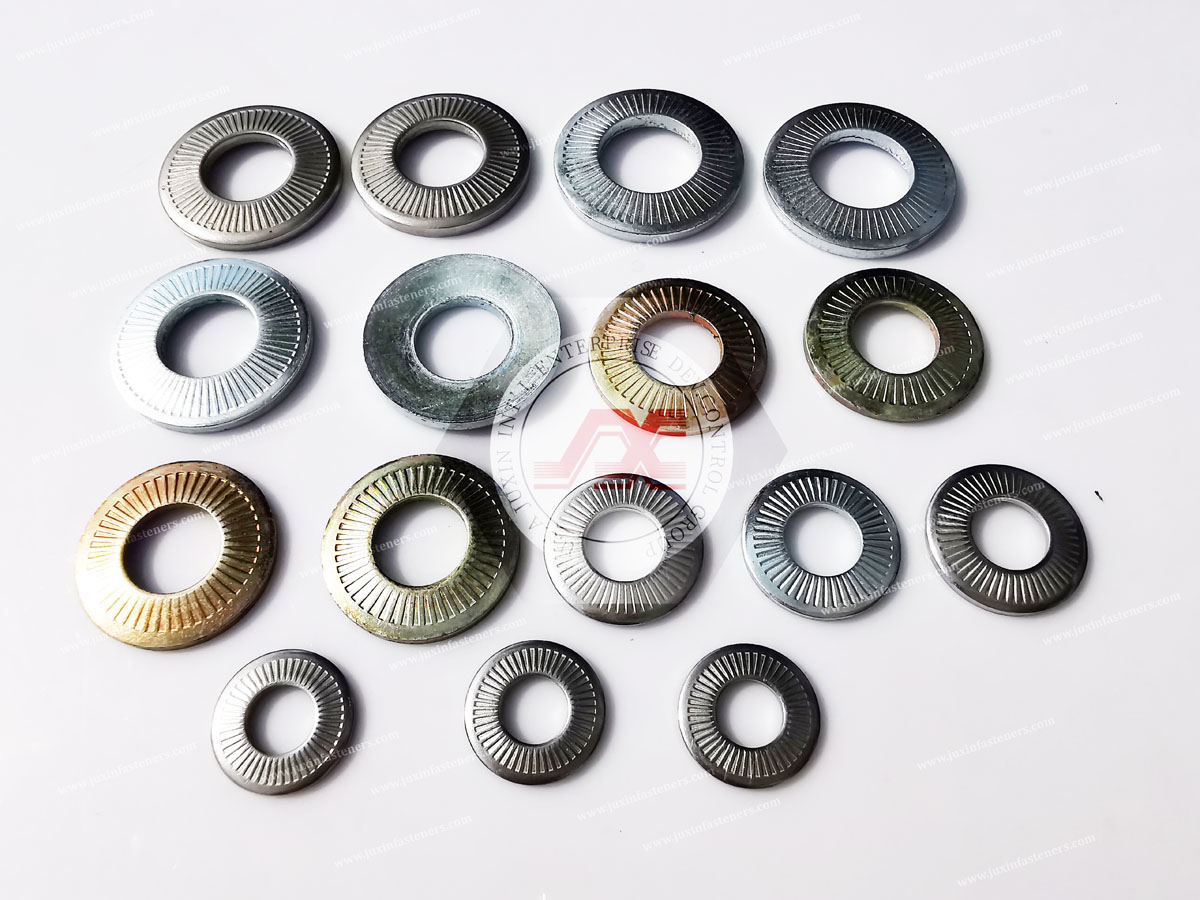
Internal tooth lock washers are thin toothed washers designed with multiple teeth projecting inward from the inner circumference.
They are also commonly called:
internal tooth lock washers;
internal star washers;
internal toothed washers;
internal serrated lock washers;
star lock washers.
Unlike a plain flat washer, an internal tooth washer introduces multiple localized tooth contact points at the bearing interface.
Unlike a bearing tab lock washer, it does not use a shaft groove and bendable locking tab.
And unlike a wedge-locking washer system, it does not use paired wedge geometry.
The correct engineering question is therefore not simply:
“Does an internal tooth lock washer stop bolts from loosening?”
It is:
“Is an internal-tooth interface appropriate for this fastener, bearing surface, coating, loading condition and required locking function?”
A practical selection path is:
Fastener → Bearing-Face Diameter → Mating Surface → Tooth Location → Locking Requirement → Surface / Electrical Requirement → Standard → Material & Finish → Validation → RFQ
JUXIN FASTENERS supports OEM sourcing of internal tooth lock washers, external tooth lock washers, plain washers, spring washers,
locking fasteners, bolts, screws, nuts and custom fastening components for electrical equipment, industrial machinery, automotive equipment, telecommunications, HVAC, automation, power systems and other engineered assemblies.
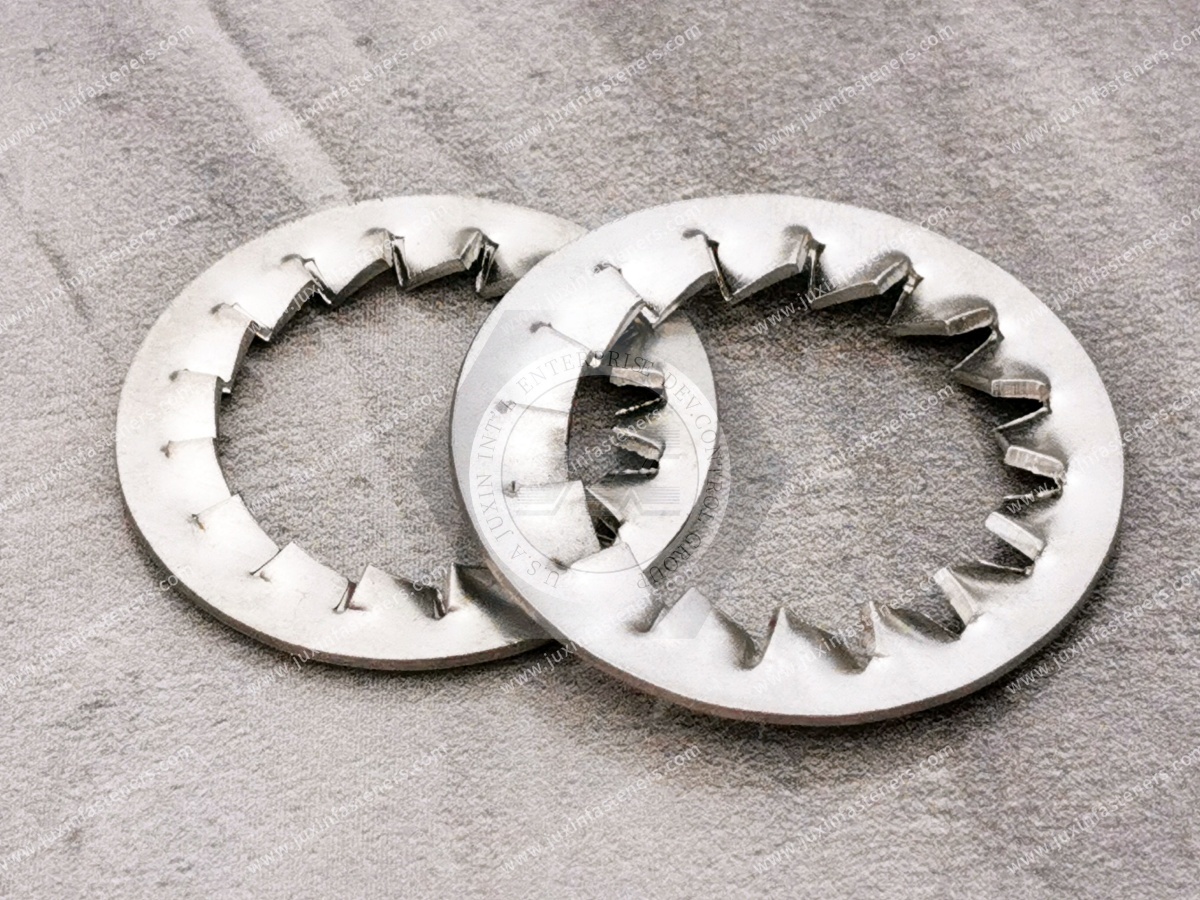
An internal tooth lock washer is generally a one-piece formed metal washer with multiple teeth extending inward around its internal circumference.
The teeth are integral features of the washer.
A conventional internal tooth lock washer does not normally consist of:
a separate washer body;
separate inner teeth;
a clamping pin.
That description belongs to a different type of mechanical component and should not be used for a conventional internal tooth washer.
This distinction is important for both engineering and sourcing.
When the threaded fastener is tightened, the formed teeth are compressed between adjacent bearing surfaces.
Depending on:
tooth geometry;
washer material;
washer hardness;
fastener bearing face;
mating material;
coating;
clamp load,
the teeth can create localized contact and resistance to relative rotation.
The intended effect comes from the interaction between the formed teeth and adjacent surfaces.
There is no separate clamping pin.
The defining characteristic of an internal tooth washer is tooth location.
The teeth extend inward toward the screw or bolt shank.
This keeps the toothed features closer to the fastener axis and can keep the external perimeter relatively clean.
That can be useful where:
external space is limited;
the washer should remain largely beneath the fastener head;
exposed external teeth are undesirable;
appearance or snagging around the outside edge matters.
But the internal geometry also creates an important selection requirement:
The fastener bearing face must be large enough to interact appropriately with the toothed washer.
These two products use similar toothed concepts but place the teeth in different locations.
Teeth point inward.
Potential advantages can include:
compact external profile;
teeth can remain more concealed beneath the fastener head;
reduced exposed tooth perimeter;
suitability for selected smaller hardware interfaces.
Teeth project outward around the washer perimeter.
The larger tooth radius can create a different contact geometry with the mating surface.
Selection depends on:
fastener head diameter;
available radial space;
mating surface;
desired tooth engagement;
appearance;
assembly requirement.
Therefore:
Internal Tooth ≠ External Tooth
They should not automatically be substituted for each other.
Some toothed washers incorporate teeth at both the internal and external circumferences.
This creates another distinct geometry.
The correct choice depends on the required contact pattern and dimensional constraints.
Procurement should specify the exact tooth configuration rather than ordering simply:
“Star washer.”
Commercial terminology can vary.
Terms such as:
toothed washer;
star washer;
serrated lock washer
are sometimes used broadly.
However, different standards and suppliers may distinguish between specific tooth or serration geometries.
For controlled OEM sourcing, specify:
applicable standard;
drawing;
inside diameter;
outside diameter;
thickness;
tooth configuration.
Do not rely on the word serrated alone.
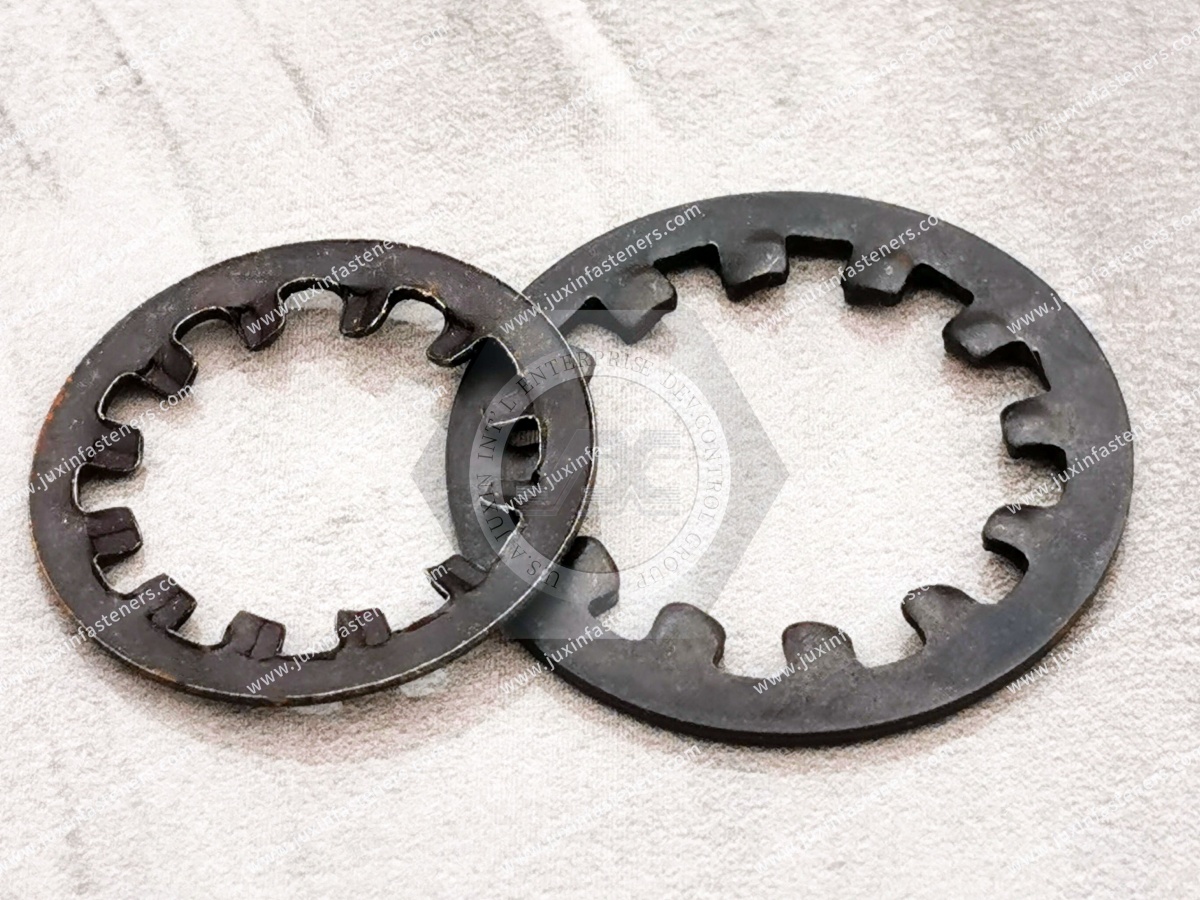
DIN 6797 has historically been widely referenced for toothed lock washers.
Within common DIN product terminology:
Form J identifies an internal-tooth configuration.
This is why industrial searches often include:
DIN 6797 J washer;
DIN 6797 internal tooth washer;
DIN 6797 internal star washer.
For existing OEM drawings and replacement parts, the specified standard and drawing should control the requirement.
Do not convert a legacy specification to another washer design merely because the nominal thread size is the same.
For inch-series hardware, ASME B18.21.1 is an important reference covering several washer categories, including tooth-lock washers.
However, an important engineering caution applies:
The word lock in the traditional product name should not be interpreted as proof that the washer will permanently prevent rotational self-loosening in every joint.
Product nomenclature and verified joint performance are not the same thing.
Therefore:
Lock Washer Name ≠ Guaranteed Locked Joint
The teeth of an internal tooth washer are formed out of the washer plane.
During tightening, these teeth can deform and contact the adjacent surfaces.
The resulting interface depends on:
tooth angle;
tooth stiffness;
washer hardness;
fastener material;
mating material;
surface coating;
clamp load.
The teeth may create localized surface indentation or penetration depending on the materials and finishes involved.
This is part of the locking concept—but it can also create a surface-damage tradeoff.
The washer must be compatible with the bearing face of the screw, bolt or nut.
If the bearing face is too small relative to the washer's tooth geometry, the intended interface may not develop correctly.
Engineers should consider:
fastener head diameter;
nut bearing diameter;
washer ID;
washer OD;
tooth location;
available bearing area.
This is why:
Same Thread Size ≠ Automatically Same Toothed Washer Interface
Internal tooth washers are commonly associated with installation beneath screw or bolt heads where the inward tooth geometry remains relatively concealed.
Potential applications can involve:
machine screws;
equipment screws;
electrical hardware;
enclosure hardware;
instrument assemblies.
Compatibility should be checked against the actual head geometry.
Internal tooth washers may also be used beneath nuts where the geometry is compatible.
The nut bearing face must interact appropriately with the washer.
Again, the selection should be based on actual dimensions rather than thread size alone.
They can provide rotational resistance through their toothed interface.
But they should not automatically be treated as a universal anti-loosening solution.
Bolted-joint loosening depends on factors such as:
preload;
transverse movement;
joint stiffness;
friction;
fastener geometry;
external loading;
surface condition.
In severe vibration environments, another locking strategy may be more appropriate.
A common sourcing request is:
“The machine vibrates, so we need a lock washer.”
That is not enough information for engineering selection.
The first question should be:
Why is the fastener losing clamp force or rotating?
Possible mechanisms include:
insufficient preload;
transverse joint movement;
embedment;
coating relaxation;
material creep;
thermal effects;
unsuitable tightening control.
A toothed washer cannot correct every one of these problems.
These two problems should be separated.
Clamp force decreases without necessarily involving visible fastener rotation.
Potential mechanisms include:
embedment;
creep;
relaxation;
gasket compression;
thermal effects.
The nut or screw rotates relative to the mating thread.
An internal tooth washer is primarily associated with resistance to relative rotation at the bearing interface.
It should not automatically be described as a solution for all preload-loss mechanisms.
These products use different geometries.
Uses multiple formed teeth to create localized contact at the bearing interface.
Uses a helical split-ring geometry.
Neither should automatically be described as a guaranteed solution to severe vibration-induced self-loosening.
Selection should follow the actual joint requirement.
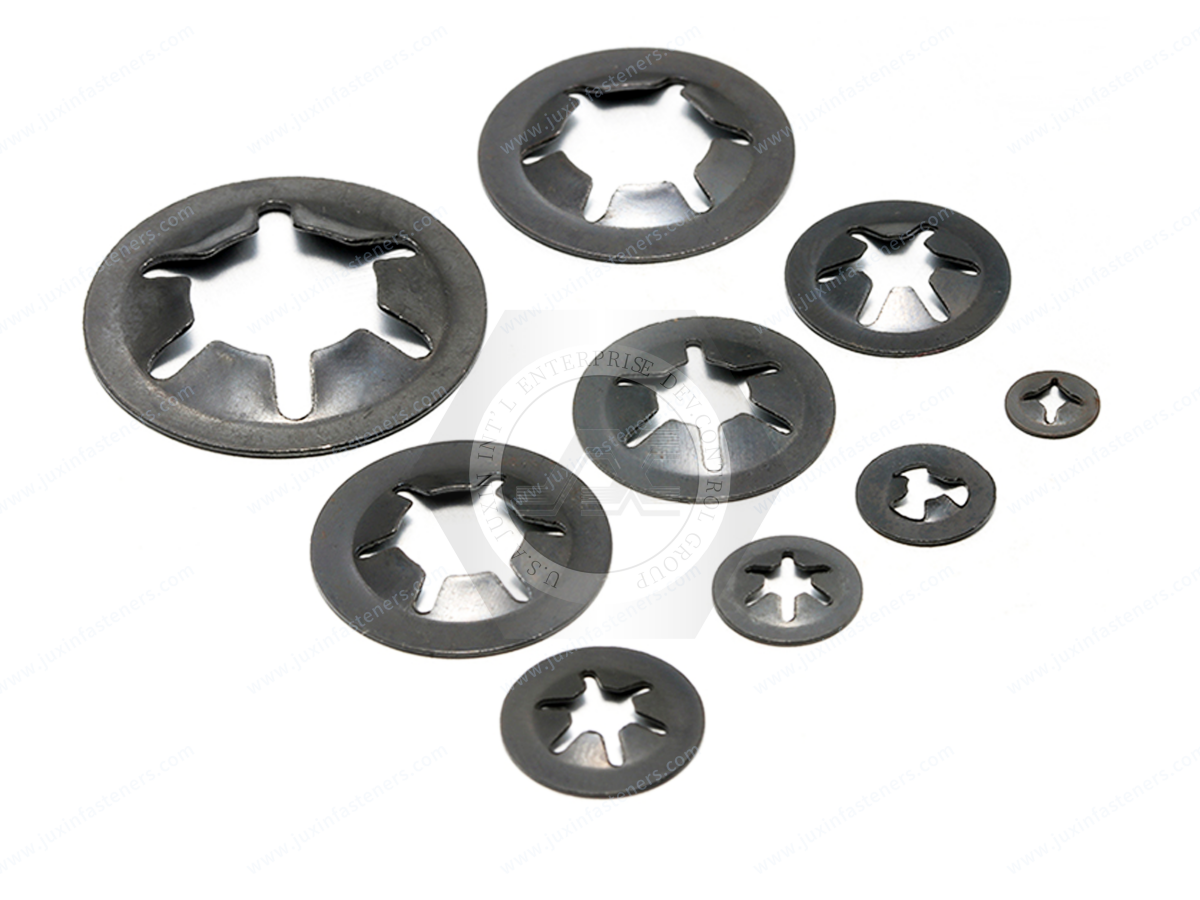
These systems are mechanically different.
Uses toothed surface interaction.
Uses paired washers with engineered wedge geometry.
They should not be grouped together simply because both are called locking washers.
For severe transverse-vibration applications, the locking mechanism should be evaluated specifically.
A prevailing-torque nut creates resistance within the nut/thread interface.
Examples can include:
nylon-insert locknuts;
all-metal prevailing-torque locknuts.
An internal tooth washer instead acts at the bearing interface.
These mechanisms solve the problem differently.
For a common prevailing-torque option, see Nylon Insert Locknuts for Anti-Vibration Applications.
Thread-locking compounds act in the threaded interface.
A toothed washer acts primarily at the bearing interface.
Selection can depend on:
temperature;
service environment;
maintenance requirements;
disassembly requirements;
contamination;
production process.
There is no universal best locking method.
These are completely different products despite both containing the word lock washer.
Multiple small inward teeth interact with the bearing surfaces.
An inner tab engages a shaft groove and an outer tab is bent into a bearing lock-nut slot.
The second system provides positive geometric restraint.
They should never be confused in technical procurement.
A plain flat washer primarily modifies the bearing interface and distributes load over its geometry.
An internal tooth washer intentionally introduces localized toothed contact.
This means the design objectives can conflict.
If the primary requirement is:
broad, smooth load distribution
a toothed washer may not perform the same role as an appropriately selected plain washer.
The tooth-locking concept depends on localized contact.
That means internal tooth washers can mark, indent or penetrate selected surfaces.
This may be acceptable—or even useful—for some assemblies.
It may be undesirable for others.
Potential concerns include:
decorative surfaces;
painted surfaces;
soft aluminum;
thin coatings;
precision finishes;
corrosion-protection layers.
Therefore:
More Tooth Bite ≠ Automatically Better Joint
Surface requirements must be considered.
A toothed washer may penetrate or damage paint or powder coating.
This can change:
appearance;
corrosion protection;
electrical contact.
Whether that is desirable depends on the design.
For a purely mechanical joint where coating protection matters, tooth penetration can be undesirable.
For a deliberately engineered electrical bonding interface, controlled coating penetration may be part of the design.
These are different requirements.
Toothed washers are sometimes used in electrical equipment because their teeth can create localized metallic contact through selected surface films or coatings.
Potential applications can include:
chassis connections;
enclosure hardware;
equipment bonding points;
electrical cabinets.
However:
Internal Tooth Washer ≠ Automatically Approved Grounding Connection
Electrical bonding performance depends on the complete interface.
Engineers may need to evaluate:
contact resistance;
coating thickness;
substrate material;
corrosion;
clamp force;
applicable electrical standard;
long-term environmental exposure.
A washer can perform well mechanically while failing to meet an electrical bonding requirement.
Likewise, a washer that creates initial electrical contact may not guarantee long-term electrical performance in a corrosive environment.
Therefore:
Mechanical Locking Requirement ≠ Electrical Bonding Requirement
They should be specified separately.
Aluminum presents several considerations.
The teeth can create localized indentation more readily than on harder steel surfaces.
Engineers should evaluate:
aluminum alloy;
material thickness;
clamp load;
surface coating;
corrosion;
galvanic compatibility.
A toothed washer should not be selected for aluminum solely because “the teeth grip better.”
Engineering plastics generally require different bearing-interface considerations.
Tooth penetration can:
damage the surface;
create stress concentration;
reduce bearing area.
A conventional toothed metal washer may therefore be unsuitable for some plastic assemblies.
Evaluate the parent material before selection.
Carbon steel is commonly used for toothed washers where the required forming, hardness and surface treatment are compatible with the application.
Possible coating systems depend on project requirements.
For OEM RFQs, define:
material;
hardness where specified;
coating;
corrosion requirement.
Do not assume all carbon-steel toothed washers have the same mechanical properties.
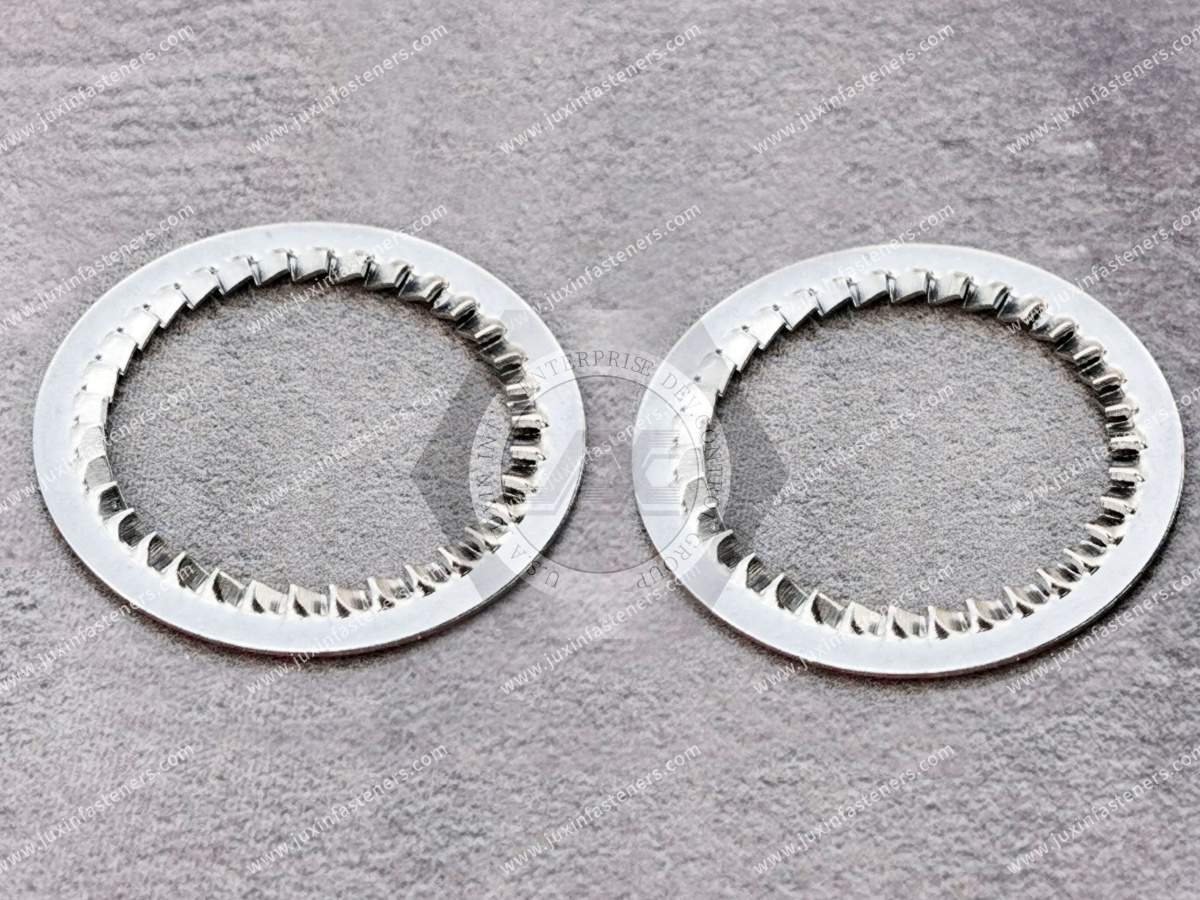
Stainless steel can be selected where corrosion resistance is important.
Potential grades depend on:
product specification;
forming requirements;
environment.
However:
Stainless Steel ≠ Corrosion-Proof
Grade selection should consider the actual exposure.
The washer teeth must interact with adjacent surfaces.
If the washer is too soft relative to the interface, the teeth may deform differently than intended.
If the tooth contact is too aggressive for the mating material, surface damage may become unacceptable.
Therefore, hardness is part of the interface design.
Do not source a toothed washer only by:
M6 / M8 / M10
without understanding the required material and standard.
Surface coatings add material to the washer.
For small toothed components, excessive or poorly controlled coating can influence:
tooth sharpness;
dimensions;
fit;
surface interaction.
Coating selection should therefore consider both corrosion protection and functional geometry.
Carbon-steel toothed washers may use zinc-based surface treatments where appropriate.
Where specified, trivalent chromium passivation can be evaluated.
The RFQ should define:
coating system;
corrosion requirement;
appearance requirement;
RoHS/REACH requirement where applicable.
Black oxide can be appropriate for selected indoor or controlled-environment applications.
It should not automatically be treated as a high-corrosion-resistance coating.
Service environment should drive coating selection.
Do not apply grease or lubricant automatically.
Lubrication changes frictional conditions and can affect tightening behavior.
It can also alter the interface on which the toothed washer depends.
If lubrication is required by the fastener system, evaluate it as part of the complete joint.
There is no universal rule that toothed lock washers should be greased.
Before installation, verify that the part is actually:
Internal Tooth
and not:
external tooth;
internal/external tooth;
split spring;
bearing tab washer;
disc spring.
These products are not interchangeable.
Check:
thread size;
fastener head or nut bearing diameter;
washer ID;
washer OD;
tooth position;
mating surface.
The washer should fit without unintended interference.
Check whether the mating surface is:
bare metal;
plated;
painted;
powder coated;
anodized;
another treated surface.
Determine whether tooth marking or coating penetration is acceptable.
Install the washer according to the drawing or approved assembly requirement.
The toothed interface must interact with the intended bearing surfaces.
Do not create an arbitrary orientation rule unless required by the washer design or applicable specification.
Apply the approved tightening procedure.
Do not assume that adding a toothed washer leaves the original torque-preload relationship unchanged.
The washer changes the bearing interface.
For critical assemblies, validate tightening using the actual production components.
Check for:
correct washer type;
correct seating;
unintended deformation;
excessive surface damage;
correct fastener position.
Where electrical bonding is required, mechanical inspection alone may not be sufficient.
Do not automatically assume unlimited reuse.
The teeth can plastically deform or change their contact geometry during tightening.
Reuse may also create different engagement with an already marked surface.
For controlled industrial assemblies, follow:
equipment requirements;
customer specification;
maintenance procedure.
Replacement may be preferable where locking reliability matters.
Potential applications include:
electrical cabinets;
switchgear housings;
control panels;
equipment chassis;
mounting hardware.
They may be useful where a compact toothed interface is required.
Electrical bonding requirements, where applicable, must be separately validated.
Potential uses include:
racks;
enclosures;
chassis;
mounting assemblies;
communication equipment.
Internal teeth can provide a relatively concealed tooth profile beneath selected fastener heads.
The exact hardware should follow the equipment design.
Automation systems use threaded fasteners in:
control equipment;
sensor mounts;
machine guards;
actuator assemblies;
electrical enclosures.
Internal tooth washers may be appropriate for selected low- to moderate-duty locking interfaces.
More demanding vibration conditions may require another locking strategy.
Potential machinery applications include:
covers;
guards;
brackets;
equipment housings;
accessory assemblies.
Do not extrapolate this to every critical rotating or structural connection.
Joint criticality matters.
Internal tooth washers can be used in selected automotive and vehicle-related hardware.
Potential applications may include:
electrical equipment;
brackets;
auxiliary hardware;
equipment housings.
They should not automatically be promoted for:
wheel fasteners;
critical suspension joints;
safety-critical powertrain joints
without application-specific qualification.
Potential uses include:
equipment housings;
electrical enclosures;
auxiliary brackets;
power-electronics assemblies.
Where electrical contact is involved, mechanical and electrical requirements should be evaluated separately.
A toothed washer does not automatically provide:
EMI shielding;
grounding certification;
enclosure sealing;
IP protection.
Potential applications can exist in:
server-related hardware;
racks;
power-conversion equipment;
cooling equipment;
electrical enclosures.
Again, the relevant factor is the joint requirement—not the industry name.
Potential uses can include:
control enclosures;
equipment covers;
brackets;
electrical assemblies.
For severe vibration around rotating machinery, evaluate whether the toothed washer provides sufficient locking performance for the specific joint.

Corrosive environments require careful selection of:
washer material;
fastener material;
coating;
mating material.
A toothed washer can disturb protective coatings, potentially affecting local corrosion behavior.
Material compatibility and corrosion protection should therefore be evaluated together.
Internal tooth washers can be used in appropriate equipment hardware and fabricated assemblies.
They should not automatically be specified for structural steel bolting.
Structural bolted connections should follow the applicable structural fastener system and engineering specification.
| Design Requirement | Selection Direction |
|---|---|
| Teeth should remain closer to fastener axis | Evaluate internal tooth |
| Clean external washer perimeter preferred | Evaluate internal tooth |
| Need wider-radius tooth contact | Evaluate external tooth |
| Limited external radial space | Internal tooth may be useful |
| Fastener bearing face is small | Verify internal tooth compatibility carefully |
| Decorative surface | Evaluate tooth marking before use |
| Painted surface | Determine whether coating penetration is acceptable |
| Electrical bonding | Validate electrical + mechanical interface |
| Severe transverse vibration | Evaluate stronger dedicated locking strategy |
| Soft plastic parent material | Toothed metal washer may be unsuitable |
| Requirement | Possible Direction |
|---|---|
| General toothed bearing interface | Internal/external tooth washer |
| Need prevailing torque | Nylon-insert or all-metal locknut |
| Severe transverse vibration | Evaluate engineered locking system |
| Need positive mechanical retention | Evaluate tab, pin or other positive locking method |
| Need broad load distribution | Flat washer |
| Need controlled spring deflection | Disc spring |
| Bearing lock nut on shaft | Bearing tab lock washer |
| Need electrical contact | Engineer bonding interface specifically |
A conventional internal tooth washer is normally a one-piece formed component.
Internal, external and combined-tooth designs are different.
Fastener bearing diameter and tooth geometry also matter.
The complete joint determines locking performance.
The teeth can mark or penetrate the mating surface.
Tooth penetration can alter both corrosion protection and electrical contact.
Electrical performance requires separate validation.
Lubrication can change friction and interface behavior.
Tooth geometry can change after tightening.
Different locking mechanisms perform differently under transverse movement.
Engineers may search:
internal tooth lock washer;
how does internal tooth lock washer work;
internal vs external tooth lock washer;
star washer internal teeth;
DIN 6797 J washer;
internal tooth washer installation;
toothed washer for grounding;
star washer for electrical bonding;
internal tooth washer vibration;
internal tooth washer under screw head.
These are product-selection and interface-design searches.
Purchasing and supplier-development teams may search:
internal tooth lock washer manufacturer;
internal star washer supplier;
DIN 6797 J washer supplier;
stainless internal tooth washer;
custom toothed washer manufacturer;
internal serrated washer supplier;
OEM lock washer supplier.
A controlled RFQ should specify more than nominal thread size.
For technical and commercial evaluation by JUXIN FASTENERS, provide where applicable:
2D drawing;
physical sample;
customer part number;
applicable standard;
DIN 6797 J requirement where applicable;
ASME B18.21.1 requirement where applicable;
metric or inch system;
nominal fastener size;
washer inside diameter;
washer outside diameter;
washer thickness;
tooth configuration;
tooth count where drawing-controlled;
fastener head or nut bearing diameter;
washer material;
material grade where specified;
hardness requirement;
stainless steel grade where applicable;
surface finish;
coating requirement;
trivalent chromium requirement where applicable;
RoHS/REACH requirement where applicable;
corrosion requirement;
mating material;
mating-surface coating;
electrical bonding requirement where applicable;
surface-damage restrictions;
tightening requirement;
vibration environment;
operating temperature;
sample quantity;
production quantity;
annual demand;
inspection requirements;
packaging requirements;
labeling requirements;
customer-specific requirements.
It is a formed washer with multiple teeth projecting inward from its inner circumference to interact with adjacent bearing surfaces.
A conventional internal tooth washer does not normally use a separate clamping pin. The teeth are integral features of the washer.
Common commercial terms include internal star washer, internal toothed washer and internal serrated lock washer.
DIN 6797 Form J is widely recognized in industrial fastener terminology as an internal-tooth lock-washer configuration.
Internal-tooth washers position the teeth toward the fastener axis. External-tooth washers position them around the outer circumference.
This changes the contact geometry and packaging envelope.
They can provide rotational resistance at the bearing interface, but they should not be assumed to prevent loosening in every vibration environment.
Yes, depending on clamp load, tooth geometry and coating properties.
The tooth interface can mark or penetrate coatings.
Toothed washers are used in some electrical bonding designs, but the washer alone does not guarantee a compliant grounding connection.
The complete electrical interface must be validated.
Do not automatically assume reuse is acceptable. The tooth geometry and mating surface can change during installation.
They use different locking mechanisms.
The correct selection depends on the joint requirement rather than a universal ranking.
Do not substitute a generic toothed washer into a controlled structural bolting system unless the applicable engineering specification requires it.
A buyer may begin with:
“Need M6 star washers.”
Engineering should continue:
Internal or External Teeth?
Then:
What Fastener Head Diameter?
What Is the Mating Material?
Can the Teeth Mark the Surface?
Is the Function Mechanical Locking or Electrical Bonding?
How Severe Is the Vibration?
What Standard Applies?
What Material and Finish Are Required?
The commercial path becomes:
Fastener → Bearing Interface → Tooth Configuration → Surface Requirement → Locking Requirement → Standard → Material → Finish → Validation → Supplier RFQ
This transforms a generic commodity request into a controlled industrial fastening specification.
JUXIN FASTENERS supports OEM sourcing of internal tooth lock washers, external tooth lock washers, plain washers, spring washers, locking fasteners,
bolts, nuts, screws and custom fastening components for electrical equipment, industrial machinery, automotive equipment, EV systems, telecommunications, HVAC, power equipment, automation and other engineered assemblies.
For broader washer-family selection, see Industrial Washers: Types, Functions & Selection Guide.
For general washer-and-bolt system engineering, see Washers and Bolts: Fastening Systems Selection Guide.
For prevailing-torque anti-loosening alternatives, see Nylon Insert Locknuts for Anti-Vibration Applications.
For high-strength threaded fasteners, see High-Strength Bolts & Nuts: Engineering Selection Guide.
For internal tooth lock washer RFQs, send your drawing or sample, applicable standard, thread size, washer ID/OD/thickness, tooth configuration,
material, hardness, finish, mating surface, locking requirement, quantity and estimated annual demand to:
An internal tooth lock washer should not be selected simply because a joint needs “more grip.”
It should be selected when its tooth geometry, bearing interface and locking mechanism match the actual engineering requirement.
 MORE NEWS
Sep. 25, 2026
Sep. 25, 2026
Sep. 25, 2026
Contact Us
Tel.:
+86 020 8621 0320
+86 020 3121 6067
E-mail:
Technical Support:
Navigation
SEND INQUIREY