
Call Us
+86 136 6007 9809
Call Us
+86 136 6007 9809

Jun. 17, 2025
Internal Torx High-Strength Screws and Class 10.9 Flange Bolts: Automotive OEM Joint Design Guide
Internal Torx high-strength screws are threaded fasteners that combine a six-lobe internal drive with a material and mechanical property specification selected for demanding industrial assemblies.
In automotive manufacturing, a properly designed high-strength fastener must achieve more than a specified tightening torque.
It must provide suitable clamp force, maintain joint integrity under service loading, resist environmental degradation and support consistent production-line installation.
The internal Torx drive, also described as a hexalobular socket drive, can provide effective tool engagement and reduce certain installation difficulties associated with less suitable drive configurations.
However, drive geometry alone does not determine vibration resistance, fatigue life or joint reliability.
These properties depend on the complete fastening system, including fastener strength, thread geometry,
bearing surfaces, preload, friction, mating components and assembly process.
For automotive OEM engineers, the challenge is selecting the correct fastener for a particular joint.
For manufacturing engineers and production managers, the priority is repeatable tightening, stable coating behavior, efficient installation and consistent quality.
For purchasing managers and supplier development teams, the critical requirements include drawing conformity, material traceability, coating specification,
inspection documentation, packaging and dependable commercial supply.
Juxin Fasteners welcomes inquiries for internal Torx screws, Class 10.9 fine-thread flange bolts and drawing-specific automotive fastening components.
What Are Internal Torx High-Strength Screws?
An internal Torx screw uses a six-lobe recess in the fastener head.
A matching driver engages the recess to apply installation or removal torque.
The drive design is commonly associated with the hexalobular socket geometry addressed by ISO 10664.
The fastener itself may be manufactured in different materials, head configurations, thread sizes and mechanical property classes.
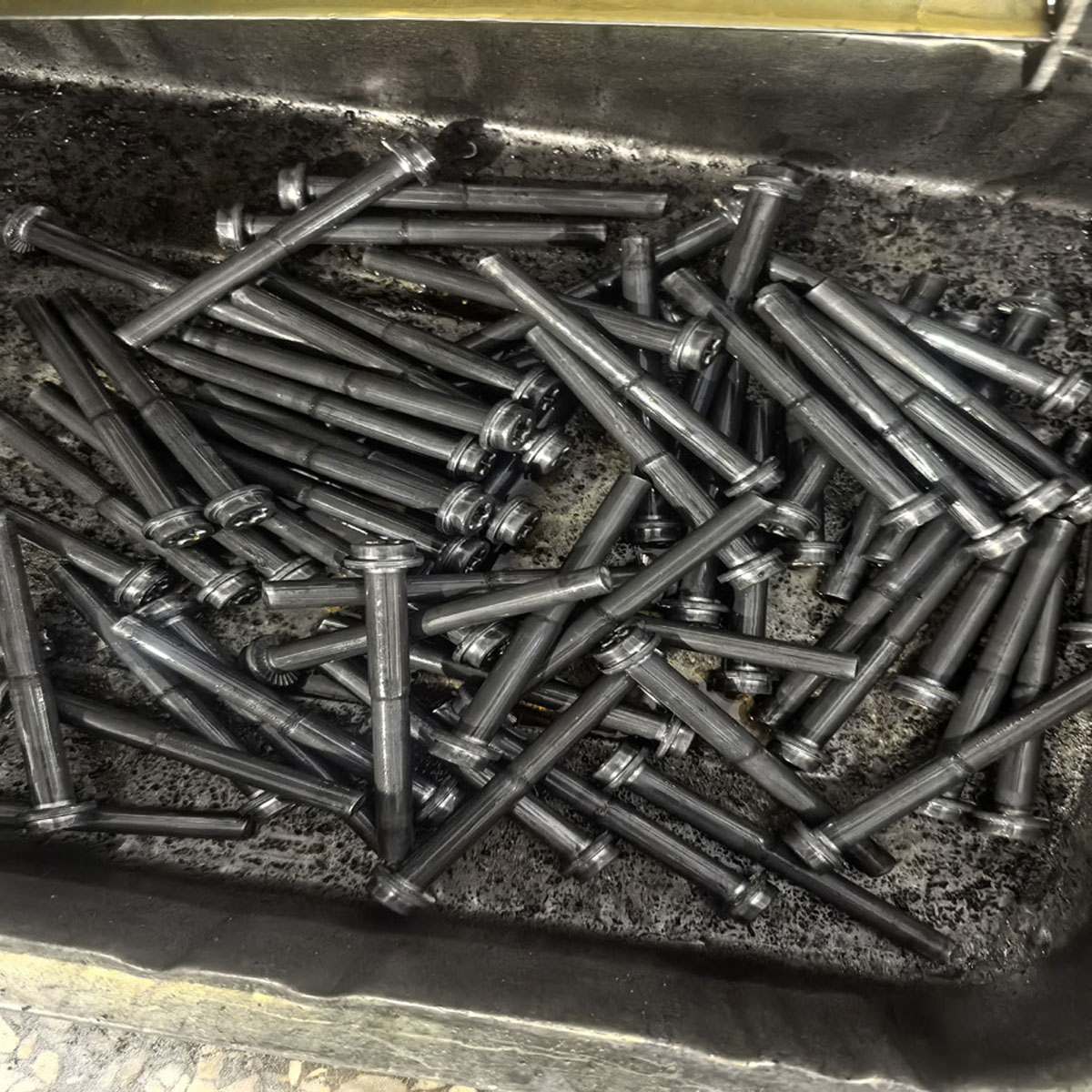
Common Configurations
Internal Torx socket head screws
Internal Torx button head screws
Internal Torx flange bolts
Internal Torx countersunk screws
Drawing-specific high-strength screws
Custom automotive fine-thread bolts
Actual product availability and standard compliance depend on the specific design.
Why the Drive Matters
The six-lobe profile can provide favorable contact geometry between the driver and screw recess.
This may support reliable torque transmission and reduce certain forms of tool slippage or recess damage when compared under suitable conditions.
However, the actual result depends on tool quality, recess dimensions, alignment and assembly settings.
Important Engineering Distinction
The Torx drive is a torque-transmission feature.
It is not, by itself, a mechanical locking feature.
Internal Torx vs Hex Socket vs External Hex Drive
The appropriate drive depends on the installation environment, required torque, tool access and head geometry.
| Drive type | Main characteristic | Engineering consideration |
|---|---|---|
| Internal Torx | Six-lobe internal recess | Tool engagement and recess geometry |
| Hex socket | Internal hexagonal recess | Common compact-head fastening solution |
| External hex | External wrenching surfaces | Requires external tool clearance |
| External hex flange | Hexagonal head with integrated flange | Combines external wrenching and bearing area |
Internal Torx Advantages
A properly designed six-lobe drive may provide:
Efficient driver engagement
Reduced tendency toward certain cam-out behavior
Suitable compatibility with automated drivers
Compact internal-drive packaging
Repeatable tool positioning when correctly controlled
Limitations
An internal Torx drive requires the correct driver size and recess geometry.
Contamination, coating buildup or damage inside the recess can affect tool engagement.
The drive may also be unsuitable where the available head geometry cannot accommodate the required recess depth and strength.
OEM Recommendation
Select the drive system together with the head geometry, fastener strength and production tightening method.
Do not choose a Torx recess solely because it is described as capable of higher torque.
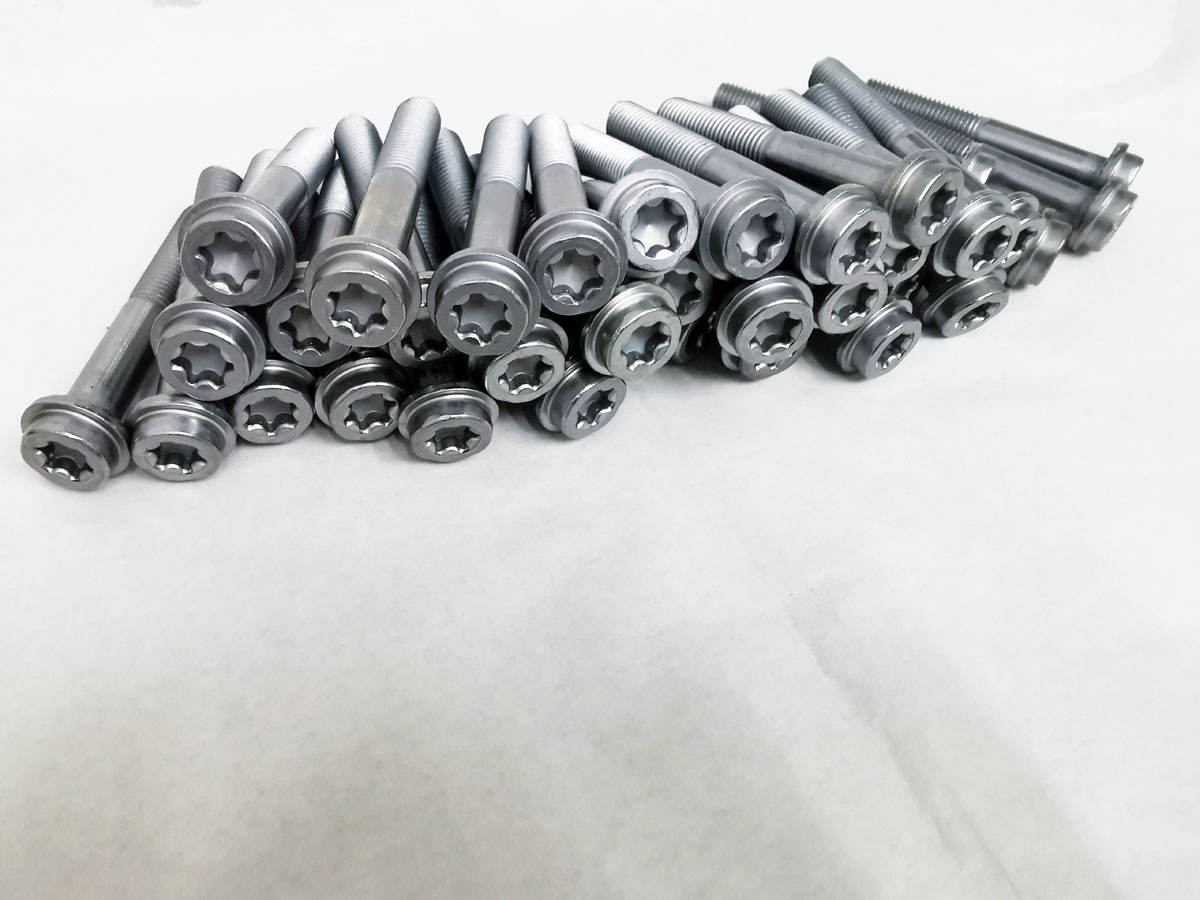
Class 10.9 Internal Torx Screws: Mechanical Properties
Class 10.9 is a mechanical property designation used for applicable carbon steel and alloy steel fasteners under ISO 898-1.
It is not a stainless steel grade or a description of the drive recess.
For relevant fastener categories, property class 10.9 establishes specified mechanical performance requirements.
What Does 10.9 Mean?
The designation corresponds to a nominal tensile strength level of approximately 1,000 MPa and a nominal yield-strength relationship associated with the class.
However, the actual minimum mechanical properties and verification requirements must be taken from the applicable ISO 898-1 provisions for the product and size.
Why Diameter Matters
Two Class 10.9 bolts of different thread diameters do not carry the same tensile load.
Their load capacity depends on the relevant stress area and mechanical properties.
Why Thread Geometry Matters
Fine and coarse threads of the same nominal diameter have different pitches and tensile stress areas.
Their engagement behavior and suitability for a given joint may differ.
Why Joint Design Matters
A high-strength bolt can still fail or lose preload if the mating threads, clamped components or bearing surfaces are inadequate.
Engineering Principle
Fastener strength is only one part of joint capacity.
The entire bolted connection must be designed for the expected loading and service conditions.
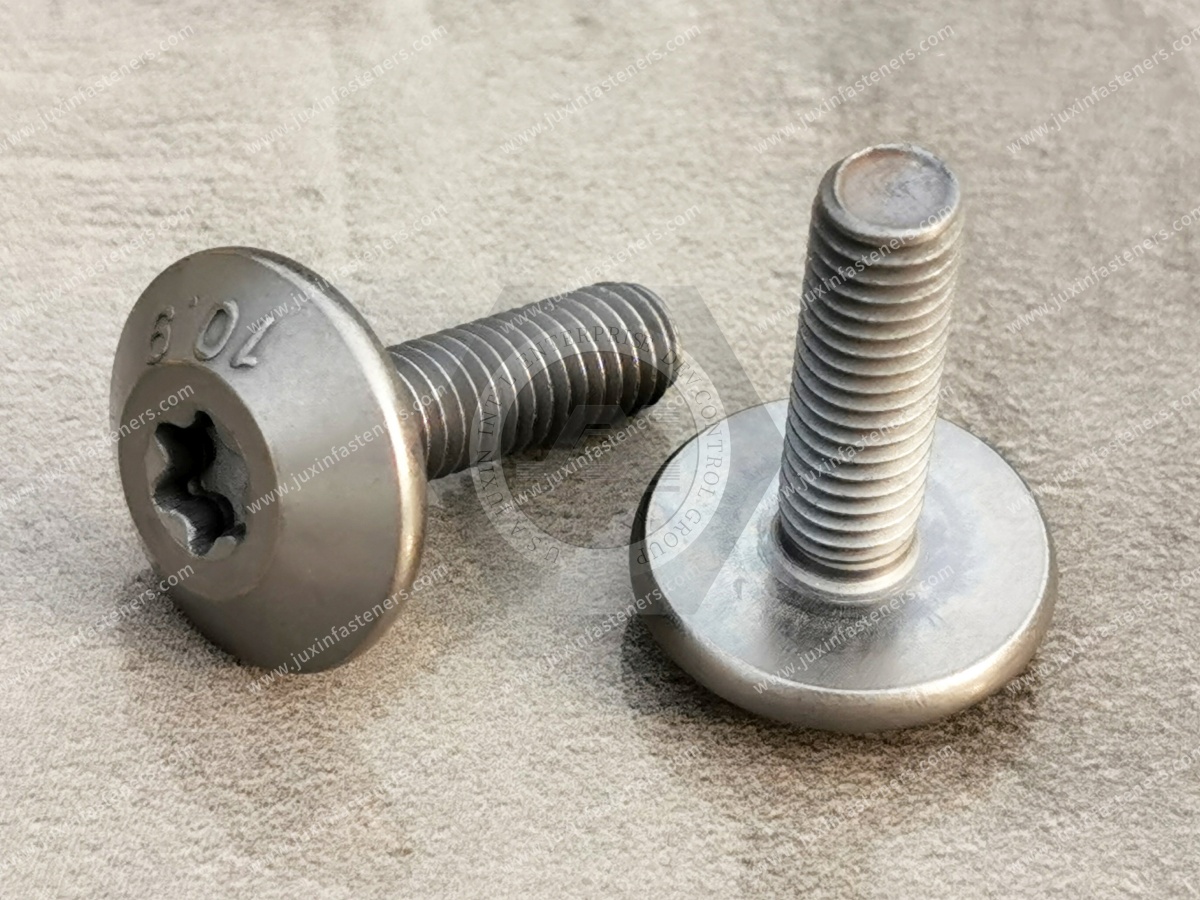
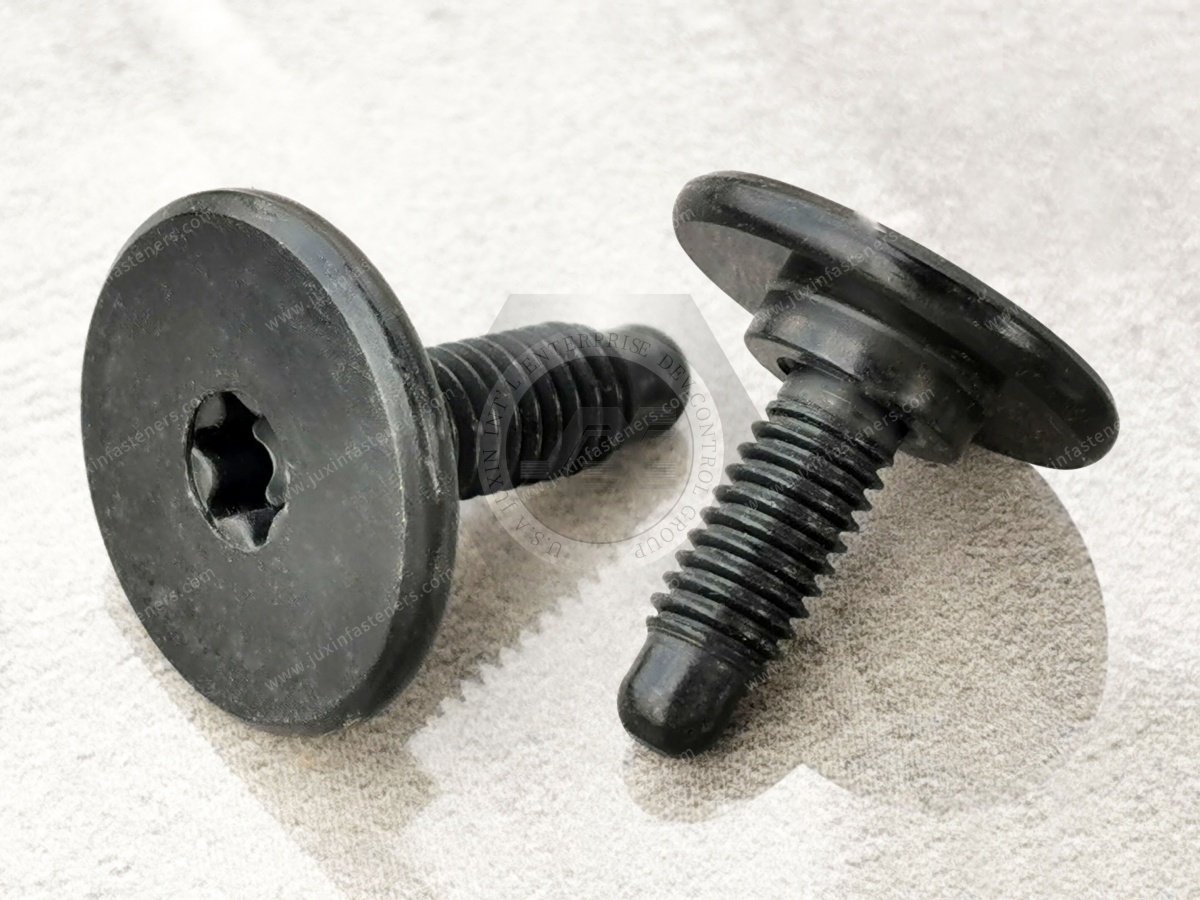
Automotive M12 × 1.5 Class 10.9 Internal Torx Flange Bolts
The original product information identifies two drawing-specific automotive fine-thread flange bolt configurations:
| Product characteristic | Configuration A | Configuration B |
|---|---|---|
| Drive | Internal Torx | Internal Torx |
| Head | Flange head | Flange head |
| Thread | M12 × 1.5 | M12 × 1.5 |
| Nominal length | 115 mm | 75 mm |
| Mechanical property class | 10.9 | 10.9 |
| Surface treatment | Natural-color zinc-nickel alloy coating | Natural-color zinc-nickel alloy coating |
| Stated corrosion test target | 720 hours neutral salt spray | 720 hours neutral salt spray |
These are the original article's stated product specifications.
The dimensions and coating information should be confirmed against the approved engineering drawings and purchasing requirements.
The stated 720-hour neutral salt spray performance is a product-specific claim from the original material, not a verified universal guarantee for all zinc-nickel-coated Torx bolts.
The applicable test method, coating specification, acceptance criteria and supporting report must be confirmed before using this value as a contractual requirement or published verified result.
Understanding M12 × 1.5 Fine Threads
M12 identifies the nominal metric thread diameter.
1.5 mm identifies the thread pitch.
This is a metric fine-thread configuration.
It is different from an M12 × 1.75 coarse-thread configuration.
Critical Compatibility Requirement
M12 × 1.5 and M12 × 1.75 threads are not interchangeable.
Likewise, a metric M12 thread is not directly interchangeable with a Unified inch thread of approximately similar diameter.
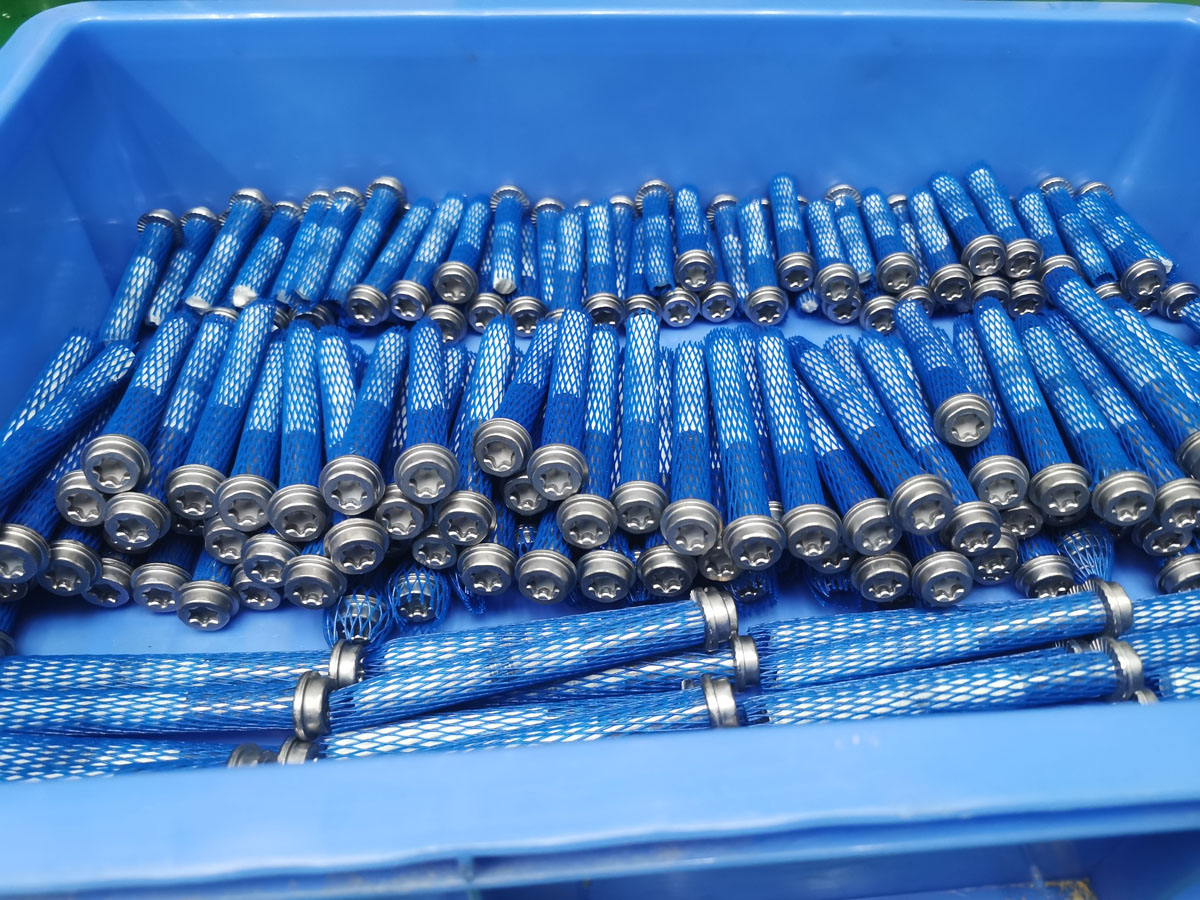
Length Designation
The 75 mm and 115 mm values describe the nominal bolt lengths stated in the original article.
The exact length measurement convention must follow the approved product drawing and applicable head geometry.
OEM Purchasing Requirement
Do not substitute a different pitch, length or head configuration without engineering approval.
Why Fine-Thread Flange Bolts Are Used in Automotive Assemblies
Fine-thread bolts may be selected for applications where thread geometry, engagement length and joint packaging requirements favor a smaller pitch.
Potential considerations include:
Thread engagement
Tensile stress area
Joint adjustment resolution
Mating component design
Assembly sensitivity
Required bolt length
Available installation space
Fine Threads Are Not Automatically Better
Fine threads may be more sensitive to contamination or damage in some assembly conditions.
The correct pitch depends on the joint design and manufacturing requirements.
Flange Head Benefits
An integrated flange provides a bearing surface beneath the bolt head.
Depending on the design, this may distribute contact pressure over a larger area than a smaller bearing face.
However, the flange does not automatically replace a washer in every joint.
The actual bearing area, contact pressure and surface requirements must be evaluated.
Flange Bearing Surface and Joint Reliability
The flange geometry affects how the tightening load is transferred into the clamped component.
Potential Advantages
Integrated bearing surface
Reduced need for a separate washer in suitable designs
Compact component arrangement
Potential simplification of assembly handling
Engineering Limitations
The flange diameter and bearing face must be compatible with the mating surface.
A large flange can create interference in restricted spaces.
A small or poorly matched bearing surface can produce excessive local contact pressure.
Production Consideration
The flange surface condition and coating influence friction during tightening.
This affects the relationship between applied torque and achieved clamp force.
Torx Drive and Vibration Resistance: What Actually Prevents Loosening?
A common misconception is that internal Torx screws are inherently vibration resistant.
The Torx recess improves tool engagement; it does not mechanically lock the threaded joint.
Why Bolted Joints Loosen
Potential mechanisms include:
Insufficient initial preload
Transverse joint movement
Settlement or embedment
Joint separation
Inadequate clamped-component stiffness
Incorrect tightening
Thermal effects
Unsuitable locking arrangement
How to Improve Joint Retention
Depending on the application, engineers may consider:
Correct preload design
Suitable joint stiffness
Appropriate thread engagement
Validated tightening procedures
Mechanical locking features
Prevailing-torque fasteners
Approved thread-locking systems
Engineering Principle
A well-designed Class 10.9 Torx bolt can be part of a reliable vibration-resistant assembly.
Its resistance to loosening comes from the joint design and any specified locking mechanism, not from the six-lobe drive itself.
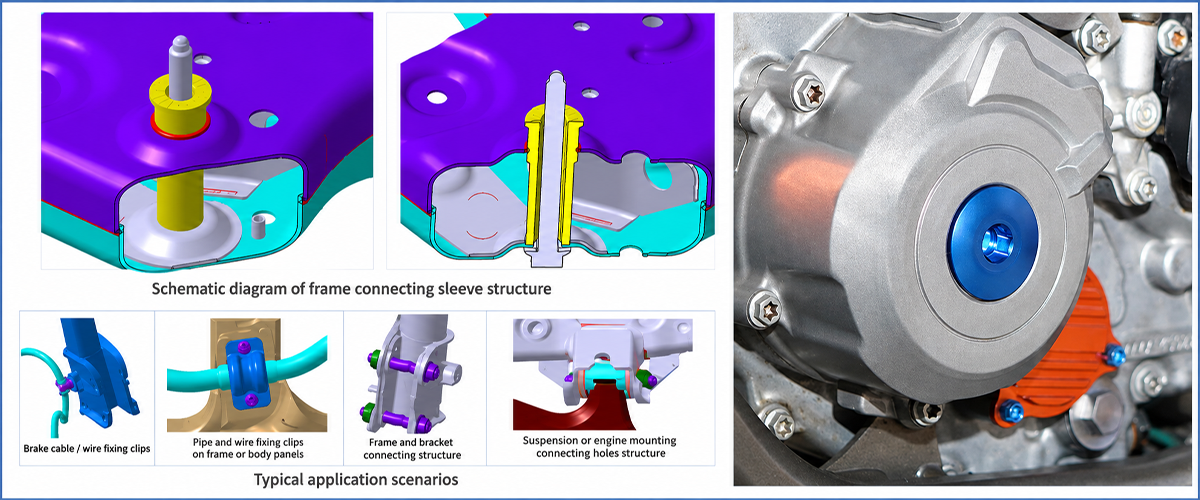
Torque, Preload and Friction in High-Strength Torx Bolts
The objective of tightening a high-strength bolt is generally to establish the required clamp force without damaging the fastener or joint.
Torque is an installation input.
Preload is the resulting tensile force in the fastener.
These are not interchangeable measurements.
Why Friction Matters
A substantial portion of applied tightening torque is consumed by friction in the threads and beneath the bearing surface.
Consequently, the same applied torque can produce different preload values when coating, lubrication or surface conditions change.
Zinc-Nickel Coating Effects
Zinc-nickel coating systems may influence thread and bearing friction.
Additional topcoats or lubricants can change assembly behavior.
Production Recommendation
The tightening strategy should be validated using the actual coated fastener, mating components and assembly conditions.
Where applicable, ISO 16047 provides a framework for torque/clamp force testing of threaded fasteners.
Important
A specified tightening torque should not be copied from another bolt merely because both are Class 10.9 or use M12 threads.
Zinc-Nickel Coating for Automotive Internal Torx Bolts
Zinc-nickel alloy coatings are used on selected steel fasteners to provide corrosion protection.
Their performance depends on the complete coating system.
Key Variables
Coating composition
Coating thickness
Surface preparation
Passivation or conversion treatment
Topcoat or lubricant
Coverage and uniformity
Fastener geometry
Service environment
Why Automotive Engineers Specify Zinc-Nickel
A suitable zinc-nickel coating system may provide improved corrosion protection compared with some conventional zinc coating systems.
However, the result depends on the specific coating specification and test requirements.
Coating and Assembly Friction
The coating must be evaluated not only for corrosion resistance but also for its effect on tightening behavior.
Recess and Thread Geometry
Excessive coating buildup can affect driver fit and thread engagement.
Quality Requirement
The approved drawing should define the coating specification and relevant acceptance criteria.
720-Hour Neutral Salt Spray Testing: How to Interpret the Requirement
The original product description specifies 720 hours of neutral salt spray testing.
This value requires careful interpretation.
What Neutral Salt Spray Testing Measures
A neutral salt spray test exposes specimens to a controlled salt fog environment under defined conditions.
ISO 9227 and ASTM B117 are commonly referenced test methods for salt spray exposure.
What the Number Does Not Mean
A 720-hour test duration does not establish that a bolt will last 720 hours in service or a specific number of years on a vehicle.
It also does not independently establish the fastener's fatigue strength or mechanical reliability.
What Must Be Specified
A meaningful coating requirement should identify:
Test method
Specimen condition
Exposure duration
Acceptance criteria
Type of corrosion evaluated
Evaluation of significant surfaces
Any preconditioning requirements
Relevant documentation
Original Product Claim
The two M12 × 1.5 bolt configurations were described as having a 720-hour neutral salt spray performance requirement.
Before publishing this as a verified achieved result, confirm the actual test report and acceptance conditions.
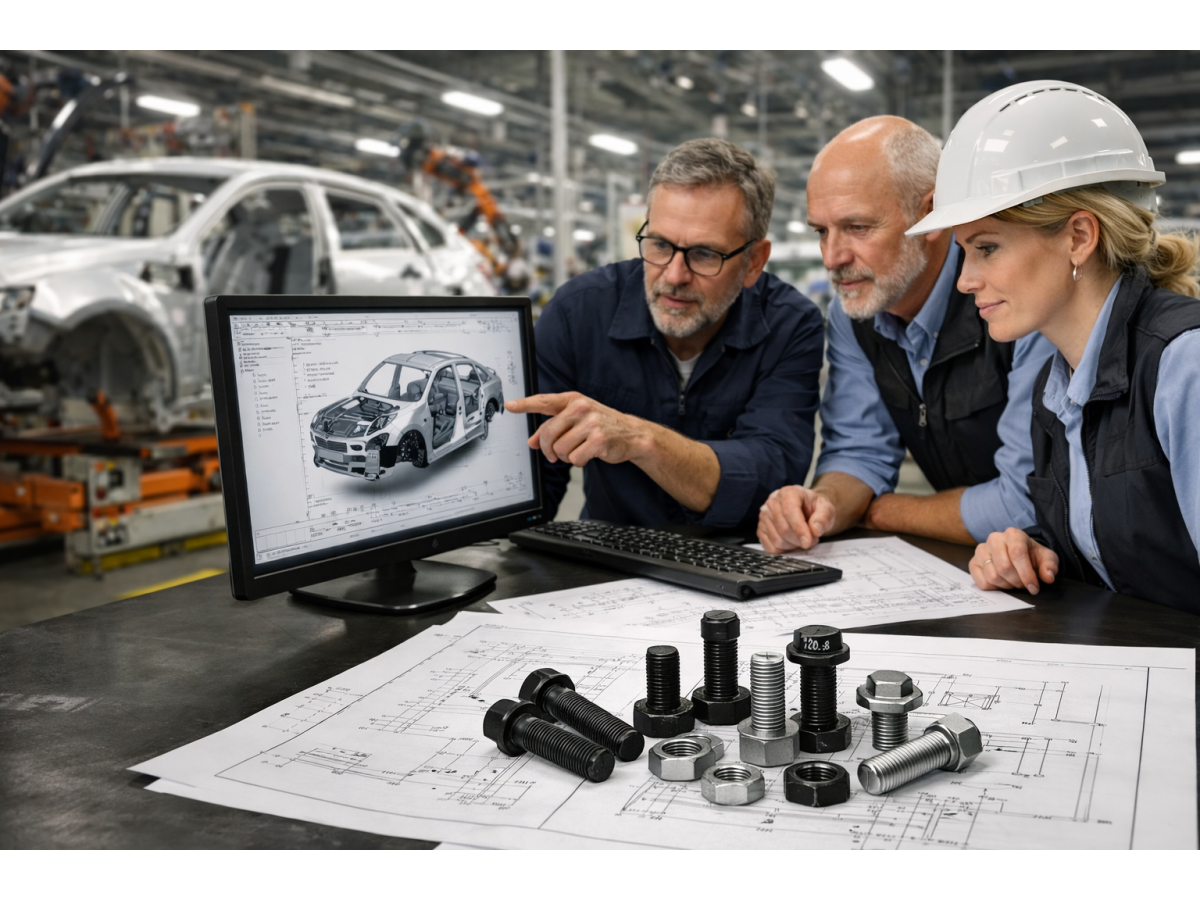
Hydrogen Embrittlement Risk in High-Strength Coated Fasteners
High-strength steel fasteners can be susceptible to hydrogen embrittlement under certain manufacturing and service conditions.
This risk is particularly relevant when considering some electroplating and surface preparation processes.
Why It Matters
Hydrogen introduced during processing may contribute to delayed brittle failure in susceptible high-strength components.
Relevant Engineering Controls
Depending on the approved coating process and applicable requirements, controls may include:
Suitable surface preparation
Controlled plating processes
Hydrogen embrittlement risk assessment
Appropriate post-process treatment where required
Relevant process qualification and verification
Important Qualification
A post-plating treatment does not guarantee the elimination of every hydrogen embrittlement risk.
The selected coating process must be suitable for the fastener's strength level and application.
OEM Recommendation
For Class 10.9 fasteners, the coating specification should address hydrogen embrittlement risk where applicable.
Internal Torx Drive Damage: Common Assembly Failure Modes
A six-lobe drive can provide effective tool engagement, but damage can still occur.
Incorrect Driver Size
Using an incorrect bit can damage the recess.
Driver Misalignment
Angular misalignment may concentrate contact stress.
Insufficient Engagement
A driver that does not fully engage the recess may slip or deform the drive features.
Contamination
Debris or coating buildup can prevent proper seating.
Excessive Tightening
Overloading the drive may cause recess damage even when the bolt material meets its specified property class.
Production Controls
Use suitable driver bits, control alignment and verify the tightening procedure.
Automated Assembly: Why Torx Drive Geometry Matters
Automotive production lines require fasteners that can be installed consistently at the intended cycle time.
An internal Torx drive may be suitable for automated screwdriving when the head geometry, recess and tooling are properly matched.
Manufacturing Considerations
Driver engagement
Fastener feeding and orientation
Recess dimensional consistency
Tool alignment
Tightening speed
Torque-angle behavior
Coating friction
Tool wear
Error detection
Production Manager's Perspective
A fastener that meets its dimensional drawing may still cause production difficulties if its recess geometry or coating condition is inconsistent.
Recommended Validation
Evaluate the fastener with the intended production tool and mating joint.
Where appropriate, review assembly time, tool engagement, tightening consistency and rejection causes.
Automotive Applications of Class 10.9 Torx Flange Bolts
High-strength threaded fasteners may be specified for automotive assemblies where the joint requires suitable preload and mechanical performance.
Potential application areas include:
Chassis-related equipment
Engine and transmission assemblies
Brackets and structural accessories
Suspension-related connections
Steering-related equipment
Manufacturing and test fixtures
Safety-Critical Qualification
Not every Class 10.9 Torx bolt is approved for every automotive application.
Wheel, steering, suspension and other safety-critical joints require the exact approved fastener design, validation and supplier qualification.
Engineering Principle
The application determines the fastener specification.
The drive type and strength class alone do not establish vehicle-level suitability.
EV Battery Pack and Electric Vehicle Equipment
EV manufacturing introduces fastening requirements related to aluminum structures, thermal cycling, corrosion exposure and electrical safety.
Internal Torx high-strength bolts may be considered for selected mechanical connections when the joint design supports their use.
Potential Applications
Battery manufacturing equipment
Structural brackets
Equipment mounting
Selected enclosure-related mechanical connections
Thermal-management equipment supports
Important Considerations
Aluminum Mating Components
High-strength steel bolts can overload weaker internal aluminum threads if the engagement design is inadequate.
Galvanic Corrosion
Coated steel fasteners installed in aluminum structures require evaluation of the complete corrosion system.
Electrical Requirements
Mechanical fastening does not automatically establish electrical bonding or insulation suitability.
Thermal Cycling
Differential expansion and joint stiffness may influence preload retention.
Sealing
A flange bolt does not automatically provide a liquid-tight or gas-tight enclosure connection.
Rail Equipment and Transportation Systems
Rail equipment may require fasteners capable of maintaining mechanical connections under vibration and environmental exposure.
Internal Torx high-strength fasteners may be considered for suitable equipment and accessory connections.
However, safety-critical rail applications require specific qualification.
Aerospace Ground Support Equipment
Ground support equipment and industrial test fixtures may use high-strength threaded fasteners.
A general Class 10.9 Torx bolt must not be described as qualified for aircraft structural applications without the relevant approvals.
Electrical Cabinets and Industrial Automation
Industrial cabinets and automation equipment may use internal Torx screws for brackets, equipment supports and mechanical connections.
High-strength property classes should be specified only where required by the joint design.
Using Class 10.9 fasteners for every enclosure connection may increase cost without providing an engineering benefit.
HVAC, Machinery and Construction Equipment
Industrial HVAC frames, machinery and construction equipment may require threaded fasteners with suitable mechanical strength and corrosion protection.
Selection Factors
Joint loading
Vibration
Environmental exposure
Service temperature
Installation access
Maintenance requirements
Robotics and Precision Machinery
Robotic equipment may benefit from compact internal-drive fastening arrangements.
However, joint stiffness, alignment, fatigue and installation accessibility remain important.
Medical and Laboratory Equipment
Selected industrial or laboratory equipment may use internal-drive screws.
A Class 10.9 steel fastener is not automatically suitable for regulated medical equipment.
Material, cleanliness and application-specific requirements must be separately verified.
Standard Internal Torx Screws vs Drawing-Specific Automotive Flange Bolts
Standard products may be suitable when the required head, drive, thread and mechanical properties match an applicable product specification.
However, many automotive flange bolts use drawing-specific geometries.
Custom Design Features May Include
Special flange diameter
Drawing-specific head height
Internal six-lobe recess dimensions
Fine-thread configuration
Specific shank geometry
Under-head fillet
Special length
Defined coating and friction requirements
Controlled packaging
Applicable Standards
ISO 10664 is relevant to hexalobular internal drive geometry.
ISO 898-1 is relevant to mechanical properties of applicable carbon and alloy steel bolts, screws and studs.
ISO 68-1, ISO 724 and ISO 965 may be relevant to metric thread geometry and tolerances.
These standards do not automatically define every feature of a custom automotive flange bolt.
The approved drawing remains essential.
Information Gain: Why the Same Class 10.9 Bolt Can Produce Different Assembly Results
Consider two nominally identical Class 10.9 internal Torx bolts installed into the same joint.
Both meet the specified mechanical property class.
However, their coating systems have different friction characteristics.
Bolt A
The coating produces a lower friction level under the approved tightening conditions.
Bolt B
The coating produces a higher friction level under the same tightening conditions.
If the same torque is applied, the resulting clamp forces may differ.
Engineering Consequence
One assembly may experience insufficient preload while another may approach an undesirable fastener load.
What This Means for OEM Sourcing
Mechanical property class, thread size and coating appearance are not sufficient to establish equivalent assembly behavior.
Practical Supplier Qualification
Evaluate the fastener's:
Material and mechanical properties
Thread geometry
Head and flange dimensions
Drive recess geometry
Coating system
Friction characteristics
Assembly performance
Required corrosion performance
This helps reduce the risk of approving a nominally equivalent replacement that behaves differently during production tightening.
Fastener Packaging and Surface Protection
Automotive fasteners may require packaging that protects the head, drive recess, coating and threads during transportation.
The original product information describes an option involving individual plastic sleeves for sensitive bolts.
Such packaging can be considered where required by the customer specification.
Potential Benefits
Reduced metal-to-metal contact
Protection of visible surfaces
Reduced risk of coating scratches
Better separation of sensitive components
Important Qualification
Individual sleeves are not automatically required for every automotive bolt.
Packaging should be selected according to the component geometry, coating sensitivity, handling process and customer requirements.
Packaging RFQ Details
Specify:
Bulk or individually protected packaging
Maximum package weight
Corrosion protection requirements
Labeling
Lot identification
Handling restrictions
Customer-specific packaging standards
OEM Quality Control for Internal Torx High-Strength Screws
A reliable quality plan should address the finished fastener, not only the incoming raw material.
Material Verification
Confirm the specified material and applicable mechanical property requirements.
Dimensional Inspection
Inspect the thread, length, head geometry, flange dimensions and drawing-specific tolerances.
Drive Recess Inspection
Confirm the required six-lobe geometry and tool fit.
Mechanical Property Verification
Apply the relevant testing and acceptance requirements for the specified property class.
Coating Inspection
Verify the approved zinc-nickel coating requirements, including any specified thickness, appearance or performance criteria.
Torque–Clamp Force Evaluation
Where required, evaluate tightening behavior using the specified test arrangement.
Corrosion Testing
Confirm the applicable salt spray test method and acceptance criteria when specified.
Packaging Inspection
Verify that the supplied packaging matches the agreed requirements.
Traceability
Define the required material, process and production-lot documentation.
Quality Principle
A fastener can pass dimensional inspection and still fail an assembly requirement if friction or driver engagement is unsuitable.
Purchasing and Supplier Development: Avoiding Incorrect Substitutions
For automotive OEM sourcing, a description such as M12 Class 10.9 Torx bolt is insufficient.
The complete product definition must include the drawing and all relevant functional requirements.
Do Not Substitute Without Approval
M12 × 1.75 for M12 × 1.5
A different flange diameter
A different drive recess size
A different coating system
A different coating friction specification
A different bolt length
A different mechanical property class
An alternative packaging arrangement where handling protection is critical
Supplier Evaluation
Purchasing teams should compare suppliers based on:
Drawing conformity
Material specification
Mechanical property requirements
Coating system
Inspection documentation
Assembly performance
Packaging
MOQ
Lead time
Commercial cost
Supply continuity
Total Cost Consideration
A lower component price may be offset by increased tool wear, assembly rework, coating damage, rejected parts or production downtime.
OEM RFQ Checklist for Internal Torx Class 10.9 Flange Bolts
| RFQ item | Information to provide |
|---|---|
| Product drawing | Drawing number and revision |
| Fastener type | Internal Torx flange bolt or other configuration |
| Thread designation | M12 × 1.5 or other exact specification |
| Nominal length | 75 mm, 115 mm or drawing-specific |
| Mechanical property class | 10.9 or other approved class |
| Head geometry | Head diameter, height and tolerances |
| Flange geometry | Flange diameter and bearing face |
| Drive geometry | Internal six-lobe size and requirements |
| Material | Applicable steel specification |
| Surface treatment | Zinc-nickel or other approved coating |
| Coating requirements | Thickness, appearance and corrosion criteria |
| Friction requirements | Specified coefficient or torque–clamp force requirements |
| Salt spray requirement | Test method, duration and acceptance criteria |
| Hydrogen embrittlement | Applicable process and verification requirements |
| Mating component | Nut, threaded hole or insert |
| Assembly method | Tooling and tightening strategy |
| Quality documentation | Material and inspection records |
| Packaging | Bulk or individually protected |
| Prototype quantity | Sample requirement |
| Annual demand | Forecast production volume |
| MOQ | Commercial confirmation |
| Delivery schedule | Required lead time and shipment plan |
Frequently Asked Questions
What is an internal Torx high-strength screw?
It is a threaded fastener combining a six-lobe internal drive with a specified high-strength material and mechanical property class.
Does Torx prevent screws from loosening under vibration?
No. The drive improves tool engagement but does not independently provide vibration locking.
What does Class 10.9 mean?
It is a mechanical property designation for applicable carbon and alloy steel fasteners under ISO 898-1.
Is M12 × 1.5 the same as M12 × 1.75?
No. They are different metric thread pitches and are not interchangeable.
What is the benefit of an internal Torx flange bolt?
It combines an internal six-lobe drive with an integrated bearing flange, subject to the actual product geometry.
Is a Torx screw tamper-resistant?
A standard six-lobe drive is not inherently tamper-resistant. Security designs require additional features and suitable tools.
Does zinc-nickel coating guarantee 720 hours of corrosion resistance?
No. The performance depends on the coating system, test method and acceptance criteria. The original 720-hour claim requires supporting verification.
Can Class 10.9 bolts experience hydrogen embrittlement?
Yes, under susceptible material and processing conditions. Appropriate coating-process controls are important.
Can internal Torx flange bolts be used in automotive chassis assemblies?
They may be suitable when the exact fastener design and joint have been qualified for the application.
Why does coating friction matter?
Friction affects the relationship between tightening torque and achieved bolt preload.
Can Juxin Fasteners review custom automotive Torx bolt drawings?
Yes. Drawing-specific inquiries can be submitted for technical and commercial evaluation.
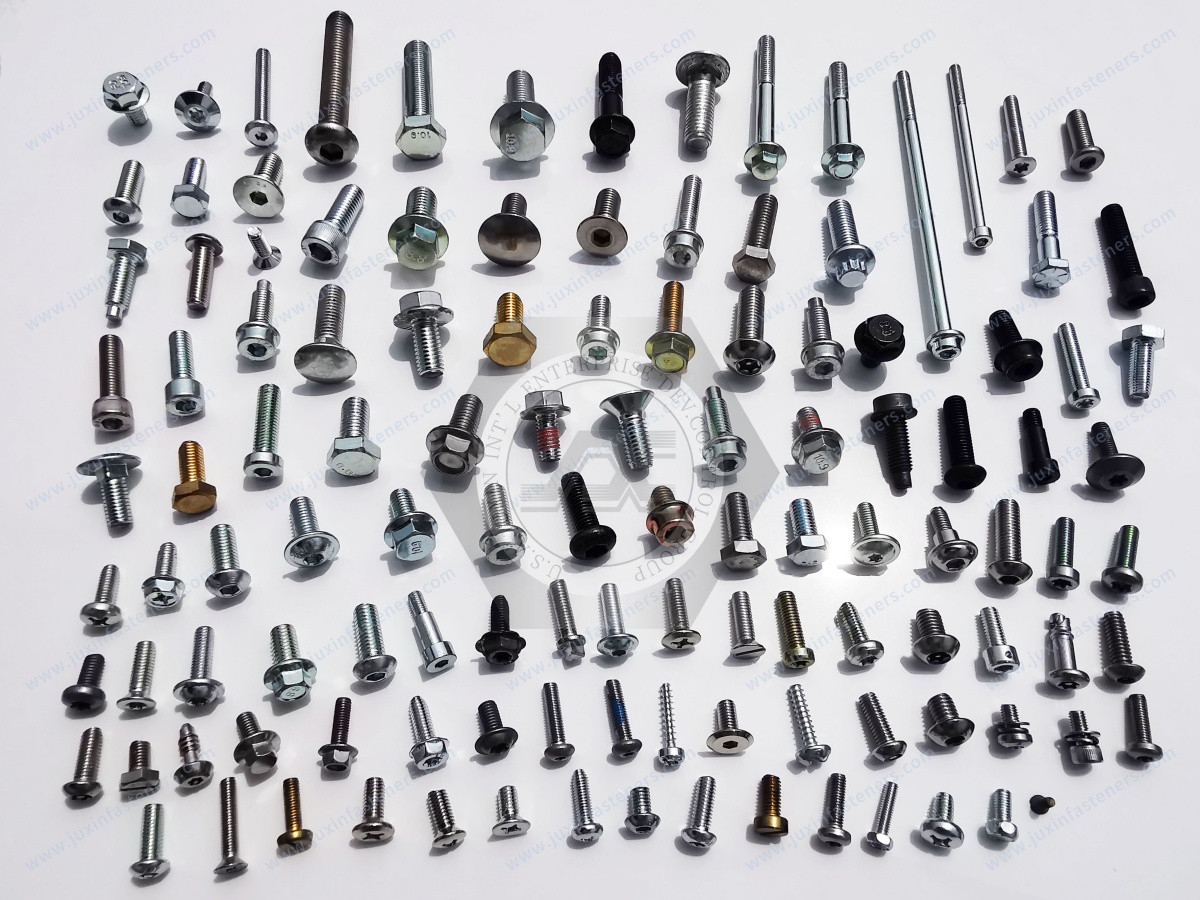
Juxin Fasteners: Internal Torx Screws and Custom Automotive Flange Bolts
Juxin Fasteners supplies industrial fastening components for suitable OEM and automotive equipment applications.
Relevant inquiries include:
Internal Torx high-strength screws
Class 10.9 internal Torx flange bolts
M12 × 1.5 fine-thread flange bolts
Zinc-nickel-coated automotive bolts
Drawing-specific six-lobe internal-drive fasteners
Custom high-strength steel screws and bolts
The exact geometry, mechanical property class, coating, inspection requirements, MOQ and delivery schedule are subject to technical and commercial confirmation.
Request Internal Torx High-Strength Screws and Automotive OEM Quotations
Are you sourcing Class 10.9 internal Torx flange bolts, M12 × 1.5 fine-thread automotive bolts,
zinc-nickel-coated screws or custom high-strength fasteners for industrial production?
Juxin Fasteners welcomes inquiries from design engineers, mechanical engineers, manufacturing engineers, production managers,
purchasing specialists, procurement managers and supplier development teams.
For technical review and quotation, please provide:
Product drawing and revision + thread designation + bolt length + property class + head and flange geometry
+ internal Torx drive size + material + coating specification + corrosion test requirements + friction requirements + mating joint details
+ inspection documentation + prototype quantity + annual demand + packaging + target delivery schedule.
Company: Juxin Fasteners
Website: https://www.juxinfasteners.com/
Email: info@juxinfasteners.com
Send your internal Torx screw drawings and automotive OEM RFQ to Juxin Fasteners for technical confirmation and quotation.
Contact Us
Tel.:
+86 020 8621 0320
+86 020 3121 6067
E-mail:
Technical Support:
Navigation
SEND INQUIREY



