
Call Us
+86 136 6007 9809
Call Us
+86 136 6007 9809

Jun. 12, 2025
316 Stainless Steel NPT Pipe Fittings: Thread Sealing, Corrosion Resistance and OEM Selection Guide
316 stainless steel NPT pipe fittings are threaded connection components used in industrial piping,
fluid control and equipment assemblies where corrosion resistance, installation accessibility and connection reliability are important.
These fittings use National Pipe Taper (NPT) threads, commonly specified in North American industrial piping systems.
The combination of a corrosion-resistant stainless steel alloy and tapered pipe thread geometry makes SS316 NPT fittings relevant to applications involving water,
selected industrial fluids, compressed air and process equipment.
However, a 316 stainless steel fitting does not automatically provide leak-free sealing, unlimited pressure resistance or compatibility with every chemical environment.
Reliable performance depends on the complete connection system, including the male and female thread geometry,
fitting design, mating material, sealing method, assembly process and operating conditions.
For mechanical and design engineers, the primary challenge is selecting a fitting that meets the required thread, pressure, temperature and corrosion specifications.
For manufacturing engineers and production managers, installation consistency, thread protection, sealant application and leak-test requirements influence production reliability.
For procurement and supplier development teams, the critical questions include material verification, dimensional conformity,
manufacturing feasibility, quality documentation and dependable volume supply.
This guide explains how to evaluate 316 stainless steel NPT fittings for industrial OEM applications and how to prepare an accurate technical RFQ.
Juxin Fasteners welcomes inquiries for stainless steel threaded connection components and drawing-specific OEM fittings, subject to technical and commercial confirmation.
What Are 316 Stainless Steel NPT Thread Fittings?
An SS316 NPT fitting is a threaded pipe connection component manufactured from a specified 316-type stainless steel material and designed with NPT tapered pipe threads.
NPT threads are commonly used to connect piping components, valves, manifolds, instruments and industrial equipment.
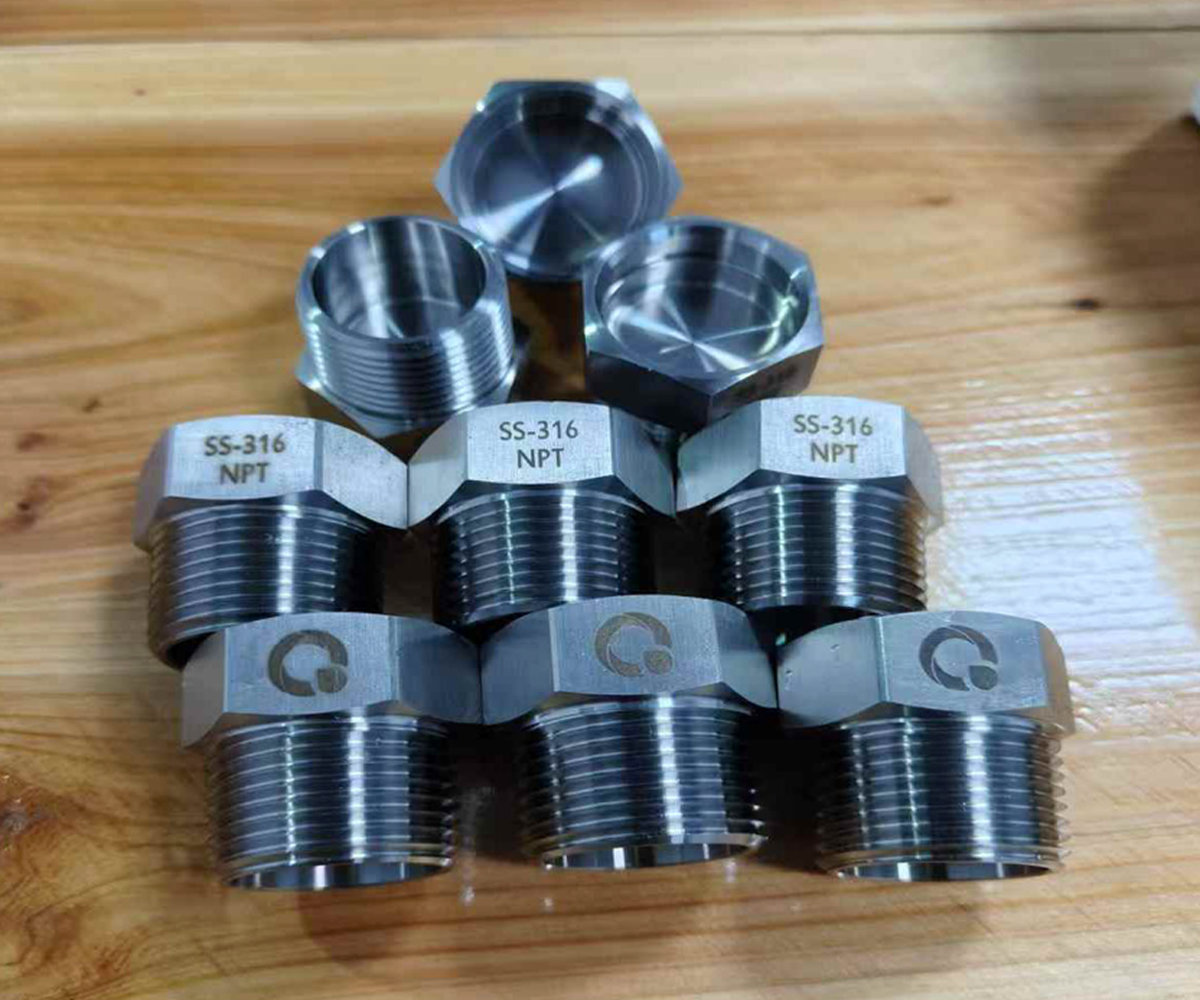
Depending on the product design, threaded fittings may include:
Male-threaded adapters
Female-threaded connectors
Threaded couplings
Pipe elbows
Pipe tees
Threaded plugs
Reducers
Drawing-specific connection components
These are examples of NPT fitting configurations; the actual available product range must be confirmed for each inquiry.
Why Use 316 Stainless Steel?
316 stainless steel contains chromium, nickel and molybdenum.
The molybdenum addition generally improves resistance to certain localized corrosion mechanisms compared with conventional 304 stainless steel.
This can make 316 a useful material candidate for equipment exposed to moisture, some chloride-containing environments and selected industrial chemicals.
However, corrosion resistance depends on the actual alloy, fluid chemistry, temperature, concentration and operating conditions.
Why Use NPT Threads?
NPT threads allow compatible male and female pipe-threaded components to be mechanically joined without welding.
Their tapered geometry creates increasing thread interference during assembly.
An appropriate sealing system is normally required where fluid-tight performance is specified.
NPT Thread Standard: ASME B1.20.1
NPT is a tapered pipe thread form covered by ASME B1.20.1.
The standard establishes requirements for general-purpose inch pipe threads, including NPT thread geometry and gauging.
Key Characteristics
NPT threads have:
A nominal pipe size designation
A tapered thread form
A specified number of threads per inch
Defined thread geometry and engagement requirements
Applicable inspection and gauging requirements
Important: Nominal Pipe Size Is Not the Actual Thread Diameter
An NPT designation such as 1/4-18 NPT does not mean that the external thread diameter is exactly 1/4 inch.
The nominal pipe size is a standardized designation rather than a direct measurement of the thread's outside diameter.
For purchasing and inspection, the complete thread designation must be used.
Common NPT Thread Designations
| NPT designation | Threads per inch | Typical specification use |
|---|---|---|
| 1/8-27 NPT | 27 | Small threaded pipe connections |
| 1/4-18 NPT | 18 | Instrument and equipment connections |
| 3/8-18 NPT | 18 | Industrial fluid connections |
| 1/2-14 NPT | 14 | General pipe and equipment connections |
| 3/4-14 NPT | 14 | Larger threaded pipe connections |
| 1-11.5 NPT | 11.5 | Industrial pipe connections |
These examples identify thread designations only.
They do not establish the pressure rating, dimensions or availability of any specific fitting.
Engineering Recommendation
When specifying an NPT fitting, include the nominal thread designation, male or female configuration, applicable thread standard and connection geometry.
Do not specify an NPT fitting using only an approximate measured diameter.
How NPT Tapered Threads Create a Connection
NPT threads use a taper of 1 in 16 on diameter.
As compatible male and female threads are engaged, the tapered geometry produces increasing contact and interference.
This provides mechanical engagement, but the thread interface contains a helical leakage path unless the connection is sealed appropriately.
Why NPT Threads Are Not Automatically Leak-Free
A tapered thread connection can leak because of:
Incorrect thread geometry
Inadequate engagement
Damaged threads
Incompatible mating threads
Unsuitable sealant
Improper sealant application
Excessive or insufficient tightening
Operating pressure or temperature outside the approved range
Vibration or mechanical loading
Corrosion or surface damage
Engineering Principle
Thread engagement and pressure sealing are related but separate requirements.
A fitting can feel mechanically tight while still failing a leak test.
NPT vs NPTF vs BSPT vs BSPP: Thread Compatibility
One of the most important purchasing and engineering considerations is distinguishing different pipe thread systems.
NPT — National Pipe Taper
NPT is a tapered pipe thread system defined by ASME B1.20.1.
A suitable sealant is generally used where a pressure-tight joint is required.
NPTF — Dryseal Pipe Thread
NPTF is a different pipe thread designation associated with dryseal thread requirements under ASME B1.20.3.
Its thread geometry and gauging requirements differ from general-purpose NPT.
NPT and NPTF should not be treated as automatically interchangeable in a qualified pressure connection.
BSPT — British Standard Pipe Taper
BSPT uses a Whitworth thread form with a 55-degree thread angle.
NPT uses a 60-degree thread form.
Even where nominal sizes appear similar, the thread forms and dimensional requirements differ.
BSPP — British Standard Pipe Parallel
BSPP is a parallel pipe thread system.
Many BSPP connections use a separate sealing interface such as a gasket, bonded seal or other specified arrangement.
A BSPP connection must not be treated as equivalent to an NPT tapered-thread connection.
Thread System Comparison
| Thread system | Thread form | General configuration | Interchangeability |
|---|---|---|---|
| NPT | 60° | Tapered | Use matching approved NPT connection |
| NPTF | 60° dryseal form | Tapered | Requires specific compatibility verification |
| BSPT | 55° Whitworth | Tapered | Not directly interchangeable with NPT |
| BSPP | 55° Whitworth | Parallel | Different sealing arrangement from NPT |
OEM Purchasing Warning
Do not substitute BSPT or BSPP fittings for NPT fittings based only on nominal size.
For pressure-containing systems, use the specified thread system and verify the complete connection.
316 Stainless Steel NPT Fittings and Thread Sealing
Proper thread sealing is essential when NPT fittings are used to contain liquids or gases.
Common sealing approaches include PTFE thread sealing tape and compatible liquid or paste thread sealants.
The correct method depends on the operating medium, pressure, temperature and equipment requirements.
PTFE Thread Sealing Tape
PTFE tape may be used on suitable NPT threaded connections when permitted by the equipment specification.
Potential Advantages
Convenient application
Availability for various industrial uses
Reduced thread friction in certain assemblies
Sealing assistance when properly applied
Important Limitations
Incorrect application can create leakage or contamination risks.
Loose tape fragments may enter fluid systems.
This is particularly important for instruments, small passages, valves and equipment sensitive to contamination.
Liquid Thread Sealants
Compatible liquid or paste sealants may be selected for certain threaded connections.
Their performance depends on the specific chemistry, operating fluid, material compatibility, curing conditions and application procedure.
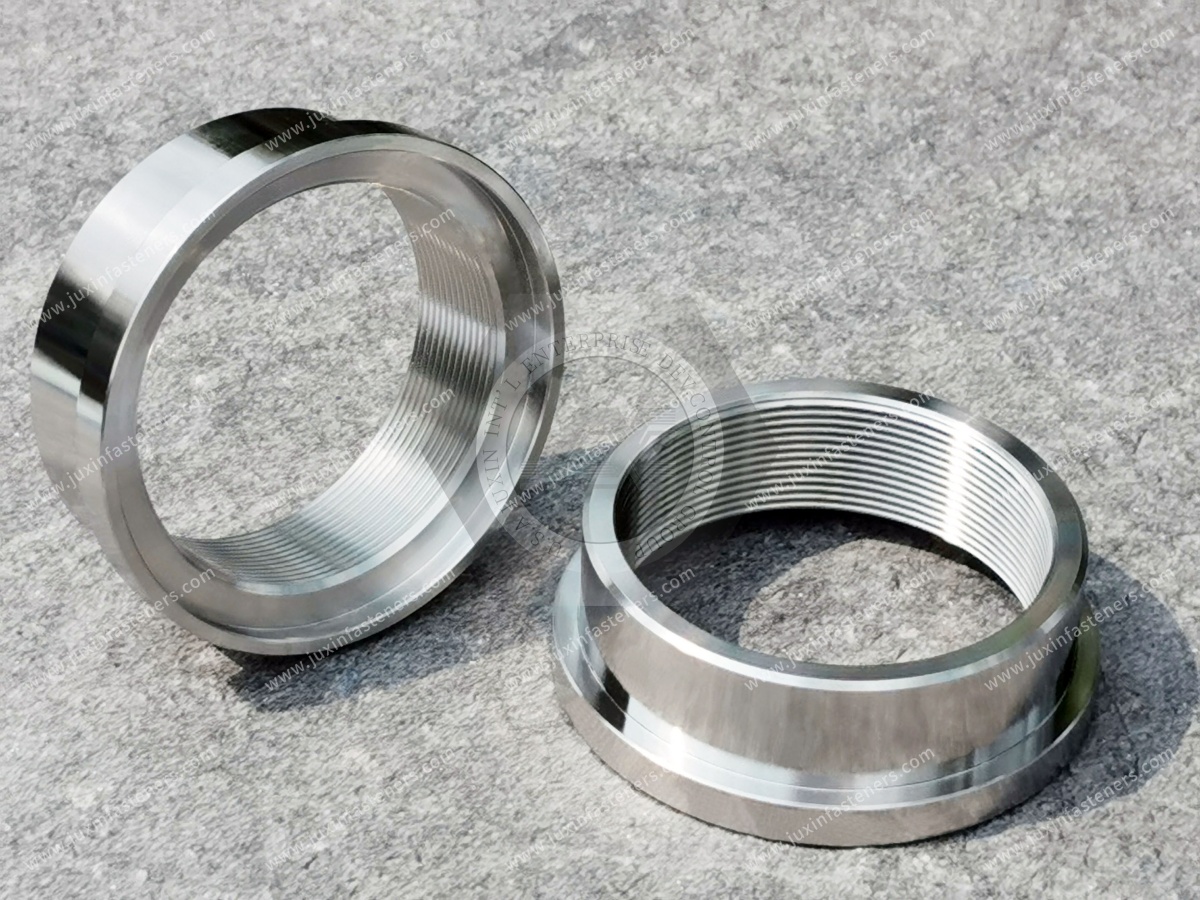
Not Every Thread-Locking Adhesive Is a Pipe Sealant
Thread-locking adhesives and pipe-thread sealants serve different functions.
A product designed primarily to resist screw loosening should not automatically be used for pressure sealing.
Sealant Selection Checklist
Confirm:
Compatibility with the process fluid
Operating temperature
Working pressure
Thread material
Required disassembly
Cure or setting conditions
Cleanliness requirements
Applicable equipment and regulatory requirements
Special Service Warning
Oxygen systems, medical gas systems, high-purity equipment and other critical services may impose special material, cleanliness and sealant restrictions.
Do not use general-purpose thread tape or sealant in such systems without application-specific approval.
Installation Torque and Thread Engagement
Unlike many conventional bolted joints, NPT connections are not normally controlled by a universal torque value.
The correct installation method depends on fitting geometry, material, thread condition, sealant and manufacturer requirements.
Under-Tightening
Insufficient engagement may cause inadequate sealing or mechanical retention.
Over-Tightening
Excessive tightening may damage threads, deform components or crack a fitting or mating port.
Why Stainless Steel Requires Special Attention
Stainless steel threads may be susceptible to galling under unfavorable installation conditions.
Galling can cause abnormal resistance, thread damage and difficult disassembly.
Practical Assembly Controls
Where applicable:
Verify the thread designation before assembly
Inspect threads for damage
Clean the connection
Apply the approved sealant correctly
Use the specified installation procedure
Avoid unnecessary repeated tightening
Perform the required leak test
Production Manager's Perspective
A standardized installation procedure is important because different operators may otherwise produce inconsistent sealing results.
316 Stainless Steel vs 316L NPT Fittings
316 and 316L are related stainless steel grades, but they are not identical specifications.
316L has a lower maximum carbon content than conventional 316.
This can be beneficial in certain manufacturing and welding conditions where sensitization-related corrosion is a concern.
When 316 May Be Suitable
A specified 316 fitting may be appropriate where its material properties, manufacturing process and corrosion performance meet the application requirements.
When 316L May Be Considered
316L may be relevant when the connection design involves welding or where the applicable material specification requires the lower-carbon grade.
Important Procurement Detail
The material description must match the actual certified material and applicable product requirements.
A fitting should not be advertised as both 316 and 316L compliant without evidence that the supplied material satisfies the required specifications.
316 Stainless Steel Corrosion Resistance: What It Can and Cannot Do
316 stainless steel is frequently selected because of its improved resistance to certain corrosive environments.
However, corrosion behavior must be evaluated under actual service conditions.
Pitting Corrosion
Chloride-containing environments can promote localized pitting.
316 may provide improved resistance compared with 304, but severe chloride exposure can still cause damage.
Crevice Corrosion
Crevice corrosion can develop where stagnant liquid is trapped between contacting surfaces.
Pipe-threaded joints, washers, fittings and equipment interfaces may create crevice-like conditions.
Stress Corrosion Cracking
Under susceptible combinations of material, tensile stress, temperature and environment, stainless steel may experience stress corrosion cracking.
Galvanic Corrosion
A stainless steel fitting connected to a dissimilar metal can introduce galvanic corrosion concerns when an electrolyte is present.
Engineering Recommendation
For aggressive chemicals, seawater immersion or elevated-temperature chloride exposure, verify material suitability rather than assuming that 316 stainless steel is universally resistant.
Pressure and Temperature Ratings of 316 NPT Fittings
A common misunderstanding is that all 316 stainless steel NPT fittings have the same pressure rating.
They do not.
The allowable pressure depends on:
Fitting type
Nominal size
Wall thickness
Material specification
Manufacturing method
Thread geometry
Operating temperature
Applicable design code
Manufacturer qualification and rating
Why Material Strength Alone Is Insufficient
The tensile strength of 316 stainless steel does not establish the pressure rating of a finished fitting.
A pressure-containing component must be evaluated as a complete design.
Temperature Effects
Material properties, sealant performance and connection reliability may change with temperature.
A fitting suitable for a particular room-temperature application may not be suitable at elevated temperature.
Applicable Piping Codes
Depending on the industrial application, ASME B31.3 or another relevant piping code may govern system design and component acceptance.
ASME B1.20.1 establishes thread requirements; it does not by itself certify a fitting's pressure rating.
OEM Requirement
Request the applicable fitting rating, temperature limitations and supporting documentation when pressure containment is critical.
Never select a pressure fitting solely on the basis of its stainless steel grade.
Leak Testing and Connection Validation
A leak-free connection should be demonstrated through the appropriate verification procedure rather than assumed from thread engagement.
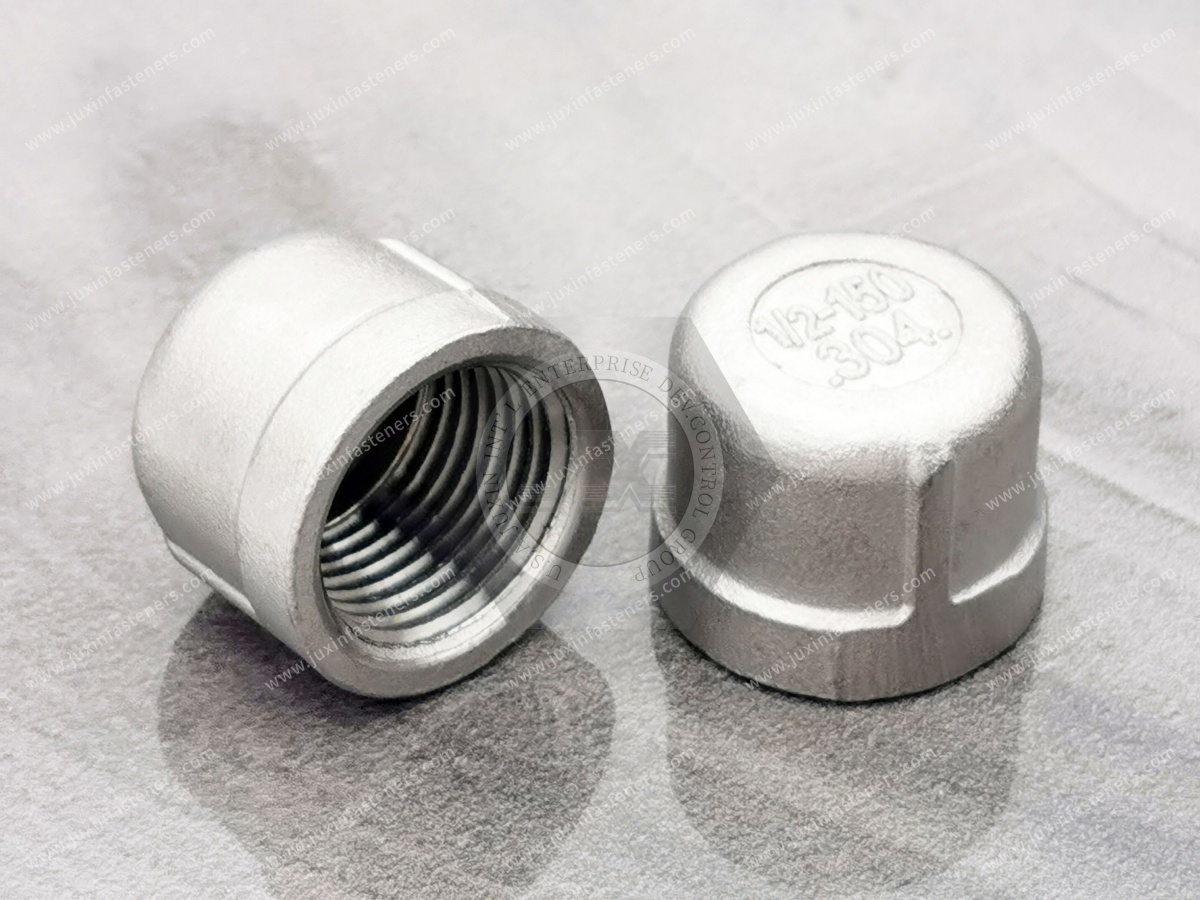
Possible Verification Methods
Depending on the system and approved specification, verification may involve:
Visual inspection
Pressure testing
Pneumatic leak testing
Hydrostatic testing
Pressure decay testing
Other application-specific methods
Important Safety Consideration
Pneumatic pressure testing can involve significant stored energy and must follow the approved safety procedure.
Inspection Principle
Thread dimensional conformity does not automatically establish fluid-tight performance.
Likewise, a successful leak test at one condition does not prove suitability for every pressure, temperature or fluid.
SS316 NPT Fittings for Automotive Manufacturing Equipment
Automotive manufacturing facilities use fluid connections in production equipment, inspection systems and automation machinery.
Potential applications include:
Pneumatic equipment
Industrial cooling equipment
Fluid test systems
Manufacturing fixtures
Process machinery
Engineering Considerations
The selected fitting must match the actual working fluid, operating pressure, vibration exposure and installation environment.
Production Considerations
Repeatable installation, leak verification and maintenance access may affect equipment uptime.
These industrial equipment applications should not be confused with automatic qualification for vehicle safety-critical fluid systems.
EV Battery Manufacturing and Liquid Cooling Equipment
EV battery production and testing facilities may use threaded fittings in suitable auxiliary cooling, test and process equipment.
Potential applications include:
Battery manufacturing equipment
Cooling circulation equipment
Thermal test fixtures
Industrial liquid cooling equipment
Fluid handling systems
Why Material Compatibility Matters
Cooling fluids may contain water, glycol mixtures or other additives.
Material compatibility must be verified for the specific fluid and concentration.
Galvanic Compatibility
Where stainless steel fittings connect to aluminum components, corrosion compatibility should be evaluated.
Sealing and Cleanliness
Leakage can damage equipment and create safety risks.
Thread sealants must be compatible with fluid cleanliness and system requirements.
Design Limitation
An industrial NPT fitting should not be assumed suitable for direct installation in a high-voltage battery pack or
safety-critical battery cooling circuit without complete engineering qualification.

AI Data Center and Industrial Liquid Cooling Applications
Liquid cooling systems used in industrial equipment and computing infrastructure require reliable fluid connections.
316 stainless steel NPT fittings may be evaluated for suitable service and auxiliary connections where the equipment design specifies tapered pipe threads.
Engineering Priorities
Fluid compatibility
Leakage prevention
Material cleanliness
Pressure and temperature suitability
Maintenance accessibility
Corrosion compatibility with mating components
Important Selection Point
Not every liquid cooling system uses NPT threads.
Other connection systems may be preferred for quick disconnection, compact manifolds, controlled sealing or maintenance requirements.
The fitting must match the actual equipment interface.
Rail Equipment and Ground Support Applications
Industrial rail maintenance facilities and ground support equipment may use threaded stainless steel connections in suitable fluid or pneumatic systems.
Potential Applications
Maintenance equipment
Pneumatic tools and fixtures
Industrial cooling equipment
Workshop fluid systems
Any installation on safety-critical rolling stock or regulated aerospace equipment requires separate qualification.
Aerospace Ground Support and Test Equipment
Aerospace ground support equipment may incorporate industrial fluid systems.
However, the presence of 316 stainless steel and NPT threads does not establish aerospace approval.
Material traceability, cleanliness, design requirements and pressure qualification must be reviewed against the actual application.
Industrial Automation, Robotics and Pneumatic Systems
Automation equipment may use threaded fittings for pneumatic or fluid connections.
Applications can include:
Robotic workcells
Machine tools
Pneumatic control equipment
Industrial fixtures
Automated production equipment
Selection Considerations
Compact installation space, vibration, access for maintenance and tubing or pipe compatibility are important.
Engineering Note
NPT fittings are pipe-threaded connections.
They should not be confused with compression fittings, push-to-connect fittings or other connection technologies unless the complete fitting design includes those interfaces.
HVAC and Industrial Cooling Systems
HVAC and cooling equipment may require threaded connections for selected fluid circuits and auxiliary components.
Potential applications include:
Water circulation equipment
Industrial cooling loops
Heat exchanger auxiliary connections
Service equipment
Suitable instrument connections
Critical Limitation
Refrigeration systems may operate with refrigerants, pressures and temperatures that require specialized rated components.
A general-purpose SS316 NPT fitting must not be assumed suitable for refrigerant service without specific verification.
Chemical Processing and Water Treatment
316 stainless steel threaded fittings may be considered for selected chemical processing and water treatment applications.
However, material suitability depends on:
Chemical composition
Concentration
Temperature
Chloride content
Flow conditions
Pressure
Cleaning chemicals
Engineering Recommendation
Obtain a corrosion compatibility assessment for the actual process medium.
For severe chemical environments, an alternative alloy or connection technology may be necessary.
Food Processing, Pharmaceutical and Medical Equipment
316 stainless steel may be used in selected food processing, pharmaceutical and laboratory equipment.
However, a standard threaded pipe fitting is not automatically hygienic or suitable for sterile service.
Hygienic Design Considerations
Conventional threaded connections may create areas that are difficult to clean.
Where hygienic or aseptic design is required, the equipment may need specialized sanitary connection systems.
Medical Gas Applications
Medical gas service involves specialized safety and cleanliness requirements.
General industrial NPT fittings must not be represented as approved for medical gas systems without the necessary product and system qualification.
Construction Equipment and Industrial Machinery
Outdoor industrial equipment may be exposed to moisture, contamination and mechanical vibration.
316 stainless steel fittings can be considered where corrosion resistance is needed and the threaded connection meets the system requirements.
Important Design Factors
Operating pressure
Mechanical support
Vibration
Corrosion exposure
Maintenance access
Mating thread compatibility
The piping system should not rely on a threaded fitting to carry unsupported external loads beyond its approved design.
Information Gain: Why a Correct NPT Thread Can Still Produce a Leaking Joint
A common sourcing mistake is to treat thread compliance as proof of sealing performance.
Consider three different failure scenarios.
Scenario A — Correct Threads, Incorrect Sealant
Both components have compatible NPT threads, but the sealant is unsuitable for the fluid or temperature.
The connection may leak despite correct thread geometry.
Scenario B — Correct Threads, Excessive Tightening
The installer applies excessive force.
The female port or fitting may become damaged, compromising sealing or mechanical integrity.
Scenario C — Correct Threads, Dissimilar Materials
A stainless steel fitting is installed into an aluminum component.
The thread engagement is dimensionally correct, but mechanical stress, thread strength and galvanic corrosion require additional evaluation.
Engineering Lesson
Thread specification, material compatibility, assembly process and operating conditions must be evaluated together.
Practical OEM Connection Validation
For a new fitting application, consider the following sequence:
Confirm the actual thread designation.
Verify mating thread compatibility.
Review fitting material and operating fluid.
Confirm the pressure and temperature rating.
Specify the approved sealing method.
Define the installation procedure.
Inspect the assembled connection.
Perform the required leak or pressure test.
Record the approved configuration for repeat production.
This approach can reduce avoidable assembly defects and supplier-related variation.
Manufacturing Engineering: Controlling NPT Assembly Quality
For OEM production, a fitting must be compatible not only with the engineering design but also with the assembly process.
Incoming Inspection
Confirm the specified material, dimensions, thread form and surface condition.
Thread Protection
Thread damage during storage and handling may affect assembly and sealing.
Protective packaging or thread protection may be appropriate.
Sealant Control
Where sealant is required, establish the approved product and application procedure.
Installation Consistency
Define the applicable tightening method and inspection criteria.
Leak Verification
Specify the test method and acceptance requirements.
Production Manager's Evaluation
Consider:
Assembly cycle time
Rework frequency
Sealant handling
Operator training
Thread damage
Leak-test throughput
Maintenance accessibility
Component traceability where required
316 Stainless Steel NPT Fittings: Material and Dimensional Inspection
A reliable procurement specification should separate material verification from dimensional and functional inspection.
Material Verification
The supplied material should satisfy the specified grade and applicable documentation requirements.
Thread Inspection
NPT thread inspection should use the appropriate ASME B1.20.1 requirements and suitable gauges.
Dimensional Inspection
Check the fitting's drawing-specific dimensions, connection geometry and relevant tolerances.
Surface Inspection
Inspect for visible damage, contamination and specified surface condition requirements.
Pressure and Leak Testing
Where required, define the test conditions and acceptance criteria.
Quality Documentation
The customer should identify the required inspection records, material documentation and any additional qualification requirements.
Important
Do not assume that a material certificate alone verifies the finished fitting's pressure containment or sealing performance.
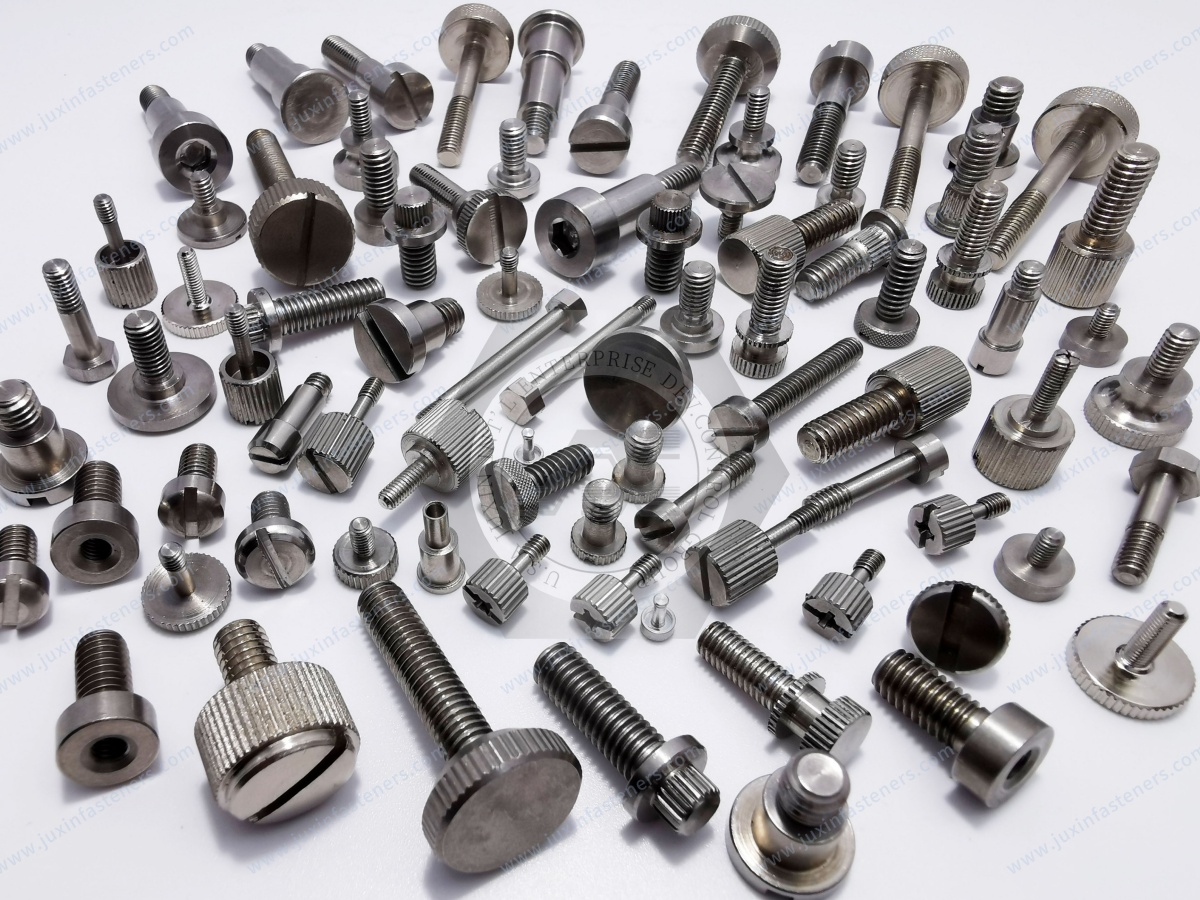
Purchasing Guide: Standard NPT Fittings vs Custom OEM Fittings
Standard fittings may be appropriate when their geometry, material and ratings meet the system requirements.
Custom fittings may be considered where the equipment design requires special geometry or interfaces.
Possible Custom Requirements
Drawing-specific overall dimensions
Special wrenching geometry
Specific male and female thread combinations
Restricted installation envelope
Defined material grade
Specified surface condition
Special inspection requirements
Application-specific packaging
Manufacturing feasibility and availability must be confirmed for each proposed configuration.
Supplier Development Considerations
Procurement teams should compare suppliers using the same technical specification.
A lower unit price is not necessarily the lowest total cost when installation defects, leakage, rework and downtime are considered.
Total Cost Factors
Relevant factors include:
Component price
Material requirements
Manufacturing complexity
Inspection requirements
Assembly labor
Sealant consumption
Leak-test requirements
Rework risk
Packaging
MOQ
Lead time
Supply continuity
OEM RFQ Checklist for SS316 NPT Thread Fittings
| RFQ requirement | Information to provide |
|---|---|
| Product type | Adapter, coupling, elbow, tee, plug or drawing-specific fitting |
| Drawing | Drawing number and revision |
| Material | 316, 316L or another approved grade |
| Material specification | Applicable standard and documentation requirements |
| Thread system | NPT, NPTF or other explicitly specified thread |
| Thread size | Complete designation, such as 1/4-18 NPT |
| Thread configuration | Male, female or combined |
| Connection geometry | Straight, elbow, reducing or custom |
| Overall dimensions | Drawing-specific dimensions and tolerances |
| Operating fluid | Water, coolant, air or specified chemical |
| Working pressure | Required pressure and relevant conditions |
| Operating temperature | Minimum and maximum service temperatures |
| Sealing method | Approved sealant or connection arrangement |
| Mating material | Stainless steel, aluminum, brass or other |
| Corrosion environment | Chlorides, humidity, chemicals or outdoor exposure |
| Inspection | Thread gauges, dimensions and material verification |
| Testing | Required leak or pressure testing |
| Documentation | Material records and other agreed documents |
| Prototype quantity | Sample or qualification demand |
| Annual volume | Expected production requirement |
| Packaging | Bulk, protected threads or other specification |
| Delivery schedule | Required lead time and shipment plan |
Frequently Asked Questions
What does SS316 NPT mean?
SS316 refers to a 316-type stainless steel material, while NPT identifies the National Pipe Taper thread system.
Are NPT fittings automatically leak-free?
No. Sealing depends on the compatible threads, approved sealant, installation procedure and operating conditions.
What standard defines NPT threads?
ASME B1.20.1 covers general-purpose inch pipe threads, including NPT.
Can NPT fittings connect to BSPT fittings?
They should not be treated as directly interchangeable. The thread forms and dimensional requirements differ.
Is NPT the same as NPTF?
No. NPTF uses distinct dryseal thread requirements and requires specific compatibility evaluation.
Is 316 stainless steel suitable for seawater?
It may be suitable for some marine exposures, but continuous seawater contact and severe crevice conditions can create corrosion risks.
What is the difference between 316 and 316L?
316L has a lower maximum carbon content, which can be relevant to certain welding and corrosion requirements.
Do all 316 stainless steel NPT fittings have the same pressure rating?
No. Pressure ratings depend on the complete fitting design, size, material specification, temperature and applicable qualification.
Can PTFE tape be used on stainless steel NPT fittings?
It may be suitable when permitted by the equipment specification and compatible with the fluid and operating conditions.
Why do stainless steel NPT threads seize during assembly?
Galling may occur because of unfavorable surface contact, friction and installation conditions.
Can 316 NPT fittings be used in EV cooling equipment?
They may be suitable for selected equipment connections when fluid compatibility, pressure, sealing and electrical safety requirements are satisfied.
Can Juxin Fasteners review custom NPT fitting drawings?
Yes. Drawing-specific inquiries can be submitted for technical and commercial evaluation.
Juxin Fasteners: Stainless Steel NPT Threaded Connections and OEM Components
Juxin Fasteners supplies industrial fastening and connection components for suitable OEM applications.
Relevant inquiries may include:
SS316 NPT threaded fittings
Stainless steel threaded pipe connectors
Male and female threaded adapters
Stainless steel pipe connection components
Drawing-specific threaded fittings
Custom industrial connection components
The exact fitting types, material grades, manufacturing feasibility, inspection arrangements, pressure requirements, MOQ and delivery schedules are subject to confirmation.
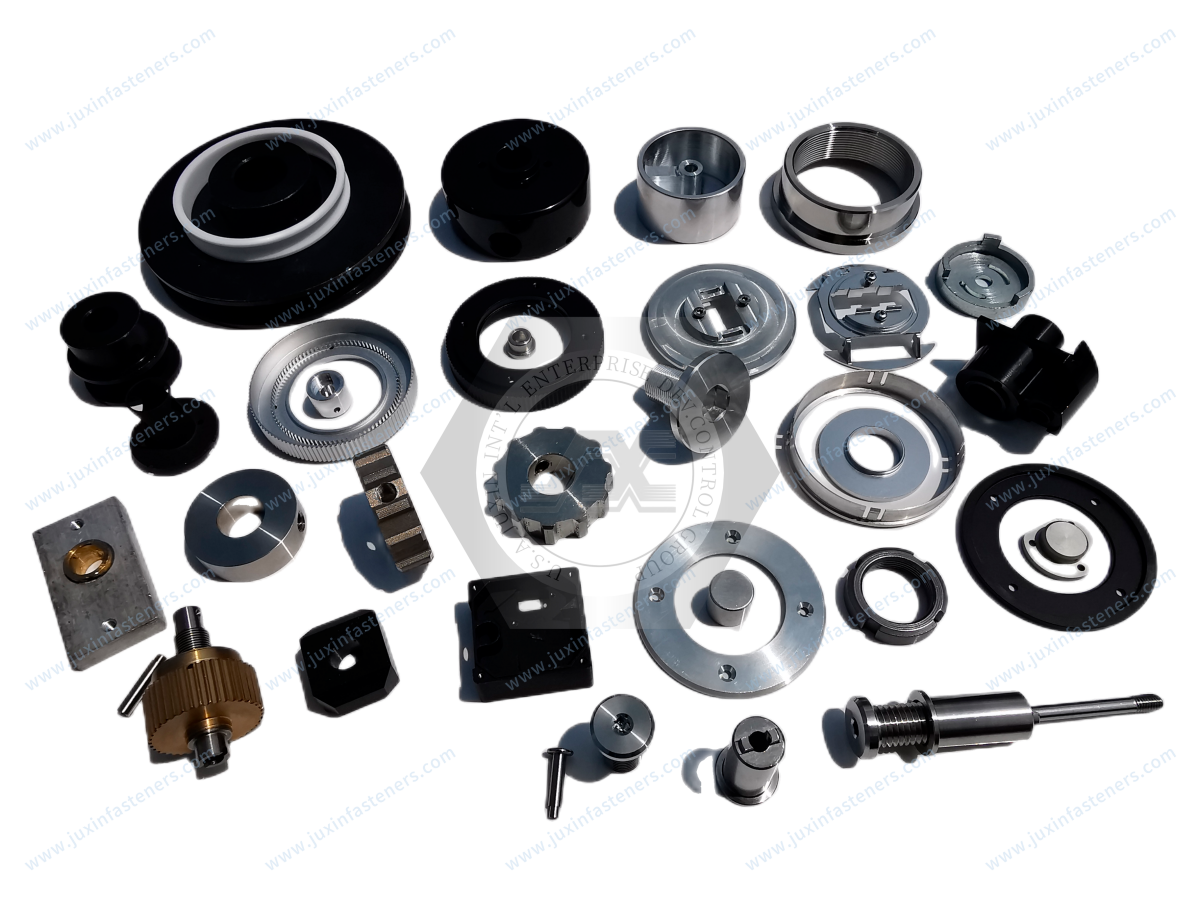
Request SS316 NPT Thread Fittings and OEM Quotations
Are you sourcing 316 stainless steel NPT fittings, corrosion-resistant threaded pipe connectors,
stainless steel adapters or custom industrial fluid connection components?
Juxin Fasteners welcomes inquiries from design engineers, mechanical engineers, manufacturing engineers, production managers,
purchasing specialists, procurement managers and supplier development teams.
For technical evaluation and quotation, please provide:
Product drawing and revision + fitting type + 316 or 316L material requirement + NPT thread designation + male/female configuration
+ dimensions + operating fluid + working pressure + operating temperature + sealing method + inspection requirements
+ prototype quantity + annual demand + packaging + target delivery schedule.
Company: Juxin Fasteners
Website: https://www.juxinfasteners.com/
Email: info@juxinfasteners.com
Send your SS316 NPT fitting drawings and OEM RFQ to Juxin Fasteners for technical review and quotation.
Contact Us
Tel.:
+86 020 8621 0320
+86 020 3121 6067
E-mail:
Technical Support:
Navigation
SEND INQUIREY



