
Call Us
+86 136 6007 9809
Call Us
+86 136 6007 9809

May. 20, 2026
IP58 Sealed Waterproof Rivet Nuts and Fasteners for New Energy Vehicle Applications
Engineering-Grade Sealing Fastener Solutions for EV Battery, Powertrain, and Charging Systems
In new energy vehicle (NEV) manufacturing, fastening systems are no longer simple mechanical connectors. They are critical components that directly affect electrical safety, battery enclosure integrity, vibration resistance, and lifecycle reliability.
As vehicle architectures evolve toward high-voltage platforms (400V–800V), integrated battery structures (CTB/CTC), and lightweight aluminum body systems, traditional welded or standard threaded fasteners are increasingly unable to meet requirements for:
Waterproof sealing under thermal cycling
Long-term vibration resistance
Corrosion protection in battery environments
Single-sided installation efficiency for automation lines
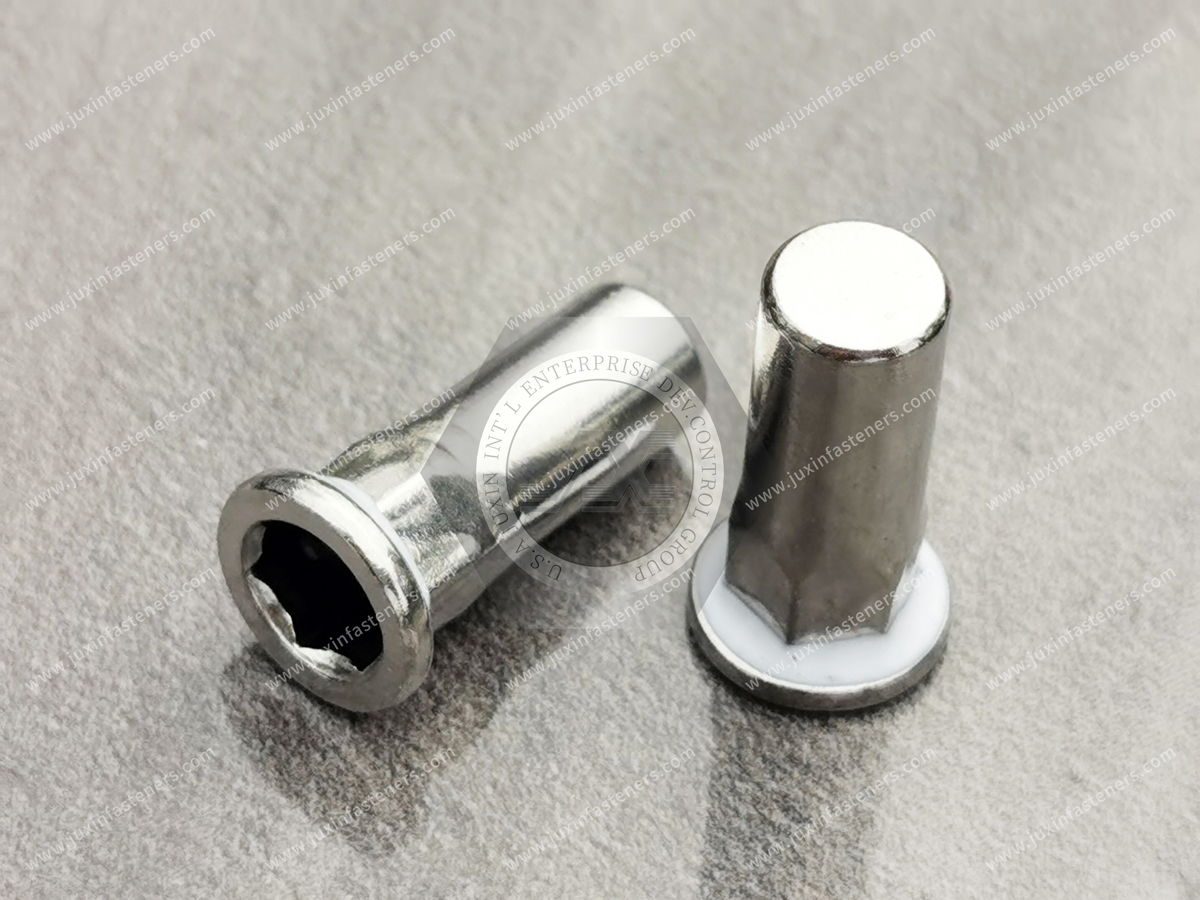
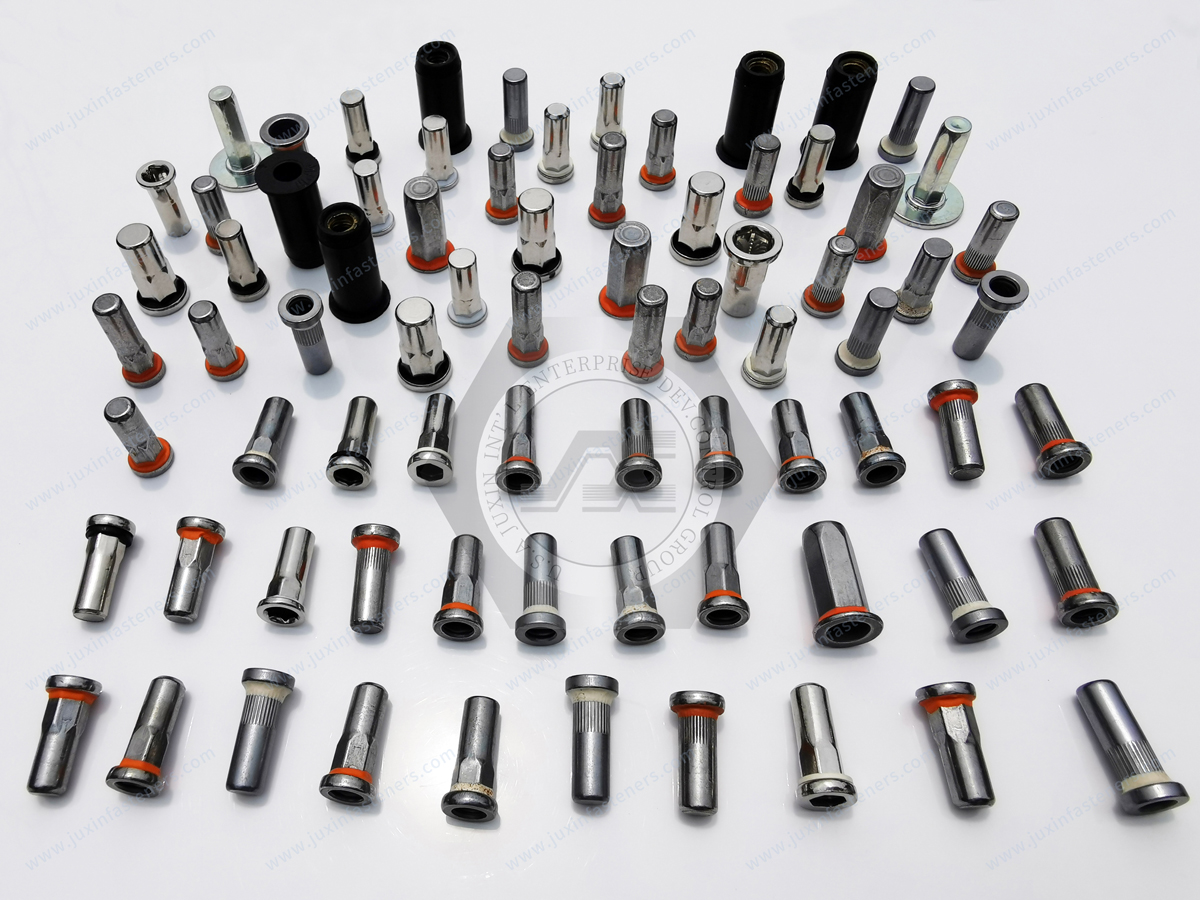
To address these challenges, IP58 sealed waterproof rivet nuts and sealing fasteners have become a widely adopted engineering solution in EV battery packs, electronic control units, charging systems, and underbody assemblies.
I. Why Engineers Use Waterproof Rivet Nuts in EV Manufacturing
From an engineering standpoint, the selection of fastening technology is driven by failure modes rather than cost alone.
Typical Failure Risks in NEV Fastening Systems:
Water ingress causing battery short circuits
Galvanic corrosion in aluminum battery trays
Thread loosening under high-frequency vibration
Seal failure after thermal expansion cycles (-40°C to +150°C)
Maintenance difficulty in sealed battery enclosures
Traditional solutions such as welding, self-tapping screws, or standard rivet nuts often fail under combined moisture + vibration + thermal cycling conditions.
II. IP58 Waterproof Rivet Nut Technical Structure
The IP58 sealed rivet nut system is designed for environments requiring both dust protection and water immersion resistance.
1. IP58 Protection Performance
IP5X: Complete dust ingress protection
IPX8-level design concept: resistance to prolonged water exposure
Suitable for:
Battery pack underside sealing zones
EV motor housing interfaces
High-voltage connector mounting points
2. Active Structural Sealing Design
Unlike conventional fasteners that rely on external gaskets, IP58 rivet nuts use an integrated sealing architecture:
Blind rivet nut body + deformation zone
Integrated sealing ring or sealing membrane
Compression sealing during bolt tightening
When installed, the sealing element undergoes controlled elastic deformation, forming a continuous barrier against water ingress paths through the fastener hole.
Engineering advantage: eliminates micro-leakage caused by gasket aging or vibration wear.
3. High-Temperature Sealing Stability
Advanced variants use:
Silicone sealing compounds (thermal resistant -40°C to +150°C)
“Double 85” aging resistance (85°C / 85% humidity)
UV + chemical exposure resistance for underbody use
4. Materials for EV Environments
Common material selections include:
304 / 316 stainless steel rivet nuts (corrosion-resistant battery environments)
High-strength aluminum alloy rivet nuts (lightweight body structures)
Zinc-nickel / Dacromet coated fasteners (salt spray resistance >500–1000h)
III. Key Application Areas in New Energy Vehicles
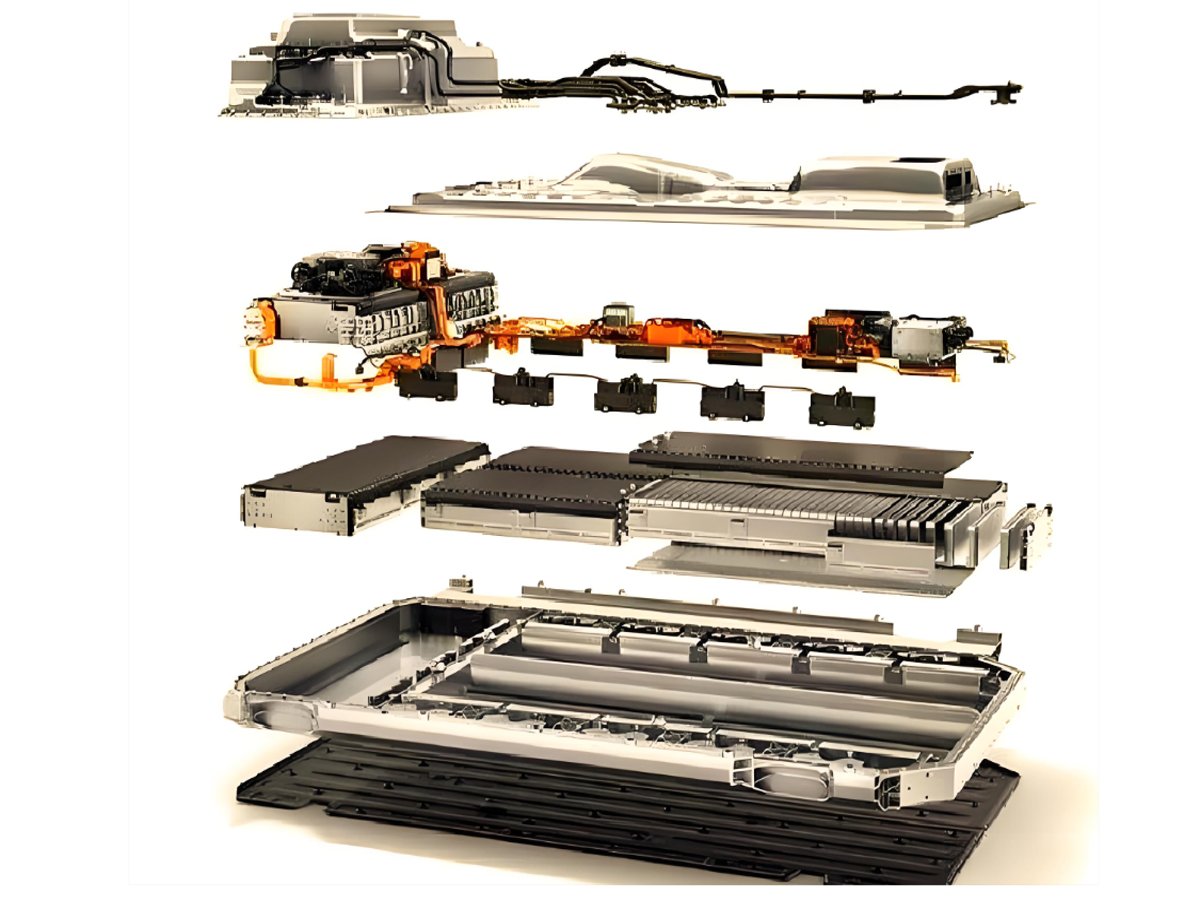
1. EV Battery Pack Fastening (Critical Application)
IP58 waterproof rivet nuts are widely used in:
Battery tray sealing joints
Battery pack cover plates
Cooling system mounting points
Engineering benefit:
Prevents electrolyte contamination and moisture-induced thermal runaway risks.
2. Electric Drive and Motor Systems
Used in:
Motor controller housings
Inverter mounting structures
Power distribution enclosures
Requirement solved:
High vibration + electromagnetic environment + sealing stability.
3. Charging System and High-Voltage Interfaces
Applications include:
Charging port housings
High-voltage connector mounting brackets
Key performance need:
Stable sealing + mechanical retention under repeated plug cycles.
4. Vehicle Body and Underbody Assemblies
Used for:
Aluminum alloy body panels
Underbody protective covers
Sensor mounting brackets
Advantage:
Enables lightweight design without welding distortion.
IV. Engineering Performance Advantages
1. Improved Assembly Efficiency
Single-sided installation (blind-hole assembly)
Compatible with automated riveting systems
Assembly efficiency increased by 40%–60%
2. Vibration and Fatigue Resistance
Maintains preload stability under cyclic load
Eliminates loosening caused by micro-motion
Suitable for high-frequency EV road vibration environments
3. Corrosion and Environmental Protection
Salt spray resistance up to 1000 hours
Resistant to coolant, electrolyte vapor, and road chemicals
Suitable for coastal and high-humidity EV markets
4. Lightweight Engineering Support
Enables thin-wall aluminum fastening (1.0–2.0 mm sheets)
Eliminates welding deformation
Supports multi-material body structures (Al + composites + steel)
V. Manufacturing and Quality Control Standards
To meet automotive OEM requirements, IP58 waterproof rivet nuts are manufactured under:
IATF 16949 automotive quality system
Full process traceability (raw material → cold forming → coating → inspection)
Automated cold heading + precision threading
100% dimensional inspection for critical batches
Key test validations:
Tensile pull-out strength test
Torque-out resistance test
Salt spray corrosion testing
Thermal cycling (-40°C to +150°C)
Vibration fatigue simulation
VI. Engineering Selection Guidelines (Important for Buyers & Engineers)
When selecting waterproof rivet nuts for EV applications:
1. Match Sheet Thickness
Ensure correct grip range (typically 1.0–6.0 mm)
2. Define Environmental Exposure
Battery interior → IP58/IP67 sealing
Underbody → corrosion + vibration priority
3. Material Selection Strategy
Stainless steel → corrosion critical zones
Aluminum alloy → lightweight structural zones
4. Installation Process Control
Controlled rivet setting force
Avoid over-compression of sealing element
Use calibrated riveting tools for consistency
VII. Industry Trend: Sealed Fasteners in EV Manufacturing
The EV industry is rapidly shifting toward:
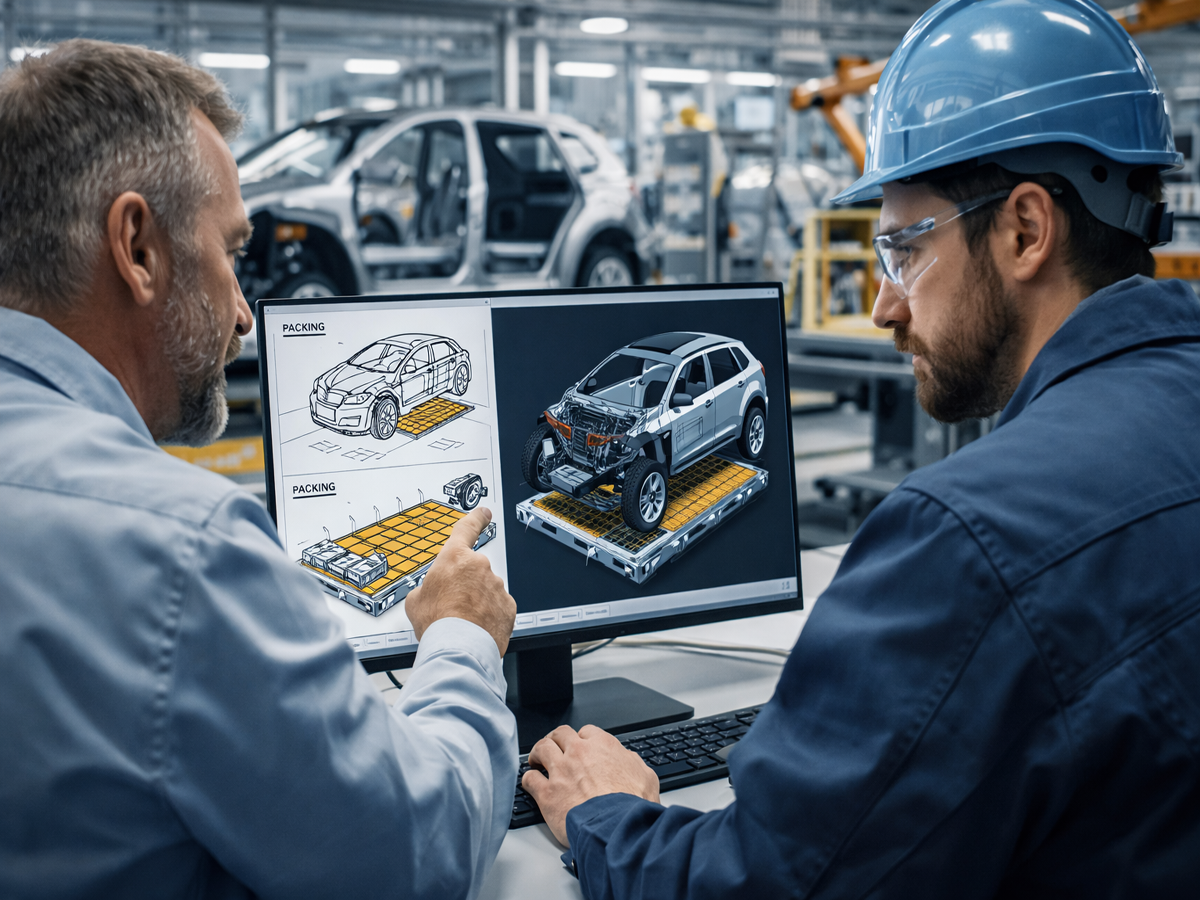
Integrated battery structures (CTB / CTC)
Higher IP protection standards (IP67 → IP68/IP69K)
Full lifecycle sealing reliability
Automated fastener installation systems
Future rivet nut systems will evolve toward:
Smart sealing fasteners with embedded monitoring
Composite material sealing layers
Zero-leak structural bonding systems
Fully digital assembly traceability
Conclusion
IP58 sealed waterproof rivet nuts and fasteners provide a critical engineering solution for next-generation electric vehicle manufacturing.
By combining:
Active structural sealing design
High corrosion-resistant materials
Automated single-sided installation
Verified vibration and thermal performance
They enable OEMs and Tier 1 suppliers to achieve:
Higher battery safety
Improved assembly efficiency
Lower lifecycle maintenance cost
Enhanced vehicle reliability under extreme environments
 MORE NEWS
Sep. 27, 2026
Sep. 27, 2026
Sep. 27, 2026
Contact Us
Tel.:
+86 020 8621 0320
+86 020 3121 6067
E-mail:
Technical Support:
Navigation
SEND INQUIREY