
Call Us
+86 136 6007 9809
Call Us
+86 136 6007 9809

Jun. 09, 2025
Low-Profile Knurled Head Thumb Screws: Tool-Free Panel Fastening, Design and OEM Supply
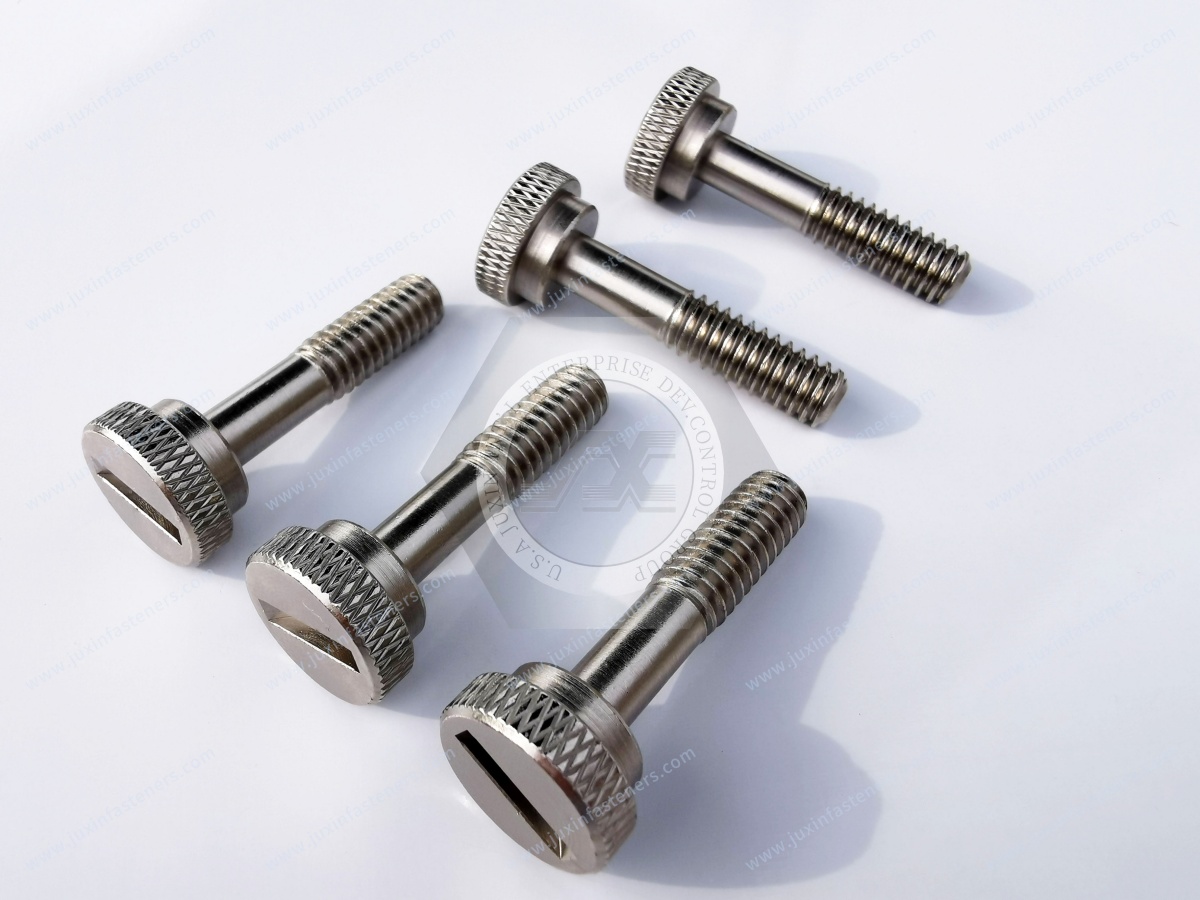
Low-profile knurled head thumb screws are manually operated threaded fasteners designed for equipment where installation height, access space and maintenance convenience are important.
Unlike conventional socket head screws or hex head bolts, a knurled thumb screw can be tightened or loosened by hand when the joint's clamping requirements and available grip permit.
The low-profile head reduces the amount of space occupied above the mounting surface, making this design relevant to compact equipment,
removable panels, control cabinets, instrumentation and industrial machinery.
However, low head height introduces an important engineering tradeoff: reducing the head profile can also reduce the surface available for finger engagement.
A successful design must balance head diameter, head thickness, knurl pattern, thread geometry and required manual tightening force.
For OEM manufacturers, the selection also affects assembly cycle time, operator ergonomics, inspection access and maintenance procedures.
Juxin Fasteners welcomes inquiries for low-profile knurled thumb screws, metal thumb screws and drawing-specific industrial fastening components.
What Is a Low-Profile Knurled Head Thumb Screw?
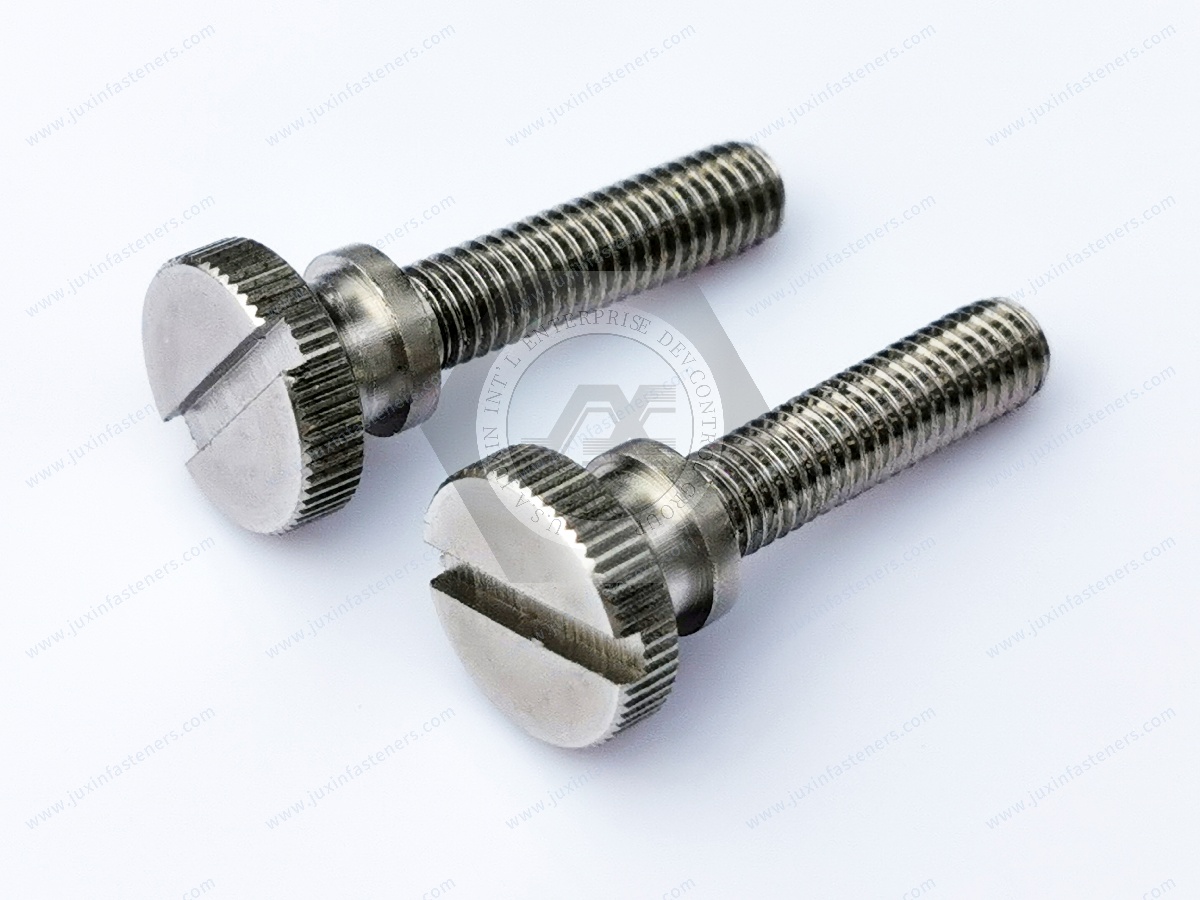
A low-profile knurled head thumb screw is a threaded fastener with a relatively thin head designed for manual operation.
Its head typically includes a textured or knurled outer circumference to improve finger grip.
The threaded shank engages a mating internal thread, such as a tapped hole, nut or suitable threaded insert.
The fastener can be used to secure a removable component or permit periodic manual adjustment.
Main Design Features
Low head height for reduced protrusion
Knurled outer surface for finger engagement
Threaded shank for mechanical fastening
Manual tightening and loosening capability
Material and surface finish options
Potential for drawing-specific head and thread configurations
The actual tightening force achievable by hand depends on the geometry, operator and assembly conditions.
Where Low-Profile Thumb Screws Are Most Useful
They are particularly relevant where a removable panel or adjustable component needs modest clamping force and convenient access.
They should not be selected solely because tool-free operation appears desirable.
The joint must be suitable for manually generated tightening force.
Low-Profile Head Design: Space Saving Versus Finger Grip
The defining advantage of a low-profile thumb screw is its reduced head height.
However, a thin head can be more difficult to grip than a taller knurled head.
This is especially important when operators wear gloves or work inside a crowded enclosure.
Head Diameter
A larger head diameter may provide greater leverage for finger tightening, but it also requires more radial clearance.
Head Height
A smaller head height reduces protrusion but may limit the area available for gripping.
Knurl Geometry
Straight knurling and diamond knurling are common textured surface approaches.
Their suitability depends on manufacturing requirements, user comfort, surface finish and the operating environment.
A more aggressive knurl does not automatically produce a better fastener.
Available Finger Clearance
A thumb screw may fit within the available mechanical envelope but still be difficult to operate.
Designers should verify access around the full head circumference.
Practical Design Principle
The usable clearance is not only the space occupied by the screw.
It must also include the space needed for the operator's fingers to rotate the head.
Critical Dimensions for Custom Low-Profile Thumb Screws
A drawing for an OEM low-profile knurled thumb screw should define the dimensions that influence both installation and manual operation.
| Dimension | Engineering purpose |
|---|---|
| Head diameter | Determines radial space and potential manual leverage |
| Head height | Determines protrusion above the mounting surface |
| Knurled region | Defines available gripping surface |
| Thread diameter | Determines mating thread compatibility |
| Thread pitch | Defines the thread geometry |
| Thread length | Affects available engagement |
| Overall length | Determines installed fit |
| Under-head geometry | Influences seating and bearing contact |
| Edge chamfers | Influence handling and assembly |
| Dimensional tolerances | Support repeatable fit and production |
Why Head Diameter and Head Height Must Be Evaluated Together
Two screws can have the same nominal thread and length while providing very different manual operating characteristics.
A thin, wide head may offer adequate grip in an open assembly.
A thin, narrow head may be difficult to turn when surrounded by adjacent components.
Design Recommendation
For critical operator-access requirements, evaluate physical samples in the actual enclosure or equipment layout before finalizing the drawing.
Carbon Steel Low-Profile Knurled Thumb Screws
Carbon steel is a practical material option for many indoor industrial thumb screw applications.
It can offer useful mechanical strength and compatibility with common fastener manufacturing processes.
Potential applications include:
Industrial machinery covers
Automation equipment
Adjustable fixtures
Electrical cabinet panels
Equipment access components
General-purpose removable assemblies
Mechanical Considerations
Although carbon steel can provide high strength, the complete thumb screw assembly is not necessarily a high-strength joint.
The manually operated head limits the practical tightening method.
The required strength must be established from the fastener design, material condition and application loads.
Surface Protection
Unprotected carbon steel can corrode in humid or aggressive environments.
A suitable surface finish should be specified when corrosion protection or appearance is required.
Nickel-Plated Steel Thumb Screws
Nickel plating is one possible surface treatment for carbon steel knurled thumb screws.
It can provide a decorative metallic appearance and corrosion protection appropriate to the specified coating system and operating environment.
Corrosion Protection
The protection depends on coating composition, thickness, continuity, porosity and exposure conditions.
Nickel plating should not be described as universally suitable for every outdoor or corrosive application.
Appearance
Nickel plating can provide a bright or controlled metallic finish for visible equipment components.
Surface Wear
The actual wear behavior depends on the coating system and service conditions.
Repeated hand operation may affect the surface over time.
Electrical Contact
A nickel-plated metal surface may conduct electricity, but electrical continuity through a fastened joint depends on the complete contact arrangement.
A nickel-plated thumb screw should not automatically be used as a qualified grounding or protective bonding component.
Contact resistance and the relevant electrical requirements must be evaluated separately.
Magnetic Properties
Nickel plating does not make a carbon steel fastener non-magnetic.
Carbon steel generally remains ferromagnetic after nickel plating.
For equipment requiring controlled magnetic behavior, the base material and finished component must be selected and verified accordingly.
OEM Specification Recommendation
State the required base material, nickel plating specification, coating thickness where relevant, appearance requirements and acceptance criteria.
Avoid descriptions such as non-magnetic nickel-plated steel screw unless the actual material and magnetic properties support that claim.
Stainless Steel Low-Profile Thumb Screws
Stainless steel may be preferred when the application requires improved corrosion resistance.
Common material considerations include 304-type and 316-type stainless steel.
304-Type Stainless Steel
May be suitable for general industrial equipment and many indoor or moderate outdoor environments.
316-Type Stainless Steel
May offer improved resistance to certain chloride-containing environments.
However, 316 is not immune to pitting or crevice corrosion.
Thread Galling
Stainless steel threaded components may be susceptible to galling under unfavorable mating and installation conditions.
Material pairing, surface condition and installation procedures should be considered.
Material Designations
SUS304 and SUS316 are Japanese material designations.
For international purchasing, the actual material specification and relevant fastener mechanical requirements must be confirmed.
Typical Applications
Industrial equipment
Food processing machinery
Outdoor control enclosures
Laboratory equipment
Selected medical equipment covers
Equipment exposed to moisture or cleaning operations
Use in regulated or safety-critical equipment requires application-specific qualification.
Brass Thumb Screws
Brass may be selected for applications where machinability, appearance and specific electrical or corrosion characteristics are relevant.
Potential applications include:
Precision instruments
Electronic equipment
Decorative hardware
Laboratory fixtures
Selected manually adjusted components
Engineering Limitations
Brass fasteners generally have different strength and wear characteristics from steel fasteners.
Thread engagement, repeated adjustment and the required clamping force must be evaluated.
Brass should not be selected solely because the fastener is manually operated.
Plastic and Resin Thumb Screws
Plastic thumb screws can provide low weight and electrical insulation in suitable applications.
Potential uses include:
Lightweight electronic enclosures
Non-structural covers
Low-load adjustment components
Selected equipment panels
Important Limitations
Plastic fasteners may be sensitive to temperature, creep, chemical exposure and repeated loading.
Electrical insulation properties depend on the actual material and application conditions.
The design should be validated where dimensional stability or long-term retention is important.
Tool-Free Fastening: What Are the Real Engineering Benefits?
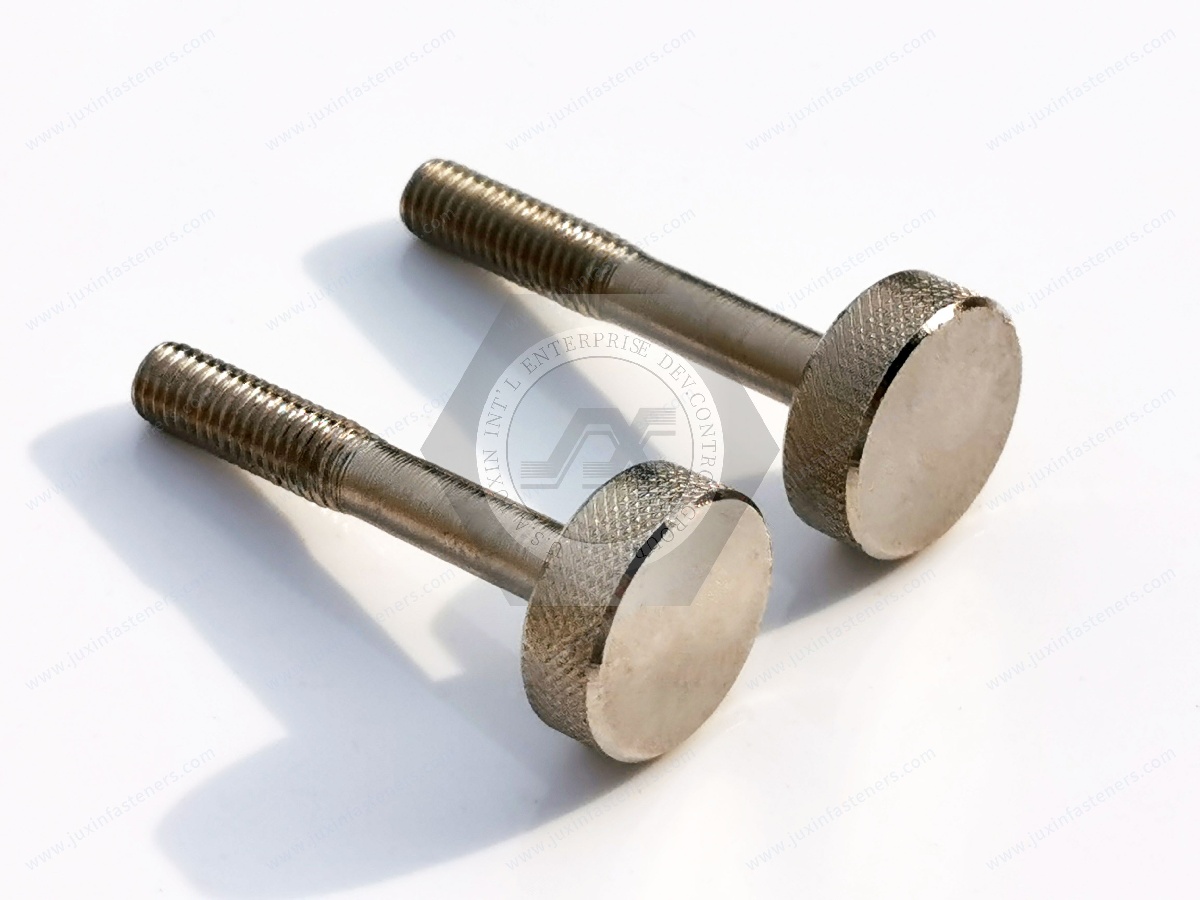
The main benefit of a thumb screw is the ability to operate the fastener without a separate tool.
This can improve convenience when a panel or component is accessed repeatedly.
Maintenance Access
Service personnel can remove selected covers without retrieving a screwdriver or wrench.
Manual Adjustment
Thumb screws can support repeated adjustment of appropriate fixtures and equipment components.
Reduced Tool Dependency
Tool-free operation can simplify certain maintenance procedures.
Assembly Process
For suitable low-load connections, manual installation may reduce the number of assembly operations.
However, these benefits should not be assumed for every production line.
A Key Limitation
Manual tightening introduces variation between operators.
If the joint requires a controlled clamp force, a tool-free thumb screw may not be the appropriate fastening method.
Manual Tightening Torque and Clamp Force
A thumb screw does not generate a fixed or universally repeatable tightening torque.
The applied torque depends on factors such as:
Head diameter
Head height
Knurl texture
Finger grip
Gloves
Operator strength
Thread friction
Bearing friction
Access restrictions
Why This Matters
A screw that feels tight to one operator may have a different preload when installed by another.
This can affect vibration resistance, joint retention and sealing performance.
Engineering Recommendation
Where consistent clamp force is necessary, use an appropriate controlled tightening method or redesign the connection.
Do not assume that manual tightening is suitable for structural or safety-critical joints.
Thumb Screw Thread Selection: Metric and Inch Systems
Low-profile knurled thumb screws may be designed with metric or inch-based threads.
The thread must match the mating component.
Metric Threads
Metric thread dimensions and tolerances should follow the applicable ISO specifications.
Relevant standards may include ISO 68-1, ISO 724 and ISO 965.
Unified Inch Threads
UNC and UNF threads are distinct from metric threads.
They must be specified according to the applicable Unified thread requirements.
Whitworth Threads
BSW and BSF threads use different thread forms and dimensions from ISO metric and Unified threads.
Interchangeability Warning
An approximate inch conversion of a metric diameter is only a dimensional reference.
It does not make the thread interchangeable.
For OEM RFQs, specify the actual thread designation, pitch or threads per inch, tolerance class and mating component.
Standard Thumb Screws Versus Custom Low-Profile Designs
DIN 464 and DIN 653 are associated with particular knurled screw product forms.
However, a drawing-specific low-profile thumb screw should not automatically be described as fully compliant with either standard.
Head geometry, dimensions and other requirements must be checked against the selected standard.
When Standard Designs May Be Suitable
A standardized knurled screw may be appropriate when its head geometry, thread and installation envelope meet the application requirements.
When Custom Low-Profile Designs May Be Necessary
Custom geometry may be considered when:
Head height must be reduced
Head diameter must match a restricted envelope
A special knurl profile is required
The thread length is drawing-specific
A special surface finish is needed
The fastener must fit a particular equipment interface
OEM Recommendation
Use the applicable standard as a reference only where its scope matches the product.
Otherwise, control the custom design through an approved engineering drawing.
Low-Profile Thumb Screws for Electrical Cabinets
Electrical cabinets often contain removable panels, inspection covers and equipment-access components.
A low-profile thumb screw can be relevant where convenient access and limited protrusion are desirable.
Potential Applications
Control panel covers
Inspection plates
Instrument enclosures
Non-safety-critical access panels
Removable equipment covers
Design Considerations
The engineer should verify that the panel can be opened safely, that the fastener provides sufficient retention and that any electrical safety requirements are satisfied.
A tool-free fastener is not automatically suitable for an enclosure that must restrict unauthorized or unqualified access.
Grounding and Electrical Continuity
If the connection forms part of an electrical bonding path, that function must be independently designed and validated.
Thumb Screws for Industrial Machinery and Robotics
Machinery and robotics equipment may require regular access for inspection, adjustment and maintenance.
Low-profile knurled thumb screws can be useful for selected covers, positioning components and removable fixtures.
Potential Benefits
Convenient manual access
Reduced dependence on hand tools
Compact head geometry
Faster component changes in suitable applications
Limitations
Vibration, dynamic loading and accidental loosening must be considered.
A manually tightened thumb screw should not be assumed to provide adequate retention for a high-vibration or high-load joint.
Machine Guards
Where machine guarding requirements apply, the fastener design must satisfy the applicable safety provisions.
Tool-free removal may be inappropriate for certain guards.
HVAC Equipment and Service Panels
HVAC equipment may use manually operated fasteners on selected inspection panels and service-access covers.
Design Requirements
Consider:
Moisture and condensation
Corrosion resistance
Access clearance
Frequency of maintenance
Panel vibration
Required retention
For outdoor equipment, the base material and coating must be suitable for the actual exposure conditions.
Medical and Laboratory Equipment
Selected medical and laboratory equipment may use thumb screws for removable covers, fixtures and adjustment components.
Selection Considerations
Surface cleanliness
Material compatibility
Repeated operation
Operator access
Cleaning chemical exposure
Equipment-specific regulatory requirements
A general industrial thumb screw should not be represented as medical-grade or approved for regulated equipment without appropriate qualification.
Automotive and EV Equipment Applications
Low-profile thumb screws may be considered for selected service-access components, test fixtures, non-safety-critical covers and equipment interfaces.
They should not be assumed suitable for primary vehicle structural connections, high-voltage battery enclosure retention or safety-critical fastening.
EV Battery Equipment
Battery-related applications may involve vibration, thermal cycling, sealing requirements and electrical safety constraints.
A manually operated fastener may be suitable only where the approved equipment design permits it.
Practical Selection Principle
Use thumb screws where tool-free access is an intentional design requirement and the joint's mechanical and safety requirements allow manual tightening.
Sheet Metal Fastening: Matching the Thumb Screw to the Mating Thread
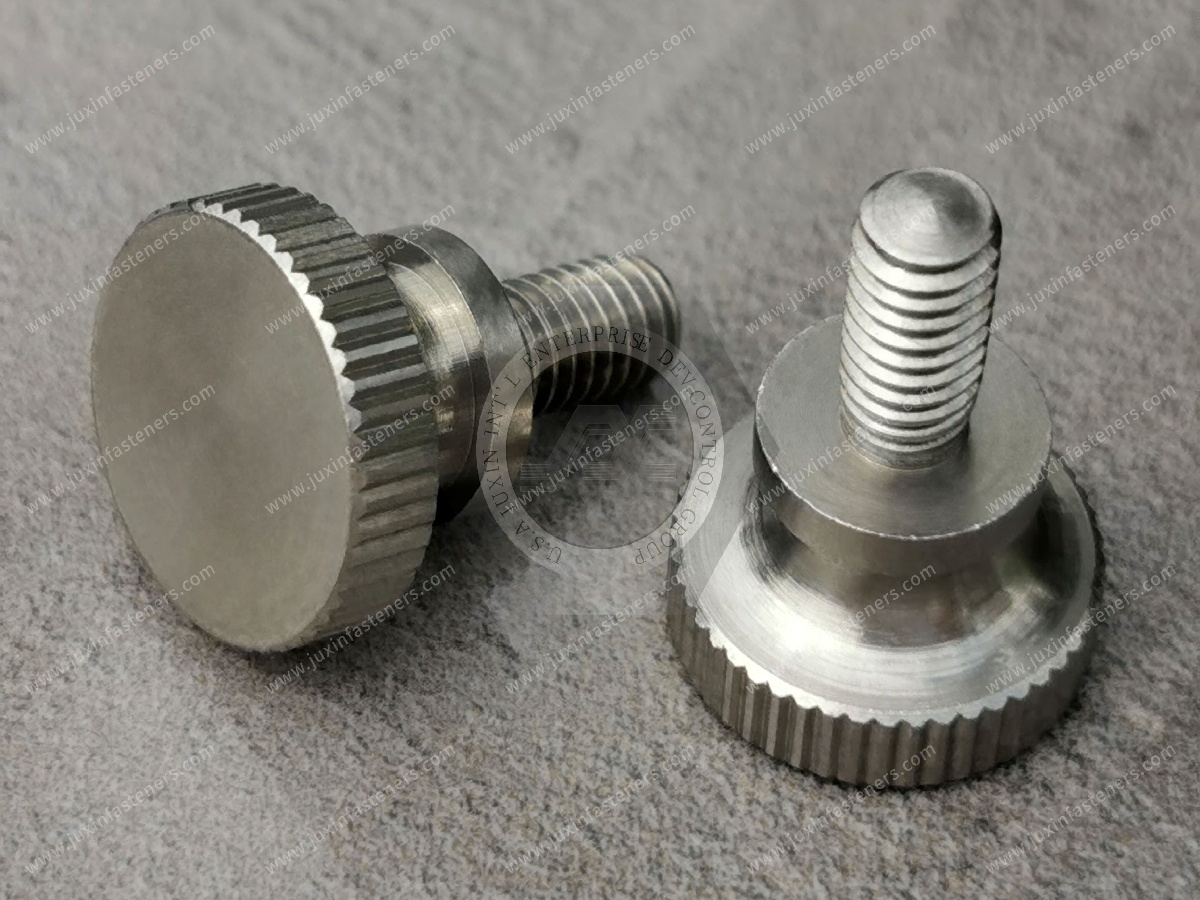
Thin sheet metal often cannot provide sufficient internal thread engagement by itself.
Depending on the application, a thumb screw may engage:
A welded nut
A rivet nut
A self-clinching nut
A separate nut
A suitable threaded insert
A tapped thicker bracket
Why Sheet Thickness Matters
The available thread engagement and local material strength influence the connection's resistance to stripping and pull-out.
Rivet Nut Applications
Rivet nuts can provide internal threads in thin sheet metal when correctly selected and installed.
Grip range, hole size and installation requirements must be checked.
Self-Clinching Nut Applications
Self-clinching nuts depend on compatible sheet material, hardness, thickness and installation conditions.
Assembly Recommendation
Specify both the thumb screw and the mating threaded component.
A correct thumb screw cannot compensate for an improperly installed or unsuitable insert.
Knob-Type Thumb Screws Versus Low-Profile Knurled Screws
Knob-type thumb screws use a larger hand-operated knob, often incorporating a polymer grip and a metal threaded shaft.
They may be more comfortable to operate where higher manual leverage or frequent adjustment is required.
However, they occupy more space.
| Selection factor | Low-profile knurled thumb screw | Knob-type thumb screw |
|---|---|---|
| Head height | Lower | Usually higher |
| Radial space | Depends on head diameter | Often greater |
| Finger grip | Limited by thin head | Can provide more gripping area |
| Manual leverage | Geometry-dependent | Often easier to operate |
| Compact equipment | Often advantageous | May be restricted |
| Frequent adjustment | Suitable when grip is adequate | Often preferable |
| Visual appearance | Compact metallic design | More prominent operator control |
Selection Principle
Choose a low-profile knurled thumb screw when compactness is a primary requirement.
Choose a larger knob-type design when operating comfort and manual leverage are more important than head height.
Captive Thumb Screws: Preventing Fastener Loss
In frequently serviced equipment, a removable thumb screw may be misplaced during maintenance.
A captive screw design can retain the fastener in the panel after disengagement from the mating thread.
Potential Advantages
Reduced risk of lost screws
Easier maintenance handling
Improved control of loose components
Convenience for frequently opened panels
Important Distinction
A conventional low-profile thumb screw is not automatically captive.
Captive functionality requires the appropriate screw geometry and retention arrangement.
OEM Recommendation
If preventing fastener loss is important, specify captive retention as a separate functional requirement.
Production Engineering: Manual Assembly Versus Controlled Installation
Tool-free operation can simplify selected assembly steps, but it may not be the most efficient solution for every production environment.
Manual Assembly
A thumb screw can be convenient when operators need to remove or adjust components repeatedly.
High-Volume Production
A conventional screw installed with an automatic or torque-controlled tool may be faster and more repeatable for some high-volume assemblies.
Ergonomic Considerations
Repeated manual tightening can increase operator fatigue, particularly with thin heads and restricted access.
Production Manager's Evaluation
Compare the following factors before adopting thumb screws for an OEM assembly line:
Actual installation cycle time
Operator access
Required tightening consistency
Assembly frequency
Rework rate
Maintenance convenience
Component cost
Inspection requirements
Information Gain: Why the Smallest Head Is Not Always the Best Low-Profile Design
Low-profile fastener selection often focuses on minimizing head height.
However, the smallest possible head may create additional production and maintenance problems.
Consider two hypothetical design approaches.
Design A — Extremely Thin Head
The screw fits within the available installation envelope but provides limited gripping surface.
Operators may struggle to tighten or remove it consistently.
Design B — Slightly Taller Head
The screw uses a modestly greater head height but offers improved finger engagement.
It may provide better usability while still meeting the equipment's clearance requirements.
Engineering Lesson
The optimum low-profile design is not necessarily the design with the minimum head height.
It is the design that meets the required clearance while remaining practical to operate.
Recommended Validation
Evaluate prototype samples in the actual assembly with representative operators, gloves and access conditions.
Where appropriate, record installation time, usability observations and any functional retention requirements.
Common Thumb Screw Failure Modes and Corrective Actions
| Problem | Possible cause | Engineering action |
|---|---|---|
| Difficult hand tightening | Head too thin or insufficient clearance | Review head geometry and access |
| Screw loosens in service | Inadequate retention or vibration | Reassess joint and locking method |
| Thread stripping | Insufficient engagement or weak mating material | Review thread design and insert selection |
| Corrosion | Unsuitable material or coating | Reassess exposure and surface protection |
| Thread galling | Unfavorable stainless steel pairing or installation | Review material, surface and assembly method |
| Head damage | Excessive force or unsuitable material | Review loading and head geometry |
| Lost screw during service | Fully removable fastener | Consider a captive configuration |
| Inconsistent assembly | Operator-dependent manual tightening | Review work instructions or controlled tightening |
OEM Quality Control for Knurled Thumb Screws
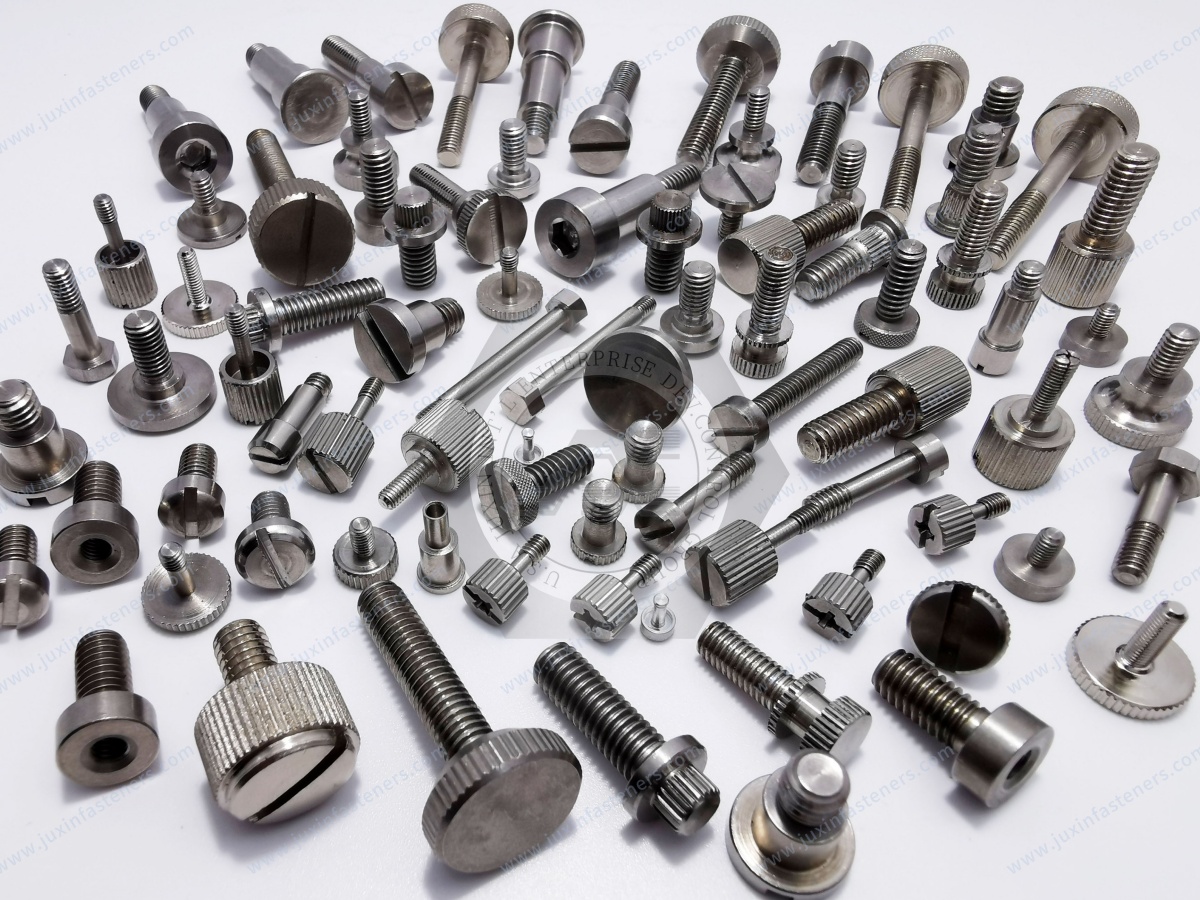
A drawing-specific thumb screw should be inspected against its approved requirements.
Dimensional Inspection
Typical features include head diameter, head height, thread dimensions, overall length and under-head geometry.
Knurl Inspection
The knurled region should meet the agreed appearance and functional requirements.
Surface Finish
The specified coating or surface condition should be checked according to the approved inspection plan.
Thread Fit
The screw should engage the intended mating thread without abnormal interference.
Functional Evaluation
Where required, confirm manual operation and retention in a representative assembly.
Quality Principle
A visually acceptable knurled head does not prove that the fastener will be easy to operate in the final equipment.
Dimensional inspection and application-level evaluation serve different purposes.
Purchasing and Supplier Development: Specifying Custom Thumb Screws
For OEM procurement, a description such as M5 nickel-plated thumb screw may be insufficient.
The drawing should establish the head geometry, material, thread and finish.
Material Selection
Specify carbon steel, stainless steel, brass or another approved material as required.
Head Geometry
Define the low-profile dimensions and knurl details.
Thread Specification
Identify the exact metric or inch thread.
Surface Treatment
Specify nickel plating or another required finish, including applicable acceptance requirements.
Supplier Substitution
A standard knurled screw should not replace a custom low-profile design without confirming dimensional and functional compatibility.
Commercial Requirements
Provide expected quantities, packaging, delivery requirements and relevant quality documentation.
OEM RFQ Checklist for Low-Profile Knurled Thumb Screws
| RFQ item | Required information |
|---|---|
| Product drawing | Drawing number and revision |
| Head type | Low-profile knurled or other design |
| Head diameter | Nominal dimension and tolerance |
| Head height | Nominal dimension and tolerance |
| Knurl geometry | Pattern and functional requirements |
| Thread designation | Metric or inch system, pitch and tolerance |
| Thread length | Required engagement length |
| Overall length | Nominal dimension and tolerance |
| Material | Carbon steel, stainless steel, brass or other |
| Surface finish | Nickel plating or specified alternative |
| Mating component | Nut, insert or tapped hole |
| Application | Panel, enclosure, adjustment or fixture |
| Operating environment | Temperature, moisture and corrosion |
| Assembly method | Manual operation or defined tool process |
| Functional requirements | Retention, accessibility and maintenance |
| Quality documentation | Required inspection or material records |
| Prototype quantity | Initial sample requirement |
| Annual demand | Forecast volume |
| Packaging | Bulk or other agreed presentation |
| Delivery | Required schedule |
Frequently Asked Questions
What is a low-profile knurled thumb screw?
It is a manually operated threaded fastener with a relatively thin knurled head intended for compact assemblies and tool-free operation.
Can low-profile thumb screws be tightened without tools?
Yes, when the required clamping force and access conditions permit manual operation.
Are low-profile thumb screws stronger than standard screws?
Not inherently. Strength depends on material, geometry and applicable mechanical requirements.
Does a thinner head improve grip?
Not necessarily. Reduced head height can make manual operation more difficult.
Are nickel-plated steel thumb screws non-magnetic?
No. Nickel plating does not eliminate the magnetic properties of a carbon steel base material.
Can nickel-plated thumb screws be used for electrical grounding?
Only when the complete connection is designed and verified for the relevant electrical requirements.
Are stainless steel thumb screws suitable for outdoor use?
They may be suitable, depending on the stainless steel grade and actual exposure conditions.
Can thumb screws be used with rivet nuts?
Yes, provided the thread specifications match and the rivet nut installation and joint requirements are satisfied.
Can low-profile thumb screws be used in automotive battery packs?
Only in applications where the approved design permits manual fastening. They should not be assumed suitable for safety-critical battery enclosure retention.
What is the difference between a thumb screw and a captive thumb screw?
A conventional thumb screw can be fully removed. A captive design includes a retention feature intended to keep the screw attached to the panel.
Can Juxin Fasteners review custom low-profile thumb screw drawings?
Yes. Juxin Fasteners welcomes drawing-based inquiries for technical and commercial evaluation.
Juxin Fasteners: Low-Profile Knurled Thumb Screws and OEM Fastening Components
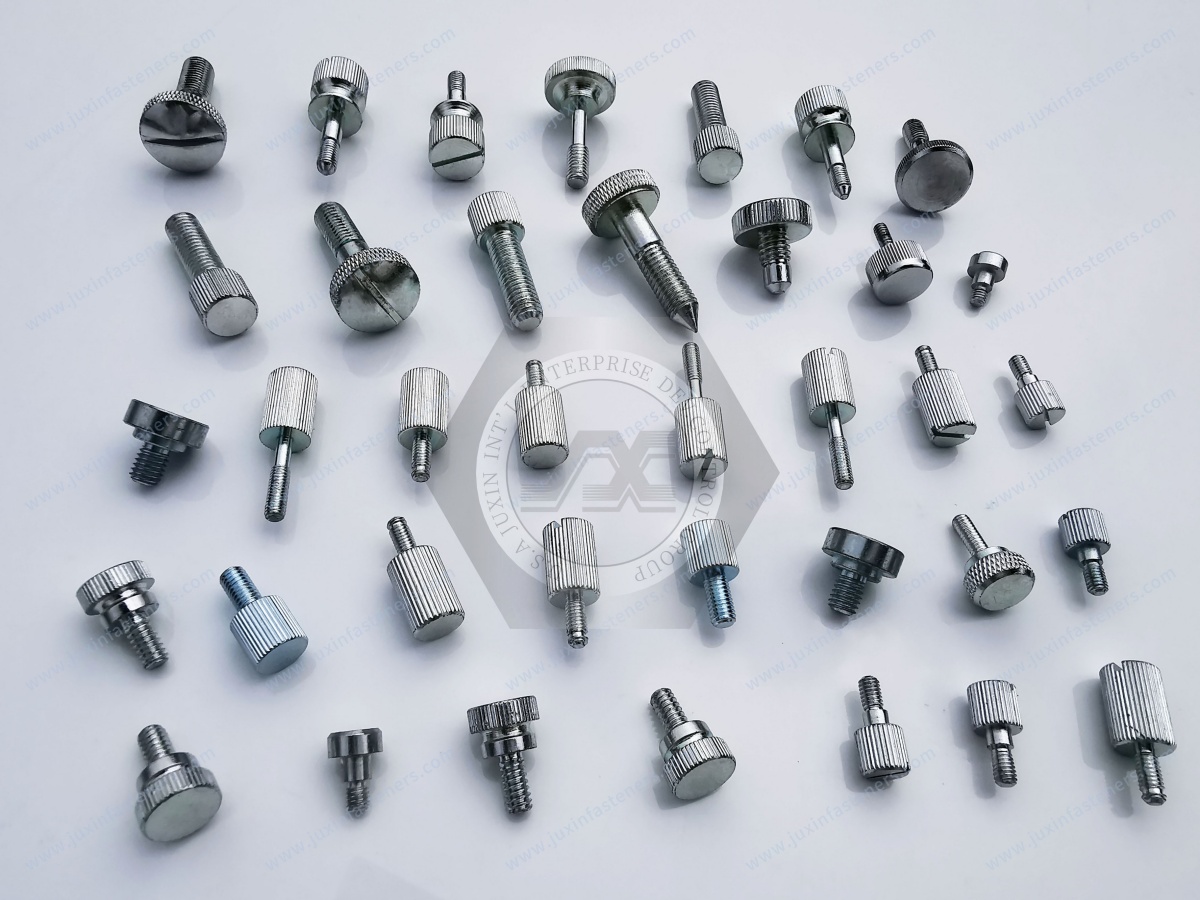
Juxin Fasteners supplies industrial fastening components for suitable equipment manufacturing and OEM applications.
Relevant product inquiries include:
Low-profile knurled head thumb screws
Carbon steel thumb screws
Nickel-plated steel thumb screws
Stainless steel thumb screws
Drawing-specific metal thumb screws
Custom head and thread configurations
Related industrial screws and fastening components
Material selection, coating options, dimensions, manufacturing feasibility, MOQ and delivery requirements are subject to technical and commercial confirmation.
Request Low-Profile Knurled Thumb Screws and OEM Quotations
Are you sourcing low-profile knurled thumb screws, nickel-plated steel thumb screws, stainless steel manual fastening screws
or custom OEM thumb screws for industrial equipment?
Juxin Fasteners welcomes inquiries from design engineers, mechanical engineers, manufacturing engineers, production managers,
purchasing specialists, procurement managers and supplier development teams.
For technical review and quotation, please provide:
Product drawing and revision + head diameter + head height + knurl design + thread specification + material + surface finish
+ mating component + operating environment + assembly requirements + prototype quantity + annual demand + packaging + target delivery schedule.
Company: Juxin Fasteners
Website: https://www.juxinfasteners.com/
Email: info@juxinfasteners.com
Send your low-profile knurled thumb screw drawings and OEM RFQ to Juxin Fasteners for technical confirmation and quotation.
Contact Us
Tel.:
+86 020 8621 0320
+86 020 3121 6067
E-mail:
Technical Support:
Navigation
SEND INQUIREY



