
Call Us
+86 136 6007 9809
Call Us
+86 136 6007 9809

Apr. 28, 2025
304 vs 316 vs Duplex Stainless Steel Fasteners: Corrosion Resistance, Strength and OEM Selection Guide
Stainless steel screws, bolts, nuts and threaded fastening components are widely specified for industrial equipment exposed to moisture,
outdoor weathering, cleaning chemicals, temperature changes and corrosive operating environments.
However, selecting a stainless steel fastener is not simply a matter of choosing a material that does not rust.
The corrosion resistance of a fastening system depends on the stainless steel grade, local environment, joint geometry, mating materials, surface condition and mechanical loading.
A fastener that performs satisfactorily in a clean indoor environment may experience pitting, crevice corrosion or premature failure in a chloride-rich industrial application.
Likewise, a corrosion-resistant fastener may still fail because of insufficient strength, thread galling, incorrect tightening or an incompatible mating component.
For OEM design engineers, the challenge is to balance corrosion resistance with strength, joint reliability and installation requirements.
For manufacturing engineers and production managers, consistent assembly behavior, automated installation and defect prevention are equally important.
Purchasing managers and supplier development teams must also ensure that the specified material, mechanical property class,
surface condition and quality requirements are consistently communicated to potential suppliers.
This guide compares 304, 316 and duplex stainless steel fasteners and explains how to select corrosion-resistant fastening components for industrial OEM applications.
Juxin Fasteners supplies stainless steel screws, bolts, nuts and related fastening components for suitable industrial applications, with drawing-specific requirements subject to technical confirmation.
Why Stainless Steel Fasteners Resist Corrosion
Stainless steels contain sufficient chromium to form a thin, protective oxide film on their surfaces.
This passive film helps reduce the rate of corrosion in suitable environments.
When the surface is exposed to oxygen under favorable conditions, the protective film can reform after minor disruption.
However, the passive layer is not an absolute barrier against every corrosive environment.
Its stability depends on the stainless steel composition and the surrounding conditions.
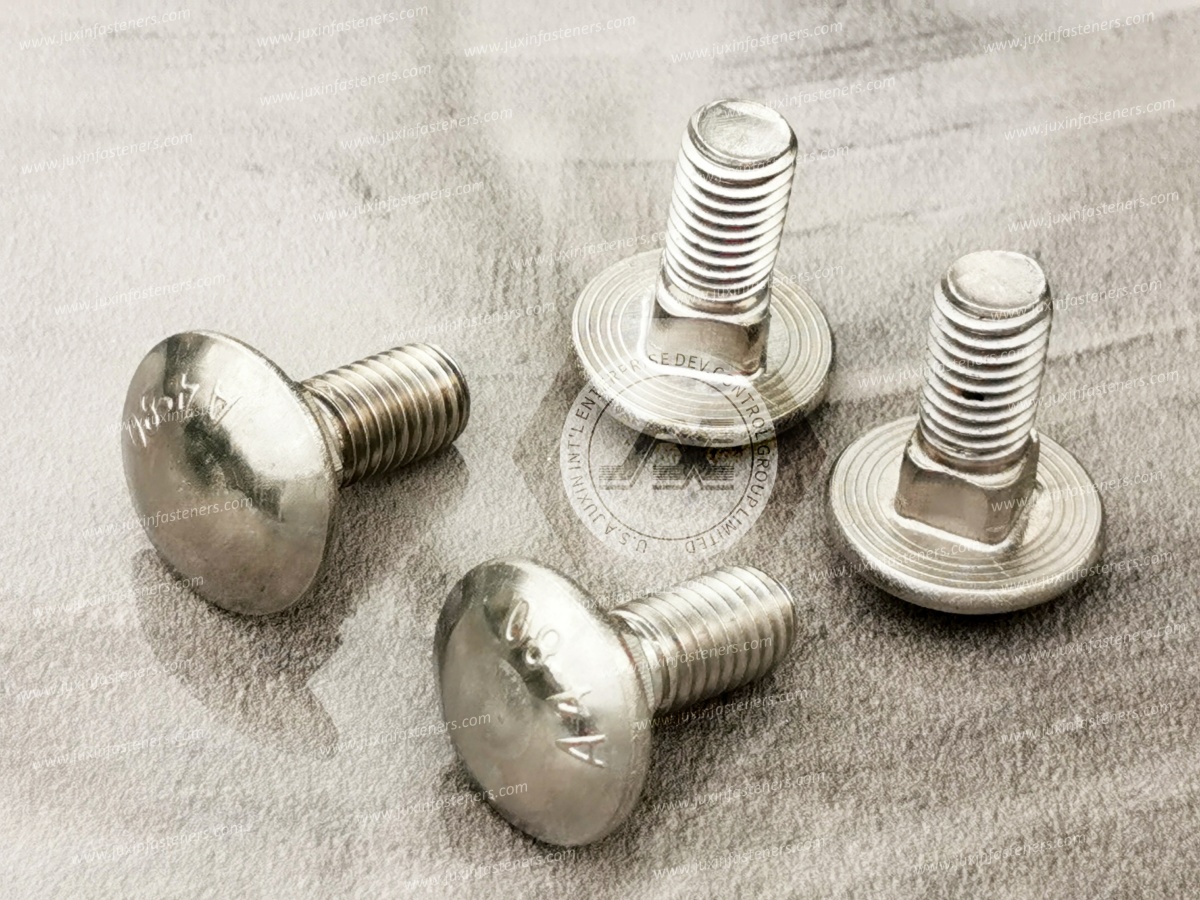
Factors Affecting Corrosion Resistance
Important variables include:
Chloride concentration
Temperature
Moisture and condensation
Acidity and chemical composition
Oxygen availability
Surface contamination
Crevices and stagnant liquid
Contact with dissimilar metals
Mechanical stress and operating conditions
Engineering Principle
A stainless steel fastener should be selected for the actual exposure conditions of the complete joint, not only for the nominal corrosion resistance of the alloy.
For example, an exposed screw head may remain in good condition while the threaded section inside a narrow, wet crevice experiences localized corrosion.
This distinction is important for marine equipment, battery enclosures, outdoor electrical cabinets and industrial machinery.
304, 316 and Duplex Stainless Steel Fasteners: Key Differences
Three commonly discussed stainless steel material groups are 304-type austenitic stainless steel, 316-type austenitic stainless steel and duplex stainless steel.
Their corrosion resistance, mechanical behavior and procurement requirements differ.
| Selection factor | 304-type stainless steel | 316-type stainless steel | Duplex stainless steel |
|---|---|---|---|
| General alloy family | Austenitic | Austenitic | Austenitic-ferritic |
| Key alloy characteristic | Chromium-nickel | Chromium-nickel-molybdenum | Mixed austenitic-ferritic microstructure |
| General atmospheric corrosion resistance | Good in suitable environments | Good in suitable environments | Grade-dependent |
| Chloride pitting resistance | More limited | Generally improved over 304 | Varies significantly by duplex grade |
| Mechanical strength | Depends on fastener property class | Depends on fastener property class | Some grades offer higher strength |
| Thread galling risk | Requires consideration | Requires consideration | Requires consideration |
| Typical selection priority | General industrial corrosion resistance | More demanding chloride exposure | Combined strength and corrosion requirements |
| Commercial consideration | Often a practical baseline | Higher alloy cost may apply | Material availability and manufacturing feasibility require confirmation |
These comparisons describe broad material tendencies.
They are not substitutes for specifying an actual material grade, fastener property class and application-specific performance requirements.
304 Stainless Steel Screws: General Industrial Corrosion Resistance
304-type stainless steel is commonly selected for general-purpose corrosion-resistant fastening.
Its combination of corrosion resistance, formability and availability makes it relevant to many industrial applications.
Common Applications
Indoor electrical cabinets
Industrial control equipment
General machinery
Commercial equipment
Furniture and architectural hardware
Sheet metal enclosures
Selected automotive components
HVAC equipment
Advantages
304-type stainless steel provides useful corrosion resistance in many atmospheric and moderately corrosive environments.
It can be suitable for cold-formed screws, bolts, nuts and other fastening components, depending on the specific material and manufacturing process.
Limitations
304 should not automatically be selected for continuously wet chloride-rich environments, aggressive cleaning chemicals or applications with significant crevice corrosion risk.
Its suitability depends on actual exposure.
Engineering Example
Consider an industrial control cabinet installed inside a temperature-controlled facility.
If the environment has limited chloride exposure and the joint meets its mechanical requirements, a 304-type stainless steel fastener may be a practical choice.
For an otherwise similar cabinet installed outdoors near coastal salt spray, the corrosion requirements may justify evaluating 316-type stainless steel or another qualified solution.
304, A2 and SUS304: Are They the Same?
These designations are related but not identical specifications.
SUS304 is a Japanese stainless steel material designation associated with JIS standards.
AISI 304 is a commonly used stainless steel grade designation.
A2 is a stainless steel group designation used in relevant ISO 3506 fastener classifications.
An A2 fastener may be based on a 304-type alloy, but the designation does not mean that every A2 fastener is specified exclusively as SUS304 or AISI 304.
For OEM purchasing, the applicable material standard and mechanical property class must be confirmed.
316 Stainless Steel Screws: Improved Resistance to Chloride-Induced Corrosion
316-type stainless steel contains molybdenum, which generally improves resistance to localized corrosion compared with 304-type stainless steel under many chloride-containing conditions.
This makes 316-type fasteners relevant to applications involving salt exposure, industrial moisture and certain chemical environments.
Common Applications
Coastal electrical equipment
Marine equipment and selected shipboard assemblies
Chemical processing equipment
Food processing machinery
Industrial washdown equipment
Outdoor equipment exposed to deicing salts
Selected battery and thermal-management equipment
Why Molybdenum Matters
Molybdenum contributes to improved resistance against pitting corrosion in many environments.
However, corrosion behavior depends on the complete alloy composition and exposure conditions.
316 Is Not Immune to Corrosion
316 stainless steel can still experience:
Pitting corrosion
Crevice corrosion
Chloride-related stress corrosion cracking under susceptible conditions
Surface contamination and staining
Galvanic corrosion effects in dissimilar-metal assemblies
Continuous seawater immersion, warm chloride-rich environments and stagnant crevices may require more resistant materials or alternative joint designs.
316, A4 and SUS316
SUS316 is a JIS material designation.
A4 is a stainless steel group designation used in relevant ISO 3506 fastener classifications.
A4 fasteners are commonly associated with 316-type corrosion resistance, but the precise alloy composition and property requirements must still be verified.
Purchasing Recommendation
Specify both the required material or permitted material family and the applicable fastener mechanical property designation.
Do not use marine grade as the only material specification.
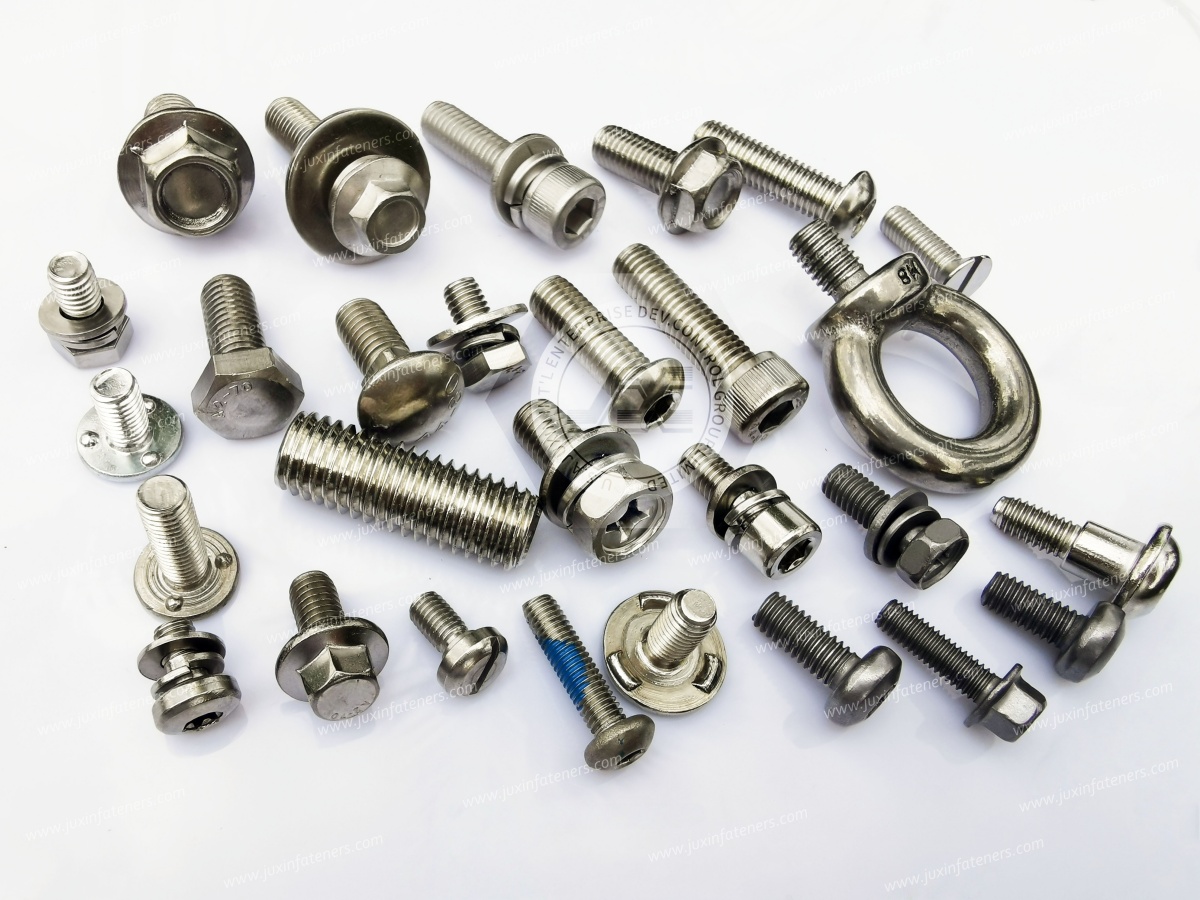
Duplex Stainless Steel Fasteners: Strength and Corrosion Resistance
Duplex stainless steels contain both austenitic and ferritic phases.
Certain duplex grades combine higher strength with useful resistance to chloride-related corrosion mechanisms.
However, duplex stainless steel is a material family rather than a single grade.
Different duplex alloys can have significantly different chemical compositions, corrosion performance and manufacturing characteristics.
Potential Engineering Advantages
Depending on the specific grade and condition, duplex stainless steel may offer:
Higher mechanical strength than conventional annealed austenitic stainless steel
Improved resistance to certain localized corrosion conditions
Improved resistance to chloride stress corrosion cracking compared with susceptible austenitic grades in some environments
Opportunities for weight or size optimization when permitted by joint design
Relevant Applications
Selected offshore equipment
Chemical processing equipment
Corrosion-exposed industrial machinery
Heavy-duty industrial connections
Equipment requiring a combination of strength and corrosion resistance
Important Limitations
Duplex material selection must consider operating temperature, manufacturing method, corrosion environment and applicable product standards.
Not every duplex grade is appropriate for every temperature or chemical environment.
Cold heading, machining, thread forming and material availability may also differ from conventional 304 or 316 fasteners.
What Does D8-80 Mean?
The original article identified D8-80 as a duplex stainless steel fastener designation.
Within the applicable ISO 3506 classification system, duplex stainless steel fasteners may be identified using D-series steel group designations together with mechanical property classes.
However, D8-80 should not be interpreted as the name of one universally defined duplex alloy.
The exact material composition, applicable ISO 3506 part and edition, product form and mechanical property requirements must be verified.
OEM Recommendation
For duplex stainless steel bolts or screws, request the exact material grade, fastener property class and manufacturing feasibility confirmation.
Do not substitute a duplex fastener for an A4 stainless steel fastener solely because its nominal strength is higher.
Mechanical Properties of Stainless Steel Fasteners
Corrosion resistance and mechanical strength are separate selection requirements.
A stainless steel fastener must have sufficient strength for the intended tensile, shear, fatigue and assembly loading.
Why Generic Strength Values Are Misleading
The original article presented broad tensile and yield strength ranges for stainless steel screws.
Such ranges cannot accurately represent all stainless steel fasteners.
Mechanical properties depend on:
Alloy and stainless steel group
Manufacturing process
Cold working
Fastener diameter
Product geometry
Mechanical property class
Applicable product standard
ISO 3506 Mechanical Property Classes
For applicable corrosion-resistant stainless steel fasteners, ISO 3506 provides mechanical property classification requirements.
Common designations include A2-70 and A4-80, subject to the applicable standard, product type and size range.
For example, in an applicable ISO 3506 designation, the number 70 denotes a specified minimum tensile strength level of 700 MPa for the relevant fastener category.
Likewise, 80 denotes a specified minimum tensile strength level of 800 MPa under the relevant classification.
These values must not be applied outside the scope and conditions of the applicable standard.
Tensile Strength Is Not the Same as Yield Strength
Fastener specifications may use proof stress or stress at a defined permanent elongation rather than a conventional yield point.
Therefore, an A4-80 fastener should not automatically be assigned a yield strength based on a generic stainless steel material table.
Strength Comparison With Carbon Steel
Carbon and alloy steel fasteners are available in high-strength property classes such as 8.8, 10.9 and 12.9 under ISO 898-1.
Stainless steel fasteners have their own material and mechanical property classification system.
A4-80 and 8.8 are not equivalent designations.
The materials differ in corrosion resistance, strength characteristics and applicable standards.
For high-load joints, engineers should compare the actual specified mechanical properties and joint requirements rather than assuming that stainless steel is always stronger or weaker.
304 vs 316 vs Duplex: Practical Material Selection Matrix
| Operating environment | Initial material consideration | Engineering verification |
|---|---|---|
| Dry indoor equipment | 304-type / A2 | Strength, appearance and maintenance |
| General outdoor exposure | 304 or 316, depending on exposure | Wetting, pollution and chloride deposition |
| Coastal atmosphere | Often 316-type / A4 as a candidate | Salt exposure, crevices and maintenance |
| Continuous seawater exposure | Higher-alloy solution may be necessary | Detailed corrosion assessment |
| Chemical processing | Application-specific alloy | Chemical concentration, temperature and compatibility |
| Food processing washdown | 304 or 316 depending on cleaning conditions | Cleaning chemicals, hygiene and crevices |
| Aluminum battery enclosure | Stainless steel may be suitable with controls | Galvanic corrosion, thread strength and preload |
| High-strength corrosion-exposed equipment | Duplex or other engineered solution | Strength, corrosion and manufacturing feasibility |
This table is a preliminary selection aid, not a material approval chart.
Pitting Corrosion: Why Stainless Steel Fasteners Can Fail Locally
Pitting corrosion is localized corrosion that can develop when the passive film breaks down under susceptible conditions.
Chloride-containing environments are particularly relevant.
Pitting may begin in a small surface area and progress without uniform corrosion across the entire fastener.
Why Pitting Matters for Bolts
A pit can act as a local stress concentration.
In a mechanically loaded fastener, this can increase concern about fatigue initiation and local damage.
Engineering Controls
Potential measures include:
Selecting a more suitable stainless steel grade
Reducing chloride accumulation
Improving drainage
Avoiding unnecessary stagnant liquid
Controlling surface contamination
Establishing appropriate inspection procedures
A change from 304 to 316 may improve performance in some conditions, but it does not eliminate all pitting risks.
Crevice Corrosion: A Critical Risk in Bolted Joints
Crevice corrosion can occur in restricted spaces where local chemistry differs from the surrounding environment.
Bolted joints naturally contain narrow interfaces.
Examples include:
Beneath bolt heads
Beneath washers
Between overlapping plates
Inside threaded engagement regions
Around sealing components
Why the Joint Geometry Matters
Even when an exposed screw head remains visually clean, the concealed joint interface may retain moisture or corrosive deposits.
This can create localized corrosion conditions.
Design Recommendations
Where relevant, engineers should consider drainage, sealing design, material compatibility and accessibility for inspection.
A corrosion-resistant material cannot compensate for every unfavorable crevice geometry.
Galvanic Corrosion: Stainless Steel Fasteners in Aluminum Assemblies
Stainless steel screws and bolts are frequently used with aluminum components.
This combination is relevant to EV battery housings, electronics, industrial enclosures and lightweight machinery.
However, when dissimilar metals are electrically connected in the presence of a conductive electrolyte, galvanic corrosion may occur.
The relative exposed surface areas, environment and electrical continuity influence the severity.
A Common Design Concern
A relatively small stainless steel fastener installed in a large aluminum component may behave differently from a joint involving a large stainless steel component and a small exposed aluminum area.
The local geometry and environmental conditions must be considered.
Possible Engineering Measures
Suitable insulating washers or sleeves where appropriate
Compatible coatings or surface treatments
Sealing and drainage provisions
Reduced exposure to conductive moisture
Material pairing and corrosion validation
Important
Electrical isolation measures must be compatible with the joint's mechanical, thermal and electrical requirements.
For example, an electrical grounding joint may require a deliberate conductive path.
Stainless Steel Thread Galling and Assembly Reliability
Galling is a form of adhesive wear that can occur when mating metal surfaces experience high contact pressure and relative sliding.
Stainless steel threaded fasteners can be susceptible to galling, particularly under unfavorable material pairing and installation conditions.
Common Contributing Factors
High installation speed
Surface roughness
Unsuitable lubrication
Excessive contact pressure
Thread misalignment
Repeated assembly
Material pairing
Why Galling Matters to Production Managers
Galling can cause sudden increases in installation torque, damaged threads, rejected assemblies and production downtime.
It may also lead to an incorrect assumption that the target clamp force has been achieved.
Practical Prevention Measures
A validated assembly process may include controlled tightening speed, suitable lubrication, appropriate surface treatment and careful thread alignment.
Any lubricant or coating change must be reviewed because it may alter the torque–preload relationship.
Engineering Principle
Do not use tightening torque alone to diagnose whether a stainless steel fastener is assembling correctly.
An abnormal torque increase may indicate galling or thread interference rather than adequate preload.
Stainless Steel Screws vs Zinc-Plated Carbon Steel Screws
Material selection often involves a tradeoff between corrosion resistance, strength, cost and manufacturing requirements.
| Factor | Stainless steel fasteners | Coated carbon or alloy steel fasteners |
|---|---|---|
| Corrosion protection | Relies substantially on alloy passivity | Relies on the specified coating system |
| High-strength options | Depends on stainless grade and class | Broad range of high-strength classes |
| Surface damage | May remain corrosion resistant, depending on conditions | Coating damage may expose the substrate |
| Galling | Important for certain stainless thread pairings | Different wear and friction characteristics |
| Coating selection | May require passivation or other treatments | Zinc, zinc-nickel, zinc flake or other specified coatings |
| Cost | Alloy cost may be higher | Depends on grade, coating and production volume |
| OEM selection | Corrosion environment and joint design | Strength, coating durability and joint design |
When Carbon Steel May Be Preferable
For a high-strength joint with moderate environmental exposure, an appropriately coated carbon or alloy steel fastener may provide a practical solution.
When Stainless Steel May Be Preferable
For equipment exposed to moisture, cleaning operations or certain corrosive environments, stainless steel may reduce dependence on sacrificial coating protection.
No Universal Winner
The correct choice depends on the required mechanical performance, corrosion environment, service life and total lifecycle cost.
Stainless Steel Passivation and Surface Finishing
Passivation is commonly associated with improving the corrosion performance of stainless steel surfaces by removing certain contaminants and supporting the passive surface condition.
However, passivation is not a substitute for selecting the correct alloy.
Why Surface Contamination Matters
Manufacturing, handling or contact with carbon steel tooling can introduce contamination that affects surface corrosion behavior.
Relevant Standards
ASTM A967/A967M and ASTM A380/A380M may be relevant to specified stainless steel passivation, cleaning and surface preparation requirements, depending on the product and process.
The applicable standard and acceptance requirements should be selected according to the actual manufacturing and quality specification.
Salt Spray Testing
Salt spray testing may be used as a controlled comparative or quality test when properly specified.
However, salt spray exposure duration does not directly establish real-world service life.
A reported number of test hours should not be converted into a guaranteed number of years of corrosion-free performance.
Quality Recommendation
Specify the actual required surface condition, inspection method and acceptance criteria.
Do not assume that every stainless steel fastener has received a particular passivation process or test unless it is explicitly included in the approved supply specification.
Stainless Steel Fasteners for Automotive Manufacturing
Automotive equipment may use stainless steel fasteners in selected exterior, interior, electrical and equipment-related assemblies.
Potential applications include:
Vehicle body accessories
Brackets and housings
Electronic equipment
Selected exhaust-related components
Underbody equipment exposed to environmental contamination
Selection Considerations
Automotive engineers must consider corrosion exposure, mechanical loading, thermal conditions, vibration and assembly requirements.
High-temperature exhaust applications may require specialized stainless steel or heat-resistant materials rather than ordinary 304 or 316 fasteners.
Production Considerations
Fastener feeding, torque control, thread engagement and coating consistency should be validated for the intended assembly.

EV Battery Pack and Thermal Management Fasteners
EV battery assemblies may contain aluminum housings, steel brackets, electrical equipment and threaded components.
Stainless steel fasteners can be relevant to selected connections where corrosion resistance is required.
Potential Product Types
Stainless steel screws
Stainless steel bolts and nuts
Stainless steel rivet nuts
Threaded inserts
Drawing-specific fastening components
Important Design Factors
Aluminum Thread Strength
A strong stainless steel bolt does not guarantee that the internal aluminum thread can carry the required load.
Thread engagement and the strength of the mating component must be verified.
Galvanic Compatibility
Material pairing and moisture exposure require evaluation.
Thermal Cycling
Differences in thermal expansion and joint stiffness may affect clamp force.
Sealing
A corrosion-resistant screw does not automatically provide a liquid-tight enclosure joint.
Sealing performance must be separately designed and validated.
Electrical Safety
The fastening arrangement must comply with the applicable electrical and battery system requirements.
Rail Equipment and Transportation Infrastructure
Outdoor rail equipment may experience rain, humidity, vibration and environmental contaminants.
Stainless steel fasteners may be considered for suitable enclosures, accessories and equipment assemblies.
However, rail applications may require additional vibration, fatigue, corrosion and qualification requirements.
A general industrial stainless steel fastener should not be represented as qualified for safety-critical rail applications without the necessary approvals.
Marine and Coastal Equipment
Marine applications create demanding corrosion conditions because of chloride exposure, moisture retention and potential crevice formation.
316-type stainless steel is commonly considered for certain marine environments.
However, continuous seawater exposure and severe crevice conditions may require more resistant materials.
Marine Selection Checklist
Consider the actual chloride concentration, immersion conditions, temperature, accessibility, joint geometry and required mechanical strength.
Aerospace and Medical Equipment
Aerospace and medical applications may require specialized materials, traceability, qualification and regulatory compliance.
The use of 304, 316 or duplex stainless steel does not by itself establish suitability for these sectors.
Any proposed fastener must be evaluated against the applicable product-specific requirements.
Electrical Cabinets and Sheet Metal Fastening Solutions
Electrical enclosures and sheet metal assemblies commonly use removable screws, nuts and installed threaded fasteners.
Potential products include:
Stainless steel machine screws
Stainless steel socket screws
Stainless steel nuts and washers
Stainless steel rivet nuts
Self-clinching fasteners where available and specified
Weld nuts and threaded inserts where appropriate
Sheet Metal Design Considerations
The fastener must be compatible with the sheet thickness, hole geometry, installation method and required retention strength.
For rivet nuts, the grip range and installation conditions must be verified.
For self-clinching fasteners, the sheet material hardness, minimum thickness and installation geometry must meet the selected product's requirements.
Production Considerations
Production managers should consider installation cycle time, tool access, fastener orientation and the risk of thread damage during automated assembly.
HVAC, Food Processing and Laboratory Equipment
HVAC systems may expose fasteners to condensation, outdoor weathering and cleaning operations.
Food processing equipment may introduce washdown conditions and cleaning chemicals.
Laboratory equipment may involve additional chemical compatibility requirements.
Material Selection
304-type stainless steel may be suitable for some applications.
316-type stainless steel may be preferred where the actual chemical or chloride exposure warrants it.
Hygienic Design
Material selection alone does not establish hygienic suitability.
Surface finish, cleanability, joint geometry and contamination control may also be relevant.
Industrial Machinery, Construction and Robotics
Stainless steel fasteners may be used in machinery guards, structural accessories, robotic equipment and outdoor industrial assemblies.
However, corrosion resistance must be balanced against mechanical strength, fatigue, vibration and assembly requirements.
For load-bearing or safety-critical applications, the approved engineering specification governs the material and fastener selection.
OEM Quality Control for Stainless Steel Screws and Bolts
A reliable stainless steel fastener purchasing specification should distinguish between material verification, dimensional inspection and functional performance.
Material Identification
The specified stainless steel grade or group should be supported by the agreed material documentation and verification method.
Mechanical Property Verification
Applicable mechanical property requirements should follow the specified product standard and fastener class.
Dimensional Inspection
Relevant dimensions may include thread geometry, length, head dimensions and drawing-specific tolerances.
Surface Condition
Inspection should address the specified surface finish, cleanliness and any required passivation.
Functional Assembly Testing
Where required, testing may assess tightening behavior, thread engagement, galling risk or joint performance.
Corrosion Testing
The test method and acceptance criteria must be defined according to the actual application.
Supplier Qualification Principle
A stainless steel material certificate alone does not prove that the finished fastener satisfies all dimensional, mechanical, surface and functional requirements.
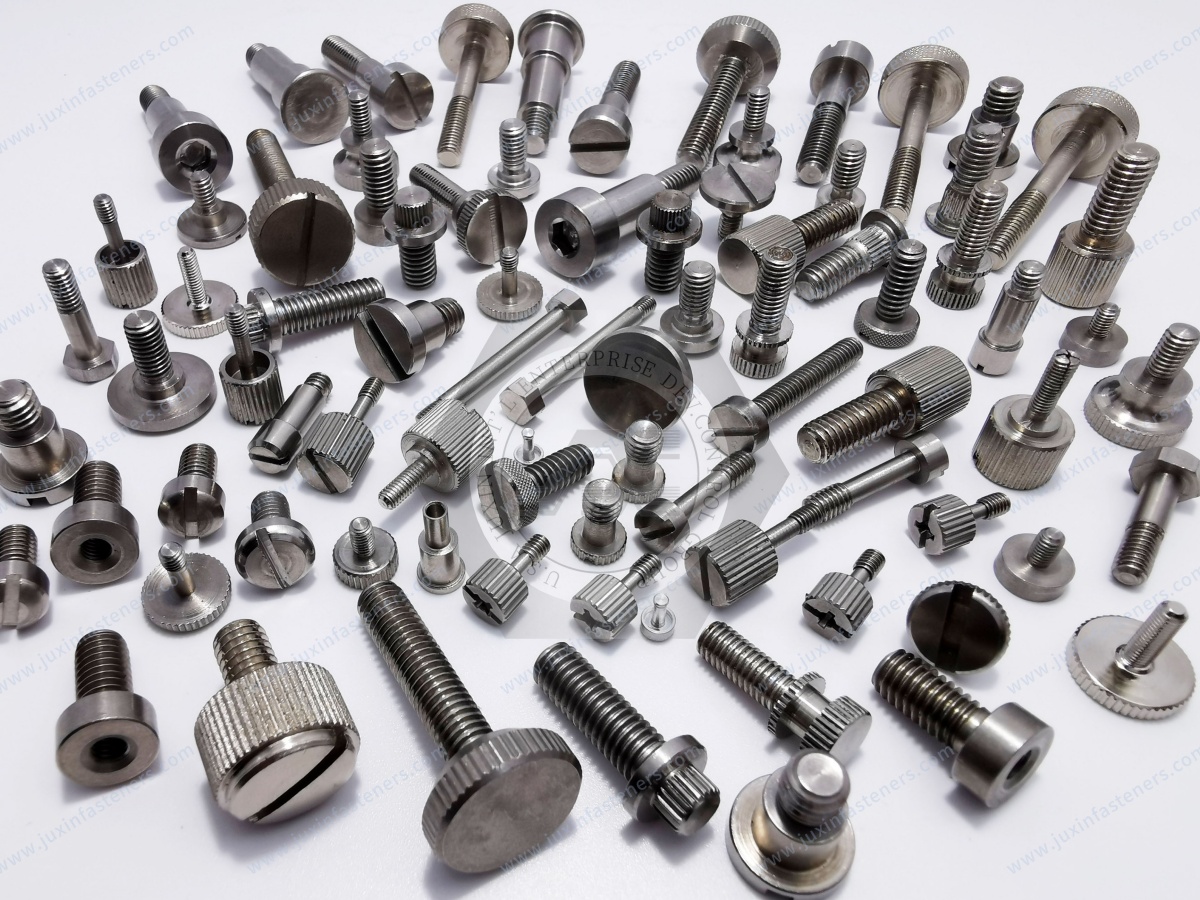
Information Gain: Why Corrosion Resistance Must Be Evaluated at Joint Level
A common material-selection mistake is to compare only the nominal corrosion resistance of two stainless steel grades.
In practice, the fastening system may include a stainless steel bolt, aluminum housing, coated washer, polymer seal and an internal threaded insert.
Each interface can influence corrosion behavior.
For example:
Case A — Exposed Stainless Steel Screw
A screw head is exposed to atmospheric moisture and can dry between wetting cycles.
Case B — Stainless Steel Screw in a Sealed Crevice
The same nominal screw material is installed in a narrow interface that retains moisture and chloride deposits.
Case C — Stainless Steel Screw in Aluminum
The joint introduces a dissimilar-metal interface and may be exposed to conductive moisture.
These three assemblies may require different corrosion controls despite using the same stainless steel grade.
Practical OEM Qualification Approach
Evaluate:
The selected stainless steel material and fastener class
The actual mating materials
The exposure environment
The joint geometry and drainage
The installation and preload requirements
The required service life and maintenance strategy
This approach helps prevent unnecessary material upgrades while identifying joints where a higher-alloy material or improved design is justified.
Purchasing and Supplier Development: How to Specify Stainless Steel Fasteners
A purchasing description such as M6 stainless steel screw is often insufficient for OEM sourcing.
The RFQ should define the product accurately enough for suppliers to evaluate technical compatibility and manufacturing feasibility.
Material Designation
Identify the required stainless steel grade or permitted material group.
Mechanical Property Class
Specify the applicable mechanical property requirements rather than relying only on material name.
Thread System
State the actual metric or inch thread designation.
Metric, UNC/UNF and BSW/BSF threads are not directly interchangeable.
Surface Requirements
Define any required passivation, finish, cleanliness or coating conditions.
Application Environment
Describe the corrosion exposure and service temperature.
Supplier Substitution
Alternative materials or fastener classes should be approved through engineering review rather than automatic purchasing substitution.
Commercial Requirements
Provide expected order quantity, annual demand, packaging and delivery requirements so that MOQ, pricing and lead time can be evaluated.
OEM Stainless Steel Fastener RFQ Checklist
| RFQ information | Why it matters |
|---|---|
| Product drawing and revision | Defines geometry and tolerances |
| Product type | Screw, bolt, nut, washer, rivet nut or insert |
| Material | 304, 316, specified duplex grade or approved equivalent |
| Fastener property class | Defines applicable mechanical performance |
| Thread designation | Ensures correct mating compatibility |
| Dimensions | Length, diameter, head geometry and engagement |
| Surface condition | Finish, passivation or other specified treatment |
| Mating materials | Supports corrosion and joint assessment |
| Service environment | Defines exposure and temperature conditions |
| Tightening method | Supports preload and assembly consistency |
| Corrosion requirements | Defines relevant qualification expectations |
| Inspection documentation | Supports quality control |
| Prototype quantity | Supports initial technical evaluation |
| Annual demand | Supports capacity and commercial planning |
| MOQ and packaging | Supports procurement requirements |
| Delivery requirements | Supports production scheduling |
Frequently Asked Questions
Is 316 stainless steel always better than 304 for screws?
Not necessarily. 316 generally offers improved resistance to certain chloride-related corrosion mechanisms,
but 304 may be appropriate and more economical for less demanding environments.
Can 304 stainless steel screws be used outdoors?
Yes, in suitable environments. Outdoor suitability depends on moisture, pollution, chloride exposure and maintenance conditions.
Are A2 and SUS304 exactly the same specification?
No. They are related designations from different classification systems. The exact material and mechanical requirements must be confirmed.
Are A4 and SUS316 interchangeable?
Not automatically. The relevant alloy composition, product specification and mechanical property class must be checked.
What does A4-80 mean?
It is a stainless steel fastener group and mechanical property designation used within the applicable ISO 3506 classification system.
Is duplex stainless steel always stronger than 316?
Some duplex grades provide higher strength, but the actual comparison depends on the specified material and fastener property class.
Can stainless steel bolts corrode in seawater?
Yes. Stainless steel may experience pitting or crevice corrosion in seawater, particularly under unfavorable temperature and exposure conditions.
Why do stainless steel screws seize during tightening?
Thread galling can occur because of adhesive wear under unsuitable material pairing, contact pressure, surface and installation conditions.
Should stainless steel screws always be passivated?
Not universally. Passivation requirements depend on the material, manufacturing history, surface condition and applicable customer specification.
Can stainless steel screws be installed into aluminum?
Yes, but the joint must be evaluated for galvanic corrosion, mating thread strength, preload and other application requirements.
Are stainless steel fasteners suitable for EV battery enclosures?
They may be suitable for selected joints when the mechanical, corrosion, electrical and assembly requirements are satisfied.
Juxin Fasteners: Stainless Steel Screws, Bolts, Nuts and OEM Components
Juxin Fasteners supplies industrial stainless steel fastening components for suitable OEM manufacturing and equipment applications.
Relevant product inquiries include:
304-type stainless steel screws and bolts
316-type stainless steel fasteners
Stainless steel nuts and washers
Stainless steel rivet nuts
Threaded fastening components
Drawing-specific stainless steel screws and bolts
Corrosion-resistant fastening configurations for industrial equipment
Duplex stainless steel fastener inquiries can be reviewed against the exact material, product design and commercial requirements.
Material grades, mechanical property classes, surface treatments, inspection arrangements,
MOQ and delivery schedules are subject to technical and commercial confirmation.
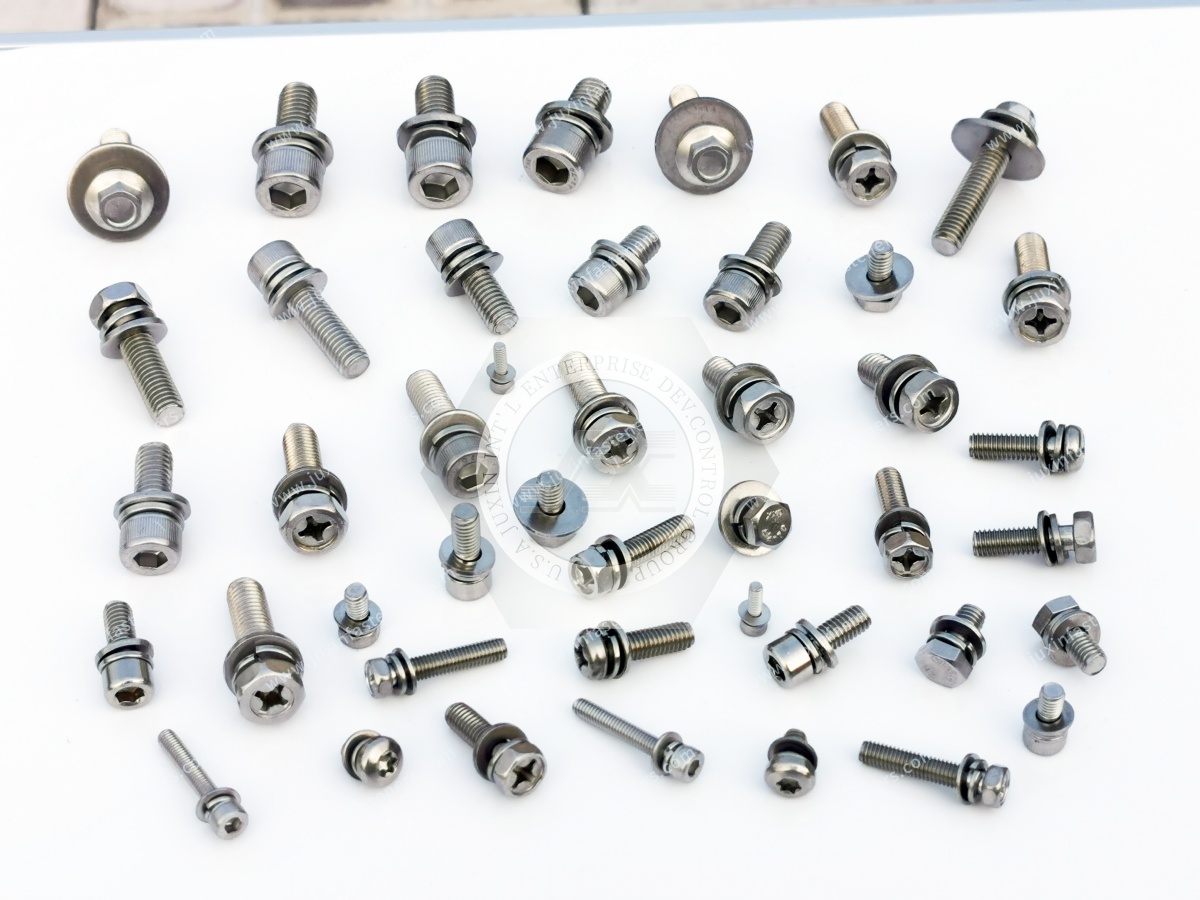
Request Corrosion-Resistant Stainless Steel Fasteners and OEM Quotations
Are you sourcing 304 stainless steel screws, 316 stainless steel bolts, stainless steel nuts,
stainless steel rivet nuts or custom corrosion-resistant fasteners for industrial OEM applications?
Juxin Fasteners welcomes inquiries from mechanical engineers, design engineers, manufacturing engineers, production managers,
purchasing specialists, procurement managers and supplier development teams.
For technical review and quotation, please provide:
Product drawing and revision + fastener type + material grade + mechanical property class + thread designation + dimensions
+ surface finish + mating materials + corrosion environment + required testing or documentation + prototype quantity + annual demand + packaging + target delivery schedule.
Company: Juxin Fasteners
Website: https://www.juxinfasteners.com/
Email: info@juxinfasteners.com
Send your stainless steel fastener drawings and OEM RFQ to Juxin Fasteners for technical confirmation, material selection review and quotation.
Contact Us
Tel.:
+86 020 8621 0320
+86 020 3121 6067
E-mail:
Technical Support:
Navigation
SEND INQUIREY



