
Call Us
+86 136 6007 9809
Call Us
+86 136 6007 9809

Oct. 25, 2023
U-nuts, clip-on nuts, spring nuts, and threaded clip nuts provide a practical way to create threaded attachment points on sheet-metal panels, brackets, housings, covers, and similar structures.
Their value is not that they act as shock absorbers or structural springs.
Their primary engineering function is to provide a conveniently positioned threaded fastening point through a clip-style interface, often without requiring a loose nut behind the panel or a welded threaded attachment.
This makes clip-on nuts particularly relevant to assemblies where production efficiency, edge installation, component serviceability, and simplified hardware handling are important.
However, a U-nut that works well in one automotive panel or equipment enclosure may be unsuitable for another.
Application engineering should consider the complete interface:
panel geometry → clip retention → thread position → mating screw → assembly process → service environment.
This guide explains where clip-on nuts are commonly useful, what engineers should evaluate in different industries, and when another fastening technology may be more appropriate.
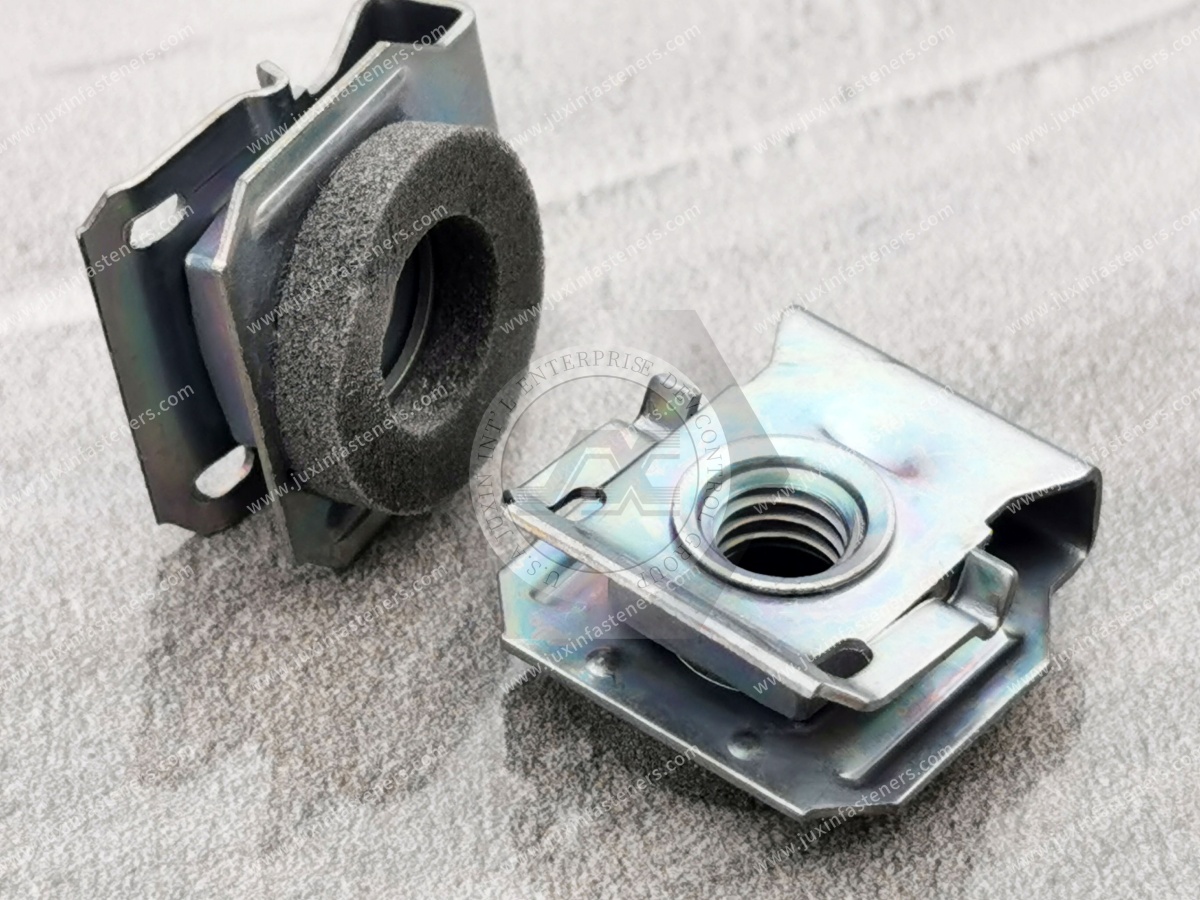
A typical U-nut clips over an accessible edge or compatible panel feature and positions a threaded element relative to a mating hole.
Depending on the design, the spring-style body helps retain the fastener on the panel before and during screw installation.
This can simplify assembly by reducing the need for a separate loose nut and rear-side wrench access.
Common commercial names include:
U-nuts
Clip-on nuts
Clip nuts
Spring nuts
Threaded clip nuts
Sheet metal clip nuts
These terms can describe different geometries. For engineering and sourcing purposes, the actual dimensions and interface should therefore take priority over the product name.
Clip-on nuts are particularly useful when several design conditions occur together.
The assembly has a suitable panel edge or mounting feature.
A threaded attachment point is required.
The fastener must remain positioned during assembly.
Using a separate loose nut would complicate assembly.
A welding or permanent installation process is unnecessary or undesirable.
The component may need to remain serviceable.
When these conditions are present, an edge-mounted clip nut can simplify the fastening architecture.
However, the design still needs to account for panel thickness, reach, thread alignment, material, finish, screw access, and production tolerances.
Automotive manufacturing is a major application area for U-nuts and clip-on fasteners because vehicles contain many formed sheet-metal panels, brackets, covers, and serviceable components.
Potential applications can include:
Body panel attachments
Interior structural attachments
Trim mounting points
Brackets
Covers
Selected exterior assemblies
Equipment mounting interfaces
Service-access components
Sheet-metal subassemblies
The exact fastener design depends on the vehicle architecture and customer specification.
A clip nut should not automatically be described as a chassis load-bearing fastener or suspension component simply because it is used in a vehicle.
Its suitability depends on the load path and the specific joint design.
Automotive assemblies combine several variables that can influence a small spring-style fastener.
These may include:
Coated sheet metal
Formed panels
Tight packaging
High-volume assembly
Powered screw installation
Multiple tolerance contributors
Temperature changes
Moisture and road environments
Service requirements
Vibration and dynamic loading
The correct question is therefore not simply:
“Is this an automotive U-nut?”
A better set of engineering questions is:
What panel must it fit?
Where must the thread center be located?
How will it be installed?
What screw will engage it?
What environmental conditions will the joint experience?
What happens during vehicle service?
These questions convert a generic fastener selection into an application-specific engineering decision.
Panel and bracket assemblies are natural candidates for clip-on fastening when the design provides an accessible edge.
Important variables include:
Finished panel thickness
Edge geometry
Edge-to-hole-center distance
Hole diameter or slot geometry
Clip reach
Thread size
Available installation clearance
Mating screw direction
The clip should seat correctly without unacceptable panel deformation or coating damage.
The thread center should also remain aligned with the mating screw throughout the expected production tolerance range.
Interior assemblies can benefit from fasteners that simplify installation and service access.
Depending on the design, clip nuts may be used at sheet-metal or bracket interfaces behind:
Interior panels
Console structures
Equipment covers
Mounting brackets
Access components
Engineers should still consider installation force and retention.
A clip that is too loose may be displaced during vehicle assembly. A clip that grips too aggressively may be difficult to install or may damage the mating surface.
The objective is controlled assembly behavior rather than maximum spring force.
One useful feature of many threaded clip systems is that they can support assemblies intended to be removed for inspection, repair, or component replacement.
Examples may include selected:
Covers
Access panels
Equipment enclosures
Service brackets
Removable sheet-metal components
However, serviceability does not mean unlimited reuse.
If repeated disassembly is expected, the actual clip, screw, panel interface, and service process should be evaluated for the intended number and type of maintenance operations.
Electrical equipment contains many sheet-metal enclosures and panel structures where a convenient threaded attachment point is required.
Potential applications include:
Electrical cabinets
Equipment enclosures
Control panels
Mounting brackets
Covers
Access panels
Internal structural supports
Clip-on nuts can reduce loose hardware and simplify assembly where the panel architecture is compatible.
Selection should consider enclosure material, finished panel thickness, thread requirements, access, corrosion environment, and equipment-specific electrical requirements.
Where grounding or bonding requirements apply, those requirements must be addressed by the complete equipment design and should not be assumed from the clip nut alone.
Power distribution equipment can contain substantial sheet-metal architectures involving covers, panels, brackets, cable-management structures, and service-access components.
A clip-on nut may be considered where:
Edge access is available
A removable threaded attachment is required
Assembly efficiency is important
A permanent welded nut is unnecessary
The fastener must still be evaluated against the equipment manufacturer's mechanical, environmental, and electrical specifications.
Data centers and AI/HPC infrastructure require large volumes of mechanical hardware across racks, power equipment, cooling equipment, control systems, and supporting enclosures.
Clip-style threaded fasteners can potentially be used in suitable sheet-metal structures such as:
Equipment housings
Covers
Brackets
Control enclosures
Cooling equipment structures
Power equipment panels
Serviceable assemblies
Not every rack or enclosure uses the same fastening architecture.
Engineers should distinguish clip-on nuts from cage nuts, rivet nuts, and self-clinching fasteners, which solve different interface requirements.
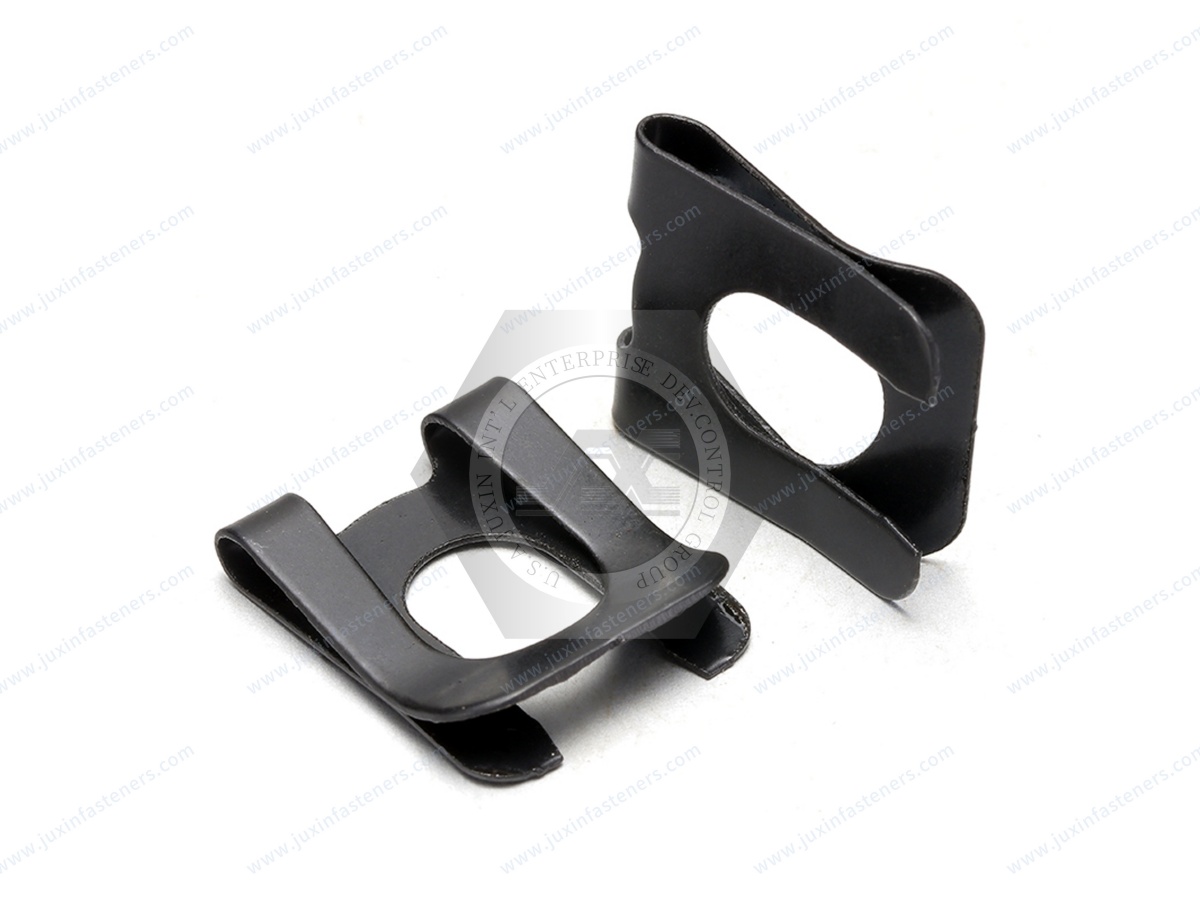
This decision often depends on the panel architecture.
A clip-on nut generally requires a suitable panel edge or related mounting feature.
A cage nut normally installs into a designed panel opening and retains a nut within a cage.
Depending on the design, some cage nuts permit positional movement that can help accommodate mating-component alignment.
Consider a cage-nut architecture when the equipment design requires its specific panel opening and retained-nut arrangement.
Consider a clip-on nut when edge mounting and the associated clip geometry better match the enclosure.
Neither technology is universally superior.
Industrial machinery contains many guards, covers, housings, brackets, and access panels that require threaded fastening.
Potential clip-nut applications include:
Machine covers
Guards
Equipment housings
Control cabinets
Service panels
Mounting brackets
Sheet-metal subassemblies
Clip-on nuts can be useful when equipment builders want a threaded attachment without handling a loose nut behind the panel.
However, they should not automatically be used for major structural joints or heavily loaded machine interfaces without engineering validation.
The load path and joint requirements determine whether the technology is appropriate.
HVAC and thermal-management systems commonly use formed sheet-metal housings, covers, duct-related equipment structures, fan enclosures, access panels, and control compartments.
Potential applications include:
Equipment covers
Fan housings
Access panels
Control-box structures
Brackets
Removable service components
These applications may involve temperature variation, condensation, outdoor exposure, or corrosive environments depending on the equipment.
Material and finish should therefore be selected according to the actual environmental specification.
Commercial equipment can include complex combinations of sheet metal, access panels, internal brackets, covers, and serviceable assemblies.
Examples can include suitable fastening points in:
Commercial kitchen equipment
Vending equipment
Refrigeration equipment
Food-service equipment structures
Equipment cabinets
Service covers
Fastener selection should consider cleaning environments, corrosion conditions, service access, panel material, and equipment-specific requirements.
Material selection should be application-specific rather than based solely on the industry name.
Automation equipment, control systems, robotic cells, and production machinery often require removable enclosure panels and mounting structures.
Clip-on nuts can provide threaded attachment points for suitable:
Machine enclosures
Control cabinets
Safety covers
Mounting brackets
Equipment panels
For high-volume equipment production, repeatable fastener position and screw alignment can be particularly important.
A small alignment problem multiplied across many assembly points can increase installation time and rework.
One of the most important lessons across all these industries is that the clip cannot be selected independently of the panel.
Engineers should consider:
Nominal panel thickness
Thickness tolerance
Coating
Paint
Multiple material layers
Local forming
Edge condition
Burrs
The clip engages the finished production interface.
If the panel condition changes, the installation behavior can change even when the fastener drawing remains unchanged.
For an edge-mounted clip nut, reach determines where the threaded feature sits relative to the panel edge.
This dimension must correspond to the mating hole and screw path.
Incorrect reach can cause:
Hole-to-thread misalignment
Difficult screw starting
Angled screw entry
Cross-threading
Assembly rework
This is particularly important when sourcing replacement clip nuts for existing equipment.
A visually similar fastener with the same thread may not be functionally equivalent if its reach differs.
Material selection should begin with the application environment rather than a generic assumption that one material is always superior.
Depending on the fastener design and customer specification, relevant material systems may include suitable carbon steels, spring steels, stainless steels, and specified surface finishes.
Consider:
Indoor or outdoor use
Moisture exposure
Chemical exposure
Panel material
Screw material
Corrosion requirements
Forming requirements
Spring behavior
Appearance requirements
Equipment specification
The complete material and finish combination should be validated for the application.
A clip-on nut should not automatically be described as vibration-proof or as a universal self-locking nut.
The clip body primarily provides positioning and panel retention in many common designs.
The behavior of the threaded joint under vibration depends on the complete joint architecture, including:
Screw and thread geometry
Joint clamp conditions
Mating surfaces
Material
Load direction
Vibration amplitude and frequency
Installation conditions
If vibration loosening is a critical design risk, the complete fastening system should be evaluated under representative conditions.
Clip-on nuts contain spring-like geometry, but that does not make them suspension springs, vibration isolators, or shock absorbers.
Their elastic geometry is primarily related to installation and panel retention.
If an assembly requires vibration isolation or shock absorption,
those functions should be addressed through components and system architecture designed specifically for those requirements.
This distinction is important when specifying fasteners for automotive, machinery, medical, and other safety-relevant equipment.
A U-nut is not the correct solution for every sheet-metal joint.
Another fastening technology may deserve consideration when:
No suitable panel edge is accessible
The required attachment point is far from an edge
Permanent panel retention is required
High structural loads exceed the intended clip application
Welding is already part of the manufacturing architecture
One-sided hole installation is more practical
A press-installed permanent threaded feature is preferred
Significant positional adjustment is required
This is where technology comparison becomes important.
A rivet nut, or blind threaded insert, is installed through a prepared hole and forms a retained threaded attachment.
It can be useful where access is available from only one side and an edge-mounted clip is not practical.
The key design question is:
Do you have a suitable panel edge, or do you need to create the threaded attachment through a hole?
That question can quickly separate many U-nut and rivet-nut applications.
Self-clinching fasteners are mechanically installed into suitable sheet material through controlled pressing.
They can provide a permanently retained threaded feature when the panel material, thickness, and manufacturing process support the technology.
A U-nut provides a different assembly route based on clip retention.
Choose based on panel design, installation equipment, retention requirements, access, service strategy, and load conditions.
Weld nuts provide a permanently welded threaded attachment and may be appropriate where welding is already part of the manufacturing process.
Clip-on nuts avoid the welding operation and can support removable or service-oriented assemblies.
Consider:
Manufacturing sequence
Panel material
Coating sequence
Welding access
Service requirements
Required retention
Joint loads
The two technologies should not be treated as interchangeable without reviewing these conditions.
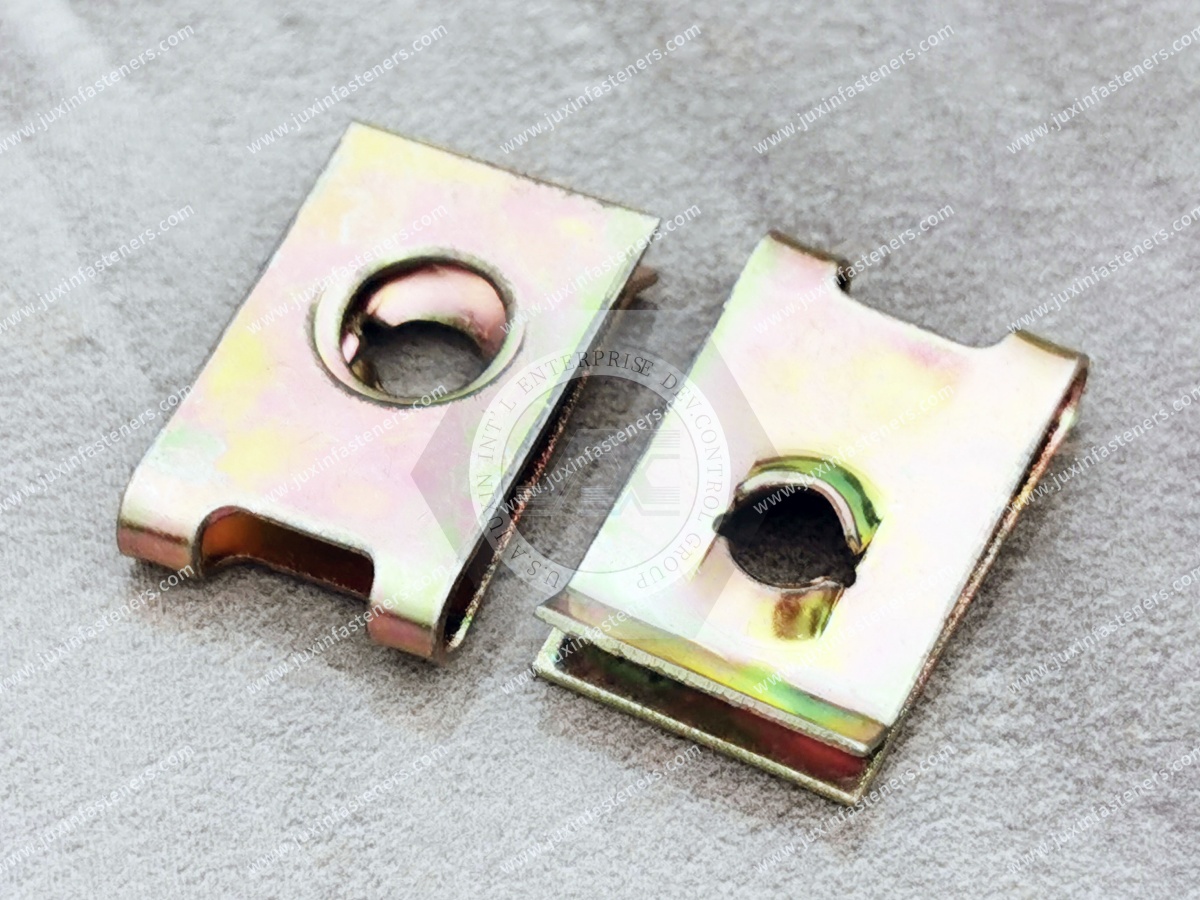
Cage nuts and U-nuts are both common in equipment and enclosure applications, but their panel interfaces differ.
Use the assembly architecture to decide:
Edge-mounted clip interface → evaluate U-nut.
Designed panel opening with captive nut architecture → evaluate cage nut.
Other requirements such as positional adjustment, service access, installation method, and load should then refine the selection.
A useful selection process begins with the assembly rather than the fastener catalog.
If yes, define the thread and mating screw requirements.
If yes, a clip-on nut may be considered.
If not, evaluate another fastening technology.
Specify:
Material
Thickness
Thickness tolerance
Coating or paint
Edge geometry
Specify:
Edge-to-hole-center distance
Hole geometry
Required clip reach
Screw installation direction
Consider:
Manual installation
Automated installation
Production sequence
Pre-assembly retention
Tool access
Service access
Consider:
Moisture
Chemicals
Corrosion exposure
Temperature
Vibration
Customer-specific environmental requirements
Critical assemblies should be validated using representative production components and actual service conditions.
Standard clip nuts can satisfy many applications, but existing OEM assemblies sometimes require geometry that is not easily replaced by a catalog component.
Custom development may be appropriate when the project has a specific:
Panel thickness
Clip reach
Thread position
Installation envelope
Material
Finish
Retention requirement
Legacy interface
JUXIN FASTENERS supports standard and custom fasteners, U-nuts, clip nuts, spring nuts, custom stamped components, and drawing-controlled components for OEM and industrial applications.
Projects can be evaluated from customer drawings, physical samples, mating-component information, and application requirements.
Procurement teams looking for an alternative clip-nut supplier should avoid qualifying parts by thread size and appearance alone.
For second-source evaluation, provide where available:
Existing drawing
Approved physical sample
Panel drawing
Representative mating panel
Mating screw
Material specification
Finish requirement
Current critical dimensions
Known assembly requirements
Annual demand
The objective is not merely to reproduce the appearance of the original part.
The objective is to reproduce the required interface and assembly function according to the customer specification.
Please provide:
Drawing
Approved sample
Thread specification
Material
Finish
Panel thickness
Edge-to-hole-center distance
Mating screw
Application
Annual or order volume
Please provide:
Industry and application
Panel material
Finished panel thickness
Edge geometry
Hole location and geometry
Required thread
Mating screw
Installation direction
Available installation space
Environmental requirements
Expected production volume
Where possible, provide:
existing fastener + drawing + representative mating panel or panel dimensions + mating screw + current specification + annual demand.
This gives both engineering and sourcing teams a stronger basis for evaluating functional equivalence.
Depending on the panel architecture and manufacturing process, related solutions include:
Clip-On Nuts Selection Guide
Clip Nut Installation Problems
Spring Nuts and U-Nuts
Automotive Fasteners
Sheet Metal Fasteners
Cage Nuts
Self-Clinching Fasteners
Rivet Nuts
Weld Nuts
Custom Fasteners
These anchor topics can help engineers move from an application problem to the appropriate fastening technology.
For industrial B2B sourcing, “U-nut” is only the beginning of the specification.
A stronger engineering definition is:
application + finished panel thickness + edge geometry + clip reach + hole location + thread + mating screw + material + finish + environment + production volume.
That information helps design engineers evaluate fit and function while giving procurement and supplier-development teams a clearer basis for supplier comparison.
If you are developing an automotive, electrical, HVAC, machinery, data center, power equipment, or other sheet-metal assembly requiring a clip-on threaded attachment,
JUXIN FASTENERS can review your drawing, existing sample, and mating-interface information for standard sourcing, custom development, or second-source projects.
For an existing component, send the drawing and approved sample where available.
For a new application, send the panel geometry, required thread, mating screw, material and finish requirements, environmental conditions, and expected volume.
Email: info@juxinfasteners.com
Website: www.juxinfasteners.com
 MORE NEWS
Sep. 27, 2026
Sep. 27, 2026
Sep. 27, 2026
Contact Us
Tel.:
+86 020 8621 0320
+86 020 3121 6067
E-mail:
Technical Support:
Navigation
SEND INQUIREY