
Call Us
+86 136 6007 9809
Call Us
+86 136 6007 9809

Jul. 12, 2023
In modern mechanical manufacturing, industrial automation, automotive systems, machinery, electrical equipment and transportation applications,
threaded joints are frequently exposed to dynamic loads, vibration, thermal cycling and environmental changes.
Under these conditions, selecting the correct nut is more than a matter of matching thread size.
A nylon-insert locknut, also known as a nylon locknut or nyloc nut, combines a conventional metallic nut body with a polymer insert that creates prevailing torque when the mating bolt thread engages the insert.
This integrated locking function can be useful in applications where resistance to unintended nut rotation is required without adding a separate locking washer or adhesive.
However, a nylon-insert locknut is not a universal solution for every bolted joint.
Its performance depends on the complete fastening system, including bolt and nut materials, thread geometry, installation method, temperature, chemical exposure, joint design and service conditions.
For engineers and procurement teams, the correct question is therefore not simply:
“Which nylon locknut is available?”
It is:
“Which nylon-insert locking configuration provides the required functional performance for this specific joint and production environment?”
A threaded joint can experience unintended rotation when external forces repeatedly disturb the relationship between the bolt, nut and assembled components.
Potential contributors include:
Transverse vibration
Cyclic loading
Thermal expansion and contraction
Joint movement
Insufficient preload
Embedment or settling
Incorrect installation
Friction variation
Component deformation
A nylon-insert locknut adds a prevailing-torque feature to the threaded assembly.
When the bolt enters the polymer insert, interference between the bolt thread and insert generates resistance to rotation.
This resistance remains part of the installation behavior even before the final joint clamping condition is established.
That makes the nylon insert fundamentally different from a standard free-running hex nut.
However, locking resistance should not be confused with joint strength.
A fastener can have prevailing torque and still be installed with insufficient preload.
Likewise, a high prevailing-torque value does not automatically mean that the joint has been correctly designed.
This distinction is important in automotive, machinery, automation and OEM applications.
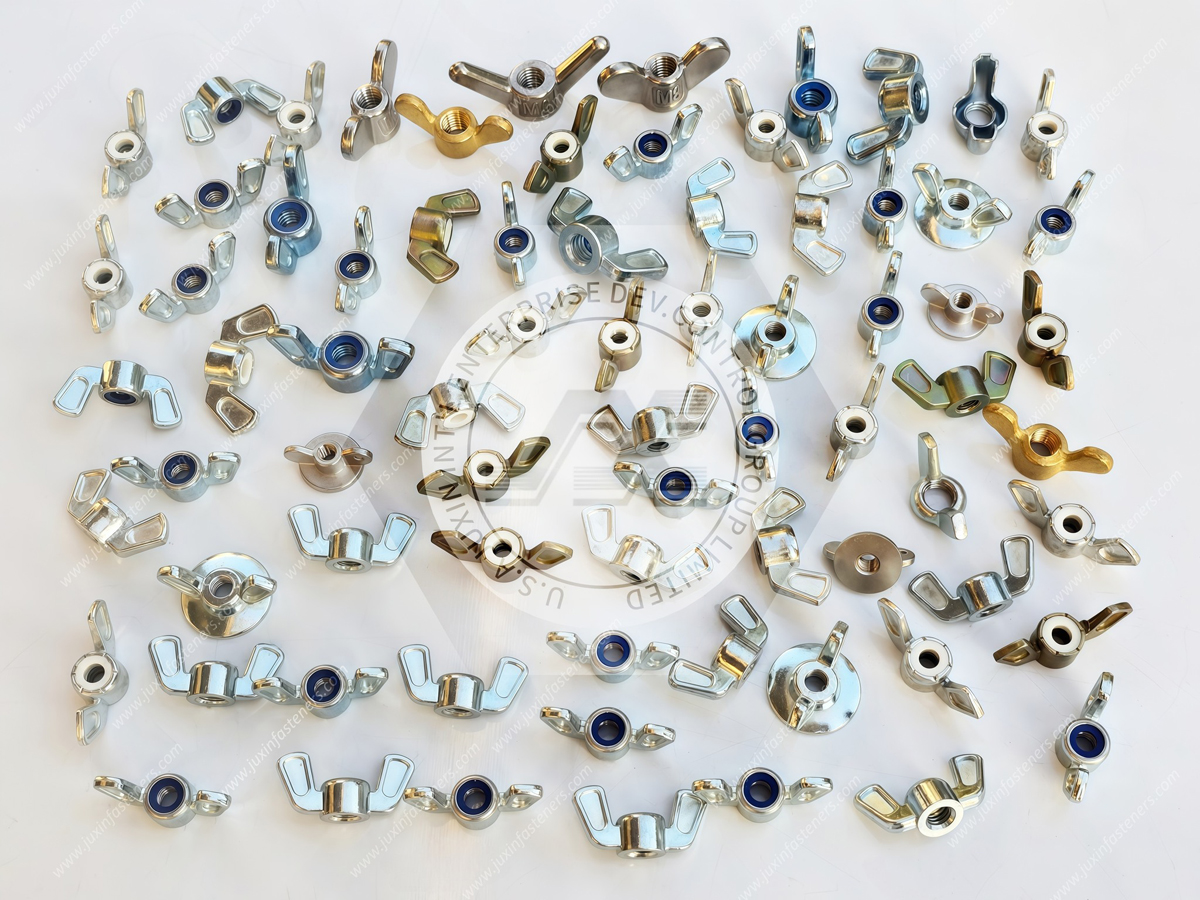
A typical nylon-insert locknut consists of a metallic threaded nut body with a polymer insert located near the upper portion of the nut.
As the male thread of a bolt or stud enters the insert, the polymer is displaced and deformed around the thread profile.
This creates contact between the polymer and the mating thread.
The resulting frictional resistance generates prevailing torque.
The basic mechanism can be represented as:
Bolt thread → Insert interference → Polymer deformation → Contact pressure → Friction → Prevailing torque
The exact behavior depends on the insert material, geometry, bolt surface condition, thread dimensions and installation conditions.
Therefore, the locking performance should be evaluated as a complete fastener system rather than as a simple property of “nylon.”
This is one of the most important engineering distinctions when working with self-locking nuts.
Prevailing torque is the resistance generated by the locking feature as the nut rotates on the bolt.
Tightening torque is the torque applied during installation.
Bolt preload is the tensile force generated in the bolt as the joint is tightened.
A simplified torque-preload relationship is commonly represented as:
T ≈ K × F × d
where:
T = tightening torque
K = torque coefficient representing friction-related effects
F = bolt preload
d = nominal fastener diameter
This relationship is simplified and does not eliminate the need to consider actual friction conditions.
Thread finish, lubrication, coating, material, locking features and assembly conditions can all affect the relationship between torque and preload.
Therefore:
Prevailing torque ≠ tightening torque ≠ bolt preload
For controlled production assembly, engineers should validate the complete bolt, nut and joint combination rather than selecting a locknut solely by its locking resistance.
Nylon-insert locknuts are available under various international and national standards.
Depending on the configuration, commonly referenced standards can include:
ISO 2320
ISO 7040
DIN 985
DIN 982
DIN 6926
ISO 7043
ASME B18.16.6
The exact applicability depends on the nut configuration, dimensions, thread, material and required property class.
Standards should not be treated as interchangeable names.
For example, a standard for a particular hexagon locknut configuration should not automatically be substituted for a flange locknut specification simply because both products use a nylon insert.
For OEM sourcing, the customer's drawing and approved specification should remain the primary reference.
A robust RFQ should therefore identify the required standard together with:
Thread size
Thread pitch
Nut configuration
Material
Property class where applicable
Surface finish
Insert requirement
Inspection requirement
Packaging requirement
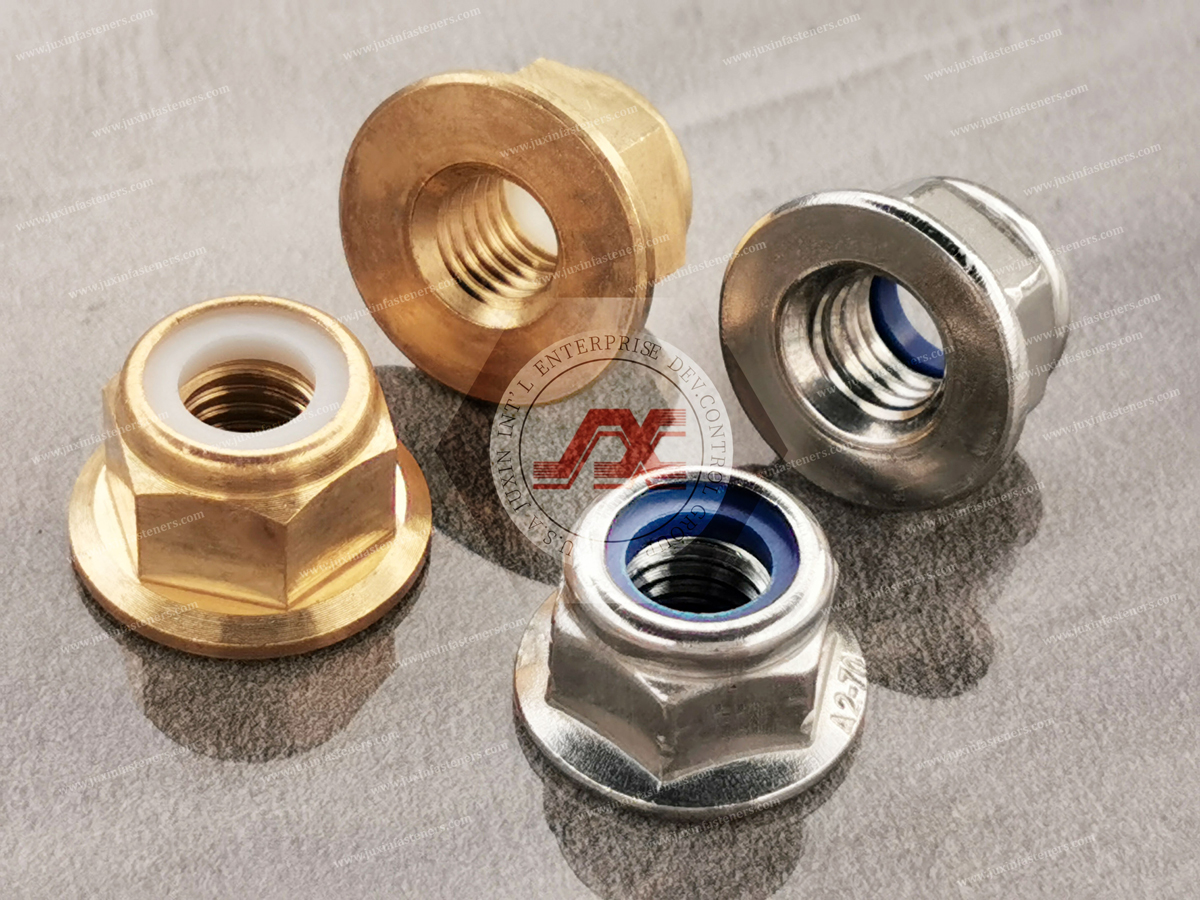
A commercial nylon-insert locknut portfolio can include several configurations depending on application requirements.
| Fastener Category | Typical Specification References | Material Options | Typical Applications |
|---|---|---|---|
| Standard Nylon-Insert Hex Locknuts | ISO/DIN/ASME specifications as applicable | Carbon steel, alloy steel, stainless steel | Machinery, automation, electrical equipment, general industrial assemblies |
| Nylon-Insert Flange Locknuts | DIN/ISO specifications as applicable | Carbon steel, alloy steel, stainless steel | Automotive components, equipment brackets, sheet-metal assemblies |
| Stainless Steel Nylon-Insert Locknuts | Applicable stainless fastener specifications | A2/A4 stainless steel families | Outdoor equipment, electrical equipment, machinery, corrosion-sensitive assemblies |
| Custom Nylon-Insert Locknuts | Customer drawing/specification | Customer-specified materials | OEM and application-specific assemblies |
The final configuration should always be selected from the customer's drawing and application requirements.
Standard nylon-insert hex locknuts are commonly used where a conventional hexagonal nut geometry is compatible with the assembly.
Potential applications include:
Industrial machinery
Automation equipment
Electrical cabinets
Control equipment
Brackets
Pump and equipment assemblies
General mechanical structures
Automotive non-high-temperature assemblies
Their principal functional feature is the integrated polymer locking insert.
The correct nut height, thread size, material and property class should be specified according to the application.
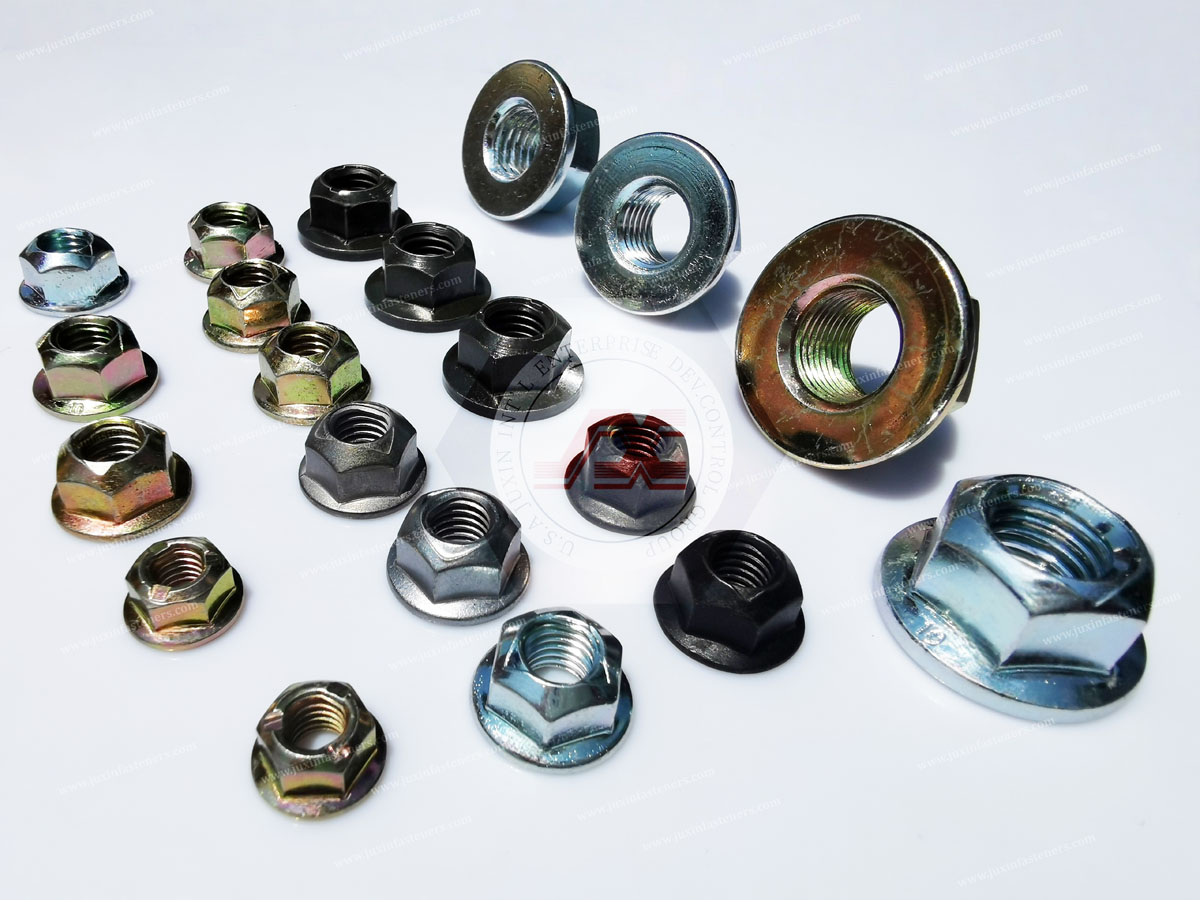
A nylon-insert flange locknut combines the prevailing-torque function of a nylon insert with an integrated flange.
The larger bearing surface can be useful in applications where the joint design benefits from increased bearing area or where a separate washer is undesirable.
However, flange geometry should not be interpreted as a universal solution for weak or thin substrates.
The engineer should still evaluate:
Parent material
Sheet thickness
Bearing stress
Clamping force
Hole geometry
Joint stiffness
Surface condition
A larger flange can change load distribution under the nut, but the overall joint must still be designed for the actual application.
The metallic nut body and polymer insert should be considered separately when selecting materials.
Carbon steel is commonly selected for general industrial applications where the mechanical and environmental requirements are compatible with the material.
Surface treatment may be specified for corrosion protection and appearance.
Alloy steel may be considered where higher mechanical properties are required.
The required property class and applicable standard should be clearly specified rather than assuming that every alloy steel locknut has the same mechanical performance.
Stainless steel nylon-insert locknuts can be selected for applications where corrosion resistance is an important consideration.
Common stainless fastener families include A2 and A4 grades under applicable ISO 3506 requirements.
However, stainless steel selection can also change friction and installation behavior.
This means that a stainless locknut should not simply be treated as a corrosion-resistant replacement for a carbon steel version without evaluating the complete assembly.
Stainless steel threaded assemblies may be susceptible to galling under certain combinations of:
Material
Surface condition
Contact pressure
Installation speed
Lubrication
Thread geometry
This is particularly relevant when stainless steel bolts and stainless steel nuts are assembled together.
Where galling is a concern, the engineering solution may involve:
Appropriate material combinations
Suitable surface treatment
Controlled installation speed
Approved lubrication
Controlled tightening procedures
Validation of the complete fastener combination
The important Information Gain is that changing fastener material changes the installation system.
Moving from carbon steel to stainless steel may improve corrosion resistance while simultaneously changing friction, torque behavior and galling risk.
The original catalog-style approach of specifying a single temperature limit for every nylon insert locknut is not technically reliable.
Polyamide behavior depends on the specific polymer formulation, grade, geometry and exposure conditions.
Engineers should therefore evaluate:
Continuous operating temperature
Peak temperature
Exposure duration
Thermal cycling
Mechanical loading during exposure
Chemical environment
Required prevailing-torque performance after exposure
The critical question is not:
“Can nylon withstand 120°C?”
The better engineering question is:
“Does the specified insert material maintain the required functional performance throughout the actual thermal duty cycle?”
This distinction is particularly important for automotive, engine-adjacent, industrial heating, HVAC and other thermally demanding environments.
Where the polymer insert is unsuitable for the actual temperature profile, an all-metal prevailing-torque nut may be a more appropriate solution.
Nylon is a polymer, so chemical compatibility must be evaluated according to the actual environment.
Potential exposure can include:
Oils
Cleaning agents
Coolants
Fuels
Solvents
Acids
Alkaline solutions
Process chemicals
Moisture
The effect depends on:
Polymer grade
Chemical concentration
Exposure time
Temperature
Mechanical stress
Environmental conditions
Therefore, “nylon compatible with chemicals” is not a sufficient engineering specification.
For chemically demanding applications, the customer should identify the actual media and operating conditions so the insert material can be evaluated accordingly.
If the polymer environment is unsuitable, an alternative locking configuration may be required.
A common misconception is that a nylon-insert locknut provides the same locking behavior after unlimited installation cycles.
It does not.
Repeated installation and removal can change the polymer insert through:
Thread deformation
Wear
Material displacement
Thermal exposure
Mechanical damage
Changes in contact conditions
The resulting prevailing torque can change over the service cycle.
There is therefore no universal “five-use” rule that should be applied to every nylon locknut.
For critical applications, reuse requirements should be defined by the applicable specification, customer drawing or validation program.
If repeated removal is expected, engineers should determine whether:
The nylon insert remains functionally suitable
A replacement locknut should be installed during maintenance
A reusable all-metal locking solution is more appropriate
A functional prevailing-torque test is required
This is particularly important for serviceable equipment and maintenance-intensive assemblies.
Nylon insert locknuts are frequently described as “anti-vibration nuts.”
This description can be useful commercially, but it requires engineering qualification.
A nylon insert creates resistance to nut rotation.
However, vibration performance depends on the entire joint.
Important variables include:
Bolt preload
Joint stiffness
Clamp length
Transverse loading
Surface condition
Joint separation
Thread friction
Fastener geometry
Installation process
A locknut should therefore not be treated as a substitute for correct joint design.
Where vibration-induced loosening is the primary engineering problem, the complete assembly should be evaluated for preload loss and self-loosening behavior.
This distinction is particularly important for engineers.
A nut may remain engaged with the bolt while the joint has already lost part of the preload required for reliable operation.
In other words:
“The nut has not fallen off” does not necessarily mean “the joint is still performing correctly.”
A locking feature primarily addresses rotational movement of the nut.
Joint integrity depends on much more:
Preload
Joint stiffness
Component deformation
Contact surfaces
External loads
Vibration
Thermal effects
This is why fastener selection should begin with the joint failure mode rather than with the product catalog.
Automotive assemblies contain a wide range of threaded joints exposed to dynamic loads, temperature changes and service requirements.
Nylon-insert locknuts may be considered for suitable applications such as:
Brackets
Body components
Interior assemblies
Electrical and electronic equipment
Non-high-temperature support structures
Equipment mounting components
General automotive hardware
The specific application must determine the final material, configuration and locking method.
A nylon locknut should not automatically be assumed suitable for high-temperature zones, safety-critical joints or applications governed by specific OEM validation requirements.
For automotive production, the drawing, approved specification and customer requirements should control the final part.

Electric vehicles and battery systems introduce additional considerations around:
Temperature
Electrical architecture
Weight
Corrosion
Packaging
Serviceability
Vibration
Thermal cycling
Nylon-insert locknuts may be considered in appropriate mechanical assemblies where the polymer insert remains compatible with the thermal and environmental conditions.
Potential areas can include:
Brackets
Enclosures
Auxiliary equipment
Electrical equipment supports
Cooling-system components where temperature permits
General mechanical assemblies
For battery-related applications, engineers should evaluate the complete environment rather than assuming that a standard nylon locknut is automatically suitable.
Industrial machinery is one of the broadest application areas for self-locking nuts.
Potential applications include:
Machine frames
Brackets
Guards
Conveyor systems
Pumps
Motors and equipment supports
Automation equipment
Fixtures
Mechanical assemblies
Selection should consider whether the joint is:
Static
Dynamic
Frequently serviced
Exposed to vibration
Exposed to chemicals
Exposed to elevated temperature
A general industrial application does not automatically require the highest locking resistance.
The correct selection is the one that provides the required function while remaining compatible with the assembly process.
Robotics and automated machinery can contain numerous compact threaded joints subject to repeated movement.
Potential applications include:
Sensor brackets
Cable-management hardware
Actuator supports
Equipment frames
End-effector assemblies
Control-system brackets
Mechanical covers
For robotic equipment, designers should pay particular attention to:
Weight
Available installation space
Dynamic loading
Maintenance frequency
Cable clearance
Joint accessibility
Temperature
A nylon insert can be useful where its material limitations are compatible with the application.
Electrical cabinets and industrial enclosures often use threaded hardware for:
Mounting brackets
Panels
Supports
Equipment mounting
Cable-management systems
Internal mechanical components
Nylon-insert locknuts may be suitable where the metallic nut body and polymer insert are compatible with the enclosure environment.
However, engineers should not assume that a nylon insert automatically makes the complete fastener electrically insulating.
The metallic nut body remains conductive.
If electrical isolation is required, the entire fastening system—including washers, bolts, brackets and enclosure materials—must be evaluated.
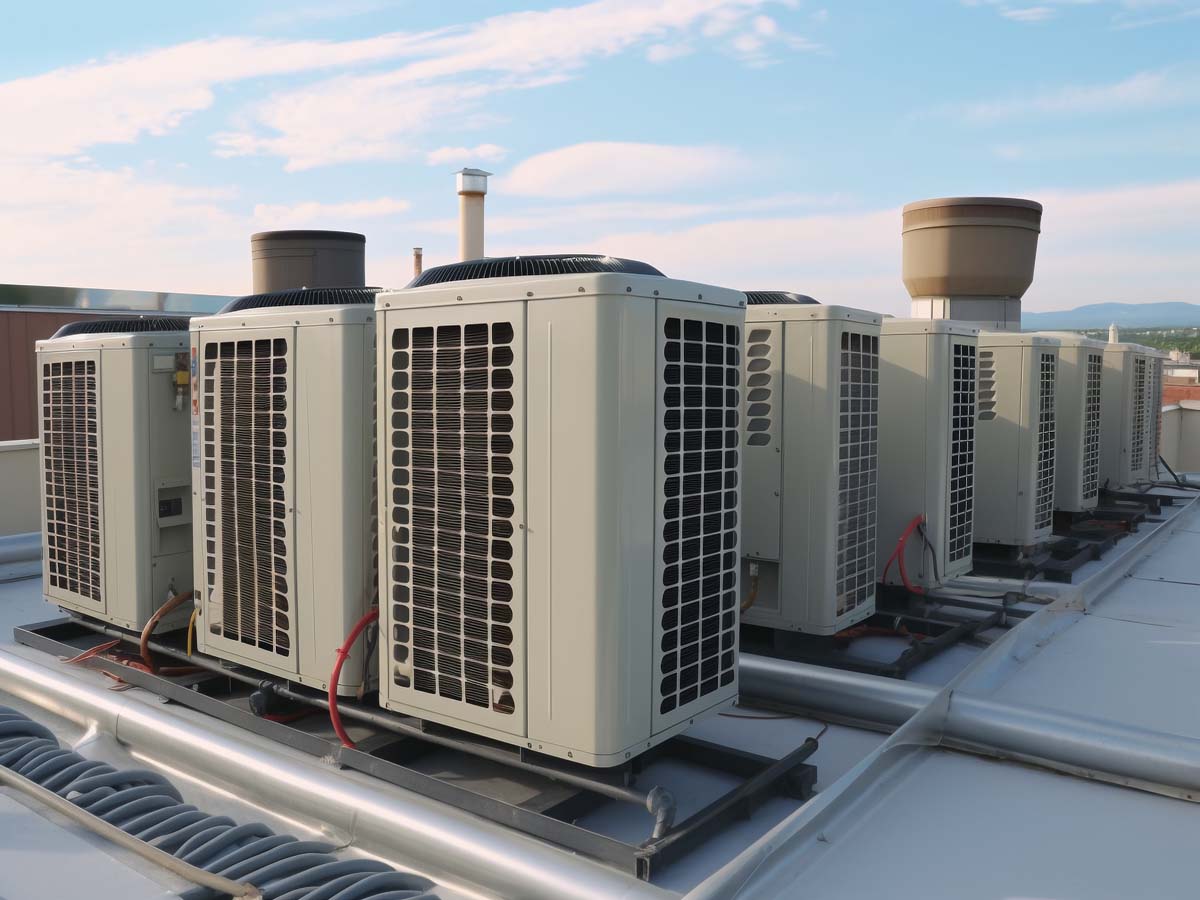
HVAC and industrial thermal equipment can expose fasteners to:
Temperature cycling
Condensation
Moisture
Refrigerants or process media
Vibration
Outdoor environments
For these applications, material and environmental compatibility become particularly important.
The selection process should evaluate:
Fastener material
Surface finish
Polymer insert grade
Operating temperature
Chemical exposure
Condensation
Service requirements
Where the temperature exceeds the practical operating envelope of the polymer insert, an alternative locking solution may be more appropriate.
Transportation systems can involve continuous vibration, environmental exposure and long service intervals.
Potential applications for nylon-insert locknuts may include suitable:
Equipment brackets
Interior mechanical assemblies
Electrical equipment
Enclosures
Non-high-temperature support systems
However, transportation applications often have customer-specific specifications and qualification requirements.
The fastener supplier should therefore work from the actual engineering drawing and applicable project requirements rather than assuming that a general industrial locknut specification is sufficient.
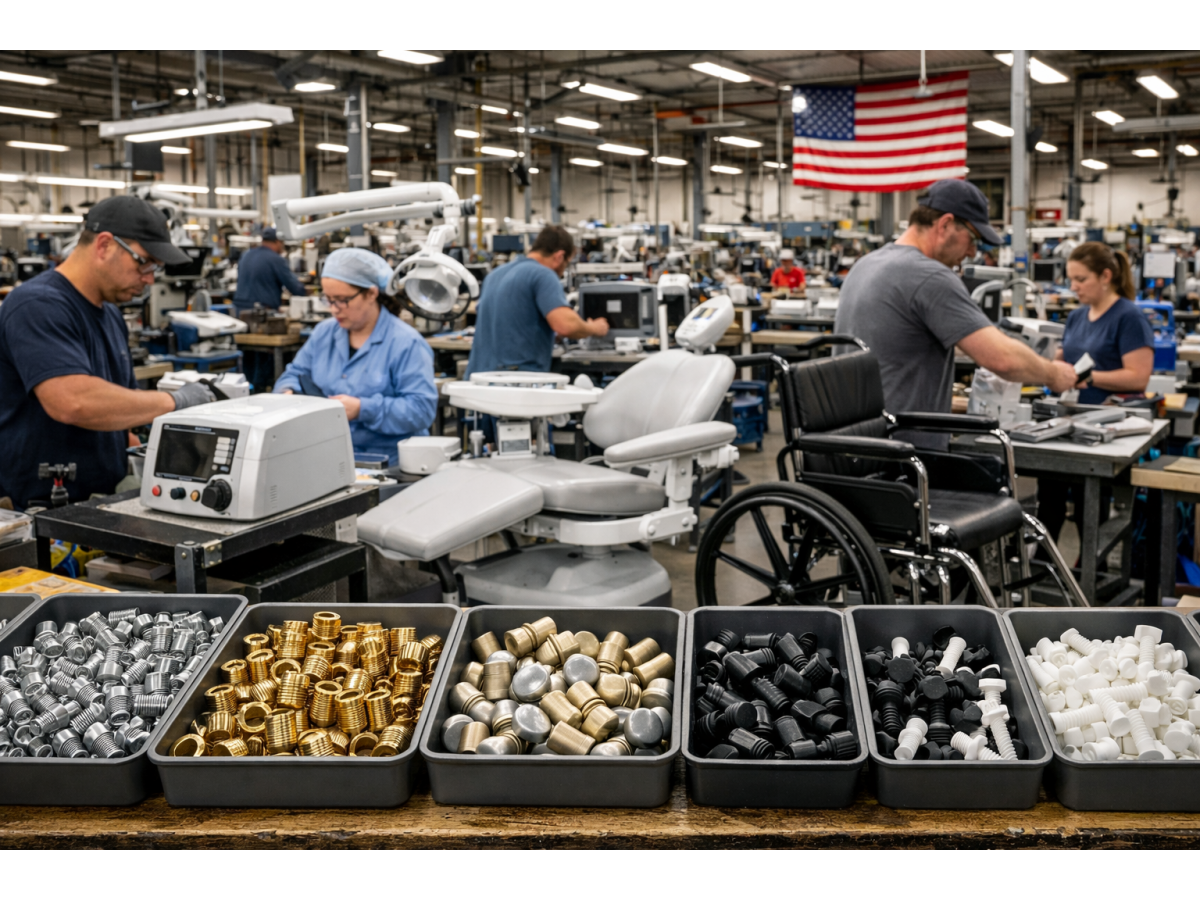
Medical and laboratory equipment may contain numerous threaded mechanical assemblies where controlled fastening and serviceability are important.
Potential applications can include:
Equipment frames
Brackets
Covers
Instrument supports
Mechanical assemblies
The use of a nylon-insert locknut does not by itself imply medical-device certification or regulatory approval.
The fastener material, finish, cleanliness, documentation and qualification must be evaluated according to the actual equipment manufacturer's requirements.
This distinction is important for procurement teams sourcing components for regulated equipment.
A useful engineering principle is:
The industry does not select the fastener. The application selects the fastener.
An automotive bracket, robotics bracket and industrial-machine bracket may all use an M8 locknut.
But they may require completely different:
Materials
Surface finishes
Temperature capability
Documentation
Inspection
Locking systems
Installation procedures
Therefore, an RFQ that only states “M8 nylon locknut” may not contain enough information for production sourcing.
Engineers and procurement teams evaluate the same fastener from different perspectives.
The engineering team normally needs to establish:
Thread specification
Nut geometry
Material
Insert material
Temperature
Environment
Joint function
Installation method
Applicable standard
Required inspection
Service conditions
The main question is:
“Will this fastener perform correctly in my joint?”
The procurement team also needs to establish:
Approved drawing
Part number
Supplier capability
Material documentation
Inspection documentation
Surface treatment records
Lot traceability
Packaging
MOQ
Annual demand
Lead-time requirements
Change-control requirements
Quality requirements
The main question becomes:
“Can this supplier repeatedly deliver the approved fastener to the required specification?”
A professional B2B fastener supplier should support both questions.
Supplier qualification should go beyond checking whether the supplier has a product photo on its website.
A production supplier should be evaluated against the actual specification.
Key areas can include:
Can the supplier manufacture the required:
Thread
Nut geometry
Material
Insert configuration
Surface finish
Quantity
Can the supplier maintain:
Drawing revision control
Part-number control
Material specification
Process consistency
Inspection requirements
Depending on the project, required documentation may include:
Certificate of Conformance
Material documentation
Dimensional inspection report
Surface treatment documentation
Functional test records
Lot identification
The exact package should be agreed with the customer.
For repeat orders, procurement teams should also evaluate whether the supplier can maintain the approved specification across production lots.
A low initial price is not necessarily the lowest total sourcing cost if inconsistent fastener performance causes line interruptions, rework or incoming inspection problems.
Inspection requirements should be based on the actual customer specification.
Potential inspection areas include:
Thread dimensions
Across-flats dimensions
Nut height
Flange diameter where applicable
Insert position
Surface finish
Visual condition
Material
Functional prevailing torque where specified
For applications where locking performance is critical, functional testing may be more informative than dimensional inspection alone.
This is because a dimensionally correct locknut can still require functional evaluation of the complete locking system.
Surface treatment should be selected according to the material and operating environment.
For carbon steel fasteners, possible finishes may include specified zinc-based or other corrosion-protection systems.
The actual finish should be controlled by the drawing or customer specification.
Engineers should consider:
Corrosion environment
Coating type
Coating thickness
Thread fit
Mating material
Installation friction
Hydrogen embrittlement risk for applicable high-strength steel parts
Surface finish is not simply a cosmetic choice.
It can influence both corrosion performance and assembly behavior.
For products supplied into regulated markets, customers may request information relating to applicable environmental requirements such as RoHS and REACH.
These are regulatory frameworks rather than generic fastener performance standards.
Supplier documentation should therefore be aligned with the actual customer requirement and product material/finish specification.
Where restricted substances or specific declarations are relevant, procurement teams should define the required documentation during supplier qualification.
For an efficient OEM quotation process, the RFQ should ideally include:
Customer part number
Drawing revision
Thread diameter
Thread pitch
Thread system
Nut configuration
Material
Property class where applicable
Nylon insert requirement
Surface finish
Applicable standard
Operating temperature
Chemical exposure
Vibration or dynamic-load environment
Installation method
Target quantity
Annual volume
Initial order quantity
Packaging requirement
Inspection requirement
CoC requirement
Material documentation requirement
Functional prevailing-torque requirement where applicable
Traceability requirement
Change-control requirement
Providing these details allows the supplier to quote the actual engineered product rather than a generic catalog equivalent.
One of the most common procurement problems is an RFQ such as:
“Please quote M10 nylon locknuts.”
That description may be insufficient.
The supplier may still need to know:
Which configuration?
Which standard?
Which material?
Which property class?
Which finish?
Which insert material?
Which temperature?
Which application?
Which inspection requirement?
A better RFQ describes the complete functional requirement.
For example:
M10 × specified pitch, nylon-insert hex locknut, specified material and property class, specified finish, applicable standard, annual quantity, inspection and documentation requirements.
The exact specification should come from the customer's engineering drawing.
JUXIN FASTENERS supplies nylon-insert locknuts and other self-locking threaded fastening solutions for industrial and OEM applications.
Our product scope can support requirements including:
Nylon insert locknuts
Nyloc nuts
Metric nylon locknuts
Nylon insert flange locknuts
Carbon steel nylon locknuts
Stainless steel nylon locknuts
Custom threaded nuts
Custom self-locking fastening components
The appropriate product configuration can be evaluated according to:
Customer drawing
Thread specification
Nut geometry
Material
Insert requirement
Surface finish
Operating environment
Quantity
Inspection requirements
For production programs, the approved drawing and specification should control the final product.
A practical sourcing process can be structured as:
Application
What equipment or assembly will use the fastener?
↓
Failure Mode
Is the concern vibration, rotation, temperature, corrosion, serviceability or another issue?
↓
Locking Requirement
Is prevailing torque required?
↓
Material
What nut-body and insert materials are appropriate?
↓
Environment
What temperature, chemical and corrosion conditions exist?
↓
Configuration
Standard hex, flange or custom?
↓
Standard
Which ISO, DIN, ASME/ANSI or customer specification applies?
↓
Inspection
Which dimensional and functional characteristics must be verified?
↓
Documentation
Which CoC, material, inspection or surface-treatment records are required?
↓
Supplier Qualification
Can the supplier consistently manufacture and control the approved specification?
↓
RFQ
Can the supplier quote the correct part at the required quantity and commercial conditions?
This creates a direct bridge between engineering requirements and procurement execution.
JUXIN FASTENERS has more than 20 years of fastener experience supporting industrial and OEM requirements.
Our approach is based on matching the fastener to the customer's actual engineering and sourcing requirements rather than treating every locknut as a generic catalog item.
For procurement and supplier-development teams, a professional sourcing process should connect:
Drawing → Specification → Material → Manufacturing → Inspection → Documentation → Packaging → Delivery
For engineering teams, the same project should connect:
Joint → Load → Environment → Locking Function → Material → Installation → Validation
Bringing these two pathways together helps reduce specification ambiguity before production sourcing begins.
If you are developing a new product, qualifying an alternative supplier or sourcing production nylon-insert locknuts, provide as much of the following information as available:
2D drawing
3D model where available
Part number
Thread specification
Material
Surface finish
Applicable standard
Application
Temperature
Environment
Quantity
Inspection requirements
Documentation requirements
JUXIN FASTENERS can review the available specification and identify the appropriate nylon-insert locknut configuration for the project.
For OEM, industrial machinery, automotive, automation, electrical and other B2B applications, contact:
JUXIN FASTENERS
20+ Years of Fastener Experience
Website: www.juxinfasteners.com
Email: info@juxinfasteners.com
Submit your drawing and sourcing requirements for a project-specific fastener quotation.
 MORE NEWS
Sep. 25, 2026
Sep. 25, 2026
Sep. 25, 2026
Contact Us
Tel.:
+86 020 8621 0320
+86 020 3121 6067
E-mail:
Technical Support:
Navigation
SEND INQUIREY