
Call Us
+86 136 6007 9809
Call Us
+86 136 6007 9809

Aug. 08, 2023
In public infrastructure, outdoor equipment, electrical enclosures, industrial machinery, transportation equipment and high-value installations,
preventing unauthorized access to assembled components can be an important part of product and maintenance design.
A conventional screw can often be removed with a common screwdriver, hex key or standard Torx driver.
Where unauthorized removal is a concern, engineers can specify tamper-resistant security screws with specialized drive geometries that require a corresponding driver or make conventional reverse removal more difficult.
Security screws are used in applications such as:
Electrical enclosures
Outdoor electronics
Public infrastructure
Street lighting
Security barriers
HVAC equipment
Signage
Industrial machinery
Equipment panels
Transportation equipment
Public seating
Access covers
Consumer and commercial equipment
However, a security screw should not be viewed as an absolute anti-theft or anti-tamper device.
Its effectiveness depends on the drive geometry, tool availability, head accessibility, installation method, maintenance strategy and overall system design.
For engineering and procurement teams, the objective is to select a security fastener that provides the required level of restricted access while remaining compatible with the structural,
environmental and service requirements of the assembly.
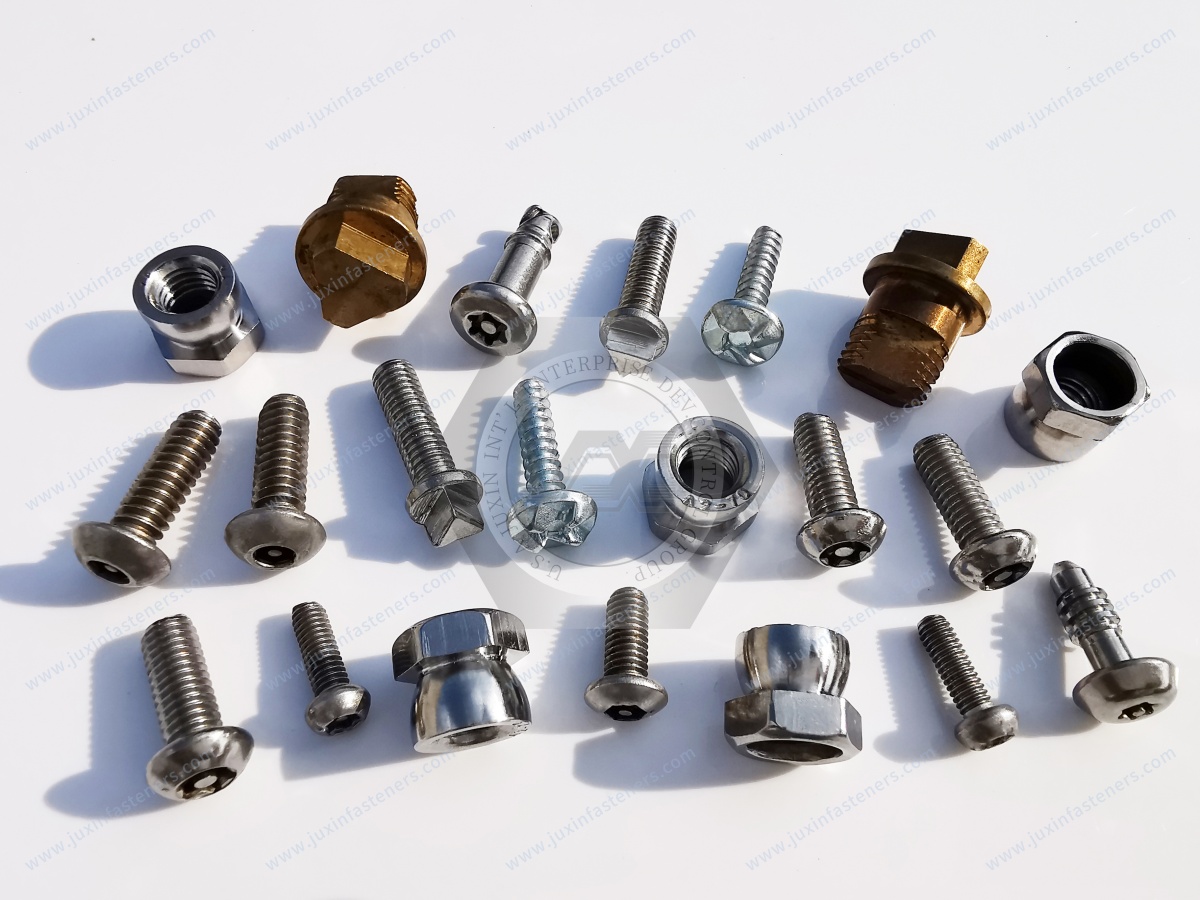
Tamper-resistant security screws are fasteners designed to make unauthorized removal more difficult than with conventional screw drives.
They achieve this through specialized drive features such as:
Pin-in Torx drives
Security six-lobe drives
One-way drives
Clutch-style drives
Asymmetric drives
Other customer-specific security geometries
The main function is restricted tool access.
This means that a standard tool may not properly engage the drive, while an authorized installer equipped with the appropriate mating bit can install or service the fastener.
The term “tamper-resistant” is generally more technically appropriate than “tamper-proof.”
No mechanical screw drive should automatically be considered impossible to remove.
A determined person with specialized tools, destructive techniques or sufficient access to the assembly may still be able to remove a security fastener.
The engineering purpose is therefore to create a controlled barrier against routine unauthorized removal.
A conventional screw is generally designed around efficient installation and serviceability.
A security screw adds another design consideration:
Who should be able to remove it, and with what tool?
| Feature | Standard Screw | Tamper-Resistant Security Screw |
|---|---|---|
| Conventional tool compatibility | Usually high | Intentionally restricted |
| Authorized installation | Standard driver | Matching security driver |
| Unauthorized removal difficulty | Generally lower | Generally higher |
| Serviceability | Broad | Controlled |
| Structural strength | Depends on screw design | Depends on screw design |
| Security function | None or limited | Specialized drive geometry |
| Typical use | General fastening | Controlled-access assemblies |
The important Information Gain is that security geometry and mechanical strength are separate design variables.
A security screw does not automatically have a higher tensile strength, better corrosion resistance or greater clamp load than a conventional screw of similar size.
Those properties come from the screw's material, geometry, heat treatment, thread design, surface finish and applicable specification.
Pin-in Torx screws, often called tamper-resistant Torx screws or security Torx screws, use a six-lobe drive with a central pin.
The mating driver contains a corresponding hole that allows it to pass over the pin and engage the drive.
A conventional Torx driver without the hole cannot normally engage the recess correctly.
This provides a practical level of tool restriction while retaining a relatively efficient torque-transmission geometry for authorized installation.
Potential applications include:
Electrical equipment
Industrial control cabinets
Electronics housings
Equipment covers
Public infrastructure
Outdoor lighting
Transportation equipment
Machinery access panels
Pin-in Torx is particularly useful when authorized maintenance must remain possible.
The drive is therefore more serviceable than a deliberately permanent one-way fastener.
One-way security screws are designed to make reverse removal difficult.
A common configuration uses a drive profile that allows installation with a suitable conventional tool but does not provide normal positive engagement for reverse rotation.
During installation, the driver can transmit torque in the intended direction.
During attempted removal, the driver tends to slip or disengage.
These screws are often considered for applications where:
Routine removal is not expected
Authorized maintenance is limited
Tampering is a concern
Permanent or semi-permanent installation is preferred
Potential applications include:
Street signage
Public seating
Lighting fixtures
Security barriers
Outdoor equipment
Utility equipment
Public infrastructure
The trade-off is serviceability.
If maintenance personnel later need to remove the fastener, specialized removal methods may be required.
Therefore, one-way security screws should be selected only after the maintenance strategy has been considered.
Some applications require a drive geometry that is less common than standard Torx, Phillips, slotted or hex drives.
Custom or asymmetric drive designs can restrict tool availability further.
These may be useful where:
Equipment access must be controlled
Standard security drives are insufficient
Authorized maintenance teams use dedicated tooling
A customer-specific security interface is required
For OEM applications, the security drive can be defined directly on the engineering drawing.
Important design inputs include:
Drive shape
Drive dimensions
Recess depth
Head geometry
Tool engagement
Installation torque
Required serviceability
Availability of authorized drivers
The objective is not simply to make the drive unusual.
The objective is to establish a controlled relationship between the fastener and the authorized installation tool.
One of the most common mistakes is to assume:
More unusual drive = more secure system.
The actual situation is more complicated.
A security screw can still be vulnerable if:
The mating tool is widely available
The screw head is easily accessible
The surrounding enclosure can be bypassed
The fastener can be destructively removed
The product can be opened through another access point
Therefore, security fastener selection should consider:
Drive geometry + tool control + head accessibility + enclosure design + maintenance strategy
This is a system-level security decision.
The fastener is one part of the access-control strategy.
The security drive is only one part of the fastener.
The head geometry also affects the assembly.
Common configurations can include:
Button head
Pan head
Flat countersunk head
Round head
Low-profile head
Custom head configurations
Button-head security screws provide a relatively low-profile rounded head while retaining useful drive depth.
They can be used for:
Equipment covers
Electrical enclosures
Machinery panels
Public fixtures
Countersunk security screws are used when the screw head needs to sit approximately flush with the surrounding surface.
Potential applications include:
Architectural hardware
Panels
Equipment covers
Public fixtures
Transportation interiors
The countersink angle and dimensions must match the mating component.
A countersunk screw should not be specified solely by its nominal thread size.
Round or pan-head configurations may be appropriate where a raised head is acceptable and a larger bearing surface is useful.
The final head geometry should follow the drawing and assembly requirements.
Security screws can be produced in different thread configurations depending on the application.
Machine screws are generally used with a prepared internal thread, such as:
Tapped holes
Threaded inserts
Weld nuts
Self-clinching nuts
Threaded plates
Captive threaded components
The screw and internal thread must use the same thread system.
For thin sheet metal or other materials where a pre-tapped internal thread is not used, self-tapping or thread-forming security screws may be considered.
Selection depends on:
Parent material
Material thickness
Screw geometry
Thread form
Hole condition
Required installation torque
Pull-out requirements
Stripping resistance
The appropriate screw type should therefore be selected from the actual application rather than by calling every security screw a “machine screw.”
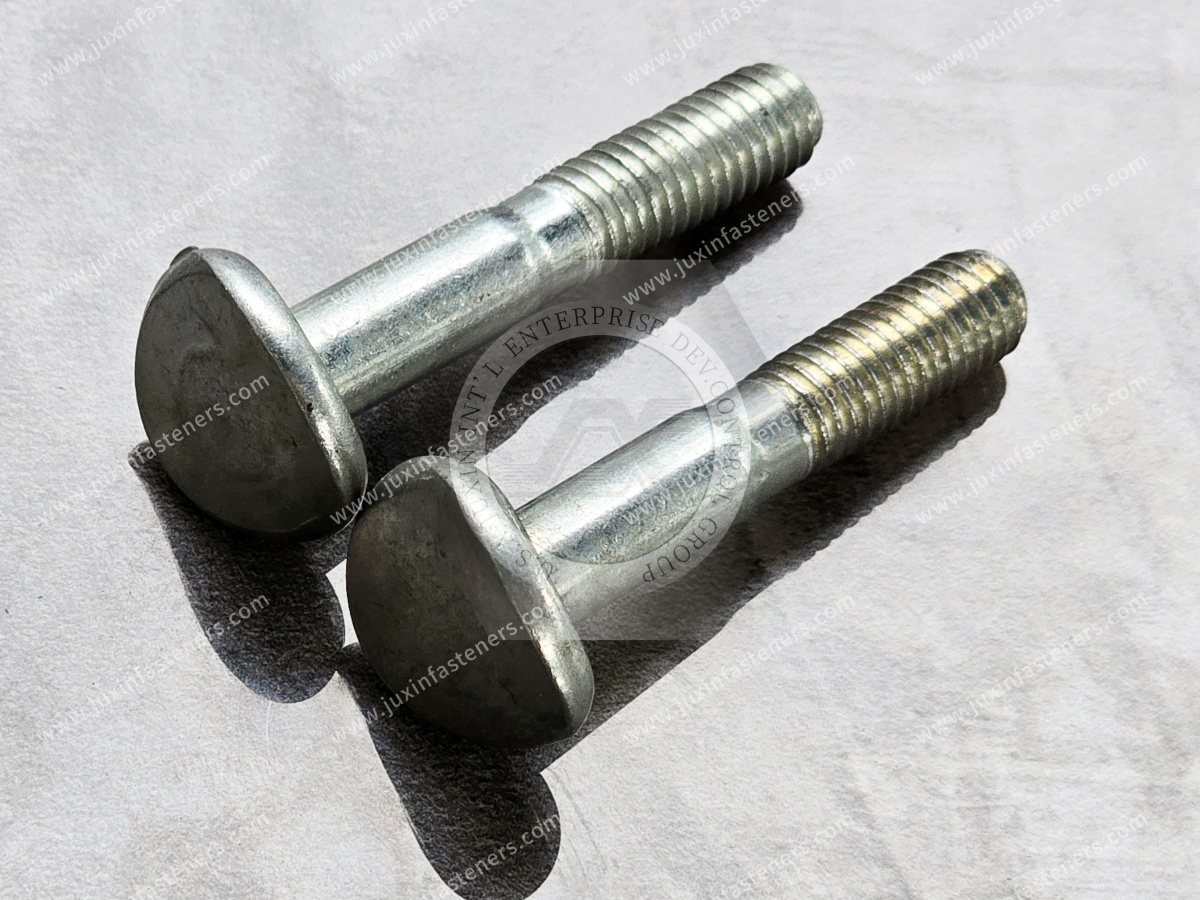
Pilot-hole size is particularly important when security screws are used in sheet-metal enclosures.
A hole that is too small can cause:
Excessive installation torque
Thread damage
Screw breakage
Material distortion
Poor production consistency
A hole that is too large can reduce:
Thread engagement
Pull-out resistance
Stripping resistance
For self-tapping screws, standards such as ISO 1478 provide relevant dimensional and product guidance.
However, there is no universal pilot-hole diameter that applies to every sheet-metal application.
The correct pilot hole depends on:
Screw thread geometry
Screw diameter
Parent material
Sheet thickness
Hole-making process
Required thread engagement
Installation method
For production programs, the pilot-hole requirement should therefore be validated for the actual screw and parent material combination.
Stainless steel is frequently considered for security screws used in outdoor or corrosion-sensitive environments.
Common stainless fastener families include:
A2 stainless steel
A4 stainless steel
Applicable stainless fastener specifications may include the ISO 3506 series where the specific product falls within its scope.
Stainless steel can offer useful corrosion resistance, but the actual performance depends on:
Stainless grade
Environment
Surface condition
Exposure duration
Contaminants
Temperature
Contact with other materials
Therefore, “stainless steel” alone is not a complete corrosion specification.
Stainless steel threaded assemblies can experience galling under certain installation conditions.
Galling is a form of adhesive wear that can cause the mating threads to seize.
Risk can increase with combinations of:
Similar stainless materials
High contact pressure
High installation speed
Poor surface condition
Inadequate lubrication
Repeated assembly
For stainless steel security screws, engineers should consider:
Mating material
Thread condition
Installation speed
Lubrication where permitted
Surface finish
Installation torque
This is especially important because a security drive may require sufficient torque transmission for authorized installation.
A robust drive geometry does not eliminate thread galling.
Carbon steel and alloy steel may be considered when mechanical strength, cost, availability or application requirements favor steel over stainless steel.
Possible applications include:
Industrial machinery
Equipment enclosures
Internal assemblies
Security panels
Automotive equipment
Mechanical structures
For higher-strength applications, the screw's property class and applicable standard should be specified.
Higher strength should not be assumed merely because the screw is made from alloy steel.
The complete specification should define:
Material
Heat treatment where applicable
Property class
Thread
Head geometry
Surface treatment
Security screws may be supplied with different surface finishes depending on the base material and environmental requirements.
Possible approaches can include:
Zinc-based finishes
Stainless steel without additional coating
Black finishes
Other customer-specified protective systems
The selected finish should be evaluated for:
Corrosion environment
Appearance
Thread fit
Installation friction
Material compatibility
Regulatory requirements
For high-strength carbon or alloy steel fasteners, the coating process may also require consideration of hydrogen embrittlement risk where applicable.
Surface treatment should therefore be treated as an engineering specification rather than simply a cosmetic option.
Outdoor security applications can involve multiple materials.
For example, a stainless steel security screw may be installed into an aluminum housing or attached to another metallic component.
When dissimilar metals are electrically connected in the presence of an electrolyte, galvanic corrosion may become a design consideration.
Engineers should therefore evaluate:
Fastener material
Mating material
Coating
Moisture exposure
Salt exposure
Environmental contamination
Electrical contact
Selecting stainless steel alone does not automatically eliminate galvanic corrosion.
The complete material system should be considered.
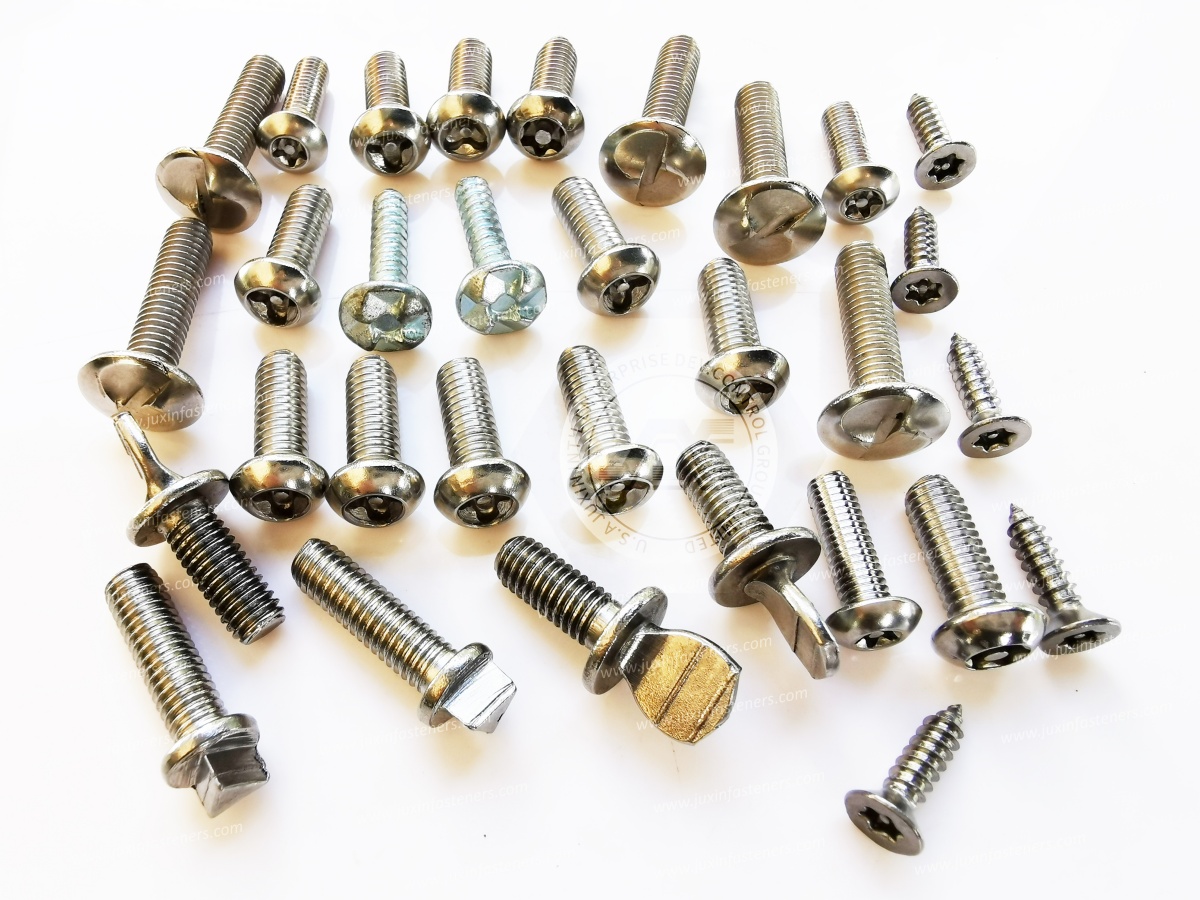
Electrical cabinets and electronic enclosures are common applications for tamper-resistant screws.
Potential applications include:
Control cabinets
Junction boxes
Outdoor electrical enclosures
Communication equipment
Instrument housings
Industrial control systems
Electronic equipment
Security screws can help restrict routine access to the enclosure.
The appropriate configuration may include:
Pin Torx
Security six-lobe
One-way
Countersunk security screw
Button-head security screw
The final selection should consider both security and maintenance.
If authorized technicians need regular access, a reusable security drive may be preferable to a one-way screw.
If routine access is undesirable, a one-way configuration may be considered.
HVAC systems can contain outdoor and indoor panels that require controlled access.
Security fasteners may be considered for:
Outdoor HVAC enclosures
Service panels
Equipment covers
Condenser housings
Commercial HVAC equipment
Publicly accessible equipment
The environment may include:
Moisture
Condensation
Temperature cycling
Outdoor exposure
Cleaning chemicals
Material and surface finish should therefore be selected according to the actual operating environment.
Public infrastructure can present a specific tampering challenge because equipment may be physically accessible to large numbers of people.
Potential applications include:
Public seating
Signage
Street lighting
Outdoor equipment
Utility enclosures
Security barriers
Transportation infrastructure
Public information equipment
For these applications, the security objective may be to prevent casual or opportunistic removal rather than to create an absolute physical barrier.
One-way screws can be considered where service access is intentionally restricted.
Reusable security drives can be considered where authorized maintenance is expected.
Outdoor electronics can combine physical-access concerns with corrosion exposure.
Applications may include:
Communication equipment
Monitoring equipment
Electronic enclosures
Outdoor control systems
Instrument housings
Sensor equipment
Important selection factors include:
Security drive
Head style
Stainless grade or protective finish
Thread system
Enclosure material
Environmental exposure
Service requirements
For outdoor installations, the screw and enclosure should be evaluated as one material system.
Industrial machinery may require restricted access to:
Control panels
Protective guards
Electrical compartments
Calibration areas
Equipment covers
Internal mechanisms
Security screws can provide an additional physical barrier where unauthorized access is undesirable.
However, safety guards and access panels must still comply with the applicable machinery and workplace requirements.
A security screw should not be used as a substitute for a properly designed safety interlock or guarding system.
Transportation equipment can contain components that are exposed to vibration, weather, public access and regular maintenance.
Potential applications include:
Interior panels
Equipment covers
Passenger-area fixtures
Electrical housings
External equipment
Signage systems
Selection should consider:
Vibration
Corrosion
Accessibility
Maintenance frequency
Fastener retention
Applicable customer specifications
The security function should be considered together with the mechanical requirements of the assembly.
A security screw may prevent routine unauthorized removal.
It does not automatically provide:
Higher tensile strength
Higher shear strength
Higher preload
Better vibration resistance
Better corrosion resistance
These characteristics depend on the actual fastener design and material.
For example, changing a conventional Torx screw to a pin-in Torx screw does not automatically increase the tensile strength of the screw.
The engineering team should separately evaluate:
Security function
and
Mechanical fastening function
This prevents security requirements from being confused with structural requirements.
Security screws must provide enough drive engagement for authorized installation.
Important variables include:
Drive size
Recess depth
Driver engagement
Driver quality
Installation torque
Screw material
Head geometry
Surface condition
A drive recess that is too shallow or damaged may reduce torque transmission and increase the risk of driver slip.
For production assembly, the authorized driver should be matched to the exact screw drive specification.
The fastener and driver should be treated as a functional pair.
Security fasteners should be selected according to how the equipment will be serviced.
Consider a reusable security drive such as a pin-in Torx configuration.
The authorized maintenance team can retain the correct driver and remove the fastener when necessary.
A less common security drive may provide stronger tool-control characteristics.
A one-way security screw may be considered where permanent or difficult removal is acceptable.
The choice therefore depends not only on security requirements but also on the expected life-cycle maintenance strategy.
| Consideration | Reusable Security Screw | One-Way Security Screw |
|---|---|---|
| Authorized removal | Designed for normal removal with correct tool | Intentionally difficult |
| Maintenance | Easier | More difficult |
| Tool control | Requires special driver | May require special removal method |
| Installation | Controlled | Generally straightforward |
| Serviceability | Higher | Lower |
| Typical use | Equipment requiring periodic service | Restricted-access or permanent applications |
Neither configuration is universally better.
The correct choice depends on the required balance between security and serviceability.
For OEM production, the security drive should be clearly defined on the engineering drawing.
A useful specification can include:
Part number
Drawing revision
Screw type
Head style
Drive type
Drive size
Thread diameter
Thread pitch
Thread length
Overall length
Material
Property class where applicable
Surface finish
Corrosion requirements
Application environment
Installation method
Required torque where specified
Packaging requirements
Inspection requirements
Documentation requirements
This is particularly important for security fasteners because visually similar drive geometries may not be interchangeable.
For many security fasteners, the drive is more than an aesthetic feature.
It is the interface between the screw and the authorized installation tool.
Therefore, procurement teams should treat the drive specification as a controlled feature.
Changes in:
Drive size
Drive depth
Pin position
Lobes
Recess geometry
Head geometry
may change the authorized tool interface.
A supplier substitution that appears visually similar may therefore create an unintended tooling or maintenance problem.
For OEM applications, the security drive should be controlled by part number and drawing revision.
Inspection requirements should reflect the actual customer specification.
Potential inspection areas include:
Head diameter
Head height
Overall length
Thread diameter
Thread length
Drive dimensions
Countersink geometry where applicable
Thread size
Pitch
Thread condition
Functional thread fit
The drive should be checked for:
Correct geometry
Correct dimensions
Correct depth
Damage
Burrs
Tool engagement
Depending on the specification:
Finish
Coating appearance
Surface defects
Corrosion condition
For production applications, the inspection plan should follow the approved drawing and quality requirements.
Depending on customer requirements, procurement teams may request:
Certificate of Conformance
Material documentation
Dimensional inspection reports
Surface-treatment documentation
Lot identification
Traceability records
The exact documentation package should be defined during supplier qualification.
Not every security screw application requires the same level of documentation.
The correct approach is to match documentation requirements to the product risk, customer quality system and applicable specification.
For products supplied into markets where applicable environmental regulations apply, customers may request information relating to:
RoHS
REACH
Restricted substances
Material declarations
Surface-treatment composition
RoHS and REACH are regulatory frameworks rather than mechanical fastener standards.
Supplier documentation should therefore correspond to the actual product material and surface finish.
Procurement teams should define the required declarations during supplier qualification rather than assuming that every security screw automatically carries the same regulatory documentation.
A practical selection process is:
What problem are you trying to prevent?
Casual tampering
Unauthorized access
Theft
Vandalism
Uncontrolled maintenance
Does an authorized technician need regular access?
Consider:
Pin Torx
Security six-lobe
One-way
Asymmetric
Custom drive
Consider:
Button
Pan
Flat countersunk
Round
Low-profile
Custom
Specify:
Metric or inch
Diameter
Pitch
Length
Thread-forming or machine-thread configuration
Consider:
Carbon steel
Alloy steel
Stainless steel
Other customer-specified material
Consider:
Corrosion environment
Appearance
Thread fit
Installation behavior
Regulatory requirements
Evaluate:
Installation torque
Drive engagement
Thread engagement
Pull-out or joint requirements where applicable
Environmental exposure
Maintenance strategy
Specify:
Dimensions
Thread
Drive
Surface finish
Material
Documentation
Provide the drawing, application information, quantity and required documentation.
Thin-gauge sheet metal often requires careful consideration of thread engagement and pull-out resistance.
Potential solutions can include:
Security self-tapping screws
Security thread-forming screws
Machine screws combined with self-clinching nuts
Machine screws combined with weld nuts
Security screws with other captive threaded components
The appropriate solution depends on:
Sheet thickness
Parent material
Hole geometry
Required serviceability
Required security level
Installation method
For higher-volume OEM sheet-metal assemblies, using a security machine screw with a controlled threaded insert or self-clinching fastener may
provide a different engineering solution from using a self-tapping security screw.
In sheet-metal assemblies, security screws can be combined with:
Self-clinching nuts
Self-clinching studs
Weld nuts
Rivet nuts
Threaded inserts
This creates a two-part fastening system:
Security screw + controlled internal thread
Such a configuration may be useful when the enclosure must be repeatedly serviced but unauthorized access should remain restricted.
For example, a pin-in Torx screw combined with a self-clinching nut can provide:
Controlled installation
Reusable maintenance access
Secure enclosure fastening
No requirement for tapping thin sheet metal
The correct internal threaded component depends on sheet thickness, material and assembly requirements.
Security screws can also be considered for selected automotive and industrial applications where restricted access is required.
Potential areas include:
Equipment covers
Electronic housings
Interior panels
Brackets
Control units
Specialized access panels
Industrial equipment
The security screw should not be assumed to replace a structural fastener where high mechanical loads or safety requirements apply.
Where higher-strength fasteners are required, the material and property class must be separately specified.
For procurement managers and supplier development teams, security fasteners require additional attention because the drive geometry can be a controlled product feature.
Supplier evaluation may include:
Can the supplier consistently control:
Head geometry
Drive geometry
Thread
Material
Finish
Length
Can the supplier maintain:
Drawing revision
Part-number control
Specification control
Change control
Can the supplier provide the documentation required by the customer?
Can the supplier prevent:
Mixing of drive types
Part-number confusion
Lot mixing
Surface damage
Can the supplier maintain the approved security drive geometry throughout repeat production?
These questions can be more important than simply comparing unit prices.
Security fasteners are sometimes purchased purely by piece price.
However, total sourcing cost can also include:
Authorized tooling
Installation time
Maintenance tooling
Replacement cost
Packaging complexity
Incoming inspection
Field service requirements
Fastener failures
Supplier changes
For OEM programs, procurement should evaluate the complete life-cycle cost.
A one-way screw may have a low unit cost but create additional maintenance cost if authorized service later requires destructive removal.
A reusable security screw may cost slightly more while providing a simpler maintenance process.
The appropriate commercial decision depends on the complete application.
A professional RFQ should ideally include:
Part number
Drawing revision
Screw type
Head style
Security drive type
Drive size
Drive dimensions where controlled
Thread diameter
Thread pitch
Thread length
Overall length
Material
Property class where applicable
Surface finish
Environmental exposure
Corrosion requirement
Installation method
Installation torque where specified
Maintenance/removal requirement
Quantity
Annual volume
Packaging requirement
Inspection requirement
CoC requirement
Material documentation requirement
Surface-treatment documentation where applicable
Traceability requirement
Change-control requirement
Providing this information helps the supplier quote the correct security fastener rather than a visually similar alternative.
JUXIN FASTENERS supplies custom screws, security screws and industrial fastening components for OEM and industrial applications.
Depending on the customer's drawing and application requirements, security fastening solutions may include:
Pin Torx security screws
Tamper-resistant Torx screws
One-way security screws
Security machine screws
Security self-tapping screws
Security sheet-metal screws
Stainless steel security screws
Carbon steel security screws
Custom security screw configurations
Available material and finish options should be selected according to the customer's required specification.
For OEM applications, JUXIN FASTENERS can work from the customer's drawing, sample or defined technical requirements to establish the appropriate fastener configuration.
The commercial conversion path can be summarized as:
Security Requirement
↓
What unauthorized access problem must be addressed?
Maintenance Strategy
↓
Should authorized technicians be able to remove the fastener?
Drive
↓
Pin Torx, one-way, asymmetric or custom?
Head
↓
Button, pan, countersunk, round or custom?
Thread
↓
Machine thread, self-tapping or thread-forming?
Material
↓
Carbon steel, alloy steel, stainless steel or specified material?
Environment
↓
Indoor, outdoor, moisture, chemicals, temperature or salt exposure?
Installation
↓
What tool and installation method will be used?
Inspection
↓
Which dimensions, drive characteristics, threads and finishes require verification?
Procurement
↓
What quantity, packaging, documentation and traceability are required?
Supplier Qualification
↓
Can the supplier maintain the controlled security geometry and approved specification?
RFQ
↓
Drawing + Specification + Quantity + Application + Quality Requirements
This approach connects the engineering security requirement directly with the commercial sourcing process.
JUXIN FASTENERS has more than 20 years of fastener experience supporting industrial and OEM fastening requirements.
Our product scope includes security screws together with broader fastening solutions such as:
Custom screws and bolts
Stainless steel fasteners
High-strength fasteners
Self-clinching fasteners
Rivet nuts
Weld nuts
Weld studs
CNC machined fastener components
Plastic and nylon hardware
This broader product capability can be useful when a security screw is only one part of a larger fastening system.
For example, an electrical enclosure may require:
Security screw + self-clinching nut + sheet-metal design + controlled surface finish
rather than a security screw alone.
The final product should always follow the customer's approved drawing and specification.
If you are developing a new product, replacing an existing supplier or sourcing tamper-resistant security screws for production, provide the available engineering and procurement information:
2D drawing
3D model where available
Existing sample or reference part
Part number
Drive type
Head style
Thread specification
Material
Surface finish
Application
Environmental conditions
Installation method
Quantity
Annual demand
Inspection requirements
Documentation requirements
Packaging requirements
JUXIN FASTENERS can evaluate the available specification and help identify the appropriate security screw configuration for the intended industrial or OEM application.
JUXIN FASTENERS
20+ Years of Fastener Experience
Custom Screws, Security Fasteners and Industrial OEM Components
Website: www.juxinfasteners.com
Email: info@juxinfasteners.com
 MORE NEWS
Sep. 25, 2026
Sep. 25, 2026
Sep. 25, 2026
Contact Us
Tel.:
+86 020 8621 0320
+86 020 3121 6067
E-mail:
Technical Support:
Navigation
SEND INQUIREY