
Call Us
+86 136 6007 9809
Call Us
+86 136 6007 9809

Jul. 12, 2023
Nylon insert locknuts are widely used when an assembly requires resistance to loosening without adding a separate locking washer or adhesive.
Often called nylon locknuts or nyloc nuts, they combine a conventional threaded nut with a non-metallic insert that interferes with the mating bolt thread.
The important engineering point is that a nylon insert locknut does not create joint clamping force by itself. Its primary function is to generate prevailing torque during thread engagement.
The resulting resistance helps maintain the fastener assembly against rotation, but prevailing torque, tightening torque and bolt preload are different engineering quantities.
Understanding that distinction is important when selecting a nylon insert locknut for automotive components, machinery, electrical equipment, automation systems, sheet-metal assemblies and other industrial applications.
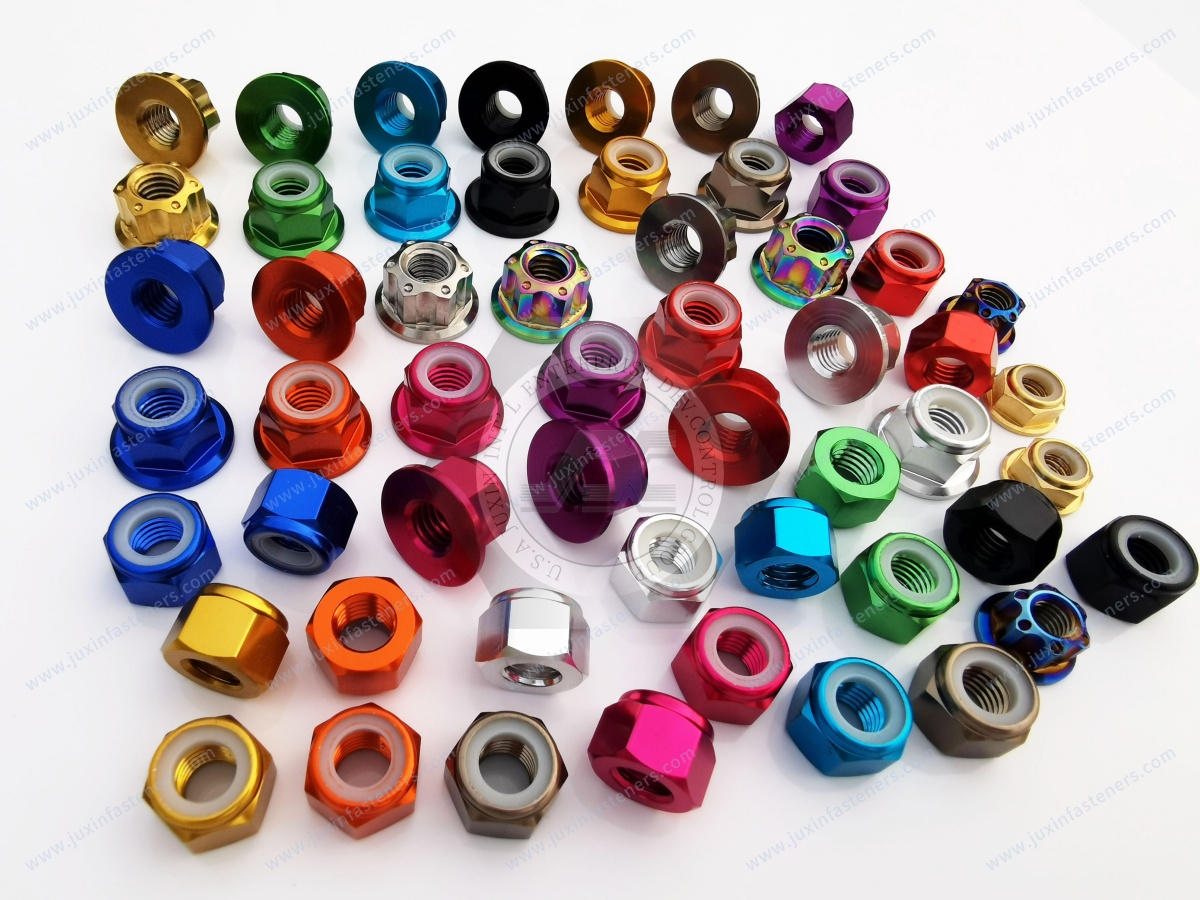
A nylon insert locknut is a threaded nut containing a polymer insert positioned near the upper portion of the internal thread.
During installation, the bolt thread enters the metal portion of the nut and then engages the nylon insert.
Because the insert opening is designed to interfere with the bolt thread, the polymer deforms around the thread profile.
This deformation creates resistance to rotation.
The basic mechanism can be summarized as:
Bolt thread → Nylon insert interference → Polymer deformation → Friction → Prevailing torque
The nut therefore behaves differently from a conventional free-running hex nut.
A standard nut primarily relies on the applied tightening process and joint friction to establish the assembly condition. A nylon insert locknut adds resistance to rotation between the nut and bolt.
This makes the product useful when a separate locking element is undesirable or when the assembly requires an integrated prevailing-torque feature.
The locking mechanism starts when the bolt reaches the nylon insert.
The insert is intentionally smaller or differently shaped than the corresponding threaded region of the bolt. As the bolt advances, its external thread displaces and deforms the polymer.
The polymer then exerts contact pressure against portions of the bolt thread.
That contact produces frictional resistance to rotation.
The resulting resistance is called prevailing torque.
Unlike the final tightening torque used to establish the joint, prevailing torque exists because the nut resists rotation even before the joint is fully clamped.
This distinction is important because the same nut can experience resistance from two different sources:
Resistance generated by the locking feature.
Resistance generated by the clamping of the joint.
They should not be treated as the same quantity.
These three terms are frequently confused.
Prevailing torque is the rotational resistance produced by the locking feature while the nut is being turned before the fastener has generated the intended joint clamping condition.
For a nylon insert locknut, this resistance is primarily associated with interaction between the bolt thread and the polymer insert.
Tightening torque is the torque applied during installation.
A simplified engineering relationship often used for threaded fasteners is:
T ≈ K × F × d
where:
T = tightening torque
K = torque coefficient representing friction-related effects
F = target bolt preload
d = nominal fastener diameter
This is a simplified relationship rather than a universal conversion.
Surface finish, lubrication, coating, thread condition, material combination, locking features and assembly conditions can all affect the relationship between applied torque and resulting preload.
Bolt preload is the tensile force generated in the fastener when the joint is tightened.
It is this preload that creates the clamping force between the assembled components.
Therefore:
Prevailing torque ≠ tightening torque ≠ bolt preload
This distinction is one of the most important considerations when specifying a nylon insert locknut.
A stronger locking effect does not automatically mean a stronger bolted joint.
The locking feature primarily changes the rotational resistance of the nut. Joint preload depends on the complete assembly system, including:
Bolt material
Nut material
Thread geometry
Lubrication
Surface finish
Coating
Tightening method
Torque coefficient
Joint stiffness
Installation procedure
Target preload
For applications where preload is tightly controlled, engineers should validate the complete fastener assembly rather than selecting a locknut based only on its perceived locking strength.
This is particularly important when the fastener is used in a high-volume production environment where friction variation can affect torque-controlled installation.
The nylon insert is not simply a washer placed inside the nut.
It is an active part of the threaded locking mechanism.
As the bolt passes through the insert, the polymer changes shape locally around the bolt thread.
Several factors influence this interaction:
Bolt thread geometry
Nut thread geometry
Insert geometry
Polymer material
Polymer hardness
Temperature
Surface condition
Bolt coating
Installation speed
Number of installation cycles
The actual locking behavior is therefore a system property rather than a simple property of the nut material alone.
A nylon insert that performs well in one bolt-and-nut combination may not behave identically when the bolt material, coating or surface condition changes.
The amount of effective thread engagement is an important part of fastener performance.
The bolt must engage the intended threaded region of the nut and pass through the locking section correctly.
If the bolt is too short, the assembly may not achieve the intended thread engagement.
If the bolt is excessively long, the protruding thread may affect surrounding components or packaging.
For nylon insert locknuts, bolt length is also relevant because the bolt must engage the insert in the intended manner.
When specifying a complete assembly, engineers should therefore consider:
Nominal thread diameter
Thread pitch
Nut height
Effective thread engagement
Bolt length
Thread protrusion
Washer thickness
Joint stack-up
Clearance around the fastener
The correct nut cannot be selected independently from the mating bolt and joint geometry.
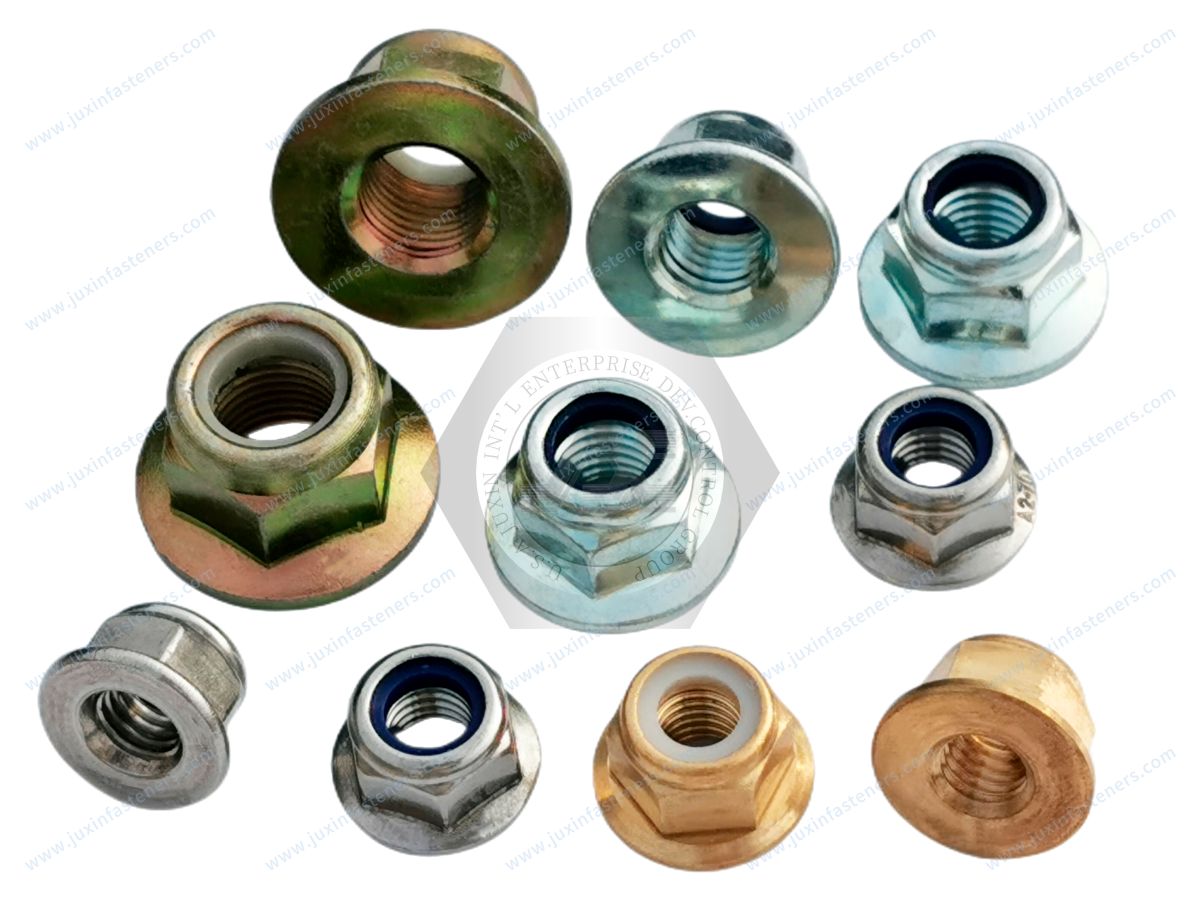
Metric nylon insert locknuts are commonly specified by nominal diameter and pitch.
Examples include:
M4 × 0.7
M5 × 0.8
M6 × 1.0
M8 × 1.25
M10 × 1.5
M12 × 1.75
The exact thread specification should always follow the engineering drawing or applicable product standard.
Fine-pitch threads may be appropriate for some applications where adjustment, thread engagement or packaging requirements justify their use. Coarse-pitch threads are common for general-purpose fastening.
The thread pitch should not be selected simply because a particular locknut is available. It should match the mating bolt and the functional requirements of the assembly.
DIN 985 and DIN 982 are commonly encountered references for nylon insert locknuts, but they should not be treated as interchangeable labels.
The applicable nut style, dimensions, height, thread specification and property requirements should be verified against the required drawing or current standard.
A procurement specification should identify the actual required configuration instead of simply stating “nylon locknut.”
For example, an RFQ may need to define:
Thread size
Thread pitch
Nut style
Material
Property class where applicable
Surface finish
Insert material
Applicable standard
Inspection requirements
Packaging requirements
This avoids ambiguity when multiple standards or configurations appear similar in a supplier catalog.
A nylon insert flange locknut combines a locking insert with an integrated flange.
The flange increases the bearing area under the nut compared with a conventional hex nut.
This configuration can be useful where the assembly benefits from a larger bearing surface or where a separate washer is undesirable.
However, a larger bearing surface does not automatically solve every substrate problem.
Engineers should still evaluate:
Parent material strength
Sheet thickness
Bearing stress
Joint geometry
Surface condition
Required clamping force
Installation method
A flange locknut should therefore be selected as part of the complete joint rather than simply as a stronger version of a standard nylon locknut.
The main functional difference is the integrated locking feature.
| Feature | Standard Hex Nut | Nylon Insert Locknut |
|---|---|---|
| Basic threading | Yes | Yes |
| Polymer locking insert | No | Yes |
| Prevailing torque | Generally not provided by the nut itself | Yes |
| Separate locking element | May be required depending on application | Often unnecessary for the locking function |
| Installation behavior | Lower thread resistance | Higher thread resistance |
| Temperature sensitivity | Primarily determined by metal system | Includes polymer temperature considerations |
| Reuse behavior | Depends on application and nut type | Must be evaluated according to specification and condition |
The choice should be based on the required joint function, not simply on whether the application experiences vibration.
Nylon insert locknuts are not suitable for every environment.
All-metal prevailing-torque nuts may be considered when the application requires a locking mechanism without a polymer insert.
The comparison should include:
| Consideration | Nylon Insert Locknut | All-Metal Locknut |
|---|---|---|
| Locking mechanism | Polymer insert | Metal thread deformation or metal locking feature |
| Temperature considerations | Polymer-dependent | Metal-system dependent |
| Electrical environment | Requires application-specific evaluation | Requires application-specific evaluation |
| Repeated installation | Must be evaluated | Must be evaluated |
| High-temperature exposure | May become limiting | Often considered where polymer limitations apply |
| Corrosion selection | Depends on nut and coating | Depends on nut and coating |
| Installation torque | Influenced by insert friction | Influenced by metal locking feature |
The important engineering question is not which type is universally better.
It is:
Which locking mechanism is appropriate for the temperature, installation cycle, environment and joint requirements?
One of the biggest limitations of nylon insert locknuts is that the insert is a polymer.
Polymer behavior changes with temperature.
Therefore, a nylon insert locknut should not be specified using a generic temperature number without considering the actual material grade and duty cycle.
Important questions include:
What is the normal operating temperature?
What is the maximum temperature?
How long is the fastener exposed to the maximum temperature?
Are there repeated thermal cycles?
Does the application experience short-duration temperature peaks?
Is the locking function required after thermal exposure?
Is the polymer grade defined by the specification?
For equipment exposed to elevated temperatures, engineers should evaluate whether the selected nylon insert material remains suitable throughout the expected service conditions.
Where the polymer system is not appropriate, an all-metal prevailing-torque solution may be considered.
There is no universal reuse number that applies to every nylon insert locknut.
Repeated installation changes the interaction between the bolt thread and polymer insert.
The locking behavior can be affected by:
Number of installation cycles
Bolt condition
Thread wear
Insert deformation
Temperature exposure
Lubrication
Installation torque
Surface finish
Storage and service environment
For critical applications, the customer's engineering specification should define whether reuse is permitted and what functional verification is required.
A simple rule such as “a nylon locknut can always be reused five times” should not be treated as a universal engineering requirement.
Material selection should consider both the nut body and the insert.
Common metallic nut-body options can include:
Carbon steel
Alloy steel
Stainless steel
Other specified materials for custom applications
The correct selection depends on mechanical requirements, corrosion environment, temperature, mating hardware and applicable standards.
Carbon steel locknuts are widely used for general industrial fastening.
Surface treatment may be specified to improve corrosion resistance or achieve a particular appearance or assembly requirement.
The coating should be selected together with the application environment and customer requirements.
Stainless steel nylon insert locknuts can be useful where corrosion resistance is an important consideration.
Common stainless fastener grades include A2 and A4 families under applicable stainless fastener specifications such as ISO 3506.
However, stainless steel does not automatically eliminate installation problems.
Stainless steel threaded assemblies can be susceptible to galling under certain combinations of material, surface condition, pressure and installation speed.
This can become especially important when a stainless steel bolt is paired with a stainless steel nylon insert locknut.
Possible engineering controls may include:
Appropriate mating materials
Suitable surface conditions
Controlled installation speed
Appropriate lubrication where permitted
Controlled tightening procedures
Validation of the complete fastener combination
Changing from carbon steel to stainless steel therefore changes more than corrosion resistance.
It can also change friction and installation behavior.
For carbon steel nylon insert locknuts, the surface finish may be selected according to the required corrosion environment and customer specification.
Possible coating systems can include zinc-based or other specified protective finishes.
The engineering evaluation should consider:
Base material
Coating type
Coating thickness
Thread fit
Hydrogen embrittlement considerations where applicable
Operating environment
Mating fastener material
Customer regulatory requirements
A corrosion-resistant coating should not be selected independently from the complete fastener system.
For high-strength steel components, the coating process and hydrogen embrittlement risk may require particular attention.
When different metals are connected in the presence of an electrolyte, galvanic corrosion can become a design consideration.
For example, a stainless steel fastener installed into or against another metallic material may require evaluation of the complete material combination.
The correct approach is not simply to select the most corrosion-resistant fastener available.
Engineers should consider:
Fastener material
Mating component material
Coating
Environmental exposure
Moisture
Salt or chemical exposure
Electrical contact
Required service life
Material compatibility should therefore be considered at the assembly level.
No.
A nylon insert locknut provides resistance to nut rotation, but it does not make every bolted joint immune to loosening.
Joint behavior depends on the complete assembly.
Potential causes of joint problems include:
Insufficient preload
Excessive vibration
Joint separation
Embedment
Thermal cycling
Incorrect tightening
Friction variation
Poor joint design
Component deformation
Fastener selection errors
This distinction is important.
A locking nut is one part of the joint design.
It should not be treated as a substitute for correct joint engineering.
For applications where vibration-induced self-loosening is the primary concern, a dedicated anti-vibration analysis may be more appropriate than selecting a locknut solely from a catalog description.
A nylon insert locknut can be considered when:
Integrated prevailing torque is required
A separate locking washer is undesirable
The operating temperature is suitable for the insert material
The application benefits from a non-metallic locking element
The installation process is compatible with prevailing torque
The customer specification allows a nylon insert
The assembly environment is compatible with the polymer
The choice should be reconsidered when:
High continuous temperature is expected
Severe thermal cycling affects the polymer
Repeated installation is a major requirement
The application requires a fully metallic locking mechanism
The locking performance must remain stable under conditions unsuitable for the insert
Customer specifications require another locking method
Before selecting a nylon insert locknut, engineers should define the following:
Specify:
Nominal diameter
Thread pitch
Metric or inch thread
Required thread tolerance where applicable
Specify whether the application requires:
Standard hex nylon insert locknut
Flange nylon insert locknut
Low-profile configuration
Custom geometry
Other specified locking configuration
Define:
Carbon steel
Alloy steel
Stainless steel
Other specified material
The insert material should be compatible with:
Temperature
Chemical exposure
Installation cycle
Required locking function
Customer specification
Define the required finish based on:
Corrosion environment
Appearance
Thread fit
Material compatibility
Regulatory/customer requirements
Specify:
Normal operating temperature
Maximum temperature
Exposure duration
Thermal cycling
Any short-duration temperature peaks
Define:
Installation method
Tightening method
Target torque or preload where specified
Lubrication condition
Installation speed where relevant
State whether the nut is:
Single-installation
Potentially reusable
Subject to defined reinstallation testing
Depending on the application, inspection requirements may include:
Dimensional inspection
Thread inspection
Material verification
Surface finish verification
Functional prevailing-torque testing
Visual inspection
Documentation requirements
A clear RFQ helps the supplier quote the correct nylon insert locknut rather than a visually similar alternative.
A useful RFQ package can include:
Part number
Drawing
2D dimensional drawing
3D model where available
Thread specification
Nut configuration
Material
Insert material
Property class where applicable
Surface finish
Applicable standard
Annual or project quantity
Initial order quantity
Packaging requirement
Inspection requirement
CoC requirement where applicable
Material certificate requirement where applicable
Functional testing requirement
Application temperature
Environmental conditions
Installation method
Special customer requirements
For custom nylon insert locknuts, the drawing and application information are particularly important.
OEM assemblies often require more than a standard catalog description.
The supplier may need to work from a controlled drawing or specification covering:
Thread dimensions
Nut geometry
Insert location
Material
Surface finish
Functional requirements
Inspection criteria
Packaging
Traceability
Revision control
For production programs, revision control is especially important.
A change in nut material, insert material, coating or geometry can change installation behavior even when the nominal thread size remains unchanged.
Procurement teams should therefore control the approved specification and revision rather than purchasing only by a generic product name.
The documentation package should match the actual customer requirement.
Depending on the project, this may include:
Certificate of Conformance
Material documentation
Dimensional inspection reports
Surface treatment documentation
Functional test results
Packaging identification
Lot traceability
Not every application requires every document.
The correct approach is to define documentation requirements during supplier qualification and RFQ review.
This avoids both under-documentation and unnecessary documentation cost.
Automotive assemblies can use nylon insert locknuts where the operating environment, temperature and customer specification are compatible with the polymer locking system.
Potential applications include:
Brackets
Interior assemblies
Body hardware
Equipment supports
Electrical and electronic assemblies
Non-high-temperature mechanical assemblies
Access panels
General automotive hardware
The correct fastener should always be selected according to the specific component, joint load, environment and OEM requirement.
A nylon insert locknut should not automatically be assumed to be suitable for a safety-critical or high-temperature automotive application.
Machinery and automation systems frequently contain numerous threaded joints where installation efficiency and resistance to unintended nut rotation are important.
Applications may include:
Machine frames
Brackets
Guards
Sensors and supports
Actuator assemblies
Automation equipment
Conveyor equipment
General mechanical assemblies
The appropriate locking method depends on whether the joint is static, dynamic, exposed to vibration, frequently serviced or subject to elevated temperature.
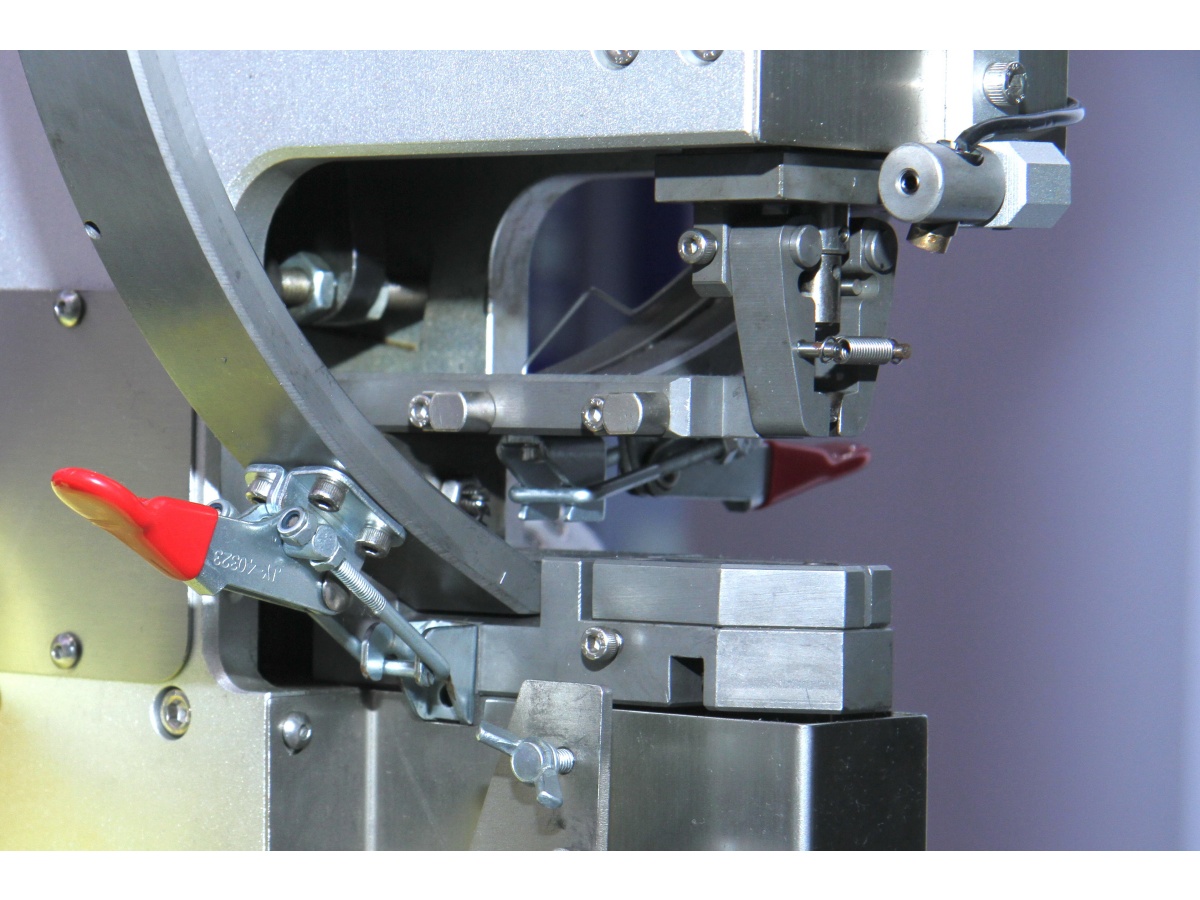
Nylon insert locknuts may also be used in electrical equipment and metal enclosure assemblies where the temperature and environmental conditions are suitable.
Potential applications include:
Electrical cabinets
Control panels
Equipment brackets
Cable-management hardware
Instrument enclosures
Industrial electrical assemblies
Where electrical isolation is required, engineers should evaluate the complete assembly rather than assuming that a nylon insert automatically provides electrical isolation.
The nut body remains metallic unless a non-metallic nut is specifically selected.
HVAC and industrial equipment may contain many mechanical joints where a compact integrated locking function is useful.
Selection should consider:
Operating temperature
Vibration
Condensation
Corrosive environment
Service requirements
Installation method
Maintenance frequency
The correct fastener should be selected based on the actual equipment environment rather than the industry name alone.
One of the most useful principles when selecting a nylon insert locknut is:
Start with the joint requirement, then select the fastener.
A practical selection sequence is:
Joint requirement → Thread → Nut configuration → Material → Insert → Temperature → Environment → Installation → Inspection → Supplier qualification
This approach reduces the risk of selecting a nut simply because its nominal size appears correct.
Two M8 nylon insert locknuts, for example, can have different materials, dimensions, coatings, insert configurations and applicable standards.
Nominal thread size alone is not a complete specification.
It may seem logical that a locknut with greater rotational resistance should always be the better choice.
That is not necessarily true.
Excessive resistance can affect:
Installation torque
Torque-to-preload relationship
Assembly equipment settings
Worker effort
Production cycle
Thread wear
Serviceability
The objective is not to maximize locking resistance.
The objective is to achieve the required joint performance with a controlled and repeatable assembly process.
When evaluating a nylon insert locknut, ask these questions:
Does the assembly need prevailing torque?
If yes, a locking nut may be appropriate.
Is the operating temperature suitable for the insert?
If not, consider another locking mechanism.
Is the bolt and nut material combination compatible?
Evaluate corrosion, friction and galling risks.
Is the installation process controlled?
If preload is important, torque behavior and friction variation should be considered.
Is repeated removal required?
If yes, confirm that the selected locking system is appropriate for the expected service cycle.
Is vibration the primary failure mode?
If yes, evaluate the complete joint and consider whether a dedicated anti-loosening solution is required.
Is the application governed by a customer drawing or standard?
If yes, the drawing and applicable specification should control the final selection.
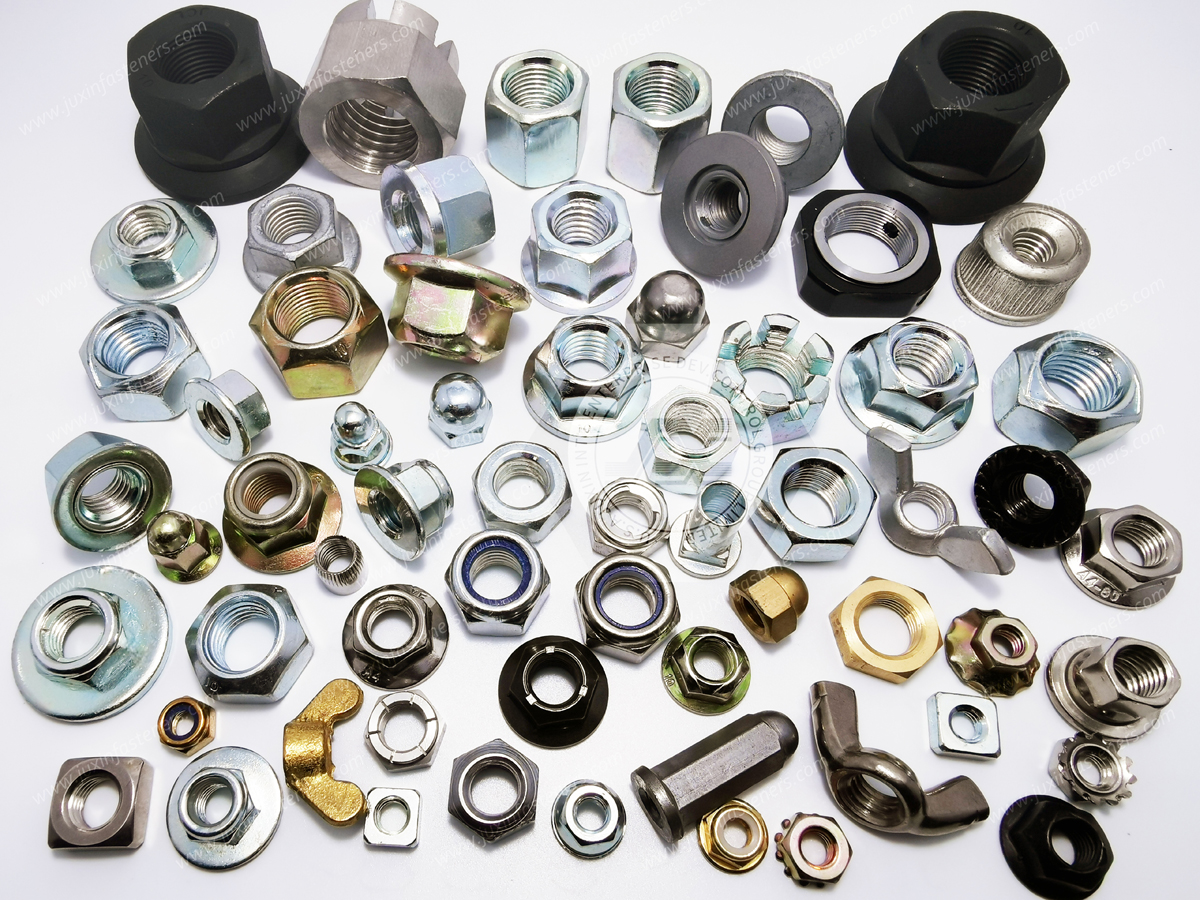
JUXIN FASTENERS supports OEM and industrial customers with nylon insert locknuts and other threaded fastening solutions for applications requiring controlled thread engagement and integrated prevailing torque.
Depending on the application, sourcing requirements may include:
Standard nylon insert locknuts
Metric configurations
Flange locknuts
Carbon steel locknuts
Stainless steel locknuts
Custom threaded nuts
Other self-locking fastening configurations
The appropriate specification can be evaluated according to the customer's drawing, thread requirement, material, finish, insert requirement, application environment and quantity.
For OEM projects, providing the drawing and application conditions at the RFQ stage helps reduce specification ambiguity and supports more accurate supplier evaluation.
A successful nylon insert locknut specification should connect engineering requirements with purchasing requirements.
The process can be summarized as:
Application
→ What is the fastener used for?
Joint
→ What load, temperature and environment does it experience?
Thread
→ What diameter and pitch are required?
Configuration
→ Standard hex, flange or custom?
Material
→ Carbon steel, stainless steel or another specified material?
Insert
→ What polymer and temperature requirements apply?
Finish
→ What corrosion and surface requirements apply?
Installation
→ How will the fastener be tightened?
Inspection
→ What dimensions and functional characteristics must be verified?
Procurement
→ What quantity, packaging and documentation are required?
This creates a much stronger RFQ than simply requesting a quotation for “M8 nylon locknuts.”
Nylon insert locknuts create their locking function through interaction between the bolt thread and a polymer insert.
The resulting prevailing torque provides resistance to nut rotation, but it should not be confused with tightening torque or bolt preload.
For engineering selection, the most important factors include thread size and pitch, nut configuration, material, insert characteristics, operating temperature,
surface finish, installation method, reuse requirements and application environment.
A nylon insert locknut can be an effective integrated locking solution when its operating conditions are compatible with the polymer insert.
Where temperature, repeated installation or other environmental conditions make the polymer unsuitable, an all-metal locking solution may be more appropriate.
For OEM and industrial sourcing, the best specification combines the engineering requirement with the actual drawing, material, finish, functional requirements and inspection criteria.
JUXIN FASTENERS provides nylon insert locknuts and custom threaded fastening solutions for industrial and OEM applications.
For a project-specific RFQ, send the drawing, thread specification, material, finish, quantity and application requirements to info@juxinfasteners.com.
JUXIN FASTENERS
20+ Years of Fastener Experience
Custom Fasteners for Industrial and OEM Applications
Website: www.juxinfasteners.com
Email: info@juxinfasteners.com
 MORE NEWS
Sep. 25, 2026
Sep. 25, 2026
Sep. 25, 2026
Contact Us
Tel.:
+86 020 8621 0320
+86 020 3121 6067
E-mail:
Technical Support:
Navigation
SEND INQUIREY