
Call Us
+86 136 6007 9809
Call Us
+86 136 6007 9809

Jul. 11, 2023
In automotive assemblies, industrial machinery, electrical equipment, automation systems, transportation equipment, and sheet metal structures,
threaded joints can be exposed to vibration, shock, thermal cycling, repeated operation, and changes in friction.
Under these conditions, a standard free-running nut may not provide the required resistance to rotational loosening.
Nylon insert locknuts, commonly called nyloc nuts or nylon locknuts, provide a practical form of prevailing-torque resistance through a polymer insert that interferes with the mating bolt thread.
Other self-locking solutions, including prevailing torque all-metal nuts and flange locknuts, can be selected when application temperature, assembly method, service conditions,
or maintenance requirements make a polymer insert unsuitable.
JUXIN FASTENERS supplies custom and standard threaded fastening solutions for industrial and OEM applications, including nylon insert locknuts,
flange locknuts, stainless steel locknuts, carbon steel locknuts, high-strength threaded fasteners, and other custom nuts and fastening components.
The correct locknut is not selected simply by searching for a “vibration-proof nut.” Engineers and procurement teams should evaluate
the complete joint: bolt and nut compatibility, thread specification, preload, friction, temperature, environment, installation method, maintenance requirements, and applicable standards.
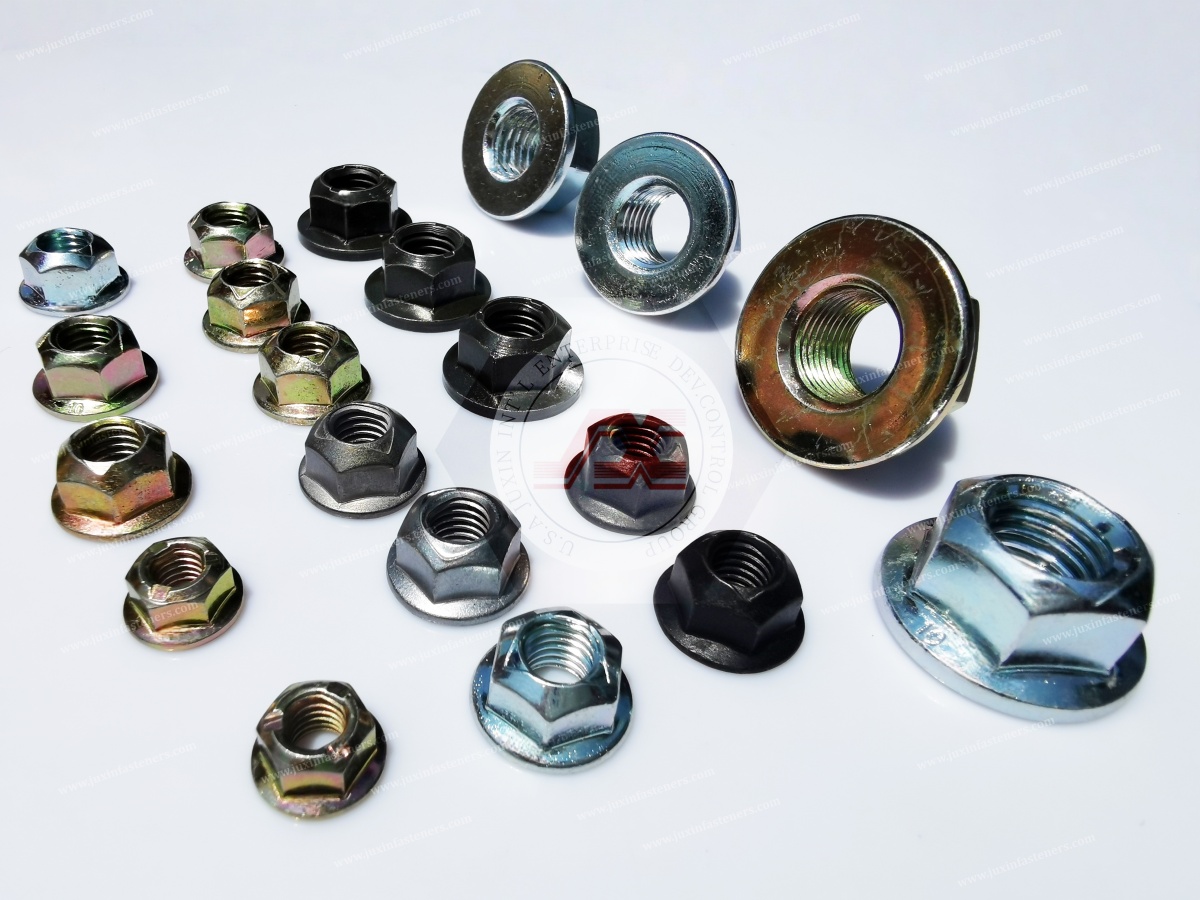
A nylon insert locknut is a threaded nut containing a polymer insert positioned within the nut.
When the bolt passes through the insert, the interference between the bolt thread and polymer creates additional prevailing torque.
This resistance helps reduce the tendency of the nut to rotate freely under vibration or operational movement.
The locking function is different from simply increasing bolt preload.
A conventional threaded joint primarily depends on the relationship between bolt preload, joint stiffness, friction, and service loads.
A nylon insert locknut adds a prevailing-torque mechanism to resist rotational movement of the nut.
This distinction is important when designing or troubleshooting a threaded joint.
A locknut does not automatically compensate for inadequate joint design, insufficient preload, excessive vibration, poor thread engagement, damaged threads, or incorrect installation.
The polymer insert creates interference with the mating male thread.
As the bolt enters the insert:
The bolt thread contacts the polymer insert.
The insert deforms around the thread profile.
Additional friction is generated between the mating thread surfaces.
This creates prevailing torque during assembly and removal.
Once the nut is fully seated, the joint develops its intended clamping force according to the complete fastener and joint design.
The locking mechanism therefore depends on both the geometry of the nut and the condition of the mating bolt.
The bolt thread should be compatible with the specified nut thread. Damaged, contaminated, incorrectly sized, or heavily worn threads can change installation behavior and locking performance.
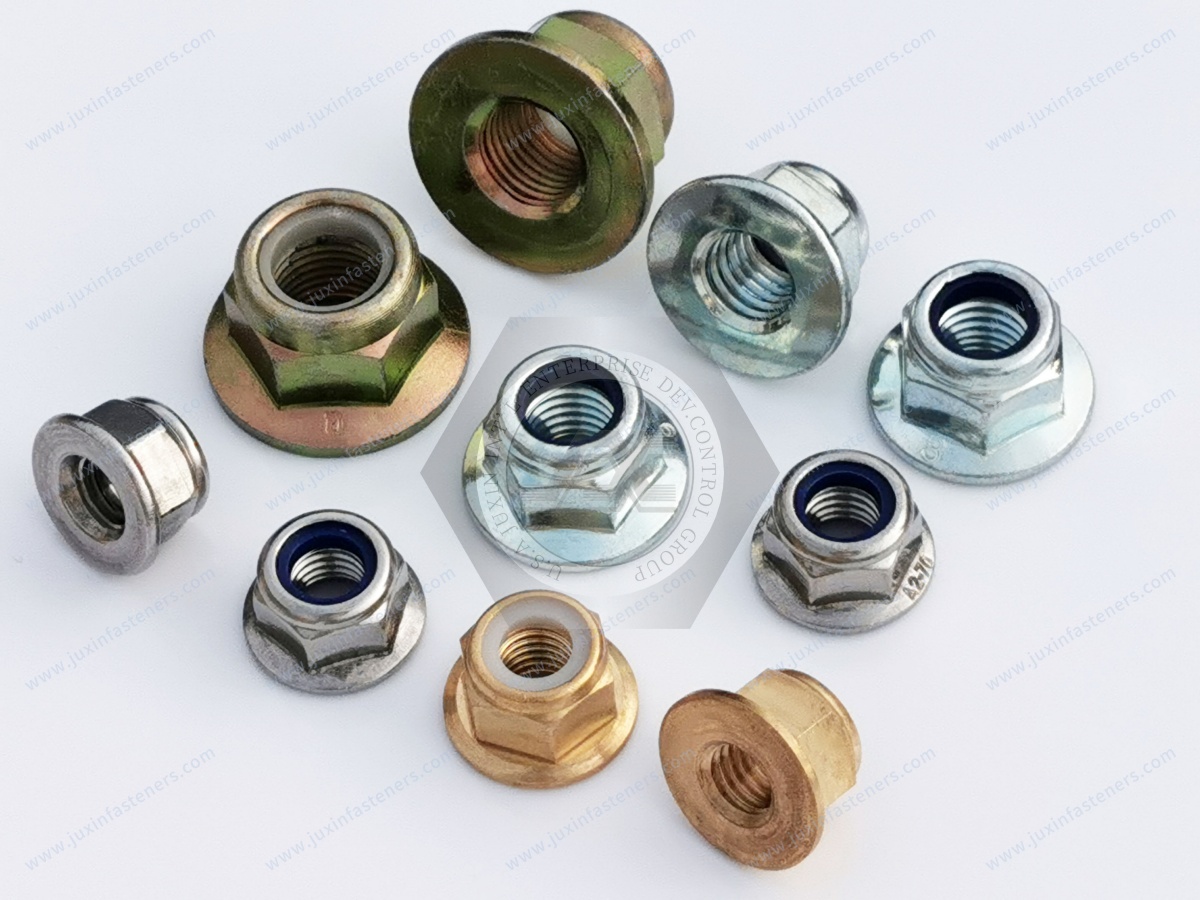
One of the most important distinctions when selecting a self-locking nut is the difference between prevailing torque and installation torque.
Prevailing torque is the resistance generated by the locking feature before the nut is fully seated against the joint.
It is not the same as the torque required to generate the desired bolt preload.
For a simplified torque relationship:
T ≈ K × F × d
where:
T = applied tightening torque
K = torque coefficient influenced by friction and other conditions
F = bolt preload
d = nominal bolt diameter
For a locknut, the torque measured during installation can include the additional prevailing torque generated by the locking element.
This means an engineer should not assume that the entire measured tightening torque is converted into useful clamp load.
For critical joints, the installation method and torque specification should account for the selected locking mechanism and actual joint conditions.
This is especially important when changing from a standard nut to a nylon insert locknut without reviewing the assembly torque strategy.
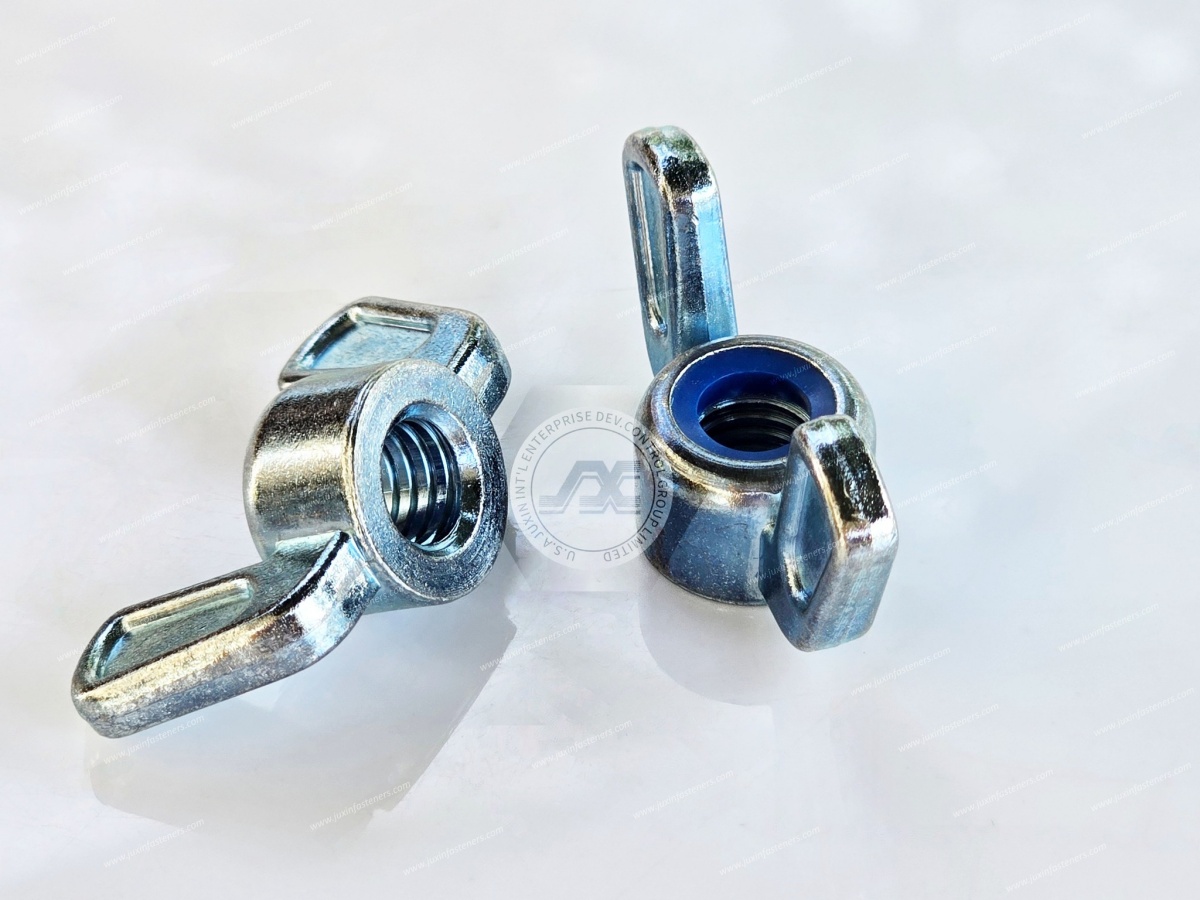
A standard free-running hex nut is designed primarily to provide threaded engagement and clamping when used with a compatible bolt.
A nylon insert locknut adds prevailing-torque resistance.
| Feature | Standard Hex Nut | Nylon Insert Locknut |
|---|---|---|
| Free-running thread | Yes | No, due to insert interference |
| Prevailing torque | Low before seating | Higher due to polymer insert |
| Vibration resistance | Depends on joint design | Additional resistance to rotational loosening |
| Temperature capability | Material-dependent | Limited by polymer insert and application |
| Repeated removal | Generally straightforward | Locking performance can change with reuse |
| Installation torque | Mainly joint friction | Joint friction + prevailing torque |
| Typical applications | General fastening | Assemblies requiring additional resistance to loosening |
The choice should be based on application requirements rather than assuming that a locking nut is always superior.
Several international standards are relevant to prevailing-torque nuts, depending on the nut configuration, thread series, dimensions, and application.
Common references include:
ISO 2320 for prevailing torque type steel nuts
ISO 10511 for prevailing torque type hexagon thin nuts with non-metallic insert
DIN 985 for prevailing torque type hexagon nuts with non-metallic insert
DIN 982 for the corresponding higher-profile prevailing torque hexagon nut configuration
DIN 6926 for prevailing torque type hexagon flange nuts with non-metallic insert
ASME B18.16.6 for inch-series prevailing-torque locknuts
The exact applicable standard should be selected according to the product geometry, thread system, dimensional requirements, material, and customer drawing.
A supplier should not treat all nylon insert locknuts as interchangeable simply because they share the same nominal thread size.
DIN 985 and DIN 982 are commonly encountered when sourcing metric nylon insert locknuts.
They represent different dimensional configurations, particularly in nut height and related geometry.
For procurement, the standard designation should therefore be specified together with:
Thread size
Thread pitch
Nut configuration
Material
Property class where applicable
Surface finish
Insert material
Quantity
Packaging
Inspection requirements
For OEM applications, the customer's drawing or approved specification should take precedence over a generic catalog description.
JUXIN FASTENERS can evaluate metric and inch-thread requirements according to the customer's application and specification.
Typical metric thread requirements may include:
M4 × 0.7
M5 × 0.8
M6 × 1.0
M8 × 1.25
M10 × 1.5
M12 × 1.75
Typical inch-thread requirements may include Unified thread forms such as:
1/4-20 UNC
5/16-18 UNC
3/8-16 UNC
1/2-13 UNC
These examples do not define a universal product range. The required thread should be confirmed from the engineering drawing or purchasing specification.
For inch-series applications, applicable ASME/ANSI thread requirements should be identified in the RFQ.
The polymer insert is an important part of the locking system.
Its behavior can be influenced by:
Temperature
Chemical exposure
Moisture
Thread geometry
Bolt material
Assembly speed
Reuse
Storage conditions
Service environment
Standard polyamide materials are widely used for nylon insert locknuts, but the exact material grade and formulation should be confirmed for the application.
The phrase “nylon locknut” should therefore not be treated as a complete material specification.
For demanding applications, the RFQ should identify the required polymer type or the performance requirements that the insert must satisfy.
A common sourcing mistake is to specify a nylon insert locknut using one universal temperature range.
Actual temperature capability depends on the polymer formulation, exposure duration, mechanical load, environmental conditions, and the requirements of the specific application.
At elevated temperatures, polymer properties can change. This may influence:
Insert interference
Prevailing torque
Long-term dimensional stability
Creep behavior
Repeated-use performance
For applications near heat sources, engines, braking systems, exhaust systems, power electronics, or other elevated-temperature environments, engineers should evaluate the actual service temperature rather than relying on a generic “nylon locknut temperature rating.”
When the polymer insert is not suitable, an all-metal prevailing-torque solution may be considered.
Nylon insert locknuts can provide additional resistance to rotational loosening, but they should not automatically be described as suitable for every high-vibration application.
Joint performance depends on:
Bolt preload
Joint stiffness
External transverse loads
Vibration frequency and amplitude
Friction conditions
Thread engagement
Fastener geometry
Installation method
Locking mechanism
For highly dynamic assemblies, engineers should validate the complete joint rather than selecting a locknut based only on the product name.
This distinction is especially important in automotive, rail, machinery, robotics, and other applications exposed to continuous mechanical movement.
If a threaded joint repeatedly loosens, changing the nut may not be the first engineering action.
The failure investigation should consider:
Was the required preload achieved?
Is the bolt correctly sized?
Is the joint sufficiently stiff?
Is the clamped material settling or embedding?
Is the bolt too long or too short?
Is there sufficient thread engagement?
Is the mating surface suitable?
Has friction changed because of coating, lubrication, or contamination?
Is the joint exposed to transverse vibration?
Is the selected locking method appropriate for the service environment?
This is a major practical distinction between fastener selection and joint design.
A self-locking nut is one component of the joint system, not a substitute for proper joint engineering.
Flange locknuts combine a nut body with an integrated flange.
The flange increases the bearing area under the nut compared with a conventional hex nut.
Depending on the design, this can help distribute the bearing load over a larger area and may eliminate the need for a separate loose washer.
Nylon insert flange locknuts can therefore be useful where both prevailing-torque resistance and integrated bearing-area geometry are required.
However, the flange does not automatically solve substrate deformation.
When fastening thin sheet metal, aluminum, plastic, or other relatively soft materials, engineers should evaluate:
Sheet thickness
Bearing surface
Hole diameter
Joint stiffness
Washer requirements
Clamp load
Local deformation
Nut flange dimensions
Sheet metal assemblies often combine relatively thin material with limited access to the rear side of the joint.
Nylon insert locknuts may be used when the assembly design allows a conventional nut to be installed and when the environmental conditions are suitable.
Applications may include:
Electrical cabinets
HVAC equipment
Industrial machinery
Control panels
Sheet metal enclosures
Automation equipment
Equipment frames
Brackets and structural subassemblies
Where rear-side access is unavailable, other fastening technologies such as self-clinching fasteners or rivet nuts may provide a more appropriate solution.
These two products solve different assembly problems.
A nylon insert locknut is normally installed onto an existing male thread.
A self-clinching nut is installed into a prepared sheet-metal hole and becomes mechanically retained in the panel.
Therefore:
Nylon insert locknut:
Useful when a mating bolt or threaded stud is available and additional prevailing torque is required.
Self-clinching nut:
Useful when permanent internal threading is required in sheet metal and access to the rear side of the panel is limited.
Selecting between them should begin with the assembly architecture rather than the fastener name.
Rivet nuts provide an internally threaded fastening point in materials where a conventional tapped thread may not be practical.
Nylon insert locknuts are externally applied nuts used with a male-threaded fastener.
For procurement teams, the distinction is important because the two products involve different installation processes, tooling, panel requirements, and assembly workflows.
JUXIN FASTENERS supplies both rivet nuts and nylon insert locknuts, allowing the fastening solution to be selected according to the actual assembly design.
Stainless steel nylon insert locknuts may be considered where corrosion resistance, appearance, or material compatibility is important.
Common stainless material families include:
A2 stainless steel
A4 stainless steel
Applicable stainless fastener requirements can be evaluated according to relevant ISO 3506 specifications where appropriate.
However, stainless steel should not be selected simply because an application is outdoors.
The actual environment may include:
Salt exposure
Humidity
Chlorides
Chemical contamination
Temperature cycling
Dissimilar-metal contact
Galvanic compatibility should also be considered when stainless fasteners are assembled with aluminum or other dissimilar metals.
Carbon steel provides a practical balance of strength, availability, cost, and manufacturing flexibility for many industrial applications.
Depending on the required specification, surface treatments may include:
Zinc plating
Trivalent chromium passivation
Zinc-nickel coating
Zinc-flake coating
Other customer-specified finishes
The coating should be selected according to the actual corrosion environment, appearance requirements, dimensional requirements, and applicable environmental restrictions.
A coating name alone does not define the complete corrosion performance of a finished fastener.
Higher-strength bolts are often paired with nuts having a compatible mechanical property class.
Relevant fastener property-class requirements should be evaluated using applicable standards such as the ISO 898 series for carbon and alloy steel fasteners.
However, higher strength does not automatically mean better joint performance.
A stronger nut may be unnecessary if the bolt, joint material, load, and application do not require it.
Conversely, using an unsuitable nut with a high-strength bolt can create a mechanical mismatch.
The bolt and nut should therefore be treated as a matched fastening system.
Fastener selection should balance:
Strength + preload + joint material + environment + installation + service conditions.
For example, increasing fastener strength while leaving the joint material unchanged may transfer more load into a softer substrate.
The result may be local deformation rather than improved joint reliability.
For aluminum structures, thin sheet assemblies, plastics, and other lower-strength materials, engineers should evaluate the complete load path rather than simply upgrading the fastener property class.
Nylon insert locknuts should not automatically be treated as having unlimited reuse capability.
Every installation and removal cycle can affect the polymer insert and the prevailing-torque behavior.
Potential factors include:
Number of installation cycles
Bolt thread condition
Assembly torque
Temperature
Contamination
Insert material
Thread condition
Application requirements
For assemblies where locking performance is critical, the customer's engineering specification should define whether replacement is required after removal.
If repeated service is expected, an alternative locking design may be more appropriate.
Automotive assemblies contain a wide range of threaded joints with different requirements.
Potential applications include:
Brackets
Body structures
Interior mechanisms
Seat-related non-safety-critical assemblies
Electrical equipment
HVAC components
Underbody components where environmental conditions are suitable
Auxiliary equipment
Automotive tooling and production equipment
For safety-critical assemblies, the complete joint must be validated according to the applicable vehicle, component, and customer requirements.
A locknut should not be described as “automotive compliant” merely because it is used in an automotive application.
Electrical cabinets, control systems, automation equipment, power equipment, and industrial enclosures can use self-locking nuts where mechanical vibration or service movement is present.
Potential considerations include:
Electrical insulation requirements
Temperature
Humidity
Chemical exposure
Metal compatibility
Panel thickness
Maintenance access
Thread size
Assembly torque
Plastic components may provide electrical isolation in some applications, but plastic should not automatically be considered an EMI-shielding solution.
EMI performance depends on the overall enclosure and grounding design.
Industrial machinery frequently combines motors, gearboxes, brackets, covers, sensors, guards, actuators, and moving assemblies.
Locknuts may be selected where additional resistance to rotational loosening is required.
Typical application areas include:
Machine frames
Motor assemblies
Automation equipment
Robotic equipment
Conveyors
Pumps
Fans
Compressors
Industrial equipment covers
Mechanical brackets
For moving machinery, engineers should consider the direction and magnitude of vibration as well as the required maintenance frequency.
Robotic equipment can experience repeated acceleration, deceleration, vibration, and movement.
Fastener selection therefore requires more than checking nominal thread size.
Engineers may need to evaluate:
Mass and inertia
Joint stiffness
Repeated movement
Vibration
Cable or harness interference
Maintenance frequency
Fastener accessibility
Temperature
Weight constraints
A nylon insert locknut can be considered where its temperature and mechanical limitations are compatible with the joint.
For highly dynamic joints, application-specific validation remains essential.
Transportation equipment can contain numerous threaded joints exposed to vibration and environmental cycling.
Potential applications include equipment brackets, interior systems, electrical cabinets, service panels, mechanical assemblies, and other non-safety-critical fastening points.
For rail and transportation projects, additional customer or project-specific requirements may apply to materials, fire behavior, corrosion resistance, traceability, testing, and documentation.
These requirements should be identified during the RFQ stage rather than assumed from the fastener category alone.
HVAC and industrial equipment may experience vibration from fans, motors, compressors, pumps, and moving mechanisms.
Nylon insert locknuts can be considered for suitable temperature zones and service conditions.
When temperatures exceed the practical operating range of the polymer insert, an all-metal prevailing-torque nut or another locking method may be more appropriate.
This is especially relevant around heat-generating equipment.
The selection between polymer-insert and all-metal prevailing-torque nuts is primarily an application decision.
| Consideration | Nylon Insert Locknut | All-Metal Locknut |
|---|---|---|
| Locking mechanism | Polymer insert | Metal deformation or spring action |
| Temperature sensitivity | Higher | Generally more suitable for elevated temperatures |
| Typical use | General industrial and OEM assemblies | Higher-temperature or specialized applications |
| Repeated installation | Locking performance may change | Depends on design and specification |
| Corrosion considerations | Depends on nut material and coating | Depends on nut material and coating |
| Installation behavior | Includes polymer prevailing torque | Depends on metal locking design |
The correct choice depends on the actual operating environment and required locking performance.
An RFQ that says only:
“M6 nylon locknut, 10,000 pcs”
is usually incomplete for OEM sourcing.
A better technical specification may include:
M6 thread
Thread pitch
Nut standard
Material
Property class where applicable
Insert material
Surface finish
Corrosion requirement
Temperature environment
Application
Drawing number
Revision
Quantity
Packaging
Inspection requirements
Documentation requirements
This additional information allows suppliers to quote the correct product instead of making assumptions.
Depending on the customer specification, inspection may include:
Typical dimensional checks may include:
Across-flats dimension
Nut height
Flange diameter where applicable
Thread dimensions
Insert position
Overall geometry
The internal thread should be checked against the applicable thread specification and customer requirements.
For metric products, the applicable ISO metric thread requirements should be identified.
For inch products, applicable Unified thread requirements should be specified.
Material requirements should be confirmed according to the drawing, purchase specification, or applicable standard.
Coating and surface-treatment requirements should be specified where applicable.
Where required, prevailing-torque performance can be evaluated according to the applicable product standard or customer test specification.
The exact test method and acceptance criteria should be agreed during technical review rather than assumed from a generic product description.
For larger OEM and industrial supply chains, documentation requirements may be as important as the physical product.
Depending on the project, procurement teams may request:
Certificate of Conformance
Material documentation
Dimensional inspection reports
Surface-treatment documentation
Lot identification
Batch traceability
Packaging specifications
Customer-specific inspection records
Drawing revision control
Change notification requirements
The required documentation should be identified before production whenever possible.
This reduces the risk of receiving technically acceptable parts that cannot be released into the customer's quality system because required documents are missing.
For products supplied into European and other regulated markets, material and surface-treatment requirements should be evaluated against the applicable regulatory requirements.
RoHS and REACH are regulatory frameworks rather than generic fastener quality certifications.
The actual assessment depends on:
Base material
Polymer material
Surface treatment
Chemical composition
Market
Customer requirements
Product configuration
For zinc-plated or coated steel locknuts, the coating chemistry should be specified clearly, especially where restrictions on certain substances apply.
Procurement teams should evaluate more than unit price when qualifying a locknut supplier.
A practical supplier review may include:
Can the supplier provide the required:
Thread sizes?
Standards?
Materials?
Property classes?
Locking configurations?
Flange configurations?
Surface treatments?
Can the supplier correctly interpret:
Drawings?
Thread specifications?
Material requirements?
Surface treatments?
Inspection criteria?
Packaging requirements?
Can the supplier provide the documents required by the customer?
Can the supplier maintain consistent:
Thread quality
Nut geometry
Insert position
Material
Surface finish
Locking performance
Can the supplier support the customer's required:
Production quantities
Packaging
Lot identification
Delivery planning
Change control
Communication
A low unit price is not a substitute for reliable supplier qualification.
For a fast and accurate quotation, provide as much of the following information as available:
Product name
Part number
Drawing
Drawing revision
Thread size
Thread pitch
Metric or inch thread
Applicable standard
Nut configuration
Material
Property class
Nylon insert requirement
Surface finish
Corrosion requirement
Operating temperature
Application
Assembly method
Annual quantity
Order quantity
Packaging requirement
Inspection requirement
Required documentation
Delivery location
Any customer-specific quality requirements
If a drawing is available, sending the drawing together with the annual or project quantity is normally the most efficient starting point for OEM sourcing.
JUXIN FASTENERS provides industrial and OEM fastening solutions covering standard and custom requirements.
Relevant products include:
Nylon insert locknuts
Nyloc nuts
Nylon insert flange locknuts
Carbon steel locknuts
Stainless steel locknuts
Prevailing torque nuts
Custom nuts
High-strength nuts
Self-clinching nuts
Weld nuts
Rivet nuts
Custom screws and bolts
CNC machined threaded components
Product configuration, material, thread, finish, locking mechanism, and inspection requirements are selected according to the customer's drawing and application.
With more than 20 years of fastener manufacturing experience, JUXIN FASTENERS works with customers on the practical connection between engineering requirements and procurement specifications.
A successful self-locking fastener project normally follows this sequence:
Application
What is the fastener securing?
↓
Joint Condition
Is the joint exposed to vibration, shock, temperature, chemicals, moisture, or repeated service?
↓
Locking Requirement
Is prevailing torque required?
↓
Fastener Configuration
Nylon insert, flange locknut, all-metal locknut, standard nut, or another fastening solution?
↓
Thread
Metric or inch? What pitch and thread specification?
↓
Material
Carbon steel, alloy steel, stainless steel, or another specified material?
↓
Finish
What corrosion and environmental requirements apply?
↓
Installation
What assembly tooling, torque method, and access conditions exist?
↓
Inspection
Which dimensions, material characteristics, surface treatment, and locking performance need to be verified?
↓
Procurement
What quantity, packaging, documentation, traceability, and delivery requirements apply?
This process helps engineers and procurement teams avoid treating the fastener as an isolated component.
For OEM and industrial buyers, successful fastener sourcing depends on more than finding the lowest unit price.
JUXIN FASTENERS supports the specification-to-sourcing process by evaluating:
Application requirements
Thread specification
Nut geometry
Material
Property class
Locking configuration
Surface treatment
Quantity
Inspection requirements
Documentation
Packaging
Production requirements
The objective is to supply the correct fastening configuration for the customer's application rather than simply substituting a visually similar catalog item.
If you are developing an automotive component, industrial machine, electrical enclosure, automation system, transportation assembly,
sheet metal structure, or other OEM product requiring self-locking threaded fasteners, send JUXIN FASTENERS your drawing or specification.
For the fastest technical evaluation, include:
Part drawing or specification
Thread size
Material
Surface finish
Annual or project quantity
Application
Required standards
Inspection and documentation requirements
Our team can review the fastening requirement and recommend a suitable product configuration for quotation.
JUXIN FASTENERS
More than 20 years of fastener manufacturing experience
Email: info@juxinfasteners.com
Website: juxinfasteners.com
 MORE NEWS
Sep. 25, 2026
Sep. 25, 2026
Sep. 25, 2026
Contact Us
Tel.:
+86 020 8621 0320
+86 020 3121 6067
E-mail:
Technical Support:
Navigation
SEND INQUIREY