
Call Us
+86 136 6007 9809
Call Us
+86 136 6007 9809

Aug. 16, 2023
In public infrastructure, commercial building equipment, transit systems, architectural panels, unattended equipment housings and other publicly accessible installations,
unauthorized disassembly can create maintenance, security and asset-protection concerns.
Standard threaded fasteners are designed for convenient installation and removal using commonly available tools.
In applications where access should be controlled, a specialized security fastening system can make unauthorized removal more difficult.
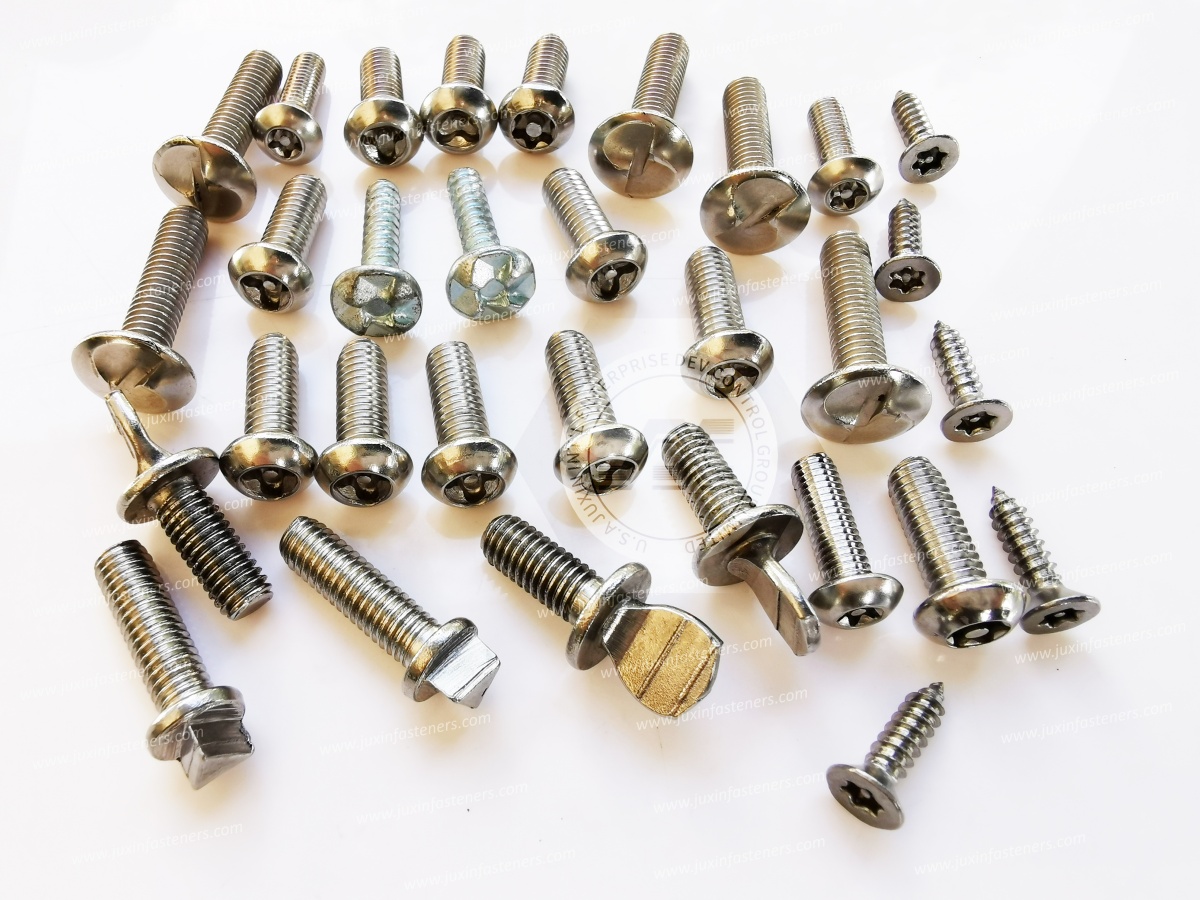
One-way security screws provide a simple and effective approach by using a drive geometry designed to transmit installation torque while reducing conventional reverse-drive capability.
When combined with binding barrels, barrel nuts or other two-part fastening components, one-way screws can create a secure clamping system for panels, partitions,
covers and other assemblies where access control is important.
The engineering objective is not simply to make a screw difficult to remove. A production-ready solution should consider:
Security requirement
Joint architecture
One-way drive geometry
Binding barrel configuration
Material selection
Panel thickness
Clamp-load distribution
Installation method
Authorized maintenance
Removal strategy
Inspection requirements
Supplier documentation
JUXIN FASTENERS supplies custom security screws, one-way screws, stainless steel fasteners, binding-barrel-type components and other industrial fastening solutions for OEM and commercial applications.
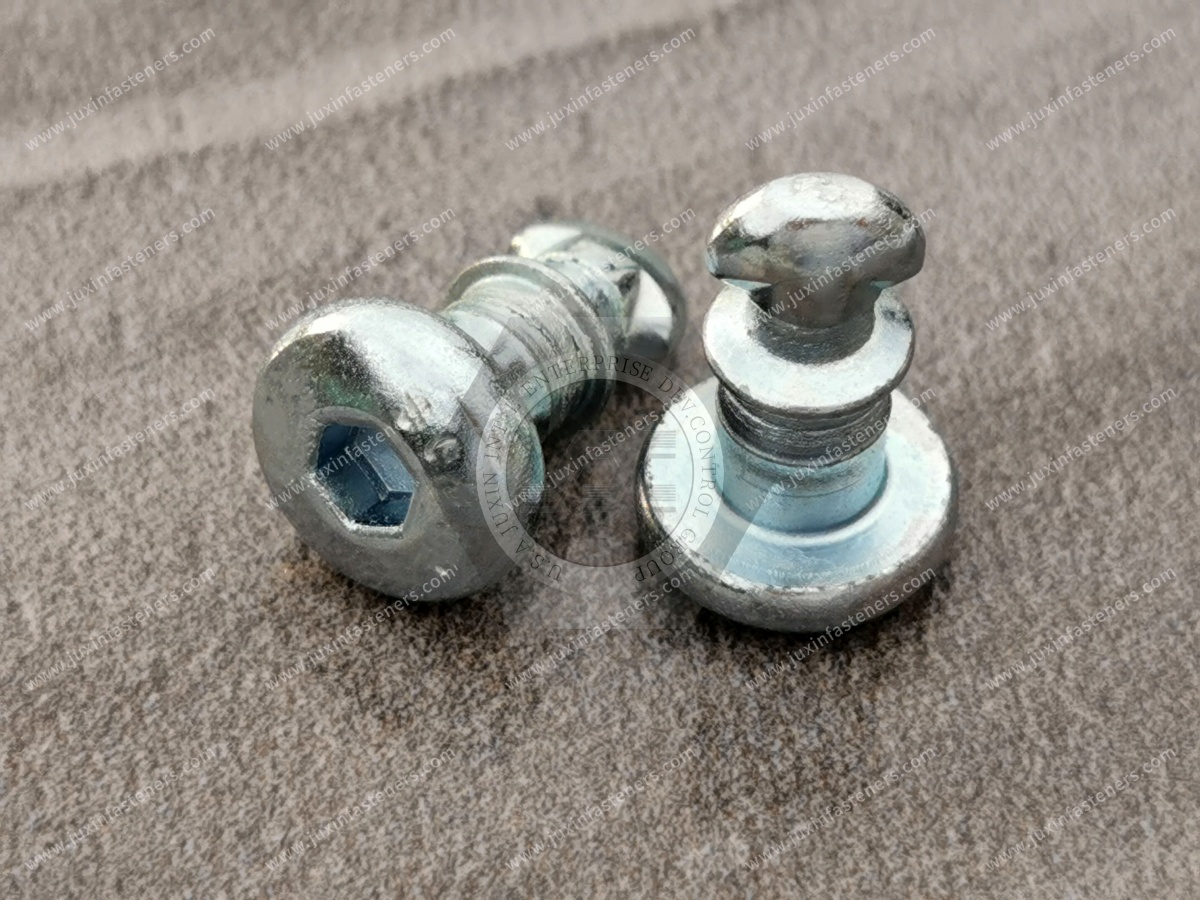
Understanding how the screw and mating component work together is essential when designing a tamper-resistant fastening system.
A one-way security screw and a binding barrel perform different functions.
The one-way screw controls the installation and removal interface.
The binding barrel provides the mating thread and, depending on its configuration, can distribute the clamping force over the panel or structural material.
The combination can be useful where the assembly must be installed from accessible surfaces while conventional reverse removal should be discouraged.
Typical applications include:
Public restroom partitions
Commercial building panels
Elevator interior panels
Outdoor signage
Public seating
Transit equipment
Architectural panels
Electrical and equipment enclosures
Security camera housings
Utility equipment
Public infrastructure
Unattended equipment housings
The final design should always be based on the actual joint construction rather than treating every one-way screw and barrel combination as interchangeable.
One-way screws typically use a specialized slot or recessed drive with an asymmetric or slanted geometry.
The important characteristic is directional behavior.
During installation, the driver can engage the drive geometry sufficiently to rotate the fastener in the intended direction.
The relationship between the driver and the drive walls allows installation torque to be transmitted into the screw.
When an ordinary flat-blade screwdriver is used in the reverse direction, the geometry is designed to reduce effective torque transfer.
Instead of providing a conventional positive drive interface, the driver tends to move or slip out of the recess.
This makes conventional reverse removal significantly more difficult than installation.
The actual performance depends on:
Drive geometry
Slot dimensions
Tool geometry
Tool condition
Installation torque
Fastener material
Assembly access
Fastener head design
Therefore, “one-way” should be understood as a functional drive characteristic rather than a claim that the fastener can never be removed.
For a broader engineering discussion of tamper-resistant security screws, engineers can evaluate the relationship between security drive design, material and application requirements.
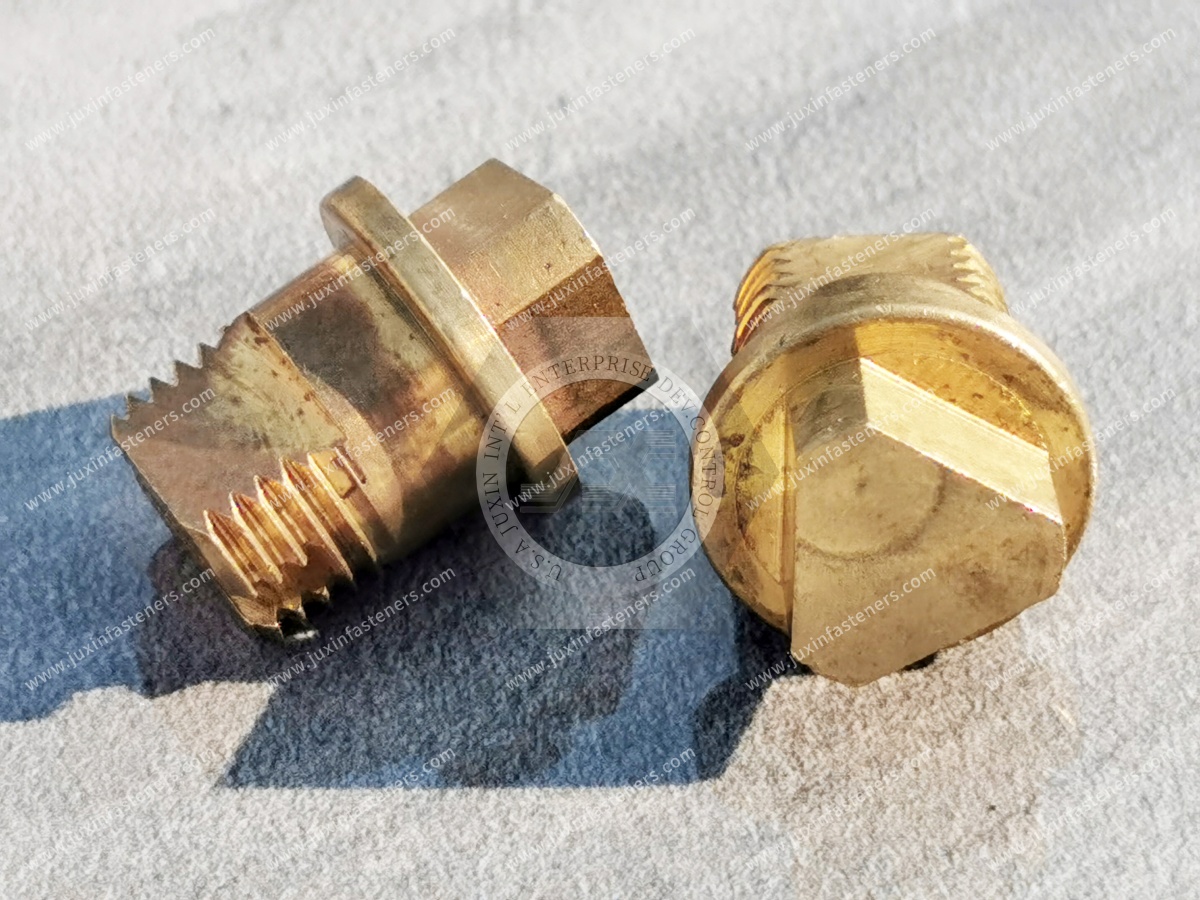
Binding barrels are female-threaded fastening components designed to mate with a screw or bolt from the opposite side.
Depending on the specific design, terminology can include:
Binding barrel
Barrel nut
Barrel fastener
Sex bolt
Chicago screw
Barrel screw assembly
These terms are sometimes used interchangeably in commercial markets, but the exact geometry and intended application should always be confirmed from the drawing.
A typical system consists of:
One-way screw + panel or component + binding barrel
The screw passes through one component and engages the internal thread of the barrel.
The barrel may incorporate a flange or enlarged bearing surface to distribute the clamping load.
This architecture can be particularly useful for:
Panels
Partitions
Signs
Covers
Architectural components
Thin sheet assemblies
Laminated panels
Furniture and equipment structures
Commercial interiors
The final joint design depends on panel thickness, hole diameter, head geometry, barrel length and required clamp load.
The screw and barrel should be designed as a complete joint.
Important variables include:
Screw diameter
Screw length
Thread pitch
Effective thread engagement
Barrel length
Barrel diameter
Flange diameter
Panel thickness
Hole diameter
Head diameter
Bearing area
Installation torque
Material pairing
For example, selecting a longer barrel does not automatically improve the joint.
If the barrel extends too far beyond the panel, it may interfere with adjacent components.
If the barrel is too short, the available thread engagement may be insufficient.
If the bearing surface is too small, thin panels may experience local deformation.
A successful design therefore balances the complete geometry.
Material selection should be separated from security-drive selection.
Common material considerations include:
Stainless steel
Carbon steel
Alloy steel
Brass
Other application-specific materials
Stainless steel may be considered where corrosion resistance is important.
For many industrial applications, stainless steel grades such as A2 or A4 may be evaluated according to the applicable fastener specification and environmental conditions.
AISI 304 and AISI 316-family stainless materials are commonly encountered in industrial fastening applications, but the exact material designation should follow the customer drawing and applicable standard.
Security performance comes from the drive design.
Corrosion performance comes primarily from the selected material and environment.
These should not be treated as the same property.
Stainless steel one-way screws can be considered for applications where tamper resistance and corrosion resistance are both relevant.
Typical applications include:
Outdoor signage
Public infrastructure
Commercial building equipment
Transit equipment
Public seating
Electrical enclosures
Telecommunications equipment
Architectural panels
Outdoor equipment housings
The appropriate stainless grade depends on the actual environment.
Relevant considerations include:
Humidity
Outdoor exposure
Chloride exposure
Coastal conditions
Industrial chemicals
Cleaning agents
Temperature
Contact with dissimilar metals
For a dedicated material-selection discussion, see the JUXIN FASTENERS guide to stainless steel security screws.
A2 and A4 stainless steels are commonly considered for corrosion-resistant fastener applications.
A2 may be suitable for many general industrial and outdoor applications where the environment is not particularly aggressive.
A4 may be considered where the environment involves more demanding corrosion exposure, including applications where chloride exposure is a significant concern.
However, selecting A4 simply because an installation is outdoors is not always necessary.
A practical material-selection process should consider:
Environment → Exposure → Material → Mechanical Requirement → Joint Design
ISO 3506 may be applicable to corrosion-resistant stainless steel fasteners depending on the fastener type and product specification.
The supplier should quote according to the customer's defined material and applicable standard rather than replacing the customer's specification with a generic “stainless steel” designation.
Binding barrels may be manufactured from materials such as:
Stainless steel
Carbon steel
Brass
Other specified materials
Material compatibility should be considered between the screw, barrel and mating structure.
For outdoor applications, using a stainless steel screw with a dissimilar barrel material may create additional corrosion considerations depending on the environment.
Potential concerns include:
Galvanic corrosion
Surface oxidation
Coating compatibility
Moisture retention
Chloride exposure
Therefore, the screw and barrel should not be specified independently without considering their complete environment.
This is an important distinction for engineers and procurement teams.
One-way screws are designed to make conventional reverse driving difficult.
They are not necessarily physically impossible to remove.
Depending on the assembly, specialized or destructive removal methods may exist.
Potential methods can include:
Specialized extraction tools
Grip-type removal tools
Cutting
Drilling
Head removal
Replacement of the fastener after destructive removal
The correct removal method depends on the specific product and installation.
Therefore, the more accurate engineering objective is:
Controlled or difficult unauthorized removal
rather than an absolute claim of permanent impossibility.
This distinction is particularly important for public infrastructure because maintenance personnel may eventually need to access the assembly.
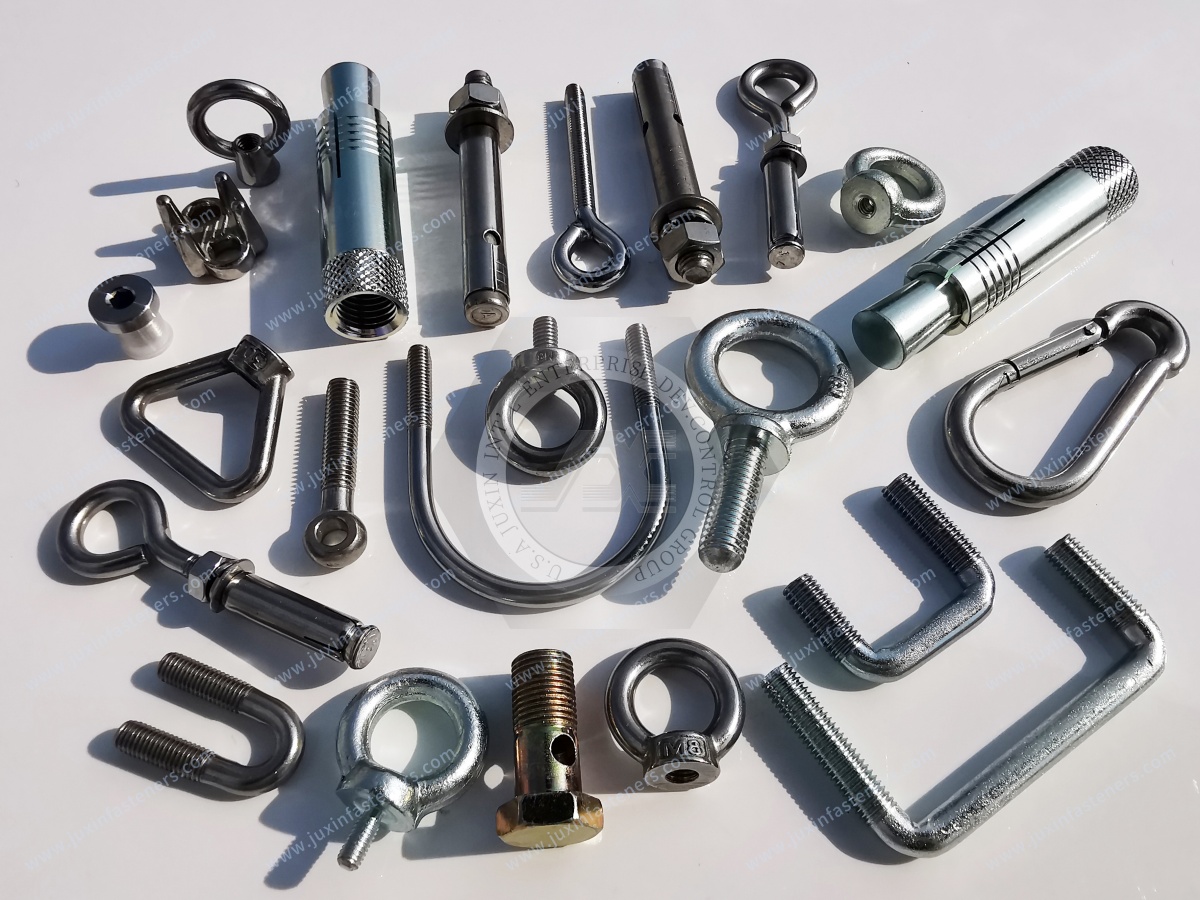
A common design mistake is to focus entirely on preventing unauthorized removal while ignoring authorized service.
Before selecting a one-way screw, engineers should ask:
Will the assembly require future maintenance?
How often will access be required?
Who will perform maintenance?
Is a dedicated tool available?
Is destructive removal acceptable?
Can replacement screws be stocked?
Can the panel be accessed without damaging adjacent components?
For frequently serviced equipment, a reusable security drive may be more appropriate.
For installations intended to remain closed for long periods, one-way screws can provide a practical access-control solution.
The maintenance strategy should therefore be part of the original fastener specification.
Public infrastructure is one of the most common application areas for tamper-resistant fastening.
Potential applications include:
Public signage
Transit station equipment
Street furniture
Public seating
Utility enclosures
Infrastructure panels
Roadside equipment
Public information displays
Outdoor equipment covers
These applications can benefit from reducing casual access using commonly available tools.
However, the fastener should be considered one element of the overall security strategy.
Equipment design, enclosure access, mounting structure and maintenance procedures may also influence the final security level.
Commercial buildings can contain equipment that must remain accessible to authorized maintenance personnel while discouraging casual interference.
Examples include:
Elevator interior panels
HVAC access panels
Electrical cabinets
Security equipment
Building control systems
Commercial partitions
Service enclosures
Equipment covers
One-way screws can be useful where routine removal is not expected.
Where repeated access is required, reusable security screws may provide a better lifecycle solution.
For broader security screw selection, engineers can also review the JUXIN FASTENERS guide to security screw drive mechanics.
Binding barrels are particularly useful when the assembly requires fastening from opposite sides of a panel.
Applications can include:
Architectural panels
Decorative partitions
Signage
Display structures
Commercial interiors
Public facilities
Equipment covers
The barrel flange can provide a larger bearing surface than a simple small-diameter nut.
This can help distribute the applied clamp load across a larger area.
However, flange size should still be matched to the substrate.
A larger flange is not automatically better if it interferes with the surrounding structure or creates an unwanted appearance.
Thin panels require special attention because fastener strength is not the only limiting factor.
The substrate may deform before the fastener reaches its mechanical limit.
Potential failure or distortion modes include:
Local indentation
Panel bending
Hole deformation
Crushing of composite materials
Surface damage
Flange imprinting
Loss of joint alignment
The engineering objective is therefore not simply:
“How strong is the screw?”
It is:
“How does the applied clamp load interact with the panel?”
This is why bearing area, flange diameter, panel thickness and installation torque should be evaluated together.
A binding barrel with an appropriate flange can distribute load over a larger surface area.
When specifying the flange, engineers may consider:
Outside diameter
Flange thickness
Barrel diameter
Panel thickness
Hole diameter
Countersink requirements
Surface appearance
Required clamp load
For thin metal panels, plastic panels or laminated structures, the flange geometry can have a significant effect on local stress distribution.
Where necessary, the assembly may also use a washer or other load-distribution component.
The final configuration should be validated against the actual substrate.
Binding barrels can also be considered for plastic or composite panels.
These materials may have different mechanical behavior from steel.
Potential concerns include:
Creep
Local crushing
Stress concentration
Hole enlargement
Temperature effects
Uneven clamp-load distribution
The fastener should therefore be selected based on the substrate, not simply the fastener material.
For industrial plastic hardware requirements, JUXIN FASTENERS also provides solutions covering automotive plastic fasteners, including application-specific plastic fastening components.
A complete security fastening assembly may consist of:
One-way screw + binding barrel
or:
Security screw + threaded barrel + panel
The advantage of treating these as a set is better control over:
Thread compatibility
Length
Bearing surfaces
Installation
Appearance
Replacement
Packaging
For OEM production, the screw and barrel should ideally be controlled as a matched assembly specification.
This reduces the risk of purchasing two individually compatible-looking components that do not provide the intended joint performance.
The selection can be summarized as follows.
Best considered where:
Unauthorized removal is a significant concern
Routine service is limited
A simple installation interface is preferred
Destructive removal is acceptable if necessary
Best considered where:
Authorized maintenance is frequent
Equipment requires periodic inspection
A controlled tool can be issued
Non-destructive removal is important
The correct choice depends on the lifecycle requirements of the equipment.
Security level should not be evaluated without considering maintenance.
Standard screws normally provide a positive drive interface for both installation and removal.
One-way screws modify the drive geometry to make conventional reverse driving difficult.
| Feature | Standard Screw | One-Way Security Screw |
|---|---|---|
| Installation | Conventional | Direction-specific |
| Normal removal | Usually straightforward | Intentionally more difficult |
| Tool availability | Common tools | May require specialized or controlled methods |
| Maintenance | Convenient | Requires lifecycle planning |
| Security objective | Mechanical fastening | Mechanical fastening + access deterrence |
| Typical application | General assembly | Public or controlled-access applications |
The correct choice depends on the application rather than simply on fastener price.
For OEM production, the one-way drive should be treated as a functional feature.
Important drawing characteristics can include:
Slot width
Slot depth
Drive angle
Head diameter
Head height
Drive position
Concentricity
Overall head geometry
The drive must be compatible with the intended installation tool.
A visually similar security screw may not perform identically if the drive dimensions are different.
Therefore, the security drive should be included in the controlled drawing or specification.
Installation torque influences the final joint condition.
However, torque does not directly represent clamp load because friction can vary.
The relationship may be affected by:
Thread friction
Bearing friction
Material
Surface finish
Lubrication
Tool condition
Drive engagement
For this reason, a generic torque value should not automatically be applied to every one-way screw.
Where a controlled torque is specified, the complete joint should be evaluated using the actual screw, barrel, substrate and installation method.
One-way screws are intentionally different from conventional screws, but they still need reliable installation.
Important considerations include:
Correct driver geometry
Full slot engagement
Driver alignment
Installation speed
Tool condition
Access clearance
Applied torque
Poor engagement can result in:
Drive deformation
Installation slippage
Tool damage
Incomplete seating
Inconsistent assembly
For production applications, the installation tool should therefore be considered part of the fastening process.
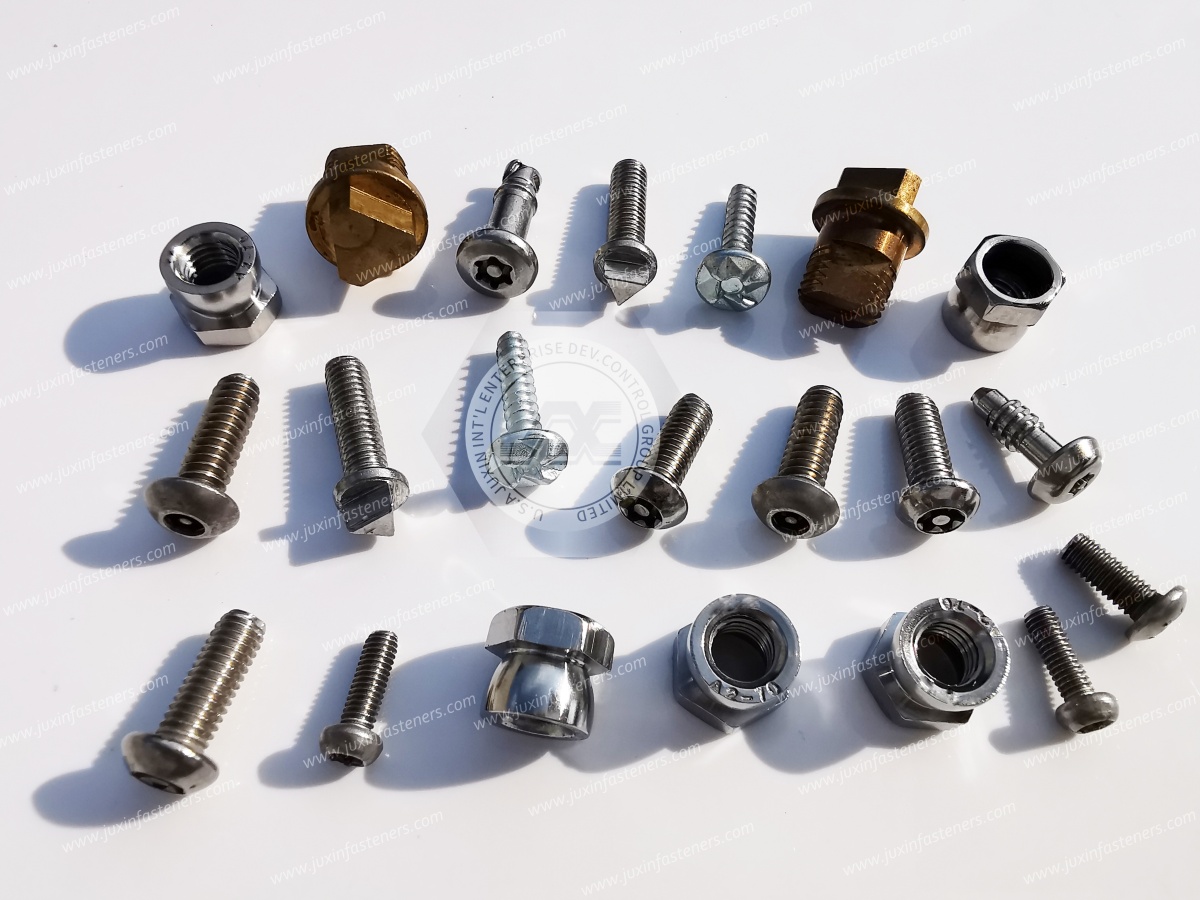
Inspection should cover both conventional fastener dimensions and security-specific features.
Depending on the customer drawing, inspection may include:
Diameter
Thread pitch
Thread length
Overall length
Head diameter
Head height
Drive width
Drive depth
Drive geometry
Surface condition
Material identification
For the binding barrel, inspection may include:
Barrel outside diameter
Barrel length
Internal thread
Flange diameter
Flange thickness
Hole dimensions
Surface condition
Material
Critical dimensions should be identified on the OEM drawing.
Thread engagement should be considered in relation to:
Screw diameter
Thread pitch
Barrel length
Material
Joint load
Installation method
Longer thread engagement is not automatically required in every application.
Excessive engagement can create:
Interference
Increased assembly time
Unnecessary material
Packaging complications
Insufficient engagement can reduce joint reliability.
The correct engagement should therefore be based on the joint design and applicable engineering requirements.
Stainless steel fasteners may be installed with:
Aluminum panels
Carbon steel structures
Zinc-coated components
Brass components
Copper-containing components
In wet or contaminated environments, dissimilar-metal contact can create galvanic-corrosion considerations.
The complete assembly should therefore be reviewed for:
Material pairing
Moisture exposure
Electrical contact
Surface coatings
Drainage
Environmental contamination
Selecting stainless steel does not automatically eliminate all corrosion risks.
Outdoor applications require more than simply specifying stainless steel.
The engineering review should include:
Rain
Humidity
UV exposure
Temperature cycling
Road salt
Coastal exposure
Industrial contaminants
Stainless grade
Drive geometry
Head style
Thread
Finish
Panel material
Barrel material
Washer material
Drainage
Joint geometry
This whole-system approach provides a more useful specification than simply stating “outdoor stainless security screw.”
A security screw is only one part of an anti-tampering system.
Consider an enclosure with a highly specialized one-way screw but an exposed hinge or removable panel.
The overall system may still have an accessible point.
Similarly, a highly corrosion-resistant screw may be installed into a component that corrodes rapidly.
Therefore:
Fastener security ≠ complete equipment security
A practical design review should examine:
Fastener
Panel
Hinge
Access opening
Mounting structure
Tools
Maintenance procedure
Replacement strategy
This is one of the most important distinctions between a product-level fastener specification and an application-level security solution.
Transit applications can include:
Station equipment
Platform panels
Seating
Signage
Interior panels
Electrical enclosures
Passenger-area equipment
The fastener may need to resist casual tampering while still allowing controlled maintenance.
Material selection should account for the operating environment.
Drive selection should account for whether maintenance access is required.
For more general industrial and transportation fastening requirements, JUXIN FASTENERS also supplies industrial and automotive bolts and nuts.
Electrical and industrial enclosures may require controlled access.
Potential applications include:
Control cabinets
Power equipment
Communication cabinets
Outdoor electronic enclosures
Industrial control panels
Monitoring equipment
The design should consider:
Panel thickness
Internal clearance
Fastener head clearance
Security drive
Corrosion environment
Maintenance frequency
For frequently serviced enclosures, a reusable security screw can be considered.
For equipment intended to remain closed for extended periods, one-way screws may be appropriate.
Procurement teams should avoid purchasing security fasteners using only a product name.
A professional RFQ should identify:
Part number
Drawing number
Drawing revision
Fastener type
Drive geometry
Head style
Diameter
Thread
Length
Material
Finish
Barrel type
Barrel length
Flange diameter
Application
Annual volume
Order quantity
Packaging
Inspection requirements
Documentation requirements
This information reduces quotation ambiguity.
It also makes supplier comparison more meaningful because each supplier is quoting against the same technical requirement.
For supplier development, important evaluation areas may include:
Can the supplier consistently produce the specified:
Drive geometry
Thread
Head
Barrel
Material
Dimensions?
Can the supplier inspect the critical characteristics?
Can the supplier provide the required:
Certificate of Conformance
Material information
Inspection documentation
Lot identification
Drawing revision control?
Can the supplier maintain the specified product configuration between production lots?
Can the supplier communicate changes affecting:
Material
Process
Dimensions
Surface treatment
Packaging
Manufacturing location?
These questions are particularly important when security geometry is a functional part of the product.
Depending on the customer's market and application, procurement may request documentation relating to:
Material designation
Applicable fastener standard
Mechanical properties
Certificate of Conformance
Inspection results
Surface treatment
Substance information
Packaging identification
RoHS and REACH requirements should be evaluated according to the customer's product and market requirements.
They should not be presented as a universal mechanical specification for every fastener.
For stainless steel products, material designation and applicable mechanical-property requirements should be clearly identified in the purchasing specification.
For a binding barrel and one-way screw assembly, a strong RFQ can include the following.
Diameter
Thread
Pitch
Length
Head type
Head diameter
Drive type
Drive dimensions
Material
Finish
Quantity
Internal thread
Barrel length
Outside diameter
Flange diameter
Flange thickness
Material
Surface finish
Quantity
Panel thickness
Panel material
Hole diameter
Installation method
Installation torque if specified
Maintenance requirement
Security requirement
Inspection requirements
Critical dimensions
Material documentation
CoC
Packaging
Traceability
Drawing revision
This level of detail allows a supplier to evaluate the complete fastening system rather than quote a generic one-way screw.
JUXIN FASTENERS supplies custom industrial fastening components for OEM applications, including security screws and application-specific fastening configurations.
Solution areas can include:
One-way security screws
Tamper-resistant screws
Stainless steel security screws
One-way slotted screws
Custom security screws
Binding-barrel-type fasteners
Barrel nuts
Two-part fastening assemblies
Custom screws and bolts
Stainless steel fastening components
Industrial OEM fasteners
The exact material, dimensions, drive geometry, thread and barrel configuration should be established according to the customer's drawing and application requirements.
Where a project requires custom stainless components beyond standard fastening products, JUXIN FASTENERS also provides stainless steel CNC machining parts for application-specific industrial components.
Not every component in an industrial assembly needs a one-way security drive.
A practical fastening strategy may combine:
One-way security screws
Standard machine screws
Self-clinching fasteners
Rivet nuts
Threaded components
High-strength bolts
Custom CNC components
The correct selection depends on the function of each joint.
Security fasteners should be used where controlled access is required rather than applied indiscriminately to every connection.
For applications requiring higher mechanical-performance fastening components, procurement teams can also evaluate high-strength bolts and nuts.
Unit price is only one part of the total cost.
A cheaper fastener can create additional costs if it causes:
Installation difficulty
Drive damage
Panel deformation
Premature corrosion
Maintenance problems
Difficult replacement
Documentation gaps
Inconsistent production
For one-way security systems, lifecycle cost should include:
Fastener Cost + Installation Cost + Maintenance Cost + Replacement Cost + Security Risk
This is particularly important for infrastructure projects involving large installed quantities.
A slightly different screw geometry can affect installation speed and serviceability across thousands of assemblies.
A professional engineering workflow can follow this sequence:
1. Define the security objective
What unauthorized action needs to be discouraged?
2. Define the maintenance strategy
Will authorized technicians need future access?
3. Define the joint
Panel, enclosure, partition, structural component or equipment housing.
4. Select the one-way drive
Define the functional drive geometry.
5. Select the binding barrel
Define thread, length, flange and bearing geometry.
6. Select the material
Consider corrosion, mechanical requirements and material compatibility.
7. Define the installation process
Tool, alignment and torque requirements.
8. Validate the assembly
Check installation, joint behavior and maintenance requirements.
9. Define inspection
Identify critical dimensions and functional characteristics.
10. Prepare the RFQ
Provide the supplier with a controlled production specification.
This workflow connects engineering requirements with procurement execution.
A common sourcing problem occurs when the screw is specified correctly but the mating barrel is treated as a generic accessory.
This can create problems with:
Thread engagement
Barrel length
Flange diameter
Panel thickness
Surface compatibility
Installation clearance
Appearance
For OEM programs, the screw and barrel should therefore be reviewed as a complete assembly.
The supplier should understand the actual panel and application instead of simply matching nominal thread size.
JUXIN FASTENERS can evaluate customer requirements based on available technical information such as:
2D drawings
3D models
Samples
Product specifications
Photographs
Application descriptions
Material requirements
Security requirements
For a new one-way binding barrel assembly, useful information includes:
Panel thickness
Material
Hole size
Required screw length
Required barrel length
Security objective
Installation access
Maintenance requirements
Annual quantity
This information allows the fastener specification to be developed around the actual assembly.
If you are sourcing one-way security screws, binding barrels, barrel nuts or complete tamper-resistant fastening assemblies for public infrastructure, commercial buildings,
transit systems, architectural panels, electrical enclosures, outdoor equipment or OEM products, JUXIN FASTENERS can review your requirements.
Please provide your drawing, sample, specification or application information where available.
A useful RFQ package can include:
One-way screw drawing
Binding barrel drawing
Material
Drive geometry
Thread specification
Dimensions
Panel thickness
Application environment
Installation requirements
Maintenance requirements
Inspection requirements
Documentation requirements
Production quantity
JUXIN FASTENERS
20+ Years of Fastener Experience
Custom Security Screws, One-Way Fasteners, Binding Barrels and Industrial OEM Components
Website: www.juxinfasteners.com
Email: info@juxinfasteners.com
 MORE NEWS
Sep. 25, 2026
Sep. 25, 2026
Sep. 25, 2026
Contact Us
Tel.:
+86 020 8621 0320
+86 020 3121 6067
E-mail:
Technical Support:
Navigation
SEND INQUIREY