Call Us
+86 136 6007 9809
Call Us
+86 136 6007 9809

Jul. 10, 2024
Passivated Stainless Steel Screws: 410, 18-8 and 316 Material Selection for OEM Applications
Stainless steel screws are widely used in industrial equipment where corrosion resistance, dimensional accuracy,
assembly reliability and long-term serviceability are important.
However, not all stainless steel screws are designed for the same operating conditions.
A 410 stainless steel concrete screw, an 18-8 stainless steel button head socket screw and a 316 stainless steel fine-thread machine screw may look similar in certain dimensions,
but their material behavior, mechanical characteristics and installation requirements can be significantly different.
Chemical passivation can help remove free iron contamination and support the natural corrosion resistance of suitable stainless steel surfaces.
It does not, however, eliminate the differences between stainless steel grades or compensate for an unsuitable fastening design.
For OEM design engineers, selecting the correct screw requires evaluating the base material, thread geometry, head configuration, joint loading and service environment.
For manufacturing engineers and production managers, the focus includes driver engagement, tightening consistency, thread galling, assembly efficiency and quality control.
For procurement and supplier development teams, a reliable sourcing decision requires accurate specifications, material verification, approved samples and clear inspection requirements.
This guide examines four stainless steel screw configurations commonly encountered in industrial procurement:
410 stainless steel concrete screws
18-8 stainless steel button head hex socket screws
Metric 18-8 stainless steel pan head Phillips screws
316 stainless steel fine-thread button head hex socket screws
It also explains how passivation, corrosion mechanisms, installation methods and OEM purchasing requirements influence the selection of these products.
Juxin Fasteners supplies industrial fasteners and supports inquiries for standard and drawing-based stainless steel screws.
Why Stainless Steel Screw Selection Requires More Than Corrosion Resistance
The term stainless steel screw describes a broad family of fasteners.
Different grades offer different combinations of:
Corrosion resistance
Hardness
Mechanical strength
Formability
Heat-treatment response
Thread behavior
Magnetic characteristics
Cost
The finished screw also depends on its manufacturing process, dimensions and applicable product specification.
A Critical Engineering Distinction
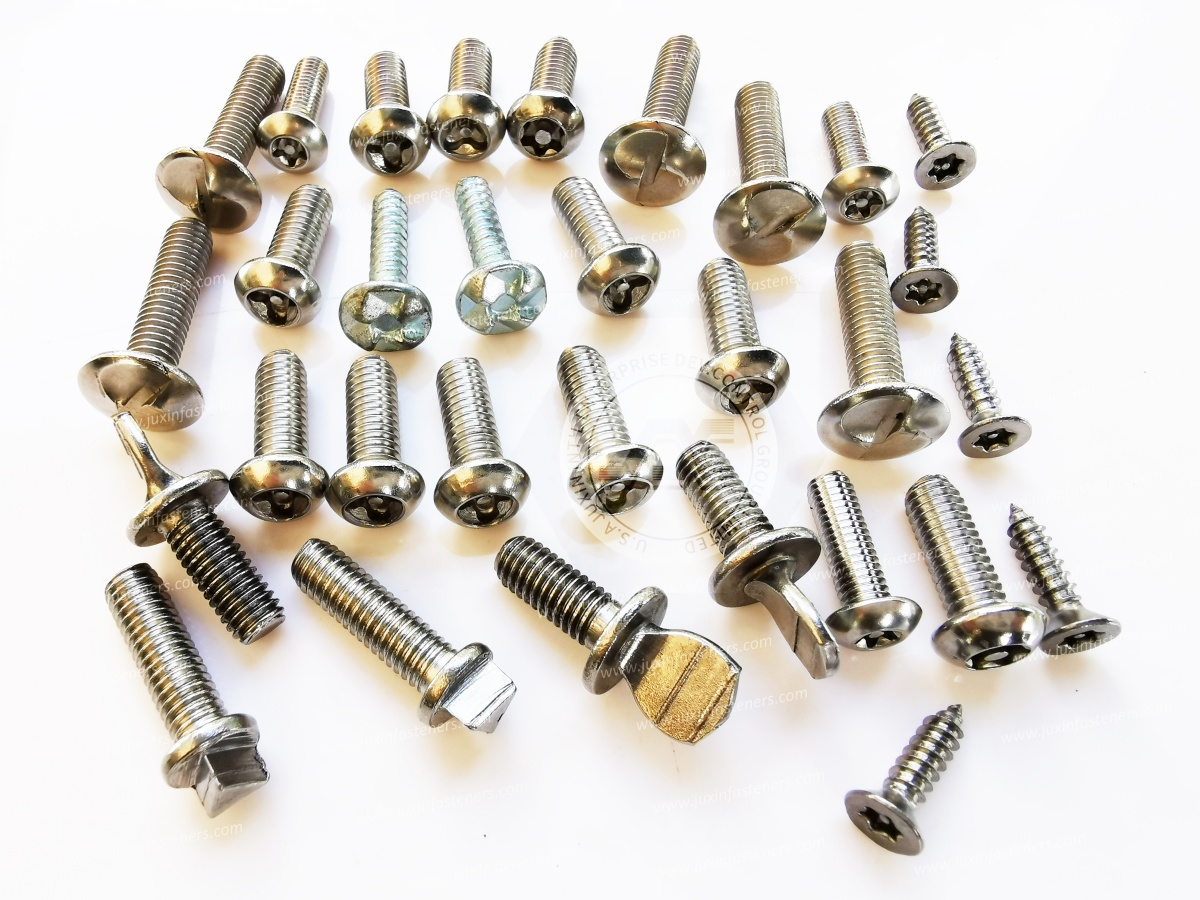
410 stainless steel is a martensitic stainless steel.
304 and 316 stainless steels are commonly classified as austenitic stainless steels.
These material families behave differently during manufacturing and service.
A suitable material for a hardened concrete screw is not necessarily appropriate for a conventional machine screw,
and a highly corrosion-resistant machine screw may not have the hardness needed for direct fastening into masonry.
Material Selection Overview
| Stainless steel type | General material family | Main engineering considerations |
|---|---|---|
| 410 | Martensitic | Hardness, heat treatment, corrosion environment |
| 18-8 / 304-type | Austenitic | General corrosion resistance, forming, galling |
| 316 | Austenitic, molybdenum-containing | Chloride exposure, localized corrosion, galling |
| A2 fastener group | ISO stainless fastener designation | Applicable material and property class |
| A4 fastener group | ISO stainless fastener designation | Applicable material and property class |
18-8, A2, 304, A4 and 316 are related commercial or standardized designations, but they should not be treated as universally interchangeable specifications.
The actual material, mechanical-property class and product requirements must be confirmed.
What Does Passivation Do for Stainless Steel Screws?
Stainless steel naturally forms a thin, chromium-rich passive surface film under suitable conditions.
During manufacturing and handling, free iron particles and other contaminants may become attached to the screw surface.
Potential sources include:
Cold heading
Thread rolling
Machining
Grinding
Deburring
Carbon steel tooling
Handling equipment
Storage and packaging
These contaminants can contribute to rust staining and surface-quality problems.
Chemical passivation is intended to remove suitable surface contaminants, particularly free iron, and support the stainless steel's natural passive condition.
What Passivation Can Improve
A properly specified process may help:
Reduce free-iron contamination
Improve surface cleanliness
Reduce contamination-related rust staining
Support consistent surface condition
Meet specified surface-treatment acceptance requirements
What Passivation Cannot Guarantee
Passivation does not automatically:
Make stainless steel rustproof
Prevent all chloride corrosion
Increase screw tensile strength
Improve thread engagement
Prevent galling
Prevent vibration loosening
Establish a particular service life
Qualify a screw for structural anchoring
Engineering Principle
The base material and fastener design must be suitable before passivation is considered.
Passivation is a surface-treatment requirement, not a substitute for mechanical or corrosion engineering.
Relevant Standards for Passivated Stainless Steel Screws
Several international standards may apply, but they address different technical requirements.
ASTM A967/A967M — Chemical Passivation
ASTM A967/A967M covers chemical passivation treatments for stainless steel parts.
It is relevant when a customer specifies chemical passivation for suitable stainless steel screws.
The treatment and acceptance requirements must be established according to the applicable standard and project specification.
ASTM A380/A380M — Cleaning and Surface Preparation
ASTM A380/A380M provides practices relating to cleaning, descaling, pickling and passivation of stainless steel parts, equipment and systems.
It is useful when surface contamination and preparation methods require attention.
ISO 3506 — Stainless Steel Fastener Mechanical Properties
The ISO 3506 series addresses mechanical properties of corrosion-resistant stainless steel fasteners.
It should not be confused with a passivation-process specification.
ISO Metric Thread Standards
ISO metric thread requirements may be relevant to metric stainless steel machine screws.
The exact thread designation and tolerance class must be specified.
ASME Inch-Series Requirements
For Unified inch-series screws, applicable ASME dimensional and thread standards should be identified according to the actual product.
Important Distinction
Metric, UNC, UNF, BSW and BSF threads are separate thread systems.
They are not directly interchangeable, even when nominal diameters appear similar.
Inch conversions are dimensional references only and do not establish thread compatibility.
410 Stainless Steel Concrete Screws: Hardness and Anchorage Requirements
410 stainless steel concrete screws represent a different engineering category from conventional stainless steel machine screws.
Concrete screws are designed to develop anchorage through a specified installation mechanism in a suitable base material.
Certain concrete screw designs require sufficient hardness to form or engage threads in the substrate.
410 stainless steel can be heat-treated to obtain selected hardness and mechanical characteristics.
However, the actual performance depends on the finished screw design and manufacturing condition.
Typical Application Areas
Depending on the approved product and anchorage design, potential applications include:
Concrete fastening
Masonry installation
Equipment mounting
Construction hardware
Building-service equipment
Selected industrial installations
Why 410 Is Different from 304 and 316
410 stainless steel generally has different corrosion resistance and heat-treatment characteristics from 304 and 316.
Its suitability cannot be judged solely by the term stainless steel.
Critical Design Factors
For a concrete screw, engineers must consider:
Base material type
Base material condition
Screw diameter and length
Embedment depth
Hole diameter
Hole depth
Installation method
Edge distance
Anchor spacing
Applied loading
Environmental exposure
Corrosion Considerations
410 stainless steel may be less suitable than certain austenitic grades in aggressive chloride environments.
Passivation may help address surface contamination, but it does not convert 410 into a 316-equivalent corrosion-resistant alloy.
Anchorage Performance
A concrete screw's load capacity cannot be inferred from stainless steel grade or passivation treatment.
Where structural or safety-critical anchorage is involved, the complete anchor system must be selected and installed according to its applicable approval, technical documentation and engineering design.
Procurement Recommendation
When requesting a quotation for 410 stainless steel concrete screws, provide the original product specification or drawing together with the required base material,
installation conditions and applicable approval requirements.
Do not substitute a general-purpose stainless steel screw for an approved concrete anchoring product.
18-8 Stainless Steel Button Head Hex Socket Screws
Button head hex socket screws feature a rounded, low-profile head with an internal hexagonal drive.
They are commonly selected for industrial assemblies where head appearance, clearance and convenient driver engagement are important.
18-8 stainless steel is a broad commercial designation associated with certain chromium-nickel austenitic stainless steels.
It should not automatically be treated as a complete specification for every A2 or 304 fastener.
Typical Applications
Potential applications include:
Industrial machinery
Automation equipment
Mechanical fixtures
Electronic equipment housings
Instrument assemblies
Selected automotive auxiliary components
Head Geometry
A button head screw has a different head profile from a conventional socket head cap screw.
The lower-profile head may provide useful clearance or appearance advantages.
However, the head geometry can also influence allowable tightening torque and mechanical performance.
Engineering Considerations
Review:
Head diameter
Head height
Socket dimensions
Thread diameter and pitch
Screw length
Mating material
Required preload
Important Limitation
A button head socket screw should not automatically replace a socket head cap screw of the same nominal diameter.
The head and drive geometry may impose different limitations.
Passivation Considerations
Passivation may be specified to remove free iron contamination introduced during manufacturing or handling.
The internal hex socket should be adequately cleaned and rinsed to avoid retained process residues.
Assembly Considerations
Stainless steel threaded connections may be susceptible to galling.
Tool alignment, thread condition and tightening procedure should therefore be reviewed.
Manufacturing Insight
In repetitive assembly, an unsuitable hex driver bit or damaged recess may increase rework even when the screw material and passivation treatment meet specification.
Metric 18-8 Stainless Steel Pan Head Phillips Screws
Pan head Phillips screws combine a protruding rounded head with a cross-recessed drive.
They are commonly used in equipment assemblies where powered or manual screwdriving is practical.
Typical Applications
Potential applications include:
Electrical equipment
Electronic enclosures
Industrial control panels
Appliances
Communication equipment
Instrument housings
Why Head Geometry Matters
Pan head screws generally provide a protruding head with a bearing surface suitable for the specified joint design.
They should not be confused with countersunk flat head screws.
The correct head type depends on:
Available clearance
Bearing requirements
Workpiece material
Appearance
Tool access
Phillips Drive Considerations
Phillips drive recesses require compatible driver bits.
Potential assembly problems include:
Cam-out
Recess damage
Driver wear
Tool misalignment
Inconsistent tightening
Production Engineering Recommendation
For repetitive powered assembly, evaluate:
Driver bit type
Bit condition
Tool alignment
Tightening speed
Torque setting
Joint seating
Passivation does not prevent cam-out or provide torque control.
Metric Thread Requirements
Metric screws should be specified with the correct nominal diameter, pitch and tolerance requirements.
An inch-series screw with a similar nominal diameter should not be assumed compatible.
Passivation and Appearance
Chemical passivation can help reduce contamination-related rust staining.
However, it is not a polishing or decorative plating process and does not guarantee a particular surface appearance.
OEM Procurement Considerations
When sourcing metric stainless steel pan head Phillips screws, confirm the actual product standard or drawing, material, drive recess, dimensions and finish.
316 Stainless Steel Fine-Thread Button Head Hex Socket Screws
316 stainless steel is commonly selected for applications requiring improved resistance to certain forms of localized corrosion compared with 304.
The presence of molybdenum contributes to this difference.
However, 316 is not immune to corrosion.
Potential Applications
Depending on the complete joint design, 316 stainless steel screws may be considered for:
Marine-related equipment
Coastal industrial machinery
Chemical-processing equipment
Outdoor instrumentation
Equipment enclosures
Selected washdown applications
Why Fine Threads May Be Specified
Fine-pitch threads may be selected where the design requires particular thread geometry, adjustment characteristics or engagement conditions.
Potential considerations include:
Thread engagement
Mating component geometry
Available thread length
Installation conditions
Joint loading
Important Limitation
Fine threads are not universally stronger or more vibration-resistant than coarse threads.
Their suitability depends on the complete joint design.
316 Stainless Steel and Chloride Exposure
316 generally offers improved resistance to certain chloride-related corrosion mechanisms compared with 304.
Nevertheless, corrosion may occur under conditions involving:
Elevated chloride concentration
High temperature
Crevices
Deposits
Stagnant moisture
Aggressive chemicals
Crevice Corrosion
Restricted spaces beneath screw heads or between mating surfaces may retain moisture and chemicals.
This can create localized corrosion conditions even when the exposed surface appears acceptable.
Passivation Considerations
Passivation may be specified to address free iron contamination.
It cannot eliminate the risk of crevice corrosion or compensate for an unsuitable alloy selection.
Thread Galling
A 316 stainless steel screw may still experience galling when assembled with a compatible stainless steel nut or threaded component.
Engineering Recommendation
Evaluate the material combination, thread condition, tightening process and service environment before approving a fine-thread stainless steel screw for recurring production.
Comparison: 410 vs. 18-8 vs. 316 Stainless Steel Screws
| Selection factor | 410 stainless steel | 18-8 / 304-type stainless steel | 316 stainless steel |
|---|---|---|---|
| Material family | Martensitic | Austenitic | Austenitic |
| Heat-treatment response | Can be hardened by suitable heat treatment | Not conventionally hardened by heat treatment | Not conventionally hardened by heat treatment |
| General corrosion behavior | Application-dependent, typically below 304/316 in many environments | Suitable for many general environments | Improved resistance to certain localized corrosion conditions |
| Typical screw applications | Certain hardened screws and concrete screw designs | Machine screws and equipment fasteners | Corrosion-resistant machine screws |
| Main selection concern | Hardness, mechanical design and environment | Corrosion, assembly and galling | Chlorides, crevices and galling |
| Passivation suitability | Depends on alloy condition and process | Suitable processes may be specified | Suitable processes may be specified |
| Automatic interchangeability | No | No | No |
Engineering Conclusion
A material upgrade is not automatically a functional replacement.
For example, changing from 410 to 316 may improve corrosion behavior in some environments but can create unacceptable differences in hardness or anchoring function.
Likewise, replacing an 18-8 button head screw with a 316 fine-thread screw requires verification of thread pitch, head geometry, mechanical requirements and installation conditions.
How Stainless Steel Screw Passivation Is Performed
The processing route depends on the alloy, surface condition and approved specification.
A typical workflow may include cleaning, chemical treatment, rinsing, drying and inspection.
Cleaning and Degreasing
Remove suitable manufacturing contaminants, such as:
Oil
Grease
Handling residues
Surface dirt
Cleaning must be appropriate for the material and contamination condition.
Chemical Treatment
Passivation treatments may use suitable nitric-acid or citric-acid-based processes.
The approved treatment must account for the stainless steel grade and applicable specification.
Rinsing
Rinsing removes process residues.
Drying
Controlled drying helps prevent residual moisture and surface staining.
Inspection
Inspection is performed according to the agreed acceptance requirements.
Important Process Limitation
Not every stainless steel grade should receive the same chemical treatment conditions.
In particular, martensitic 410 stainless steel requires material-appropriate process selection.
A treatment suitable for an austenitic grade should not automatically be applied to a hardened 410 component without evaluation.
Passivation Is Not a Coating
Chemical passivation does not normally deposit a conventional measurable protective coating.
It is different from:
Zinc plating
Nickel plating
Black oxide
PTFE-containing coatings
Electropolishing
Each process has different purposes and limitations.
Passivation Quality Control for OEM Stainless Steel Screws
A useful quality plan should address both surface condition and functional dimensions.
Material Verification
Confirm the specified stainless steel grade.
Dimensional Inspection
Check relevant dimensions, including:
Thread diameter
Thread pitch
Thread tolerance
Screw length
Head diameter
Head height
Drive recess geometry
Surface Inspection
Review:
Rust staining
Visible contamination
Process residues
Handling damage
Passivation Verification
Depending on the applicable standard and material, suitable tests may be specified to evaluate surface contamination or passivation acceptance.
Not every test is appropriate for every stainless steel grade.
Corrosion Testing
Salt spray or other corrosion tests may be specified for particular applications.
However, salt spray testing is not a universal requirement for all passivated screws and should not be interpreted as a direct prediction of service life.
Functional Assembly Evaluation
Where relevant, assess:
Driver engagement
Thread fit
Tightening behavior
Galling
Joint seating
Inspection Matrix
| Quality concern | Recommended review | Why it matters |
|---|---|---|
| Wrong material grade | Material documentation | Prevents unsuitable substitutions |
| Free iron contamination | Applicable surface test | Supports cleanliness requirements |
| Thread mismatch | Thread inspection | Prevents assembly failure |
| Recess damage | Drive inspection | Reduces tool engagement problems |
| Galling | Assembly evaluation | Reduces seizure and rework |
| Corrosion environment | Material and joint review | Supports service suitability |
| Lot consistency | Agreed inspection records | Supports recurring OEM orders |
Production Reliability: Common Stainless Steel Screw Assembly Failures
Thread Galling
Stainless steel threads can seize during installation.
Potential contributing factors include material pairing, friction, tightening speed and thread condition.
Recess Damage
Phillips or hex socket recesses may become damaged through incorrect tools or excessive installation loading.
Incorrect Thread Pitch
Fine-thread and coarse-thread screws are not interchangeable simply because their nominal diameter is identical.
Insufficient Thread Engagement
The required engagement depends on the mating material, fastener dimensions and applied loads.
Overtightening
Excessive tightening may damage threads, deform clamped components or cause fastener failure.
Localized Corrosion
Pitting and crevice corrosion may occur even on passivated stainless steel.
Incorrect Product Substitution
Replacing a concrete screw with a conventional machine screw, or substituting a different head type, can change the fastening mechanism.
Production Manager's Perspective
These problems can create:
Assembly interruptions
Increased scrap
Rework
Tool damage
Inconsistent cycle times
Maintenance problems
The correct objective is to select a fastener that performs reliably throughout the intended assembly process, not merely one that meets a nominal material description.
Industrial Applications and Material Selection
Automotive and EV Equipment
Potential applications include:
Electronic module housings
Interior components
Auxiliary brackets
Equipment enclosures
Production fixtures
Engineering Priorities
Vibration
Moisture
Road chemicals
Tool access
Assembly consistency
Stainless steel screws should not automatically be selected for every automotive structural or safety-critical connection.
Marine and Coastal Equipment
Potential applications include:
Marine electronics
Instrument housings
Auxiliary machinery
Coastal equipment cabinets
Engineering Priorities
Chloride exposure
Crevice corrosion
Galvanic compatibility
Material selection
Maintenance access
316 stainless steel may be considered where appropriate, but application-specific evaluation remains necessary.
Construction and Infrastructure Equipment
Potential applications include:
Equipment mounting
Building-service hardware
Mechanical fixtures
Selected concrete or masonry fastening systems
Engineering Priorities
Base material
Installation geometry
Loading
Corrosion exposure
Approved anchorage requirements
A passivated screw should not be assumed suitable for structural anchoring without the required engineering approval.
Medical and Pharmaceutical Equipment
Potential applications include:
Instrument housings
Laboratory equipment
Nonimplantable mechanical assemblies
Selected processing equipment
Engineering Priorities
Surface cleanliness
Material documentation
Chemical exposure
Cleaning requirements
Product-specific qualification
Passivation alone does not establish medical-device approval or sterilization suitability.
Food Processing Equipment
Potential applications include:
Machine guards
Equipment covers
Conveyor-related assemblies
Commercial food machinery
Engineering Priorities
Cleaning chemistry
Hygienic design
Corrosion resistance
Crevice avoidance
Maintenance
304 and 316 may be considered according to the environment and equipment requirements.
Electronics and Industrial Electrical Equipment
Potential applications include:
Control cabinets
Instrument panels
Communication equipment
Electrical enclosures
Server-related mechanical assemblies
Engineering Priorities
Head clearance
Tool access
Surface cleanliness
Moisture
Assembly efficiency
Industrial Machinery and Automation
Potential applications include:
CNC equipment
Automation systems
Mechanical fixtures
Instrument assemblies
Equipment guards
Engineering Priorities
Thread engagement
Joint loading
Drive durability
Repeated maintenance
Production consistency
How to Select the Right Passivated Stainless Steel Screw
Selection should begin with the application rather than a general preference for stainless steel.
Operating Environment
Determine:
Indoor or outdoor exposure
Moisture
Chlorides
Cleaning chemicals
Temperature
Maintenance conditions
Material Grade
Evaluate whether 410, 18-8 / 304-type or 316 stainless steel meets the mechanical and corrosion requirements.
Fastening Mechanism
Identify whether the application requires:
A conventional machine screw
A concrete or masonry fastening system
A threaded insert
Another engineered fastening solution
Head and Drive Geometry
Confirm:
Button head
Pan head
Socket head
Flat head
Phillips drive
Internal hex drive
The head and drive must match the intended installation method.
Thread Requirements
Specify:
Nominal diameter
Pitch
Thread tolerance
Applicable standard
Mechanical Requirements
Evaluate:
Applied loading
Required preload
Joint geometry
Mating material
Thread engagement
Surface Treatment
Specify chemical passivation only where it is appropriate for the material and project requirements.
Quality Requirements
Define the inspection and acceptance criteria.
Selection Decision Matrix
| Application requirement | Main selection priority |
|---|---|
| Hardened concrete screw application | Approved anchoring design and suitable material condition |
| General machinery assembly | Mechanical properties and thread fit |
| Low-profile head requirement | Button head geometry and torque limitations |
| Repetitive powered assembly | Drive engagement and process validation |
| Marine-related exposure | Corrosion environment and material grade |
| Fine-thread connection | Pitch compatibility and engagement |
| Clean equipment environment | Surface contamination and handling |
| Bulk OEM sourcing | Stable specification and inspection consistency |
OEM Procurement: How to Specify Stainless Steel Screws Correctly
Purchasing and supplier development teams should avoid vague RFQs such as “stainless steel screws, passivated.”
A complete technical request should identify the following.
Product Type
Specify the actual screw configuration.
Examples:
410 stainless steel concrete screw
18-8 stainless steel button head hex socket screw
Metric 18-8 stainless steel pan head Phillips screw
316 stainless steel fine-thread button head hex socket screw
Product Standard or Drawing
Provide the applicable standard or approved 2D drawing.
Thread Specification
Identify the nominal diameter, pitch and thread system.
Material
Specify the actual stainless steel grade and mechanical requirements.
Surface Treatment
Identify the passivation specification and acceptance requirements.
Application Conditions
Explain relevant environmental and installation requirements.
Quantity
Provide sample and production quantities.
Inspection
Identify dimensional, material and surface-treatment requirements.
Delivery
Provide the target delivery schedule and packaging requirements.
Supplier Substitution Review
Before approving an alternative supplier or product, verify:
Material grade
Mechanical properties
Head geometry
Drive type
Thread designation
Length
Surface treatment
Inspection requirements
Functional compatibility
Important Procurement Principle
Two screws described as “passivated stainless steel” may have completely different mechanical functions.
Material and surface-treatment descriptions are not sufficient for interchangeability.
OEM Cost Considerations
The total cost of a screw includes more than its purchase price.
Relevant factors may include:
Material grade
Head and drive complexity
Thread configuration
Manufacturing process
Surface treatment
Inspection
Packaging
Installation time
Tool wear
Rework
Scrap
For recurring OEM projects, the engineering and purchasing teams should establish a stable approved specification before comparing commercial quotations.
Frequently Asked Questions
What are passivated stainless steel screws?
They are stainless steel screws treated through a suitable chemical process intended to remove free iron contamination and support the natural passive surface condition.
Does passivation make stainless steel screws completely rustproof?
No. Passivation cannot guarantee protection against every form of corrosion.
What is the difference between 410 and 304 stainless steel screws?
410 is a martensitic stainless steel that can be hardened through suitable heat treatment.
304 is an austenitic stainless steel commonly selected for general corrosion-resistant fastening applications.
Is 410 stainless steel suitable for concrete screws?
Certain concrete screw designs use hardened 410 stainless steel.
Suitability depends on the complete anchoring product, material condition, installation requirements and applicable approvals.
Can 316 stainless steel replace 410 in a concrete screw?
Not automatically. The materials have different hardness and mechanical characteristics, and the anchoring mechanism must be evaluated.
Is 18-8 stainless steel the same as A2?
Not as a complete technical specification. The actual material and mechanical-property requirements must be confirmed.
Is 316 stainless steel better than 304?
316 generally offers improved resistance to certain localized corrosion conditions, particularly some chloride-containing environments.
It is not universally better for every application.
Does passivation increase screw strength?
No. Passivation is not a mechanical strengthening process.
Does passivation prevent stainless steel thread galling?
No. Galling depends on material pairing, surface condition, friction and installation conditions.
Are button head screws suitable for high tightening torque?
Their suitability depends on the product standard, head geometry, drive dimensions and mechanical requirements.
They should not automatically be treated as equivalent to conventional socket head cap screws.
Can a fine-thread screw replace a coarse-thread screw?
Not without evaluating thread compatibility and the complete joint design.
What is ASTM A967/A967M?
It is a specification covering chemical passivation treatments for stainless steel parts.
What is the difference between ASTM A967 and ISO 3506?
ASTM A967/A967M addresses chemical passivation. ISO 3506 addresses mechanical properties of corrosion-resistant stainless steel fasteners.
Is salt spray testing mandatory for passivated stainless steel screws?
Not universally. Testing depends on the applicable specification and customer requirements.
Can passivated stainless steel screws be used in medical equipment?
They may be suitable for selected applications, subject to material, cleanliness and product-specific qualification requirements.
Can Juxin Fasteners supply custom stainless steel screws?
Juxin Fasteners supports inquiries for standard and drawing-based industrial fasteners.
Specific materials, dimensions, treatments, quantities and commercial conditions are confirmed during project review.
Juxin Fasteners: Stainless Steel Screws and OEM Fastening Solutions
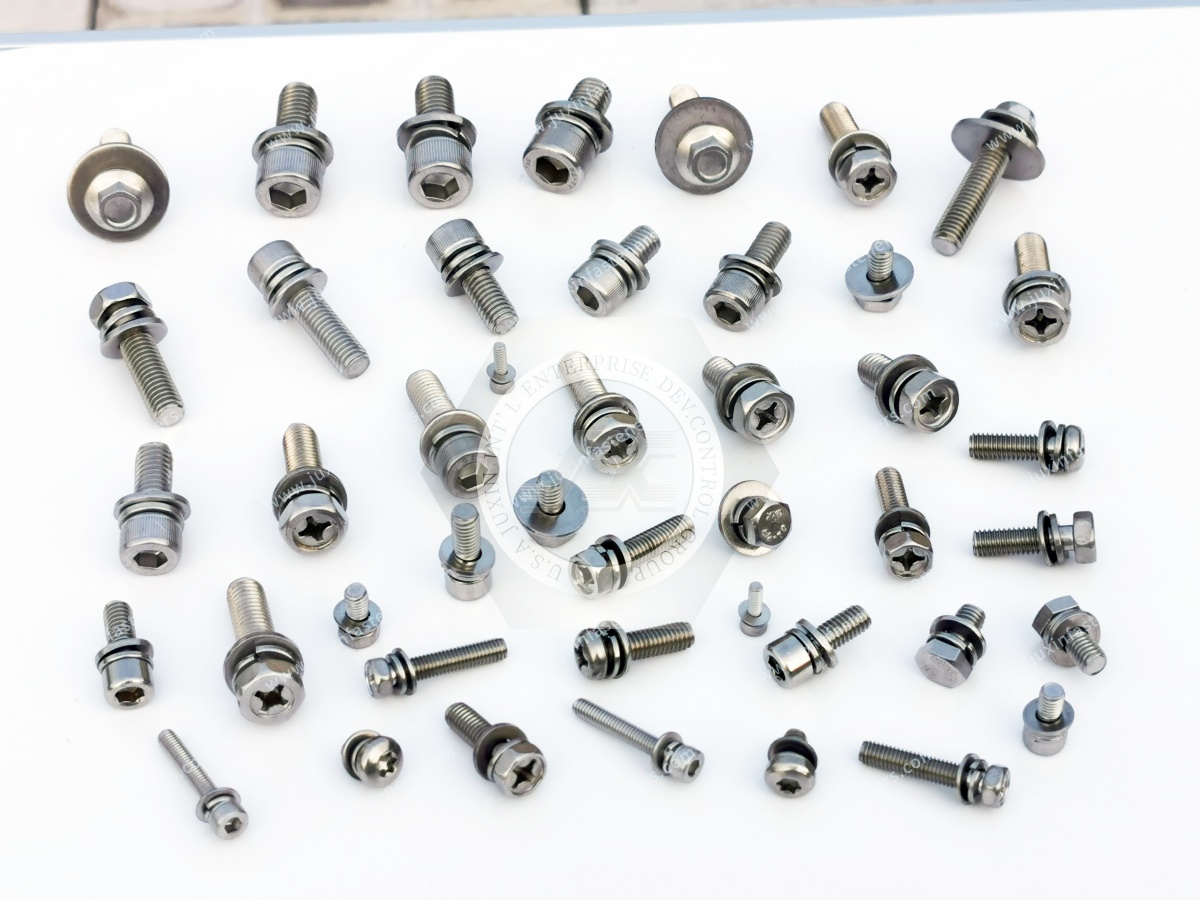
Juxin Fasteners supplies industrial fastening components for international OEM customers.
Relevant product categories include:
Stainless steel machine screws
Stainless steel button head screws
Stainless steel socket head screws
Stainless steel Phillips screws
Stainless steel hex head screws
Stainless steel nuts
Stainless steel locking nuts
Custom threaded components
Drawing-based CNC-machined parts
For projects requiring passivation or other surface treatments, the applicable technical requirements should be included in the customer's RFQ.
Specific product availability, material grades, treatments, MOQ, inspection requirements and delivery schedules are confirmed for each inquiry.
Request an OEM Passivated Stainless Steel Screw Quotation
Are you sourcing 410, 18-8 or 316 stainless steel screws for industrial production?
Do you need to compare screw materials, review passivation requirements, evaluate an existing drawing or qualify an alternative fastener supplier?
Juxin Fasteners welcomes inquiries from design engineers, structural engineers, mechanical engineers, manufacturing engineers,
production managers, purchasing specialists, procurement managers, supplier development teams and supply chain managers.
For technical review and quotation, please provide:
2D drawing or applicable standard + screw type + head and drive geometry + thread diameter and pitch + length
+ stainless steel grade + mechanical requirements + passivation specification + operating environment + inspection criteria
+ sample quantity + production quantity + packaging requirements + target delivery schedule.
For concrete or masonry screws, include the required anchoring specification and installation conditions.
For supplier replacement projects, provide the existing approved product specification and identify any proposed deviations.
Company: Juxin Fasteners
Website: https://www.juxinfasteners.com/
Email: info@juxinfasteners.com
Send your stainless steel screw drawings and OEM RFQ to Juxin Fasteners for technical review and quotation.
Contact Us
Tel.:
+86 020 8621 0320
+86 020 3121 6067
E-mail:
Technical Support:
Navigation
SEND INQUIREY