
Call Us
+86 136 6007 9809
Call Us
+86 136 6007 9809

Sep. 28, 2023
Retaining rings are compact mechanical fasteners designed primarily to locate and retain components axially on shafts or inside bores.
Installed into machined or formed grooves, retaining rings can replace bulkier retention methods such as threaded shaft ends, locknuts,
shoulders, end plates or additional fastening hardware in suitable assemblies.
They are widely used to retain bearings, gears, pulleys, rollers, bushings, seals, rotors and other mechanical components in automotive systems,
electric motors, pumps, industrial machinery, automation equipment and mechanical transmissions.
However, selecting a retaining ring requires more than matching the nominal shaft or bore diameter.
The actual retention capability depends on the relationship between the ring geometry, groove geometry, material, ring expansion or contraction,
axial load, shaft or housing strength, installation method and operating environment.
JUXIN FASTENERS supplies standard and custom retaining rings, circlips, snap rings and related fastening components for industrial OEM and engineered assembly applications.
For drawings, dimensions, material requirements and RFQs, contact info@juxinfasteners.com.
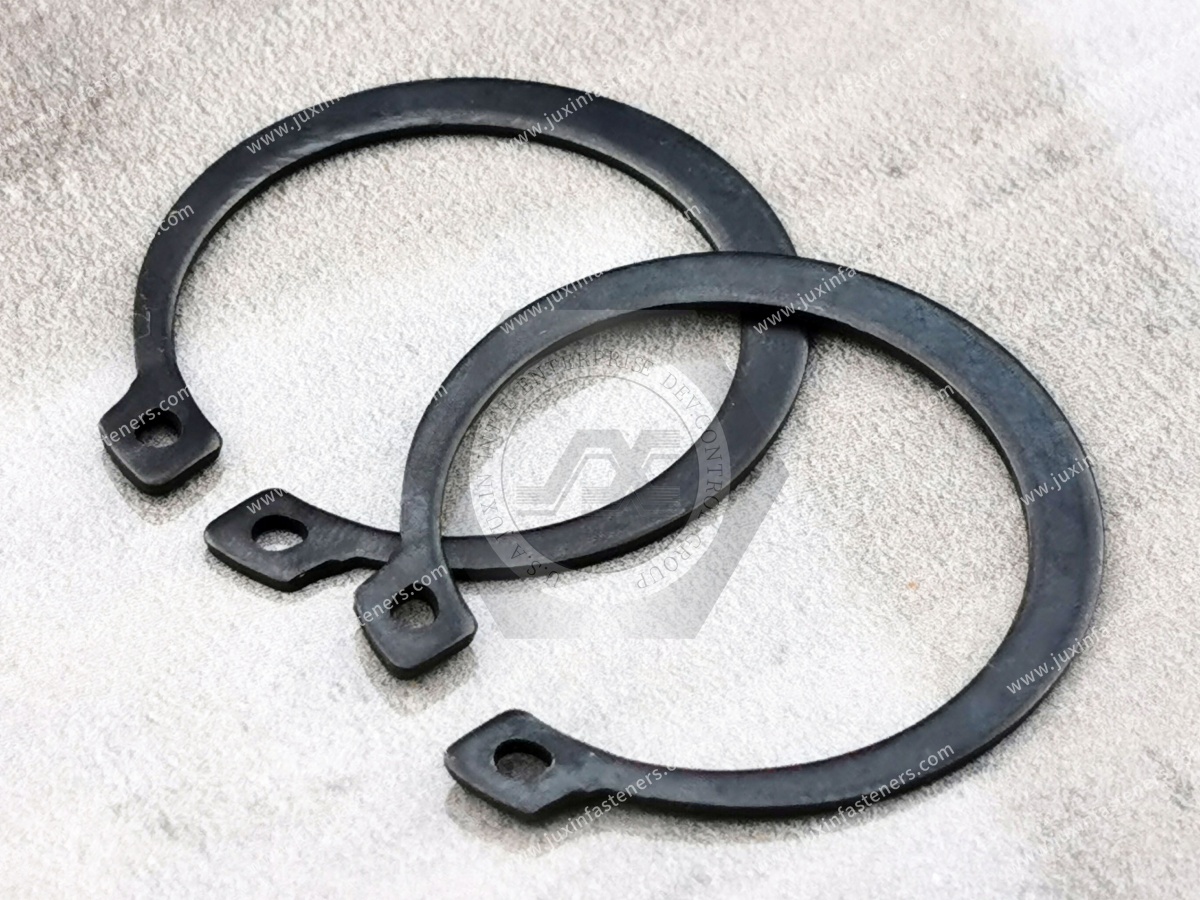
A retaining ring is a mechanical retention component installed into a groove on a shaft or inside a bore.
Its primary purpose is to create an axial shoulder that prevents another component from moving beyond a defined position.
Common terminology includes:
retaining ring
circlip
snap ring
shaft retaining ring
bore retaining ring
external circlip
internal circlip
external snap ring
internal snap ring
spring retaining ring
The terms "circlip," "snap ring" and "retaining ring" are sometimes used interchangeably in commercial searches, although specific ring geometries and standards can differ.
For engineering procurement, the applicable standard, dimensions or approved drawing should therefore take priority over generic product terminology.
The principal function of a retaining ring is axial retention.
Typical examples include:
keeping a bearing on a shaft;
preventing a bearing from moving out of a housing;
retaining a gear in its axial position;
locating a pulley on a shaft;
securing a roller assembly;
retaining a bushing;
limiting movement of a mechanical component.
A retaining ring is not inherently a bearing, seal or friction-reduction component.
It may be used adjacent to bearings or seals, but its main mechanical role is retention and positioning.
This distinction is important because an incorrect understanding of the component function can lead to poor joint design.
External retaining rings are installed into grooves machined around the outside diameter of a shaft.
The ring expands during installation, passes over the shaft and then contracts into the groove.
Once seated, part of the ring extends beyond the shaft diameter and forms an axial retaining shoulder.
Typical applications include:
bearings
gears
pulleys
sprockets
rollers
shaft-mounted components
electric motor assemblies
transmission components
DIN 471 is widely associated with external retaining rings for shafts.
For sourcing and engineering purposes, a DIN 471 requirement should be treated as a dimensional and functional specification rather than simply a product name.
Engineers should confirm the applicable:
nominal shaft diameter
groove diameter
groove width
ring thickness
installed geometry
material
finish
The shaft diameter alone is not enough to fully define the retention system.
Internal retaining rings are installed into grooves inside housings or bores.
During installation, the ring is compressed to enter the bore and then expands into the groove.
Once seated, the exposed portion of the ring forms an axial shoulder that retains a component inside the housing.
Typical applications include:
bearing housings
gearboxes
hydraulic equipment
motor housings
pump assemblies
transmission systems
mechanical cartridges
DIN 472 is widely associated with internal retaining rings for bores.
The engineering specification should define not only the nominal bore size but also the corresponding groove geometry and material requirements.
Correct groove design is essential because the ring and groove work together as the retention system.
A simple distinction helps prevent purchasing mistakes:
DIN 471 = external retaining rings for shafts
DIN 472 = internal retaining rings for bores
An external ring expands during installation and contracts into a shaft groove.
An internal ring contracts during installation and expands into a bore groove.
The two products are not interchangeable.
This difference should be reflected in drawings, BOM descriptions, RFQs and supplier documentation.
Commercial terminology varies between markets.
"Circlip" is particularly common in European and UK engineering terminology.
"Snap ring" is widely used in North American industrial terminology.
"Retaining ring" is the broader engineering and procurement term.
Search behavior therefore often includes:
external circlip
internal circlip
shaft snap ring
bore snap ring
retaining ring for shaft
retaining ring for hole
A good OEM specification should go beyond terminology and identify the actual standard or drawing.
One of the most important engineering facts about retaining rings is that the ring does not carry the axial load by itself.
The groove and surrounding shaft or housing material are part of the load path.
When an axial force pushes a retained component against the ring, the load transfers through:
component → retaining ring → groove wall → shaft or housing
This means retention capacity can be limited by several different failure modes.
Possible limitations include:
ring deformation
ring expansion or contraction
groove-wall shear
groove deformation
shaft or housing yielding
ring disengagement
retained-component edge deformation
Therefore, selecting a stronger ring without checking the groove does not automatically increase joint capacity.
This is one of the most important differences between catalog selection and actual retaining-ring engineering.
The groove diameter controls how deeply the ring seats and how much radial engagement is available.
If the groove is too shallow, the ring may not seat securely.
If it is too deep, ring support and installed geometry can be affected.
Groove dimensions should follow the applicable standard or approved engineering drawing.
Groove width affects axial clearance and support.
A groove that is too narrow can prevent full seating.
A groove that is too wide can increase axial movement and alter load distribution.
Tolerance therefore matters.
Groove corners and edge conditions influence stress concentration and ring support.
Manufacturing processes must maintain the required geometry rather than treating the groove as an approximate recess.
For highly loaded applications, the shaft or housing groove should be inspected as a functional feature.
A common design mistake is assuming that retaining-ring strength alone determines allowable axial load.
In reality, a high-strength spring steel ring installed into a weak aluminum groove can be limited by the housing rather than by the ring.
Likewise, a strong ring installed into a thin-wall housing may deform the groove under load.
Engineers should therefore evaluate:
ring strength
groove-wall strength
shaft/housing material
edge distance
wall thickness
axial load
This is particularly important in lightweight automotive, EV and aluminum equipment structures.
Retaining rings are primarily axial retention components, but rotational speed can also affect ring selection.
On rotating shafts, centrifugal force acts on external retaining rings.
As rotational speed increases, the ring tends to expand outward.
At sufficiently high speed, this can reduce groove engagement.
High-speed shaft applications therefore require additional evaluation of:
shaft speed
ring mass
ring geometry
groove engagement
material
dynamic loading
A ring that is acceptable for a stationary shaft is not automatically appropriate for a high-speed rotor.
This consideration is especially relevant in:
electric motors
high-speed pumps
turbo machinery
spindle systems
rotating industrial equipment
Static axial load is not the only design condition.
Repeated impact or reversing axial loads can create fatigue and groove damage even when the peak load appears acceptable.
Applications involving:
reciprocating mechanisms
transmission systems
mobile equipment
impact tools
high-cycle automation
should therefore consider dynamic loading rather than relying solely on a static load rating.
Retaining rings require a combination of strength, elasticity and dimensional stability.
Common material families include:
Carbon spring steel is widely used for industrial retaining rings because it can provide:
high strength
elastic recovery
wear resistance
cost-effective high-volume production
The final performance depends on the selected material, heat treatment and ring geometry.
Stainless steel retaining rings may be selected where corrosion resistance is important.
Applications can include:
foodservice equipment
outdoor machinery
marine-related equipment
medical equipment
chemical-processing equipment
cooling systems
The stainless steel grade should be selected according to the actual corrosion environment.
Application-specific retaining rings may require other materials where temperature, corrosion, magnetic behavior or special mechanical requirements justify them.
Material substitution should be based on mechanical and environmental requirements rather than nominal chemistry alone.
Carbon steel retaining rings may use protective finishes depending on the operating environment and customer specification.
Potential finishes can include:
phosphate coatings
zinc-based coatings
zinc-flake systems
other engineered protective finishes
Coating selection should consider:
corrosion resistance
dimensional effect
friction
installation wear
environmental compliance
operating temperature
Because retaining rings depend on elastic deformation during installation, coating flexibility and adhesion can also matter.
A brittle or excessively thick coating may be damaged as the ring expands or contracts.
Retaining rings are compact precision components.
Excessive coating thickness can influence:
ring thickness
groove clearance
installation force
seating
axial play
For tight-tolerance assemblies, engineers should therefore consider whether dimensional requirements apply before or after coating.
This should be clarified in drawings and RFQs.
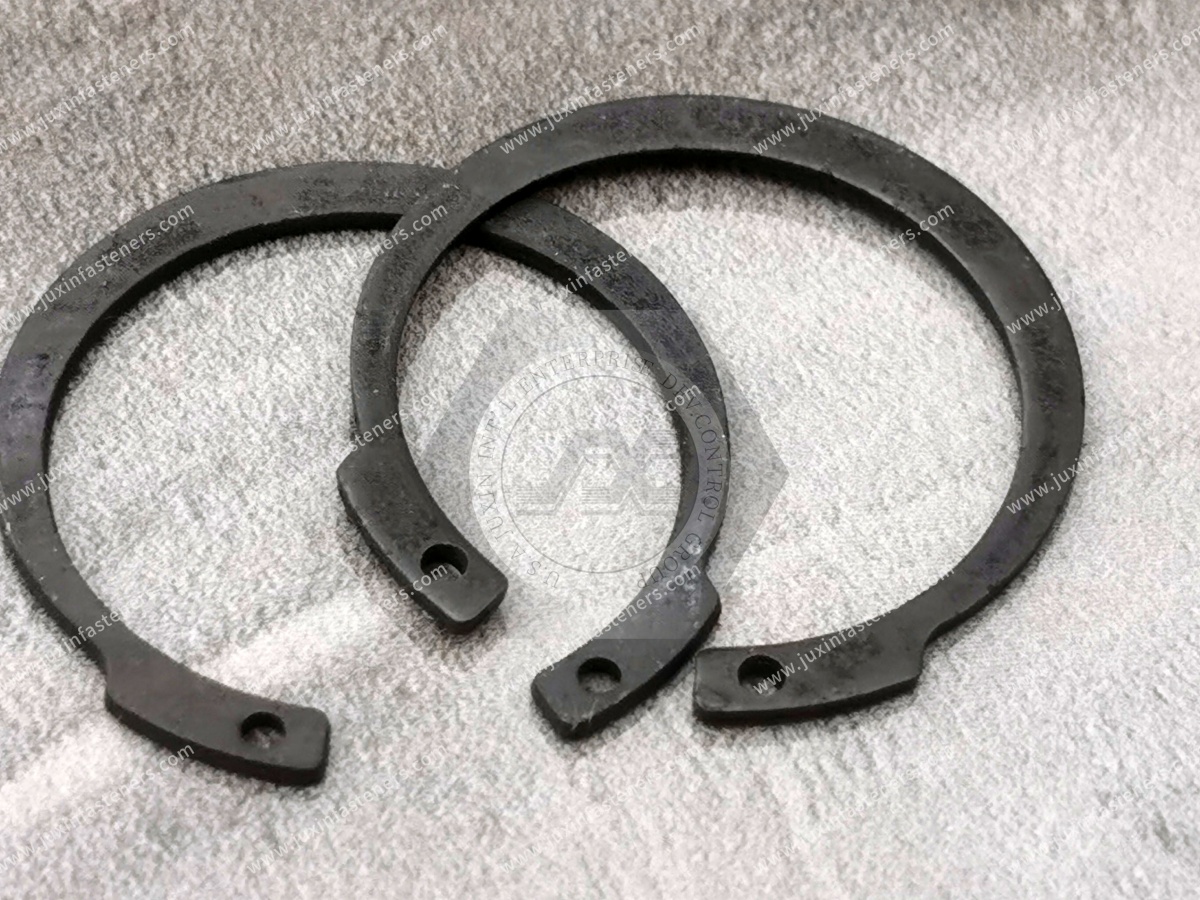
Bearings are one of the most common applications for retaining rings.
A retaining ring may locate:
the inner bearing ring on a shaft;
the outer bearing ring inside a housing.
However, the retaining ring should not automatically be treated as the only component controlling bearing axial position.
Bearing-system design may also involve:
shaft shoulders
housing shoulders
spacers
locknuts
preload components
end caps
The correct retention strategy depends on bearing type, axial load, thermal expansion and service requirements.
A retaining ring does not function as a low-friction bearing surface.
If a rotating component continuously rubs against the retaining ring, the assembly may require:
a thrust washer
spacer
bearing
controlled axial clearance
Direct continuous friction against a retaining ring can produce wear and should not be assumed to be normal operating behavior.
This is an important distinction when designing rotating assemblies.
Retaining rings may be positioned near seals in hydraulic, pneumatic or lubrication systems, but the retaining ring itself does not normally provide the fluid seal.
Its role may be to retain:
a seal
bearing
piston component
internal cartridge
Fluid containment is provided by the actual sealing element.
Separating retention function from sealing function helps engineers select the correct components and prevents misleading product specifications.
Retaining rings are widely used in automotive mechanical systems.
Potential applications include:
electric motors
transmissions
gear assemblies
pump systems
actuator systems
shaft assemblies
bearing retention
auxiliary mechanisms
For EV systems, retaining rings can also appear in motors, pumps, thermal-management equipment and electromechanical actuators.
Safety-critical applications require the applicable OEM-approved design, validation and quality requirements.
A generic DIN retaining ring should not be treated as automatic approval for any vehicle safety function.
Electric motors are an important application because shaft retention, bearing positioning and high rotational speed may all occur in the same assembly.
Engineers should evaluate:
rotor speed
axial load
bearing arrangement
groove strength
thermal expansion
installation method
For high-speed e-drive systems, centrifugal effects on external retaining rings can become more important than in conventional low-speed machinery.
Industrial equipment uses retaining rings in:
gearboxes
conveyors
machine tools
pumps
compressors
rollers
automated production equipment
drive systems
They can reduce component count and simplify assembly where groove-based axial retention is appropriate.
Compact electromechanical assemblies often have limited space for conventional locknuts or end plates.
Retaining rings can provide efficient axial retention for:
small bearings
rollers
actuators
shafts
guide systems
Assembly access and serviceability should be considered during design.
Retaining rings may be used to locate bearings, seals and internal mechanical components in pump and hydraulic assemblies.
The ring itself should not be specified as the sealing element.
Engineers should evaluate:
fluid compatibility
corrosion exposure
axial pressure loads
groove strength
service access
Modern data-center cooling infrastructure includes pumps, fans, motors, actuators and fluid-handling equipment.
Retaining rings can be used within:
pump assemblies
motor shafts
fan systems
actuators
valve mechanisms
cooling equipment
For these applications, reliability depends on correct ring and groove design rather than simply selecting a nominal shaft diameter.
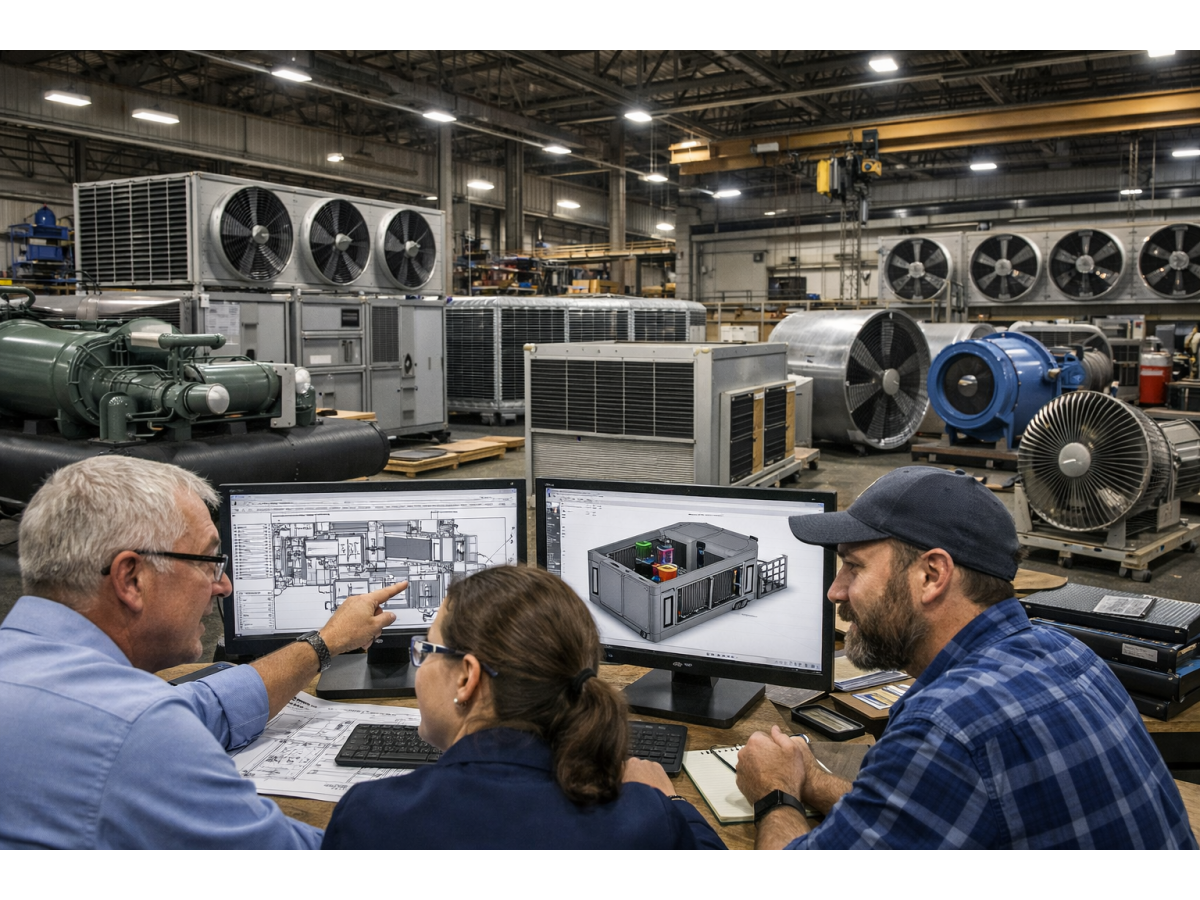
Fans, blowers, compressors, pumps and control actuators commonly contain shafts and bearings requiring axial retention.
Retaining rings provide a compact option where the design permits groove-based retention.
For high-speed fans and blowers, rotational-speed effects should be considered.
Battery energy storage systems contain cooling equipment, HVAC systems, fans, pumps and electromechanical components.
Retaining rings may therefore appear within auxiliary mechanical systems even when they are not part of the battery cell or electrical connection itself.
This distinction helps procurement teams map component requirements accurately across an ESS bill of materials.
Retaining-ring technology is used in aerospace and medical equipment, but these industries impose strict material, traceability, validation and regulatory requirements.
Commercial DIN retaining rings should not automatically be described as aerospace- or medical-qualified.
Such applications require the approved customer specification and qualification process.
External rings are normally expanded using appropriate retaining-ring pliers or automated installation equipment.
Installation should avoid excessive expansion.
Over-expanding the ring can permanently deform it and reduce its ability to seat correctly in the groove.
The installation process should confirm that:
the correct ring is used;
the groove is clean and dimensionally correct;
the ring is expanded only as much as necessary;
the ring fully seats in the groove;
no permanent deformation is visible.
Internal rings are compressed during installation.
Excessive compression can also cause permanent deformation.
After installation, the ring should expand fully into the bore groove.
Incomplete seating can significantly reduce retention capability.
For automated assembly, presence and seating verification may be integrated into the production process.
Retaining rings are elastic components, but their elastic range is not unlimited.
Common installation problems include:
excessive expansion
excessive compression
twisting
incorrect pliers
scratching
incomplete groove seating
installing the wrong nominal size
A ring damaged during installation may look acceptable while having reduced retention capability.
For high-volume OEM assembly, tooling design can therefore be as important as the ring specification itself.
Retaining rings are compact and economical, but they are not ideal for every axial retention problem.
Alternative methods may be preferable when:
extremely high axial loads are present;
groove machining significantly weakens the shaft;
very high rotational speed creates ring expansion concerns;
zero axial play is required;
repeated field removal is expected;
installation access is limited;
a positive threaded retention method is required.
Alternatives can include:
shaft nuts
locknuts
end plates
threaded collars
shaft shoulders
pins
custom retainers
The correct solution depends on load, space, manufacturing cost, serviceability and safety requirements.
Retaining rings are often inexpensive components, but engineers should evaluate total assembly economics.
Using a retaining ring requires a groove.
That groove may add:
machining time
tooling
inspection
dimensional control
In high-volume production, the retaining ring can still provide substantial assembly advantages.
In low-volume or large-shaft applications, another retention method may sometimes be more economical.
This is why component price alone should not determine the retention architecture.
A practical selection process starts with the assembly rather than the catalog.
Determine whether the ring retains a component on a shaft or inside a bore.
Confirm the shaft or housing diameter.
Determine whether the load is:
static
cyclic
reversing
impact
Confirm:
groove diameter
groove width
groove edge geometry
surrounding wall thickness
The groove material may determine the actual load capacity.
For external rings on rotating shafts, evaluate centrifugal expansion.
Consider:
corrosion
temperature
chemicals
moisture
outdoor exposure
Consider installation access, tooling and whether the ring will be removed during maintenance.
A professional retaining-ring RFQ should include more than "DIN 471 M10" or "snap ring for 20 mm shaft."
Depending on the application, procurement should provide:
applicable standard
customer drawing
external or internal configuration
nominal shaft or bore diameter
groove dimensions
ring dimensions
material
heat treatment
hardness where specified
surface treatment
corrosion requirement
annual demand
order quantity
inspection requirements
material documentation
traceability
packaging
delivery schedule
For high-speed or high-load applications, the engineer should also provide operating conditions.
Depending on the product specification, inspection may include:
ring thickness
radial dimensions
lug geometry
hole dimensions
flatness
material
hardness
heat-treatment condition
coating
surface condition
Functional inspection can also include checking ring fit against controlled groove or shaft/bore dimensions.
For OEM programs, inspection requirements should be agreed according to drawing characteristics and application risk.
DIN 471 and DIN 472 cover widely used standard retaining-ring configurations, but not every assembly fits a standard product.
Custom retaining components may be required when the application needs:
non-standard diameter
special radial profile
unusual axial load
limited installation space
special material
custom lug geometry
specific corrosion resistance
unique assembly tooling
JUXIN FASTENERS can review standard and drawing-based retaining components together with related industrial fasteners.
For an accurate quotation, provide:
DIN 471, DIN 472 or applicable drawing
external or internal ring
shaft or bore diameter
groove diameter
groove width
ring thickness
material
hardness requirement
surface treatment
operating temperature
corrosion environment
axial load if known
rotational speed if applicable
annual usage
order quantity
inspection requirements
documentation requirements
packaging
target delivery schedule
A 2D drawing or existing sample is particularly useful for non-standard retaining rings.
JUXIN FASTENERS supports industrial OEM, Tier-1 and supply-chain customers requiring standard and custom fastening components.
Our broader fastening portfolio allows customers to source retaining rings together with related components such as:
spring washers
disc spring washers
locking washers
all-metal lock nuts
high-strength bolts and nuts
self-clinching fasteners
blind rivet nuts
weld nuts
threaded inserts
custom stamped components
CNC-machined components
This allows procurement teams to consolidate technical communication and quality requirements across multiple fastening categories.
Its primary purpose is to retain and locate a component axially on a shaft or inside a bore.
DIN 471 is commonly used for external retaining rings for shafts. DIN 472 is commonly used for internal retaining rings for bores.
Circlip is a common term for certain retaining-ring designs. In sourcing, the standard or drawing should be used to identify the exact component.
The terms overlap in industrial usage, particularly between different regional markets, but specific product geometries can vary. Use the standard or drawing for procurement.
Not inherently. It is primarily an axial retention component. A separate thrust washer or bearing may be required where sliding contact occurs.
Not normally. It can retain a sealing component, but the seal itself provides fluid containment.
The ring geometry, material, groove geometry, shaft or housing material, wall thickness and load condition all contribute to retention capability.
Centrifugal force can cause an external ring to expand at high shaft speed, potentially reducing groove engagement.
Yes in appropriate designs, but groove strength must be evaluated because the aluminum housing may become the limiting part of the retention system.
Reuse depends on the application, ring condition and approved engineering procedure.
Rings that have been over-expanded, over-compressed, deformed or damaged should not be assumed suitable for reuse.
Provide the standard or drawing, shaft/bore size, groove dimensions, material, finish, quantity, operating conditions, inspection requirements and delivery requirements.
The most important principle in retaining-ring design is simple:
The retaining ring and its groove form one mechanical retention system.
A high-strength ring cannot compensate for an incorrectly machined groove, weak housing material, excessive shaft speed or unsuitable installation process.
For design engineers, this means evaluating the complete load path from the retained component through the ring and into the shaft or housing.
For procurement and supplier-development teams, it means sourcing against defined dimensions, materials, heat treatment,
surface finish and quality requirements rather than purchasing by nominal diameter alone.
JUXIN FASTENERS supplies DIN 471 external retaining rings, DIN 472 internal retaining rings, circlips, snap rings and custom retaining components
together with a broader portfolio of industrial fastening solutions for OEM applications.
For quotation, drawing review or application support, send your specification, drawing and expected quantity to:
 MORE NEWS
Sep. 27, 2026
Sep. 27, 2026
Sep. 27, 2026
Contact Us
Tel.:
+86 020 8621 0320
+86 020 3121 6067
E-mail:
Technical Support:
Navigation
SEND INQUIREY