
Call Us
+86 136 6007 9809
Call Us
+86 136 6007 9809

Aug. 16, 2023
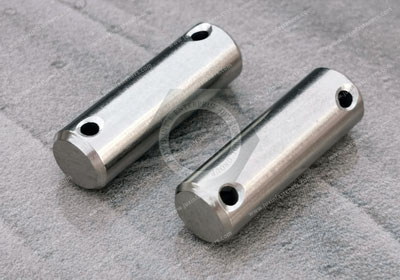
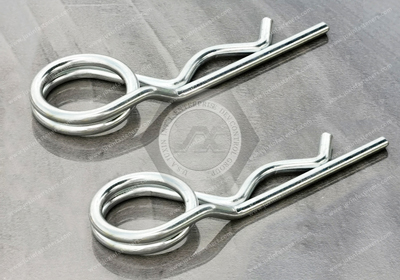
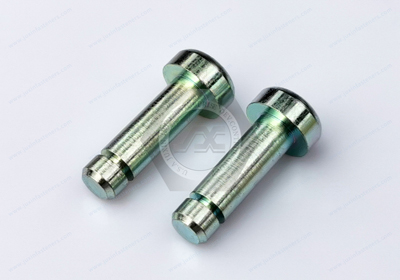
Ring-grip clevis pins are mechanical pivot and linkage fasteners designed for assemblies that require controlled alignment, repeated disassembly, and practical manual access. Unlike conventional threaded bolts and locknuts, a quick-release clevis pin can be removed without turning a threaded fastener through the entire joint, making it useful where equipment changeover, inspection, adjustment, or component replacement occurs regularly.
A ring-grip clevis pin typically combines a cylindrical pin body, a head or shoulder, and an integrated pull ring or ring-grip feature. Depending on the design, the pin may also incorporate a split-pin hole, retaining groove, clip interface, or another secondary retention feature.
These components are commonly considered for industrial machinery, automation fixtures, material-handling equipment, agricultural machinery, construction equipment, mobile equipment, mechanical linkages, maintenance-access assemblies, and other applications where a pivot connection must be both functional and serviceable.
JUXIN FASTENERS provides 20+ years of fastener experience supporting OEM and industrial sourcing requirements for standard and custom mechanical fastening components. For ring-grip clevis pins, engineering decisions should be based on the complete joint: load path, pin diameter, working length, retention method, mating-hole geometry, material, environment, and required service cycle.
 |  |  |
A clevis pin is not simply a replacement for a bolt. Its mechanical behavior depends on how the pin interfaces with the clevis, mating eye, bracket, bushing, washer, and retention system.
The primary engineering questions are:
What load is transferred through the pin?
Is the joint operating in single shear or double shear?
Is the pin primarily carrying shear, or is bending also significant?
How much rotation occurs between the pin and mating component?
How frequently will the pin be removed?
What prevents unintended pin extraction?
What environmental exposure will the pin experience?
Does the ring provide only a grip function, or must it also support a tether or secondary function?
A reliable design treats the pin and its surrounding joint as one mechanical system.
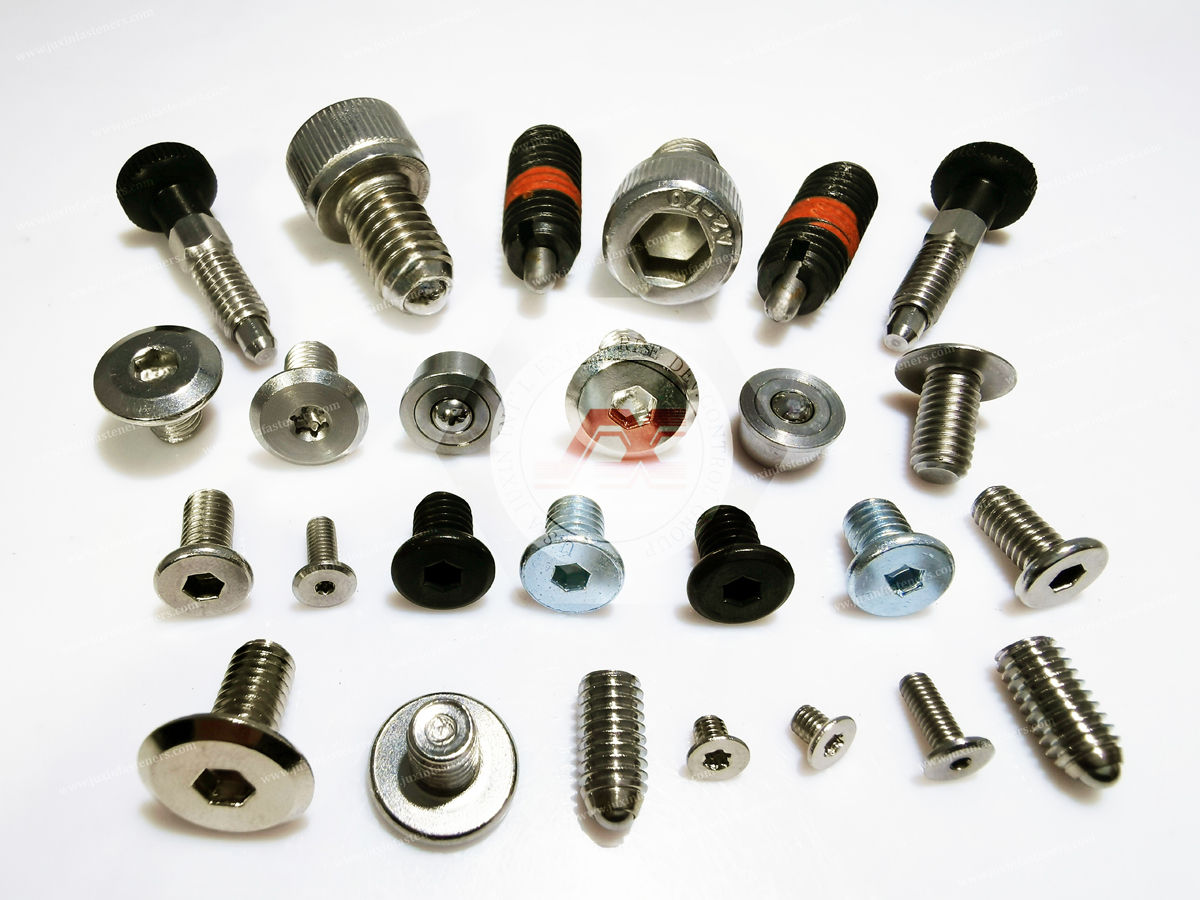
The primary benefit of a ring-grip configuration is manual accessibility.
A ring provides a convenient point for the operator to grasp when inserting or extracting the pin. This is particularly useful when gloves are worn or when conventional tools are undesirable.
The ring geometry should be selected according to the available access space, expected operator force, glove clearance, and surrounding equipment.
Some ring-grip clevis pins use a folding or pivoting ring that can lie close to the pin head after installation.
This can reduce the required clearance envelope compared with a permanently projecting handle. However, the actual clearance benefit depends on the ring diameter, ring thickness, pivot geometry, and surrounding assembly.
A quick-release pin can simplify repeated service operations because the operator does not need to rotate a threaded bolt and nut through the entire joint.
This makes the design particularly useful for:
Quick-change fixtures
Adjustable machinery
Removable guards
Maintenance-access mechanisms
Tooling changeover
Mechanical linkages
Temporary or modular assemblies
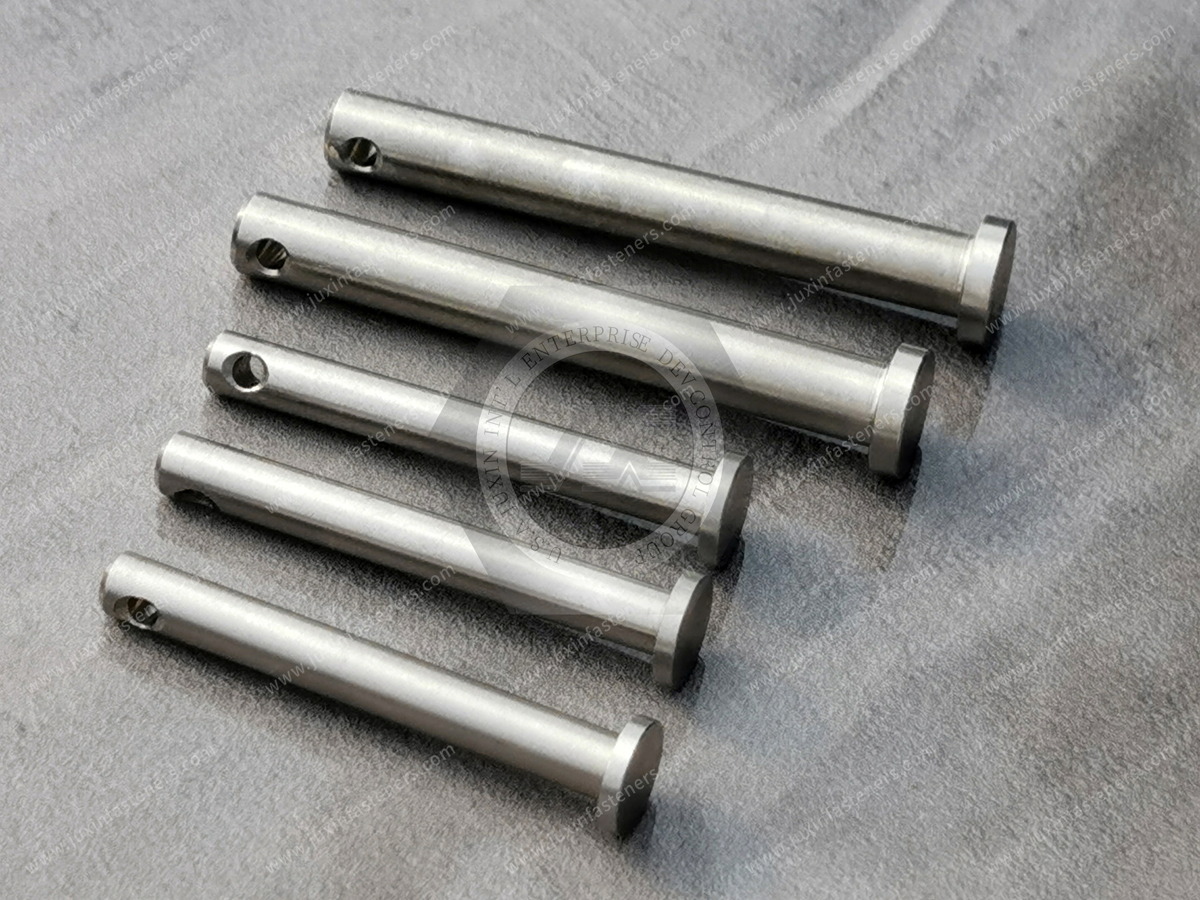
A common specification mistake is to treat the pull ring as the complete retention system.
The ring primarily provides access and actuation. The actual retention method may be based on:
Split-pin or cotter-pin retention
Retaining clips
E-clips or external retaining elements where compatible
Grooves with dedicated retaining hardware
Shoulder geometry
Spring-loaded retention mechanisms
Customer-specific locking features
The correct solution depends on the application and pin design.
A ring-grip clevis pin intended for a high-vibration assembly should not automatically be considered secure merely because it has a pull ring.
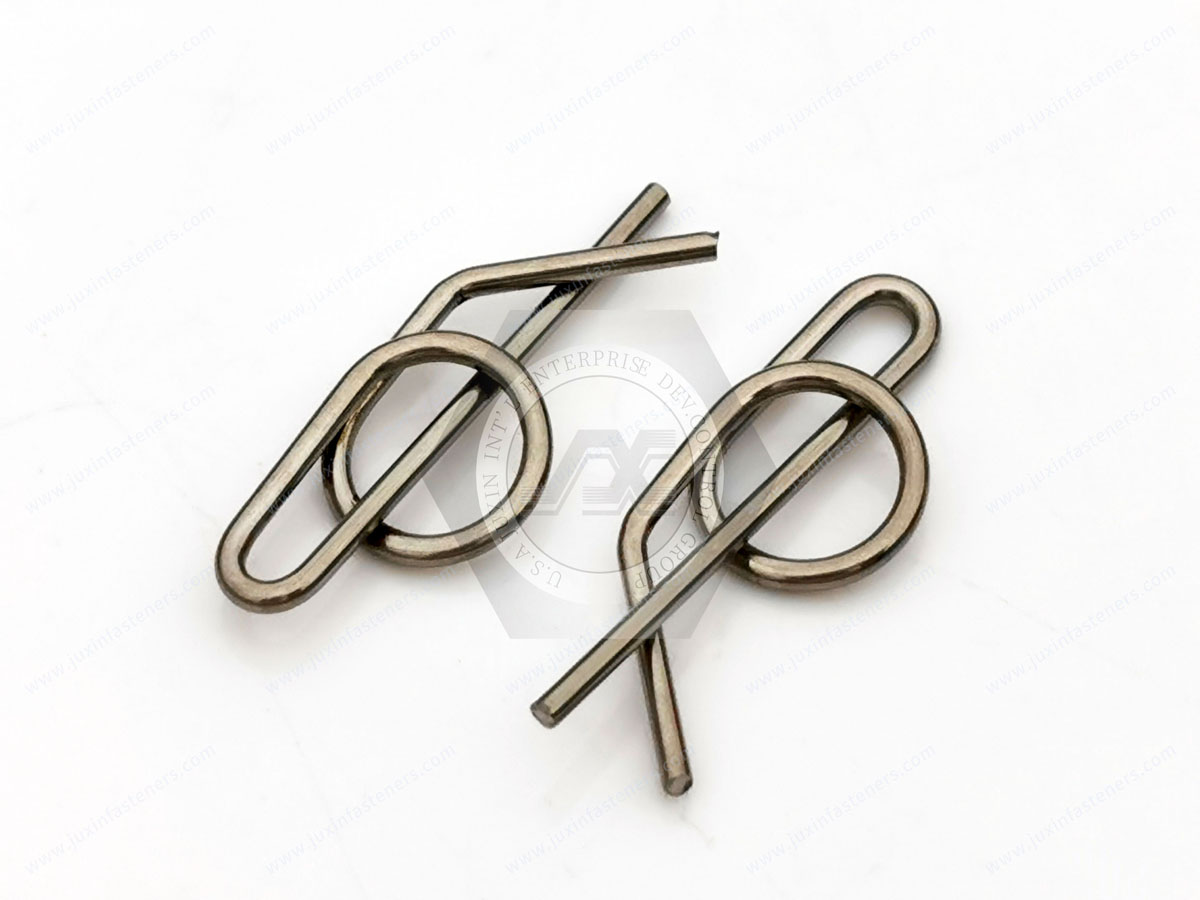
ISO 2341 specifies characteristics for headed clevis pins with metric dimensions and nominal diameters from 3 mm to 100 mm, including versions with and without a split-pin hole. ISO 2340 covers clevis pins without a head.
ASME B18.8.1 covers inch-series clevis pins and cotter pins.
Other related standards may apply to mating or retaining components. For example, ISO 1234 covers metric split pins, while ISO 8738 addresses plain washers for clevis pins.
For OEM applications, the applicable standard should be identified from the actual component configuration and drawing.
A ring-grip feature, special head, customized retention interface, or non-standard geometry may require a customer-specific drawing rather than treating a standard designation as a complete product specification.
A typical clevis pin specification may include:
Nominal diameter
Pin working length
Overall length
Head diameter
Head thickness
Pin-end geometry
Split-pin hole diameter and location
Retaining groove dimensions
Ring diameter
Ring wire diameter
Ring pivot geometry
Surface finish
Material
Dimensional tolerances
These dimensions should be controlled according to the applicable standard or OEM drawing.
Increasing pin diameter can increase the available cross-sectional area, but joint performance is not determined by pin diameter alone.
The assembly may be limited by:
Clevis plate thickness
Hole diameter
Hole-edge distance
Bracket material strength
Bearing stress
Pin bending
Bushing condition
Clearance between mating components
Local deformation
Retention hardware
Therefore, selecting a larger pin without reviewing the surrounding structure can shift the failure mode rather than solve the underlying design problem.
A clevis joint can operate in different load configurations.
In a simplified single-shear arrangement, the load passes through one primary shear plane. Pin bending may become significant depending on the joint geometry and clearance.
A typical double-shear clevis arrangement places the mating eye between two clevis plates, creating two primary shear planes.
This can improve load distribution compared with a comparable single-shear arrangement, but the actual capacity still depends on the complete joint geometry and material properties.
The phrase “double-shear clevis pin” should therefore describe the joint configuration, not an intrinsic rating of the pin.
A clevis pin should not be specified only by tensile or nominal material strength.
Engineering evaluation may need to consider:
Shear stress
Bending stress
Bearing stress
Contact pressure
Deflection
Fatigue loading
Wear
Pin-hole clearance
Joint stiffness
Load direction
For safety-critical or heavily loaded equipment, the final joint design should be validated by the responsible engineer using the actual load cases and applicable design criteria.
JUXIN FASTENERS can evaluate the manufacturing requirements from customer drawings and application information,
while the customer remains responsible for defining the required design load and safety criteria.
A clevis pin does not always experience pure shear.
Excessive clearance between the pin and mating hole can increase the lever arm through which the load acts. This can introduce bending in the pin.
The engineering review should therefore consider:
Load path + hole clearance + unsupported span + pin diameter + mating material
rather than relying on a simple shear-area calculation.
This is especially important for long working lengths and joints with flexible brackets.
Working length determines how much of the pin engages the joint.
An insufficient working length may produce incomplete engagement. An excessive working length may create unnecessary protrusion, interference, or bending exposure.
For OEM sourcing, specify:
Nominal pin diameter
Required working length
Total length
Clevis plate thickness
Mating eye thickness
Washer requirements
Retention method
Required clearance
This information allows the supplier to interpret the application rather than simply matching a nominal diameter.
Industrial machinery frequently uses removable linkage connections for:
Adjustable arms
Guards
Covers
Tooling
Fixtures
Actuator linkages
Mechanical stops
Changeover components
A ring-grip clevis pin can reduce service time when an assembly must be repeatedly opened and closed.
For production machinery, however, the ring must not interfere with moving parts, sensors, belts, cables, or adjacent structures.
Automation fixtures often require rapid replacement of tooling or positioning components.
Ring-grip clevis pins can be used where the joint requires:
Repeatable positioning
Manual changeover
Removable tooling
Pivoting components
Adjustable fixture elements
Quick maintenance access
The pin should be selected according to the fixture's actual load path and cycle frequency.
For automated systems with very high cycle counts, the designer should also evaluate wear at the pin-hole interface rather than treating the pin as a permanently fixed fastener.
Quick-release hardware is particularly valuable when tooling changes occur frequently.
A ring-grip clevis pin can allow an operator to:
Access the ring.
Release the retention feature.
Pull the pin.
Remove or reposition the component.
Reinstall the pin.
Restore the retention feature.
This sequence can simplify maintenance and changeover compared with conventional threaded hardware.
Agricultural equipment frequently operates in environments containing:
Moisture
Soil
Dust
Fertilizers
Organic debris
Temperature changes
Mechanical vibration
For these applications, material and surface protection should be selected according to actual exposure.
Stainless steel can be appropriate for corrosion-sensitive applications, while coated carbon or alloy steel may be considered where higher mechanical requirements and environmental protection are both needed.
The correct selection depends on the complete assembly and operating environment.
Construction and mobile equipment can impose:
Shock loads
Repeated articulation
Vibration
Contamination
Outdoor corrosion
Frequent maintenance
A quick-release clevis pin can be useful for removable linkage or serviceable components.
However, a manually removable pin should not be used in a structural or safety-critical location without an appropriate retention strategy and engineering validation.
Material selection should balance:
Strength
Density
Corrosion exposure
Wear resistance
Galvanic compatibility
Temperature
Manufacturing requirements
Cost
Required service life
Austenitic stainless steels such as 304 and 316 are commonly considered where corrosion resistance is important.
316 stainless steel is often selected for environments where greater resistance to chloride-related corrosion is required compared with 304, but the final selection depends on exposure and the entire material system.
Aluminum alloys can provide a useful strength-to-weight ratio for weight-sensitive assemblies.
7075-series aluminum, for example, is widely used in applications where high specific strength is important. It should not simply be described as a universal replacement for steel because wear, corrosion, surface condition, hardness, and joint loading may differ substantially.
Reducing pin mass can be valuable in aerospace support equipment, portable tooling, mobile equipment, and other weight-sensitive systems.
However, lower density does not automatically produce a better mechanical solution.
The engineer should evaluate:
Mass reduction + load requirement + wear + corrosion + mating material + service environment
rather than choosing aluminum solely because it is lighter.
Stainless steel ring-grip clevis pins may be considered for:
Outdoor machinery
Marine-adjacent equipment
Food-processing machinery
Washdown environments
Industrial equipment
Transportation equipment
Corrosion-sensitive assemblies
The grade should be selected according to the environment and mechanical requirement.
Where stainless steel contacts aluminum or other dissimilar metals in the presence of an electrolyte, galvanic corrosion should also be evaluated.
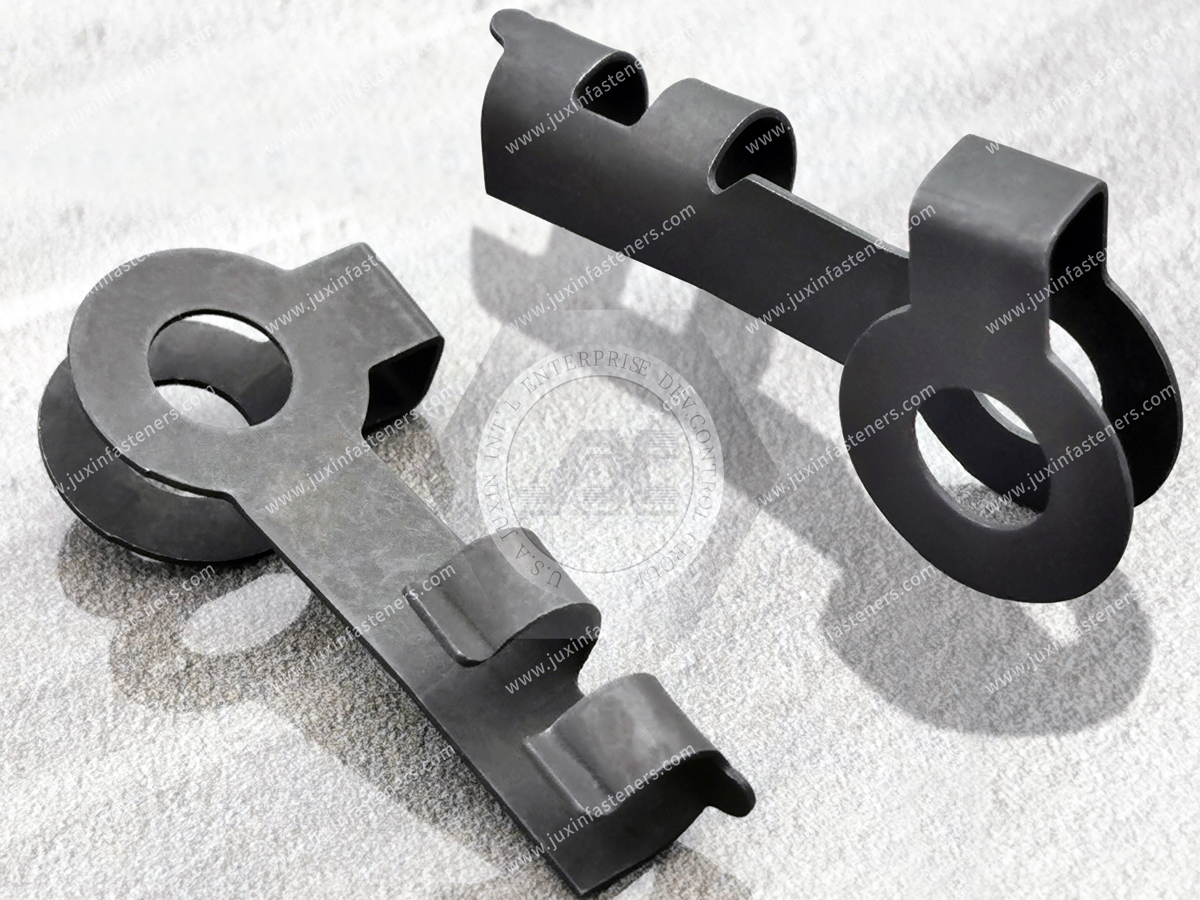
Carbon and alloy steel can provide mechanical performance suitable for many heavily loaded industrial applications.
Potential surface treatments include:
Zinc plating
Zinc-nickel coatings
Other specified protective systems
The finish should be selected according to corrosion exposure, dimensional requirements, friction requirements, and applicable environmental restrictions.
A coating should not be treated as a substitute for correct material and joint design.
Corrosion performance is a system-level consideration.
The engineering review should consider:
Pin material
Clevis material
Bushing material
Washer material
Surface treatment
Water exposure
Salt or chloride exposure
Cleaning chemicals
Drainage
Electrical contact between dissimilar metals
For example, stainless steel and aluminum can form a galvanic couple under suitable electrolyte conditions. The severity depends on the materials, area relationship, environment, and assembly details.
Salt-spray testing can be useful for comparing specified coating systems under a defined laboratory method.
However, a salt-spray result should not automatically be converted into a field-life prediction.
Actual service life depends on:
Environment
Coating thickness and quality
Mechanical damage
Joint geometry
Temperature
Contamination
Maintenance
Drainage
Exposure duration
For procurement, the required test method and acceptance criteria should therefore be specified rather than asking only for a generic “corrosion-resistant” finish.
Vibration can affect both the pivot joint and the retention mechanism.
Potential concerns include:
Pin migration
Retaining-element loosening
Fretting
Hole enlargement
Ring fatigue
Contact wear
Noise
Progressive clearance increase
A quick-release pin for a vibrating assembly should therefore be evaluated as a complete retention system.
Depending on the design, secondary retention may include:
Cotter pins
Split pins
Retaining clips
Spring clips
Retaining rings
Customer-specific locking elements
The selection should reflect the expected vibration, maintenance frequency, accessibility, and consequences of unintended extraction.
For applications where pin loss could create a serious hazard, a secondary retention strategy should be explicitly defined in the engineering specification.
In agricultural machinery, mobile equipment, maintenance tooling, and field-service equipment, removable pins can be misplaced after extraction.
A tether or lanyard can reduce the risk of losing the pin when the assembly design permits it.
A ring may provide a convenient attachment point, but the ring should only be used for tether loads when its geometry and strength have been designed for that purpose.
The lanyard itself should also be selected according to:
Required length
Flexibility
Environmental exposure
Attachment method
Expected handling
Tether load
A visually similar ring can serve very different purposes.
A pull ring may be intended only for manual extraction.
A structural eye may be designed to carry a specified load.
These functions should not be confused.
If a customer requires the ring to carry a tether, cable, or repeated pulling force, that requirement should be included in the drawing or RFQ.
Where a clevis pin rotates repeatedly, contact between the pin and mating hole can create wear.
Potential mechanisms include:
Adhesive wear
Fretting
Surface deformation
Hole enlargement
Corrosion-assisted wear
Lubrication-related contamination
The correct solution may involve:
Different pin material
Bushing integration
Surface treatment
Controlled clearance
Improved alignment
Replaceable wear components
A pin intended for repeated articulation should therefore be evaluated differently from a pin used only for occasional removal.
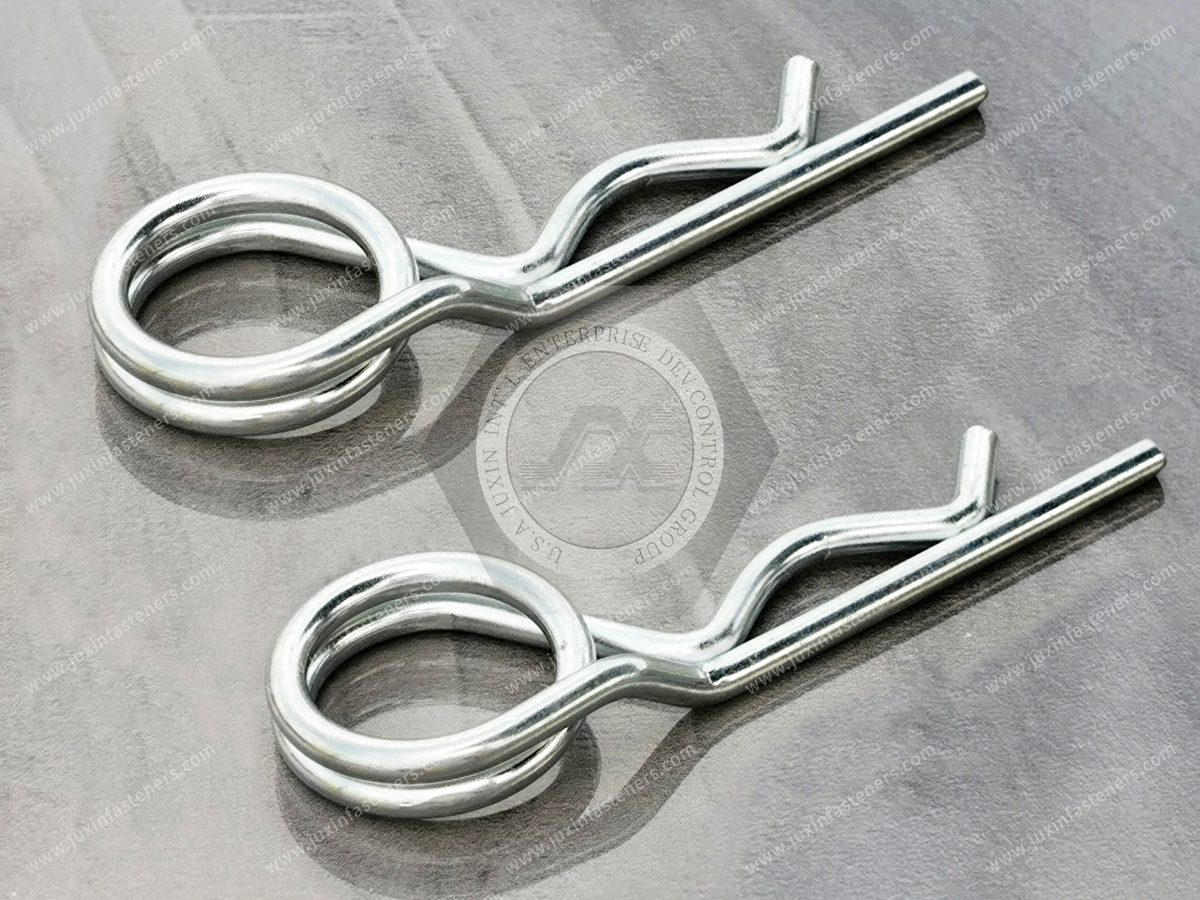
Bushings can change the wear mechanism of a pivot joint.
Instead of allowing the clevis pin to directly contact the structural bracket, a bushing may provide a replaceable interface.
For these assemblies, the specification should consider:
Pin diameter
Bushing internal diameter
Bushing material
Operating clearance
Lubrication
Rotation speed
Radial load
Maintenance interval
The pin should be matched to the actual bushing system rather than selected independently.
| Feature | Ring-Grip Clevis Pin | Conventional Bolt |
|---|---|---|
| Primary function | Pivot / removable linkage | Threaded clamping |
| Manual removal | Typically convenient | Usually requires tool |
| Threaded joint | Not normally required for pin retention | Normally required |
| Repeated changeover | Well suited | Less convenient |
| Pivot application | Common | Possible but thread may not be ideal as bearing surface |
| Retention | Clip, split pin, groove or other mechanism | Nut, thread locking or other method |
| Best use case | Removable pivot/linkage | Clamped structural or mechanical joint |
The two products solve different mechanical problems.
The terms “clevis pin,” “hitch pin,” “quick-release pin,” and “ring pull pin” are sometimes used interchangeably in commercial searches, but their geometries and retention methods can differ.
For engineering procurement, the actual drawing and application should take priority over terminology.
A supplier should understand:
Diameter
Working length
Head configuration
Retention method
Ring geometry
Material
Finish
Load
Environment
This prevents a keyword match from becoming an incorrect component selection.
Weight-sensitive equipment may require removable pivot hardware for:
Access panels
Service mechanisms
Adjustable fixtures
Ground support equipment
Portable tooling
Modular assemblies
For aerospace-related applications, the required material, traceability, inspection, and documentation should be defined by the customer's engineering and quality requirements.
A component should not be represented as aerospace-qualified merely because it is used in an aerospace-related application.
Material handling equipment may use clevis pins in:
Linkages
Guards
Adjustable mechanisms
Wheels and casters
Actuator connections
Folding structures
Where equipment carries significant loads, the clevis pin should be evaluated together with the surrounding bracket and retention mechanism.
Fixtures frequently require repeatable removal and repositioning.
Ring-grip clevis pins can support:
Fixture changeover
Adjustable stops
Removable brackets
Pivoting clamps
Tooling modules
Positioning mechanisms
The ring can improve operator access, particularly where the pin is recessed or difficult to grasp.
OEM applications may require dimensions that are not directly covered by a standard product.
Custom parameters can include:
Non-standard diameter
Custom working length
Special head dimensions
Custom ring diameter
Ring wire diameter
Special retention hole
Groove configuration
Special surface finish
Material requirements
Packaging requirements
For custom production, the customer's drawing should define critical characteristics and acceptance requirements.
A useful engineering specification should include:
Pin diameter
Working length
Overall length
Head dimensions
Ring dimensions
Retention-hole dimensions
Groove dimensions
Load direction
Static load
Cyclic load
Rotation
Required safety factor
Service cycle
Stainless steel
Carbon steel
Alloy steel
Aluminum alloy
Other specified material
Corrosion protection
Finish
Surface condition
Lubrication requirement where applicable
Split pin
Cotter pin
Retaining clip
Groove
Secondary locking feature
Tether requirement
For procurement teams, a purchase specification should avoid vague descriptions such as:
“Stainless quick-release pin, standard size.”
A stronger RFQ includes:
Product: Ring-grip clevis pin
Drawing: Customer drawing number and revision
Diameter: Required nominal diameter
Working Length: Required length
Material: Required grade
Finish: Required surface treatment
Retention: Defined retention method
Ring: Defined ring dimensions/function
Application: Machinery, automation, mobile equipment, etc.
Quantity: Annual or project quantity
Inspection: Required dimensional or material checks
Documentation: CoC and other required documents
Packaging: OEM packaging requirements
Delivery: Required schedule and shipping terms
This reduces quotation ambiguity and improves supplier comparison.
Engineers typically search for:
Clevis pin dimensions
Shear loading
Pin diameter
Material selection
Retention method
Pivot wear
Bushing compatibility
Quick-release mechanisms
ISO or ASME references
Procurement and supply-chain teams typically search for:
Ring-grip clevis pin suppliers
OEM clevis pin manufacturer
Custom clevis pins
Stainless steel clevis pins
Production capability
Inspection documentation
Packaging
MOQ
Lead-time planning
Supplier qualification
A useful B2B product page must address both information paths.
Supplier evaluation may include:
Product drawing review
Manufacturing process review
Material control
Dimensional inspection
Surface treatment control
Lot identification
Certificate availability
Sample approval
Change-control procedures
Packaging control
Production capacity
Communication capability
The exact supplier qualification process should follow the customer's purchasing and quality requirements.
Depending on the drawing, inspection may include:
Pin diameter
Overall length
Working length
Head dimensions
Ring dimensions
Retention-hole location
Groove dimensions
Surface condition
Material verification
Hardness where specified
Inspection methods may include calibrated dimensional tools, gauges, optical measurement, and other methods appropriate to the characteristic.
Not every order requires every inspection method. Inspection should be linked to the drawing and purchase specification.
For industrial OEM procurement, documentation requirements should be agreed before production.
Possible documents include:
Certificate of Conformance
Material certificate
Inspection report
Dimensional report
Surface-treatment documentation
Customer-specific quality documents
If EN 10204 inspection documentation is required, the exact document type should be specified in the purchase requirements rather than assumed for every order.
Not every clevis pin requires the same documentation package.
A standard maintenance component may require a basic Certificate of Conformance.
A highly controlled OEM component may require additional:
Material documentation
Dimensional inspection
Lot traceability
Special-process records
Customer-specific forms
Matching documentation depth to application risk can reduce unnecessary cost while maintaining appropriate quality control.
For outdoor machinery and mobile equipment, the specification should identify the actual environmental conditions.
Consider:
Rain
Salt exposure
Chlorides
Mud
Cleaning chemicals
Temperature
Humidity
UV exposure
Abrasion
Material and coating decisions should be made together with the surrounding hardware.
For related industrial components, JUXIN FASTENERS also supports broader high-strength bolts and nuts and custom fastening requirements.
Where a ring-grip clevis pin includes non-standard geometry, precision machining may be required for the pin body, head, grooves, holes, or special interfaces.
For assemblies requiring additional custom mechanical components, JUXIN FASTENERS also supports stainless steel CNC machining parts.
This can be useful when the clevis pin is part of a broader OEM mechanical assembly rather than a standalone purchased item.
Many industrial assemblies use several fastening technologies together.
A removable pivot may use a ring-grip clevis pin, while nearby structural interfaces may use threaded bolts, nuts, self-clinching fasteners, or custom machined components.
JUXIN FASTENERS provides broader industrial and automotive bolts and nuts for OEM fastening applications.
For assemblies involving lightweight covers, brackets, clips, and non-metallic components, automotive plastic fasteners may also form part of the overall fastening system.
A common procurement problem is beginning with a product name rather than the mechanical requirement.
Instead of asking only for:
“Ring-grip clevis pin, M8.”
Define:
What must the pin do?
For example:
Pivot a linkage
Allow repeated removal
Carry transverse load
Maintain alignment
Provide quick maintenance access
Prevent accidental extraction
Support a tether
Then define:
How must it do it?
Diameter
Working length
Retention
Material
Finish
Ring geometry
Cycle requirement
This functional approach improves supplier matching and reduces incorrect substitutions.
The pin cannot be evaluated independently from its mating hole.
Important variables include:
Hole diameter
Hole tolerance
Hole roundness
Hole alignment
Edge distance
Bracket thickness
Bushing presence
Surface condition
An oversized or misaligned hole can increase movement and bending even when the pin itself meets the specified diameter.
For OEM applications, the hole and pin should therefore be reviewed as a matched mechanical interface.
“Quick release” describes the intended service function.
It does not mean that the pin should be free to fall out during operation.
A well-designed quick-release assembly can combine:
Manual access + controlled retention + defined load path + serviceability
This distinction is particularly important for machinery exposed to vibration or repeated movement.
If a pin is removed hundreds or thousands of times, the ring, retention interface, pin surface, mating hole, and operator interface can all experience wear.
The design review should therefore consider:
Number of removal cycles
Rotation frequency
Extraction force
Ring fatigue
Retention-element wear
Hole wear
Fretting
Contamination
Lubrication requirements
A pin that performs well in a static application may require a different design for high-cycle equipment.
A practical sourcing workflow is:
Application
→ machinery, automation, mobile equipment, tooling or linkage
Joint Function
→ pivot, removable linkage, adjustable mechanism or service access
Load Path
→ single shear, double shear, bearing load, bending or mixed loading
Geometry
→ diameter, working length, overall length, head and ring
Retention
→ split pin, clip, groove or other retention
Material
→ stainless steel, carbon steel, alloy steel, aluminum or specified alloy
Environment
→ indoor, outdoor, washdown, marine-adjacent, contaminated or temperature-sensitive
Cycle Requirement
→ occasional maintenance or repeated changeover
Inspection
→ dimensional, material, surface and customer-specific requirements
Documentation
→ CoC, inspection report, material documentation or other specified records
Supplier Qualification
→ drawing review, samples, quality requirements and production planning
RFQ
This sequence gives procurement teams a clearer basis for comparing qualified suppliers.
A strong RFQ should provide as much of the following information as available:
Product name
Customer drawing
Drawing revision
Pin diameter
Working length
Overall length
Head geometry
Ring geometry
Retention method
Material
Surface finish
Application
Static and dynamic load information where relevant
Operating environment
Required service cycle
Annual quantity
Packaging requirements
Inspection requirements
Documentation requirements
Target production schedule
If some parameters are not yet finalized, application information can still help the supplier identify the appropriate manufacturing route and clarification points.
JUXIN FASTENERS supports OEM and industrial customers with fastener sourcing and custom mechanical component requirements.
For ring-grip clevis pins, the sourcing process can be based on:
Customer drawings
Existing samples
Required dimensions
Material specifications
Retention requirements
Surface treatment requirements
Application environment
Production quantities
Inspection requirements
Packaging specifications
The objective is not simply to supply a nominal “clevis pin,” but to match the component to the customer's actual mechanical and procurement requirements.
A successful OEM sourcing process can progress through:
Application Review
→ Drawing / Sample Review
→ Material and Geometry Confirmation
→ Prototype or Sample Evaluation
→ Dimensional / Functional Approval
→ Production Specification
→ Repeat Manufacturing
→ Quality Documentation
→ Ongoing Supply
For repeat production, controlling the approved drawing revision and agreed specifications is essential.
Any engineering or material change should follow the customer's required change-control process.
A supplier can make a much more useful recommendation when the RFQ includes the actual application.
For example:
“Ring-grip clevis pin for removable automation fixture, 8 mm diameter, repeated weekly changeover, indoor environment, double-shear joint.”
provides significantly more engineering context than:
“Please quote 8 mm clevis pins.”
Application information helps the supplier understand the required geometry, retention concept, material considerations, and documentation level.
Global OEM procurement increasingly requires more than a product price.
Purchasing and supplier-development teams may also evaluate:
Specification accuracy
Drawing interpretation
Production consistency
Material control
Inspection capability
Documentation
Packaging
Communication
Delivery planning
Change control
Long-term supply capability
For this reason, clevis pin sourcing should be treated as an engineering procurement activity rather than a simple catalog comparison.
If you are developing a new machinery linkage, automation fixture, removable pivot, maintenance mechanism, or custom OEM assembly, send JUXIN FASTENERS the available technical information.
Useful RFQ materials include:
2D drawing
3D model
Existing sample
Pin dimensions
Material requirement
Finish requirement
Retention requirement
Application description
Quantity
Inspection requirements
Documentation requirements
JUXIN FASTENERS can review the supplied requirements and support sourcing for standard or custom ring-grip clevis pins and related industrial fastening components.
JUXIN FASTENERS
20+ Years of Fastener Experience
Ring-Grip Clevis Pins, Quick-Release Pivot Hardware and Custom OEM Fastening Components
Website: www.juxinfasteners.com
Email: info@juxinfasteners.com
 MORE NEWS
Sep. 25, 2026
Sep. 25, 2026
Sep. 25, 2026
Contact Us
Tel.:
+86 020 8621 0320
+86 020 3121 6067
E-mail:
Technical Support:
Navigation
SEND INQUIREY