
Call Us
+86 136 6007 9809
Call Us
+86 136 6007 9809

Jul. 16, 2024
Stainless Steel Bolts, Nuts and Washers: Industrial Joint Design and OEM Fastening Solutions
Stainless steel bolts, nuts, washers and screws are widely used in industrial equipment where corrosion resistance, maintenance accessibility and reliable mechanical fastening are important.
Applications range from machinery housings and electrical enclosures to food-processing equipment, outdoor instrumentation, solar equipment and selected energy-storage components.
However, reliable fastening performance does not depend on the stainless steel grade alone.
A bolted joint must be evaluated as a complete system consisting of the fastener, mating thread, washer or bearing surface, clamped components and installation process.
A stainless steel bolt with adequate tensile capacity may still perform poorly if the mating nut has an incompatible thread,
the washer damages the clamped material or the installation process produces insufficient preload.
Similarly, a corrosion-resistant bolt may be unsuitable when the joint contains aluminum or another material susceptible to galvanic corrosion.
For mechanical and structural engineers, the challenge is to establish the correct joint configuration and loading requirements.
For manufacturing engineers and production managers, the priority is consistent assembly without thread damage, excessive installation torque or unnecessary rework.
For purchasing managers, procurement specialists and supplier development teams, the objective is to source a complete fastening specification that can be evaluated, approved and purchased consistently.
This guide explains how to select stainless steel bolts, nuts and washers as a coordinated industrial fastening system.
Juxin Fasteners supplies industrial fastening components and welcomes inquiries for standard and drawing-based stainless steel fasteners.
What Is a Stainless Steel Bolted Joint?
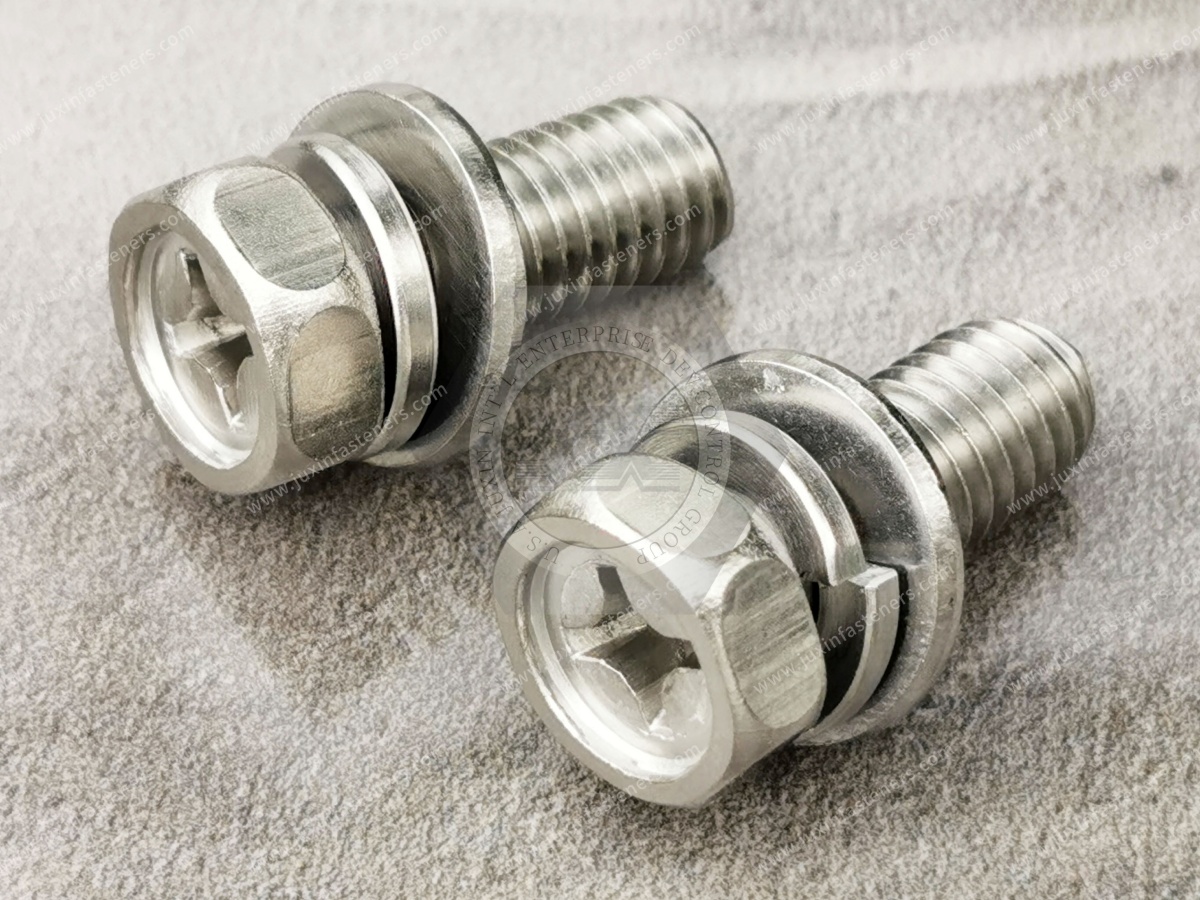
A bolted joint connects two or more components using a threaded fastening arrangement.
A typical through-bolted connection may include:
A bolt
A mating nut
One or more washers, where required
The clamped components
Suitable bearing surfaces
Other joints use a screw threaded directly into a tapped component rather than a separate nut.
Important Distinction
A bolt, screw, nut and washer perform different functions.
A washer is not automatically required in every joint, and adding a washer does not automatically improve reliability.
The correct configuration depends on the joint geometry and functional requirements.
How a Bolted Joint Carries Load
In many preloaded joints, tightening the fastener creates a clamping force between the connected components.
This clamp load may help the joint resist separation and relative movement.
Depending on the design, external loads may be transferred through friction between clamped surfaces, direct bearing, fastener shear or a combination of mechanisms.
Engineering Principle
The fastener's tensile strength is only one part of joint performance.
A complete design should also consider:
Required preload
External loading
Joint stiffness
Thread engagement
Bearing stress
Material compatibility
Fatigue conditions
Environmental exposure
Selecting Stainless Steel Bolts for Industrial Equipment
Bolt selection should begin with the approved joint requirements.
Head Configuration
Common configurations include:
Hexagon head bolts and screws
Socket head cap screws
Flange head screws and bolts
Other drawing-specific threaded fasteners
The correct head depends on installation access, bearing requirements and available space.
Thread Specification
Specify the actual thread system, nominal diameter, pitch and tolerance where applicable.
Length
The required length depends on the joint stack, washer arrangement, nut engagement and available clearance.
Material
Material selection must satisfy corrosion and mechanical requirements.
Mechanical Properties
The selected fastener must meet the specified property class or other applicable mechanical requirements.
Engineering Insight
A larger bolt diameter does not automatically correct a poorly designed joint.
Increasing diameter may change hole clearances, bearing conditions and component stresses.
Matching Stainless Steel Bolts and Nuts
Bolts and nuts must have compatible thread specifications and suitable mechanical properties.
Thread Compatibility
Check:
Thread system
Nominal diameter
Pitch
Thread tolerance
Engagement length
Metric Threads
ISO metric threads are commonly used in international industrial equipment.
Unified Inch-Series Threads
UNC and UNF are distinct inch-series thread designations used in relevant applications.
Legacy British Threads
BSW and BSF are separate thread systems.
Critical Rule
Metric, UNC, UNF, BSW and BSF threads are not directly interchangeable.
Approximate diameter similarity or inch-to-millimeter conversion does not establish compatibility.
Mechanical Compatibility
The nut must be suitable for the intended bolt and joint requirements.
A nut's material designation alone does not establish its load-carrying capability.
Engineering Recommendation
Specify the bolt and nut together where their compatibility is important to the approved joint.
Stainless Steel Washers: More Than Simple Spacers
Washers may perform several functions depending on the design.
Bearing Surface Management
A washer may provide a suitable bearing interface between the fastener and the clamped component.
Load Distribution
A suitable washer can help distribute bearing pressure over a larger area.
Surface Protection
Washers may reduce localized marking of certain surfaces when appropriately specified.
Spacing
Washers may be used to establish a defined stack height or clearance.
Important Limitation
A standard flat washer is not automatically a locking device.
Likewise, increasing washer diameter does not always improve a joint.
A washer that is too thin or insufficiently strong may deform under the applied load.
Washer Selection Considerations
Inside diameter
Outside diameter
Thickness
Hardness or mechanical properties
Surface condition
Bearing requirements
Corrosion compatibility
Engineering Insight
For soft clamped materials, the washer and bearing surface may be just as important as the bolt's nominal strength.
Selecting Stainless Steel Materials for Bolted Assemblies
Material selection should balance corrosion resistance, mechanical properties, manufacturing characteristics and commercial requirements.
304 Stainless Steel
304 is commonly considered for general industrial applications requiring suitable corrosion resistance.
Potential applications include:
Machinery housings
Indoor equipment
Electrical enclosures
Commercial appliances
316 Stainless Steel
316 generally offers improved resistance to certain localized corrosion mechanisms compared with 304.
It may be considered for selected coastal, outdoor or chemically exposed applications.
18-8 Stainless Steel
18-8 is a broad commercial designation associated with certain chromium-nickel stainless steels.
It should not automatically be treated as a complete specification equivalent to every 304 product.
A2 and A4 Material Groups
A2 and A4 are material groups used in relevant ISO stainless steel fastener specifications.
The required mechanical-property class should be identified separately.
410 Stainless Steel
410 is a martensitic stainless steel that may be heat treated.
Its corrosion resistance and mechanical behavior differ from those of common austenitic stainless steels.
Important Limitation
Higher corrosion resistance does not automatically mean higher tensile strength or better fatigue performance.
Bolt, Nut and Washer Material Matching
Using stainless steel for every component may appear straightforward, but joint compatibility still requires review.
Similar Stainless Steel Materials
Matching stainless steel components may simplify certain corrosion considerations, but the combination may still be susceptible to galling.
Mixed Stainless Steel Grades
Different grades should not be substituted without checking mechanical properties, corrosion conditions and joint requirements.
Stainless Steel With Aluminum
When stainless steel contacts aluminum in the presence of a suitable electrolyte, galvanic corrosion may occur.
Stainless Steel With Carbon Steel
Mixed-metal assemblies may also require evaluation of corrosion compatibility and surface protection.
Engineering Recommendation
Select the complete material combination rather than evaluating each fastener independently.
Galvanic Corrosion in Mixed-Metal Industrial Assemblies
Galvanic corrosion can occur when dissimilar metals are electrically connected in a suitable electrolyte.
The severity depends on several factors, including:
Material combination
Electrolyte exposure
Exposed surface area ratio
Protective coatings
Joint geometry
Drainage and moisture retention
Potential Design Measures
Depending on the application:
Appropriate material selection
Compatible coatings
Electrical isolation where permitted
Sealing
Moisture management
Drainage
Important Limitation
A stainless steel fastener may remain relatively resistant to corrosion while the surrounding aluminum component experiences damage.
Corrosion evaluation must include the entire assembly.
Stainless Steel Thread Galling in Bolt and Nut Assemblies
Galling is an important concern in certain stainless steel threaded connections.
It involves adhesive surface damage during relative sliding and can cause threads to seize.
Potential Contributing Factors
Material pairing
Thread surface condition
Installation speed
High contact pressure
Misalignment
Inadequate lubrication for the application
Possible Engineering Measures
Depending on the joint requirements, engineers may evaluate:
Suitable material pairings
Thread surface condition
Approved lubricants
Installation speed
Tool alignment
Compatible coatings
Important Limitation
A coating or lubricant should not be introduced without considering its effect on friction and preload.
Production Manager's Perspective
Galling can interrupt assembly, damage components and increase rework.
For repetitive production, installation trials should verify that the selected bolt-and-nut combination can be assembled consistently.
Preload, Tightening Torque and Joint Reliability
Preload is the tensile force introduced into a fastener during tightening.
In many joints, preload contributes to clamping force.
However, tightening torque does not translate into one fixed preload value.
Torque Depends on Friction
Thread friction and bearing-surface friction affect the relationship between applied torque and achieved preload.
Washer Effects
Adding or changing a washer may alter the bearing interface and friction conditions.
Coating Effects
Surface treatments and lubricants may also change installation behavior.
Joint Stiffness
The relative stiffness of the fastener and clamped components affects the joint response to external loading.
Engineering Recommendation
Where preload is important, develop and validate the tightening specification using the actual fastener, nut, washer, surface condition and clamped materials.
Important Limitation
Do not reuse a tightening torque value automatically after changing the material, coating, washer or nut configuration.
Vibration and Loss of Clamp Load
Industrial equipment may experience vibration and cyclic loading.
However, stainless steel does not inherently prevent loosening.
Potential Causes of Joint Problems
Insufficient preload
Relative movement
Surface embedding
Material relaxation
Thermal cycling
Unsuitable joint stiffness
Incorrect installation
Locking Systems
Depending on the application, engineers may consider appropriate locking nuts, locking screws or other qualified locking features.
Important Distinction
A prevailing-torque locking feature may resist rotation, but it does not automatically prevent every mechanism of clamp-load loss.
Engineering Insight
Joint reliability must be validated at the assembly level.
Industrial Machinery and Automation Applications
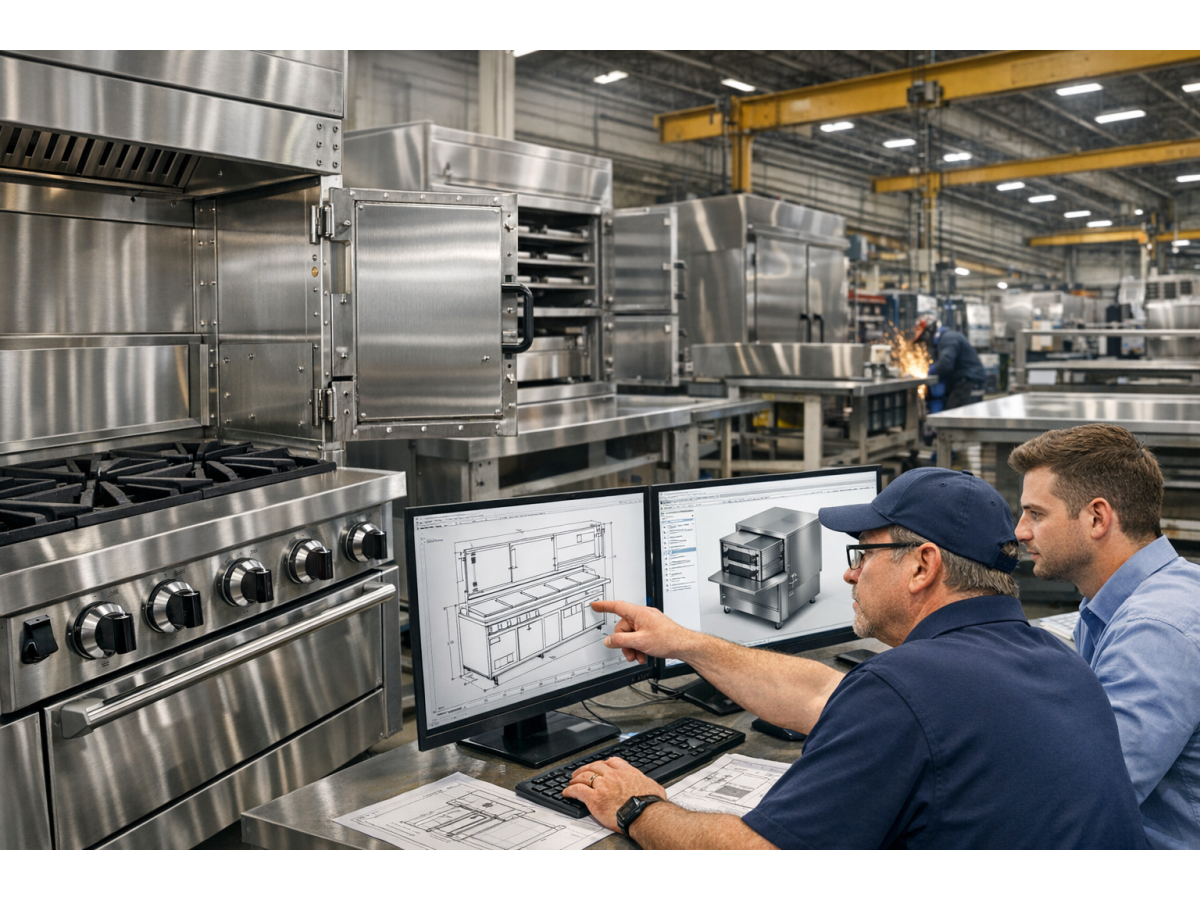
Industrial equipment may use stainless steel bolted joints in:
Equipment housings
Machinery covers
Automation components
Instrument brackets
Selected pump accessories
Mechanical fixtures
Engineering Priorities
Mechanical loading
Joint stiffness
Installation access
Vibration
Maintenance
Production Priorities
Consistent tightening
Tool compatibility
Reduced thread damage
Inspection accessibility
Recurring supply
Important Limitation
A general-purpose stainless steel fastener should not automatically replace a specified high-strength fastener in a critical machine connection.
Electrical Equipment and Power Distribution
Potential applications include:
Electrical cabinets
Control enclosures
Instrument panels
Power distribution equipment housings
Auxiliary mounting hardware
Engineering Priorities
Corrosion exposure
Electrical clearance
Mechanical retention
Service access
Material compatibility
Important Electrical Consideration
Stainless steel is electrically conductive.
Fastener selection must not compromise electrical isolation, grounding or other applicable safety requirements.
Food-Processing and Commercial Equipment
Stainless steel fastening systems may be considered for:
Food-processing machinery
Beverage equipment
Commercial kitchens
Equipment housings
Washdown equipment
Engineering Priorities
Cleaning chemical compatibility
Corrosion resistance
Surface cleanliness
Hygienic joint design
Maintenance accessibility
Important Limitation
A stainless steel grade alone does not establish food-contact compliance or hygienic design conformity.
Outdoor Construction and Architectural Equipment
Potential applications include:
Equipment enclosures
Handrails and accessories
Selected facade hardware
Outdoor instrumentation
Nonstructural mounting assemblies
Engineering Priorities
Environmental exposure
Corrosion compatibility
Mechanical loading
Installation access
Long-term inspection
Important Structural Limitation
Structural building connections, facade retention and safety-critical installations may be subject to specific engineering codes, approvals and design requirements.
General-purpose stainless steel bolts should not be substituted into these connections without appropriate qualification.
Marine and Coastal Equipment
Stainless steel fasteners may be considered for selected coastal and marine-related equipment.
Potential applications include:
Marine instrumentation
Auxiliary equipment housings
Coastal electrical cabinets
Port equipment accessories
Material Selection
316 may provide improved resistance to certain localized corrosion conditions compared with 304.
However, chloride exposure, crevice conditions and joint geometry must be evaluated.
Important Limitation
316 stainless steel is not universally suitable for every seawater or offshore application.
Renewable Energy and Energy Storage Equipment
Potential applications include:
Solar equipment accessories
Outdoor electrical enclosures
Energy-storage equipment housings
EV charging equipment accessories
Auxiliary instrumentation
Engineering Priorities
Environmental exposure
Joint loading
Galvanic compatibility
Thermal cycling
Electrical safety
Maintenance
Important Limitation
Primary structural solar connections, wind turbine critical joints and battery safety-related connections require application-specific design and approval.
International Standards for Stainless Steel Bolts, Nuts and Washers
A complete bolted joint may involve several different standards.
Stainless Steel Bolt and Screw Mechanical Properties
ISO 3506-1 applies to specified corrosion-resistant stainless steel bolts, screws and studs.
Stainless Steel Nut Mechanical Properties
ISO 3506-2 applies to specified corrosion-resistant stainless steel nuts.
Stainless Steel Hexagon Head Screws
ISO 4017 defines dimensional requirements for fully threaded metric hexagon head screws.
Stainless Steel Hexagon Nuts
ISO 4032 defines dimensional requirements for certain hexagon nuts.
Flat Washers
ISO 7089 defines dimensions and general requirements for specified plain washers.
North American Specifications
ASTM F593 and ASTM F594 may be relevant to certain stainless steel bolts, screws, studs and nuts within their respective scopes.
Applicable ASME B18 standards may define dimensional requirements for specified inch-series products.
Important Standards Principle
A dimensional standard does not automatically establish the material, mechanical properties or complete joint performance.
The approved drawing and purchasing specification should identify all relevant requirements.
Custom Stainless Steel Bolt, Nut and Washer Assemblies
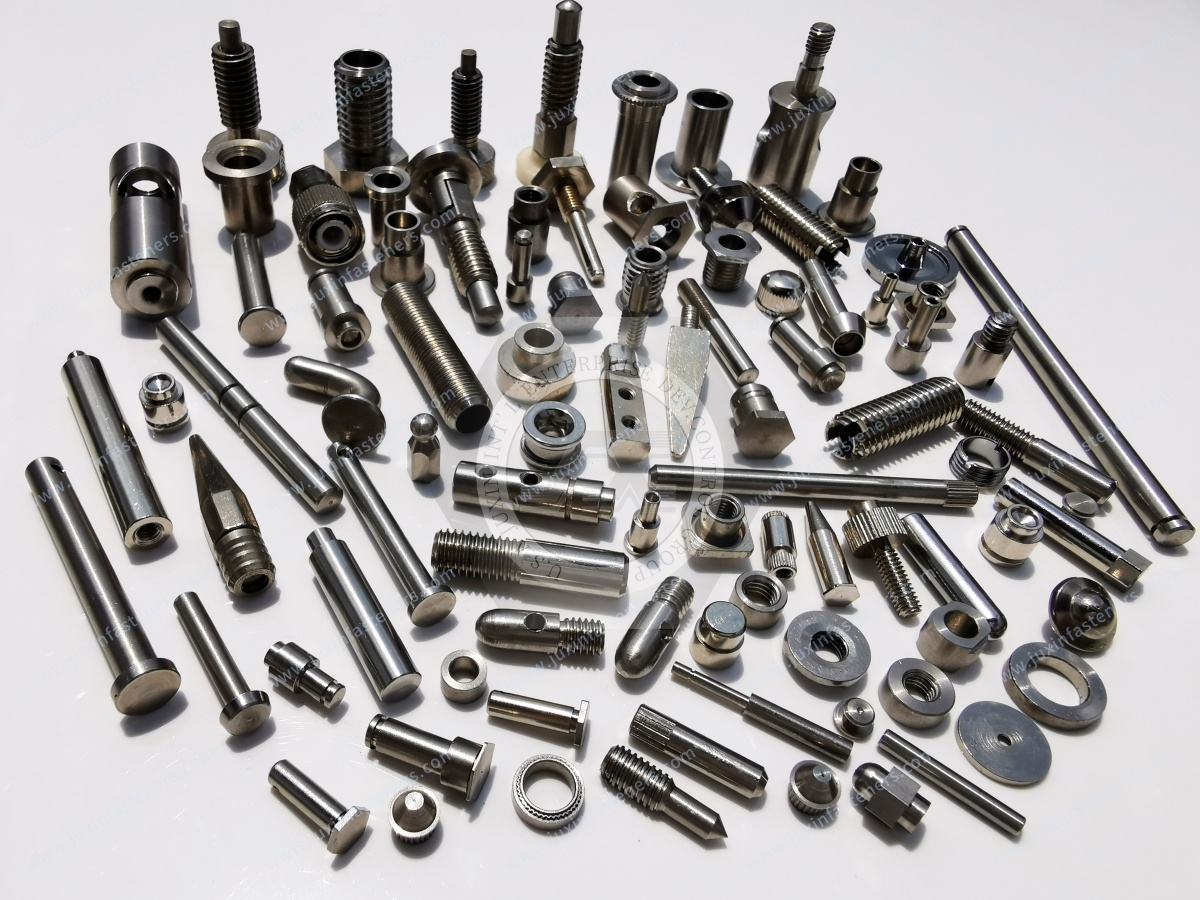
Some industrial equipment designs require nonstandard fastening components.
Potential customization requirements include:
Special bolt lengths
Shoulder features
Nonstandard head geometry
Special washer dimensions
Custom threaded components
Specific surface treatments
Critical dimensional tolerances
Engineering Review
Custom fastener projects should consider:
Joint loading
Material
Mechanical properties
Thread geometry
Manufacturing feasibility
Inspection requirements
Commercial Review
Sample requirements, MOQ, production quantities and delivery schedules should be confirmed during quotation.
Important Limitation
Custom manufacturing does not automatically establish suitability for a regulated or safety-critical application.
Any required engineering qualification must be completed separately.
Supplier Qualification for Industrial Stainless Steel Fastening Systems
Procurement teams should evaluate the complete fastening arrangement.
Product Specification
Confirm the approved drawings and applicable standards.
Material Compatibility
Verify the required bolt, nut and washer materials.
Thread Compatibility
Check the thread designation and fit.
Mechanical Requirements
Confirm the relevant property classes and functional requirements.
Inspection Requirements
Define critical dimensions and any required material or functional verification.
Sample Approval
Where appropriate, evaluate representative components in the intended assembly.
Production Consistency
Define acceptance criteria and relevant change-control requirements.
Commercial Requirements
Review:
MOQ
Sample requirements
Production quantities
Packaging
Delivery schedule
Supply continuity
Total assembly cost
Supplier Development Insight
A replacement supplier should not be approved solely because the individual bolt, nut and washer dimensions appear similar.
The assembled joint must remain compatible with the approved engineering requirements.
How to Prepare a Complete Stainless Steel Fastener RFQ
For efficient quotation, provide the following information.
Bolts and Screws
Drawing or product standard
Head style
Thread designation
Length
Material and mechanical properties
Nuts
Product standard
Thread designation
Nut style
Material and mechanical requirements
Washers
Product standard
Inside diameter
Outside diameter
Thickness
Material and required properties
Joint Information
Clamped materials
Joint stack thickness
External loading
Environmental exposure
Installation method
Required preload or tightening specification, if established
Quality and Commercial Information
Inspection requirements
Sample quantity
Production quantity
Packaging
Target delivery schedule
Practical Procurement Recommendation
When purchasing a bolt, nut and washer set, identify whether the components must be supplied as separate line items, matched components or a defined assembly.
This can affect packaging, inspection and production-line handling.
Frequently Asked Questions
Are stainless steel bolts and nuts completely rustproof?
No. Corrosion resistance depends on material, surface condition, environment and joint design.
Can 304 and 316 stainless steel fasteners be used together?
Potentially, but material compatibility, mechanical requirements and the operating environment should be reviewed.
Do stainless steel bolts require stainless steel nuts?
Not universally. The mating nut must satisfy thread, mechanical and corrosion requirements.
Are stainless steel washers always necessary?
No. Washer use depends on the joint design and bearing requirements.
Do flat washers prevent bolts from loosening?
Not automatically. A standard flat washer is not inherently a locking device.
Can stainless steel bolts be used with aluminum components?
Yes, in suitable designs, but galvanic corrosion and joint compatibility must be evaluated.
What causes stainless steel bolts and nuts to seize?
Galling is one possible cause. Thread damage, misalignment and other assembly conditions may also contribute.
Are stainless steel fasteners suitable for outdoor applications?
They may be suitable when the grade, joint design and exposure conditions are appropriate.
Can metric stainless steel bolts replace UNC or UNF bolts?
No. These thread systems are not directly interchangeable.
What should an OEM buyer provide when sourcing stainless steel bolts, nuts and washers?
The approved drawings, material and mechanical requirements, thread specifications, joint conditions, inspection criteria and purchasing quantities.
Juxin Fasteners: Industrial Stainless Steel Bolts, Nuts and Washers
Juxin Fasteners supplies industrial fastening components and welcomes inquiries for standard and drawing-based stainless steel fastening requirements.
Relevant product categories include:
Stainless steel hexagon head screws and bolts
Stainless steel socket head screws
Stainless steel machine screws
Stainless steel flange screws
Stainless steel nuts
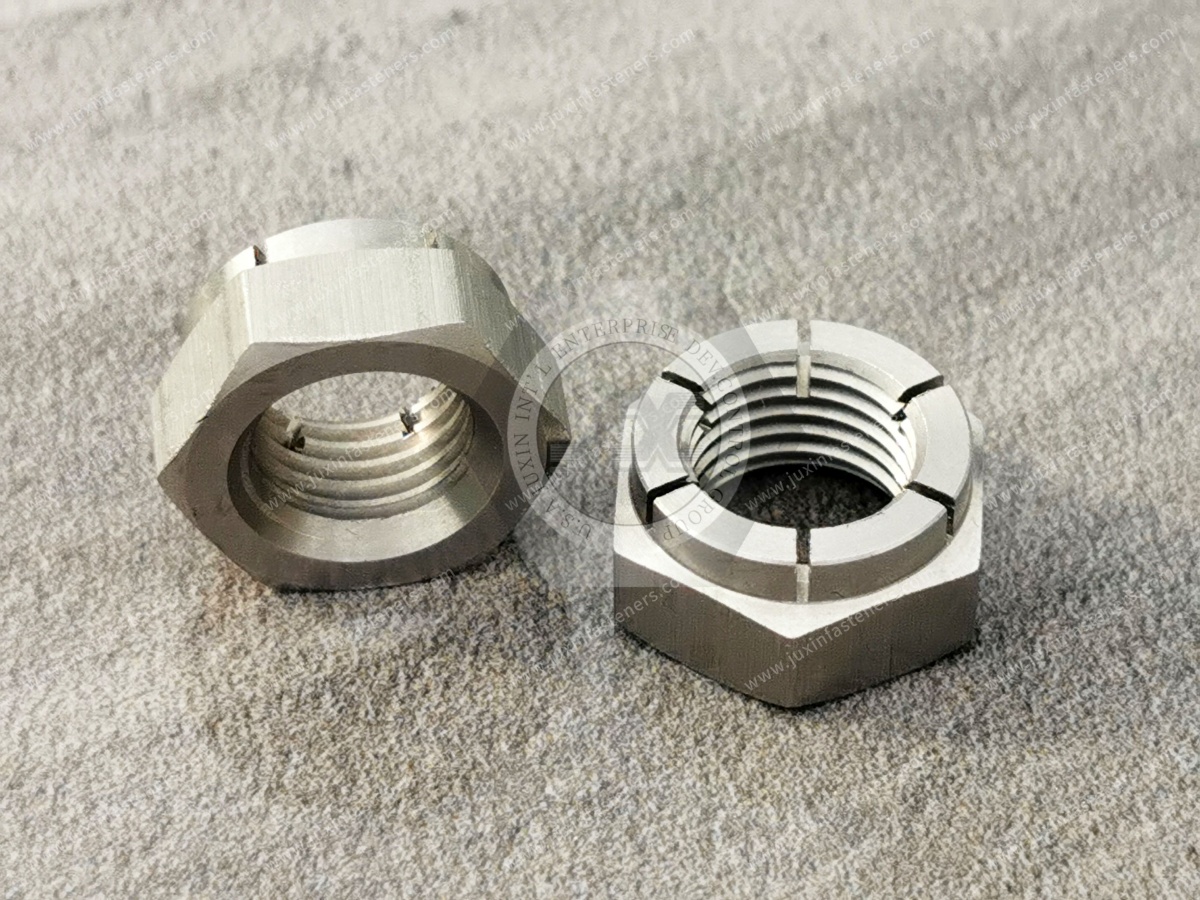
Stainless steel lock nuts
Stainless steel washers
Stainless steel shoulder screws
Custom threaded components
Specific product availability, material grades, dimensions, custom configurations, samples, MOQ, inspection requirements and delivery schedules are subject to technical and commercial confirmation.
Request an OEM Stainless Steel Fastening System RFQ
Are you sourcing stainless steel bolts, nuts and washers for industrial machinery, electrical equipment, food-processing systems, outdoor equipment or renewable-energy applications?
Do you need to qualify a replacement supplier, develop a custom threaded component or purchase a coordinated fastening assembly for recurring OEM production?
Juxin Fasteners welcomes inquiries from structural engineers, design engineers, mechanical engineers, manufacturing engineers, production managers,
purchasing specialists, procurement managers, supplier development teams and supply chain managers.
For technical review and quotation, please provide:
2D drawings or product standards + bolt and nut thread specifications + washer dimensions + material grades + mechanical-property requirements
+ clamped materials + joint loading + operating environment + installation requirements + inspection criteria + sample quantity
+ production quantity + packaging requirements + target delivery schedule.
For replacement projects, include the existing approved fastener specification and identify any proposed material or dimensional changes.
Company: Juxin Fasteners
Website: https://www.juxinfasteners.com/
Email: info@juxinfasteners.com
Send your stainless steel bolt, nut and washer drawings and OEM RFQ to Juxin Fasteners for technical review and quotation.
Contact Us
Tel.:
+86 020 8621 0320
+86 020 3121 6067
E-mail:
Technical Support:
Navigation
SEND INQUIREY



