
Call Us
+86 136 6007 9809
Call Us
+86 136 6007 9809

Aug. 19, 2023
Electric vehicle battery packs, power electronics housings, thermal-management systems,
and other automotive electronic enclosures frequently require threaded fastening points in thin sheet metal or formed aluminum structures.
Traditional tapped holes may not provide sufficient thread engagement in thin materials. Welding can introduce heat, distortion, coating damage, or access limitations.
Sealing blind rivet nuts provide an alternative by creating an internally threaded attachment point from one accessible side of the enclosure.
Closed-end and sealing blind rivet nut configurations can also be considered when the enclosure design requires additional control of the blind-side opening or sealing around the fastener flange.
Typical applications include:
EV battery enclosures
Battery tray covers
Automotive electronic housings
Power-electronics enclosures
Thermal-management assemblies
Charging equipment
Inverter housings
Control modules
Industrial electrical cabinets
Outdoor electronic enclosures
The engineering objective is not simply to select a “waterproof rivet nut.”
The complete joint must be evaluated:
Rivet nut + sheet metal + flange/seal + mating screw + installation process + enclosure + validation test
JUXIN FASTENERS supports OEM and industrial fastening requirements with 20+ years of fastener experience, including rivet nuts, blind threaded inserts,
self-clinching fasteners, custom screws and related mechanical components.
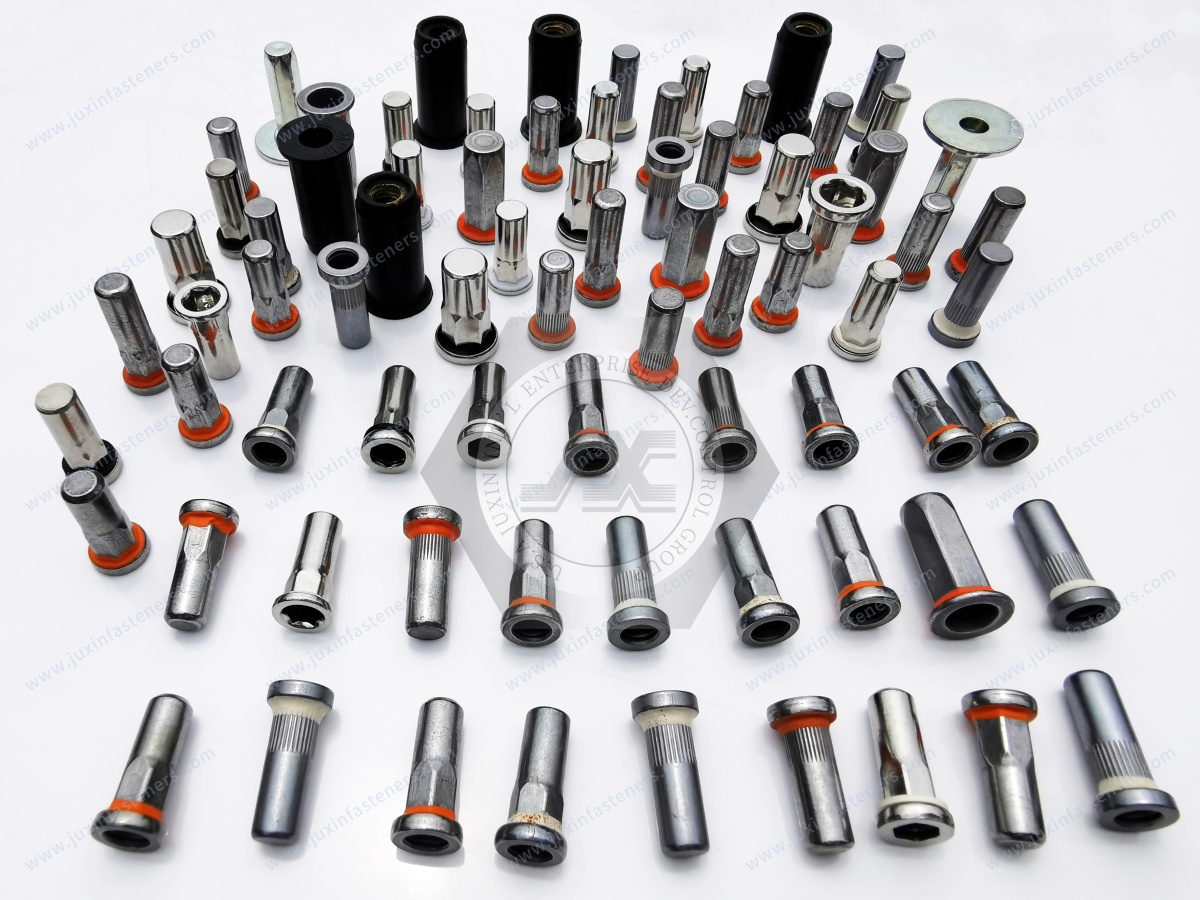
A blind rivet nut creates a threaded attachment point without requiring access to the rear side of the sheet.
This is particularly useful when the enclosure is:
Closed
Hollow
Box-shaped
Already assembled
Difficult to access from the reverse side
During installation, the rivet nut is inserted through a prepared hole and set using an appropriate installation tool.
The body deforms on the blind side and forms a mechanical grip against the sheet.
The resulting assembly provides an internal thread for a mating screw.
A closed-end rivet nut has a sealed or closed blind end rather than an open passage through the body.
This can be useful when the designer wants to limit direct passage through the fastener body.
However, closed-end construction should not automatically be interpreted as a complete fluid seal for the enclosure.
The final sealing performance can also depend on:
Flange geometry
Sheet surface
Hole quality
Seal material
Screw interface
Installation compression
Enclosure design
A sealing blind rivet nut generally combines a threaded blind fastener with a sealing feature intended to reduce fluid or moisture migration through the installation interface.
Possible sealing concepts include:
Elastomer sealing rings
Sealing washers
Flange-mounted seals
Customer-specific sealing elements
Closed-end body designs
The exact sealing mechanism should be defined by the product drawing.
A closed-end rivet nut and a flange-sealed rivet nut are related concepts but are not automatically identical.
This distinction is critical for EV battery enclosure engineering.
A closed-end rivet nut can prevent a direct open passage through the fastener body, but water ingress can still occur around the interface between:
Rivet nut flange
Sheet metal
Seal
Mating screw
Enclosure panel
Therefore:
Closed end ≠ automatically waterproof
and:
Sealing rivet nut ≠ automatically IP67
An IP rating applies to the relevant enclosure or assembly after the prescribed test conditions are satisfied.
For road-vehicle electrical equipment, ISO 20653:2023 defines IP-code protection for enclosures and includes requirements and tests for protection against foreign objects and water.
IP67 is commonly used in discussions of protection against dust and temporary water immersion.
However, the rating belongs to the enclosure or equipment assembly, not simply to an individual rivet nut.
For automotive applications, ISO 20653:2023 addresses degrees of protection provided by road-vehicle electrical equipment enclosures and specifies tests used to confirm the relevant degree of protection.
Therefore, a technically responsible specification should say:
“Sealing blind rivet nut for an enclosure designed and validated for the applicable IP requirement.”
rather than:
“This rivet nut guarantees IP67.”
The actual IP performance must be demonstrated on the relevant enclosure configuration.
IEC 60529 establishes the general IP Code classification for degrees of protection provided by enclosures.
For automotive applications, ISO 20653 builds on the IP-code concept and includes road-vehicle-specific requirements and test conditions.
The appropriate standard should therefore be selected according to the equipment and market.
For an EV battery enclosure, the customer specification may reference ISO 20653, IEC 60529, or additional OEM-specific environmental requirements.
One of the primary advantages of a blind rivet nut is one-sided installation.
The installer can access the visible side of the panel while the opposite side remains inaccessible.
This is useful for:
Battery housings
Closed profiles
Chassis structures
Electrical cabinets
Automotive body structures
HVAC equipment
Industrial enclosures
The installation tool must be compatible with the rivet nut geometry, thread, grip range, and required setting method.
The basic installation sequence is:
Prepare the specified hole.
Insert the rivet nut.
Position the installation tool.
Apply the required setting force or stroke.
Form the blind-side deformation.
Confirm the final installation condition.
Inspect the thread and flange seating.
The exact setting method depends on the rivet nut design and installation equipment.
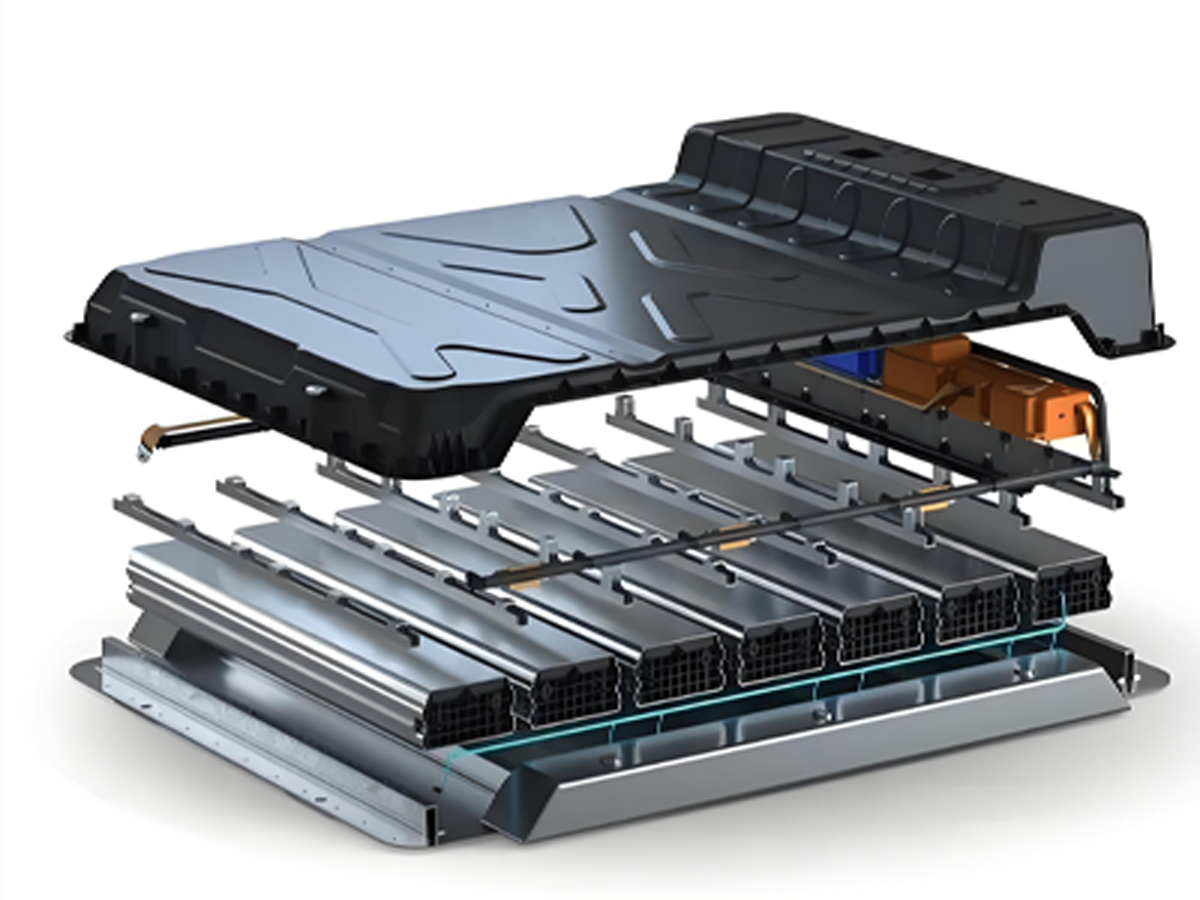
Grip range is one of the most important parameters when selecting a blind rivet nut.
The rivet nut must be capable of forming its blind-side deformation correctly within the actual material thickness.
If the sheet is outside the intended grip range, potential problems include:
Insufficient deformation
Excessive deformation
Weak retention
Poor flange seating
Distortion of the panel
Reduced torque-out resistance
Installation inconsistency
Therefore:
Thread size alone is not enough to select a rivet nut.
A common procurement mistake is ordering:
“M6 blind rivet nuts”
without specifying the sheet thickness.
An M6 rivet nut installed in a thin aluminum cover may require a very different body length and grip range from an M6 rivet nut installed in a thicker steel bracket.
A proper RFQ should identify:
Thread
Head style
Body style
Material
Sheet thickness
Grip range
Hole diameter
Installation method
Semi-hex or half-hex rivet nuts use a non-round body section to improve resistance to rotation in compatible holes.
This can be particularly useful when the joint must resist higher tightening torque or repeated service loads.
Potential applications include:
Automotive brackets
Aluminum enclosures
Battery housings
Structural covers
High-vibration equipment
The mating hole must be designed to match the selected body geometry.
A semi-hex rivet nut cannot provide its intended anti-rotation behavior if the mating hole does not properly control the body geometry.
The engineering interface includes:
Rivet nut body geometry + hole geometry + sheet thickness + installation deformation
If the hole is oversized, poorly formed, or incorrectly shaped, the available anti-rotation benefit can be reduced.
This is why the hole specification should be treated as part of the fastener system.
Two commonly discussed performance characteristics are:
Torque-out relates to resistance against rotation of the installed rivet nut when a mating screw is tightened or loosened.
Pull-out relates to axial loading that attempts to pull the rivet nut out of the sheet.
These are different failure modes.
A rivet nut can have good torque resistance but still be limited by sheet deformation under axial load.
Likewise, a design may have adequate pull-out performance while requiring additional control of rotation.
Increasing the tightening torque of the mating screw does not automatically improve the complete joint.
The limiting component may be:
Rivet nut thread
Rivet nut body
Sheet metal
Installation deformation
Screw
Local panel deformation
The correct design therefore matches the mating screw torque to the complete joint capability.
For EV battery enclosures, this is especially important because aluminum sheet can have very different mechanical behavior from steel sheet.
Aluminum is widely used in automotive structures because of its low density and useful corrosion characteristics.
However, thin aluminum sheet can present fastening challenges.
Potential concerns include:
Local deformation
Hole enlargement
Threaded insert rotation
Bearing stress
Galvanic interaction
Thermal expansion
Coating damage
A semi-hex or other anti-rotation rivet nut geometry may be considered where the joint requires increased resistance to rotation.
Steel battery housings and support structures may provide different joint behavior from aluminum.
The fastener selection should account for:
Sheet strength
Sheet thickness
Coating
Corrosion environment
Required thread size
Assembly torque
Service requirements
A rivet nut that performs well in one sheet material should not automatically be assigned the same performance values in another material.
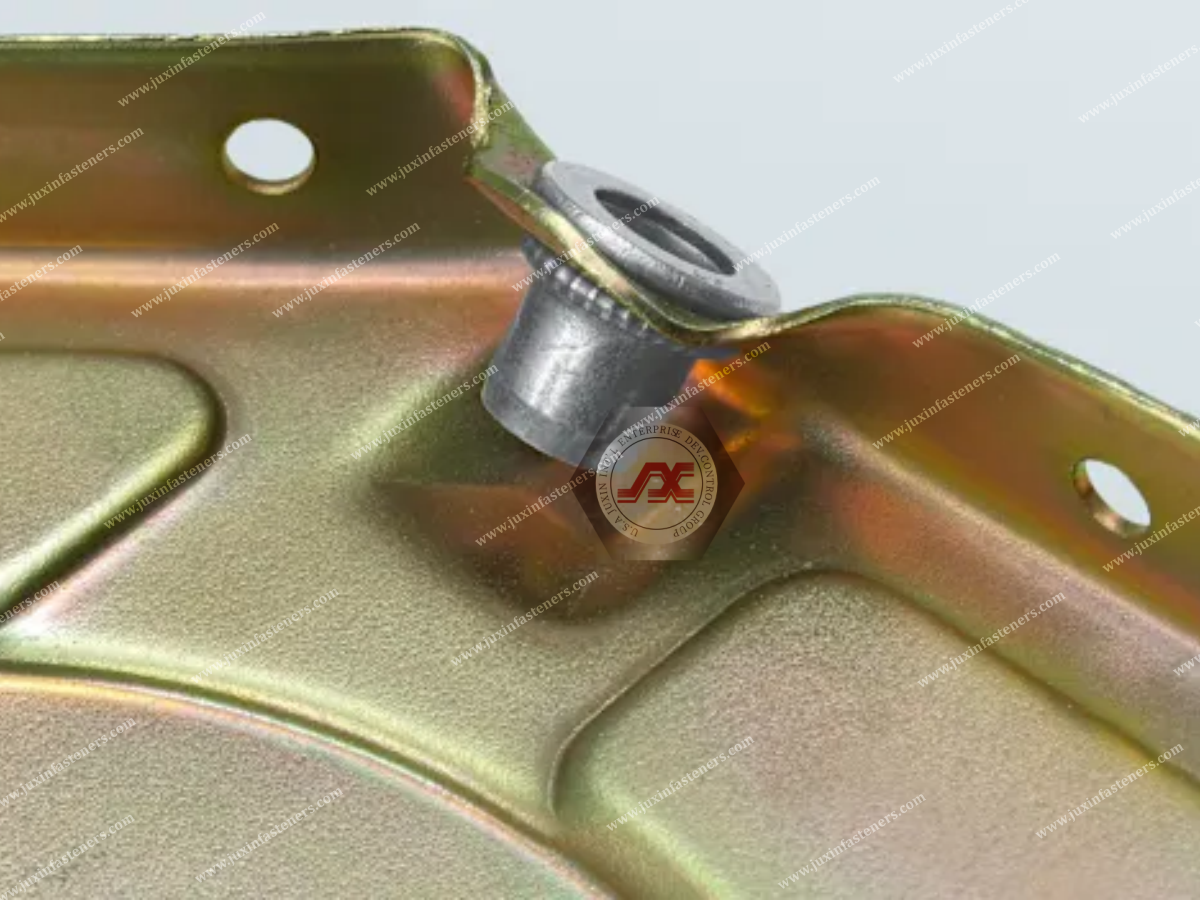
Stainless steel rivet nuts may be considered when corrosion resistance is important.
Commonly considered grades include:
304 stainless steel
316 stainless steel
Material selection should reflect the actual environment.
Potential considerations include:
Road salt
Water exposure
Coolant
Humidity
Cleaning chemicals
Temperature
Galvanic compatibility
Carbon steel rivet nuts can provide an economical solution for many industrial and automotive applications.
Protective finishes may include specified zinc-based or other corrosion-protection systems.
The finish should be selected according to:
Corrosion environment
Required appearance
Thread condition
Dimensional constraints
Environmental requirements
The surface finish should not be treated as a substitute for proper material compatibility.
A stainless steel rivet nut installed in an aluminum enclosure creates a dissimilar-metal interface.
Under suitable environmental conditions, galvanic corrosion can occur.
The risk depends on:
Metal pair
Electrolyte presence
Surface area ratio
Coating condition
Temperature
Moisture exposure
Electrical continuity
For EV battery enclosures, this issue should be evaluated together with the panel, rivet nut, washer, screw, coating, and environmental exposure.
A sealing feature can reduce moisture migration through a specific interface.
It does not automatically eliminate all corrosion mechanisms.
If moisture reaches another part of the dissimilar-metal interface, galvanic interaction can still occur.
Therefore, corrosion protection and sealing should be treated as two related but separate engineering decisions.
A sealing flange can provide an interface between the rivet nut and the enclosure surface.
The effectiveness of the seal depends on:
Seal material
Seal geometry
Flange flatness
Hole geometry
Surface condition
Compression
Temperature
Chemical compatibility
The seal must remain within its functional compression range during the expected service conditions.
Where an elastomer seal is used, material selection should consider:
Temperature
Fluid exposure
Coolant compatibility
Aging
Compression set
Chemical exposure
Environmental conditions
The appropriate elastomer cannot be selected solely because it provides a high initial sealing force.
Long-term behavior matters.
A sealing gasket works within a functional compression range.
Too little compression may allow leakage.
Too much compression may cause:
Excessive deformation
Material damage
High installation load
Reduced elastic recovery
Premature aging
The design should therefore establish an appropriate compression window.
EV battery enclosures experience changing temperatures during:
Fast charging
High-power operation
Ambient temperature changes
Thermal management
Vehicle operation
Parking and storage
Different materials can expand at different rates.
For example:
Aluminum enclosure + steel fastener + elastomer seal
may exhibit different thermal expansion behavior across the joint.
The sealing interface should therefore be evaluated over the actual temperature range.
A sealing rivet nut may appear effective immediately after installation.
Long-term performance can change due to:
Thermal cycling
Elastomer aging
Compression relaxation
Panel movement
Fastener preload changes
Vibration
Moisture exposure
For critical enclosure applications, validation should reproduce representative service conditions.

Battery assemblies are exposed to vehicle vibration and road-induced loads.
Potential joint concerns include:
Rivet nut rotation
Panel movement
Screw loosening
Seal movement
Hole enlargement
Fretting
Fatigue
Anti-rotation geometry and appropriate screw-joint design can help address some of these concerns, but the complete assembly must be validated.
Battery thermal-management systems may include coolant passages and adjacent structural components.
Fasteners around these assemblies may encounter:
Coolant exposure
Temperature cycling
Vibration
Aluminum structures
Stainless or coated steel components
Sealing fasteners can be useful where an enclosure or mounting interface requires controlled moisture resistance.
However, the fastener should not be described as a pressure-containing coolant component unless its actual function and qualification support that claim.
High-voltage electrical systems require controlled enclosure design to protect internal components from environmental exposure and accidental access.
Fastening interfaces may be located around:
Battery covers
Connector plates
Service access panels
Power-electronics housings
Junction boxes
Control enclosures
The fastener selection should support the enclosure's defined mechanical and environmental requirements.
For EV battery enclosure applications, IP protection should be treated as a system characteristic.
The validation configuration may include:
Enclosure panels
Gaskets
Fasteners
Rivet nuts
Mating screws
Cable interfaces
Connectors
Vents
Service openings
If one sealing interface fails, the enclosure may not achieve its required ingress-protection level.
This is why the statement:
“IP67 rivet nut”
should be replaced with:
“Sealing rivet nut intended for use in an enclosure designed and validated to the applicable IP requirement.”
Closed-end rivet nuts can be useful where the designer wants to limit the open passage through the threaded body.
Potential applications include:
Battery enclosures
Outdoor electronics
Control cabinets
Automotive electronics
HVAC equipment
Industrial housings
The actual sealing requirement should determine whether a closed-end body alone is sufficient or whether an additional flange seal is required.
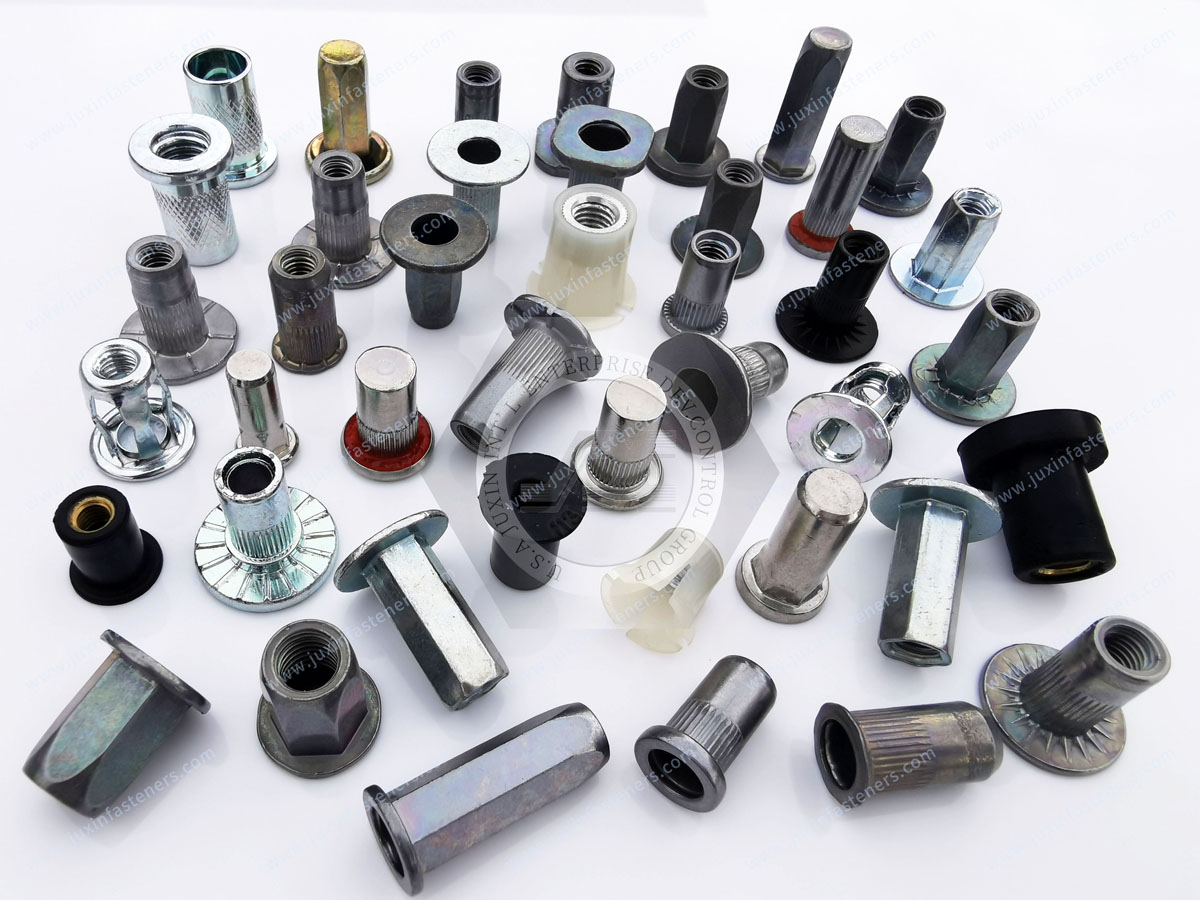
A flanged sealing rivet nut can combine:
Internal thread
Blind-side expansion
Flange
Sealing interface
The flange may sit against the outer surface of the enclosure panel.
Where an elastomer seal is integrated, the seal should be specified by material, geometry, and intended operating environment.
OEM projects may require custom configurations such as:
Custom flange diameter
Reduced head
Special sealing groove
Semi-hex body
Full-hex body
Knurled body
Closed end
Custom grip range
Custom thread
Special stainless grade
Customer-specific seal material
A detailed drawing is the preferred basis for custom production.
A rivet nut may require two different performance functions:
Function 1: Sealing
Prevent or reduce fluid and moisture migration at the interface.
Function 2: Anti-Rotation
Resist rotation when the mating screw is tightened or serviced.
A seal does not automatically prevent spin-out.
A semi-hex body does not automatically create a water seal.
When both functions are required, both should be specified independently.
The mating screw should engage the intended thread length of the rivet nut.
Important variables include:
Thread size
Thread pitch
Effective thread length
Screw length
Washer thickness
Panel stack-up
Required clamp load
The screw should not bottom against the closed end before achieving the intended joint condition.
For closed-end rivet nuts, screw length must therefore be checked carefully.
A closed-end rivet nut can impose a physical limit on screw penetration.
If the screw is too long, it may contact the closed end before the mating component is correctly clamped.
If it is too short, insufficient thread engagement may result.
A proper assembly specification should therefore include:
Rivet nut thread length + panel stack-up + washer thickness + required screw engagement
rather than selecting screw length from nominal thread size alone.
The installation process influences final rivet nut performance.
Depending on the product design, the setting process may be controlled by:
Tool stroke
Installation force
Mandrel movement
Nosepiece configuration
Thread engagement
Grip range
Incorrect setting can lead to:
Under-setting
Over-setting
Body distortion
Reduced torque-out resistance
Reduced pull-out performance
Panel deformation
Production assembly should therefore use the installation method specified for the selected rivet nut.
High-volume automotive production may require repeatable installation.
Potential production requirements include:
Defined installation tooling
Controlled process parameters
Tool maintenance
Part feeding
Orientation control
Thread verification
Presence detection
Process documentation
The exact automation architecture depends on the customer's assembly line.
A supplier should not automatically claim compatibility with every pneumatic or automated installation system without reviewing the tool and rivet-nut configuration.
Depending on the drawing and customer requirements, inspection may include:
Body diameter
Flange diameter
Overall length
Grip range
Thread size
Thread pitch
Thread gauge inspection
Closed-end condition
Seal position
Seal dimensions
Surface condition
Material verification
Additional functional testing may be specified for torque-out, pull-out, installation performance, or sealing behavior.
Blind rivet nut performance can involve several failure modes.
Testing may consider:
Torque-out
Pull-out
Thread stripping
Body deformation
Panel deformation
Installation behavior
Testing should use a defined substrate, sheet thickness, hole geometry, installation procedure, mating screw, and load direction.
A test result without the test configuration is difficult to apply to another assembly.
A common procurement mistake is asking:
“What is the pull-out strength of this M6 rivet nut?”
The more useful engineering question is:
“What is the pull-out performance of this rivet nut in our sheet material, thickness, hole geometry and installation condition?”
The result can change substantially with:
Sheet material
Sheet thickness
Hole diameter
Body geometry
Installation condition
Screw condition
Load direction
Therefore, customer-specific testing can be more meaningful than relying solely on a catalog number.
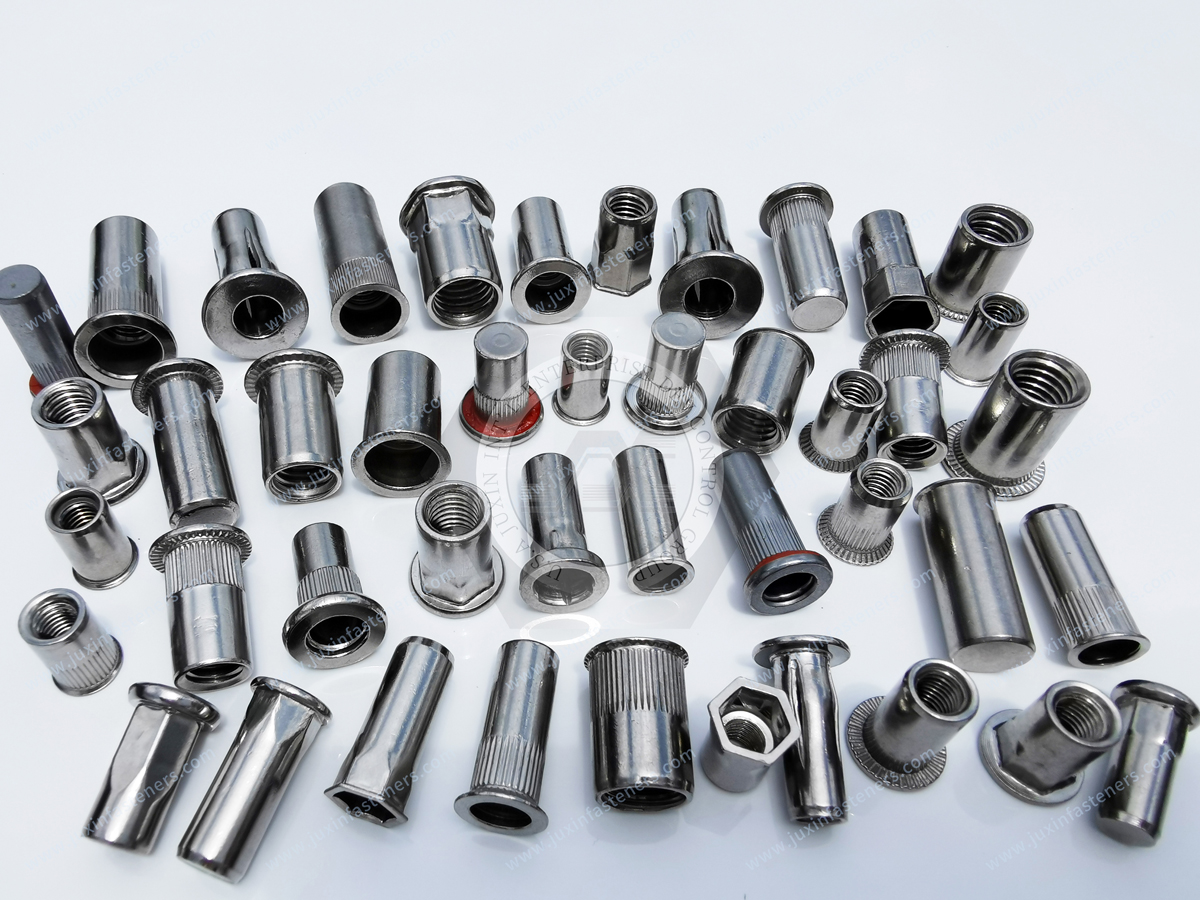
Where stainless steel is specified, customers may require material identification and documentation appropriate to the project.
Potential requirements include:
Stainless grade
Material standard
Certificate of Conformance
Material certificate
Lot traceability
Applicable stainless-steel standards should be identified according to the actual product and material form.
ASTM A240, for example, covers specified stainless steel plate, sheet, and strip products; it should not be used as a blanket statement that a finished rivet nut complies with every relevant performance requirement.
Carbon steel rivet nuts may use protective coatings selected for the application.
Possible systems include:
Zinc-based coatings
Zinc-nickel systems
Other specified protective finishes
The coating should be evaluated for:
Corrosion environment
Thickness
Thread fit
Assembly friction
Hydrogen-related considerations where applicable
Environmental requirements
Finish selection should be agreed in the engineering specification.
Automotive and industrial customers may impose requirements concerning:
Restricted substances
Chemical declarations
REACH-related substances
RoHS where applicable
Customer-specific environmental documentation
The exact requirement depends on the product, market, customer and application.
Environmental compliance should therefore be documented against the actual supplied product and finish rather than described as a generic characteristic of every fastener.
Engineers may search for:
Sealing rivet nut design
Closed-end rivet nuts
EV battery enclosure fasteners
Semi-hex rivet nuts
Torque-out resistance
Pull-out resistance
Aluminum sheet fastening
IP67 enclosure fastening
Thermal cycling
Galvanic corrosion
Installation tooling
Procurement teams may search for:
Sealing blind rivet nut supplier
EV battery rivet nut manufacturer
Closed-end rivet nuts
Stainless steel rivet nuts
Automotive threaded inserts
Custom rivet nut supplier
OEM production quantities
Quality documentation
Supplier qualification
Packaging and logistics
A strong B2B solution page should serve both search paths.
Automotive procurement teams may evaluate:
Drawing capability
Material control
Production consistency
Inspection procedures
Traceability
Sample approval
Change control
Packaging
Delivery planning
Quality documentation
Communication
Automotive customers may also have customer-specific quality-system requirements.
IATF 16949 requirements and OEM customer-specific requirements should only be claimed where the supplier actually holds or meets the applicable requirements.
OEM-specific requirements can vary; the IATF organization publishes customer-specific requirements for major automotive manufacturers.
The correct design sequence is:
Enclosure material
→ Sheet thickness
→ Hole geometry
→ Required thread
→ Load requirement
→ Anti-rotation requirement
→ Sealing requirement
→ Environment
→ Temperature
→ Installation process
→ IP validation requirement
Only then should the final rivet nut configuration be selected.
This prevents the common mistake of choosing a catalog rivet nut first and trying to force the enclosure design around it.
| Application | Key Fastener Requirement | Main Engineering Considerations |
|---|---|---|
| Battery cover | Sealing threaded attachment | Seal compression, panel thickness, service access |
| Battery tray | Structural threaded attachment | Pull-out, torque-out, sheet strength |
| HV enclosure | Environmental protection | IP requirement, insulation architecture, corrosion |
| Power electronics housing | Compact threaded fastening | Thin sheet, thermal cycling, serviceability |
| Thermal-management housing | Corrosion-resistant fastening | Coolant exposure, temperature, material compatibility |
| Service panel | Repeated assembly | Thread durability, sealing, installation repeatability |
| Automotive bracket | Anti-rotation | Semi-hex/full-hex geometry, torque-out |
| Outdoor electronics | Moisture protection | Corrosion, sealing interface, enclosure validation |
A practical sourcing workflow is:
Enclosure Architecture
→ Battery tray, battery cover, HV housing, power electronics or control enclosure
Sheet Material
→ Aluminum, steel or other specified material
Sheet Thickness
→ Actual minimum and maximum thickness
Hole Geometry
→ Round, semi-hex, full-hex or customer-specific hole
Thread
→ M4, M5, M6, M8 or specified thread
Grip Range
→ Actual panel thickness range
Body Geometry
→ Round, knurled, semi-hex or full-hex
Anti-Rotation Requirement
→ Defined torque-out requirement where applicable
Sealing Requirement
→ Closed end, flange seal, elastomer seal or other configuration
Environment
→ Water, dust, coolant, salt, humidity, temperature
IP Requirement
→ Applicable enclosure-level target and test method
Installation
→ Manual, pneumatic or automated tool
Inspection
→ Thread, dimensions, material, installation or functional tests
Documentation
→ CoC, material documentation, inspection records
Supplier Qualification
→ Customer-specific requirements
RFQ
This converts an engineering problem into a procurement-ready specification.
A strong RFQ should include:
Application
Enclosure type
Sheet material
Sheet thickness
Hole diameter or geometry
Thread size
Grip range
Head style
Body geometry
Closed or open end
Sealing requirement
Seal material where applicable
Operating temperature
Environmental exposure
IP requirement
Mating screw specification
Required torque
Annual quantity
Inspection requirements
Documentation requirements
Packaging requirements
Delivery requirements
A drawing or existing sample is especially valuable for custom EV battery enclosure fasteners.
Battery enclosures rarely use only one type of fastener.
An OEM assembly may also require:
High-strength bolts
Nuts
Self-clinching fasteners
Custom screws
CNC-machined components
Plastic hardware
Retaining components
JUXIN FASTENERS supports broader high-strength bolts and nuts for industrial and automotive mechanical assemblies.
For custom metal components associated with battery housings, brackets and equipment structures, customers can also review stainless steel CNC machining parts.
Sealing blind rivet nuts can form one part of a broader fastening architecture.
Other components may be used for:
Structural joints
Brackets
Covers
Cable management
Interior panels
Electrical assemblies
Service components
JUXIN FASTENERS also supports industrial and automotive bolts and nuts.
For non-metallic automotive components, automotive plastic fasteners can be considered where the application calls for lightweight clips, retainers, cable holders or other plastic fastening hardware.
A practical development process can follow:
Application Review
→ Drawing / Sample Review
→ Material and Geometry Confirmation
→ Prototype / Sample
→ Installation Evaluation
→ Joint Testing Where Required
→ Enclosure Validation
→ Production Approval
→ Repeat Manufacturing
→ Quality Documentation
→ Ongoing Supply
For automotive programs, the customer's own validation and quality-approval process remains the controlling requirement.
The most important engineering principle for sealing EV enclosure fasteners is:
The rivet nut is a component of the enclosure sealing system, not the entire sealing system.
Validation should reproduce the relevant:
Panel material
Panel thickness
Hole geometry
Rivet nut
Seal
Screw
Torque
Temperature
Vibration
Water exposure
Pressure or immersion condition
Only a representative assembly test can establish whether the complete enclosure meets its required environmental protection level.
Compare:
RFQ A:
“Please quote M6 waterproof rivet nuts.”
with:
RFQ B:
“Please quote closed-end sealing M6 rivet nuts for a 2.0 mm aluminum EV battery enclosure, semi-hex body, defined flange seal,
automotive temperature range, repeated service access, specified IP validation requirement and annual production quantity.”
The second RFQ gives the supplier enough context to evaluate the actual engineering requirement.
This improves quotation accuracy and reduces the risk of supplying a technically similar but functionally unsuitable part.
JUXIN FASTENERS supports OEM and industrial customers with:
Blind rivet nuts
Sealing rivet nuts
Closed-end rivet nuts
Semi-hex rivet nuts
Stainless steel rivet nuts
Carbon steel rivet nuts
Custom threaded fastening components
Related automotive and industrial fasteners
For custom projects, customers can provide:
2D drawings
3D models
Samples
Enclosure material
Sheet thickness
Thread requirements
Sealing requirements
Environmental conditions
Quantity requirements
Inspection requirements
The objective is to match the rivet nut to the actual enclosure and assembly requirements.
If you are developing an EV battery enclosure, automotive electronic housing, thermal-management system, industrial electrical cabinet,
outdoor enclosure or other thin-sheet assembly requiring a sealed threaded fastening point, send JUXIN FASTENERS the available technical information.
Useful RFQ materials include:
2D drawing
3D model
Existing sample
Sheet material
Sheet thickness
Hole geometry
Thread size
Grip range
Body geometry
Closed-end requirement
Seal requirement
Operating temperature
Fluid or moisture exposure
IP requirement
Installation method
Annual quantity
Inspection requirements
Documentation requirements
JUXIN FASTENERS can review standard or custom sealing blind rivet nut requirements for EV battery enclosures, automotive electronics, industrial equipment and other OEM applications.
JUXIN FASTENERS
20+ Years of Fastener Experience
Sealing Blind Rivet Nuts, Closed-End Rivet Nuts, Automotive Threaded Inserts and Custom OEM Fastening Components
Website: www.juxinfasteners.com
Email: info@juxinfasteners.com
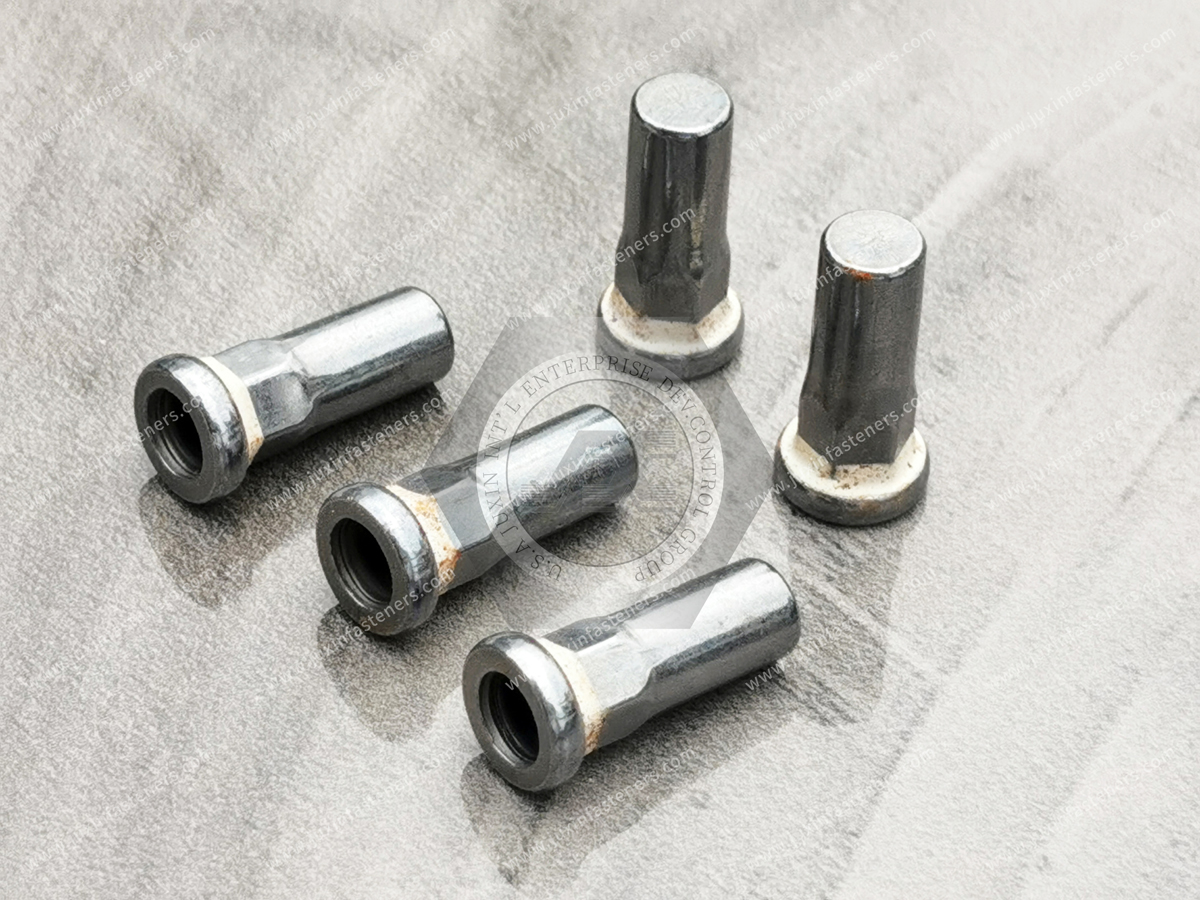
 MORE NEWS
Sep. 25, 2026

Sep. 25, 2026
Sep. 25, 2026
Contact Us
Tel.:
+86 020 8621 0320
+86 020 3121 6067
E-mail:
Technical Support:
Navigation
SEND INQUIREY