
Call Us
+86 136 6007 9809
Call Us
+86 136 6007 9809

Jun. 22, 2024
Captive Panel Screws and Self-Clinching Fasteners: Installation and OEM Sheet Metal Solutions
Captive panel screws and self-clinching fasteners are widely used in industrial equipment where thin sheet metal,
repeated service access and reliable assembly are important design requirements.
Although these fasteners are often grouped together, they perform different functions.
A captive panel screw is designed to remain retained in a removable panel when its threaded connection is released.
A self-clinching nut, stud or standoff creates a permanently retained threaded or spacing feature in suitable sheet metal.
In some assemblies, a captive screw is combined with a self-clinching retaining component to create a complete panel fastening system.
Understanding these differences helps engineers avoid incorrect product selection, installation problems and unnecessary manufacturing cost.
JUXIN FASTENERS supplies self-clinching nuts, studs, standoffs, captive fastening components and drawing-based custom hardware for electrical enclosures,
telecommunications equipment, data center infrastructure, EV charging equipment and industrial OEM applications.
This guide explains the principal product types, installation methods, design limitations and procurement considerations.
What Is a Captive Panel Screw?
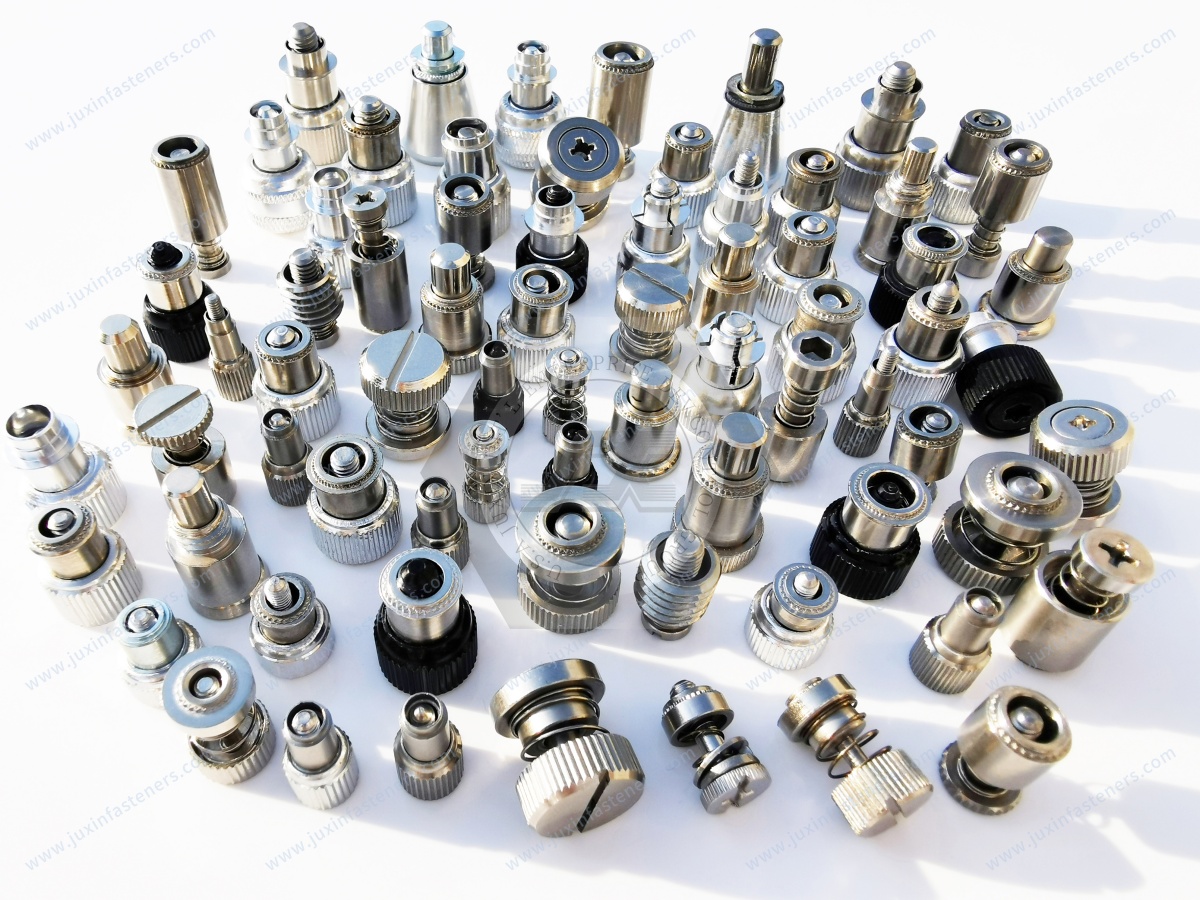
A captive panel screw is a screw designed to remain mechanically retained in a panel or mounting assembly when disengaged from its mating thread.
It is also commonly called a captive screw, captivated screw or retained panel screw.
Unlike an ordinary loose screw, a captive screw does not normally separate from its retaining structure during intended servicing.
This makes it useful for removable covers, inspection doors, access panels and equipment housings.
Depending on the design, a captive screw assembly may include:
Threaded screw
Retaining sleeve or ferrule
Retaining ring or other retention feature
Spring, where applicable
Knob or tool-driven head
Panel attachment feature
Not every captive screw contains all of these components.
What Is a Self-Clinching Fastener?
A self-clinching fastener is designed to be permanently installed into suitable ductile sheet material by controlled pressing.
During installation, the panel material flows into a specially designed undercut or retention feature.
This creates mechanical retention without requiring a conventional welded joint.
Common self-clinching fasteners include:
Self-clinching nuts
Self-clinching studs
Self-clinching standoffs
Self-clinching captive panel screw assemblies
Certain concealed-head and specialty sheet metal fasteners
The installation method and performance depend on the individual fastener design.
Captive Screws vs. Self-Clinching Fasteners
These product groups should not be treated as interchangeable.
| Feature | Captive panel screw | Self-clinching nut, stud or standoff |
|---|---|---|
| Primary function | Retain a screw in a panel during disengagement | Create a retained threaded or spacing feature |
| Typical use | Removable covers and service panels | Permanent sheet metal attachment points |
| Installation | Depends on retaining design | Controlled pressing into suitable sheet material |
| Repeated service access | Common design objective | Depends on the assembled joint |
| Main design concern | Screw retention and operating clearance | Panel compatibility and mechanical retention |
| Typical products | Spring-loaded, floating and fixed captive screws | Clinch nuts, studs and standoffs |
A captive screw may use a self-clinching retainer, but not every captive screw is self-clinching.
Similarly, a self-clinching nut does not automatically prevent a separate mating screw from being lost.
Why Captive Panel Screws Are Used Instead of Loose Screws
Loose screws can create avoidable problems in equipment requiring frequent access.
During assembly or maintenance, a screw may fall into the enclosure, become misplaced or require replacement.
In electrical equipment, loose conductive hardware may create additional concerns if it enters sensitive areas.
Captive screws help reduce these risks by keeping the fastener associated with the panel.
Serviceability
Captive screws can simplify access to removable covers because the technician does not need to handle separate loose screws.
Assembly Efficiency
Retained hardware can reduce the number of loose components handled at the workstation.
However, the actual production benefit depends on the screw design, installation process and assembly layout.
Maintenance Control
Captive fastening systems can help ensure that the intended fastener remains available during repeated servicing.
This can be useful in server racks, electrical cabinets and industrial inspection panels.
Main Types of Captive Panel Screws
Press-In and Self-Clinching Captive Screws
Some captive panel screw assemblies use a press-installed retaining component.
For a true self-clinching design, the panel must be compatible with the required material displacement and retention mechanism.
Typical applications include suitable aluminum and low-carbon steel sheet metal.
Engineering Considerations
Panel material and hardness
Minimum panel thickness
Mounting-hole diameter
Hole-to-edge distance
Installation direction
Retainer geometry
Required pushout resistance
Available press access
A self-clinching fastener should not be installed solely by applying the highest available force.
The correct force and tooling arrangement depend on the specific product.
Flare-In Captive Screws
Flare-in captive screw assemblies use a deformable retaining feature that is expanded or flared during installation.
This creates a mechanical attachment to the panel.
Flare-in designs may be useful where a self-clinching installation is unsuitable, but the actual choice depends on the fastener and panel geometry.
Installation Requirements
Flare-in installation may require:
A specified mounting hole
Appropriate panel access
Matching installation tooling
Controlled deformation
Verification of retention
Some designs require a chamfered or specially prepared hole.
A universal 90-degree hole requirement should not be assumed.
The manufacturer's drawing determines the required hole geometry.
Spring-Loaded Captive Screws
Spring-loaded captive screws incorporate a spring to control screw position or provide a defined retraction function.
They are commonly considered for service panels and equipment covers.
Potential advantages include improved handling and easier engagement during assembly.
However, spring loading does not automatically make the fastener tool-less or suitable for every vibration environment.
Typical Configurations
Knob-operated captive screws
Tool-driven spring-loaded screws
Low-profile captive screw assemblies
Selected floating designs
The spring travel, available thread engagement and operating clearance must match the panel design.
Floating Captive Panel Screws
Floating captive screws allow limited positional movement between the retained screw and its mounting structure.
This can help compensate for controlled alignment variation between the access panel and mating threaded component.
Floating capability must not be confused with unrestricted movement.
The allowable float depends on the specific fastener design.
When Floating Retention Is Useful
Floating captive screws may be considered when:
Several screws must engage simultaneously
Panel tolerances accumulate across a large assembly
Mating threaded features have limited positional variation
Repeated maintenance access is required
Excessive misalignment can still damage threads or prevent proper engagement.
Floating designs should not be used as a substitute for correcting major fabrication errors.
Selecting the Correct Installation Method
The best captive screw installation method depends on the actual panel material, geometry and production process.
| Installation method | Typical design consideration | Potential limitation |
|---|---|---|
| Self-clinching | Suitable ductile panel material and controlled press installation | Unsuitable panel hardness or insufficient thickness |
| Flare-in | Accessible retaining feature and correct flaring tooling | Backside access or deformation requirements |
| Retaining ring | Compatible screw groove and retention geometry | Additional components and assembly steps |
| Floating retainer | Controlled positional adjustment | Limited allowable movement |
| Spring-loaded assembly | Defined spring travel and operating clearance | Additional assembly space and component complexity |
No installation method is universally suitable for every panel.
Sheet Metal Design Requirements for Self-Clinching Fasteners
Self-clinching performance depends on the relationship between the fastener and the surrounding sheet material.
This is particularly important for thin sheet metal assemblies.
Panel Thickness
Each self-clinching fastener design has a specified compatible panel thickness or thickness range.
A panel that is too thin may not provide sufficient material for the intended retention mechanism.
A panel that is too thick may prevent correct seating or installation.
The specified grip or panel-thickness requirement must be verified from the product drawing.
Panel Hardness
Self-clinching installation relies on controlled deformation of the panel material.
If the panel is too hard relative to the fastener's installation requirements, sufficient material flow may not occur.
This can result in poor retention or damage.
Mounting-Hole Diameter
Hole diameter is critical.
An oversized hole may reduce the available material needed for retention.
An undersized hole may cause improper seating or excessive installation force.
The hole should be produced and inspected according to the applicable fastener drawing.
Hole-to-Edge Distance
Installing a self-clinching fastener too close to a panel edge may cause deformation or reduce retention.
The required minimum edge distance depends on the product and panel material.
There is no universal edge-distance value applicable to every self-clinching fastener.
Panel Flatness and Surface Condition
Distortion, burrs, coatings or other surface conditions may affect seating and installation.
For certain self-clinching products, installation into a prepared hole before painting or coating may be appropriate.
However, the actual manufacturing sequence must follow the product specification and approved process.
Pushout and Torque-Out Resistance
Two important performance characteristics for self-clinching fasteners are pushout resistance and torque-out resistance.
Pushout Resistance
Pushout resistance concerns the force required to dislodge the installed fastener under a defined axial loading condition.
Torque-Out Resistance
Torque-out resistance concerns the fastener's resistance to rotation in the panel under a defined test condition.
These characteristics are different.
A fastener may have satisfactory axial retention but inadequate resistance to rotation for the intended assembly.
The required performance must be evaluated against the specific panel material, thickness and installation conditions.
Installation Process for Self-Clinching Fasteners
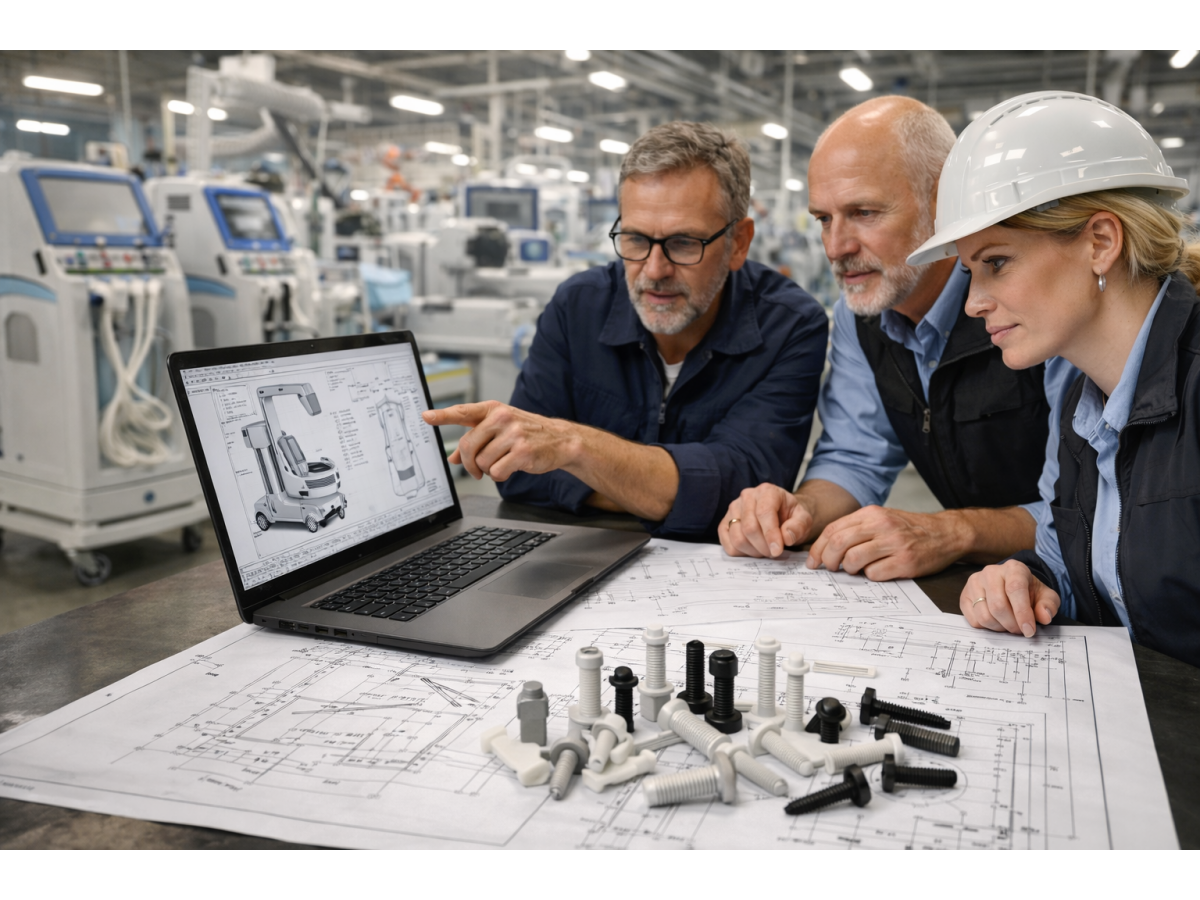
A typical self-clinching installation sequence includes:
Prepare the mounting hole according to the approved fastener drawing.
Confirm the panel material and thickness are compatible.
Position the fastener and panel correctly in the installation tooling.
Apply controlled pressing force using suitable tooling.
Verify seating and any required dimensional or retention characteristics.
The fastener's installation direction must be correct.
Where the design relies on panel material flow into a retention feature, incorrect tooling or installation orientation may prevent proper clinching.
Why Installation Force Alone Is Not a Quality Standard
A high pressing force does not guarantee successful installation.
Excessive force may deform the panel or damage the fastener.
Insufficient force may result in incomplete seating.
The production process should be established using the specific product's installation requirements and verified results.
Installation Quality for High-Volume Production
Manufacturing engineers should evaluate:
Repeatable hole preparation
Correct fastener orientation
Tooling alignment
Press access
Panel support
Installation sequence
Part identification
Inspection criteria
Production managers should also consider whether the installation operation can be integrated into the existing sheet metal production line.
Captive Screw Installation and Repeated Service Access
Captive panel screws must remain retained while allowing the intended fastening and unfastening operations.
Important design considerations include:
Retained screw travel
Available thread engagement
Mating thread alignment
Screw head clearance
Tool access
Panel opening movement
Retention after repeated servicing
Engineering Example: Removable Electrical Cabinet Cover
Consider a removable electrical cabinet cover secured by several captive screws.
The engineer must ensure that the screws can retract sufficiently for the cover to be removed without interference.
The mating threaded features must be positioned so that the screws can engage without cross-threading.
If the cover is large and dimensional variation is expected, a floating captive screw design may be considered.
However, the allowable float must be verified.
The final design should also consider whether the cover can be safely supported during servicing.
Common Captive Fastener Installation Problems
Fastener Spins in the Panel
Possible causes include unsuitable panel material, incorrect mounting-hole diameter, incomplete clinching or insufficient torque-out resistance.
Fastener Pushes Out During Assembly
Potential causes include incorrect panel thickness, improper installation or inadequate axial retention.
Captive Screw Does Not Engage the Mating Thread
Possible causes include misalignment, insufficient screw travel, incorrect thread designation or panel distortion.
Panel Deforms Around the Fastener
Potential causes include excessive installation force, inadequate support or insufficient edge distance.
Screw Becomes Difficult to Remove
Possible causes include thread damage, galling, corrosion or an unsuitable mating-thread condition.
The correct response is to identify the actual failure mechanism rather than immediately increase installation force or change fastener material.
Material Selection for Captive Screws and Clinching Components
Material selection should consider both fastener function and installation requirements.
Carbon Steel
Carbon steel may be used for suitable captive screws, retainers and self-clinching components.
Surface protection may be required depending on the operating environment.
Stainless Steel
Stainless steel may be selected for suitable corrosion-exposed applications.
However, stainless steel fasteners must still be evaluated for mechanical properties, galling risk and installation compatibility.
Aluminum
Aluminum components may be considered where low weight is important.
Their suitability depends on the required strength, geometry and operating conditions.
Dissimilar-Metal Connections
When stainless steel or plated steel fasteners are used in aluminum panels, galvanic compatibility may require evaluation.
Material and coating selection should be based on the actual environmental exposure.
Thread Standards and Compatibility
Captive screws and mating threaded components must use compatible thread specifications.
Metric ISO threads and inch-series UNC/UNF threads are distinct systems.
BSW and BSF threads are also separate systems.
Similar nominal diameters do not establish interchangeability.
For drawing-based projects, the thread designation and tolerance requirements should be specified clearly.
Industry Applications
Electrical Enclosures and Control Cabinets
Captive panel screws are useful for removable covers and access doors in electrical equipment.
Self-clinching nuts and standoffs may provide permanent threaded mounting points in suitable sheet metal.
Applications include:
Distribution cabinets
Control panels
Switchgear enclosures
Power conversion equipment
Industrial electrical housings
The design should consider maintenance access, tool clearance and the risk of loose hardware entering electrical compartments.
AI Data Centers and Server Equipment
Server racks and computing equipment frequently require compact, serviceable fastening systems.
Potential applications include:
Server chassis covers
Network equipment panels
Cooling equipment housings
Rack-mounted accessories
Power distribution enclosures
Captive screws may reduce loose hardware during maintenance.
Self-clinching standoffs and nuts may provide mounting features for chassis and internal assemblies.
Telecommunications Equipment
Telecommunications cabinets and network equipment may require repeated access during installation and servicing.
Captive fastening systems can support removable panels and controlled hardware retention.
Floating designs may be useful where several threaded engagement points must align.
EV Charging Equipment and Automotive Electronics
EV charging stations and automotive electronic enclosures may use captive screws and self-clinching hardware for service panels, covers and internal mounting structures.
Design considerations include environmental exposure, corrosion protection, electrical clearances and assembly access.
Fastener selection must follow the equipment's approved mechanical and electrical requirements.
Medical Equipment and Laboratory Instruments
Medical equipment housings may use captive screws for access panels and self-clinching fasteners for internal mounting features.
Material selection and installation requirements depend on cleaning exposure, service procedures and the specific equipment design.
A general-purpose captive fastener should not be assumed suitable for every regulated medical application.
Industrial Machinery and HVAC Equipment
Captive screws and self-clinching hardware may be used in:
Machine guards
Inspection covers
HVAC control panels
Industrial equipment enclosures
Sheet metal access doors
The fastener system should be selected according to service frequency, panel loading and operating conditions.
Production Engineering: Reducing Assembly Problems
For production managers, captive fastening systems should be evaluated as part of the complete assembly process.
A fastener that performs well in a laboratory installation may still create difficulties on a production line if the mounting hole, tooling access or panel handling sequence is unsuitable.
Design for Assembly
A practical design review should address:
Can the fastener be installed before other components obstruct access?
Is the panel adequately supported during pressing?
Can the operator verify correct seating?
Does the captive screw have enough clearance to retract?
Can the mating thread be engaged without cross-threading?
Does the fastener interfere with adjacent components?
Total Installed Cost
The lowest unit price is not always the lowest assembly cost.
A captive screw may cost more than a loose screw, but the system may reduce hardware handling and simplify servicing.
A self-clinching standoff may eliminate the need for certain separate nuts or spacing components.
The economic comparison should include fastener price, tooling, installation labor, assembly steps and expected maintenance requirements.
OEM Procurement and Supplier Development
For procurement and supply chain teams, sourcing captive screws and self-clinching fasteners requires more than confirming thread size.
The supplier must understand the panel material, installation method and finished assembly requirements.
Important RFQ Information
A useful RFQ should include:
Fastener type and drawing
Thread designation
Panel material
Panel thickness
Mounting-hole dimensions
Required installation method
Surface treatment
Required retention performance
Annual volume
Sample requirements
Target delivery schedule
If the customer is replacing an existing captive screw or self-clinching fastener, the original drawing or sample should be provided.
Alternative Supplier Evaluation
When qualifying a second supplier, nominal dimensions alone may not establish interchangeability.
The replacement should be evaluated for installation geometry, panel compatibility, retention behavior and assembly function.
For captive screws, the retention mechanism, spring travel and allowable float may also require comparison.
Tooling, MOQ and Lead Time
Custom captive screw assemblies may require specialized components or tooling.
Commercial feasibility depends on the design, material, quantity and manufacturing route.
MOQ, tooling cost and lead time should be confirmed during quotation.
No universal MOQ or lead time applies to every custom captive fastening system.
JUXIN FASTENERS: Captive Screw and Self-Clinching Fastener Supply
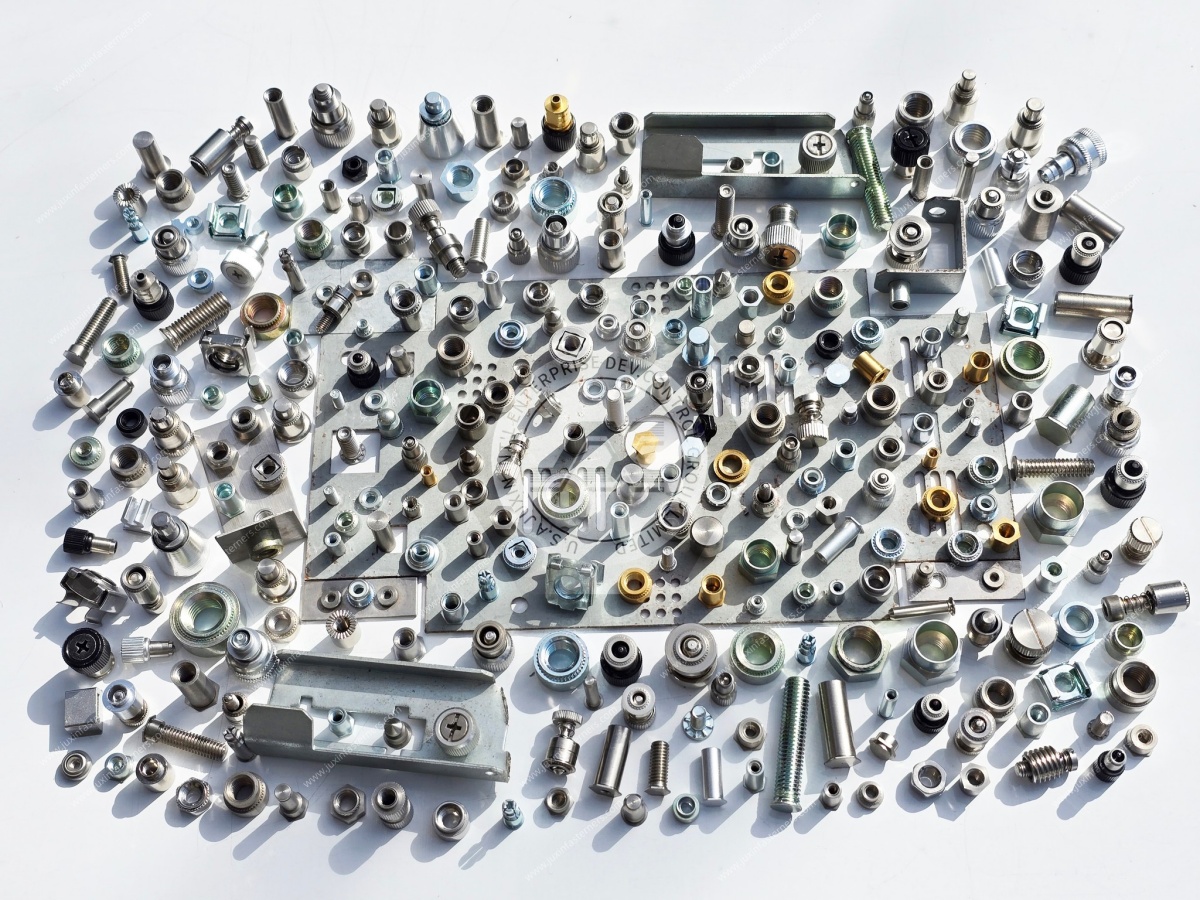
JUXIN FASTENERS supplies industrial fastening products for sheet metal assemblies and drawing-based OEM applications.
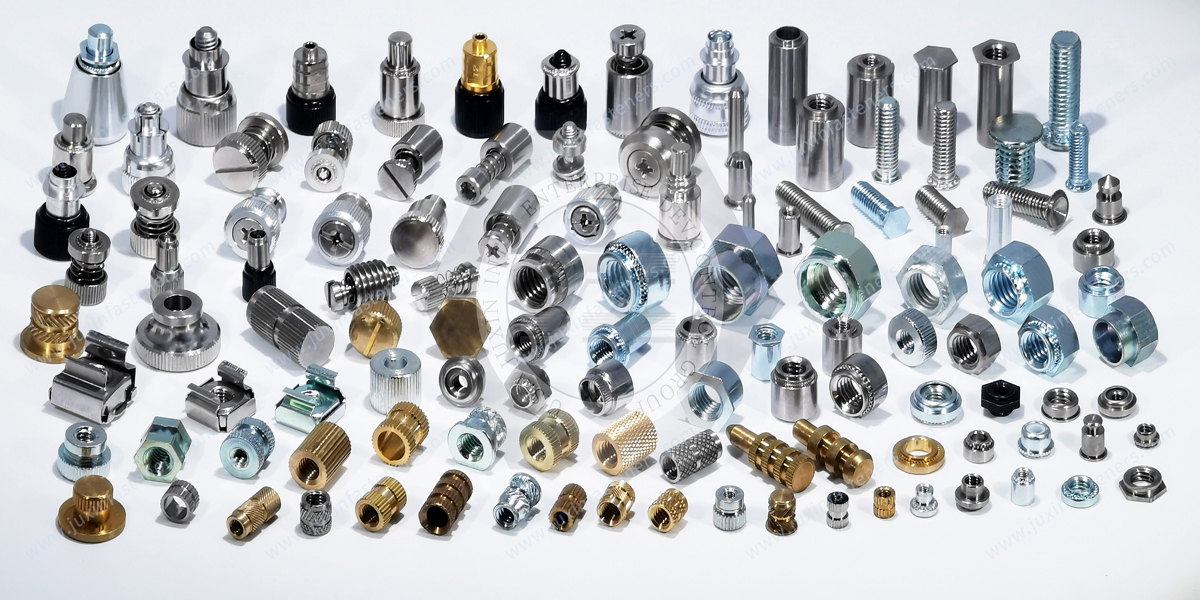
Relevant product families include:
Self-clinching nuts
Self-clinching studs
Self-clinching standoffs
Blind self-clinching standoffs
Captive fastening components
Custom captive panel screw assemblies, subject to drawing review
Threaded inserts
CNC-machined threaded components
Custom sheet metal fastening hardware
For each project, material, panel compatibility, installation geometry, retention requirements and manufacturing feasibility should be confirmed.
Specific installation performance, tooling arrangements, testing requirements and product availability are subject to technical evaluation.
Frequently Asked Questions
What is the difference between a captive screw and a self-clinching fastener?
A captive screw remains retained in a panel when disengaged.
A self-clinching fastener creates a permanent mechanical attachment to suitable sheet metal. Some assemblies combine both functions.
Can self-clinching fasteners be installed in any sheet metal?
No. Panel thickness, hardness, hole dimensions and other requirements must match the fastener design.
Are captive panel screws suitable for repeated maintenance?
Many are designed for repeated access, but the actual suitability depends on the screw, retainer and mating-thread design.
Can captive screws be installed after painting?
It depends on the installation method and product requirements. Coating thickness and possible panel damage must be considered.
What is the purpose of a floating captive screw?
It allows limited positional movement to accommodate specified assembly variation.
Does a self-clinching nut prevent the mating screw from being lost?
No. A standard self-clinching nut retains the nut in the panel, not necessarily the mating screw.
What causes a self-clinching fastener to rotate in the panel?
Possible causes include incorrect installation, unsuitable panel material, improper hole dimensions or insufficient torque-out resistance.
Can a flare-in captive screw replace a self-clinching captive screw?
Possibly, but only after evaluating panel geometry, installation requirements and retention performance.
Are metric and UNC captive screws interchangeable?
No. The thread systems are different and require compatible mating threads.
What should be included in an OEM captive fastener RFQ?
The drawing, thread, panel material, thickness, installation method, surface finish, quantity and required performance should be provided.
Request Captive Panel Screws and Self-Clinching Fastener OEM Solutions
Are you designing an electrical enclosure, server chassis, EV charging cabinet or industrial access panel requiring retained screws or permanent threaded mounting features?
JUXIN FASTENERS welcomes inquiries from design engineers, structural engineers, manufacturing engineers, production managers,
purchasing specialists, procurement managers and supplier development teams.
For an efficient technical review and quotation, please provide:
2D drawing + fastener type + thread designation + panel material + panel thickness + mounting-hole requirements + installation method
+ required retention performance + surface treatment + sample quantity + annual purchasing volume + target delivery schedule
Our team can review suitable product options, installation compatibility, custom manufacturing feasibility, MOQ, samples, lead time and quotation details.
Company: JUXIN FASTENERS
Website: https://www.juxinfasteners.com/
Email: info@juxinfasteners.com
Send your captive screw or self-clinching fastener drawings to JUXIN FASTENERS for technical evaluation and OEM quotation.
Contact Us
Tel.:
+86 020 8621 0320
+86 020 3121 6067
E-mail:
Technical Support:
Navigation
SEND INQUIREY



