
Call Us
+86 136 6007 9809
Call Us
+86 136 6007 9809

Feb. 23, 2023
Precision Self-Clinching Nuts & Standoffs: Technical Design & Global Sourcing Guide for Thin Sheet Metal
Designing reliable threaded connections in thin sheet metal can be challenging. Conventional tapping may provide insufficient thread engagement,
while welding can introduce heat distortion, burn-through, additional finishing requirements, and inconsistent assembly results.
Self-clinching fasteners provide an alternative mechanical fastening method for creating permanent threaded attachment points in sheet metal.
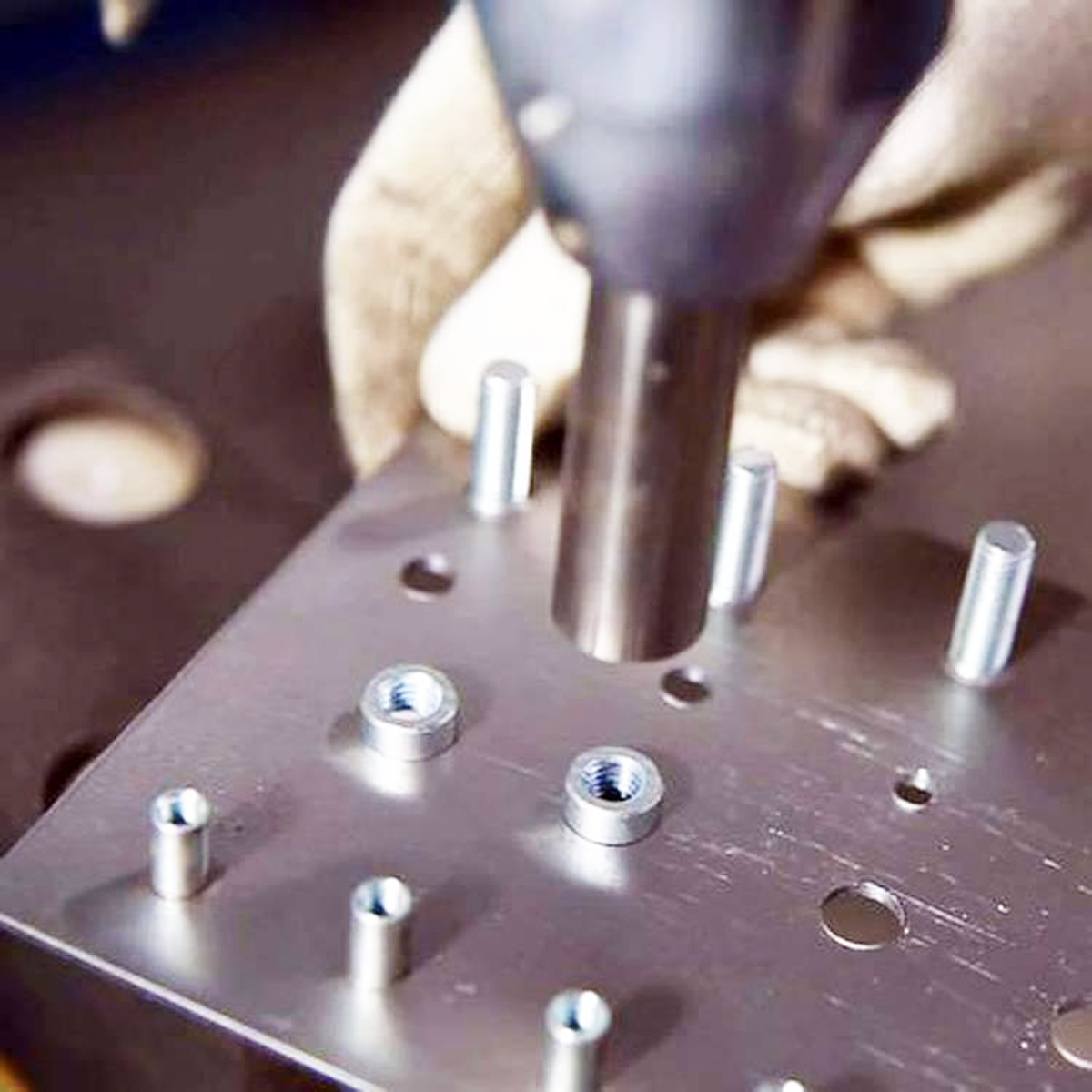
During installation, the self-clinching fastener is pressed into a properly sized hole using controlled parallel force.
The surrounding sheet material flows into the engineered clinching feature of the fastener, securing the component mechanically within the panel.
For engineers designing sheet metal enclosures, electrical cabinets, automotive components, medical equipment, telecom systems, and industrial machinery,
self-clinching nuts and self-clinching standoffs can provide repeatable internal threads without the need for conventional tapping or welding.
For procurement and supply-chain teams, selecting the correct self-clinching fastener also involves material compatibility, sheet hardness, dimensions,
installation requirements, corrosion resistance, quality documentation, and long-term supply capability.
This guide explains the key engineering and sourcing considerations when selecting self-clinching nuts and standoffs for thin sheet metal applications.
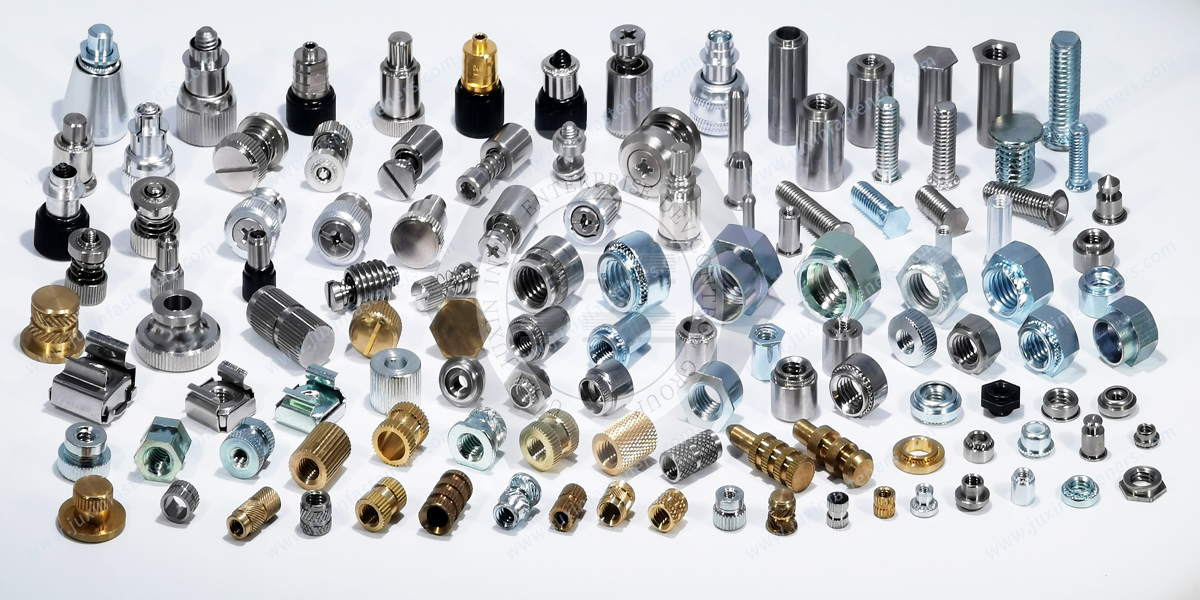
What Are Self-Clinching Nuts and How Do They Work?
A self-clinching nut is a threaded fastener designed to be permanently installed into sheet metal.
Unlike a conventional nut that remains loose behind a panel, a self-clinching nut becomes mechanically retained inside the sheet after installation.
The basic installation process consists of three steps:
A correctly sized round hole is punched, drilled, or otherwise prepared in the sheet.
The self-clinching nut is positioned in the mounting hole.
A controlled parallel squeezing force presses the fastener into the panel, allowing the sheet material to flow into the clinching feature.
The resulting connection provides an integrated threaded mounting point without requiring a loose nut during final assembly.
This makes self-clinching nuts particularly useful for thin sheet metal where conventional threading may not provide enough material for reliable thread engagement.
Common applications include:
Sheet metal enclosures
Electrical control cabinets
Telecom equipment
Server and network racks
Automotive electronic modules
EV battery-related components
Industrial automation equipment
Medical equipment housings
HVAC equipment
Electronic assemblies
The performance of a self-clinching fastener depends on more than the fastener itself.
Sheet material, hardness, thickness, hole size, edge distance, installation force, and fastener geometry should all be considered during design.
Material compatibility is one of the most important considerations when selecting self-clinching nuts.
The host sheet should generally be sufficiently softer and ductile enough to allow material displacement around the clinching feature during installation.
The actual compatibility depends on the fastener material, sheet material, sheet thickness, hole geometry, and installation conditions.
| Self-Clinching Nut Series | Typical Material | Suitable Host Materials | Typical Application |
|---|---|---|---|
| Type CLA | Aluminum | Aluminum and softer metal sheets | Lightweight enclosures, aerospace-related structures, weight-sensitive assemblies |
| Type CLS | Stainless Steel | Suitable steel and aluminum sheets within specified hardness limits | Telecom cabinets, outdoor equipment, corrosion-sensitive assemblies |
| Type S / SS | Carbon Steel, plated | Steel and aluminum sheet metal | Automotive components, industrial enclosures, electrical cabinets |
| Type SP | Hardened stainless steel | Harder stainless steel and demanding sheet metal applications | Stainless steel enclosures, corrosion-sensitive industrial equipment |
The correct selection should always be verified against the actual sheet material, hardness, thickness, hole diameter, and required installation performance.
For stainless steel sheet metal, this consideration becomes especially important because some stainless steels can work-harden during forming and may require
a suitable hardened stainless-steel self-clinching fastener design.
Stainless steel sheet metal is widely used in applications requiring corrosion resistance, durability, hygiene, or a clean exterior appearance.
However, stainless steel presents a different installation challenge from mild steel or aluminum because of its higher hardness and work-hardening characteristics.
When designing self-clinching connections in 304 or 316 stainless steel sheet, engineers should evaluate:
Sheet hardness
Sheet thickness
Hole diameter
Fastener material and hardness
Clinching feature geometry
Required pushout resistance
Required torque-out resistance
Installation force
Edge distance
A hardened stainless-steel self-clinching nut may be more appropriate for harder stainless steel panels than a conventional stainless-steel self-clinching nut.
Final selection should be confirmed through dimensional and installation testing.
This makes material compatibility a critical part of specifying stainless steel self-clinching nuts rather than simply selecting a fastener based on thread size.
Self-clinching fasteners are not the only way to create threaded connections in sheet metal. The appropriate joining method depends on material, thickness,
production volume, access, strength requirements, and assembly process.
| Joining Method | Thin Sheet Metal | Secondary Operation | Heat Input | Integrated Thread | Assembly Efficiency |
|---|---|---|---|---|---|
| Self-Clinching Nut | Excellent for suitable sheet materials | Low | None | Yes | High |
| Tapped Hole | Limited by available material thickness | Higher | None | Yes | Medium |
| Welded Nut | Suitable for many sheet applications | Welding required | Yes | Yes | Medium |
| Rivet Nut | Excellent where rear-side access is limited | Riveting installation | None | Yes | High |
Self-clinching nuts are particularly effective when the sheet can be accessed from both sides during installation and the design requires a permanent integrated thread.
Rivet nuts, also called blind rivet nuts or threaded inserts, are useful when installation must be performed from one side of the panel.
This makes the two technologies complementary rather than interchangeable:
Self-clinching nuts: ideal for pre-fabricated sheet metal components where press installation is available.
Rivet nuts: ideal for blind or assembled structures where only one side of the panel can be accessed.
Weld nuts can provide strong threaded attachment points but introduce heat into the sheet metal manufacturing process.
This can affect coatings, create distortion, and require additional welding operations.
For high-volume sheet metal production, engineers often compare self-clinching fasteners, weld fasteners,
and rivet nuts based on the complete manufacturing process rather than simply comparing the purchase price of the individual fastener.
Self-clinching standoffs combine permanent sheet metal attachment with a defined spacing distance.
They are widely used to mount:
Printed circuit boards
Control boards
Electronic modules
Sensors
Displays
Electrical components
Internal brackets
Component assemblies
A self-clinching standoff can eliminate the need for separate spacers, loose nuts, or additional brackets.
For electronic equipment, this can simplify the assembly stack-up while maintaining a controlled distance between the PCB or component and the metal enclosure.
JUXIN FASTENERS JX-SO, JX-SOA, JX-SOS and related configurations are designed for applications where the internal assembly requires a threaded mounting point with access through the standoff.
These self-clinching standoffs can be used in electrical cabinets, electronic equipment, industrial control systems, medical equipment, and other sheet metal assemblies.
For thinner stainless steel panels, specialized configurations such as JX-SOO and JX-SOOS can be selected according to the applicable material thickness and installation requirements.
Blind standoffs such as JX-BSO, JX-BSOA, and JX-BSOS feature a closed end.
The closed-end design can be useful when the outside surface of the panel needs to remain closed and visually clean.
It can also help prevent an open passage through the standoff itself.
For enclosure applications where dust or moisture resistance is required, blind standoffs can support the overall enclosure design.
However, the final IP rating depends on the complete enclosure construction, sealing system, joints, cable entries, and assembly process.
The correct standoff should be selected according to the mechanical and dimensional requirements of the complete assembly.
| Requirement | Recommended Consideration |
|---|---|
| PCB mounting | Threaded self-clinching standoff |
| Limited exterior access | Blind self-clinching standoff |
| Standard steel panel | Carbon steel or stainless steel standoff according to environment |
| Corrosive environment | Stainless steel configuration |
| Thin stainless steel panel | Specialized stainless steel standoff configuration |
| Clean exterior appearance | Blind standoff |
| Multiple PCB stack heights | Different standoff lengths and thread configurations |
| Electronic enclosure | JX-SO / JX-SOS / JX-BSO series according to design |
Engineers should confirm panel thickness, mounting-hole diameter, thread specification, standoff length, material, and installation method before final selection.
The host material must have sufficient ductility and appropriate hardness for the self-clinching feature to displace the sheet material.
A fastener should not be selected solely according to nominal thread size. Sheet hardness and material behavior are equally important.
Thin sheet metal applications require particular attention to minimum sheet thickness.
The available panel thickness must be compatible with the selected self-clinching fastener.
Using a fastener designed for a thicker panel in an excessively thin sheet can reduce installation performance and retention.
The mounting hole must be manufactured to the specified size and tolerance.
An oversized hole can reduce retention performance, while an undersized hole can increase installation force or damage the sheet or fastener.
For production applications, hole diameter should be controlled consistently across the manufacturing process.
Adequate distance between the fastener and the sheet edge helps prevent local deformation or bulging during installation.
As a general design starting point, engineers should evaluate edge distance relative to the hole diameter and the specific fastener manufacturer's installation
recommendations rather than applying one universal value to every fastener.
Self-clinching fasteners should normally be installed using a controlled parallel squeezing force.
Hydraulic, pneumatic, or mechanical presses can be used when properly configured.
Impact installation methods should generally be avoided because uncontrolled impact loading can damage the fastener, distort the sheet, or produce inconsistent installation quality.
Two important performance characteristics of self-clinching nuts are torque-out resistance and pushout resistance.
Torque-out resistance measures the ability of the installed fastener to resist rotational movement when torque is applied to the threaded connection.
This is particularly important in applications where repeated tightening and loosening occurs.
Pushout resistance measures the force required to push the installed fastener out of the sheet.
This characteristic becomes important when the threaded connection is subjected to axial loading.
Actual performance depends on:
Sheet material
Sheet thickness
Sheet hardness
Hole size
Fastener geometry
Installation force
Thread size
Fastener material
Therefore, application-specific testing is recommended when the connection is safety-critical or subject to demanding mechanical loads.
Automotive electronics and EV systems contain numerous thin metal housings and mounting panels.
Self-clinching nuts can provide integrated threads for:
ECU housings
Control modules
Electrical enclosures
Battery-related assemblies
Charging equipment
Sensor brackets
The key requirements typically include vibration resistance, repeatable installation, corrosion protection, and controlled dimensional performance.
Telecom cabinets, network equipment, server systems, and electronic enclosures require compact internal mounting structures.
Self-clinching standoffs can create defined PCB mounting heights while self-clinching nuts provide permanent threaded mounting points.
Blind standoffs can also be considered when maintaining a closed exterior surface is important.
PLC cabinets, motion-control systems, robotic equipment, and industrial control panels frequently use sheet metal enclosures.
Self-clinching fasteners can reduce the need for loose hardware and simplify the assembly of internal brackets and electronic components.
Medical equipment often combines thin sheet metal structures with electronic modules, internal brackets, and controlled assembly requirements.
Stainless steel self-clinching fasteners and standoffs can be considered where corrosion resistance, durability, and a clean finished surface are important.
Electrical cabinets, HVAC housings, control panels, and sheet metal equipment often require multiple threaded mounting points.
Self-clinching nuts provide a repeatable method for integrating threads into relatively thin panels without conventional tapping.
For OEM projects, selecting a self-clinching fastener supplier involves more than product availability.
Engineering and procurement teams should evaluate:
Material consistency
Dimensional control
Thread quality
Installation performance
Surface treatment
Corrosion resistance
Lot traceability
Packaging
Quality documentation
Production capacity
Customization capability
Global export experience
A qualified self-clinching fastener manufacturer should be able to support both standard components and application-specific requirements.
JUXIN FASTENERS supports OEM and industrial customers with self-clinching nuts, self-clinching standoffs, rivet nuts, weld fasteners, and other sheet metal fastening solutions.
Procurement teams frequently need to replace an existing self-clinching fastener with an equivalent component from another supplier.
Common reference brands and specifications may include PEM, Southco, Bossard, and other industry-standard fastening systems.
However, a direct replacement should not be based only on the product name.
Before approving a cross-reference, procurement and engineering teams should verify:
Thread specification
Thread size
Fastener material
Surface treatment
Panel thickness
Mounting-hole diameter
Head dimensions
Shank dimensions
Overall length
Installation requirements
Torque-out performance
Pushout performance
JUXIN FASTENERS can support dimensional cross-reference and application verification for commonly specified self-clinching fasteners.
One of the main advantages of self-clinching technology is process simplification.
Compared with conventional threaded holes or loose hardware, self-clinching fasteners can eliminate or reduce certain secondary operations such as:
Thread tapping
Weld nut installation
Loose nut handling
Separate spacer installation
Additional hardware assembly
This can help manufacturers improve assembly consistency and reduce the number of individual components handled during production.
The actual cost benefit depends on production volume, labor cost, sheet metal process, fastener quantity, and assembly method.
Therefore, total cost of ownership should be evaluated at the assembly level rather than by comparing fastener unit prices alone.
For industrial OEM applications, fastener quality is closely connected with process control and traceability.
Depending on project requirements, JUXIN FASTENERS can support documentation such as:
Material documentation
Dimensional inspection records
Quality inspection reports
RoHS documentation
REACH documentation
Surface treatment information
Salt spray testing documentation where applicable
PPAP documentation according to customer requirements
Batch and lot traceability
Specific documentation should be confirmed according to the product, project, and customer quality requirements.
Before releasing a self-clinching fastener specification, engineers and procurement teams should confirm the following:
Panel
Material
Hardness
Thickness
Hole diameter
Edge distance
Fastener
Thread type
Thread size
Material
Surface treatment
Head style
Shank dimensions
Overall length
Performance
Torque-out requirement
Pushout requirement
Corrosion resistance
Environmental conditions
Temperature requirements
Repeated assembly requirements
Manufacturing
Installation equipment
Installation force
Hole preparation
Assembly sequence
Inspection method
Sourcing
Required annual quantity
Packaging requirements
Lot traceability
Quality documentation
Prototype requirements
Customization requirements
This checklist helps prevent a common sourcing problem: selecting a fastener that matches the drawing dimension but is not suitable for the actual sheet material or manufacturing process.
When sourcing self-clinching nuts and standoffs for an OEM project, the supplier should be evaluated as a manufacturing partner rather than simply as a fastener reseller.
Important questions include:
Can the supplier manufacture the required thread and dimensions?
Can the supplier provide consistent material and hardness?
Can the supplier support custom lengths and configurations?
Can the supplier provide surface treatment options?
Can the supplier provide inspection and traceability documentation?
Can the supplier support prototype and production quantities?
Can the supplier provide engineering assistance for application selection?
Can the supplier support international OEM supply requirements?
JUXIN FASTENERS provides self-clinching nuts, self-clinching standoffs, rivet nuts, weld fasteners, and other industrial fastening components for sheet metal applications.
Our product and engineering support can help customers evaluate material compatibility, dimensions, installation requirements, surface treatment, and production requirements before placing a larger OEM order.
If you are selecting self-clinching nuts or self-clinching standoffs for thin sheet metal, providing the actual application information can significantly improve product selection.
Send the following information where available:
Sheet material
Sheet thickness
Sheet hardness
Thread specification
Mounting-hole diameter
Required fastener length
Required quantity
Operating environment
Surface treatment requirement
Existing part number or drawing
JUXIN FASTENERS can assist with standard product selection, dimensional cross-reference, OEM requirements, and customized fastening solutions.
For technical drawings, CAD files, samples, or sourcing inquiries, contact:
Website: www.juxinfasteners.com
JUXIN FASTENERS — Self-Clinching Nuts, Self-Clinching Standoffs and Industrial Sheet Metal Fastening Solutions for Global OEMs.
 MORE NEWS
Sep. 25, 2026
Sep. 25, 2026
Sep. 25, 2026
Contact Us
Tel.:
+86 020 8621 0320
+86 020 3121 6067
E-mail:
Technical Support:
Navigation
SEND INQUIREY