
Call Us
+86 136 6007 9809
Call Us
+86 136 6007 9809

Nov. 01, 2024
Marine & Shipbuilding Fasteners: Corrosion-Resistant Bolts, Nuts, Screws and Rivets for OEMs
Marine fasteners operate in environments where corrosion, vibration, mechanical loading and maintenance accessibility can interact to affect the reliability of an entire assembly.
A fastener that performs adequately in an indoor industrial machine may experience very different conditions when installed in a shipboard enclosure,
exposed deck fitting, offshore equipment housing or coastal machinery assembly.
Selecting a marine bolt, nut, screw or rivet therefore requires more than choosing a material marketed as “marine grade.”
The correct specification depends on chloride exposure, joint materials, mechanical requirements, temperature, fastening method and inspection expectations.
For mechanical and structural engineers, the priorities include material compatibility, corrosion mechanisms, load transfer, preload and fatigue.
For manufacturing engineers and production managers, installation torque, thread galling, tooling access, coating damage and assembly repeatability are equally important.
For purchasing managers and supplier development teams, reliable sourcing requires clear material specifications, dimensional standards, inspection documentation and a defined approval process.
Juxin Fasteners supplies industrial bolts, nuts, screws, solid rivets and drawing-specific fastening components for suitable marine equipment and shipbuilding-related OEM applications.
Why Marine Fasteners Require Application-Specific Selection
Marine service conditions vary considerably.
A fastener inside a dry equipment compartment does not experience the same environment as a bolt on an exposed deck or a component immersed in seawater.
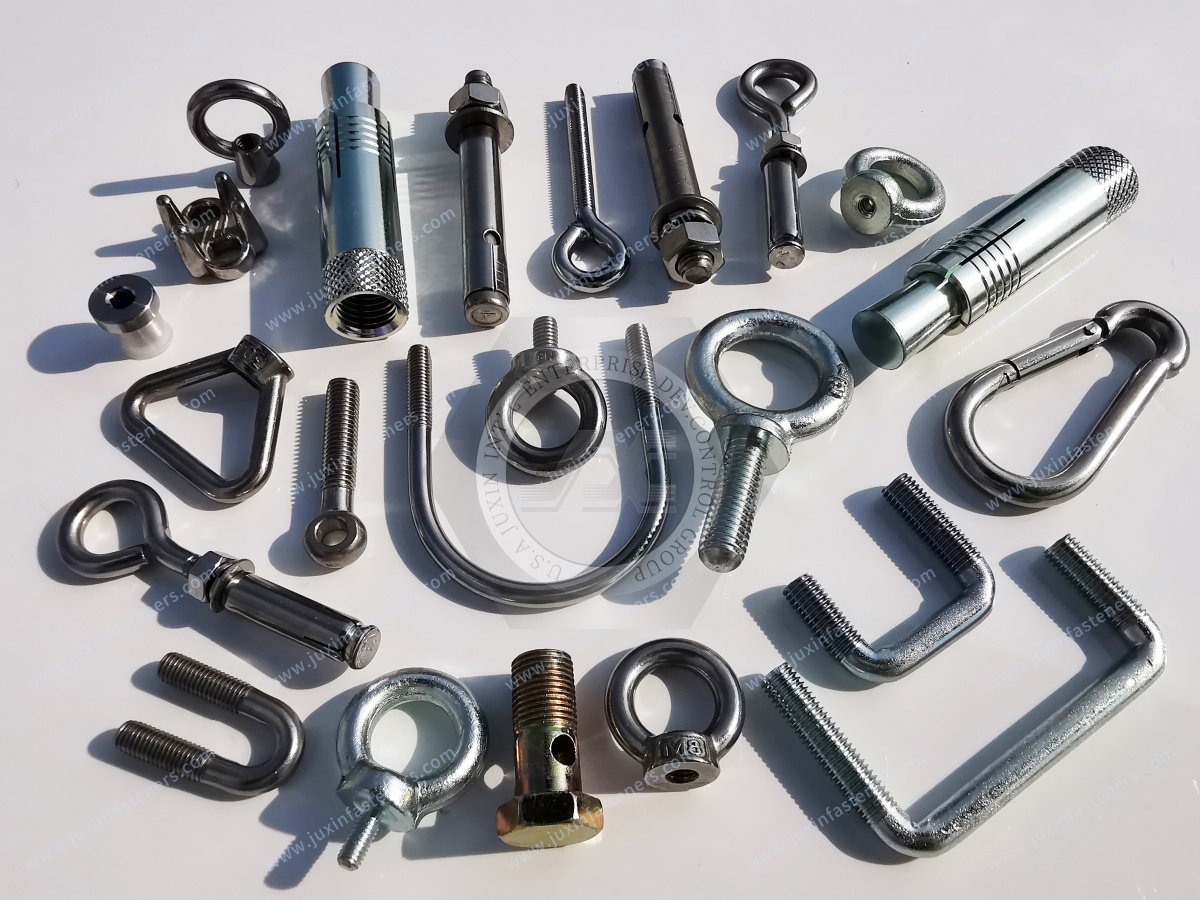
Common Marine Exposure Conditions
Humid indoor compartments
Coastal atmospheric exposure
Salt spray and intermittent wetting
Splash zones
Direct seawater immersion
Confined joints with trapped moisture
Offshore equipment exposed to cyclic loading
Important Distinction
A fastener suitable for one marine environment may not be suitable for another.
Marine Exposure Classification for Fastener Selection
| Exposure condition | Typical concern | Engineering priority |
|---|---|---|
| Protected indoor marine equipment | Humidity and occasional condensation | General corrosion resistance |
| Coastal atmosphere | Airborne chlorides and wet-dry cycling | Surface corrosion and coating performance |
| Exposed deck equipment | Salt deposits, moisture and vibration | Corrosion, preload and maintenance |
| Splash zone | Repeated seawater wetting | Pitting, crevice corrosion and joint sealing |
| Continuous seawater immersion | Chloride exposure and oxygen differences | Material compatibility and localized corrosion |
| Confined wet joints | Trapped electrolyte | Crevice corrosion and inspection access |
Engineering Recommendation
Define the actual exposure category before specifying the fastener material.
Marine Bolts and Hex Head Fasteners
Marine equipment may use:
Hex head bolts
Hex socket cap screws
Flange bolts
Heavy hex bolts
Drawing-specific bolts
Other approved threaded fasteners
Potential Applications
Equipment mounting
Pump housings
Machinery guards
Deck equipment
Mechanical brackets
Marine enclosure assemblies
Engineering Considerations
Tensile loading
Shear loading
Preload
Joint stiffness
Corrosion exposure
Thread compatibility
Maintenance access
Important Limitation
General industrial bolts should not automatically be used for hull structure, propulsion or other safety-critical marine connections.
Marine Nuts and Locking Fasteners
Nuts may include:
Standard hex nuts
Flange nuts
Nylon insert lock nuts
All-metal prevailing torque nuts
Other drawing-specific locking nuts
Vibration-Related Considerations
Marine engines, pumps, winches and auxiliary machinery may produce repeated dynamic loading.
However, a locking nut alone does not guarantee that a joint will remain secure.
Engineering Recommendation
Evaluate preload, joint movement, temperature and the selected locking mechanism together.
Nylon Insert Lock Nuts
Nylon insert lock nuts may be suitable for selected applications within their approved temperature and environmental limits.
Important Limitation
The polymer insert's temperature capability and chemical compatibility must be checked.
All-Metal Prevailing Torque Nuts
All-metal locking nuts may be considered where polymer inserts are unsuitable.
Important Limitation
Prevailing torque performance, reuse requirements and mating-thread compatibility must be confirmed.
Marine Machine Screws and Self-Tapping Screws
Marine equipment may require:
Machine screws
Hex socket screws
Self-tapping screws
Self-drilling screws
Socket set screws
Custom threaded components
Potential Applications
Equipment covers
Cabin fittings
Electrical enclosures
Instrument housings
Mechanical brackets
Access panels
Engineering Considerations
Base material
Thread engagement
Sheet thickness
Corrosion
Vibration
Installation torque
Maintenance frequency
Important Limitation
Self-drilling and self-tapping screws must be selected for the actual substrate and thickness.

Marine Solid Rivets
Solid rivets provide permanent mechanical fastening in suitable assemblies.
Relevant products may include:
Stainless steel dome head solid rivets
Stainless steel countersunk solid rivets
Aluminum solid rivets
Drawing-specific rivets
Potential Applications
Marine equipment housings
Sheet metal assemblies
Non-removable brackets
Selected interior fittings
Equipment panels
Important Limitation
A solid rivet is not automatically watertight.
Sealing performance depends on the complete joint design and installation process.
ASME and DIN Rivet Standards
Depending on the actual product, relevant dimensional specifications may include applicable ASME B18.1-series requirements or DIN rivet standards.
Engineering Recommendation
Specify the correct rivet head geometry, diameter, length, material and installation requirements.
Do not assume that all rivets comply with the same standard.
Marine Fastener Material Selection
Material selection must consider corrosion resistance and mechanical requirements together.
A2 Stainless Steel Fasteners
A2 stainless steel is commonly associated with 304-type austenitic stainless steel.
Potential Applications
Protected marine equipment
Indoor enclosures
Selected low-chloride environments
Important Limitation
A2 stainless steel may be susceptible to localized corrosion in chloride-rich environments.
A4 Stainless Steel Fasteners
A4 stainless steel is commonly associated with molybdenum-containing austenitic stainless steels such as 316-type compositions.
Potential Advantages
Improved resistance to certain chloride-containing environments compared with A2
Suitability for selected marine equipment
Broad industrial application potential
Important Limitation
A4 stainless steel is not immune to pitting, crevice corrosion or chloride stress corrosion cracking under all conditions.
A4-70 and A4-80: What the Numbers Mean
A4 identifies a stainless steel material group.
The numerical designation identifies a mechanical property class under the applicable ISO 3506 standard.
Important Distinction
A4-80 is not a corrosion-resistance grade superior to A4-70 simply because the number is higher.
The distinction concerns mechanical property requirements, not a guaranteed improvement in seawater resistance.
Engineering Recommendation
Select material group and mechanical property class separately.
Duplex and Super Duplex Stainless Steel
Duplex and super duplex stainless steels may be specified for certain demanding marine or offshore applications.
Potential considerations include:
Strength
Localized corrosion resistance
Material availability
Manufacturing requirements
Cost
Qualification
Important Limitation
These alloys should be treated as drawing-specific sourcing requirements unless the exact product and manufacturing capability have been confirmed.
Nickel-Based and Specialty Marine Alloys
Certain marine applications may specify specialty alloys such as nickel-copper materials.
Engineering Considerations
Material grade
Mechanical properties
Corrosion exposure
Manufacturing feasibility
Inspection
Cost
Important Limitation
Specialty alloy availability should not be assumed for every fastener type or dimension.
Marine Fastener Material Comparison
| Material category | Typical consideration | Main limitation |
|---|---|---|
| A2 / 304-type stainless steel | General corrosion resistance | Localized chloride corrosion |
| A4 / 316-type stainless steel | Improved resistance in some chloride environments | Pitting and crevice corrosion remain possible |
| Duplex stainless steel | Strength and corrosion resistance | Specification and sourcing complexity |
| Super duplex stainless steel | Demanding chloride environments | Cost, processing and qualification |
| Specialty nickel alloys | Specific corrosion requirements | Material availability and cost |
| Coated alloy steel | Mechanical performance with protective coating | Coating damage and corrosion exposure |
Engineering Recommendation
Use the actual environment, mechanical requirements and lifecycle expectations to select materials.
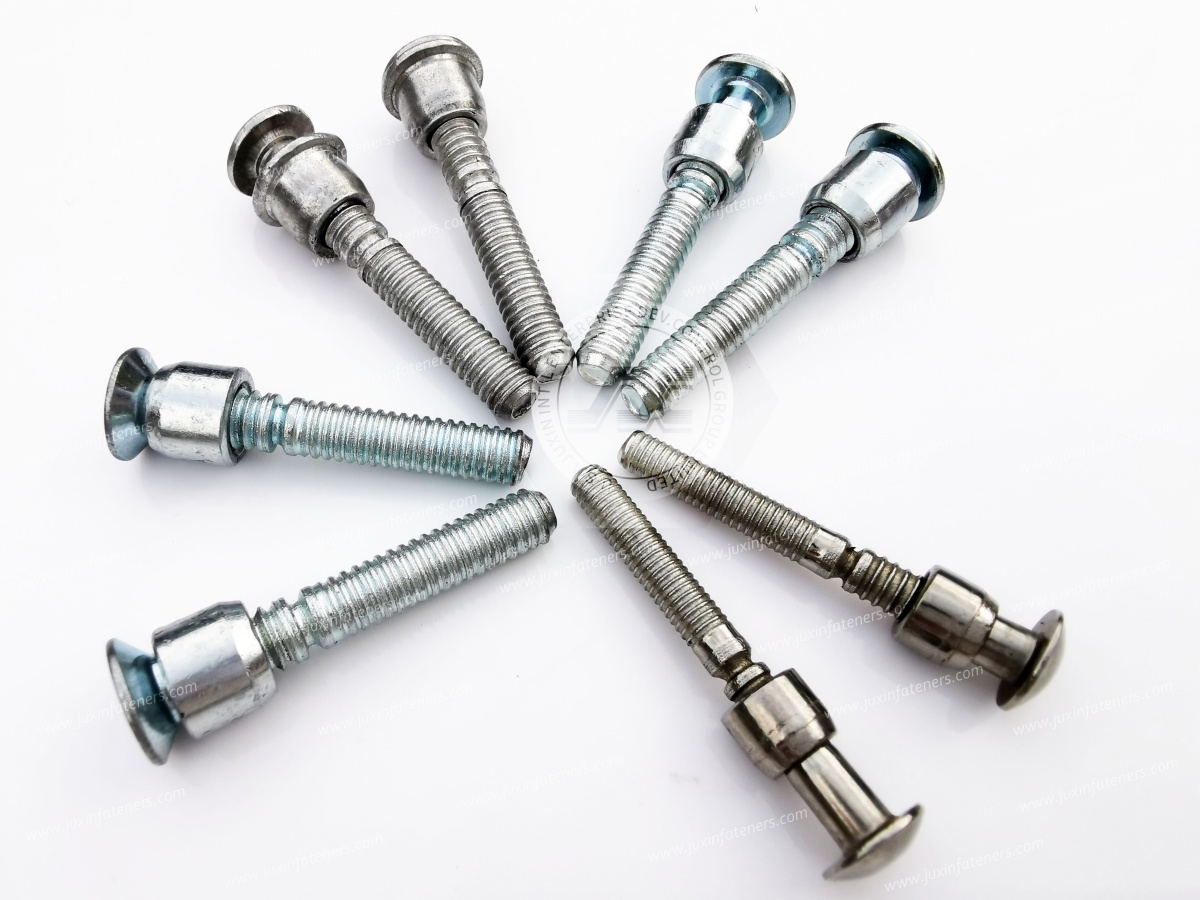
Pitting Corrosion in Stainless Steel Marine Fasteners
Pitting corrosion is a localized corrosion mechanism that can occur in chloride-containing environments.
It may produce small surface openings with deeper localized attack.
Risk Factors
Chloride concentration
Temperature
Surface condition
Oxygen availability
Deposits
Material composition
Engineering Recommendation
Do not judge pitting resistance solely by the visible appearance of the fastener.
Crevice Corrosion in Marine Bolted Joints
Crevice corrosion can develop in confined areas where electrolyte becomes trapped.
Potential locations include:
Under bolt heads
Beneath washers
Between mating plates
Inside poorly drained joints
Around gasket interfaces
Engineering Recommendation
Consider drainage, sealing, material selection and inspection access during joint design.
Galvanic Corrosion in Stainless Steel-to-Aluminum Connections
Marine equipment frequently combines different metals.
A stainless steel fastener installed in an aluminum component may create galvanic corrosion risk when an electrolyte is present.
Relevant Factors
Metal combination
Electrolyte exposure
Relative exposed surface areas
Coating condition
Joint geometry
Potential Mitigation Measures
Depending on the design:
Electrical isolation
Suitable washers or sleeves
Protective coatings
Joint sealing
Drainage
Compatible material selection
Important Limitation
An insulating washer alone may not fully isolate the complete threaded connection.
Engineering Recommendation
Evaluate all metal-to-metal contact paths.
Marine Fastener Coating Selection
Surface coatings may be used to protect suitable steel fasteners.
Potential coating categories include:
Zinc-based coatings
Zinc-nickel coatings
Zinc-flake systems
PTFE-containing coating systems
Other drawing-specified protective finishes
Important Distinction
Coating names alone do not define corrosion performance.
The complete coating specification should include relevant process and acceptance requirements.
Zinc-Nickel Coatings
Zinc-nickel coatings may provide improved corrosion performance compared with some conventional zinc coating systems.
Engineering Considerations
Coating thickness
Thread fit
Installation friction
Corrosion requirements
Process qualification
Hydrogen embrittlement risk where applicable
Zinc-Flake Coatings
Zinc-flake systems may be selected for certain corrosion-resistant fastener applications.
Engineering Considerations
Coating specification
Friction characteristics
Thread dimensions
Assembly requirements
Coating damage
PTFE-Containing Coatings
PTFE-containing coating systems may be used for selected friction-control or corrosion-related requirements.
Important Limitation
A PTFE-containing coating is not automatically suitable for every marine environment or joint.
Hot-Dip Galvanizing
Hot-dip galvanizing may be suitable for certain steel fasteners and structural applications.
Important Limitation
Coating thickness, thread allowances, dimensional compatibility and applicable standards must be considered.
Salt Spray Testing and Real Marine Service Life
Salt spray testing can be useful for comparing specified coating systems under controlled conditions.
ASTM B117 and ISO 9227 are examples of salt spray test methods.
Important Distinction
A specified number of salt spray hours does not directly establish an equivalent number of years in marine service.
Actual corrosion behavior depends on:
Exposure conditions
Wet-dry cycling
Temperature
Crevices
Mechanical damage
Material combinations
Maintenance
Engineering Recommendation
Use salt spray testing as one part of a broader qualification program.
Marine Bolt Preload and Joint Reliability
Bolted joints depend on adequate clamping force where the design requires preload.
Relevant Factors
Bolt material
Nut material
Thread condition
Lubrication
Coating
Washer selection
Joint stiffness
Installation method
Important Limitation
Using a corrosion-resistant stainless steel bolt does not guarantee adequate preload retention.
Engineering Recommendation
Specify installation requirements for the complete bolted joint.
Thread Galling in Stainless Steel Marine Fasteners
Austenitic stainless steel threads may be susceptible to galling.
Galling is adhesive damage that can occur when threaded surfaces slide under pressure.
Risk Factors
Material pairing
Surface condition
High contact pressure
Installation speed
Lubrication
Potential Mitigation Measures
Appropriate lubrication
Controlled installation speed
Suitable thread combinations
Surface treatments
Correct thread fit
Important Limitation
Lubrication changes torque-tension behavior.
Engineering Recommendation
Do not apply a dry-thread torque specification unchanged to a lubricated assembly without validation.
Vibration and Fatigue in Marine Fastening Systems
Marine machinery can experience dynamic loading from engines, pumps, propulsion systems and moving equipment.
Potential Failure Mechanisms
Loss of preload
Joint slip
Fretting
Fatigue cracking
Thread damage
Corrosion-assisted cracking
Engineering Recommendation
Evaluate joint geometry, preload and operating loads together.
Marine Fastener Failure Analysis
Visible Red Rust
May indicate corrosion of exposed carbon steel or coating breakdown.
Localized Pitting
May indicate chloride-related attack on a susceptible material.
Corrosion Beneath Washers
May indicate crevice corrosion or trapped electrolyte.
Damaged Threads
May indicate galling, overload, incorrect fit or installation damage.
Loose Bolted Joint
May indicate inadequate preload, joint settlement, vibration or installation problems.
Fatigue Fracture
May result from cyclic stresses and unfavorable joint loading.
Engineering Recommendation
Identify the actual failure mechanism before replacing the fastener with a stronger or more expensive material.
Commercial Shipbuilding Applications
Fasteners may be used in suitable shipboard equipment and assemblies, including:
Machinery guards
Equipment brackets
Access panels
Cabin fittings
Auxiliary equipment
Interior enclosures
Important Limitation
Hull structures, watertight boundaries and other class-controlled systems require project-specific engineering and approval.
Marine Pumps and Valves
Potential applications include:
Pump covers
Equipment mounting
Valve accessories
Mechanical brackets
Auxiliary housings
Engineering Considerations
Fluid exposure
Temperature
Pressure
Vibration
Material compatibility
Maintenance access
Important Limitation
Pressure-retaining joints require the applicable equipment design and qualification requirements.
Winches, Cranes and Deck Equipment
Marine deck machinery may require fasteners for:
Equipment guards
Auxiliary brackets
Access covers
Noncritical mounting components
Maintenance assemblies
Engineering Considerations
Cyclic loading
Vibration
Corrosion
Tool access
Inspection intervals
Important Limitation
Load-bearing lifting equipment connections require specific engineering approval.
Offshore Energy Equipment
Potential applications include suitable components used in:
Offshore wind equipment
Auxiliary machinery
Equipment enclosures
Maintenance fixtures
Instrument mounting systems
Engineering Considerations
Corrosion exposure
Inspection access
Fatigue
Coating performance
Long-term maintenance
Important Limitation
Safety-critical offshore structural fasteners require dedicated specifications and qualification.
Marine Electrical Enclosures and Control Equipment
Potential applications include:
Electrical cabinets
Control panels
Instrument enclosures
Equipment mounting brackets
Access covers
Engineering Considerations
Corrosion resistance
Electrical clearance
Grounding requirements
Sealing
Maintenance access
Important Limitation
A mechanically secure fastener does not automatically provide compliant electrical bonding or enclosure sealing.
Port Equipment and Harbor Machinery
Potential applications include:
Container-handling equipment
Harbor machinery
Equipment guards
Access panels
Auxiliary mechanical assemblies
Engineering Considerations
Coastal exposure
Vibration
Abrasion
Maintenance
Coating durability
Production Recommendation
Select fasteners according to the actual operating environment and maintenance strategy.
Naval and Defense-Related Equipment
Specialized marine equipment may require additional documentation and approval.
Important Limitation
General industrial fasteners should not be represented as defense-qualified or military-standard products without verified specifications and authorization.
OEM Marine Fastener Design and Manufacturing
Marine OEM projects may require drawing-specific:
Bolt and screw dimensions
Nut geometry
Thread designation
Material grade
Mechanical property class
Surface treatment
Corrosion requirements
Dimensional tolerances
Inspection documentation
Packaging
Manufacturing feasibility depends on the actual specification, material and expected production volume.
Metric and Inch Thread Systems
Marine equipment may use different thread systems.
Metric Threads
ISO metric threads are specified using metric diameter and pitch designations.
UNC and UNF Threads
Unified inch-series threads use separate dimensional and pitch requirements.
BSW and BSF Threads
Certain older equipment may use British thread systems.
Important Distinction
Metric, UNC, UNF, BSW and BSF threads are not directly interchangeable.
Engineering Recommendation
For repair and replacement projects, verify the original thread system before ordering.
Production-Line Installation Considerations
For marine equipment OEMs, fastener performance must be repeatable during assembly.
Key Factors
Correct material identification
Thread cleanliness
Coating consistency
Driver engagement
Torque control
Lubrication
Tool accessibility
Inspection
Packaging
Production Recommendation
Validate the approved fastener and installation process together.
Marine Fastener Quality Inspection
Inspection requirements depend on the product standard and purchase specification.
Dimensional Inspection
Potential checks include:
Diameter
Thread pitch
Length
Head dimensions
Thread tolerance
Surface condition
Material Verification
Depending on the project:
Material identification
Material documentation
Mechanical property verification
Hardness testing where applicable
Coating Inspection
Potential checks include:
Coating type
Coating thickness
Appearance
Corrosion testing where specified
Thread fit
Functional Inspection
Application-specific checks may include:
Torque behavior
Thread engagement
Prevailing torque
Joint retention
Installation compatibility
Important Limitation
The exact inspection plan, acceptance criteria and documentation scope must be agreed upon.
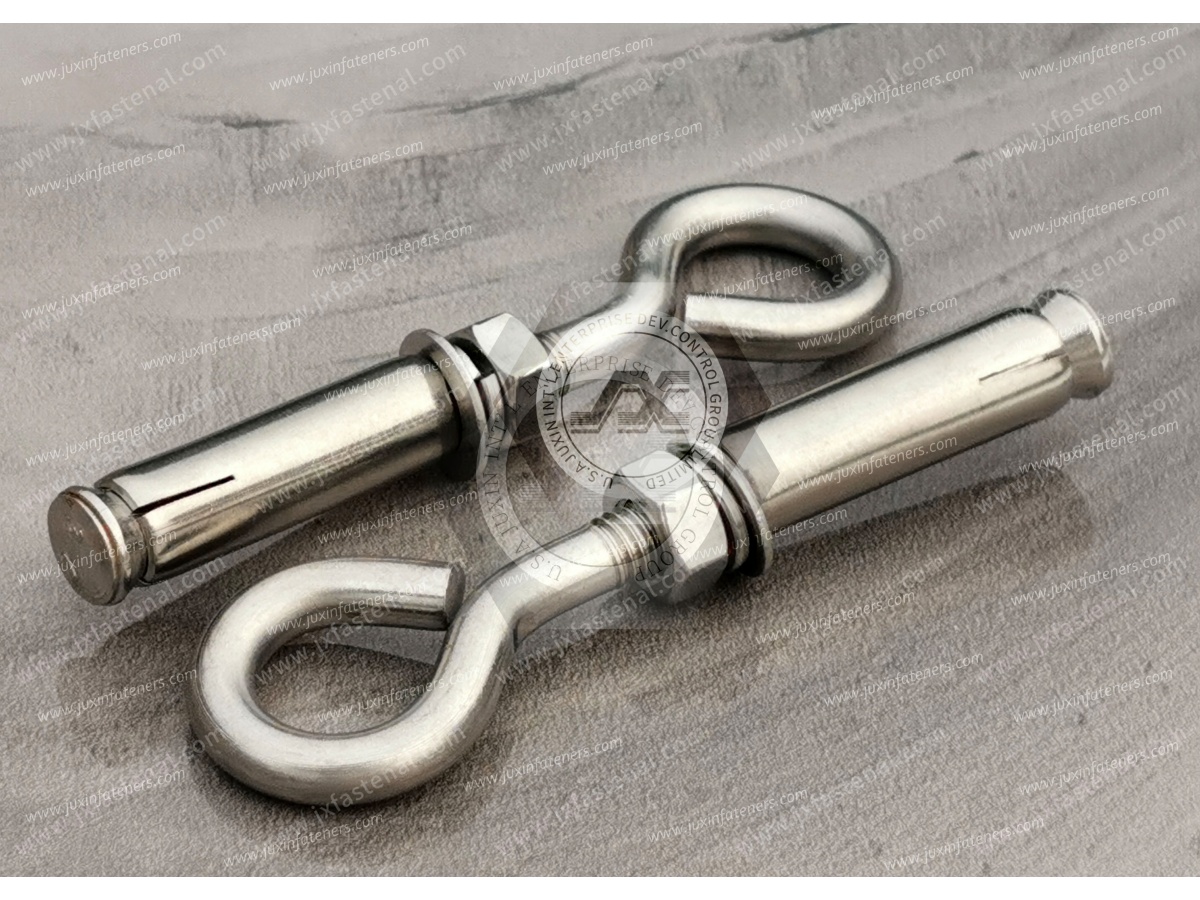
Supplier Qualification for Marine Fasteners
Purchasing managers and supplier development teams should evaluate:
Applicable dimensional standards
Material grade
Mechanical property class
Drawing conformity
Corrosion requirements
Surface treatment
Inspection documentation
Sample approval
MOQ
Lead time
Annual demand
Packaging
Change control
Supply continuity
Important Distinction
Supplier qualification is not the same as product approval by a marine classification society.
Class-Approved Marine Fasteners
Certain marine applications may require approval under the relevant vessel or offshore project rules.
Engineering Recommendation
Identify classification, traceability and inspection requirements before placing an order.
Important Limitation
Juxin Fasteners does not claim universal classification-society approval for general industrial fasteners.
Any project-specific approval or documentation requirement must be reviewed and confirmed.
Total Cost of Marine Fastener Procurement
The lowest unit price may not provide the lowest lifecycle cost.
Relevant cost factors include:
Material selection
Corrosion performance
Installation time
Rework
Maintenance access
Inspection
Replacement frequency
Supply continuity
Procurement Recommendation
Evaluate fastener cost alongside assembly and maintenance requirements.
Frequently Asked Questions
What are marine-grade fasteners?
Fasteners selected for the mechanical and environmental requirements of a marine application.
The term does not identify one universal material or certification.
Is 316 stainless steel suitable for seawater?
It may be suitable for selected marine environments, but continuous immersion, crevices and chloride exposure can create localized corrosion risks.
What is the difference between A4-70 and A4-80?
Both use the A4 stainless steel material designation, but they have different mechanical property class requirements.
Are stainless steel fasteners stronger than alloy steel fasteners?
Not universally. Strength depends on the exact material and mechanical property class.
Can stainless steel bolts be used in aluminum marine equipment?
Potentially, but galvanic corrosion and joint design must be evaluated.
Do marine fasteners need special coatings?
Some applications require coatings, while others may use corrosion-resistant base materials without an additional coating.
Are zinc-nickel coatings suitable for offshore equipment?
They may be suitable in selected systems, but performance must be validated for the actual environment.
Does a salt spray test prove marine service life?
No. Salt spray testing is a controlled test method and does not directly predict years of field service.
Can solid rivets be used in marine equipment?
Yes, in suitable engineered assemblies. Structural and watertight applications require additional design considerations.
Are all marine fasteners approved for shipbuilding structures?
No. Structural and class-controlled applications require specific approval and qualification.
Can Juxin Fasteners supply custom marine fasteners?
Juxin Fasteners welcomes drawing-specific inquiries.
Materials, dimensions, coatings, inspection requirements, qualification and commercial terms require confirmation.
Juxin Fasteners: Marine and Shipbuilding OEM Fastener Supply
Juxin Fasteners supplies industrial fastening components for suitable marine equipment and shipbuilding-related applications.
Relevant product categories include:
Stainless steel hex bolts
Stainless steel socket screws
Stainless steel machine screws
Stainless steel nuts
Locking nuts
Stainless steel solid rivets
Aluminum solid rivets
Drawing-specific industrial fasteners
Specialty alloys, protective coatings and project-specific documentation may be reviewed according to the customer's requirements.
Exact materials, dimensions, compliance, inspection scope, MOQ and lead times are subject to technical and commercial confirmation.
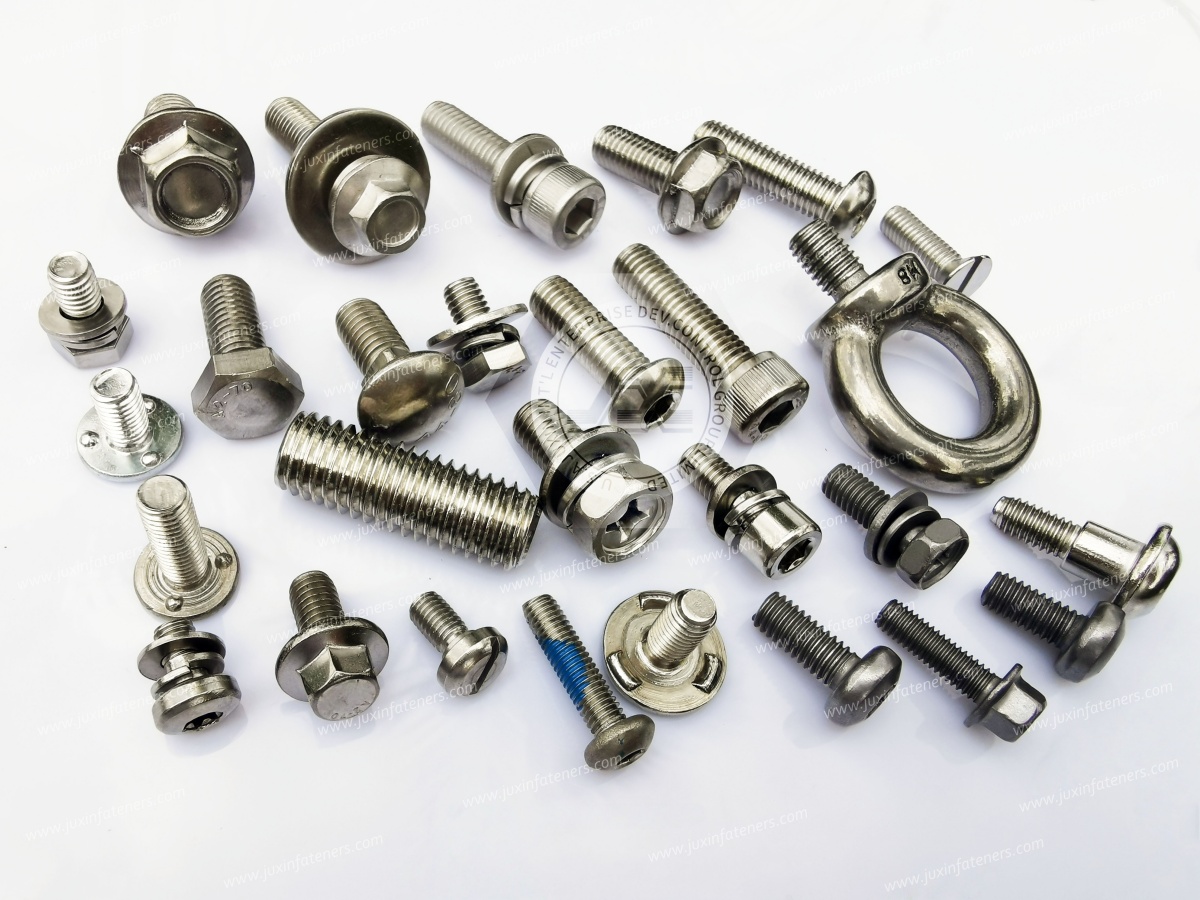
Request a Quote for Marine and Shipbuilding Fasteners
Are you sourcing marine bolts, stainless steel nuts, corrosion-resistant screws, solid rivets or drawing-specific fastening components for shipbuilding and marine equipment manufacturing?
Juxin Fasteners welcomes inquiries from mechanical engineers, structural engineers, manufacturing engineers, production managers, purchasing specialists and supplier development teams.
For technical review and quotation, please provide:
Fastener drawings and revisions + applicable dimensional standards + metric or inch thread designations + material grade and mechanical property class
+ surface treatment + corrosion exposure conditions + mating materials + joint loading and installation requirements + inspection documentation
+ project-specific classification requirements where applicable + prototype quantity + annual demand + packaging + target delivery schedule.
Company: Juxin Fasteners
Website: https://www.juxinfasteners.com/
Email: info@juxinfasteners.com
Send your marine fastener drawings and OEM RFQ to Juxin Fasteners for technical confirmation, material selection and quotation.
Contact Us
Tel.:
+86 020 8621 0320
+86 020 3121 6067
E-mail:
Technical Support:
Navigation
SEND INQUIREY



