
Call Us
+86 136 6007 9809
Call Us
+86 136 6007 9809

Nov. 01, 2024
DIN 660 Steel Round Head Solid Rivets: Joint Design, Installation and OEM Supply
DIN 660 steel round head solid rivets are permanent mechanical fasteners used in suitable metal assemblies where a formed rivet head provides a non-removable connection.
Unlike bolts and screws, solid rivets do not rely on a threaded fastening mechanism.
Installation involves inserting the rivet through aligned holes and plastically deforming the free end to create a closing head.
For industrial OEMs, successful riveting depends on the relationship between rivet geometry, material condition, hole preparation, joint thickness and forming process.
A correctly selected rivet can provide a durable connection.
However, its performance cannot be assessed from rivet material strength alone.
The connected plates, edge distances, bearing stresses, installation quality and service loads may govern the joint.
This guide focuses specifically on DIN 660 steel round head solid rivets, rather than treating every solid rivet head style and material as equivalent.
For mechanical and structural engineers, the main concerns include load paths, hole geometry, joint deformation and failure prevention.
For manufacturing engineers and production managers, tooling access, rivet feeding, closing-head consistency, inspection and assembly cycle time are equally important.
For procurement and supplier development teams, dimensional conformity, material specification, batch consistency,
samples and long-term sourcing requirements determine whether an alternative rivet supplier is suitable.
Juxin Fasteners supplies steel solid rivets and drawing-specific industrial fastening components for OEM manufacturing applications.
What Is a DIN 660 Steel Solid Rivet?
A DIN 660 solid rivet is a solid-shank rivet with a round, domed factory head defined by the applicable DIN dimensional specification.
The rivet is installed through prepared holes in the components being joined.
The free end is then formed into a closing head using an appropriate riveting process.
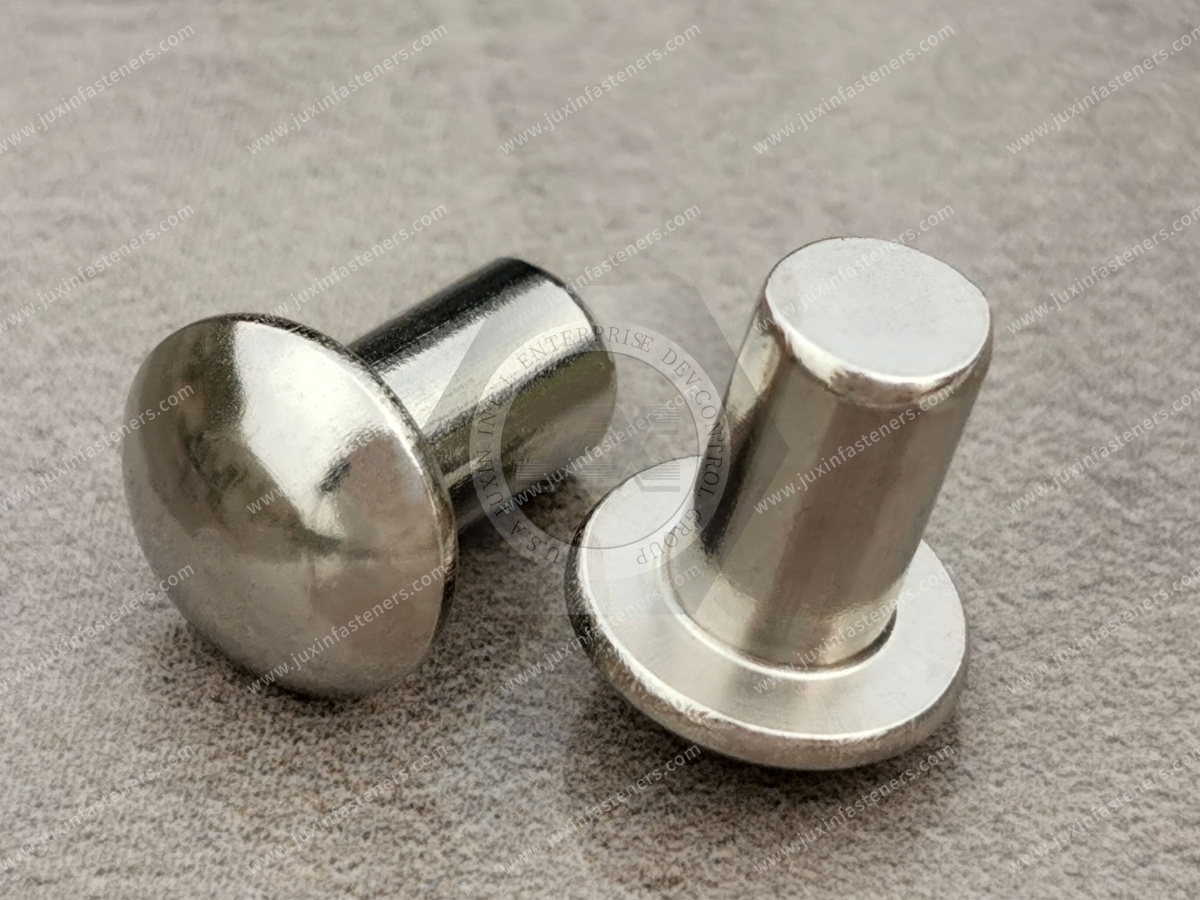
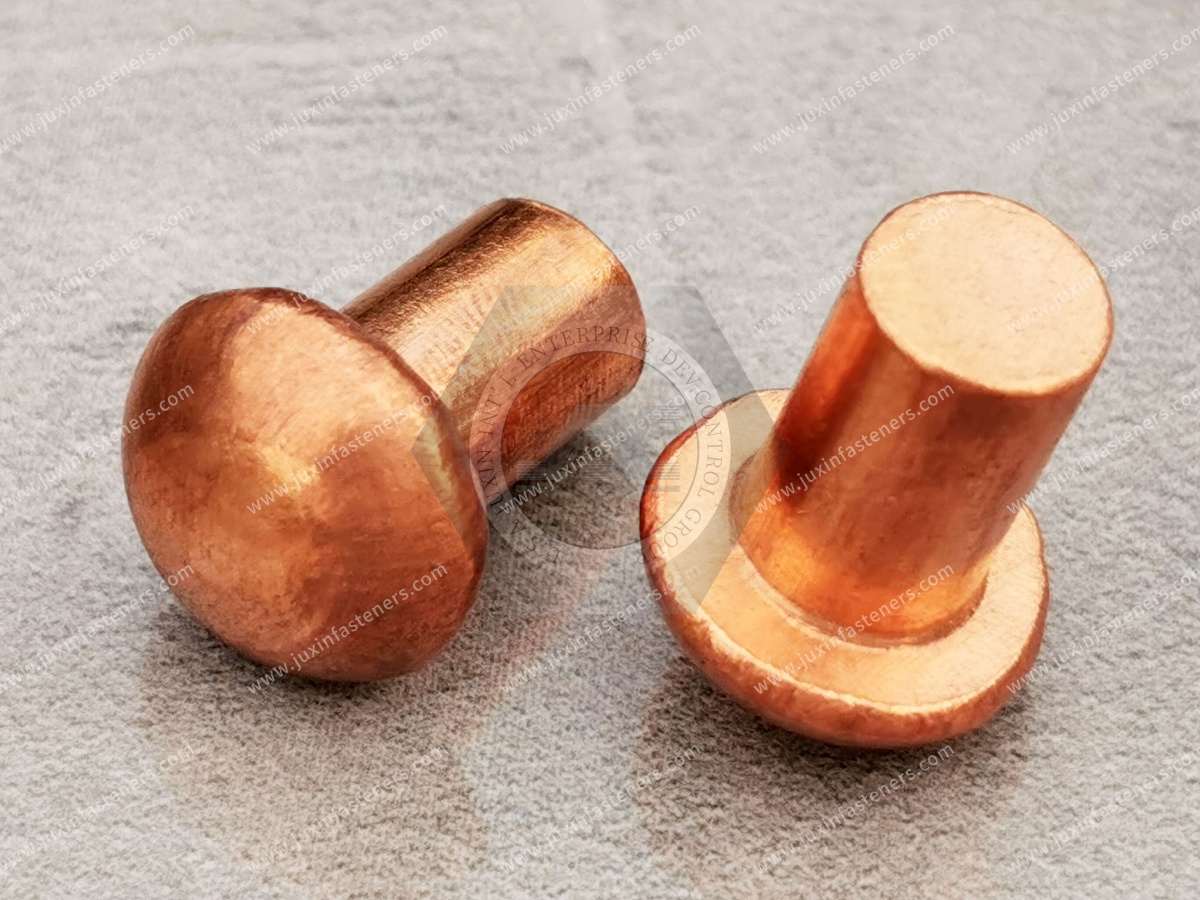
Typical Components of a Solid Rivet
Preformed factory head
Solid cylindrical shank
Free end for closing-head formation
Important Distinction
DIN 660 describes a particular round head rivet geometry.
It should not be used as a universal standard reference for flat head, countersunk or other rivet head styles.
DIN 660 Round Head Geometry
The round head has a domed profile that protrudes above the connected surface.
Its geometry influences:
Tool contact
Head support
Local bearing
Clearance around the joint
Appearance
Installation access
Engineering Consideration
A protruding round head may not be suitable where a flush external surface is required.
DIN 660 Versus Other Solid Rivet Head Styles
| Rivet type | General head geometry | Selection consideration |
|---|---|---|
| DIN 660 round head solid rivet | Domed, protruding head | General permanent joints with head clearance |
| Flat head solid rivet | Relatively flat head profile | Application-specific bearing and clearance |
| Countersunk solid rivet | Head seated in a countersink | Flush surface requirement |
| Special OEM solid rivet | Drawing-defined geometry | Nonstandard assembly requirements |
Engineering Recommendation
Specify the actual rivet head dimensions and applicable standard.
Do not assume that different head styles are interchangeable.
Steel Materials for DIN 660 Solid Rivets
Steel solid rivets may be produced from materials selected for the required forming behavior and service conditions.
The original product range includes carbon steel and alloy steel options.
However, the suitability of a steel grade depends on its composition, condition and installation method.
Carbon Steel Solid Rivets
Carbon steel may be selected for general industrial riveting applications.
Engineering Considerations
Formability
Mechanical properties
Installation process
Corrosion exposure
Material compatibility with the connected parts
Alloy Steel Solid Rivets
Alloy steels may be considered for drawing-specific applications.
Important Limitation
A material with higher nominal strength is not automatically a better riveting material.
If the material is too hard or insufficiently ductile for the intended process, closing-head formation may become difficult or produce defects.
Engineering Recommendation
Select rivet material according to both installed joint requirements and forming capability.
Rivet Diameter Selection
Rivet diameter affects the nominal shank area, hole size, installation force and joint geometry.
For a circular shank, the nominal cross-sectional area is:
A = πd² / 4
Where:
A = nominal shank cross-sectional area
d = nominal shank diameter
This geometric relationship is useful for preliminary calculations.
Important Limitation
Nominal shank area alone does not determine the allowable shear load of a riveted joint.
Material properties, shear planes, hole condition, installation quality and connected-member failure modes must also be considered.
Rivet Length and Grip Thickness
The required rivet length depends on the total thickness of the materials being joined and the amount of shank needed to form the closing head.
Grip Thickness
Grip thickness is the total thickness of the components captured between the rivet heads.
Closing-Head Allowance
Additional shank length is required to form the closing head.
The necessary allowance depends on:
Rivet diameter
Material
Closing-head geometry
Forming method
Joint configuration
Important Distinction
Rivet length should not be selected solely by adding an arbitrary fixed allowance to grip thickness.
Engineering Recommendation
Validate the required length using the applicable installation specification, tooling requirements and trial assembly.
Hole Diameter and Hole Preparation
Correct hole preparation is essential for reliable riveting.
Hole Diameter
The hole must accommodate rivet insertion while allowing the intended installed joint behavior.
Hole Quality
Relevant factors include:
Hole diameter
Roundness
Alignment
Burrs
Surface condition
Hole spacing
Plate thickness
Potential Problems
Oversized holes may allow excessive movement or produce an unfavorable installed geometry.
Undersized or misaligned holes may damage the rivet during insertion.
Engineering Recommendation
Specify hole tolerances based on the joint design and riveting process.
Rivet Edge Distance and Pitch
Rivet spacing and distance from the plate edge influence joint strength.
Edge Distance
Insufficient edge distance can increase the risk of tear-out or edge deformation.
Pitch
Rivet pitch affects load distribution and the available net section of the connected plate.
Engineering Considerations
Plate material
Plate thickness
Rivet diameter
Load direction
Number of rivets
Joint geometry
Manufacturing tolerances
Important Limitation
A universal edge-distance or pitch value should not be applied to every industrial riveted joint.
Engineering Recommendation
Determine these dimensions using the applicable structural or product design requirements.
Single-Shear and Double-Shear Riveted Joints
The number of shear planes affects the load path through a rivet.
Single-Shear Joint
A typical single-shear arrangement has one principal shear plane through the rivet.
Double-Shear Joint
A suitable double-shear arrangement has two principal shear planes.
Important Limitation
A double-shear arrangement should not automatically be assumed to provide exactly twice the usable joint capacity.
Plate bearing, geometry, load distribution and other failure modes may control the design.
Common Riveted Joint Failure Modes
A riveted connection may fail through several mechanisms.
Rivet Shear
The rivet may fail across one or more shear planes.
Plate Bearing
The rivet may deform the surrounding hole or cause excessive bearing deformation.
Plate Tear-Out
Material near an edge may tear under load.
Net-Section Failure
The connected plate may fail through a reduced cross-sectional area containing rivet holes.
Head or Closing-Head Failure
An improperly formed head may fail or allow joint separation.
Fatigue Cracking
Repeated loading may initiate cracks in the rivet or connected members.
Engineering Recommendation
Evaluate the complete joint rather than considering only rivet shear strength.
How DIN 660 Solid Rivets Are Installed
Solid riveting requires access to both sides of the joint, unless a specialized process provides an equivalent forming arrangement.
Typical Installation Sequence
Prepare and inspect the component holes.
Align the connected parts.
Insert the solid rivet.
Support the factory head with suitable tooling.
Form the free end into the specified closing head.
Inspect the completed joint.
Important Consideration
The exact process depends on rivet diameter, material, equipment and joint configuration.
Cold Riveting of Steel Solid Rivets
Cold riveting forms the closing head without intentionally heating the rivet to a hot-working temperature.
Potential Advantages
No separate heating step
Compatibility with suitable production equipment
Reduced thermal exposure of adjacent components
Engineering Considerations
Rivet material ductility
Diameter
Required forming force
Tooling capacity
Risk of cracking
Closing-head consistency
Important Limitation
Not every steel solid rivet can be cold-formed successfully at every diameter or hardness.
Hot Riveting of Steel Solid Rivets
Hot riveting involves heating the rivet before forming the closing head.
It has historical and specialized uses in steel construction and heavy-duty assemblies.
Engineering Considerations
Heating temperature
Transfer time
Material condition
Forming process
Cooling behavior
Worker safety
Joint specification
Important Limitation
Hot riveting is not simply a substitute for cold riveting.
The material, joint design and installation procedure must be suitable for the selected process.
Cold Riveting Versus Hot Riveting
| Factor | Cold riveting | Hot riveting |
|---|---|---|
| Intentional rivet heating | Not required | Required |
| Forming force | Depends on material and geometry | Depends on temperature and process |
| Thermal exposure | Lower | Higher |
| Equipment requirements | Suitable forming equipment | Heating and forming equipment |
| Typical selection | Compatible production assemblies | Specialized or traditional heavy steel work |
| Main concern | Formability and tool capacity | Temperature and process control |
Engineering Recommendation
Select the installation method before finalizing rivet material, length and tooling.
Closing-Head Formation
The closing head is the deformed end of the installed rivet.
Its geometry influences joint integrity.
Important Characteristics
Head diameter
Head height
Symmetry
Surface condition
Contact with the connected component
Common Installation Defects
Incomplete head formation
Cracking
Excessive deformation
Off-center head
Damaged factory head
Misaligned rivet
Loose joint
Production Recommendation
Establish acceptance criteria for the installed closing head and verify them during process qualification.
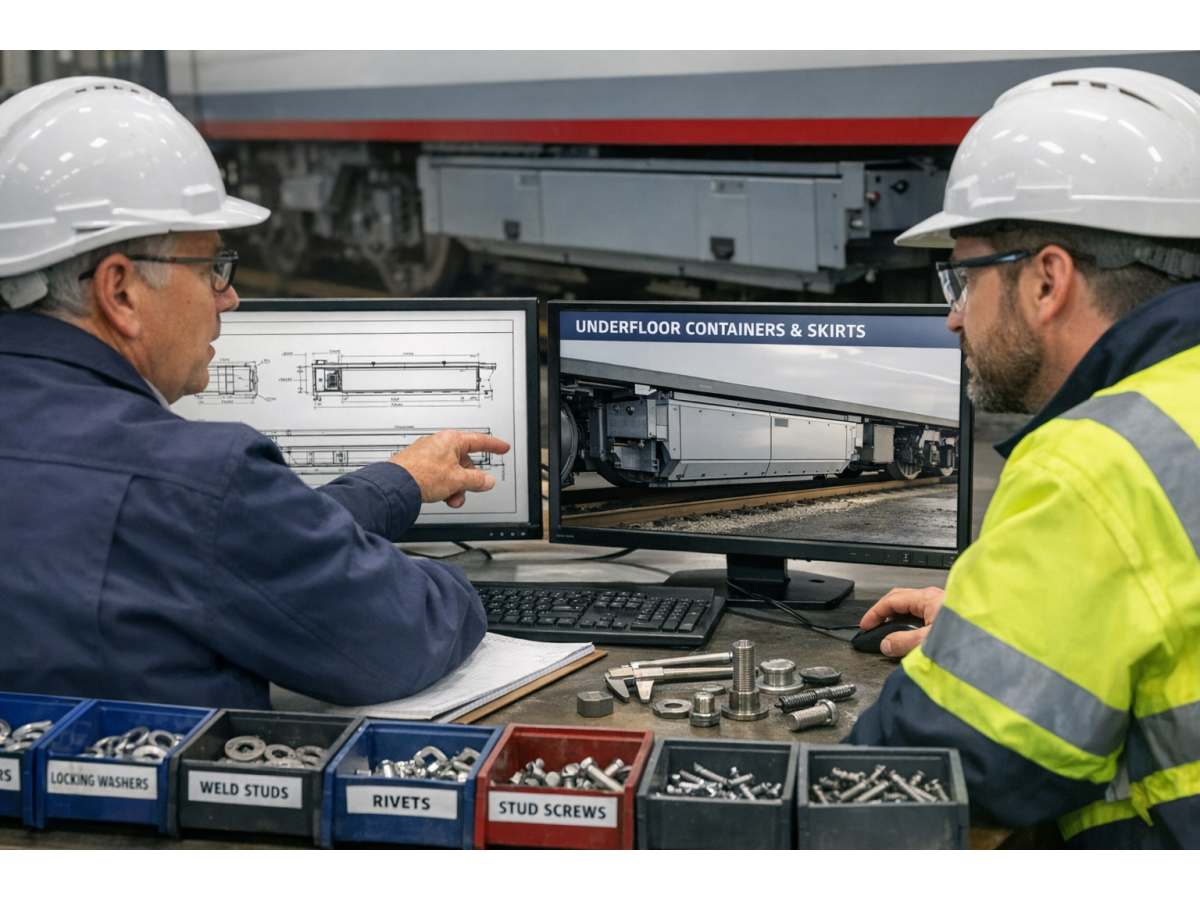
Rivet Installation Equipment
Depending on the application, steel solid rivets may be installed using:
Riveting presses
Pneumatic riveting equipment
Impact riveting tools
Specialized forming equipment
Application-specific fixtures
Production Considerations
Forming force
Tool alignment
Cycle time
Head support
Operator access
Tool wear
Part handling
Inspection
Engineering Recommendation
Validate rivet geometry using the actual production equipment.
Vibration and Fatigue in Riveted Joints
A solid rivet has no threaded locking interface.
However, this does not mean that a riveted joint is immune to fatigue or vibration-related damage.
Potential Risks
Joint slip
Fretting
Hole elongation
Fatigue cracking
Local deformation
Loss of clamping effectiveness
Engineering Recommendation
For cyclic or vibration-sensitive applications, evaluate the complete connection under representative service loads.
Corrosion Protection for Steel Solid Rivets
Steel rivets may require surface protection depending on their environment.
Potential coating systems include:
Zinc-based coatings
Black oxide
Zinc-nickel coatings
Nickel coatings
Other drawing-specified protective systems
The suitability of each system depends on the rivet material, forming method and environmental exposure.
Important Limitation
Not every coating is suitable for every rivet geometry or installation process.
Coating Damage During Riveting
Riveting plastically deforms part of the rivet.
This deformation may damage certain coatings.
Potential Effects
Cracking
Flaking
Exposed steel
Reduced corrosion protection
Local coating discontinuity
Engineering Recommendation
Evaluate coating performance after installation, not only on the uninstalled rivet.
Pre-Installation Versus Post-Installation Coating
The coating sequence can influence corrosion performance.
Pre-Installation Coating
Potential advantages include coating individual rivets before assembly.
However, forming may damage the coating.
Post-Installation Coating
Coating after riveting may protect the completed assembly, depending on access, process compatibility and environmental requirements.
Engineering Recommendation
Define the coating sequence in the assembly specification.
Hot-Dip Galvanizing Considerations
Hot-dip galvanizing may be suitable for certain steel components.
However, coating thickness, geometry, installation process and joint requirements must be considered.
Important Limitation
Hot-dip galvanizing should not automatically be specified for small precision rivets or rivets requiring substantial deformation after coating.
Galvanic Corrosion in Mixed-Metal Joints
When steel rivets contact dissimilar metals in the presence of an electrolyte, galvanic corrosion may occur.
Relevant Factors
Metal combination
Electrolyte exposure
Surface area relationship
Coating condition
Joint geometry
Engineering Recommendation
For aluminum-to-steel or other mixed-metal joints, evaluate corrosion compatibility and protective measures.
DIN 660 Rivets in Industrial Machinery
Steel solid rivets may be used in suitable machinery assemblies.
Potential applications include:
Mechanical brackets
Equipment frames
Industrial fixtures
Non-removable linkages
Selected fabricated components
Engineering Considerations
Joint load
Plate thickness
Rivet diameter
Installation access
Maintenance requirements
Important Limitation
A permanent riveted joint may not be appropriate where routine disassembly is required.
Automotive Manufacturing Applications
Solid rivets may be used in selected automotive-related components and manufacturing equipment.
Potential applications include:
Production fixtures
Equipment brackets
Noncritical fabricated assemblies
Drawing-approved mechanical components
Important Limitation
Vehicle chassis, suspension, seating and other safety-critical applications require specific engineering approval and qualification.
DIN 660 dimensional conformity alone does not establish suitability.
Railway and Rail Transit Applications
Steel rivets have historical and specialized uses in railway equipment and structures.
Potential applications may include:
Restoration work
Repair of approved riveted assemblies
Selected equipment components
Industrial maintenance applications
Engineering Considerations
Fatigue loading
Joint design
Corrosion
Inspection
Applicable rail requirements
Important Limitation
Safety-critical rail applications require the relevant engineering specification and approval.
Shipbuilding and Marine Equipment
Steel rivets have a long history in ship construction.
Modern marine applications require evaluation of the specific assembly.
Potential uses may include:
Restoration
Repair of existing riveted structures
Marine equipment
Selected fabricated components
Engineering Considerations
Corrosion exposure
Joint sealing
Material compatibility
Maintenance
Installation access
Important Limitation
A DIN 660 steel rivet is not automatically suitable for a watertight hull connection or direct seawater exposure.
Steel Structures and Construction
Steel solid rivets may be relevant to:
Restoration of riveted steel structures
Approved repair projects
Specialized fabricated connections
Industrial structural assemblies
Important Limitation
Modern structural construction often uses other approved fastening or joining systems.
A DIN 660 rivet should not be assumed suitable for a bridge or building connection without project-specific engineering requirements.
Heavy Equipment and Mining Machinery
Potential applications include:
Equipment brackets
Guards
Non-removable assemblies
Selected mechanical components
Engineering Considerations
Shock loading
Abrasion
Vibration
Corrosion
Inspection access
Important Limitation
Severe service conditions require application-specific validation.
Aerospace-Related Equipment
Solid rivets are used in aerospace manufacturing, but aerospace structural rivets are subject to specialized specifications and qualification requirements.
Important Distinction
A general industrial DIN 660 steel rivet is not automatically an approved aircraft structural rivet.
Potential industrial uses may include suitable ground-support equipment and non-flight-critical fixtures.
Electrical Equipment and Industrial Enclosures
Steel solid rivets may be used in:
Electrical cabinets
Equipment panels
Industrial enclosures
Mechanical mounting components
Fabricated assemblies
Engineering Considerations
Sheet thickness
Corrosion exposure
Assembly access
Electrical clearance
Maintenance requirements
Important Limitation
Mechanical fastening suitability does not establish electrical bonding or grounding compliance.
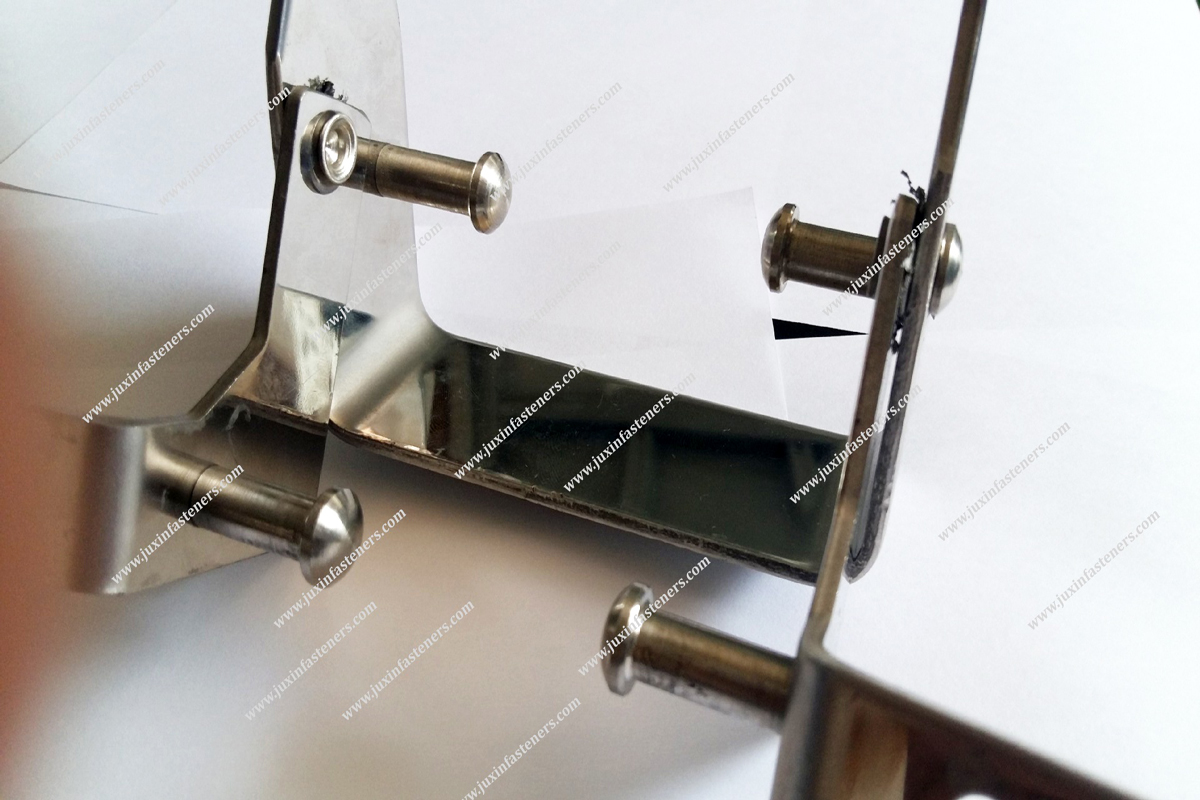
Quality Inspection of DIN 660 Steel Solid Rivets
Inspection should follow the applicable product standard and customer drawing.
Dimensional Inspection
Potential checks include:
Shank diameter
Rivet length
Factory head diameter
Head height
Head geometry
Straightness
Surface condition
Material Verification
Depending on the specification:
Material identification
Material documentation
Mechanical property verification
Hardness testing where applicable
Surface Finish Inspection
Potential checks include:
Coating type
Coating thickness
Appearance
Corrosion performance where specified
Installed Joint Inspection
Potential checks include:
Closing-head geometry
Visible cracks
Joint seating
Misalignment
Local plate deformation
Installation damage
Important Limitation
The exact inspection plan, sampling frequency and acceptance criteria depend on the application.
Production-Line Assembly Considerations
For high-volume manufacturing, rivet selection must account for installation efficiency.
Key Factors
Rivet feeding
Tooling access
Forming force
Cycle time
Operator handling
Tool wear
Fixture design
Inspection
Scrap and rework
Production Recommendation
Evaluate total installed cost rather than comparing rivet unit price alone.
Custom DIN 660 Steel Solid Rivets
OEM projects may require drawing-specific:
Diameter
Length
Head geometry
Material grade
Material condition
Surface finish
Dimensional tolerances
Packaging
Inspection requirements
Manufacturing feasibility depends on the actual design, material and expected production volume.
Supplier Qualification for Industrial Solid Rivets
Purchasing managers and supplier development teams should evaluate:
Applicable DIN standard
Drawing conformity
Material specification
Mechanical requirements
Dimensional consistency
Surface treatment
Sample approval
Inspection documentation
Production process compatibility
MOQ
Lead time
Annual demand
Packaging
Change control
Alternative Supplier Validation
A replacement rivet should be checked for more than nominal diameter and length.
Head geometry, material condition, forming behavior and installed-joint performance may affect functional interchangeability.
Engineering Recommendation
Validate alternative rivets using the actual assembly process before approving a supplier change.
Frequently Asked Questions
What is a DIN 660 solid rivet?
A solid-shank rivet with a round, domed factory head defined by the applicable DIN dimensional specification.
Are DIN 660 rivets the same as countersunk rivets?
No. DIN 660 is associated with round head solid rivets, while countersunk rivets use different head geometry and applicable standards.
Can DIN 660 steel rivets be cold riveted?
Potentially, depending on the material condition, diameter and forming equipment.
Can DIN 660 steel rivets be hot riveted?
Hot riveting may be appropriate for certain steel rivets and applications, subject to material and process requirements.
How is solid rivet length selected?
Length depends on grip thickness and the material required to form the specified closing head.
Do solid rivets resist vibration?
They have no threaded loosening mechanism, but the complete joint can still experience fatigue, slip or deformation under vibration.
Are steel solid rivets suitable for marine environments?
They may be suitable in selected protected or engineered applications, but corrosion protection and environmental exposure must be evaluated.
Can DIN 660 rivets be used in bridges or railway structures?
Only where the project design and applicable requirements approve the rivet and installation process.
Are solid rivets stronger than bolts?
Not universally. Performance depends on the complete connection, materials, geometry and loading.
Can Juxin Fasteners supply custom steel solid rivets?
Juxin Fasteners welcomes drawing-specific inquiries. Materials, dimensions, manufacturing feasibility,
inspection requirements and commercial terms require confirmation.
Juxin Fasteners: DIN 660 Steel Solid Rivets and OEM Supply
Juxin Fasteners supplies industrial steel solid rivets and drawing-specific fastening components.
Relevant product categories include:
DIN 660 round head steel solid rivets
Carbon steel solid rivets
Drawing-specific alloy steel rivets
Custom round head rivets
Industrial permanent fastening components
Other rivet head styles, materials and coatings may be reviewed according to the customer's technical requirements.
Exact materials, dimensions, mechanical requirements, inspection scope, MOQ and lead times are subject to confirmation.
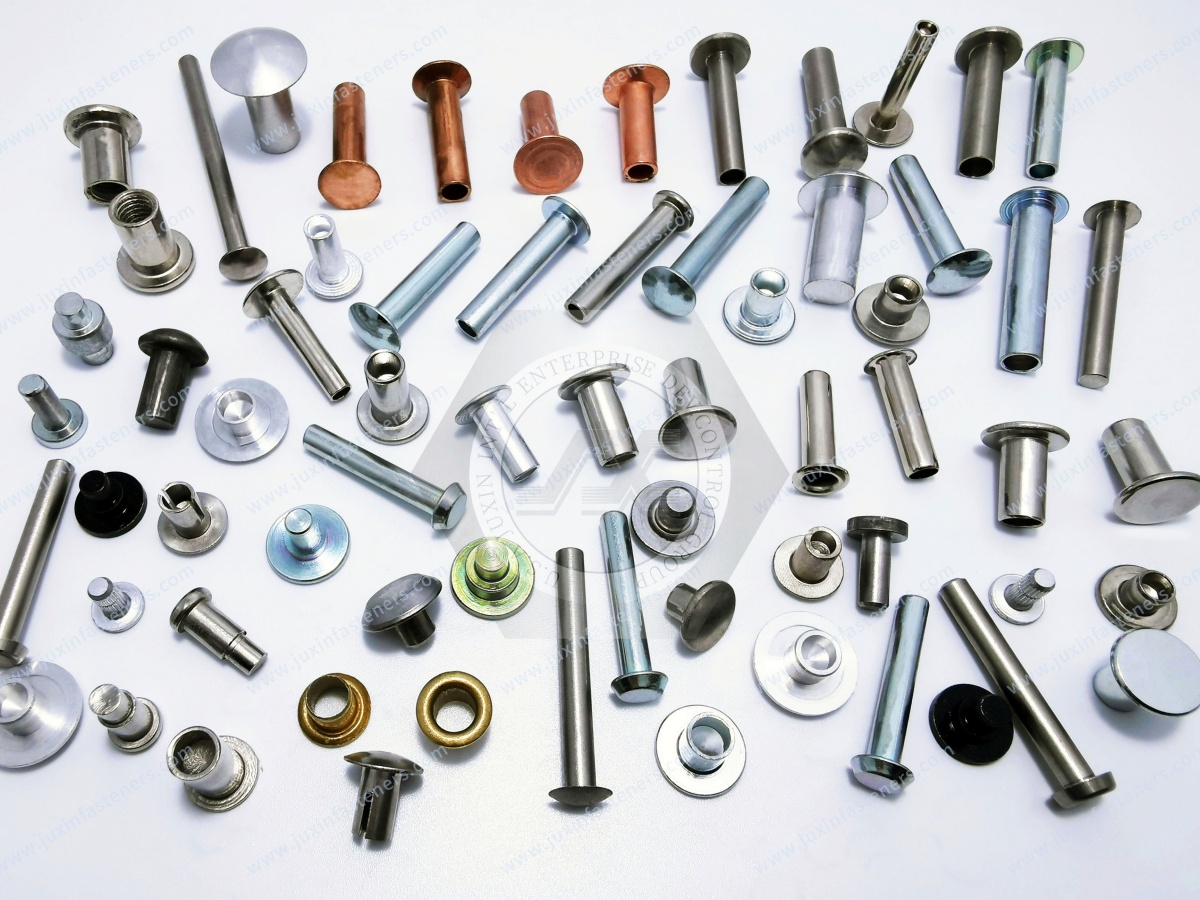
Request a Quote for DIN 660 Steel Solid Rivets
Are you sourcing DIN 660 steel round head solid rivets for industrial machinery, metal fabrication, equipment assemblies or a drawing-specific OEM project?
Juxin Fasteners welcomes inquiries from mechanical engineers, structural engineers, manufacturing engineers, production managers, purchasing specialists and supplier development teams.
For technical review and quotation, please provide:
Rivet drawing and revision + DIN 660 or applicable specification + nominal shank diameter + length + head geometry
+ material grade and condition + surface finish + connected material and thickness + grip thickness + hole diameter and tolerance
+ installation method + closing-head requirements + mechanical and corrosion requirements + inspection documentation
+ prototype quantity + annual demand + packaging + target delivery schedule.
Company: Juxin Fasteners
Website: https://www.juxinfasteners.com/
Email: info@juxinfasteners.com
Send your DIN 660 steel solid rivet drawings and OEM RFQ to Juxin Fasteners for technical confirmation, product selection and quotation.
Contact Us
Tel.:
+86 020 8621 0320
+86 020 3121 6067
E-mail:
Technical Support:
Navigation
SEND INQUIREY



