
Call Us
+86 136 6007 9809
Call Us
+86 136 6007 9809

May. 24, 2026
Technical Solution: Thread Insert Engineering Guide for Rail Transit and Automotive Applications
As the global transportation sector undergoes a massive paradigm shift toward sustainability and energy efficiency, automotive and rolling stock manufacturers are aggressively pursuing lightweighting strategies. Heavy steel assemblies are increasingly being replaced by low-density materials such as extruded aluminum, magnesium alloys, and fiber-reinforced composite structures.
However, these lightweight materials exhibit significantly lower shear strength compared to traditional steel, making tapped threads highly susceptible to stripping, galling, and premature failure under cyclic loads.
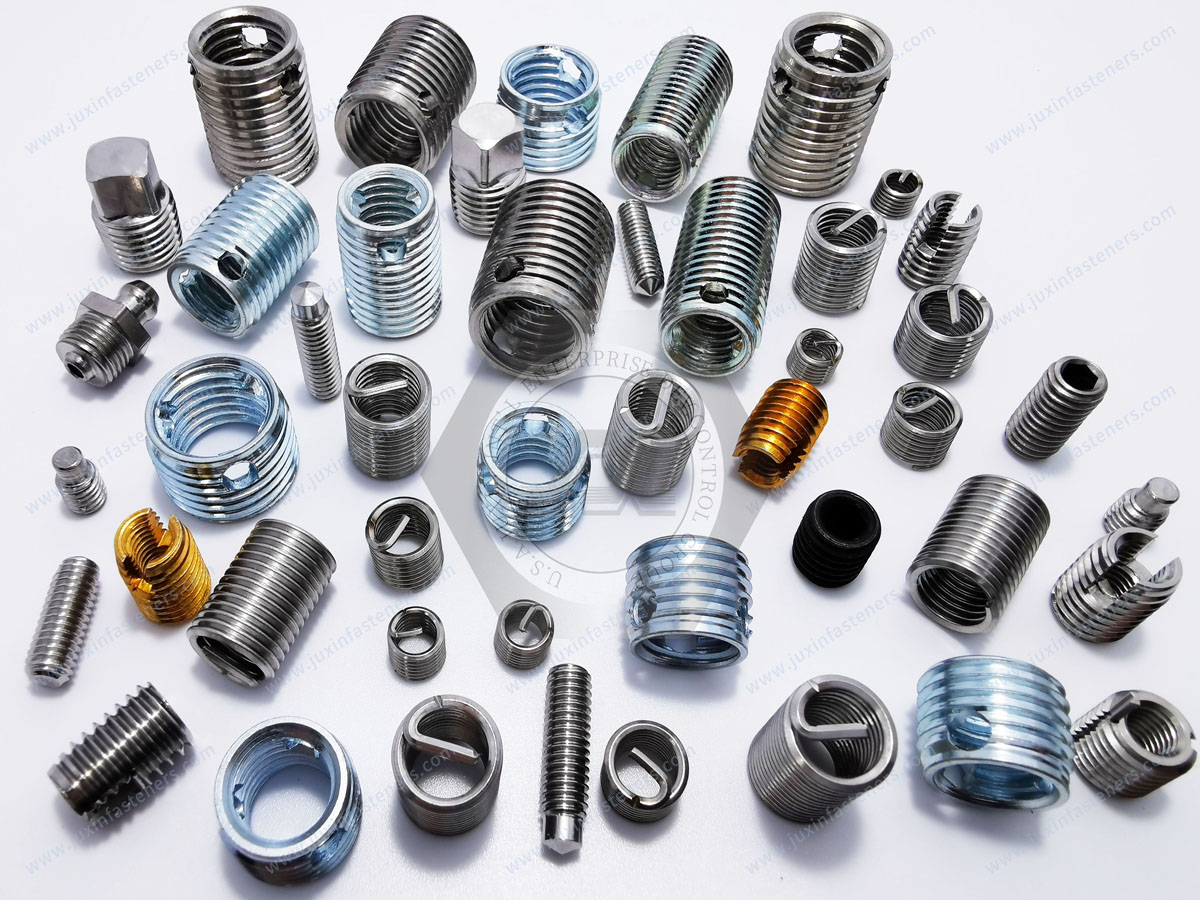
To bridge this structural gap, high-performance stainless steel thread inserts have become an industry-standard engineering solution. These precision-formed wire or solid inserts provide heavy-duty, high-strength internal threads that reinforce soft metal parent substrates, ensuring long-term joint integrity in demanding transit environments.
High-Performance Material Selection for Industrial Environments
Selecting the appropriate core metallurgy for thread inserts is critical to achieving the required tensile strength and preventing galvanic corrosion. Our manufacturing lines produce inserts categorized into two primary material grades:
Stainless Steel Inserts: Fabricated from premium work-hardened austenitic alloys (such as Grade 304 or 316), these inserts offer exceptional resistance to atmospheric corrosion, chemical exposure, and thermal degradation. They provide an ultra-smooth internal thread profile that dramatically minimizes thread friction and eliminates fastener galling during assembly.
Carbon Steel Inserts: Heat-treated for enhanced hardness and tensile properties, these inserts provide a highly cost-effective, high-load-capacity solution for internal components where environmental exposure is controlled or where specialized surface platings (such as zinc-nickel) are applied to resist corrosion.
Critical Engineering Advantages of Thread Reinforcement
Integrating premium stainless steel thread inserts into lightweight castings or profiles yields measurable mechanical and operational benefits:
Prevent Thread Stripping: By distributing the clamping forces and localized stresses from the bolt across a significantly larger surface area within the softer parent material, our inserts eliminate the risk of thread stripping, even under high installation torque.
Increase Load-Bearing Capacity: The flexible design of wire thread inserts compensates for pitch and angle errors between the internal and external threads. This optimized load distribution ensures that the entire length of thread engagement contributes uniformly to holding power, maximizing joint pull-out strength.
Enable Seamless Repairability: In maintenance, repair, and overhaul (MRO) applications, damaged or stripped factory threads can be easily drilled out, re-tapped, and retrofitted with our inserts. This restores the component to its original blueprint specification without requiring expensive housing scrap or component replacement.
Strategic Applications Across Modern Transit Sectors
The dual-industry versatility of advanced thread insert technology makes it a cornerstone component in several high-growth manufacturing sectors:
Aluminum Rail Car Fillers and Body Structures
In high-speed and urban rail vehicle production, extruded aluminum profiles make up the main carbody structures. Our inserts provide robust, reusable fastening points for structural brackets, structural floor mountings, and dynamic bogie attachments, where direct tapping into aluminum would fail over time due to track-induced vibrations.
Electrical Housings and Control Enclosures
Onboard signaling cabinets, driver console frames, and power distribution boxes rely on thread inserts. They ensure that sensitive electrical enclosures can be opened and re-closed repeatedly for routine maintenance checks without compromising the sealing torque or stripping the threads.
E-Mobility and Electric Vehicle (EV) Battery Enclosures
In the automotive sector, EV battery trays and pack enclosures are primarily engineered from lightweight aluminum castings to maximize driving range. Our inserts provide the high-tensile joint security required to fasten battery covers and internal cooling plates, ensuring structural safety and environmental sealing against moisture ingress.
Global Technical Compliance and Engineering Support
Our manufacturing processes are fully certified to international quality standards, ensuring that every insert delivers precise dimensional accuracy and material traceability required by Tier-1 automotive and aerospace-grade rail OEMs.
We offer comprehensive design support, including technical data sheets detailing pull-out testing profiles, minimum parent-material thickness requirements, and recommended installation tooling.
To streamline your design phase, request digital CAD files, or obtain a comprehensive quote for your high-volume production line, contact our application engineering team today.
 MORE NEWS
Sep. 27, 2026
Sep. 27, 2026
Sep. 27, 2026
Contact Us
Tel.:
+86 020 8621 0320
+86 020 3121 6067
E-mail:
Technical Support:
Navigation
SEND INQUIREY