
Call Us
+86 136 6007 9809
Call Us
+86 136 6007 9809

Oct. 21, 2023
A strut channel spring nut is a compact fastening component, but its design involves more than simply attaching a spring to a threaded nut.
For the component to function correctly, several features must work together:
the threaded nut body;
channel-engagement geometry;
nut width and thickness;
optional serrations or teeth;
positioning spring;
spring length and stiffness;
material and surface finish;
compatible strut channel geometry.
This is why two spring nuts with the same thread designation are not necessarily interchangeable.
For engineers and procurement teams, understanding spring nut structure is especially important when selecting replacement parts,
qualifying alternative suppliers or developing custom channel fastening components.
JUXIN FASTENERS supports standard and custom nuts, threaded components and application-specific fasteners based on drawings, specifications, physical samples and OEM requirements.
A conventional strut channel spring nut can be divided into two main assemblies:
1. Threaded channel nut body
2. Positioning spring
However, from an engineering perspective, the nut body itself contains several functional features.
These can include:
internal thread;
upper bearing or engagement surface;
channel-engagement edges;
serrations or teeth;
side geometry;
lower spring attachment area.
Each feature influences how the component fits, positions and engages within its intended channel.
The nut body is the primary mechanical component.
It provides the female thread for the mating bolt and transfers load into the channel.
Unlike a conventional hex nut, a channel nut is shaped to interact with the internal geometry of a strut channel.
Important design variables include:
length;
width;
thickness;
thread size;
thread position;
engagement geometry;
edge profile;
serration geometry where used.
These dimensions cannot be selected independently from the intended channel.
The internal thread provides the connection to the mating bolt.
Depending on the market and application, spring nuts can use metric or Unified inch threads.
The thread specification should match the actual bolt system.
Important considerations include:
thread designation;
pitch or threads per inch;
thread tolerance;
effective thread engagement;
nut thickness;
bolt material and grade;
coating.
Thread size alone does not identify the complete spring nut.
For example, two products may both use M10 threads while having completely different external geometry for different strut channels.
Nut thickness affects more than overall component size.
It can influence:
available thread engagement;
mechanical stiffness;
channel fit;
available installation space;
engagement geometry.
A thicker nut is not automatically stronger in every channel system.
If the geometry prevents correct seating against the channel lips, additional thickness can be irrelevant or even create interference.
The nut must therefore be designed as part of the complete channel interface.
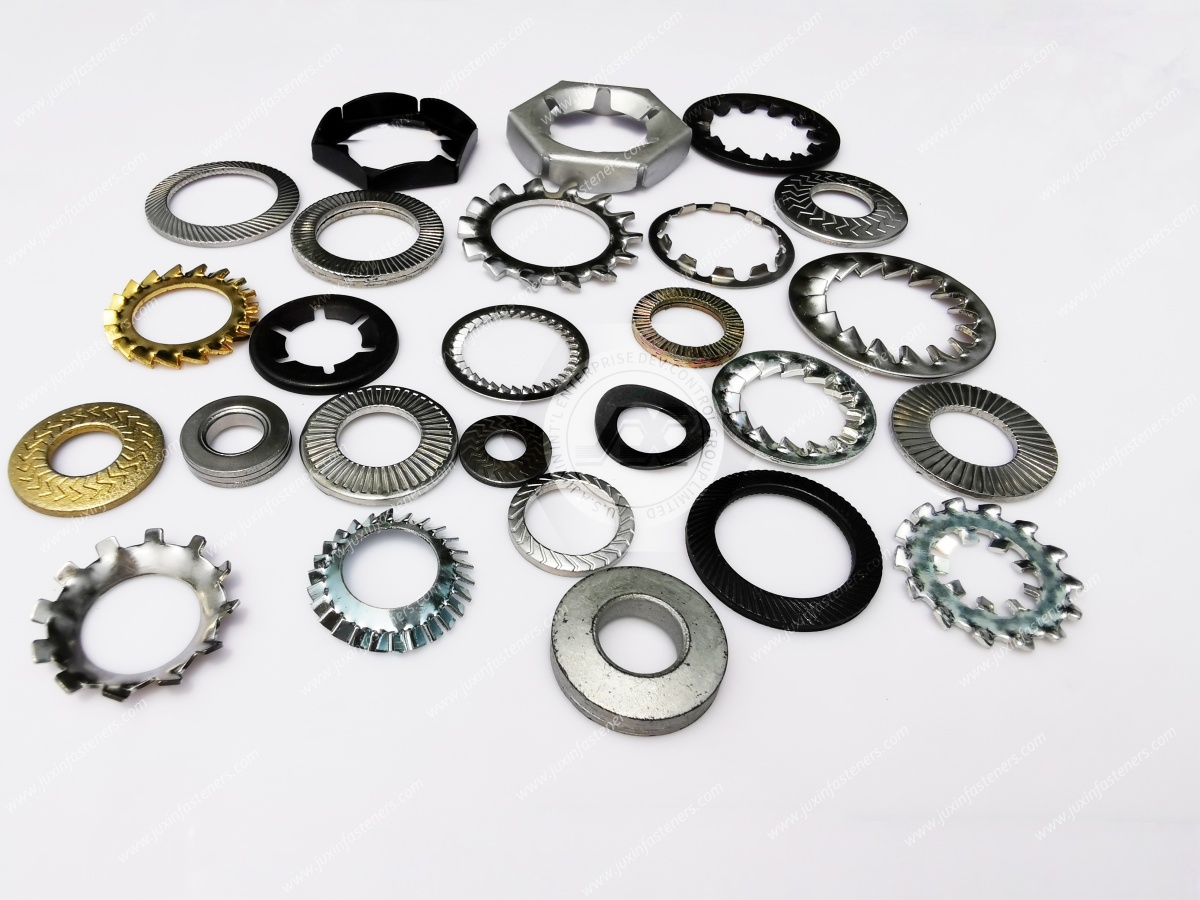
Nut width is one of the most important dimensions for channel compatibility.
The nut must:
enter the channel opening as intended;
rotate or position correctly where required;
engage the channel lips;
avoid excessive lateral clearance;
fit the internal channel geometry.
A replacement nut that is only slightly different in width can behave differently during installation.
For legacy-part sourcing, measuring nut width is therefore essential.
The surfaces that contact the channel lips form a critical part of the mechanical interface.
Their geometry determines how the nut seats against the channel after the mating bolt is tightened.
Depending on the design, engagement surfaces can be:
flat;
grooved;
serrated;
toothed;
otherwise profiled.
The geometry must correspond to the intended channel.
This interface—not the positioning spring—is a major part of how load is transferred from the nut into the support channel.
Many channel nuts incorporate serrations or teeth on their engagement surfaces.
These features are designed to interact with compatible channel surfaces.
Depending on the system, serrations can contribute to controlled mechanical engagement and resistance to relative movement.
However:
serrated does not automatically mean higher load capacity.
The actual performance depends on the combination of:
serration geometry;
nut material;
channel geometry;
channel material;
bolt preload;
loading direction.
A serrated nut should therefore be evaluated as part of its intended channel system.
The attached spring primarily assists installation and positioning.
It can help:
hold the nut toward the channel opening;
prevent the nut from dropping deeper into the channel;
maintain temporary positioning;
allow the nut to be moved along the channel;
simplify installation in vertical or overhead orientations.
This function is particularly useful when installers need to align brackets, clamps or fittings before the bolt is installed.
This is an important distinction.
In a conventional strut channel spring nut, the spring should not be described as generating continuous pressure between the mating bolt and nut threads.
It is not automatically equivalent to:
a prevailing-torque lock nut;
a nylon insert lock nut;
an all-metal lock nut;
a vibration isolator.
The primary bolted connection is created when the mating bolt is tightened into the channel nut and the nut engages the channel.
The spring mainly assists installation.
Spring length is an important compatibility parameter.
Different channel depths may require different spring configurations.
If the spring is too short, it may not position the nut effectively.
If the spring is too long, it may:
interfere with insertion;
become excessively compressed;
prevent correct positioning;
interfere with other components inside the channel.
Therefore, spring length should be selected according to channel geometry.
Spring outside diameter can also influence compatibility.
An oversized spring may interfere with the channel walls.
A very small spring may provide insufficient positioning behavior for the intended design.
The available internal channel envelope should therefore be considered when designing or reproducing a spring nut.
Wire diameter affects spring behavior.
Changing wire diameter can change:
stiffness;
compression characteristics;
durability;
available clearance;
manufacturability.
For replacement parts, visually similar springs should not automatically be assumed equivalent.
If spring behavior is important to installation, the spring dimensions should be defined.
The method used to attach the spring must keep it connected to the nut during:
handling;
packaging;
installation;
positioning;
normal assembly operations.
The exact attachment design can vary by product.
For custom spring nuts, the attachment feature should be reviewed together with the nut-body manufacturing process.
The objective is reliable positioning without interfering with the thread or channel-engagement surfaces.
A spring nut cannot be designed correctly without understanding the mating channel.
Important channel dimensions can include:
overall width;
overall depth;
opening width;
lip dimensions;
material thickness;
internal clearance;
profile geometry.
This explains why "M8 spring nut" is not a complete engineering specification.
The thread defines only one interface.
The channel defines another.
Both must be compatible.
Different channel depths can require different spring configurations.
A deeper channel may use a longer positioning spring.
A shallower channel may require a shorter spring.
However, channel depth alone does not establish compatibility.
The nut body must still match:
opening geometry;
channel lips;
width;
internal profile.
For replacement sourcing, the complete channel cross-section is more useful than channel depth alone.
Not every channel nut requires a metal spring.
A springless channel nut can use another method of positioning or may simply be installed manually before tightening.
The mechanical purpose of the nut remains similar:
provide a threaded attachment point within the channel.
The spring mainly improves installation convenience.
Therefore, the decision between spring and springless designs can involve assembly method as much as structural performance.
Modern channel fasteners can also use:
plastic retainers;
twist-lock features;
push-in mechanisms;
preassembled connectors;
other proprietary retention systems.
These designs can improve installation speed for specific support systems.
Conventional metal spring nuts remain useful where compatibility, simplicity and established channel architecture make them appropriate.
Nut-body material should be selected according to the mechanical and environmental requirements of the assembly.
Important factors include:
required mechanical properties;
thread strength;
channel interaction;
corrosion exposure;
coating requirements;
temperature;
customer specification.
Steel is commonly used for many industrial channel nuts.
Stainless steel may be appropriate for certain corrosive or demanding environments.
Material should not be specified solely by appearance.
The spring has a different function from the nut body.
Its material should provide suitable elastic behavior and durability for the positioning function.
Relevant considerations can include:
elastic properties;
corrosion environment;
spring geometry;
compression cycles;
storage and handling conditions.
The spring and nut body therefore do not necessarily require identical materials.
Surface finish can be selected according to the service environment and mating support system.
Possible industrial approaches include appropriate:
zinc-based coatings;
zinc-flake systems;
hot-dip galvanized configurations;
stainless steel materials;
other specified corrosion-protection systems.
The complete assembly should be considered.
Using a corrosion-resistant nut with an unsuitable bolt or channel does not automatically create a corrosion-resistant support system.
Coatings can affect threaded components.
Excessive or uncontrolled coating thickness may influence:
thread fit;
assembly torque;
dimensional compatibility;
appearance.
Thread and coating requirements should therefore be considered together during manufacturing and supplier qualification.
Depending on geometry, material, volume and specification, channel nuts can be produced using suitable forming,
stamping, machining, threading and secondary manufacturing processes.
A manufacturing route should be selected based on:
part geometry;
material;
mechanical requirements;
tolerance;
production quantity;
tooling economics.
A prototype or low-volume custom nut may require a different manufacturing approach from a high-volume standardized component.
Internal threads may be produced using an appropriate threading process depending on the material, geometry and manufacturing route.
The finished thread should meet the drawing or specified thread requirements.
For supplier qualification, engineers may need to define:
thread specification;
thread tolerance;
coating condition;
inspection requirements.
Thread inspection should be performed according to the applicable specification rather than relying only on a mating bolt test.
Not every dimension requires the same tolerance.
Function-critical dimensions can include:
nut width;
nut thickness;
engagement geometry;
thread position;
spring dimensions.
Other dimensions may allow wider manufacturing tolerance without affecting assembly.
For custom OEM components, defining functional tolerances rather than unnecessarily tight tolerances can improve manufacturing efficiency and cost control.
A good spring-nut drawing should focus on the interfaces that control function.
These include:
Thread interface
How the bolt engages the nut.
Channel interface
How the nut enters and engages the channel.
Spring interface
How the spring positions the nut inside the channel.
Mounted-component interface
How the assembled fastener works with the bracket or fitting.
This interface-based approach can make a custom drawing more useful than simply dimensioning every visible feature.
When developing or replacing a spring nut, useful dimensions include:
overall nut length;
overall nut width;
nut thickness;
thread designation;
thread location;
engagement-surface geometry;
serration dimensions where applicable;
spring free length;
spring outside diameter;
spring wire diameter;
assembled overall height.
Channel dimensions should also be provided.
Photographs are useful for identifying the general product family.
However, perspective and scale make it difficult to determine:
exact width;
exact thickness;
thread;
serration geometry;
spring dimensions;
channel fit.
For quotation and sample development, a physical sample, drawing or measured dimensions can substantially reduce uncertainty.
Older machinery or infrastructure may use a spring nut for which the original supplier or part number is unavailable.
A replacement-development process can begin with:
physical sample review;
thread identification;
dimensional measurement;
channel-profile measurement;
material review;
coating review;
application review;
sample production;
fit and assembly validation.
The objective should not simply be to reproduce appearance.
The replacement must reproduce the required interfaces and function.
A used spring nut may have:
worn serrations;
deformed edges;
corrosion;
damaged threads;
compressed or distorted spring geometry.
Measured dimensions from a worn sample may therefore differ from the original component.
Where possible, multiple samples and the mating channel should be reviewed.
Strut-channel systems are widely used to support electrical installations.
Spring nuts can provide adjustable attachment points for:
cable-support systems;
conduit brackets;
electrical equipment;
power-distribution infrastructure;
control equipment;
instrumentation.
For these applications, engineers should consider both mechanical requirements and environmental conditions.
HVAC and MEP systems frequently use modular channel supports for:
ducting;
pipework;
mechanical services;
suspended equipment;
utility brackets.
Spring nuts make these mounting points adjustable before final tightening.
This installation flexibility is one of the main reasons the design remains widely useful.
Data-center facilities contain extensive electrical, cooling and mechanical infrastructure.
Channel support systems can be used around:
electrical distribution;
cooling pipework;
cable management;
equipment support;
MEP infrastructure.
Spring nuts and related channel fasteners therefore have potential applications within data-center construction and equipment-support supply chains.
The component must still match the approved channel and support-system requirements.
Industrial equipment and automation systems often need flexible mounting positions for:
sensors;
electrical equipment;
cable management;
brackets;
guards;
utility components.
Channel systems allow these components to be repositioned without machining a new fixed threaded hole.
Spring nuts provide the adjustable threaded interface.
A standard product is preferable when it meets:
channel geometry;
thread;
material;
coating;
load requirements;
installation needs.
A custom spring nut becomes relevant when the assembly requires:
proprietary channel geometry;
non-standard nut dimensions;
special thread;
modified engagement features;
special spring configuration;
unique material;
customer-specific coating;
discontinued replacement part.
Custom design should start from functional requirements rather than appearance alone.
A custom spring nut should be designed not only to fit but also to manufacture consistently.
Design-for-manufacturing questions include:
Can the nut geometry be formed economically?
Are tolerances functionally necessary?
Is sufficient material available around the internal thread?
Can serrations be produced consistently?
Can the spring be attached reliably?
Will the selected coating affect fit?
Can the component be inspected efficiently?
What production volume is expected?
Addressing these questions early can reduce unnecessary tooling changes and sourcing delays.
For a new or replacement spring nut, follow this sequence.
Obtain the channel profile and dimensions.
Specify metric or inch thread and mating bolt.
Establish maximum and minimum width, length and thickness.
Determine how the nut contacts and engages the channel lips.
Determine the spring length and geometry required for positioning.
Select nut and spring materials according to mechanical and environmental requirements.
Choose the corrosion-protection system and consider mating-component compatibility.
Control dimensions that affect channel fit, thread function and spring positioning.
For new designs, verify fit before full production.
Where performance is critical, validate the nut with the actual channel, bolt and fitting.
A complete RFQ should ideally include:
part drawing;
channel drawing or profile;
thread specification;
nut length;
nut width;
nut thickness;
engagement geometry;
serration requirements;
spring free length;
spring diameter;
spring wire diameter;
nut material;
spring material where specified;
finish;
corrosion requirement;
mating bolt;
application;
annual quantity;
packaging requirement;
inspection requirement.
If some information is unavailable, a physical sample can provide a useful starting point.
A typical strut channel spring nut consists of a threaded channel nut body and an attached positioning spring.
The spring primarily helps hold and position the nut inside the channel before the mating bolt is tightened.
Not in the conventional strut spring-nut design. The positioning spring should not be confused with a prevailing-torque locking mechanism.
The structural load path primarily involves the bolt, threaded nut, channel-engagement surfaces and channel. The spring mainly assists positioning.
Serrations provide an engagement feature for compatible channel profiles. Their performance depends on the complete nut/channel system.
Different channel depths and installation geometries require different positioning-spring configurations.
Not necessarily. Nut width, thickness, engagement geometry and spring configuration may differ.
Thread, nut width, length, thickness, engagement geometry, spring dimensions and the mating channel profile are particularly useful.
A sample can be used as a starting point for dimensional and manufacturing review. The mating channel and application information should also be provided where possible.
Custom development can be appropriate for proprietary channels, discontinued parts, special threads, unusual dimensions, special materials or OEM-specific mounting systems.
Yes. JUXIN FASTENERS supports drawing-based and sample-based development of custom fastening components for industrial and OEM applications.
A spring nut should not be specified only as:
"M8 spring nut"
or:
"M10 spring nut."
Those descriptions define the thread, but not the complete component.
Reliable spring-nut selection requires consideration of:
thread + nut geometry + channel engagement + spring configuration + material + coating + mating channel.
For engineers, these interfaces determine whether the component fits and functions correctly.
For procurement and supplier-development teams, defining them reduces the risk of sourcing a visually similar but incompatible replacement.
JUXIN FASTENERS supports global OEM, ODM, engineering, procurement, sourcing and supplier-development teams with standard and custom nuts, threaded components and application-specific fasteners.
If you have an existing drawing, send the drawing.
If the original drawing is unavailable, send a physical sample together with the mating channel or channel dimensions.
If you are developing a new channel system, send the channel cross-section, thread requirements, material requirements and application information.
We can support technical review, manufacturing feasibility evaluation, sample development, custom fastener development, quotation and production sourcing.
Email: info@juxinfasteners.com
Website: www.juxinfasteners.com
Previous: Push-On Nuts & Shaft Retainers
 MORE NEWS
Sep. 27, 2026
Sep. 27, 2026
Sep. 27, 2026
Contact Us
Tel.:
+86 020 8621 0320
+86 020 3121 6067
E-mail:
Technical Support:
Navigation
SEND INQUIREY