
Call Us
+86 136 6007 9809
Call Us
+86 136 6007 9809

Oct. 21, 2023
Strut channel spring nuts are widely used to create adjustable threaded attachment points inside metal framing and modular support channels.
They are commonly found in electrical, HVAC, MEP, pipe-support, industrial equipment, power-distribution and data-center infrastructure.
Although the component looks simple, its working principle is frequently misunderstood.
A typical strut channel spring nut combines two functional elements:
a threaded channel nut that forms the mechanical connection
and
a spring that helps position the nut during installation.
The spring should not automatically be interpreted as a self-locking mechanism that continuously pushes against the bolt threads or generates the primary clamping force.
Understanding this distinction helps engineers select the correct component, helps installers avoid assembly errors, and helps procurement teams identify replacement spring nuts more accurately.
JUXIN FASTENERS supplies standard and custom nuts, threaded components and application-specific fasteners for industrial OEM and equipment applications.
A typical spring nut works through the interaction of four elements:
the channel;
the channel nut;
the positioning spring;
the mating bolt.
The spring nut is inserted into the open side of a compatible strut channel.
The spring helps keep the threaded nut close to the channel opening and provides temporary positioning while the installer moves the nut to the required location.
A bracket, clamp, fitting or other component is then positioned over the channel.
The bolt passes through that component and threads into the spring nut.
As the bolt is tightened, the channel nut engages the channel lips or internal profile.
The mechanical connection is then established through:
bolt → channel nut → channel profile → support structure.
That load path is the key to understanding how the component actually works.
The spring is primarily an installation feature.
Depending on the product and channel configuration, it can help:
hold the nut near the channel opening;
keep the nut from falling deeper into the channel;
temporarily maintain its position;
simplify horizontal or vertical adjustment;
support alignment with a bracket or fitting;
make overhead installation easier.
This is especially useful because channel systems are designed to allow the attachment point to move before final tightening.
The installer can position the nut where the connected equipment actually needs to be mounted rather than relying on a permanently located threaded hole.
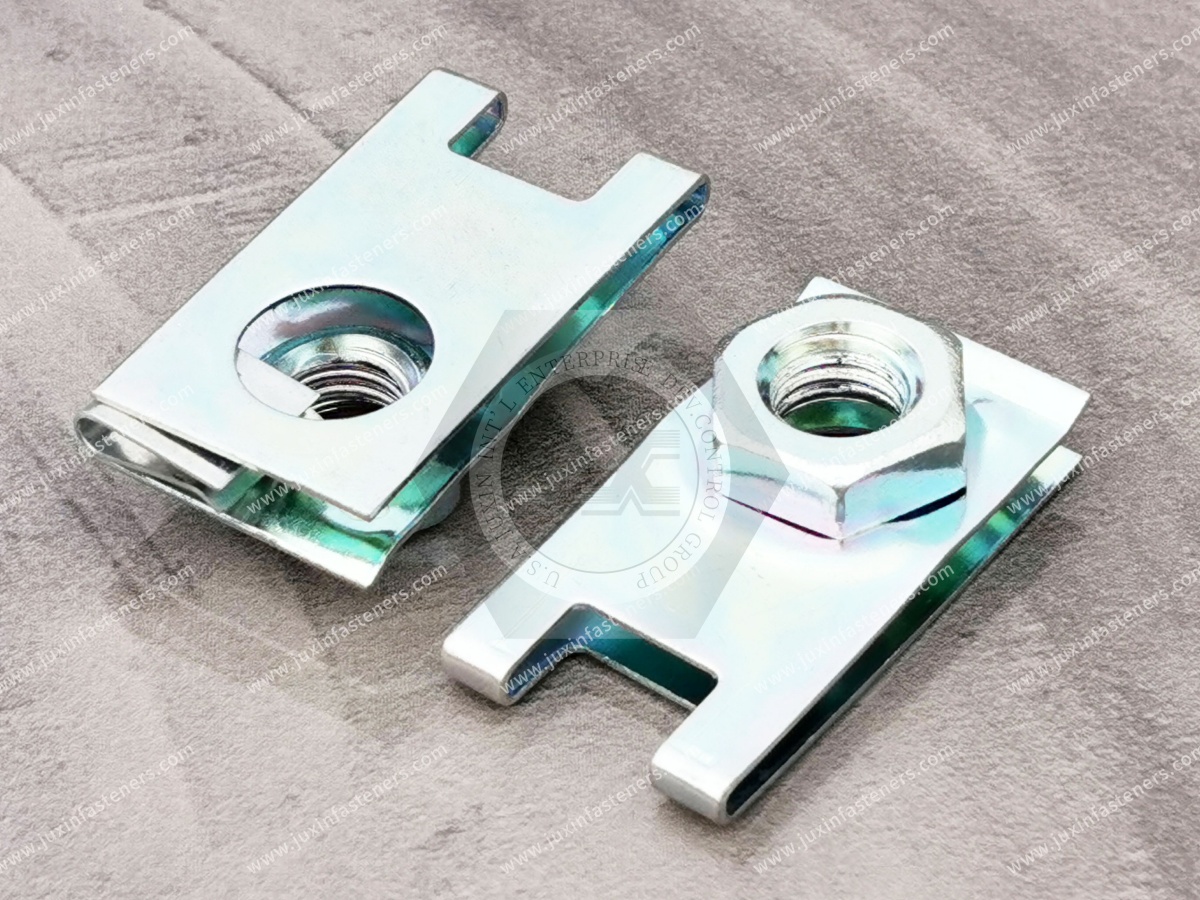
In a conventional strut channel spring nut, that is not the primary working principle.
The spring is attached to the channel nut and normally acts against the inside of the channel to assist positioning.
It should not be described as continuously applying pressure to the mating threads to create a prevailing-torque locking effect.
That mechanism would describe a different type of locking technology.
This distinction is important because spring nut is a product name that can easily be misinterpreted.
The presence of a spring does not automatically mean that the component is a self-locking nut.
The primary clamping force is generated when the bolt is tightened into the threaded channel nut.
As with other bolted joints, preload is influenced by factors including:
applied tightening torque;
thread geometry;
bolt material;
nut material;
surface coating;
lubrication;
thread friction;
bearing friction;
joint stiffness.
The positioning spring should therefore not be credited with maintaining the primary clamp load of the completed connection.
The nut body is designed to interact with a compatible channel profile.
Depending on the system, the nut may have:
shaped edges;
grooves;
serrations;
teeth;
other engagement features.
When correctly positioned and tightened, these features interact with the channel lips or internal bearing surfaces.
This helps transfer load from the bolt and mounted component into the channel.
The exact engagement geometry varies between channel systems.
For this reason, two spring nuts with the same thread size may not be interchangeable.
A spring nut normally needs to be oriented correctly inside the channel.
If the nut is positioned incorrectly, its engagement surfaces may not seat properly against the channel profile.
Potential consequences include:
poor engagement;
nut rotation;
slipping;
reduced bearing area;
damage to channel lips;
difficulty tightening the bolt;
inconsistent connection performance.
Installation instructions for the approved channel system should therefore be followed where available.
A common installation sequence is as follows.
Before installation, verify:
channel profile;
nut width;
nut thickness;
spring configuration;
thread size;
mating bolt.
The nut should be designed for the channel being used.
Insert the spring nut into the channel opening.
The spring compresses as necessary inside the channel.
Rotate or position the nut so its engagement surfaces align with the channel lips.
The exact movement depends on the channel-nut design.
Slide the nut along the channel until it reaches the required mounting position.
This adjustability is one of the major advantages of strut-channel systems.
Place the bracket, fitting, clamp, plate or other mounted component over the attachment location.
Insert the mating bolt through the connected component and engage the nut threads.
Ensure adequate thread engagement according to the approved assembly design.
Tighten according to the applicable channel-system or engineering requirements.
Do not apply a universal torque value to every spring nut because torque requirements vary by product and system.
Nut rotation can occur for several reasons.
Potential causes include:
incorrect nut orientation;
incompatible nut and channel;
damaged engagement features;
excessive channel clearance;
incorrect nut dimensions;
worn channel lips;
poor initial positioning;
damaged components.
A rotating nut should not automatically be solved by applying more tightening torque.
The first step should be to determine whether the nut is correctly matched and engaged with the channel.
Slipping can indicate a problem with the load-transfer interface.
Possible causes include:
incompatible channel geometry;
incorrect nut width or thickness;
inadequate engagement;
damaged serrations or teeth;
channel deformation;
incorrect installation;
excessive load;
inappropriate loading direction.
This is one reason replacement sourcing should not rely only on thread size.
An M8 or M10 thread identifies the threaded interface but does not completely identify the channel nut.
The channel is part of the fastening system.
Important dimensions can include:
channel width;
channel depth;
opening width;
lip geometry;
material thickness;
internal shape.
The spring nut must fit this geometry correctly.
A visually similar nut designed for another channel family may thread onto the same bolt but fail to engage the channel correctly.
For procurement teams, this creates a common sourcing risk.
Spring length affects installation positioning.
A spring intended for a deeper channel may not work correctly in a shallow channel.
Likewise, a short spring may not provide useful positioning in a deeper profile.
Spring selection should therefore consider:
channel depth;
installation orientation;
nut position;
available internal space.
Spring length should not be treated as a load rating.
Its primary purpose remains positioning.
The difference between long- and short-spring versions is primarily related to channel geometry and installation behavior.
A long spring can provide suitable positioning in certain deeper profiles.
A short spring can be appropriate for shallower profiles or where internal clearance is limited.
The correct version should be matched to the actual support system.
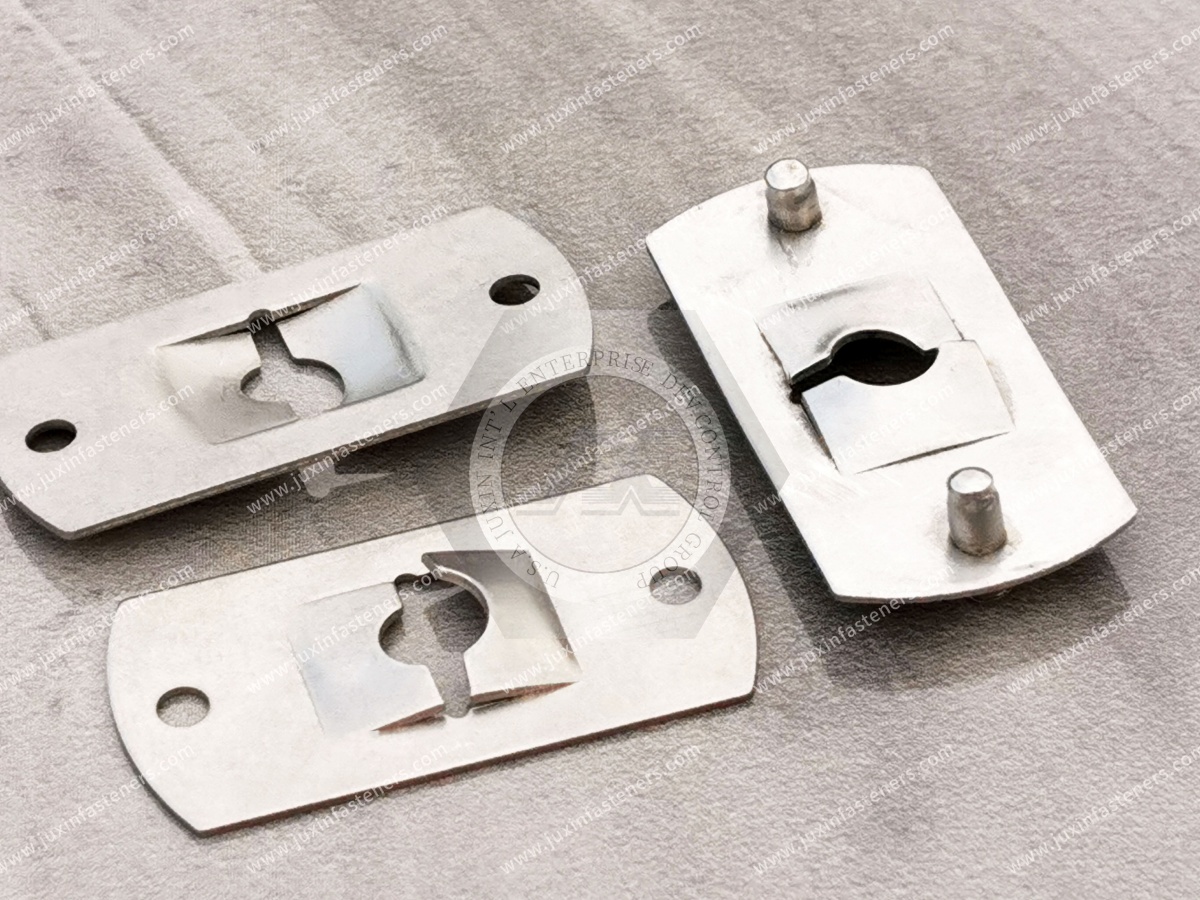
Some channel nuts use serrated or toothed engagement surfaces.
When tightened against a compatible channel, these features interact with the channel lips.
They may contribute to:
positional retention;
resistance to relative movement;
defined mechanical engagement.
However, serrations should not be described as universally increasing load capacity.
Performance depends on the nut and channel working together as a system.
Not simply because it has a spring.
A conventional strut channel spring nut should not automatically be classified as a prevailing-torque lock nut.
Dedicated self-locking nuts can use mechanisms such as:
prevailing thread deformation;
polymer locking elements;
all-metal locking geometry;
other controlled interference systems.
The positioning spring on a channel nut serves a different purpose.
If resistance to vibration-induced loosening is required, the complete joint should be evaluated and an appropriate locking strategy selected.
It should not be treated as a vibration isolator.
The small spring used for positioning is not normally intended to isolate the mounted equipment from operational vibration.
Vibration-control systems may instead require:
elastomeric isolators;
vibration mounts;
engineered supports;
appropriate locking fasteners;
other application-specific components.
The spring nut's main role remains providing an adjustable threaded attachment point inside the channel.
Understanding the load path provides useful engineering insight.
A simplified connection may transfer load through:
mounted component → bolt → threaded channel nut → channel lips/profile → channel → support/anchor system.
Every component in that chain matters.
The connection can therefore be limited by:
bolt strength;
thread strength;
nut geometry;
channel-lip capacity;
channel section;
fitting strength;
anchor system;
support structure.
The spring itself is normally not the primary structural load-carrying element.
Under tension loading, the mounted component tends to pull away from the channel opening.
The channel nut transfers this force into the channel lips or engagement surfaces.
The capacity depends on the complete nut/channel geometry and material system.
Under shear loading, force acts parallel to the connection interface.
Load transfer may involve the bolt, fitting, nut, channel and frictional/contact interfaces.
Again, the complete assembly must be evaluated.
Real installations can experience both tension and shear.
Examples include:
suspended equipment;
pipe supports;
HVAC assemblies;
cable support systems;
equipment brackets.
For load-critical installations, system-specific engineering data should be used.
It would be incorrect to say:
"An M10 spring nut can carry X kN."
Thread size alone does not define the connection.
The result also depends on:
channel profile;
channel thickness;
nut dimensions;
nut material;
bolt;
fitting;
load direction;
installation;
support configuration.
For engineering applications, load information should therefore be tied to a defined system or validated assembly.
Installation torque can change with:
thread size;
material;
coating;
lubrication;
bolt specification;
nut geometry;
channel system;
fitting.
Applying a torque value from one manufacturer's system to a visually similar component in another system may not be appropriate.
Where a validated support system provides an installation torque, follow that requirement.
For custom systems, engineering validation may be needed.
Several installation errors can reduce reliability.
The engagement surfaces do not properly contact the channel lips.
Thread size matches, but nut width or engagement geometry does not.
The spring does not position the nut correctly.
The mating bolt does not engage enough thread for the approved design.
Overtightening can damage threads, fittings, nut geometry or the channel.
The connection may not develop the required preload or seating.
Bent or damaged channel lips can prevent correct nut engagement.
For an installed connection, inspection may include:
correct nut orientation;
proper channel engagement;
correct bolt;
sufficient thread engagement;
seating of the fitting;
visible channel damage;
corrosion;
component deformation.
For safety- or load-critical support systems, inspection should follow the applicable project and system requirements.
Reuse should not be assumed universally.
Before reuse, consider:
condition of the threads;
condition of the engagement surfaces;
corrosion;
deformation;
spring condition;
channel condition;
project requirements.
Where the component is part of a controlled or critical support system, follow the approved installation and quality requirements.
Strut-channel spring nuts are widely associated with electrical infrastructure.
They can provide adjustable attachment points for:
cable trays;
conduit supports;
electrical brackets;
equipment supports;
control cabinets;
power-distribution infrastructure;
instrumentation.
Their adjustability can simplify installation when equipment location changes during field assembly.
HVAC and MEP support systems use modular channels for:
pipe supports;
duct supports;
mechanical equipment;
suspended services;
brackets;
utility infrastructure.
Spring nuts allow fittings to be repositioned before final tightening.
This can reduce fabrication complexity and make field adjustment easier.
Data centers contain dense electrical and mechanical infrastructure.
Modular support systems may be used for:
electrical distribution;
cable-management support;
cooling pipework;
mechanical services;
equipment frames;
other MEP infrastructure.
Spring nuts and channel nuts can therefore appear throughout the support-system supply chain.
The approved support-system design should still control component selection and load requirements.
Manufacturing and automation systems frequently require adjustable mounting positions.
Strut-channel systems can support:
sensors;
cable routing;
control components;
guards;
equipment brackets;
utility systems.
Spring nuts make it possible to reposition attachment points without drilling and tapping a new fixed hole for every change.
These products should not be confused.
A spring nut normally engages a strut channel.
A cage nut is retained inside a spring cage and typically clips into a panel or rack mounting hole.
For server racks and equipment cabinets, cage nuts may be the appropriate product.
For strut-channel support systems, channel nuts or spring nuts are generally the relevant product family.
A clip nut or U-nut normally clips over sheet metal.
A spring nut normally installs inside a channel.
The base material and mounting geometry therefore determine which technology is appropriate.
A rivet nut creates a permanent or semi-permanent threaded insert in thin sheet or another suitable parent material.
A spring nut creates an adjustable threaded point inside a compatible channel.
Use a rivet nut when the design requires a threaded insert in sheet material.
Use a channel nut when the design uses modular strut-channel architecture.
A self-clinching nut is mechanically installed into suitably prepared sheet metal and becomes captive in the panel.
A spring nut remains adjustable within the channel until tightened.
These technologies solve different assembly problems.
A spring nut is a logical option when the assembly requires:
a compatible strut channel;
adjustable mounting position;
removable threaded connection;
modular support architecture;
efficient field installation.
It may be particularly useful for electrical, HVAC, MEP and industrial support systems.
Another fastening technology may be more appropriate when:
there is no strut channel;
a permanent captive thread is required;
the assembly uses thin sheet;
a panel requires a cage nut;
a sheet edge requires a clip nut;
the connection requires a dedicated locking nut;
the structural requirement exceeds the approved channel system.
Correct fastener selection starts with the assembly architecture.
When replacing an existing spring nut, collect more than the thread size.
Useful information includes:
thread designation;
nut width;
nut length;
nut thickness;
spring length;
spring diameter;
engagement geometry;
serration or tooth pattern;
material;
finish;
channel dimensions.
Photographs of the nut installed in the channel can also be valuable.
If possible, provide the channel cross-section.
Legacy equipment may not have an available drawing.
A physical spring-nut sample can help determine:
basic geometry;
thread;
spring configuration;
engagement features;
material clues;
finish.
However, worn or damaged components should be evaluated carefully because service conditions may have changed their original dimensions.
Custom development may be required for:
proprietary channel systems;
discontinued components;
non-standard threads;
modified engagement geometry;
special spring configurations;
special materials;
custom coatings;
OEM mounting systems.
JUXIN FASTENERS supports drawing-based and sample-based development of custom fastening components.
Before approving a spring nut, engineers should ask:
What channel profile is being used?
What is the channel depth and opening geometry?
What thread is required?
What bolt will be used?
What component is being mounted?
What is the loading direction?
What nut engagement geometry is required?
What spring length fits the channel?
What material and coating are required?
Is the assembly load-critical?
Is vibration present?
Is a separate locking strategy required?
What environmental exposure exists?
Is system-specific load or torque data available?
This is far more reliable than selecting a spring nut only by thread size.
For procurement and supplier-development teams, useful RFQ information includes:
drawing or physical sample;
channel profile;
channel dimensions;
thread;
nut dimensions;
engagement geometry;
spring length;
nut material;
spring material where specified;
coating;
corrosion requirement;
mating bolt;
application;
load information where applicable;
order quantity;
estimated annual demand;
packaging requirement.
The more accurately the channel interface is defined, the lower the risk of sourcing a visually similar but incompatible component.
Have a drawing? Send the drawing.
Have an existing spring nut? Send the physical sample.
Have only photographs? Include the channel and installed assembly.
Know only the thread size? Add nut width, thickness and channel dimensions if possible.
Need to replace a discontinued part? Send the old component and application information.
Developing a proprietary mounting system? Send the channel cross-section, bolt requirement and expected loading conditions.
JUXIN FASTENERS can review the available information and identify which additional details may be required for quotation, sample development and production sourcing.
A strut-channel spring nut uses a threaded channel nut to engage a compatible channel while an attached spring helps position the nut during installation.
The bolt is then tightened into the nut to establish the mechanical connection.
The spring primarily helps position the nut inside the channel before final tightening.
The primary bolted-joint clamping force is generated by tightening the mating bolt. The positioning spring should not be treated as the primary preload mechanism.
Not automatically. A conventional strut spring nut is different from a prevailing-torque or other dedicated self-locking nut.
The positioning spring should not be treated as a vibration isolator. If vibration is a design concern, the complete support and fastening system should be evaluated.
Possible causes include incorrect orientation, incompatible nut/channel geometry, damaged engagement features or poor seating.
Slipping can result from incompatible geometry, insufficient engagement, channel damage, incorrect installation or excessive loading.
No. Nut dimensions, engagement geometry, spring configuration and channel compatibility can differ even when thread size is identical.
Spring length should be matched to the compatible channel depth and installation geometry.
Reuse depends on component condition, system requirements and the criticality of the assembly.
Threads, engagement surfaces, spring condition and channel condition should be evaluated.
Useful information includes thread, nut dimensions, spring dimensions, engagement geometry, material, coating and channel profile.
A physical sample and assembly photographs can be especially helpful.
Yes. JUXIN FASTENERS supports drawing-based and sample-based development of custom fastening components for OEM and industrial applications.
The working principle of a strut-channel spring nut is straightforward once the functions are separated correctly.
The spring positions.
The nut provides the thread and channel engagement.
The bolt generates the primary clamping action.
The channel forms part of the structural load path.
That distinction helps engineers avoid treating spring nuts as universal self-locking or vibration-damping fasteners.
For procurement teams, it also explains why thread size alone is not enough to identify a replacement component.
JUXIN FASTENERS supports global OEM, ODM, engineering, procurement, sourcing and supplier-development teams with standard and custom nuts, threaded components and application-specific fasteners.
Whether your requirement comes from an existing spring nut, channel profile, OEM drawing, physical sample or new custom mounting system, send us the technical information currently available.
We can support drawing review, sample review, manufacturing feasibility evaluation, custom development, quotation and production sourcing.
Email: info@juxinfasteners.com
Website: www.juxinfasteners.com
 MORE NEWS
Sep. 27, 2026
Sep. 27, 2026
Sep. 27, 2026
Contact Us
Tel.:
+86 020 8621 0320
+86 020 3121 6067
E-mail:
Technical Support:
Navigation
SEND INQUIREY