
Call Us
+86 136 6007 9809
Call Us
+86 136 6007 9809

Oct. 21, 2023
Spring nuts are threaded fastening components commonly used inside strut channels and modular support systems to provide an adjustable attachment point for bolts, brackets,
fittings, clamps and other mounted components.
They are widely used in electrical installations, HVAC systems, pipe supports, MEP infrastructure, industrial equipment and modular framing.
Depending on the market and product design, they may be called:
spring nuts;
channel spring nuts;
strut channel spring nuts;
spring channel nuts;
channel nuts with springs;
strut nuts.
Although the component appears simple, one important engineering point is frequently misunderstood:
The spring is primarily an installation and positioning feature. It should not automatically be interpreted as the mechanism that generates or maintains bolted-joint preload.
The bolted connection is established when the mating bolt is tightened and the channel nut engages the channel profile.
For engineers and procurement teams, spring-nut selection therefore depends on the complete system:
channel profile + nut geometry + thread + bolt + fitting + load + material + finish + installation conditions.
JUXIN FASTENERS supplies standard and custom nuts, washers, threaded components and application-specific fastening components for global industrial OEM applications.
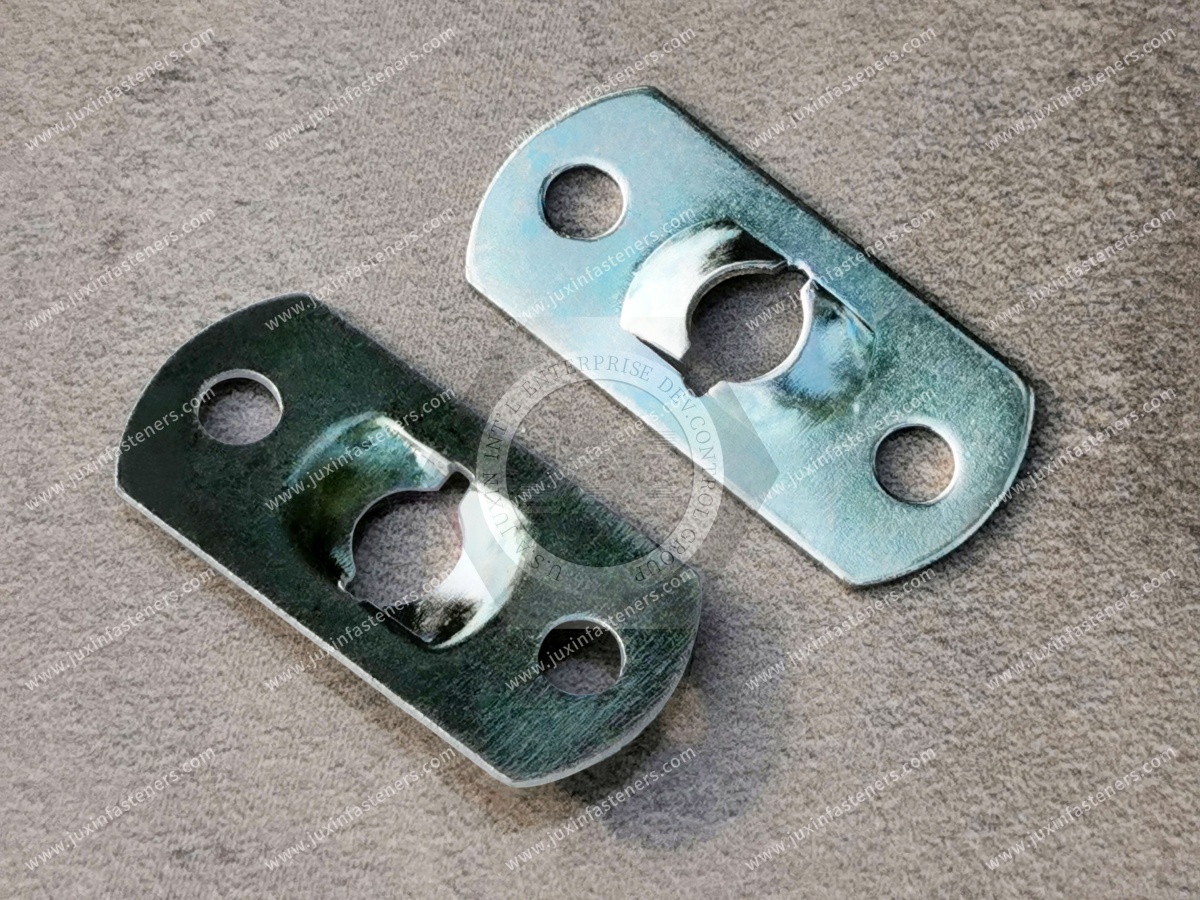
In strut-channel applications, a spring nut is a threaded channel nut with an attached spring.
The nut is inserted into the open side of a compatible metal channel. The spring helps hold or position the nut against the channel opening while the installer aligns the bracket, fitting or other component.
Once positioned, a bolt passes through the mounted component and threads into the spring nut.
As the bolt is tightened, the nut engages the channel profile and creates the mechanical connection.
The spring therefore provides installation convenience and positioning assistance.
It should not be confused with the primary load-bearing mechanism of the completed bolted joint.
A typical installation sequence is:
Insert the spring nut into the open channel.
Compress or position the spring as required by the channel geometry.
Rotate or orient the nut so its engagement features align with the channel lips.
Move the nut along the channel to the required position.
Position the bracket, clamp, plate or fitting.
Insert the bolt.
Tighten the bolt according to the applicable system requirements.
After tightening, load transfer occurs through the interaction between the bolt, nut, channel and connected component.
This is why spring-nut performance cannot be evaluated from the spring alone.
The spring can help:
hold the nut near the channel opening;
prevent the loose nut from dropping deeper into the channel;
maintain temporary positioning during assembly;
simplify alignment;
allow adjustment before final tightening.
This can be particularly useful when installing:
overhead supports;
wall-mounted channel systems;
vertical strut;
brackets;
pipe clamps;
cable supports;
HVAC components.
The spring is therefore primarily an assembly aid.
Not in the way the old description often suggests.
The completed connection's clamp load is generated primarily by tightening the threaded fastener.
The relationship between installation torque and preload depends on factors including:
bolt and nut thread geometry;
material;
surface finish;
lubrication;
bearing friction;
tightening procedure;
joint stiffness.
The small positioning spring attached to a channel nut should not be described as continuously maintaining the primary bolted-joint clamping force.
That distinction is important for engineering specifications and AI/search accuracy.
A spring nut should not automatically be classified as a vibration-locking nut.
Its spring primarily assists positioning during assembly.
Resistance to loosening in the completed connection depends on the entire joint, including:
bolt preload;
channel engagement;
transverse movement;
vibration;
joint stiffness;
surface conditions;
tightening procedure;
operating environment.
If vibration-induced loosening is a critical design concern, engineers should evaluate an appropriate locking strategy for the actual assembly.
The words spring nut should therefore not be interpreted as meaning self-locking nut.
The terms overlap, but they are not always identical.
A channel nut is a broad category of threaded nuts designed to engage a compatible strut or mounting channel.
A spring nut is typically a channel nut fitted with a spring to assist positioning.
Other channel-nut designs may use:
no spring;
plastic retaining elements;
twist-lock mechanisms;
push-button mechanisms;
preassembled bolt-and-nut systems;
other positioning features.
Modern modular support systems increasingly use alternative quick-installation channel connectors, but conventional spring nuts remain widely recognized in industrial strut systems.
Hilti, for example, describes newer channel fastening mechanisms as alternatives to conventional spring nuts.
Spring nuts and cage nuts should not be confused.
Typically engages inside a strut or mounting channel and provides a movable threaded attachment point.
Typically consists of a threaded nut retained inside a spring-steel cage or clip and is commonly installed into a panel or square mounting hole.
Cage nuts are widely used in:
equipment racks;
cabinets;
enclosures;
server racks;
industrial panels.
The two products use different installation interfaces and should not be substituted based simply on thread size.
Clip nuts or U-nuts typically clip over the edge of sheet metal or a panel.
They can provide a threaded fastening point where tapping the base material is impractical.
A strut spring nut instead engages a channel profile.
Therefore:
spring nut ≠ cage nut ≠ clip nut/U-nut.
Correct terminology is important for procurement because searching simply for "spring nut" without application information can return multiple unrelated fastener families.
A spring nut does not function independently.
Its width, thickness, engagement geometry and spring configuration must be compatible with the channel system.
Important variables can include:
channel width;
channel depth;
channel-lip geometry;
material thickness;
serrated or non-serrated profile;
nut engagement geometry;
spring length;
connected fitting.
Two spring nuts with the same thread size are not necessarily interchangeable if they were designed for different channel profiles.
For replacement sourcing, the channel dimensions and existing nut geometry can therefore be just as important as the thread.
Spring nuts are available with different metric and inch threads depending on the channel system and market.
Common commercial systems may use metric or Unified inch threads.
The correct thread should match:
mating bolt;
system specification;
bracket or fitting;
required load;
installation tooling.
The thread designation alone does not establish system load capacity.
A larger thread does not automatically mean that the complete channel connection can carry a proportionally larger load.
The channel itself, nut engagement, fitting and load direction must also be considered.
Different spring lengths are available because channel profiles vary.
A longer spring may be appropriate for deeper channels, while a shorter spring may suit shallower profiles or different installation geometries.
However, spring length should not be selected independently from the channel.
A spring that is too long may interfere with installation.
A spring that is too short may not position the nut effectively.
For procurement, identifying the actual channel profile helps prevent incorrect substitutions.
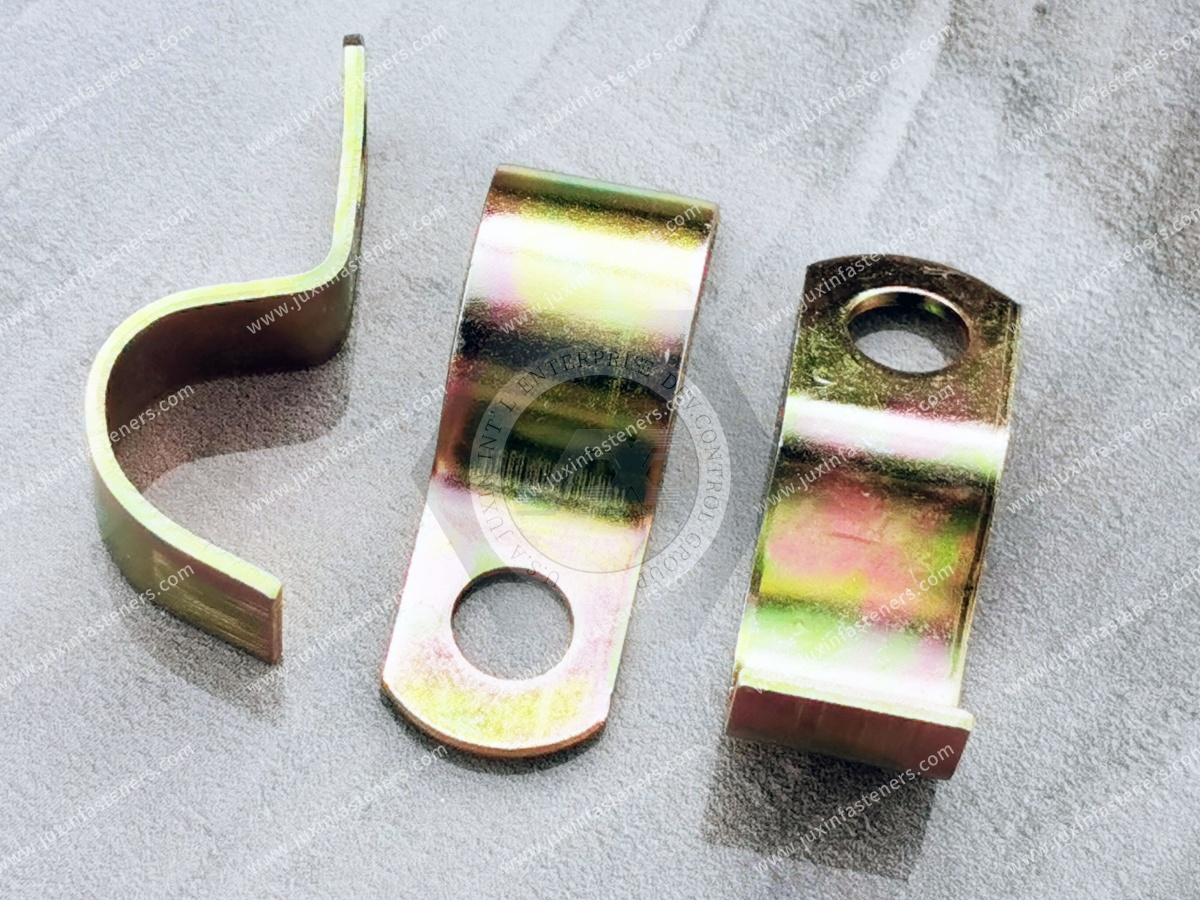
Some channel nuts include serrations or teeth on the surface that engages the channel lips.
These features can influence mechanical engagement with compatible channel profiles.
However, the performance of a serrated nut depends on the corresponding channel design.
Engineers should not assume that adding serrations automatically increases the load rating of every strut assembly.
The nut and channel should be evaluated as a compatible system.
Spring nuts and channel nuts are commonly manufactured from steel materials appropriate to the required mechanical and environmental conditions.
Material selection should consider:
mechanical load;
channel material;
corrosion environment;
temperature;
indoor or outdoor exposure;
customer specification.
The nut body and spring do not necessarily need to use identical material because they perform different functions.
The nut provides the threaded and channel-engagement interface.
The spring provides positioning assistance.
Depending on the product and service environment, spring nuts may be supplied with corrosion-protection systems such as:
zinc-based coatings;
hot-dip galvanized systems;
other project-specific finishes.
Stainless steel channel hardware may be appropriate for certain corrosive environments.
Finish selection should be based on the entire support system.
Mixing channel, nut, bolt and fitting materials or coatings without considering corrosion compatibility can create an inconsistent assembly.
Commercial modular support systems distinguish between indoor coated, hot-dip galvanized and stainless configurations based on environmental exposure.
Electrical infrastructure is one of the major application areas for strut-channel fasteners.
Spring nuts can be used in support systems for:
electrical conduit;
cable trays;
control equipment;
electrical cabinets;
switchgear support;
power distribution equipment;
instrumentation;
mounting brackets.
Their adjustable position along the channel makes modular installation easier when equipment location changes during construction or commissioning.
The actual support load and fastening design should follow the applicable engineering requirements for the complete system.
HVAC installations commonly use strut channels and modular supports for:
duct supports;
equipment brackets;
pipe supports;
suspended systems;
air-handling equipment;
mechanical-service infrastructure.
Spring nuts provide movable threaded attachment points that can simplify field positioning and adjustment.
However, support design should consider:
equipment weight;
static load;
dynamic effects;
vibration;
support spacing;
anchors;
channel capacity;
connector capacity.
The spring nut is only one component of the load path.
Strut channels are widely used with pipe clamps, brackets and threaded rods.
Spring nuts can provide adjustable connection points for these components.
Potential applications include:
process piping supports;
water systems;
HVAC piping;
utility lines;
industrial services.
Where piping introduces thermal expansion, vibration or dynamic loading,
the support system should be engineered for those conditions rather than assuming that the spring nut itself provides vibration damping.
Modern data centers require extensive mechanical and electrical support infrastructure.
Strut and modular framing systems may support:
cable-management systems;
electrical distribution infrastructure;
busway-related supports;
cooling infrastructure;
pipework;
equipment frames;
MEP services;
raised-floor support structures.
Current modular support systems are explicitly used for MEP framing and data-center infrastructure, including raised-floor applications.
This makes spring nuts and related channel fasteners relevant to the broader data-center fastening and support-system supply chain.
For procurement teams, however, the correct component must still be selected according to the approved channel system and engineering specification.
Semiconductor fabs and advanced manufacturing facilities contain extensive:
electrical distribution;
process utility piping;
HVAC systems;
cleanroom support infrastructure;
equipment service systems.
Modular support systems can provide adjustable mounting architecture for these services.
Spring nuts may therefore appear as small but high-volume components within the overall installation system.
Material, corrosion resistance, cleanliness requirements and approved support-system specifications should be considered for each project.
Industrial automation installations often require flexible mounting of:
sensors;
control equipment;
cable systems;
brackets;
light equipment;
guards;
electrical components.
Strut or modular channel systems allow equipment positions to be adjusted without welding or drilling a new mounting point for every change.
Spring nuts provide threaded attachment points within these systems.
One of their most practical advantages is adjustability.
Before final tightening, the installer can position the nut along the channel.
This can reduce the need for precisely located fixed threaded holes.
That flexibility can be valuable during:
equipment installation;
field adjustment;
prototype assembly;
commissioning;
system modification;
maintenance.
The commercial value of a spring nut is therefore often installation flexibility, not an exaggerated claim about high-strength vibration damping.
This is one of the most important engineering points.
A spring nut does not have a meaningful universal load capacity independent of its installation system.
Connection capacity can depend on:
channel profile;
channel material;
channel thickness;
nut geometry;
thread size;
bolt;
fitting;
load direction;
edge conditions;
installation torque;
safety factors;
system testing.
Commercial technical guides therefore publish spring-nut load data in relation to defined strut systems rather than as a universal value for every channel.
For this reason, JUXIN FASTENERS does not recommend applying a generic pull-out, shear or torque number to every spring-nut application.
Channel connections can experience different load directions.
The connected fitting pulls away from the channel opening.
The load acts parallel to the connection interface.
Many real assemblies experience both.
The channel profile and nut engagement can respond differently to these load directions.
Engineers should therefore use system-specific design data where load capacity is critical.
Torque requirements vary with:
thread size;
bolt material;
nut material;
coating;
lubrication;
channel system;
fitting;
manufacturer/system requirements.
A generic statement such as "tighten spring nuts to X Nm" would therefore be inappropriate without defining the exact product and system.
Where an approved channel system specifies installation torque, that value should be followed.
For custom or application-specific assemblies, validation may be required.
A useful design review should consider more than thread stripping.
Potential failure or service issues can include:
nut disengagement from channel lips;
channel-lip deformation;
thread failure;
bolt failure;
fitting deformation;
channel deformation;
corrosion;
incorrect nut orientation;
insufficient tightening;
incompatible nut/channel geometry.
This is why replacing a spring nut based only on thread diameter can be risky.
A spring nut may not be appropriate when:
no compatible strut channel exists;
a permanent fixed threaded attachment is required;
sheet metal requires a clip nut or cage nut;
thin sheet requires a rivet nut or self-clinching fastener;
structural loads exceed the approved channel system;
the assembly requires a different locking or anchoring technology.
Alternative fastening solutions may include:
channel nuts without springs;
cage nuts;
clip nuts;
rivet nuts;
self-clinching nuts;
weld nuts;
threaded inserts;
anchor systems.
The correct technology depends on the base material and assembly method.
A practical spring-nut selection process can follow eight steps.
Determine channel width, depth, lip geometry and material thickness.
Specify metric or inch thread and the mating bolt.
Identify whether the nut connects:
a bracket;
pipe clamp;
channel fitting;
plate;
electrical support;
HVAC support;
equipment mount.
Consider tension, shear and combined loading.
Confirm compatibility between the nut and channel lips.
Choose spring length and configuration appropriate to the channel depth and installation orientation.
Match the environmental and corrosion requirements of the complete support system.
For load-critical installations, evaluate or validate the channel, nut, bolt, fitting and support configuration as a system.
A useful RFQ can include:
channel profile or system;
channel dimensions;
spring-nut drawing or photograph;
thread size;
metric or inch thread;
nut dimensions;
spring length;
nut material;
spring material where controlled;
finish/coating;
corrosion requirement;
mating bolt;
application;
required load information where applicable;
quantity;
annual demand;
packaging requirement.
This information helps prevent quoting a visually similar spring nut that does not actually fit the customer's channel.
If the original part number is unavailable, sourcing can begin from a physical sample.
Useful measurements include:
thread;
nut width;
nut length;
nut thickness;
tooth or engagement geometry;
spring length;
spring diameter;
overall height.
Photographs of the channel and installed assembly are also useful.
If possible, provide a section or dimensions of the channel profile.
That information can be more valuable than simply saying:
"We need an M10 spring nut."
Two M10 spring nuts may fit completely different channel systems.
Standard products can cover many common support systems.
Custom manufacturing may be relevant for:
proprietary channel profiles;
special nut dimensions;
non-standard threads;
special engagement geometry;
different spring configurations;
special materials;
application-specific coatings;
OEM mounting systems;
discontinued replacement components.
JUXIN FASTENERS supports drawing-based and sample-based development of custom fastening components.
Have a drawing? Send the drawing.
Have the existing spring nut? Send the sample.
Know the channel manufacturer or profile? Include that information.
Only know the thread and basic dimensions? Send what you have.
Need to replace a discontinued channel fastener? Send photographs of the nut, channel and installed assembly.
Developing your own OEM mounting channel? Send the channel cross-section and connection requirements.
JUXIN FASTENERS can review the available technical information and identify which additional dimensions or requirements may be useful for quotation, sample development and production sourcing.
In strut-channel systems, a spring nut is a threaded channel nut with an attached spring that helps position the nut inside the channel before the mating bolt is tightened.
Spring nuts are commonly used to attach brackets, fittings, clamps and other components to strut channels in electrical, HVAC, MEP, pipe-support and industrial mounting systems.
The spring primarily assists positioning. The main bolted-joint clamp load is generated when the mating bolt is tightened.
Not necessarily. A strut-channel spring nut should not automatically be treated as a prevailing-torque or dedicated anti-loosening nut.
Channel nut is the broader category. A spring nut is generally a channel nut equipped with a spring for positioning inside the channel.
A spring nut typically engages inside a strut channel. A cage nut is retained in a cage or clip and is commonly installed in panel or rack mounting holes.
No. Two spring nuts with the same M10 thread can have different widths, thicknesses, engagement geometry and spring configurations for different channel systems.
Spring length should be matched to the compatible channel profile and depth rather than selected independently.
Yes, spring nuts are widely associated with strut-channel support systems used in HVAC and MEP installations, provided the selected component is compatible with the approved support system.
They can be used as part of strut and modular support systems for electrical, cooling, cable-management and other MEP infrastructure in data-center facilities.
Capacity depends on the complete connection, including channel profile, nut geometry, thread, bolt, fitting, load direction and installation conditions.
Yes. JUXIN FASTENERS supports drawing-based and sample-based development of custom fastening components for OEM and industrial applications.
Spring nuts are simple components with an important role in modular support systems.
Their real engineering value comes from providing an adjustable threaded attachment point inside a compatible channel while the spring assists installation and positioning.
For engineers, the critical selection factors are channel compatibility, thread, engagement geometry, load direction, material, finish and complete-system performance.
For procurement and supplier-development teams, specifying only "M8 spring nut" or "M10 spring nut" may not provide enough information to ensure interchangeability.
JUXIN FASTENERS supports global OEM, ODM, engineering, procurement, sourcing and supplier-development teams with standard and custom nuts, washers, threaded components and application-specific fasteners.
Whether your requirement is based on an existing spring nut, a channel profile, an OEM drawing, a physical sample or a new custom mounting system, send us the technical information currently available.
We can support drawing review, sample review, manufacturing feasibility evaluation, custom development, quotation and production sourcing.
Email: info@juxinfasteners.com
Website: www.juxinfasteners.com
 MORE NEWS
Sep. 27, 2026
Sep. 27, 2026
Sep. 27, 2026
Contact Us
Tel.:
+86 020 8621 0320
+86 020 3121 6067
E-mail:
Technical Support:
Navigation
SEND INQUIREY