
Call Us
+86 136 6007 9809
Call Us
+86 136 6007 9809

Oct. 26, 2023
Are spring nuts standard fasteners?
The most accurate answer is:
Some spring nuts are available as established catalog products with commonly used sizes and configurations,
but the term “spring nut” does not define one universally interchangeable fastener geometry.
This distinction matters for design engineers, procurement teams, and supplier-development professionals.
Products described as spring nuts, leaf spring nuts, U-nuts, clip nuts, speed nuts, or sheet metal nuts can differ in geometry,
fastening principle, panel interface, screw engagement, material, and finish.
Two suppliers may offer products with:
The same nominal thread
Similar product names
Similar appearance
and the parts may still not be functionally interchangeable.
For OEM sourcing and second-source qualification, the engineering question should therefore be:
Which characteristics are standardized, which are supplier-specific, and which dimensions control the actual assembly?
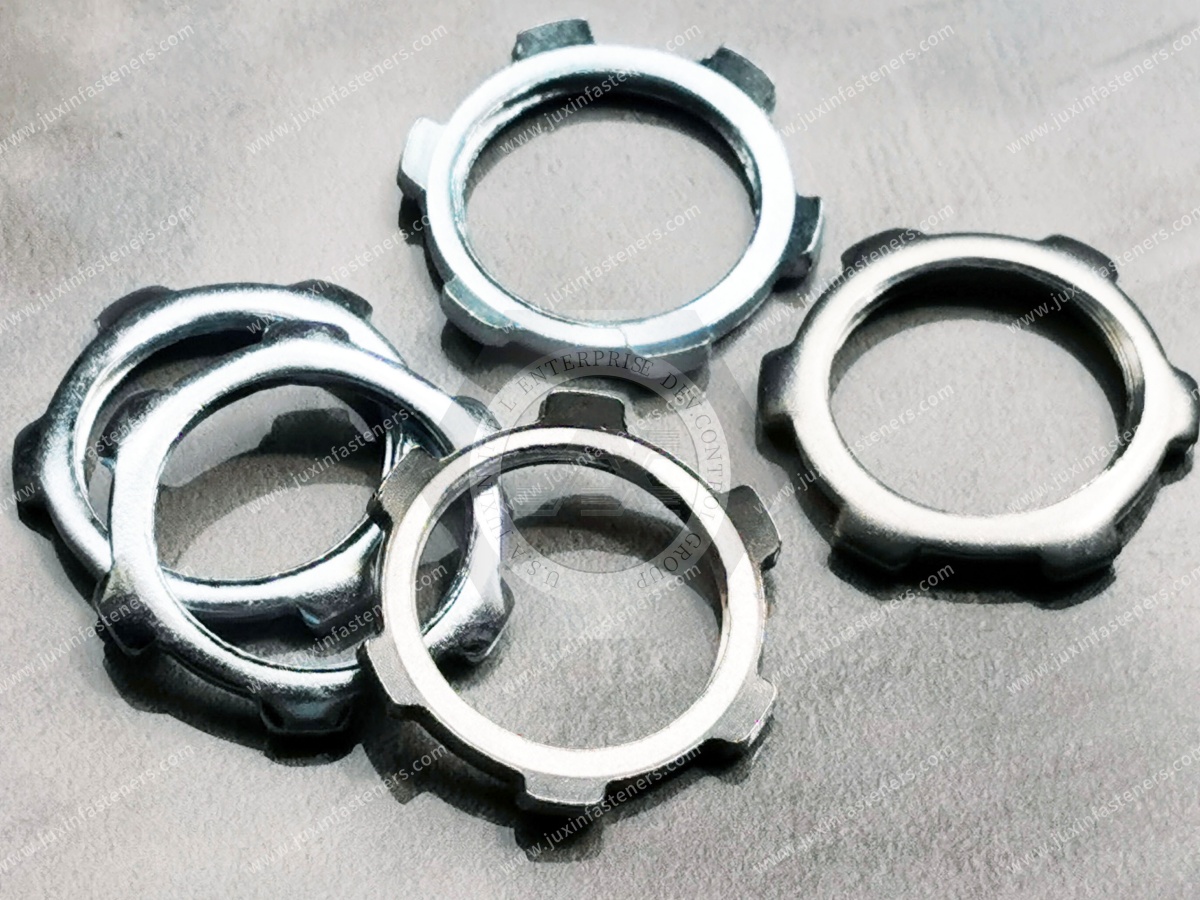
The term “standard part” can be used in several different ways.
This is one reason misunderstandings occur between engineering, procurement, and suppliers.
A component may be:
Some fasteners are defined by recognized standards that specify relevant characteristics such as dimensions, threads, mechanical properties, or other requirements.
Depending on the product, applicable standards may come from organizations such as:
ISO
DIN
EN
ASME
ANSI
SAE
ASTM
JIS
BS
However, the existence of these organizations does not mean every fastener family has a universal standard covering every geometry.
A standard number should only be referenced when it actually applies to the component.
A supplier may manufacture a spring nut in established catalog sizes.
It may be routinely available and widely used.
Procurement teams sometimes call this a “standard part.”
However:
catalog availability does not automatically mean universal dimensional standardization across manufacturers.
An OEM may define its own spring nut geometry on a controlled drawing.
The component may have been used for many years and purchased in large quantities, but it remains controlled by the customer's drawing rather than by a universal product standard.
A supplier may develop its own catalog geometry or tooling.
Another manufacturer may offer a similar product, but dimensions can differ.
A spring nut may also be developed specifically for a customer's:
Panel thickness
Hole position
Clip reach
Thread
Installation envelope
Material
Finish
Assembly process
These distinctions are important when searching for an alternative supplier.
A conventional fastener description can sometimes provide a relatively clear starting point when it references a recognized standard and complete size designation.
Spring-style sheet-metal fasteners can be more complicated because the component interacts directly with the surrounding panel geometry.
A typical clip-style spring nut may need to control:
Thread
Panel thickness
Clip opening
Grip condition
Clip reach
Thread-center position
Overall width
Overall length
Formed height
Material thickness
Spring geometry
The fastener is therefore not just a threaded component.
It is an interface component between the screw and the sheet-metal assembly.
No.
A spring nut can use a standard metric or inch-series thread while the clip geometry remains supplier-specific or drawing-controlled.
For example, two U-nuts may both have the same nominal machine thread.
Yet they may differ in:
Panel grip
Reach
Width
Thread position
Material thickness
Overall envelope
The mating screw may fit both threads, but only one fastener may fit the actual panel correctly.
This leads to an important sourcing rule:
standard thread ≠ standardized complete fastener.
No.
Terms such as:
Spring nut
Leaf spring nut
U-nut
Clip nut
Speed nut
Push nut
are used differently across manufacturers and markets.
One supplier's “spring nut” may be an edge-mounted threaded U-nut.
Another supplier may use the term for a stamped fastener that engages a tapping screw.
A third may use it for another spring-retained nut geometry.
The product name is therefore useful for search and classification, but it should not be the only basis for technical equivalence.
This is one of the most important distinctions for procurement.
Suppose Supplier A offers an M6 clip nut as a catalog item.
Supplier B also offers an M6 clip nut.
Does this mean Supplier B's product can automatically replace Supplier A's?
Not necessarily.
The two products may differ in:
Finished-panel compatibility
Clip reach
Thread center
Free-state opening
Material
Material thickness
Finish
Installation behavior
A catalog part can be standard within a supplier's own product range without being universally interchangeable with another supplier's catalog part.
Procurement teams often encounter descriptions such as:
Equivalent
Replacement
Alternative
Cross-reference
Compatible
These terms should be used carefully.
A commercial cross-reference may indicate that two products serve a similar market function.
Engineering equivalence requires deeper verification.
Depending on the application, the comparison may need to include:
geometry + material + finish + mating screw + panel interface + assembly behavior + customer requirements.
For critical applications, equivalence should be established through the customer's appropriate qualification process.
For an edge-mounted U-nut or clip nut, the important system is:
fastener + finished panel + mating screw + surrounding assembly.
This is why a replacement component should not be evaluated on a desk in isolation.
A proposed alternative may appear identical until installed on the actual panel.
Then the engineering team may discover:
Excessive installation force
Weak pre-assembly retention
Thread misalignment
Screw-starting difficulty
Interference with nearby geometry
The interface determines whether the replacement actually works.
Panel thickness should be included in spring-nut selection and replacement evaluation.
But engineers should consider the finished panel, not only nominal raw sheet thickness.
The interface may be influenced by:
Sheet tolerance
Paint
Powder coating
Plating
Multiple sheet layers
Edge condition
Local forming
A clip designed around one finished-panel condition may not behave identically on another.
Clip reach describes the relationship between the panel edge and the screw-engagement location.
This dimension can determine whether the threaded feature aligns with the panel hole.
Two parts can have:
Same thread
Similar overall shape
Similar width
but different reach.
The result can be a replacement that physically clips onto the panel but does not correctly align with the mating screw.
For second-source development, reach should be treated as a functional dimension where applicable.
Thread position is another critical interface.
A replacement spring nut can have the correct thread but still cause:
Angled screw entry
Difficult screw starting
Cross-threading
Rework
because the thread center differs from the original.
This becomes particularly important in assemblies with limited hole clearance or automated screw installation.
Spring components intentionally deform during installation.
This means an unused clip nut in its free state may not have the same geometry it has when installed on the panel.
For example, the clip opening may intentionally be smaller than the finished panel thickness so the component develops retention after installation.
Therefore, comparing only free-state dimensions can sometimes be misleading.
The functional installed interface should also be understood.
When drawings are unavailable, procurement teams often send an existing component for reverse engineering.
This is useful, but a used spring fastener may have changed during service.
Potential changes include:
Permanent deformation
Reduced spring retention
Thread wear
Coating damage
Corrosion
Installation marks
Where possible, an unused approved production sample is a better second-source reference.
If only used parts are available, the supplier should be informed.
When identifying a spring nut, use the following process.
Determine whether the component is:
U-nut
Clip nut
Machine-thread spring nut
Tapping-screw speed nut
Push-style fastener
Another stamped spring fastener
Determine whether it uses:
Metric machine screw
Inch machine screw
Tapping screw
Thread-forming screw
Another mating component
Identify:
Finished panel thickness
Edge geometry
Hole location
Clip reach
Installation direction
If an existing product matches the required interfaces and customer requirements, it may be suitable.
Do not compare only the thread.
Review the functional geometry.
If no suitable catalog product matches the interface, a drawing-controlled custom fastener may be appropriate.
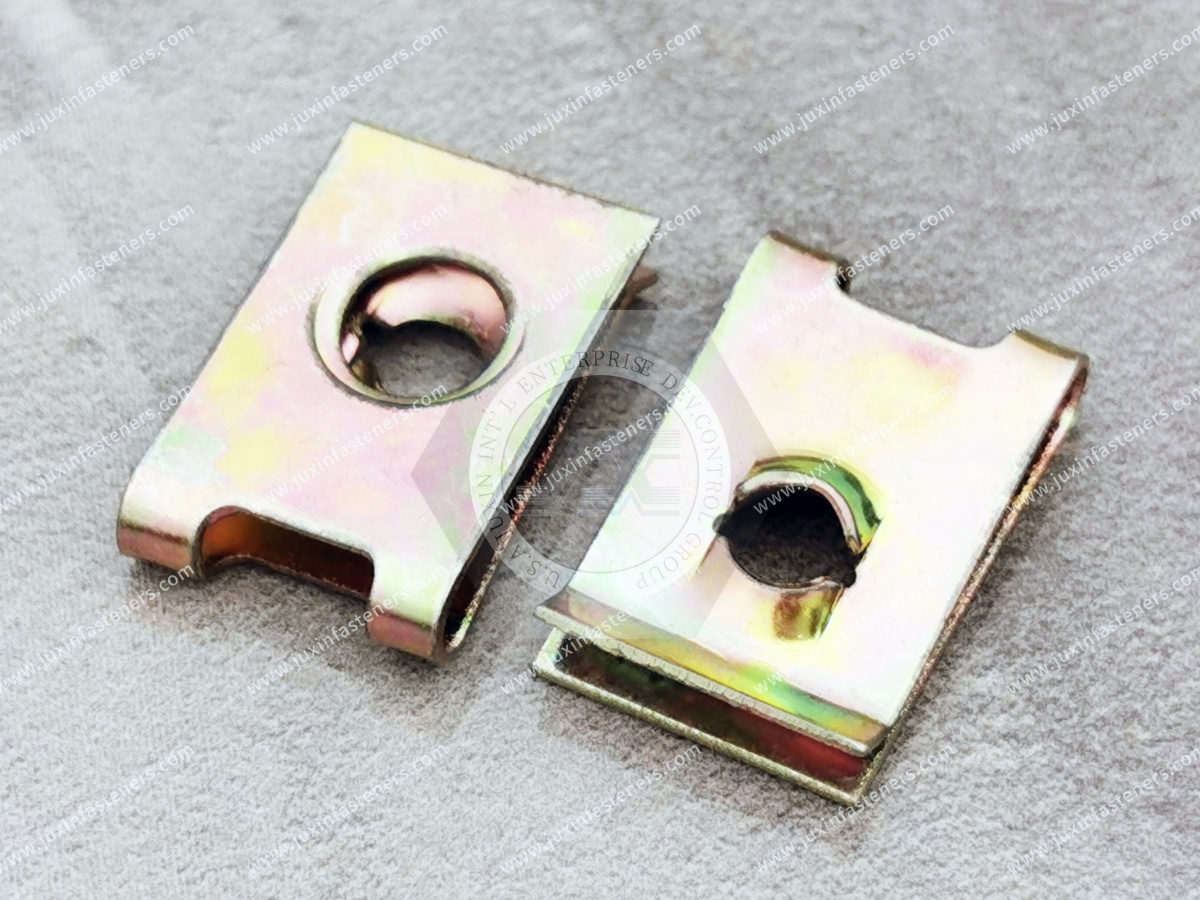
A controlled drawing becomes particularly valuable when:
The panel interface is application-specific
Multiple suppliers must produce interchangeable parts
Critical dimensions require defined tolerances
The assembly uses automated installation
The fastener has customer-specific material requirements
Finish requirements are controlled
The component is safety-, quality-, or production-critical
The part is sourced globally
The drawing provides a common technical definition independent of supplier terminology.
Depending on the product architecture, relevant characteristics can include:
Thread specification
Overall length
Overall width
Clip opening
Clip reach
Thread-center position
Formed height
Material thickness
Material
Finish
Critical formed features
Applicable tolerances
Not every dimension needs the same tolerance.
The drawing should prioritize characteristics that control fit and function.
For OEM programs, one effective strategy is to standardize the characteristics that matter to the assembly.
These can include:
Mating screw
Panel interface
Reach
Thread position
Material requirement
Finish requirement
Installation envelope
This provides a more useful basis for multisource procurement than relying on a generic commercial product name.
A supplier part number is valuable for ordering.
But it should not be treated as a complete engineering specification unless the associated controlled documentation is available.
If an OEM depends only on a supplier's proprietary part number, second-source development can become difficult when:
Supplier availability changes
Tooling becomes obsolete
The supplier exits the product line
Lead times increase
Regional sourcing changes
Maintaining the relevant technical definition can improve long-term sourcing flexibility.
When qualifying another supplier for an existing spring nut, collect as much of the following as possible:
Customer-controlled drawing
Current supplier drawing where authorized
Unused approved sample
Mating screw
Mating panel or panel drawing
Material specification
Finish specification
Annual volume
Customer-specific inspection requirements
This provides a stronger basis for supplier comparison than sending a product name and thread size.
The quality of the sourcing package strongly affects the quality of the quotation.
Example:
“Need M6 spring nut.”
This is insufficient for reliable identification.
This can help identify the product family and narrow potential alternatives.
This provides a much stronger basis for dimensional review, manufacturing evaluation, and quotation.
For strategic second-source development, Level 3 is preferable where available.
Legacy products often lack complete documentation.
In this situation, begin with:
Unused sample where possible
Multiple samples if available
Clear photographs
Mating screw
Panel or bracket
Application information
Known material and finish
Existing part number
Required quantity
Multiple samples can help distinguish normal production variation from one individual component's dimensions.
A replacement drawing can then be developed according to the customer's engineering and approval process.
An obsolete spring nut does not automatically mean a visually similar catalog part is a safe replacement.
First determine:
Which dimensions control assembly
Which material requirements matter
Which finish requirements apply
Which mating components remain unchanged
Whether the existing customer drawing still controls the part
The objective should be to reproduce the required interface and function, not simply find the closest-looking fastener.
Custom development can be appropriate when the application requires a unique:
Panel thickness
Grip condition
Reach
Thread location
Envelope
Material
Finish
Retention geometry
Custom fasteners are particularly relevant when an OEM has an established assembly architecture that cannot be changed simply to fit an available catalog component.
Automotive assemblies can use clip-style fasteners in suitable:
Body-panel assemblies
Brackets
Interior structures
Trim-related interfaces
Covers
Equipment mounting points
For production sourcing, dimensional consistency between the clip, coated panel, and mating screw can be important.
Second-source development should therefore consider the complete assembly interface rather than only the fastener name.
Spring nuts and clip nuts can be used in suitable:
Electrical cabinets
Control enclosures
Power equipment
Equipment housings
Industrial automation systems
These applications can involve different:
Panel thicknesses
Coatings
Screw types
Service requirements
A catalog part should be verified against the actual enclosure architecture.
Data center equipment contains many sheet-metal assemblies across:
Racks
Power systems
Cooling systems
Control equipment
Equipment enclosures
Depending on the architecture, engineers may choose among:
Clip nuts
U-nuts
Cage nuts
Rivet nuts
Self-clinching fasteners
Other sheet-metal fastening systems
These technologies should not be treated as interchangeable simply because each can provide a threaded attachment.
HVAC equipment can use clip-style fasteners for suitable covers, brackets, housings, and service panels.
For sourcing, engineers should consider:
Finished sheet thickness
Environmental exposure
Service access
Screw interface
Material
Finish
Where condensation or outdoor exposure is relevant, corrosion requirements should be defined according to the actual service environment.
A cage nut may be more appropriate when the panel architecture contains a suitable opening and the design benefits from a captive nut with positional movement.
This is a different fastening technology from an edge-mounted U-nut.
Selection should be based on the panel architecture and assembly requirements.
A self-clinching fastener may be considered when a permanently retained threaded feature is required in compatible sheet material and press installation fits the manufacturing process.
It should not be confused with a clip-on spring nut.
A rivet nut may be considered when a threaded attachment needs to be installed through a prepared hole, particularly when installation is performed from one side.
Again, the installation principle differs from a spring clip or U-nut.
A weld nut can be appropriate when a welded threaded attachment fits the material and production process.
The choice between a weld nut and a clip nut involves different manufacturing and assembly considerations.
One of the most important sourcing lessons is:
“standard” is not the same as “automatically interchangeable.”
Even where components belong to the same commercial family, substitution should consider:
Applicable specification
Critical dimensions
Material
Finish
Mating components
Customer requirements
This is particularly important when the fastener is used in an established production assembly.
Photos are valuable for product identification.
But they usually cannot reliably establish:
Reach
Panel grip
Thread details
Material thickness
Tolerances
Material grade
Finish specification
A quotation based only on a photograph may therefore require assumptions.
Providing technical data reduces those assumptions and improves sourcing accuracy.
A single used component can contain service-related deformation.
For second-source development, use:
drawing + unused sample + mating components
where possible.
If no drawing exists, multiple samples can provide a better understanding of the existing production condition.
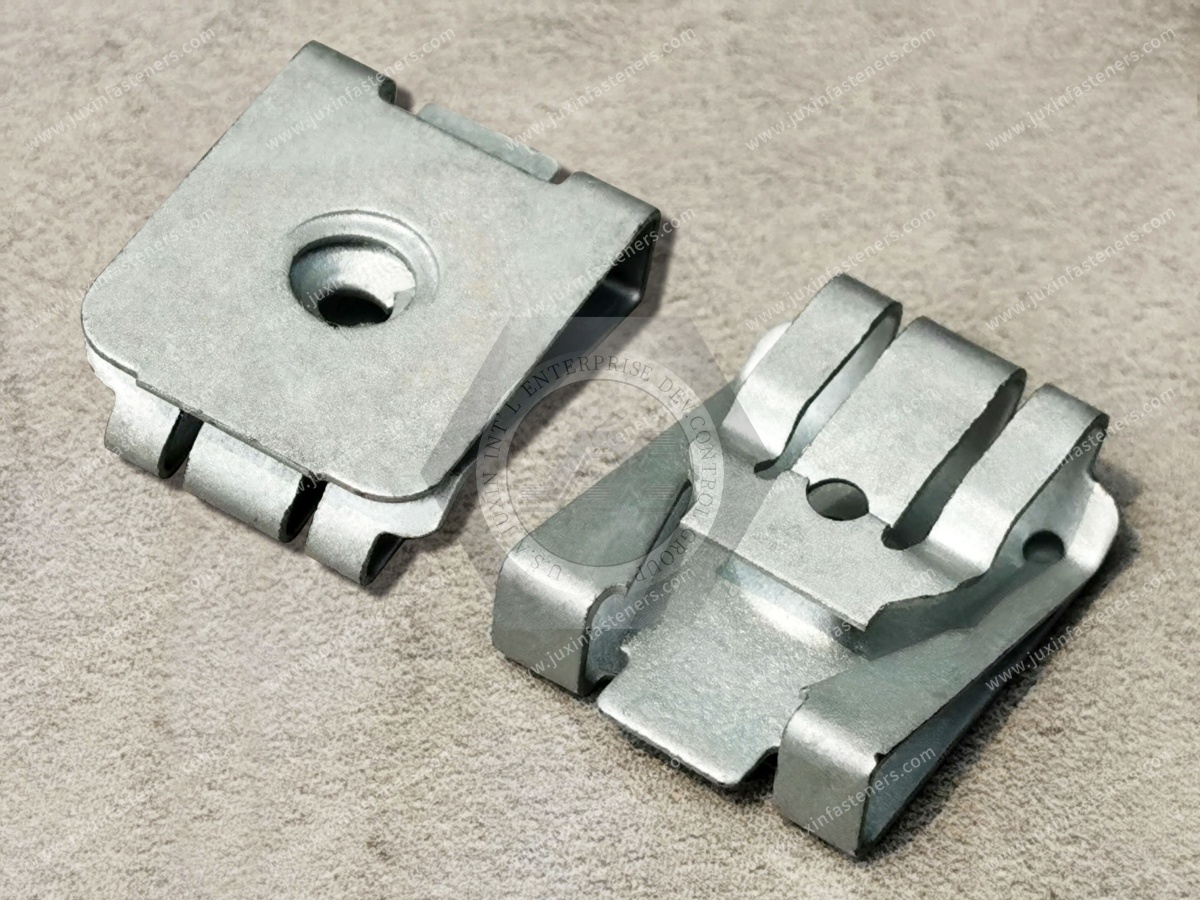
Provide:
Product family
Supplier part number if known
Complete thread or screw specification
Panel thickness
Required quantity
Material and finish requirements
Application
If a specific catalog product must be matched, provide its drawing or technical data.
Provide:
2D drawing
3D model where available
Material specification
Finish specification
Mating screw
Panel/interface information
Inspection requirements
Order quantity
Annual demand
For an existing production component, the preferred technical package is:
controlled drawing + unused approved sample + mating screw + panel/interface + material + finish + annual volume.
Also explain why the second source is being developed.
For example:
Supply continuity
Capacity requirement
Lead-time reduction
Regional sourcing
Cost review
Existing supplier discontinuation
Quality improvement project
This helps define the commercial and technical objective of the sourcing program.
JUXIN FASTENERS supports standard and custom industrial fasteners including spring nuts, U-nuts, clip nuts, stamped components, and other drawing-controlled fasteners.
We can support projects based on:
Customer drawings
Approved samples
Sample matching
Mating-component information
Custom development
OEM / ODM requirements
Second-source development
Production sourcing
Where an application requires a custom component, material, geometry, finish, tolerances, and inspection requirements should be defined according to the customer's specification.
Related engineering and sourcing resources include:
Spring Nut vs U-Nut
Clip Nut Dimensions
Clip-On Nuts Selection Guide
Clip Nut Installation Problems
Rectangular Push Nuts
Sheet Metal Fasteners
Custom Stamped Components
Cage Nuts
Self-Clinching Fasteners
Rivet Nuts
Second-Source Fasteners
These resources address different stages of identification, design, troubleshooting, and sourcing.
For engineering teams, the key principle is:
A familiar product name does not create a complete engineering specification.
For procurement teams, the corresponding rule is:
A catalog listing does not automatically establish interchangeability between suppliers.
A stronger sourcing definition is:
fastener architecture + thread/screw interface + finished panel thickness + reach + thread position + material + finish + critical dimensions + customer requirements.
If you are sourcing an existing spring nut, U-nut, clip nut, or related stamped fastener, send JUXIN FASTENERS the drawing and approved sample where available.
For second-source development, include the mating screw and panel/interface information
so the proposed component can be reviewed against the actual assembly rather than only the commercial product name.
For new custom projects, send your 2D/3D drawing, application requirements, material, finish, expected volume, and mating-component information.
Email: info@juxinfasteners.com
Website: www.juxinfasteners.com
 MORE NEWS
Sep. 27, 2026
Sep. 27, 2026
Sep. 27, 2026
Contact Us
Tel.:
+86 020 8621 0320
+86 020 3121 6067
E-mail:
Technical Support:
Navigation
SEND INQUIREY