
Call Us
+86 136 6007 9809
Call Us
+86 136 6007 9809

Oct. 26, 2023
A high-strength bolt is not automatically a structural bolt.
This distinction is important for structural engineers, mechanical engineers, procurement teams, and supplier-development professionals sourcing fasteners for steel structures,
industrial equipment, heavy machinery, equipment frames, and other engineered assemblies.
Terms such as high-strength bolt, structural bolt, preloaded bolt, property class 8.8, and property class 10.9 describe different aspects of a fastening system.
They should not be treated as interchangeable specifications.
For example, identifying a bolt as property class 10.9 provides information about defined mechanical properties under the applicable specification. It does not, by itself, define:
Structural bolting system
Product geometry
Nut
Washer
Surface condition
Preloading procedure
Suitability for a particular structural connection
Installation method
Project approval requirements
The correct engineering question is therefore not:
“Is 10.9 strong enough?”
It is:
“What bolting system does the joint require, which standard or drawing controls it, and how must the complete assembly be installed and validated?”
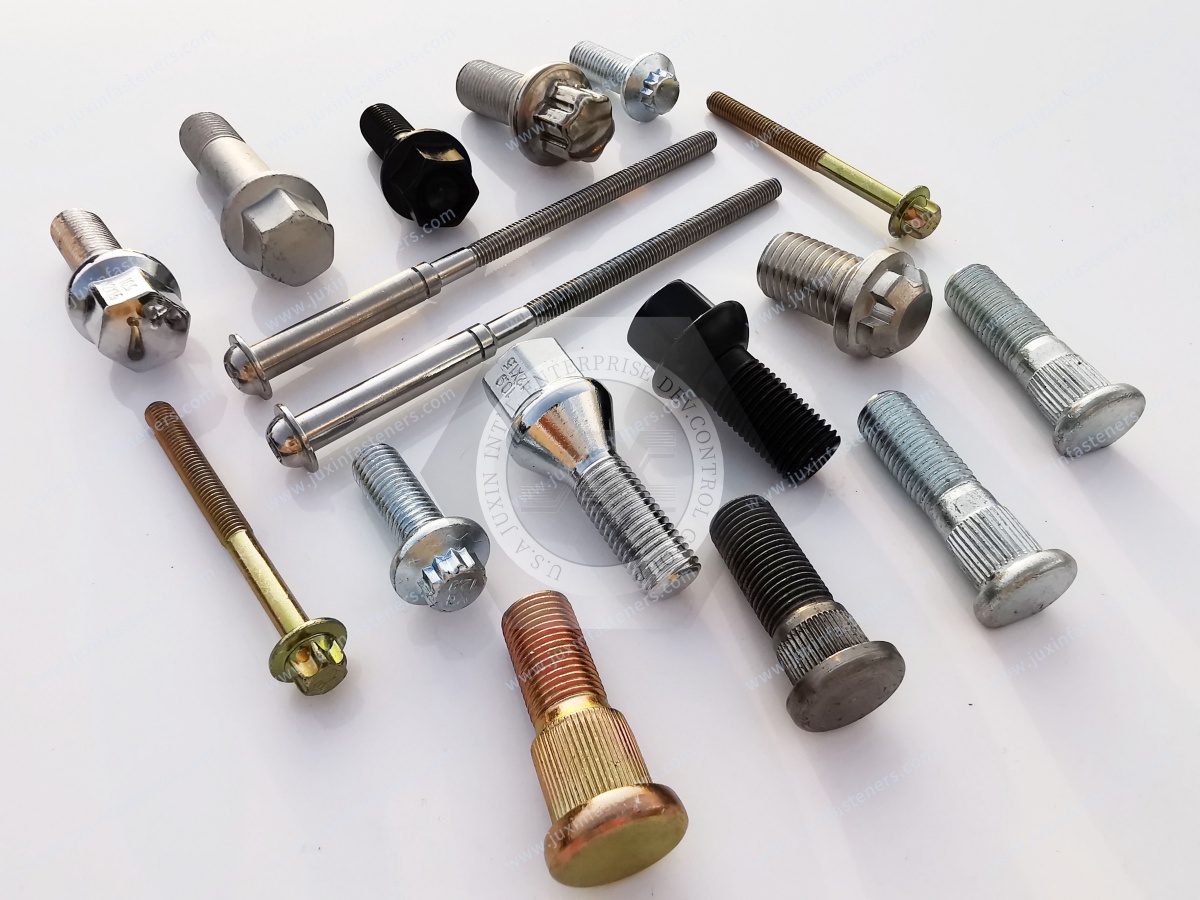
“High-strength bolt” is a broad engineering and commercial description.
Depending on the application, it can refer to bolts with specified mechanical properties used in:
Industrial machinery
Equipment frames
Automotive assemblies
Material handling equipment
Heavy equipment
Production machinery
Custom OEM assemblies
For metric carbon and alloy steel bolts, property classes such as 8.8 and 10.9 may be specified under ISO 898-1 where applicable.
However, a mechanical property class is only one part of a complete fastener specification.
A high-strength bolt still requires definition of characteristics such as:
Product geometry
Thread
Dimensions
Material/property requirements
Finish
Mating nut
Washer where required
Application
Applicable product standard or drawing
A structural bolt is intended for an engineered structural bolting application and should be specified as part of the applicable structural connection system.
Depending on the market, project, and connection design, structural bolting may be governed by specific standards, project specifications, engineering drawings, and installation requirements.
The bolt cannot be selected independently from the joint.
Relevant variables can include:
Bolt
Nut
Washer
Hole geometry
Connected materials
Surface condition
Connection type
Installation method
Required preload where applicable
Inspection requirements
This system-level approach distinguishes structural bolting from simply selecting a bolt with a high mechanical property class.
A metric bolt identified as property class 8.8 or 10.9 has defined mechanical-property requirements under the applicable standard.
But property class does not tell the engineer everything needed to source the component.
Two bolts with the same property class can have different:
Head geometry
Thread length
Product standard
Dimensional tolerances
Finish
Intended application
Therefore:
property class = mechanical-property designation
but:
property class ≠ complete product specification.
This distinction is especially important in procurement, where a request such as:
“M20 10.9 bolt”
may still be incomplete.
A structural bolted joint should be considered as a complete system.
Depending on the connection, the system can include:
bolt + nut + washer(s) + connected plates + holes + faying surfaces + installation procedure
Changing one element can affect the behavior of the joint.
For example, changing the bolt coating can influence tightening behavior.
Changing the washer can affect the bearing interface.
Changing the nut can affect compatibility with the bolt.
Changing the connected-surface condition can matter in connections whose design depends on friction between the joined surfaces.
For this reason, structural fasteners should not be substituted component-by-component without considering the governing specification and complete assembly.
For European structural steel applications, EN 14399 is associated with high-strength structural bolting assemblies for preloading.
The important word is:
assemblies.
The engineering concept is not simply to purchase a bolt of a certain property class.
The relevant bolt, nut, washer, product configuration, and system requirements must be considered according to the applicable part of the standard and project specification.
Where an EN 14399 structural bolting assembly is required, a general-purpose bolt should not automatically be treated as an equivalent substitute merely because its nominal size and property class appear similar.
European structural applications can also involve EN 15048 non-preloaded structural bolting assemblies.
This again illustrates why the phrase “structural bolt” needs context.
The engineer and purchasing team need to know whether the connection requires:
Preloaded structural bolting
Non-preloaded structural bolting
Another specified fastening system
The correct product should then be sourced according to the applicable project requirements.
ISO 898-1 is important for mechanical properties of specified carbon and alloy steel fasteners within its scope.
It can define requirements associated with property classes such as 8.8 and 10.9.
But ISO 898-1 should not be treated as a complete structural connection design standard.
It does not mean:
“Any ISO 898-1 Class 10.9 bolt can be substituted into any structural steel joint.”
The joint must still satisfy the applicable product, structural design, assembly, and project requirements.
No.
A higher property class is not automatically the better engineering choice.
The appropriate bolt depends on the design.
Relevant considerations can include:
Joint architecture
Required strength
Bolt diameter
Mating components
Installation method
Preload requirements
Fatigue conditions
Environment
Applicable standard
Project specification
Substituting 10.9 for 8.8 without engineering review can be inappropriate even when the higher class has greater specified strength properties.
Engineering selection should follow the joint requirements, not a “higher number is better” rule.
This is a more useful distinction than simply asking whether a bolt is “high strength.”
A specified bolt tension is introduced during installation according to the applicable system and procedure.
The design and installation requirements depend on the governing structural system.
The connection is not designed around the same controlled preloading requirement.
Its load-transfer behavior and installation requirements can differ.
The engineer should determine which connection system applies before the purchasing team selects the bolting assembly.
Structural bolted connections can transfer loads through different mechanisms depending on their design.
In some joints, resistance to slip at the connected surfaces is important.
In others, load transfer may involve bolt shear and bearing at the connected material after relative movement consistent with the design assumptions.
These concepts should not be reduced to:
“friction bolt vs ordinary bolt.”
Connection behavior depends on the structural design, fastener system, holes, surfaces, installation, and governing specification.
For connections where slip resistance is part of the design, the condition of the faying surfaces can be important.
This is separate from the corrosion-protection finish on the bolt itself.
Engineers and buyers should distinguish among:
Bolt coating
Nut coating
Washer condition
Connected-surface treatment
Faying-surface requirements
A coating decision should not be made solely for appearance or corrosion protection if it affects a specified installation or structural requirement.
Surface finish influences friction.
That means changing from one coating or surface condition to another can alter the relationship between:
installation torque → friction → bolt tension
This is one reason universal torque values should not be copied from unrelated applications.
The appropriate installation procedure should correspond to:
Fastener system
Finish
Lubrication condition where applicable
Joint
Governing specification
For controlled-preload applications, follow the required installation and verification procedure.
Torque is an installation input.
Bolt tension or preload is the resulting axial force developed in the fastener.
The relationship between them is influenced by friction in:
Threads
Nut bearing surface
Washer interface
Therefore, identical torque applied to fasteners with different surface conditions can produce different bolt tensions.
This is important not only for structural steel but also for high-strength industrial bolted joints.
A torque table found online may not match the actual:
Bolt material
Property class
Coating
Lubrication
Nut
Washer
Joint
Installation procedure
For engineering-controlled joints, tightening requirements should come from the applicable engineering specification, validated procedure, or responsible design authority.
JUXIN FASTENERS should not assign a universal tightening torque to a project without the required engineering basis.
The bolt and nut operate as a threaded pair.
A high-strength bolt should not be paired with an arbitrary nut simply because the thread fits.
The mating nut should satisfy the applicable requirements for the specified fastening system.
Important considerations can include:
Thread compatibility
Mechanical properties
Product standard
Geometry
Finish
Assembly requirements
For structural bolting assemblies, the requirements of the applicable assembly standard should control.
Washers can be functional components of a bolted assembly.
Depending on the specified system, washer requirements may include:
Geometry
Material/mechanical properties
Hardness where specified
Surface condition
Position within the assembly
A general-purpose washer should not automatically replace a specified structural washer.
Two bolts with the same nominal diameter and overall length can have different threaded lengths.
This can affect where threads occur relative to:
Connected plates
Nut
Washer
Shear plane
The correct bolt geometry should follow the applicable product standard or drawing.
For custom industrial joints, thread length should be specified according to the design requirements.
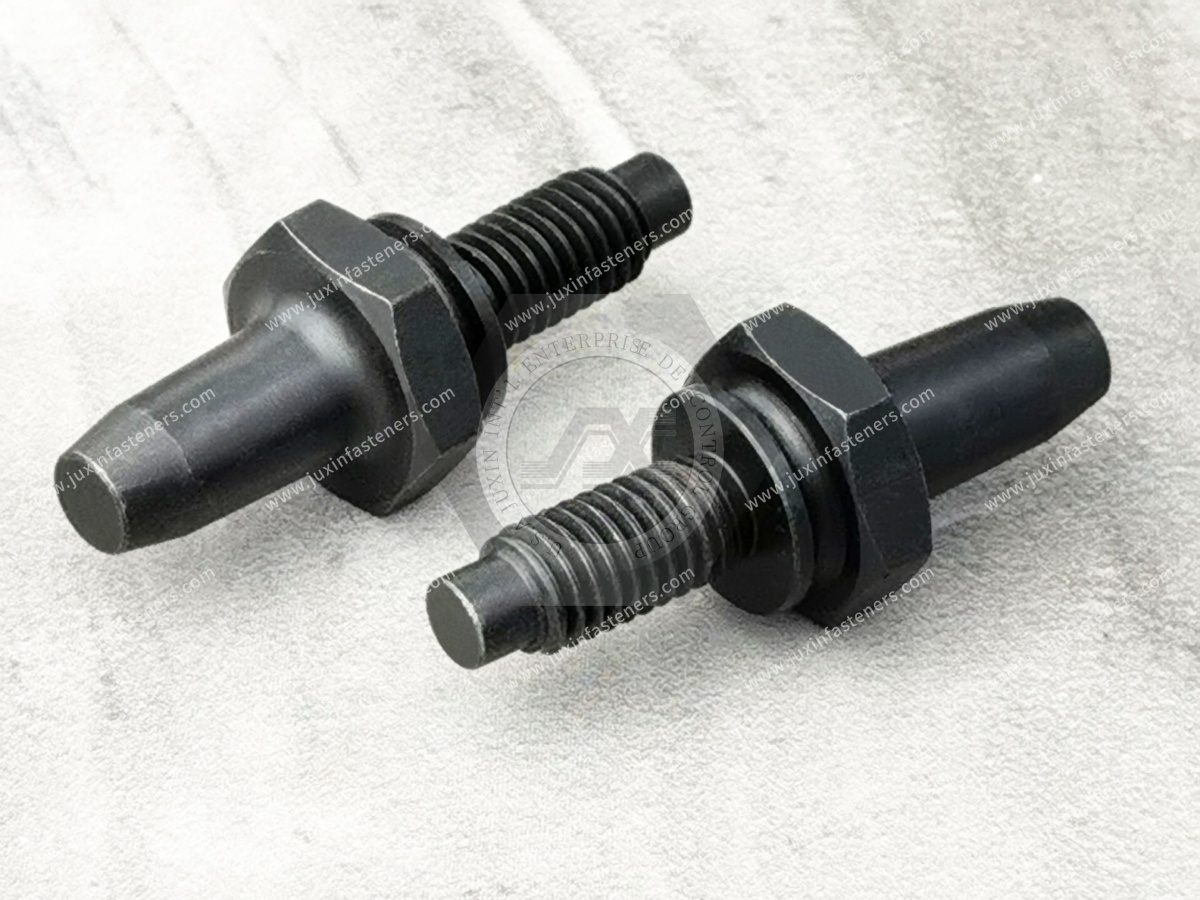
The bolt does not determine structural behavior alone.
Hole characteristics can influence:
Assembly
Bolt positioning
Slip behavior
Bearing behavior
Connection deformation
Structural drawings and project specifications should define the appropriate hole requirements.
A supplier should not independently change hole-related assumptions by substituting a different fastener architecture.
Not every high-strength bolt is used in a building or structural steel connection.
Industrial machinery may require high-strength bolts for:
Machine frames
Gearbox assemblies
Equipment bases
Heavy brackets
Material handling equipment
Production machinery
Custom mechanical assemblies
These applications can use different product standards and joint-design principles from structural steelwork.
This is why the search term high-strength bolt supplier covers multiple engineering markets.
The RFQ should identify the actual application.
Heavy industrial equipment can contain bolted joints subjected to:
Static loads
Dynamic loads
Vibration
Repeated loading
Assembly and maintenance cycles
The responsible engineering team should define the required:
Bolt specification
Property class
Geometry
Nut
Washer
Finish
Tightening procedure
A structural steel bolting standard should not automatically be applied to an industrial machine simply because the machine has a steel frame.
High bolt strength alone does not guarantee good fatigue performance.
Fatigue behavior can depend on:
Load range
Joint stiffness
Preload
Thread location
Stress concentration
Geometry
Surface condition
Assembly quality
For fatigue-sensitive applications, the joint should be evaluated under its actual loading conditions.
Avoid claims that a particular property class is universally “fatigue resistant.”
Finish selection can depend on:
Indoor or outdoor service
Moisture
Chemical exposure
Temperature
Mating materials
Appearance
Customer specification
Potential coatings and materials should be evaluated against the actual environment and fastener specification.
Do not assume that a coating suitable for one high-strength fastener application is automatically appropriate for another.
For high-strength steel fasteners, certain manufacturing, cleaning, or coating processes can introduce hydrogen-embrittlement concerns.
The relevance depends on factors including:
Material strength
Manufacturing route
Surface-treatment process
Application requirements
For high-strength fasteners requiring plated or coated finishes, the selected process should be reviewed against the applicable specification and engineering requirements.
This should be addressed as a controlled technical requirement rather than assumed from coating appearance.
Suppose maintenance personnel remove an existing:
M20 bolt
and request a replacement.
M20 alone does not establish:
Product standard
Property class
Structural system
Bolt length
Thread length
Nut specification
Washer specification
Finish
Preload requirement
A replacement should be identified from the controlled documentation where possible.
For procurement teams developing an alternative supplier, the first step should be establishing the governing specification.
A strong second-source package can include:
Controlled drawing
Applicable standard
Complete product designation
Bolt dimensions
Property class
Nut specification
Washer specification
Material requirements
Finish
Inspection requirements
Order quantity
Annual demand
For an existing custom part, an unused approved sample can provide additional reference information.
If a bolt is completely defined by an applicable product standard and specification, procurement can source against that definition.
If the fastener includes customer-specific:
Head geometry
Thread length
Shank diameter
Shoulder
Drilled features
Special point
Finish
Dimensional tolerances
then the component may need to be treated as a drawing-controlled custom fastener.
The RFQ should make this distinction clear.
A common sourcing mistake is combining requirements from different standards without checking whether the resulting specification is technically valid.
For example:
Geometry from one product standard
Mechanical properties from another
Coating from a third
Nut selected independently
Washer selected independently
This can create a specification that no longer corresponds to a recognized bolting system.
When multiple standards are referenced, their compatibility should be confirmed by the responsible engineering team.
For a drawing-controlled high-strength bolt, relevant information may include:
Thread designation
Overall length
Thread length
Head geometry
Shank geometry
Material or required mechanical properties
Property class where applicable
Finish
Critical tolerances
Special features
Applicable standards
Only requirements relevant to the actual part should be specified.
A useful RFQ should contain more than:
“Need M20 high-strength bolts.”
Instead provide:
Applicable standard or drawing
Complete size
Thread
Length
Property class or mechanical-property requirement
Nut requirements
Washer requirements
Finish
Quantity
Annual demand
Application where relevant
Required documentation
This allows suppliers to quote the intended product rather than make assumptions.
For a structural project, provide:
Governing structural bolting standard
Complete assembly designation
Size and length
Required bolt/nut/washer configuration
Finish or surface requirements
Preloaded or non-preloaded requirement where applicable
Project-specific technical requirements
Inspection/documentation requirements
Quantity
The project engineer's specification should remain the controlling technical reference.
For a drawing-controlled OEM component, provide:
2D drawing
3D model where available
Thread specification
Material/mechanical-property requirement
Finish
Critical dimensions and tolerances
Mating nut or threaded component
Application
Order quantity
Annual volume
If developing a second source, provide an approved unused sample where available.
If the original drawing is unavailable, provide:
Unused sample where possible
Existing part number
Clear photographs
Mating nut
Washer
Application
Known material/property class
Known finish
Required quantity
For engineered or safety-critical joints, reverse engineering from a sample should not replace the responsible engineering team's approval of the final specification.
Related engineering and sourcing topics include:
High-Strength Bolts
Custom Bolts
Heavy-Duty Nuts
Structural Fasteners
Custom Fasteners
Stainless Steel Fasteners
Drawing-Controlled Components
Second-Source Fasteners
These resources should be linked according to the actual application rather than grouping all high-strength fasteners into one category.
The most important engineering principle is:
A bolt property class defines specified mechanical properties. It does not define the complete joint or structural bolting system.
For engineering teams, selection should begin with:
connection design → governing specification → bolting system → product geometry → mechanical properties → finish → installation procedure → validation.
For procurement and supplier-development teams, sourcing should begin with:
standard or drawing → complete bolt specification → nut → washer → finish → documentation → quantity → qualification requirements.
JUXIN FASTENERS supports standard and custom industrial fasteners, high-strength bolts, nuts, drawing-controlled components, and OEM fastener sourcing.
For a standard high-strength fastener project, send the applicable standard, complete designation, size, property requirements, finish, and quantity.
For a custom OEM bolt, send the 2D/3D drawing, material or mechanical-property requirements, finish, mating components, and annual volume.
For second-source development, include the controlled drawing and approved sample where available so the proposed component
can be reviewed against the actual specification rather than only its nominal diameter and property class.
Email: info@juxinfasteners.com
Website: www.juxinfasteners.com
Previous: Worm-Drive Hose Clamp Selection Guide
 MORE NEWS
Sep. 27, 2026
Sep. 27, 2026
Sep. 27, 2026
Contact Us
Tel.:
+86 020 8621 0320
+86 020 3121 6067
E-mail:
Technical Support:
Navigation
SEND INQUIREY