
Call Us
+86 136 6007 9809
Call Us
+86 136 6007 9809

Sep. 07, 2023
Spring washers are widely used in mechanical assemblies, industrial equipment, electrical systems, machinery, automotive components and other bolted joints.
However, the term spring washer covers several different washer geometries with different mechanical functions.
One of the most common engineering mistakes is to assume that every spring washer automatically:
prevents bolt loosening;
maintains bolt preload;
absorbs vibration;
increases joint strength;
compensates for thermal expansion;
extends fastener service life.
These functions should not be treated as universal properties.
The actual behavior of a washer depends on its geometry, material, installed deflection and, most importantly, the complete bolted joint in which it is used.
For engineering and OEM sourcing, a better selection path is:
Joint Requirement → Washer Function → Washer Geometry → Bolt/Nut Interface → Material → Surface Finish → Installation Condition → Validation
JUXIN FASTENERS supplies industrial fasteners and washer solutions for drawing-based and specification-based OEM requirements.
Washer selection should begin with the function required by the assembly rather than with the assumption that a spring washer is automatically an anti-loosening device.
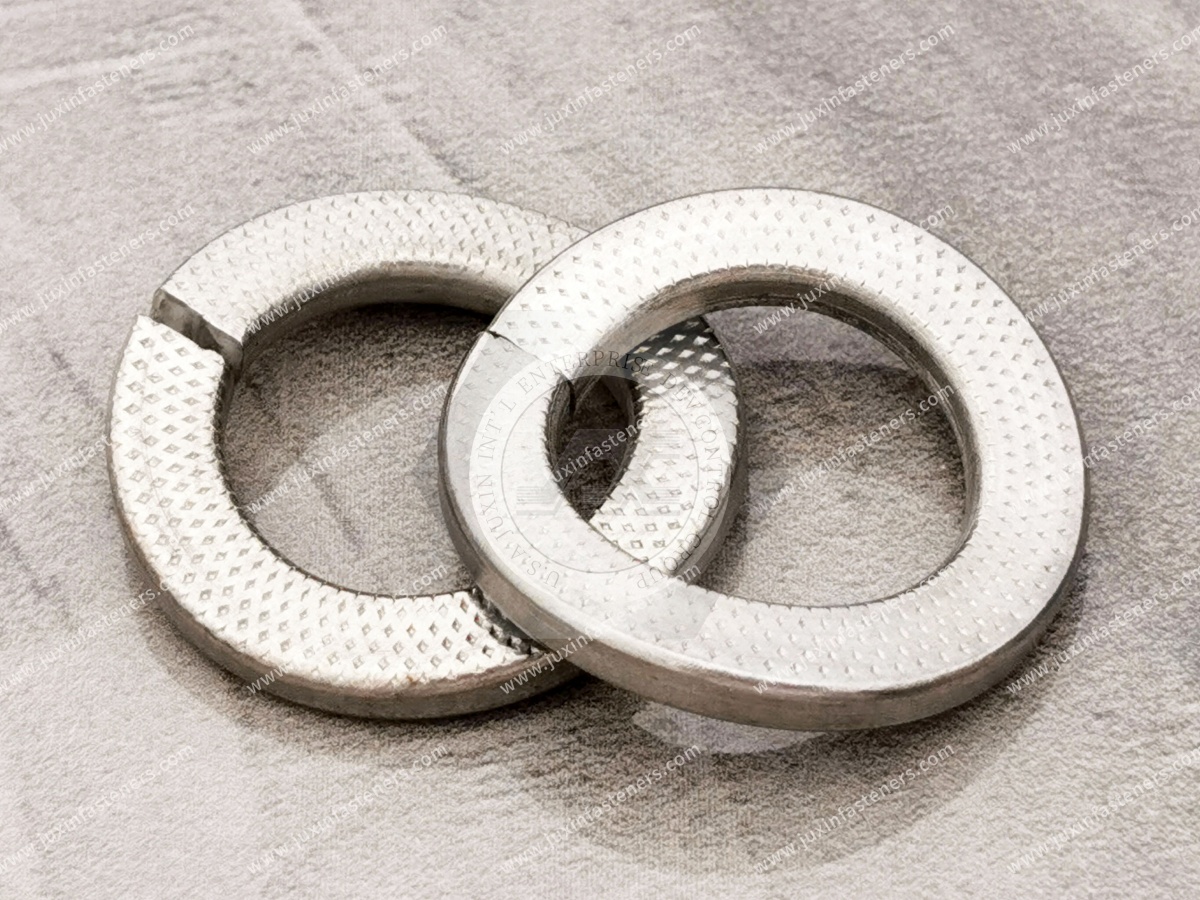
A spring washer is a washer or washer-like elastic component designed to deflect under load.
Depending on the geometry, this deflection may be used for purposes such as:
providing an elastic reaction force;
accommodating limited axial movement;
controlling component clearance;
supporting bearing or rotating assemblies;
providing a defined spring characteristic;
serving a historically specified washer function in a bolted assembly.
Different products marketed as spring washers can behave very differently.
A split helical spring lock washer should not be treated as mechanically equivalent to a wave washer or a disc spring.
The phrase “spring washer” is often used broadly.
For engineering purposes, it is more useful to identify the actual geometry.
Common categories can include:
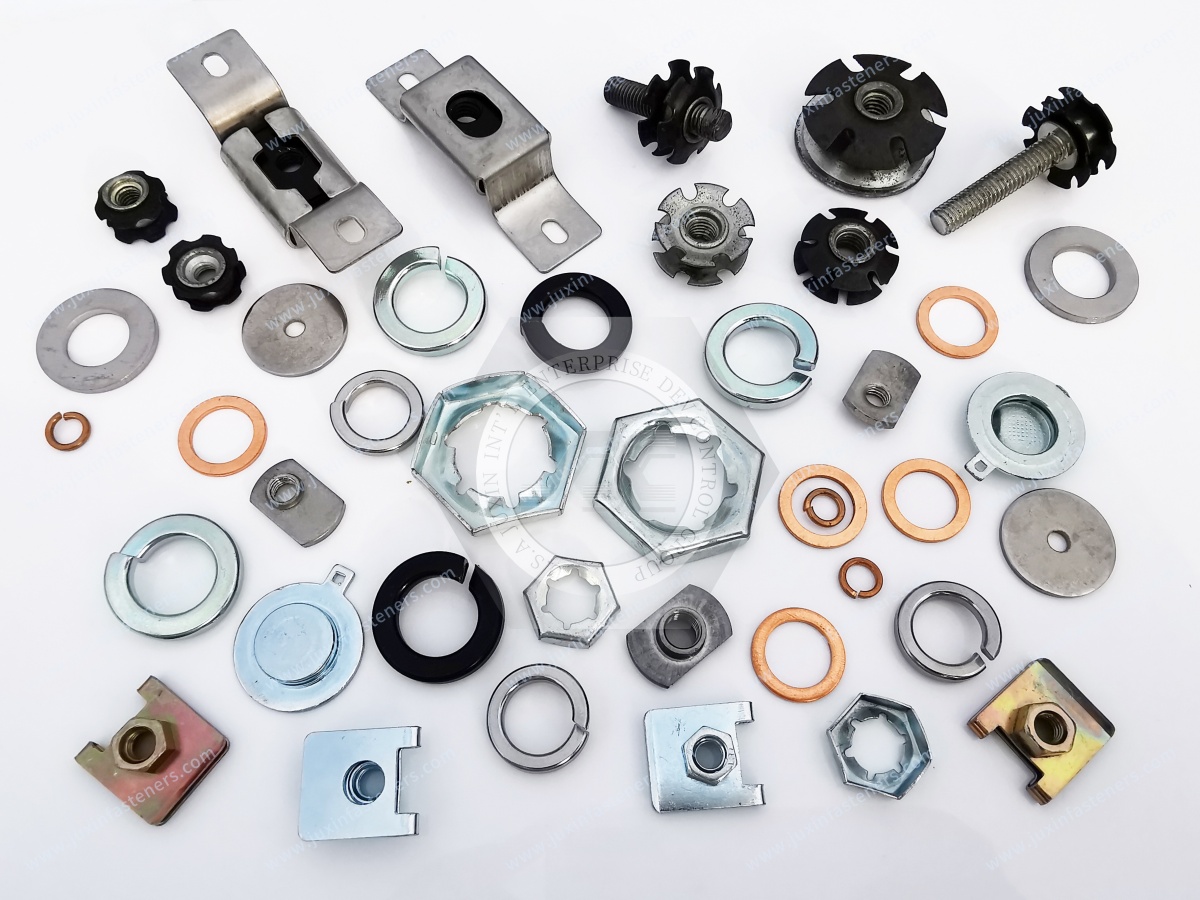
helical spring lock washers;
split lock washers;
wave washers;
curved washers;
conical disc springs or Belleville-type washers;
other drawing-specific elastic washers.
Each geometry should be evaluated according to its intended function.
The basic mechanical principle of many spring washers is elastic deformation.
When an axial force compresses or deflects the washer, the component produces a reaction force.
The force-deflection relationship depends on factors including:
washer geometry;
material;
material condition;
thickness;
free height;
installed height;
amount of deflection.
However, this does not mean that a small spring washer automatically maintains the preload of a much stiffer bolted joint.
That distinction is important.
Bolt preload is primarily generated by tightening the threaded fastener.
A washer can influence the local interface and, depending on its design, contribute an elastic response.
But:
Washer Spring Force ≠ Bolt Preload
and:
Spring Washer ≠ Automatic Preload Maintenance System
The final clamp force of a bolted joint depends on the complete assembly.
Important variables can include:
bolt stiffness;
joint stiffness;
tightening method;
friction;
bearing surfaces;
embedment;
temperature;
external loading;
material relaxation.
This is why washer selection should be part of joint design rather than treated as an isolated anti-loosening decision.
This question requires a more precise answer than the traditional statement that “spring washers prevent loosening.”
Some washer designs can influence the mechanical interface.
However, a conventional split or helical spring lock washer should not automatically be treated as a reliable locking solution for every vibration-loaded joint.
ASME B18.21.1 covers dimensional requirements, physical properties and related test methods for inch-series helical spring-lock washers, tooth-lock washers and plain washers.
Importantly, ASME also notes that the historical word “lock” in these product names should not be interpreted as guaranteeing permanent locking of the attachment.
Therefore, engineers should not specify a split lock washer solely because the application experiences vibration.
A conventional split helical lock washer has an inclined or helical free form.
During tightening, it compresses as the joint is clamped.
As the washer becomes compressed, its behavior changes from its free spring shape toward a much flatter installed condition.
In a highly preloaded bolted joint, the locking contribution of a conventional split washer can therefore be much more limited than its free shape suggests.
For vibration-critical applications, the complete joint should be evaluated instead of assuming that the washer alone will prevent self-loosening.
Fastener loosening under vibration can depend on:
preload;
transverse movement;
joint stiffness;
bolt stiffness;
friction;
bearing surfaces;
clamp length;
external loading;
thread geometry;
locking method.
Therefore:
Vibration Present → Add Spring Washer
is not a complete engineering selection rule.
The correct question is:
What loosening mechanism is expected, and what joint-retention strategy addresses that mechanism?
If reliable resistance to rotational loosening is required, engineers may need to evaluate alternative or additional fastening methods depending on the application.
These can include:
prevailing-torque locknuts;
nylon-insert locknuts;
all-metal locknuts;
thread-locking features;
mechanical locking systems;
application-specific locking designs.
For additional guidance on locking nuts, see Nylon Insert Locknuts for Anti-Vibration Applications at /solutions/nylon-insert-locknuts-anti-vibration.
The appropriate solution depends on temperature, vibration, serviceability, preload and customer requirements.
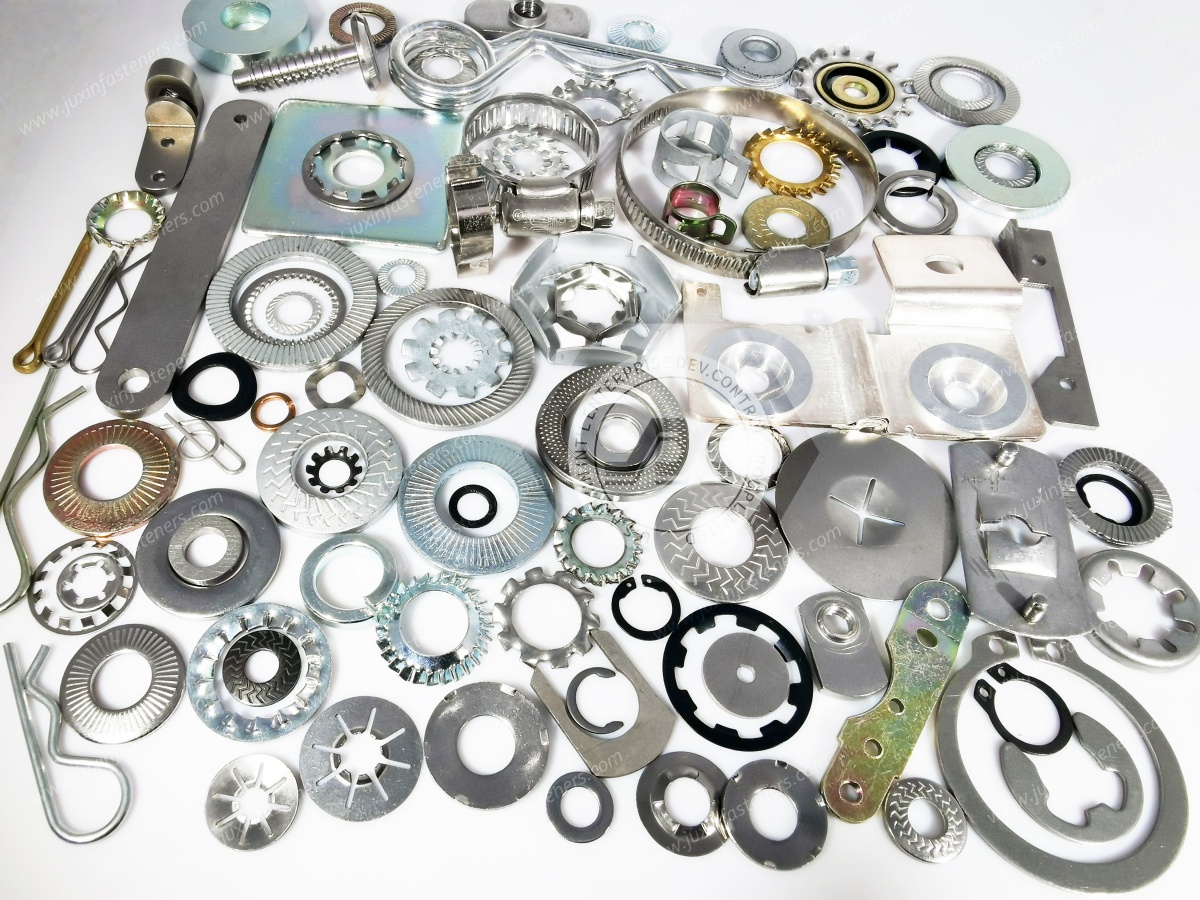
Split helical spring lock washers are among the most recognizable spring-washer forms.
They can be encountered in:
machinery;
industrial equipment;
maintenance assemblies;
electrical equipment;
legacy mechanical designs.
Where a customer drawing specifically requires this washer type, the product should be supplied according to the applicable dimensional, material and finish requirements.
However, the washer should not be promoted as a universal solution for vibration loosening.
For inch-series applications, ASME B18.21.1 covers helical spring-lock washers, tooth-lock washers and plain washers within its stated scope.
It addresses dimensional requirements, physical properties and related test methods.
It is useful for projects requiring applicable inch-series washer definitions.
However, conformance should only be claimed when the supplied product actually meets the applicable standard requirements.
DIN 127 is historically well known in connection with spring lock washers.
However, DIN Media currently identifies DIN 127 as a withdrawn standard.
That makes an important difference for modern OEM sourcing.
A legacy drawing may still call out DIN 127, and replacement or maintenance projects may still need to identify components based on that historical specification.
But new engineering content should not present DIN 127 as though it were a current universal washer standard.
For legacy requirements, the drawing, customer specification and intended replacement strategy should be reviewed before production.
A withdrawn standard does not mean an existing machine or product can simply use a different washer without review.
Legacy equipment may have:
established drawings;
validated assemblies;
spare-parts requirements;
customer-controlled specifications.
For replacement sourcing, procurement should identify whether the requirement is:
Exact Legacy Replacement
or:
Engineering Redesign / Approved Alternative
Those are different sourcing tasks.
Wave washers use one or more wave-shaped sections to provide axial spring behavior.
They can be useful where an assembly requires controlled axial compliance within a limited space.
Potential applications can include:
bearing assemblies;
shafts;
rotating components;
electric motors;
mechanical equipment;
precision assemblies.
A wave washer should be selected according to its required load-deflection behavior rather than described generically as a vibration-damping washer.
One useful function of a wave washer can be the management of axial clearance.
For example, an assembly may require an elastic component between two parts to accommodate:
dimensional variation;
limited axial movement;
component tolerance;
controlled contact.
The correct wave washer depends on the required installed height and force-deflection behavior.
This is a different engineering task from preventing a threaded fastener from rotating loose.
Conical disc springs, often associated with Belleville-type geometry, can provide a substantial axial spring response in a compact envelope.
Depending on design, disc springs can be used individually or in combinations.
Their selection can involve:
load;
deflection;
installed height;
stacking arrangement;
fatigue requirements;
temperature;
material.
These products should not be treated as interchangeable with conventional split lock washers.
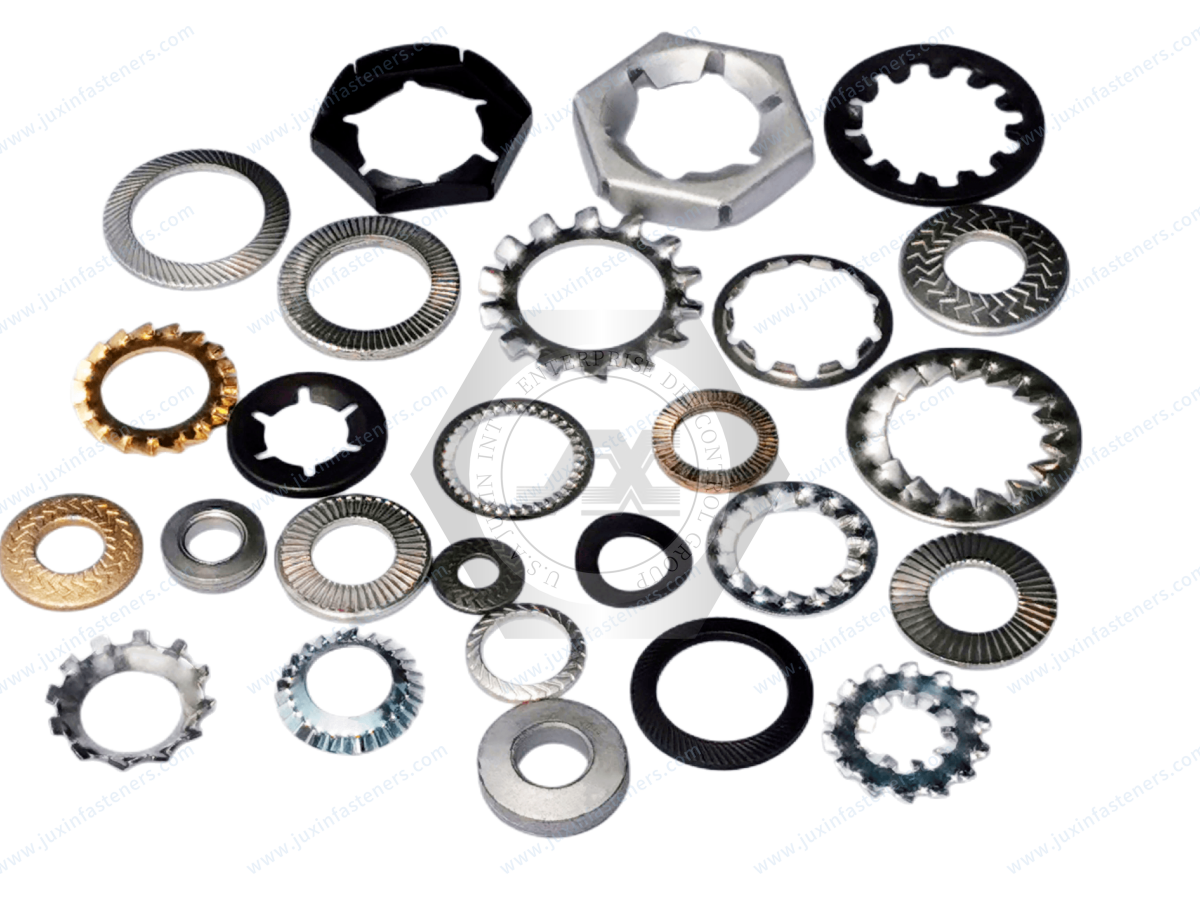
A plain washer and a spring washer can serve different purposes.
A plain washer may be selected to:
distribute bearing load;
protect a mating surface;
provide a defined bearing interface;
accommodate hole geometry.
A spring washer introduces an elastic geometry intended to deflect.
Neither should automatically be described as superior.
The correct washer depends on the joint requirement.
For a broader washer comparison, see Industrial Washers: Types, Functions & Selection Guide at /solutions/industrial-washers-types-functions-selection-guide.
An engineer should first ask what the washer is expected to accomplish.
If the primary requirement is bearing-area distribution under a bolt head or nut, a properly specified plain washer may be more directly related to the problem.
If the requirement is axial spring behavior, a spring component may be relevant.
If the requirement is resistance to rotational loosening, the joint may require a dedicated locking strategy.
Separating these functions prevents one washer from being expected to solve every joint problem.
A nylon-insert locknut uses a polymer insert to create prevailing torque on the mating thread.
That is a different locking mechanism from the elastic shape of a spring washer.
Selection can depend on:
temperature;
chemical exposure;
reuse requirements;
vibration environment;
mating thread;
installation torque.
Neither system should be substituted for the other without reviewing the application.
All-metal locknuts use metallic prevailing-torque features rather than a polymer insert.
They may be considered where the application requires a different temperature or environmental capability from nylon-insert designs.
Again, this is a thread-locking strategy rather than simply an axial washer function.
This depends strongly on the washer design and the joint.
A washer with a meaningful force-deflection characteristic can contribute compliance to an assembly.
However, a conventional split lock washer should not automatically be described as maintaining constant clamp force under vibration, thermal expansion or embedment.
The relevant question is whether the washer's load-deflection behavior is significant relative to the complete joint stiffness and expected displacement.
Bolted-joint behavior is influenced by the stiffness relationship between the fastener and the clamped components.
If the joint is extremely stiff compared with the elastic travel available from a washer, the washer may have limited ability to compensate for meaningful joint movement.
This is why statements such as:
“The spring washer continuously pushes against the bolt and maintains constant preload.”
are too simplistic for an engineering guide.
Different materials expand at different rates as temperature changes.
A washer alone does not guarantee compensation for thermal expansion.
For temperature-cycling assemblies, engineers may need to evaluate:
bolt material;
clamped-part materials;
grip length;
coefficients of thermal expansion;
operating temperature range;
joint stiffness;
relaxation;
washer spring characteristic where applicable.
The complete joint determines the result.
Bolted joints can lose some initial preload through embedment or settlement at contact interfaces.
Whether a spring element can meaningfully compensate depends on its design and the joint.
A generic split washer should not be marketed as a universal solution for embedment-related preload loss.
For a broader joint-level discussion, see Washers and Bolts: Fastening Systems Selection Guide at /solutions/washers-and-bolts-fastening-systems-selection-guide.
The original 2023 article described spring washers broadly as shock-absorbing and vibration-damping components.
That is too general.
A spring component can store and release elastic energy.
But true vibration damping requires energy dissipation.
Spring behavior and damping are not the same physical property.
Therefore:
Elasticity ≠ Damping
and:
Spring Washer ≠ Shock Absorber
unless a specific washer/system has been designed and validated for that function.
Spring washers can be manufactured from different materials depending on product design and application.
Possible material families can include:
carbon or spring steel;
stainless steel;
other project-specific alloys.
Material selection should consider:
washer geometry;
required spring characteristic;
corrosion environment;
temperature;
manufacturing process;
customer specification.
A material name alone does not establish the performance of the finished washer.
Carbon and spring steels are commonly associated with many washer designs.
Where corrosion protection is required, an appropriate surface treatment may also be specified.
The finished component should be evaluated according to:
Material + Material Condition + Geometry + Surface Treatment
rather than raw material alone.
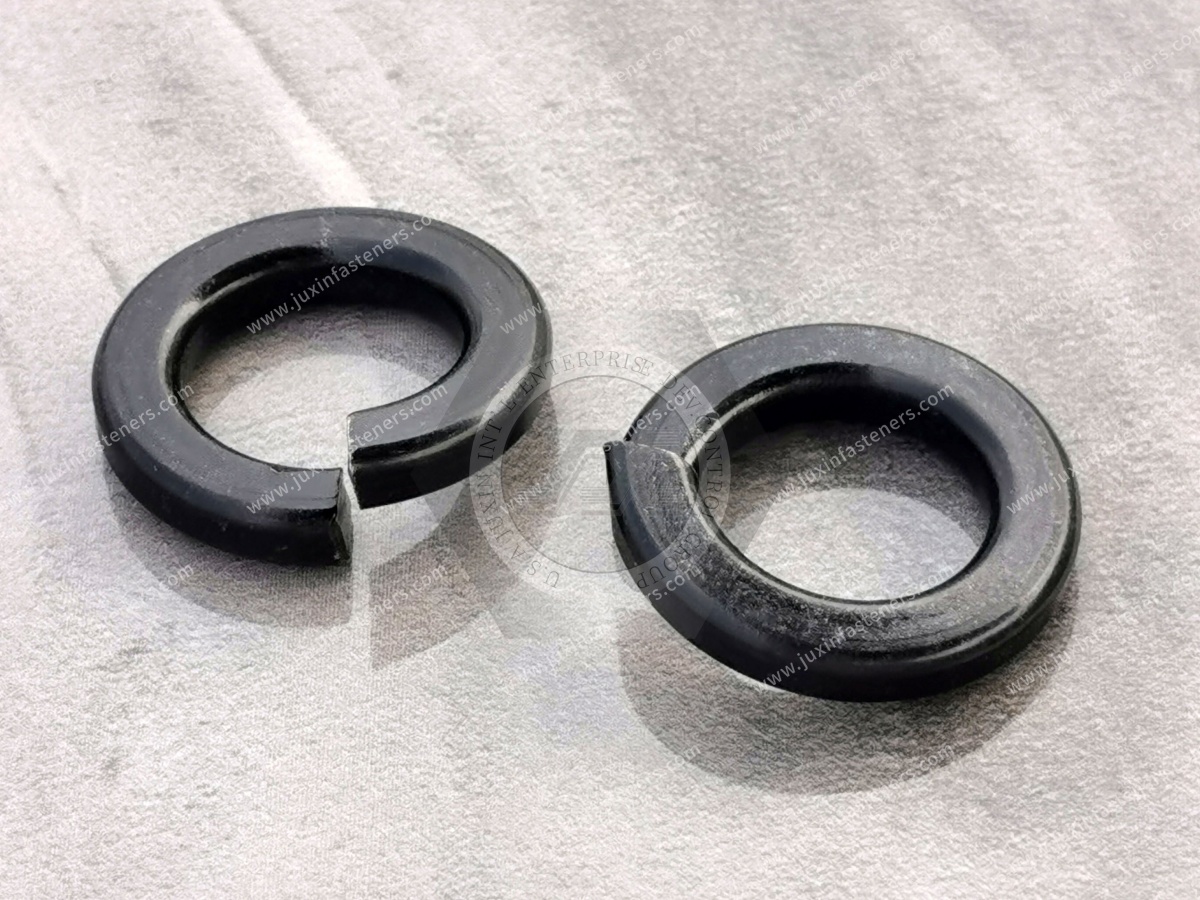
Stainless steel may be selected where corrosion resistance is an important project requirement.
However, “stainless” does not mean universally corrosion-proof.
Grade selection should consider:
moisture;
chlorides;
cleaning chemicals;
temperature;
mating materials.
The exact stainless grade should follow the project specification.
Titanium or specialty alloys may be encountered in specialized engineering applications.
These should not be presented as generic upgrades for standard spring washers.
Selection can involve:
material compatibility;
mechanical requirements;
corrosion environment;
weight;
cost;
customer qualification.
Availability and manufacturing feasibility should be confirmed for the specific drawing.
Carbon steel washers may use project-specific surface treatments such as:
zinc-based coatings;
phosphate-based finishes;
other specified coatings.
For applicable JUXIN FASTENERS projects, trivalent chromium zinc plating can be considered where required.
The RFQ should define, where applicable:
coating type;
passivation;
coating thickness;
appearance;
corrosion-test requirement;
acceptance criteria;
RoHS/REACH requirements.
A requirement such as:
“Salt spray resistant”
is incomplete.
Where ASTM B117 is specified, procurement should also define:
exposure duration;
acceptance criteria;
coating system;
evaluation requirement.
ASTM B117 is a salt spray/fog test method.
It does not establish one universal number of hours for every washer and does not directly predict real-world service life.
Higher-strength or higher-hardness steel components can require consideration of hydrogen embrittlement when certain cleaning or electroplating processes are used.
Risk depends on factors such as:
material condition;
hardness;
strength;
residual stress;
processing;
geometry;
applied stress.
Post-plating treatment should therefore follow the applicable component, coating or customer specification rather than a universal website recipe.
The original article stated that most spring washers should operate at a compression ratio between 10% and 25%.
That should not be generalized.
Different washer geometries have different force-deflection characteristics and installation requirements.
A wave washer, disc spring and split lock washer cannot be controlled by one universal percentage rule.
The required installed deflection should come from:
product design;
engineering calculation;
validated product data;
customer specification.
Selection can involve:
bolt or screw diameter;
washer inside diameter;
outside diameter;
thickness;
free height;
installed height;
bearing surface;
surrounding clearance.
The correct dimensions depend on washer type and applicable standard or drawing.
Installation should follow the engineering drawing and assembly specification.
Depending on the joint, important variables can include:
washer orientation where geometry requires it;
mating surfaces;
bolt/nut specification;
tightening method;
torque or tension requirement;
lubrication condition;
reuse policy.
The washer should not be expected to compensate for an uncontrolled tightening process.
Another important engineering distinction is that tightening torque is only an indirect method of creating bolt tension.
Friction at the threads and bearing surfaces can strongly affect the relationship between applied torque and achieved preload.
Adding or changing a washer can also change the bearing interface.
Therefore, washer substitution can sometimes affect an existing torque-controlled assembly.
For critical joints, the complete tightening specification should be reviewed.
Reuse should not be assumed automatically.
A previously installed washer may have experienced:
permanent deformation;
wear;
corrosion;
surface damage;
loss of intended free geometry.
Where reuse is important, the requirement should be defined and validated for the specific washer and application.
Depending on product type and customer requirements, inspection can include:
dimensional verification;
material verification;
surface condition;
coating;
cracks or visible defects;
free height or geometry where relevant;
functional testing where specified.
The inspection plan should follow the applicable drawing or standard.
Spring washers may be found in automotive equipment and legacy fastening systems.
Potential applications can include:
brackets;
accessories;
equipment mounts;
non-structural mechanical assemblies.
However, a generic spring washer should not automatically be recommended for:
wheel fastening;
brake systems;
suspension safety joints;
crash-critical structures.
Those applications require system-specific engineering and validation.
Machinery may use different washer types in:
covers;
equipment frames;
motors;
pumps;
brackets;
service assemblies.
The correct washer depends on the actual joint requirement.
A machine experiencing vibration should not automatically receive a split lock washer without evaluating the loosening mechanism.
Wave washers and other elastic washer designs can be useful in certain rotating equipment where controlled axial force or clearance management is required.
Possible applications can include:
bearings;
motor assemblies;
shaft systems.
The required force-deflection behavior should be specified for the actual assembly.
Washers can be used in:
equipment enclosures;
mounting brackets;
cabinet hardware;
internal mechanical assemblies.
However, a generic spring washer should not automatically be treated as a grounding or electrical bonding component.
Electrical continuity requirements require separate design and validation.
HVAC systems can use washers in:
fan equipment;
housings;
control assemblies;
service panels;
machinery mounts.
The presence of vibration does not automatically establish the correct washer type.
The joint and maintenance requirements should guide selection.
Heavy machinery and construction equipment can contain high-load and vibration-exposed bolted joints.
These applications should not be described as automatically suitable for a generic spring washer.
For highly loaded or safety-related joints, the fastener system should be engineered according to the applicable equipment requirements.
The original article broadly recommended spring washers for aerospace engines, hydraulic systems and mounting structures.
That claim is too broad.
Aerospace fastening systems can involve tightly controlled hardware, approved drawings, specific locking methods and qualification requirements.
JUXIN FASTENERS should not present a generic commercial spring washer as an aerospace-critical locking solution unless the exact product and project requirements support that claim.
For aviation or MRO inquiries, the customer drawing, specification and application classification should be reviewed before quoting.
Marine environments can introduce:
moisture;
salt exposure;
galvanic interaction;
crevice conditions.
Material and surface treatment therefore become important.
A generic spring washer should not be described as suitable for marine service solely because it is made from stainless steel.
The exact grade and assembly materials should be evaluated.
Automation equipment may use washers in:
machine frames;
enclosures;
sensor brackets;
motor assemblies;
serviceable modules.
Compact equipment can also impose dimensional-envelope requirements.
The washer must fit both the fastener and surrounding assembly.
| Engineering Requirement | What to Evaluate |
|---|---|
| Rotational loosening resistance | Complete locking strategy, not washer name alone |
| Axial compliance | Washer force-deflection behavior |
| Bearing load distribution | Plain washer geometry may be more relevant |
| Clearance control | Wave/curved washer behavior where appropriate |
| High preload joint | Washer behavior after installation compression |
| Vibration | Joint-level loosening mechanism and validation |
| Corrosion | Material, coating and environment |
| Temperature | Material and complete joint behavior |
| Legacy replacement | Existing drawing and historical specification |
| Critical application | Application-specific testing and qualification |
Instead of:
Vibration → Spring Washer
use:
Joint Function → Failure Mode → Required Washer/Locking Function → Fastener System → Material → Finish → Installation → Validation
This changes spring washer selection from a traditional habit into an engineering decision.
An engineer may search:
how do spring washers work;
do spring washers prevent loosening;
split lock washer effectiveness;
spring washer vs flat washer;
spring washer vibration;
wave washer selection.
A procurement team may search:
spring washer manufacturer;
spring washer supplier;
custom spring washers;
stainless spring washers;
split lock washer supplier;
OEM washer supplier.
Both search journeys should ultimately converge on a controlled specification.
A professional RFQ should identify the actual washer requirement rather than requesting “spring washers” generically.
Useful information can include:
washer type;
drawing;
applicable standard where required;
metric or inch system;
mating bolt or screw size;
inside diameter;
outside diameter;
thickness;
free height where relevant;
installed height where relevant;
material;
material condition where specified;
surface treatment;
operating environment;
temperature range where relevant;
corrosion requirement;
application;
functional requirement;
annual demand.
When submitting an RFQ to JUXIN FASTENERS at info@juxinfasteners.com, provide as much of the following information as available:
2D engineering drawing;
3D model where relevant;
physical sample;
customer part number;
existing supplier/reference part number;
washer type;
split/helical, wave, curved, disc or other geometry;
applicable standard where required;
legacy standard reference where applicable;
metric or inch system;
mating bolt/screw diameter;
inside diameter;
outside diameter;
washer thickness;
free height where applicable;
required installed condition where applicable;
material;
required material grade;
hardness or material condition where specified;
surface treatment;
trivalent chromium zinc requirement where applicable;
RoHS/REACH requirement where applicable;
corrosion-test method where required;
required exposure duration;
acceptance criteria;
hydrogen embrittlement controls where applicable;
operating temperature;
environmental exposure;
required spring/load-deflection behavior where applicable;
locking requirement if relevant;
reuse requirement where applicable;
sample quantity;
production quantity;
annual demand;
packaging requirements;
inspection requirements;
customer-specific specifications.
A buyer may begin with:
“Need spring washer supplier.”
An engineer may begin with:
“Will a spring washer stop this bolt loosening?”
Neither question is yet a production specification.
A controlled sourcing path is:
Search Problem → Joint Failure Mode → Required Washer Function → Washer Geometry → Bolt/Nut Interface → Material → Surface Finish →
Installed Condition → Validation → Approved Drawing → Supplier RFQ → Repeat Supply
This approach prevents a historical product name such as “spring lock washer” from becoming an unsupported performance guarantee.
For OEM spring washers, industrial washers, wave washers, split/helical spring washers and drawing-based fastening components, contact JUXIN FASTENERS at info@juxinfasteners.com.
Provide the drawing, washer type, mating fastener, material, finish, functional requirement and annual demand so
JUXIN FASTENERS can evaluate the actual engineering requirement rather than recommending a washer solely from the phrase “anti-loosening.”
 MORE NEWS
Sep. 25, 2026
Sep. 25, 2026
Sep. 25, 2026
Contact Us
Tel.:
+86 020 8621 0320
+86 020 3121 6067
E-mail:
Technical Support:
Navigation
SEND INQUIREY