
Call Us
+86 136 6007 9809
Call Us
+86 136 6007 9809

Sep. 06, 2023
Industrial washers are often treated as simple supporting components in mechanical fastening systems.
In reality, the washer can directly influence the bearing interface between a bolt, screw, nut, and the connected component.
The correct washer can distribute clamping load over a larger area, protect a softer substrate, control the bearing interface, support a locking or sealing function, and contribute to consistent assembly conditions.
The wrong washer can create problems such as local indentation, deformation, unsuitable friction conditions, interference with adjacent components, or an ineffective locking or sealing strategy.
This makes washer selection an engineering decision rather than simply a purchasing decision.
Industrial washers are widely used in:
Automotive manufacturing
Electric vehicles
Battery systems
Industrial machinery
Electrical equipment
Telecommunications equipment
HVAC systems
Transportation equipment
Sheet-metal assemblies
Structural equipment
Commercial machinery
OEM products
For design engineers, structural engineers and manufacturing engineers, the important question is not simply:
“Which washer fits this bolt?”
It is:
“Which washer provides the appropriate interface between this fastener and this joint?”
For procurement and supply-chain teams, the corresponding question is:
“How should the washer be specified so that the required geometry, material, surface condition and function are consistently supplied?”
This guide explains the major industrial washer types, their mechanical functions, selection criteria, international standards, material considerations,
locking and sealing applications, industry-specific requirements, and the information required for an OEM washer RFQ.
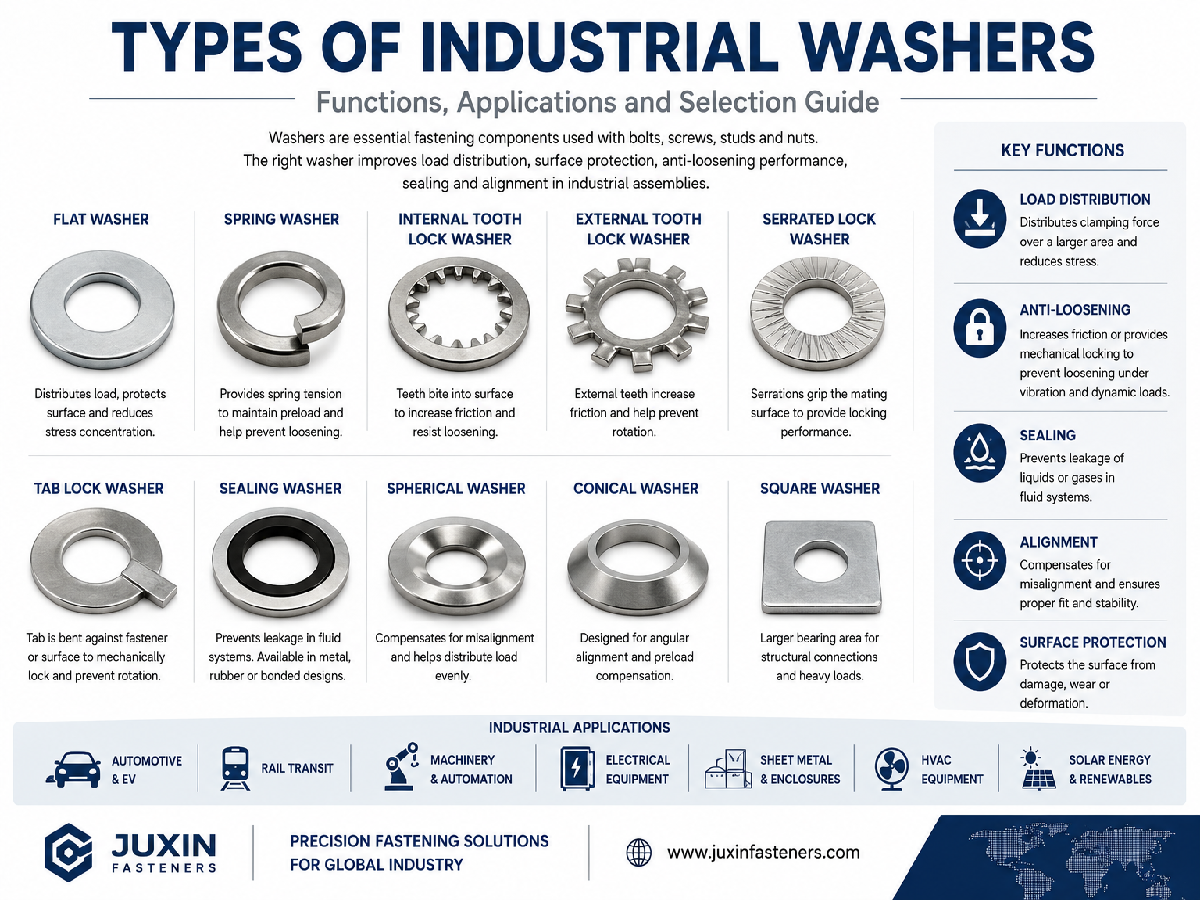
An industrial washer is a component installed between a fastener and a connected component, or used as part of a specialized fastening or sealing assembly.
Depending on its design, a washer can provide one or more functions:
Load distribution
Bearing-area control
Surface protection
Spacing
Alignment
Locking assistance
Sealing
Spring action
Compensation for angular conditions
The word “washer” therefore describes a broad family of components rather than one single product.
When a bolt is tightened, the resulting clamping load enters the connected component through the bearing interface.
Without a suitable washer, the contact area may be relatively small.
This can be especially important when fastening:
Thin sheet metal
Aluminum
Painted surfaces
Coated surfaces
Softer engineering materials
Components with large clearance holes
A washer can increase the effective bearing area and change how the load is transferred into the component.
However, a washer does not automatically increase the strength of the complete joint.
The joint still depends on:
Fastener strength
Parent-material strength
Hole geometry
Joint stiffness
Preload
Friction
Component thickness
Loading conditions
A simple flat washer can be viewed as a bearing-interface component.
The load path can be represented as:
Bolt head → Washer → Connected component
or:
Nut → Washer → Connected component
A washer can therefore influence the transition between the fastener and the mating material.
This is one reason washer selection should be considered together with bolt and nut selection.
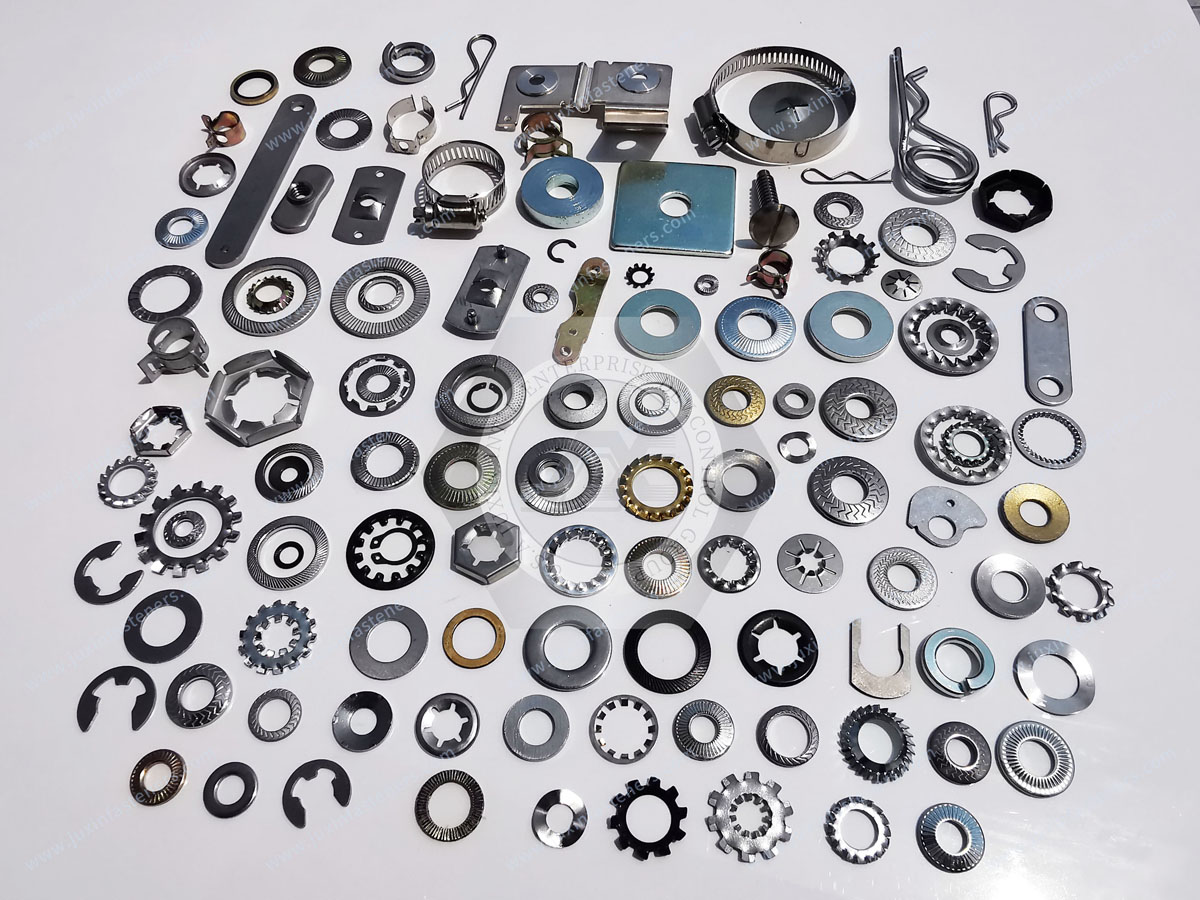
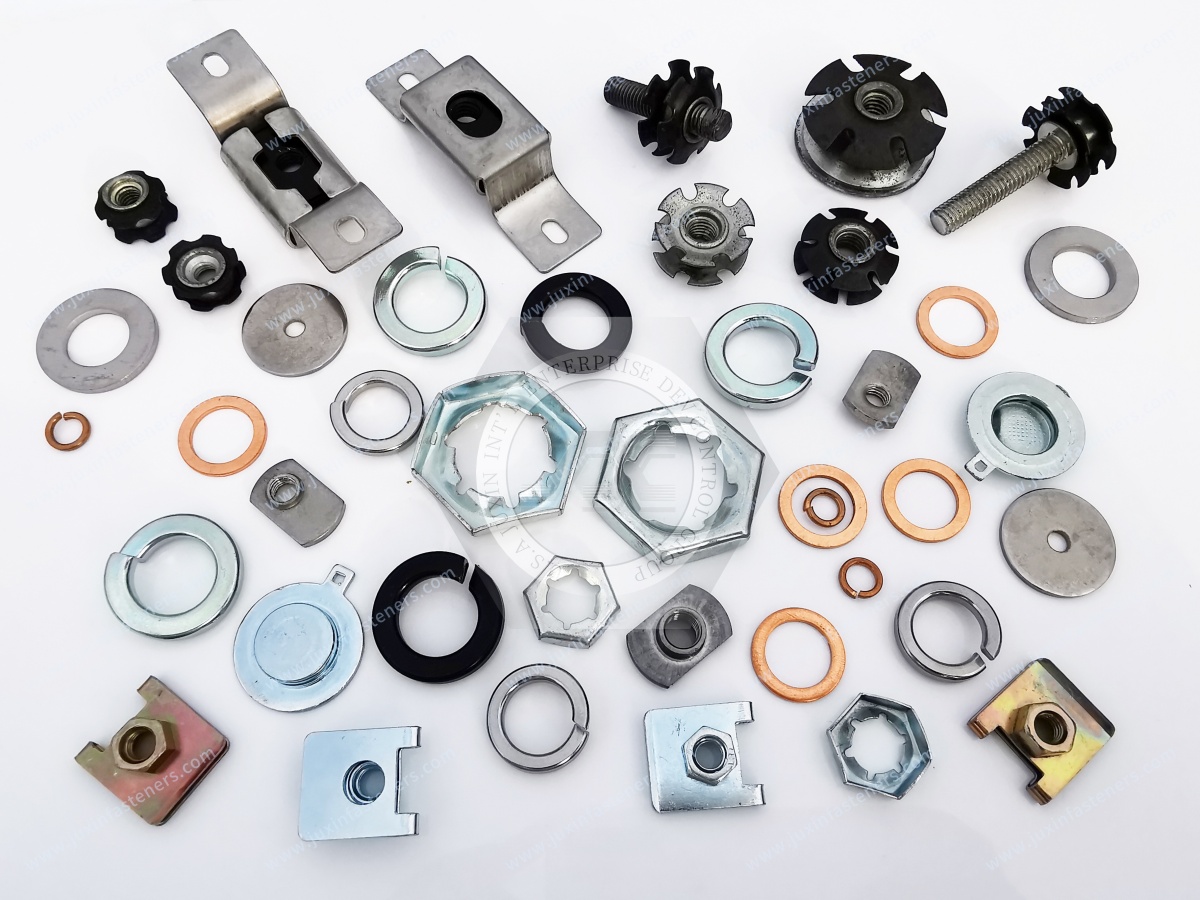
Industrial washers can be broadly classified into:
Flat washers
Large-OD washers
Spring washers
Wave washers
Serrated washers
Tooth lock washers
Tab washers
Stop washers
Sealing washers
Bonded sealing washers
Spherical washers
Conical washers
Special-purpose washers
Custom washers
Each type has a different intended function.
The correct selection depends on the actual joint.
Flat washers are the most common industrial washer category.
Their primary functions include:
Load distribution
Surface protection
Bearing-interface control
Supporting thin materials
Separating the fastener from the mating surface
Metric plain washer standards include ISO 7089, ISO 7090 and ISO 7091 for their respective dimensional and product requirements.
Other washer geometries and sizes are covered by additional international standards depending on the design.
For inch-series applications, ASME B18.21.1 covers plain washers and other washer categories within its defined scope.
A standard flat washer is often selected when the joint requires a conventional bearing interface.
Typical applications include:
General machinery
Equipment frames
Brackets
Enclosures
Automotive components
Sheet-metal assemblies
The washer should still be checked for:
Inside diameter
Outside diameter
Thickness
Material
Surface treatment
Compatibility with the bolt and mating component
Large-OD washers provide a larger bearing area than standard washer configurations.
They may be considered when:
The connected material is thin
The bearing surface is relatively soft
A larger area of load distribution is required
A large clearance hole needs support
Local indentation needs to be reduced
They are particularly relevant to sheet-metal assemblies.
However, larger diameter does not automatically mean better performance.
The available space and joint geometry must still be checked.
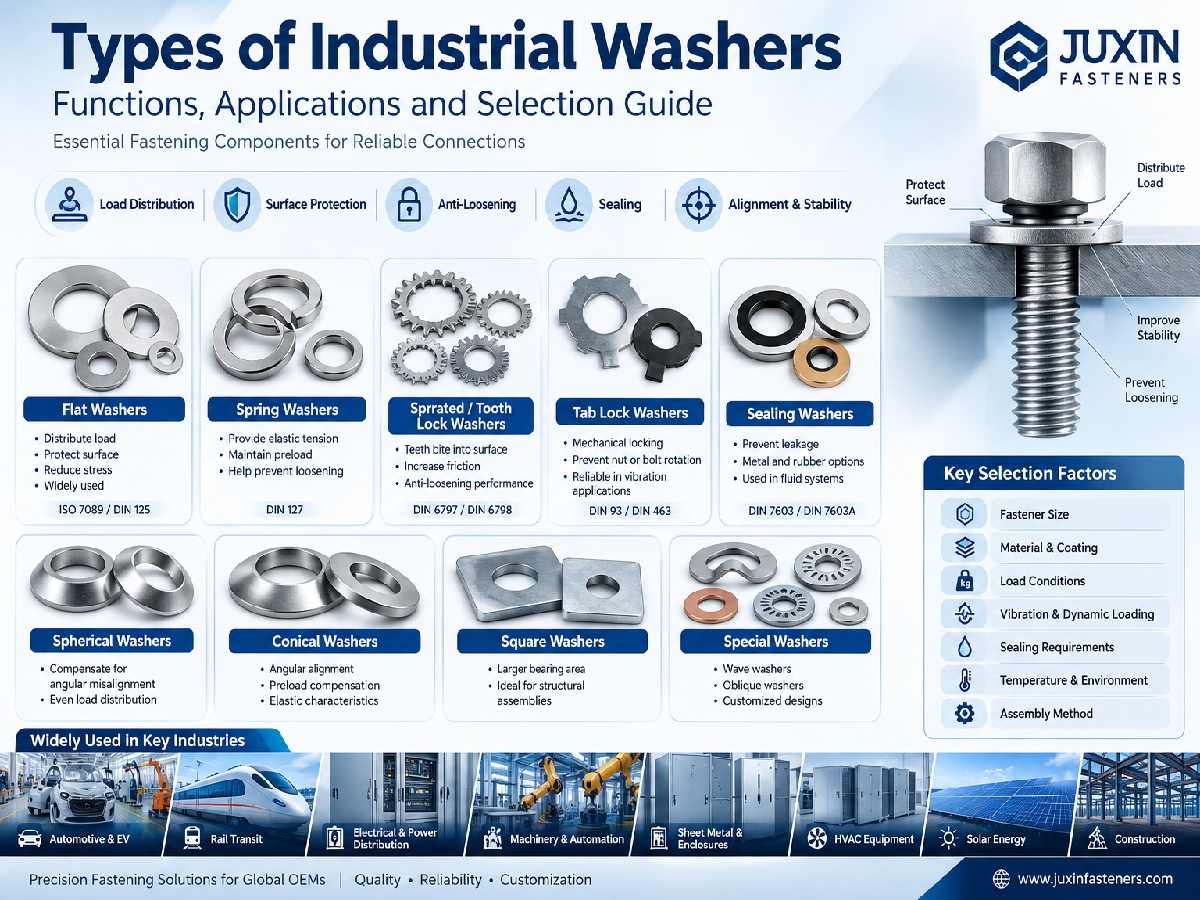
Thin sheet materials can be susceptible to local deformation around fastener holes.
An oversized washer can spread the bearing load across a larger region.
Potential applications include:
Sheet-metal cabinets
Electrical enclosures
Automotive panels
Equipment covers
Brackets
Lightweight structures
The correct outside diameter should be determined from the actual joint geometry rather than selected only from a general catalog.
The washer inside diameter must accommodate the fastener and the intended assembly condition.
Important considerations include:
Nominal bolt diameter
Actual fastener geometry
Hole clearance
Washer standard
Installation requirements
Potential movement
An oversized washer hole may reduce effective support around the fastener.
An undersized hole may interfere with installation.
Outside diameter determines the available bearing footprint.
A larger outside diameter can be useful when the connected material requires increased bearing support.
But the washer must also clear:
Adjacent components
Formed sheet-metal features
Welds
Flanges
Countersinks
Moving parts
Assembly tooling
Washer thickness affects the physical and mechanical characteristics of the bearing interface.
It can influence:
Bearing stiffness
Resistance to deformation
Stack height
Component clearance
Fastener engagement relationship
A thicker washer is not automatically the correct washer.
The thickness must fit the complete assembly.
Industrial washers can be produced from various materials, including:
Carbon steel
Alloy steel
Spring steel
Stainless steel
Aluminum
Other application-specific materials
Material selection should consider:
Mechanical requirements
Mating material
Corrosion environment
Temperature
Surface treatment
Electrical requirements
Assembly conditions
For OEM sourcing, “steel washer” is usually insufficient as a complete material specification.
Carbon steel washers are widely used in industrial fastening systems.
They can be paired with carbon or alloy steel bolts in applications where mechanical performance and cost efficiency are important.
The washer material and geometry should still be selected according to the joint.
The fastener property class does not by itself define the required washer.
Stainless steel washers are commonly selected where corrosion resistance or material compatibility is important.
Typical applications include:
Outdoor equipment
Electrical equipment
Food-processing equipment
HVAC equipment
Automotive components
Industrial machinery
The specific stainless steel grade should be stated when it is important to the application.
When stainless steel bolts and washers are combined, engineers should consider:
Stainless grade
Mechanical properties
Surface condition
Corrosion environment
Assembly friction
Potential galling considerations
Mating component material
The term “stainless steel” alone does not fully define the fastening system.
For applicable stainless steel bolts, screws and studs, ISO 3506-1:2020 defines mechanical and physical property requirements for
specified corrosion-resistant stainless steel grades and property classes within its scope.
High-strength bolted joints require particular attention to the bearing interface.
Common metric fastener property classes include:
8.8
10.9
12.9
The washer should be evaluated with respect to:
Bolt property class
Washer material
Washer thickness
Bearing area
Parent-material strength
Installation method
The objective is to ensure that the washer does not become an unintended weak interface in the joint.
Washer hardness can become important when the assembly is subjected to high bearing loads.
A washer that is too soft for the application may experience local deformation.
Potential effects include:
Embedding
Indentation
Changes in bearing area
Preload changes
Local deformation
However, washer hardness should not be selected solely from the bolt property class.
The complete joint must be evaluated.
This distinction is important in engineering design.
A high-strength bolt does not automatically create a high-strength joint.
The limiting factor could instead be:
Parent material
Hole deformation
Washer deformation
Thread engagement
Joint stiffness
Bearing stress
Edge distance
Component thickness
Therefore:
Fastener strength ≠ complete joint strength.
Spring washers use a formed geometry to provide an elastic response under load.
Different spring washer designs include:
Split spring washers
Wave washers
Conical spring washers
Other specialized spring elements
Their behavior depends on the specific geometry and load condition.
They should not automatically be specified as universal vibration-locking devices.
A common engineering assumption is that a split spring washer automatically prevents bolt loosening under severe vibration.
That assumption is too broad.
The effectiveness of any locking strategy depends on:
Joint design
Preload
Friction
Relative movement
Vibration characteristics
Fastener geometry
Surface condition
For critical dynamic joints, engineers should select the locking strategy based on the actual joint behavior rather than relying on a generic “spring washer = anti-loosening” rule.
Wave washers use wave-shaped geometry to provide spring characteristics.
They may be considered where the assembly requires:
Axial compensation
Controlled spring action
Limited movement accommodation
Preload assistance in a specific mechanical design
Their suitability depends on the required load-deflection behavior.
Conical washers provide a controlled spring effect through their conical geometry.
They may be useful in applications where:
Axial movement needs to be accommodated
A spring characteristic is required
Assembly space is limited
Joint movement needs to be managed
The specific washer geometry and loading condition should be evaluated.
Serrated washers use teeth or serrations to interact with the mating surfaces.
Depending on the design, they can be used where mechanical interaction between the washer and mating surface is required.
Applications can include:
Electrical equipment
Sheet-metal assemblies
Control panels
Industrial machinery
Grounding-related applications where appropriate
Electrical bonding should always be evaluated at the system level.
Internal-tooth washers have teeth positioned around the inner circumference.
The teeth interact with the fastener bearing surface.
Selection depends on:
Bolt head or nut geometry
Available clearance
Surface type
Coating
Assembly requirements
External-tooth washers position the teeth around the outer perimeter.
They may be considered when interaction with the external mating surface is required.
The available clearance and surface condition should be evaluated before selection.
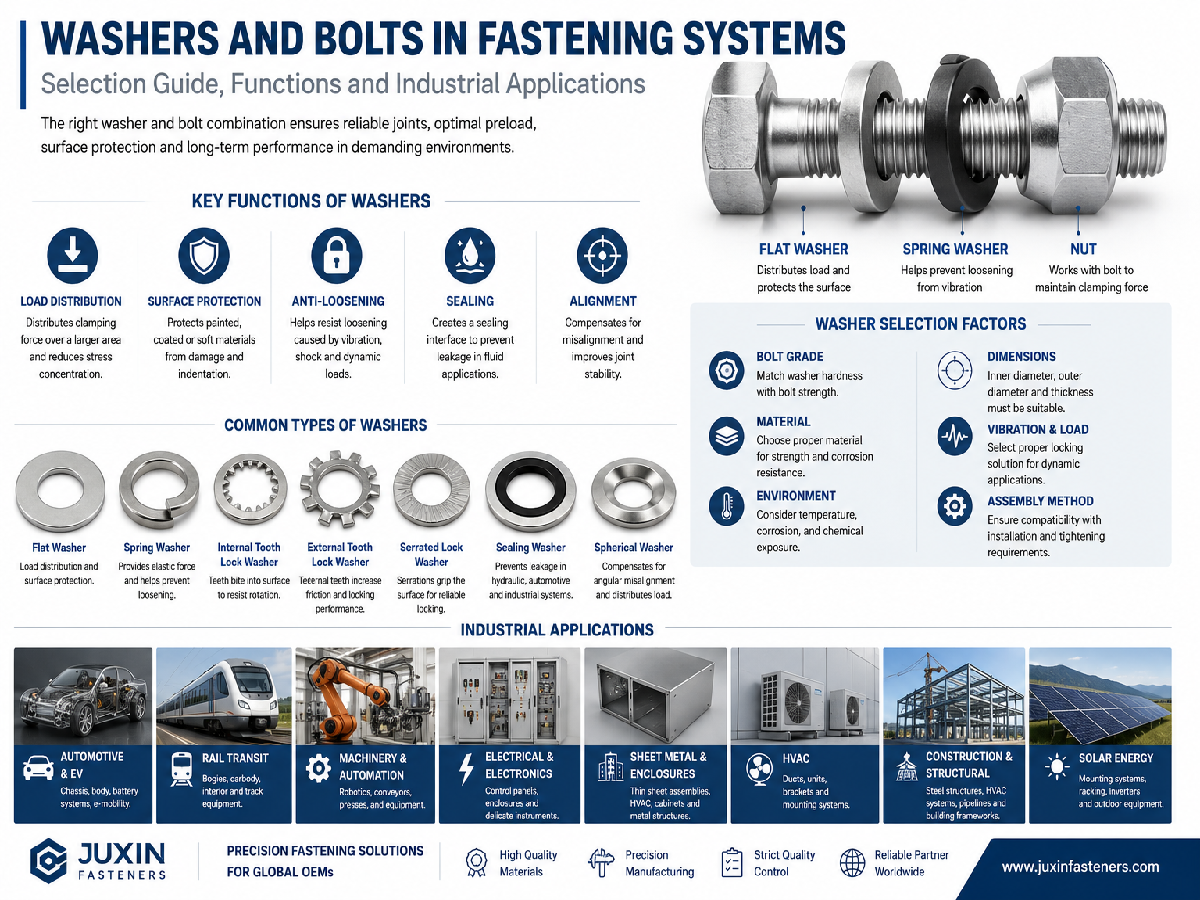
Some locking washer designs use multiple contact features to increase mechanical interaction within the joint.
These products should be evaluated according to:
Joint preload
Surface condition
Material
Vibration
Installation procedure
No washer geometry should be treated as an automatic guarantee against every type of loosening.
Tab washers and stop washers use physical features to prevent rotational movement.
The locking mechanism may involve:
Tabs
Ears
Bends
Slots
Housing features
These products can be useful in specialized machinery and mechanical assemblies where positive mechanical restraint is required.
A physical locking feature is fundamentally different from friction-based locking.
Examples include:
Tab washers
Lock plates
Castellated nut arrangements
Retaining features
When positive locking is required, the complete assembly should be designed around the intended mechanical restraint.
Sealing washers are designed to provide a controlled sealing interface.
They can be used in:
Hydraulic equipment
HVAC systems
Fluid connections
Industrial enclosures
Automotive systems
Mechanical equipment
The sealing element may be:
Elastomeric
Metallic
Composite
The material must be compatible with the application environment.
Bonded sealing washers combine a metal washer with an elastomeric sealing element.
Typical elastomer options can include application-specific materials such as:
NBR
EPDM
Other compatible elastomers
Selection depends on:
Fluid compatibility
Temperature
Compression
Aging
Chemical exposure
Sealing geometry
A sealing washer should not automatically be described as an IP67 or IP68 solution.
IP ratings apply to the performance of the relevant enclosure or assembly under the applicable test conditions.
For enclosure applications, the sealing system must therefore be evaluated as a complete assembly.
Metal sealing washers can be used where the application requires a metallic sealing interface.
Potential materials include:
Copper
Aluminum
Other application-specific metals
The material and sealing geometry must be matched to:
Mating surfaces
Pressure
Temperature
Fluid
Assembly method
Spherical washer systems can accommodate angular conditions between the fastener axis and the bearing surface.
They may be considered for:
Structural frames
Machinery
Heavy equipment
Applications where alignment variation must be managed
The purpose is not simply load distribution.
The geometry can help maintain a more appropriate bearing interface under angular conditions.
Conical washer arrangements can also be used to address alignment or load-transfer requirements.
Selection should consider:
Angular condition
Bolt diameter
Bearing surface
Washer geometry
Joint stiffness
These components are more specialized than conventional flat washers and should be specified according to their intended function.
Aluminum is common in:
Automotive structures
EV components
Electrical enclosures
Lightweight equipment
Industrial machinery
Because aluminum can have different bearing and deformation behavior from steel, washer selection deserves additional attention.
A larger bearing area may be useful depending on the joint design.
Thin sheet metal is another application where bearing-area control is important.
Potential objectives include:
Reducing local indentation
Increasing bearing area
Protecting the surface
Supporting the fastener hole
Large-OD washers can be considered when standard washer dimensions do not provide sufficient support.
A washer can help distribute load over a painted or coated surface.
However, the washer's surface condition can influence:
Coating damage
Friction
Bearing behavior
Appearance
The assembly should be evaluated to ensure that the washer does not create an unintended failure mechanism.
Industrial washers are used throughout automotive systems, including:
Body structures
Brackets
Interior assemblies
Exterior components
Chassis-related assemblies
Electrical equipment
Battery systems
Mounting brackets
The washer specification should be based on the individual application rather than simply using a generic automotive washer designation.
For broader automotive fastening requirements, see the related JUXIN FASTENERS solution:
/solutions/automotive-high-strength-fasteners-bolts-nuts-clamps
EV battery systems can involve:
Aluminum structures
Thin sheet components
Sealing interfaces
Electrical considerations
Vibration
Thermal cycling
Corrosion concerns
Washers can support mechanical bearing requirements, but they should not be assumed to provide sealing or electrical functions unless specifically designed and validated for those purposes.
For applications requiring sealed threaded fastening into sheet-metal battery enclosures, JUXIN FASTENERS also supplies sealing blind rivet nut solutions.
Related internal solutions:
/solutions/sealing-blind-rivet-nuts-ev-battery-enclosures
/solutions/closed-end-sealing-blind-rivet-nuts-ev-battery
/solutions/ev-blind-rivet-nuts-high-reliability-fastening
Industrial machinery may use washers in:
Frames
Motor mounts
Gearbox assemblies
Guards
Brackets
Covers
Pumps
Equipment housings
The selection should consider:
Static loading
Dynamic loading
Vibration
Maintenance
Corrosion
Assembly access
Electrical equipment can use:
Plain washers
Tooth washers
Sealing washers
Stainless steel washers
Specialized fastening components
Where grounding or bonding is required, the electrical path should be deliberately designed.
A washer should not be assumed to provide a required electrical function simply because it has teeth.
HVAC equipment can expose fastening components to:
Moisture
Condensation
Temperature changes
Vibration
Chemicals
Outdoor environments
Washer material and surface treatment should therefore be selected according to the actual environment.
Sealing washer systems may be appropriate where the washer forms part of a designed fluid or environmental seal.
Rail, commercial vehicle and other transportation equipment may experience:
Vibration
Repeated loading
Environmental exposure
Temperature changes
Maintenance cycles
Washer selection should be integrated into the joint design and fastening process.
Telecommunications equipment often uses sheet-metal enclosures and mounting structures.
Washer requirements may include:
Bearing-area control
Surface protection
Corrosion resistance
Electrical interface considerations
Assembly repeatability
Where the enclosure design requires permanent threads in sheet metal, self-clinching fasteners may also provide an alternative fastening architecture.
Related internal solution:
/solutions/telecommunications-equipment-fasteners-self-clinching-nuts
One of the most common procurement shortcuts is:
“M8 bolt → M8 washer.”
This identifies only one dimension.
A proper washer selection should also consider:
Inside diameter
Outside diameter
Thickness
Material
Standard
Surface treatment
Connected material
Required function
Two washers intended for the same nominal bolt diameter may have significantly different engineering roles.
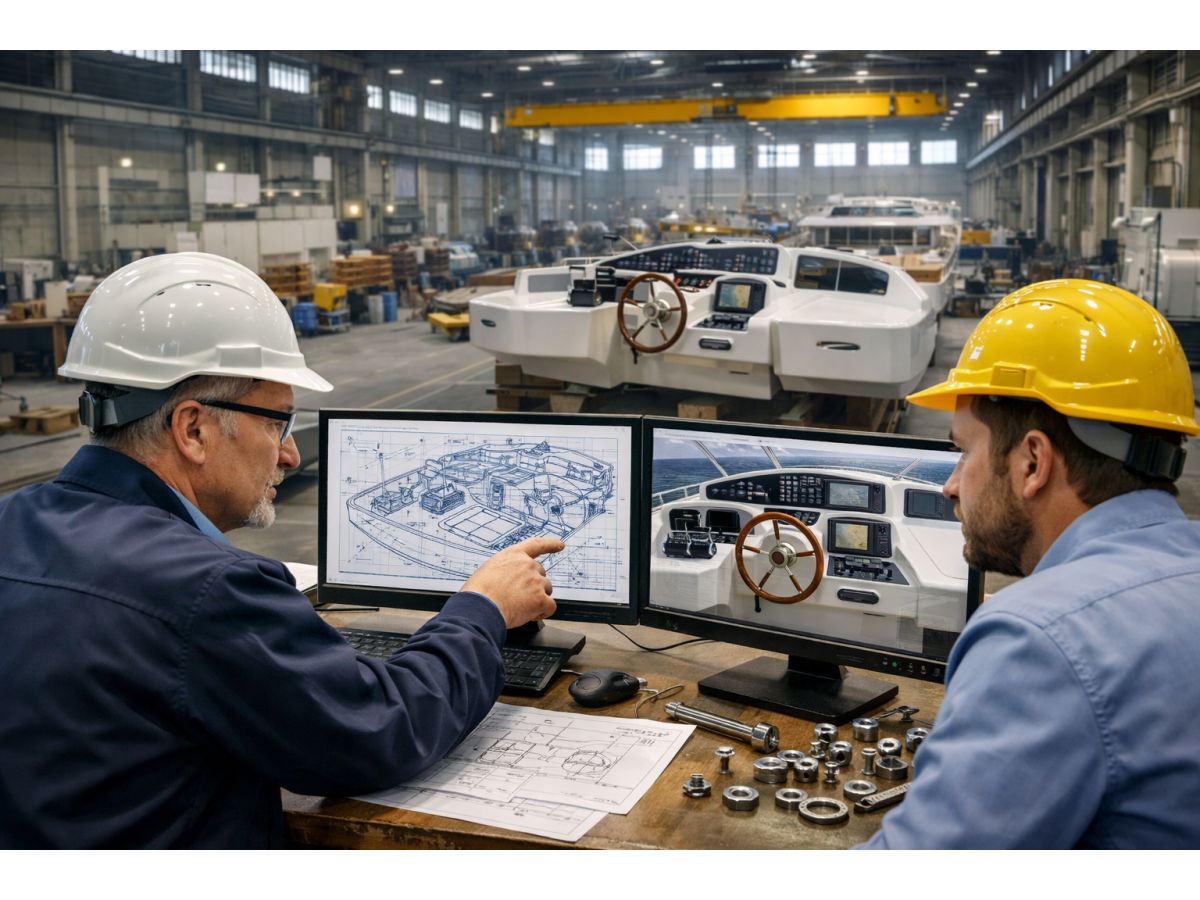
When a high-strength bolt is installed into thin aluminum or sheet metal, the parent material may govern the bearing condition.
This means washer selection should begin with the joint, not the bolt catalog.
Ask:
What material is actually receiving the clamping load?
That answer can determine whether a standard washer, large-OD washer or another fastening architecture is appropriate.
Instead of specifying:
“Washer required.”
A better engineering specification identifies the intended function:
Load distribution
Surface protection
Locking
Sealing
Spring action
Alignment compensation
Spacing
This improves communication between engineering, purchasing and the supplier.
A plain washer primarily manages the bearing interface.
A locking washer is intended to address movement or loosening through its specific geometry.
A sealing washer addresses the sealing interface.
These functions should not be mixed together.
One washer should not automatically be assumed to replace another washer type simply because the dimensions appear similar.
A washer with one surface treatment can behave differently during tightening from an otherwise identical washer with another surface condition.
The surface can influence:
Friction
Bearing behavior
Corrosion resistance
Appearance
Coating interaction
This matters particularly in torque-controlled production.
The simplified relationship:
T ≈ K × F × d
illustrates that torque depends on friction-related conditions.
Changing:
Washer material
Washer coating
Lubrication
Bearing surface
can change the assembly friction conditions.
Therefore, when a production fastening process has already been validated, a washer substitution should not be treated as a purely dimensional change.
A spring washer can provide elastic behavior.
That does not mean every spring washer is an effective solution for every vibration problem.
For dynamic joints, engineers should consider:
Joint stiffness
Preload
Relative movement
Friction
Fastener geometry
Locking mechanism
The correct anti-loosening solution should be selected based on the actual failure mode.
A sealing washer can contribute to a sealing system.
But sealing depends on:
Compression
Surface condition
Washer geometry
Elastomer compatibility
Temperature
Fluid
Pressure
Assembly process
Therefore, “sealing washer” should be treated as one component within the sealing system.
Hardness is not simply a product marketing feature.
For demanding bolted joints, engineers should evaluate whether the washer can maintain its intended geometry under the actual bearing load.
The appropriate specification depends on:
Bolt property class
Washer material
Washer thickness
Parent material
Joint design
| Application | Typical Washer Consideration |
|---|---|
| General industrial assembly | Standard flat washer |
| Thin sheet metal | Large-OD or application-specific washer |
| Aluminum structure | Bearing-area and material compatibility |
| High-strength bolted joint | Washer material, geometry and bearing condition |
| Dynamic/vibration joint | Dedicated locking strategy |
| Fluid connection | Sealing washer system |
| Outdoor equipment | Corrosion-resistant material/coating |
| Electrical enclosure | Bearing, corrosion and electrical-interface requirements |
| Angular joint | Spherical or specialized washer system |
| Lightweight equipment | Material and bearing-area optimization |
International standards provide an important reference for washer dimensions and product requirements.
Depending on the washer type and application, relevant standards may include:
ISO 7089
ISO 7090
ISO 7091
ISO 7093
ISO 7094
ASME B18.21.1
Applicable DIN standards
Applicable ASTM material specifications
The exact standard should be selected according to the washer geometry and applicable product scope.
A standard number should not be added to a drawing merely because it is commonly associated with washers.
ISO washer standards can define dimensional and technical requirements for particular washer designs.
When using an ISO washer designation, procurement teams should confirm:
Correct standard
Product type
Nominal size
Material requirements
Applicable product class
Surface treatment
This prevents standard-number ambiguity during international sourcing.
ASME standards are particularly relevant for inch-series fastening systems.
ASME B18.21.1 covers several washer categories within its defined scope, including plain, helical spring-lock and tooth-lock washers.
For North American OEM programs, the engineering drawing should identify the applicable ASME specification where required.
DIN standards remain widely referenced in international engineering documentation.
Where a customer drawing specifies a DIN washer, the supplier should verify:
Exact DIN standard
Dimension series
Material
Finish
Required grade
The standard designation should be retained accurately in the purchasing specification.
ASTM standards can be relevant to material requirements depending on the washer material and product specification.
However, an ASTM material standard should not automatically be interpreted as a complete finished-washer specification.
The distinction between:
material standard
and
finished-product dimensional standard
should remain clear.
Standard washers are appropriate for many applications.
Custom washers become relevant when the application requires:
Special outside diameter
Special inside diameter
Special thickness
Non-standard geometry
Special material
Special surface treatment
Special bearing profile
Custom washers can be used in:
Automotive
EV
Machinery
Electrical equipment
HVAC
Industrial enclosures
Specialized OEM equipment
For a custom washer quotation, provide:
2D drawing
3D model where applicable
Inside diameter
Outside diameter
Thickness
Material
Surface treatment
Tolerances
Application
Annual usage
Prototype quantity
If there are critical functional requirements, include them explicitly.
A professional washer drawing should define:
Washer type
Applicable standard
Material
Dimensions
Tolerances
Surface treatment
Critical characteristics
Special requirements
Avoid relying solely on a photograph or a generic product name.
For purchasing teams, the minimum technical description should normally include:
Product
Washer type
Standard
Nominal size
Dimensions
Inside diameter
Outside diameter
Thickness
Material
Material grade
Property requirements where applicable
Surface
Coating
Passivation where applicable
Surface condition
Application
Mating material
Environmental exposure
Functional requirement
Commercial
Prototype quantity
Annual volume
Packaging
Delivery requirements
Documentation requirements
When evaluating an industrial washer supplier, procurement teams should verify:
Product specification
Material control
Dimensional capability
Surface-treatment requirements
Inspection requirements
Packaging
Documentation
Production capacity
Communication process
Change-control requirements
These factors help separate technically comparable suppliers from suppliers offering only similar-looking products.
Depending on customer requirements, incoming inspection may focus on:
Outside diameter
Inside diameter
Thickness
Flatness
Material identification
Surface condition
Coating condition
Visual quality
Critical inspection characteristics should be defined by the customer specification.
For flat washers, flatness can influence seating.
Potential issues include:
Uneven bearing
Localized contact
Assembly instability
Appearance problems
The required flatness tolerance should be specified where it is functionally important.
Washer edges should be compatible with the application.
Potential concerns include:
Sharp edges
Burrs
Surface damage
Coating damage
Handling safety
For components used against painted or finished surfaces, edge condition can be particularly important.
Industrial washers can be exposed to:
Moisture
Condensation
Salt
Chemicals
Outdoor environments
Industrial atmospheres
Material and surface treatment should therefore be selected according to the actual environment.
Corrosion performance should not be inferred from appearance alone.
When dissimilar metals are placed together, the environmental conditions can influence galvanic corrosion behavior.
Examples may include:
Steel + aluminum
Stainless steel + aluminum
Coated steel + aluminum
The fastening system should therefore be evaluated as a complete material combination.
Tooth washers and similar components are sometimes used in electrical applications.
However, the actual electrical function depends on:
Contact surfaces
Coatings
Assembly force
Electrical design
Environmental conditions
A washer should not be described as a grounding component unless the complete application supports that function.
Maintenance-intensive products may require repeated removal and installation.
Engineers should consider:
Washer deformation
Surface damage
Locking mechanism
Corrosion
Installation procedure
Reuse requirements
A washer should not automatically be assumed reusable for unlimited assembly cycles.
High-volume manufacturing can involve automated or semi-automated fastening.
The washer should be compatible with:
Feeding equipment
Orientation requirements
Tool access
Assembly sequence
Fastener geometry
Torque-control process
For custom production, the assembly process should be discussed during the RFQ stage.
For automated production, packaging can influence assembly efficiency.
Depending on the customer process, washers may require:
Defined packaging quantities
Part-number separation
Protective packaging
Orientation requirements
Lot identification
The appropriate packaging format should be specified by the customer.
A professional OEM system should distinguish washers by their actual technical configuration.
A part number may need to identify:
Diameter
Washer type
Material
Surface treatment
Special configuration
This helps prevent technically different washers from being treated as interchangeable inventory.
A supplier should not substitute a washer merely because:
The nominal bolt diameter is the same
The outside diameter is similar
The washer looks identical
The price is lower
Substitution should be evaluated against the actual drawing and functional requirements.
Design engineers typically search for:
Washer dimensions
Standards
Material
Bearing area
Washer hardness
Bolt compatibility
Joint behavior
Locking principles
Procurement teams typically search for:
Industrial washer supplier
OEM washer manufacturer
Custom washer sourcing
Material options
Production quantities
Documentation
Packaging
Lead-time requirements
RFQ process
A strong industrial washer solution page should answer both groups without turning into a keyword list.
For engineers evaluating a washer, the most useful next step is to provide:
Drawing
Bolt specification
Joint material
Washer dimensions
Required function
Environmental conditions
This allows the supplier to evaluate the component within its intended application.
For purchasing teams, an RFQ should include:
Part number
Drawing
Standard
Material
Surface treatment
Quantity
Annual demand
Packaging
Documentation requirements
This makes supplier quotations technically comparable.
Supplier development teams should establish a clear technical baseline before comparing suppliers.
The baseline can include:
Approved drawing
Material specification
Applicable standard
Surface-treatment specification
Inspection requirements
Packaging standard
Change-control requirements
This reduces ambiguity throughout the supplier lifecycle.
JUXIN FASTENERS provides industrial fastening components for OEM and industrial applications, including:
Industrial washers
Flat washers
Specialized washer configurations
Bolts
Screws
Nuts
High-strength fasteners
Stainless steel fasteners
Self-clinching fasteners
Blind rivet nuts
Sealing blind rivet nuts
Weld fasteners
CNC-machined fastening components
Plastic fastening components
The appropriate product depends on the customer's drawing, material, application and technical requirements.
Some applications cannot be solved effectively with a conventional washer and bolt.
Depending on the assembly, alternatives may include:
Self-clinching nuts
Self-clinching studs
Self-clinching standoffs
Blind rivet nuts
Sealing blind rivet nuts
Weld nuts
Weld studs
Threaded inserts
Custom machined components
The objective is to select the fastening architecture that fits the assembly rather than forcing every application into a standard bolt-and-washer configuration.
Blind rivet nuts are particularly useful where threaded fastening is required but backside access is limited.
They can be considered for:
Sheet-metal assemblies
Automotive components
EV enclosures
Industrial equipment
Electrical enclosures
Related JUXIN FASTENERS engineering solutions:
/solutions/blind-rivet-nuts-comprehensive-engineering-guide
/solutions/automotive-blind-rivet-nuts-large-cap-anti-rotation
/solutions/ev-blind-rivet-nuts-high-reliability-fastening
Self-clinching fasteners can provide permanent threads in suitable sheet-metal assemblies.
Common products include:
Self-clinching nuts
Self-clinching studs
Self-clinching standoffs
Selection depends on:
Sheet thickness
Parent material
Hole geometry
Installation process
Required load
Assembly sequence
Weld nuts and weld studs can be integrated into metal structures where permanent fastening features are required.
Potential applications include:
Automotive assemblies
Brackets
Frames
Enclosures
Industrial equipment
The parent material and welding process must be considered as part of the complete fastening design.
For a custom washer, the manufacturing route should be selected according to:
Material
Geometry
Thickness
Volume
Tolerance
Surface treatment
Required function
The supplier should review the drawing before recommending a production route.
The material and surface treatment should be considered together.
For example, the design may require:
Carbon steel + zinc-based coating
Stainless steel + specified surface condition
Spring steel + protective finish
Application-specific material + specified coating
The final selection should follow the customer's engineering and environmental requirements.
Depending on the customer and application, documentation may include:
Certificate of Conformance
Material documentation
Dimensional inspection information
Surface-treatment documentation
Lot identification
Customer-specific quality records
Documentation requirements should be established during the RFQ process.
For electrical, electronic and many industrial supply chains, customers may require compliance information related to RoHS and REACH.
Surface treatments and material composition can affect these requirements.
JUXIN FASTENERS can review the customer's applicable material and surface-treatment requirements as part of the quotation process.
A useful engineering approach is to ask:
What problem is the washer supposed to solve?
If the problem is:
Local indentation → evaluate bearing area.
Surface damage → evaluate washer geometry and surface condition.
Vibration loosening → evaluate the complete locking strategy.
Fluid leakage → evaluate the complete sealing interface.
Angular misalignment → evaluate spherical or specialized washer geometry.
Corrosion → evaluate material and surface compatibility.
This failure-mode approach is often more useful than starting with a catalog category.
The correct sequence is:
Joint requirement → fastening function → washer geometry → material → surface treatment → supplier specification
Not:
Catalog washer → find a bolt → design the joint around it
This distinction can reduce unnecessary engineering compromises.
A technically appropriate washer can sometimes reduce overall system cost by:
Protecting components from deformation
Reducing assembly problems
Simplifying part specifications
Supporting standardized fastener families
Avoiding unnecessary custom components
Reducing supplier ambiguity
The lowest washer unit price is therefore not always the lowest total fastening-system cost.
Standardizing washer sizes can simplify procurement and inventory.
But standardization should be applied only where the washer remains appropriate for:
Bearing area
Material
Joint geometry
Environment
Assembly process
A standardized washer that is technically unsuitable can create more cost than it saves.
Replacing one washer with another can affect:
Bearing area
Stack height
Friction
Surface contact
Locking behavior
Corrosion behavior
Sealing
Therefore, a washer substitution should be treated according to the customer's engineering-change requirements when the function of the joint is affected.
For OEM procurement, a part number should correspond to a clearly defined technical configuration.
If two washers differ in:
Material
Thickness
Surface treatment
Geometry
Functional design
they should not be treated as equivalent merely because they fit the same bolt.
A practical OEM workflow is:
1. Define the application
↓
2. Identify the connected materials
↓
3. Define the fastener
↓
4. Define the washer function
↓
5. Select washer geometry
↓
6. Select material
↓
7. Select surface treatment
↓
8. Confirm dimensions and tolerances
↓
9. Review assembly conditions
↓
10. Confirm documentation requirements
↓
11. Request samples where required
↓
12. Proceed to production sourcing
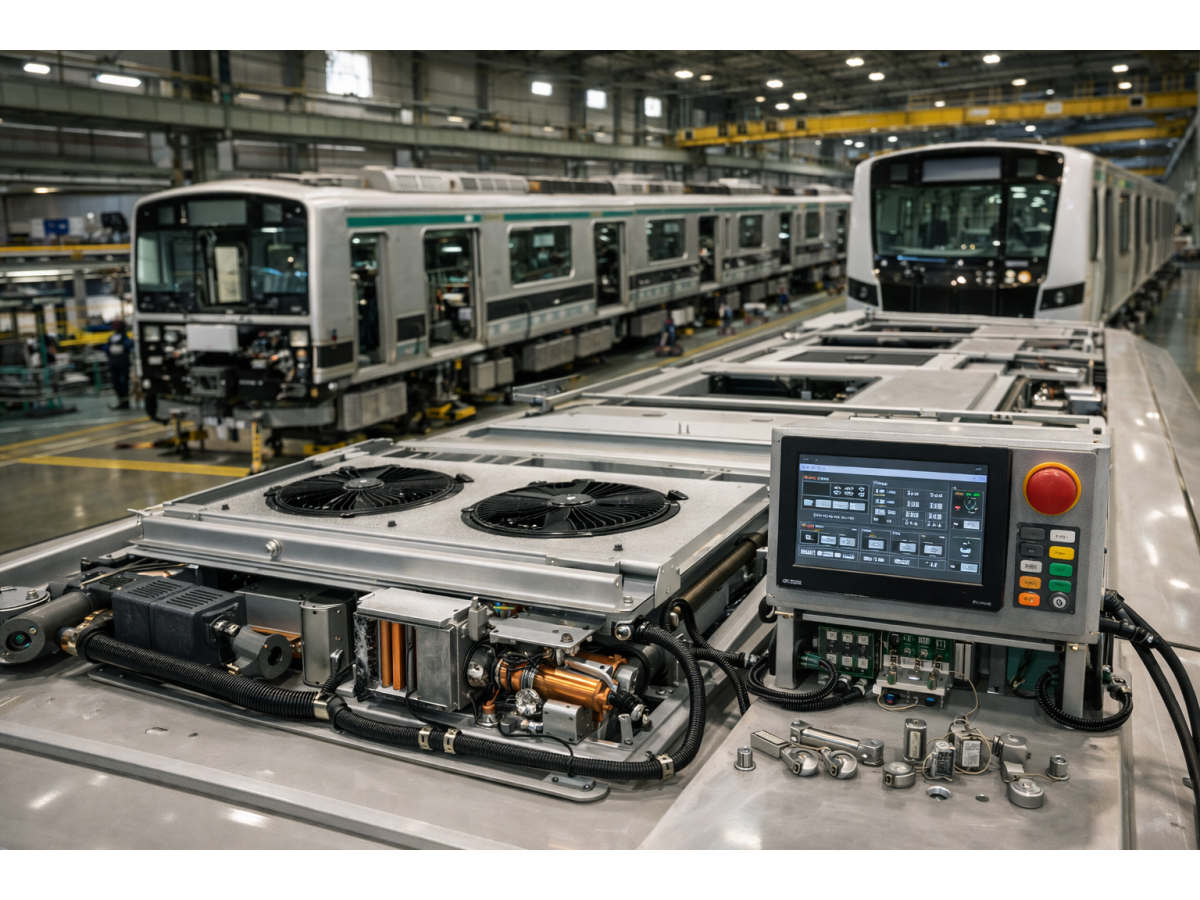
When a washer is being selected for a critical application, review the complete system:
Bolt + Washer + Nut + Joint Material + Hole + Surface + Installation Process + Environment
This is the engineering model that should guide final selection.
Before requesting a quotation, provide:
Washer type
Standard
Part number
Quantity
Inside diameter
Outside diameter
Thickness
Tolerances
Material
Grade
Property requirements where applicable
Coating
Surface condition
Corrosion requirements
Industry
Mating material
Bolt specification
Functional requirement
Environmental exposure
Prototype quantity
Annual volume
Packaging
Delivery requirements
Documentation requirements
The most useful starting package is:
2D drawing + material + surface treatment + annual quantity + application
A 3D model can also be supplied where the geometry requires three-dimensional review.
If no drawing is available, provide:
Photos
Dimensions
Bolt size
Mating material
Application description
Required function
The more complete the technical information, the more accurately the supplier can evaluate the requirement.
JUXIN FASTENERS supports OEM and industrial customers requiring specified fastening components for automotive, EV, machinery, electrical, telecommunications, HVAC, transportation and other industrial applications.
Our product scope includes industrial fastening components such as:
Industrial washers
Bolts
Screws
Nuts
High-strength fasteners
Stainless steel fasteners
Self-clinching fasteners
Blind rivet nuts
Sealing blind rivet nuts
Weld fasteners
CNC-machined components
Plastic fasteners and components
For each project, the final product selection should follow the customer's engineering specification and application requirements.
The commercial path can be straightforward:
Engineering requirement
→ Drawing/specification review
→ Washer selection
→ Material and surface confirmation
→ Sample evaluation where required
→ Quotation
→ Production
→ OEM supply
→ Repeat orders
This process connects engineering requirements with procurement execution.
If you are sourcing industrial washers for an automotive, EV, machinery, electrical, HVAC, transportation or OEM application, send JUXIN FASTENERS your drawing or current specification.
For a faster technical review, include:
2D drawing
3D model where applicable
Washer dimensions
Material
Surface treatment
Bolt specification
Mating material
Application
Prototype quantity
Estimated annual volume
Packaging requirements
Required inspection or compliance documentation
JUXIN FASTENERS can review the requirement and determine the appropriate washer or fastening solution based on the specified application.
Email: info@juxinfasteners.com
Website: www.juxinfasteners.com
For OEM sourcing, the goal is not simply to find a washer that fits a bolt.
The goal is to specify the correct washer, fastener, material, interface and production requirements as one controlled fastening system.
 MORE NEWS
Sep. 25, 2026
Sep. 25, 2026
Sep. 25, 2026
Contact Us
Tel.:
+86 020 8621 0320
+86 020 3121 6067
E-mail:
Technical Support:
Navigation
SEND INQUIREY