
Call Us
+86 136 6007 9809
Call Us
+86 136 6007 9809

Sep. 07, 2023
Spring washers are widely used in industrial fastening systems, but their actual function is often misunderstood.
A conventional explanation says that a spring washer is compressed during tightening, stores elastic energy and continuously pushes against the bolt or nut to prevent loosening.
That explanation is incomplete.
Different spring washer geometries perform different mechanical functions,
and a washer that provides elastic deflection does not automatically provide reliable resistance to rotational loosening, maintain constant bolt preload or absorb vibration.
For engineers and procurement teams, the better starting point is not:
“Which spring washer should we buy?”
It is:
“What function does this bolted joint actually require?”
A more reliable engineering path is:
Joint Condition → Failure Mode → Required Function → Washer Type → Fastener Interface → Material → Surface Treatment → Installation → Validation
JUXIN FASTENERS supplies industrial washers and fastening components for OEM, machinery, automotive, electrical equipment, HVAC,
automation and other industrial assemblies. Selection can be based on applicable standards, customer drawings, existing samples or project-specific specifications.
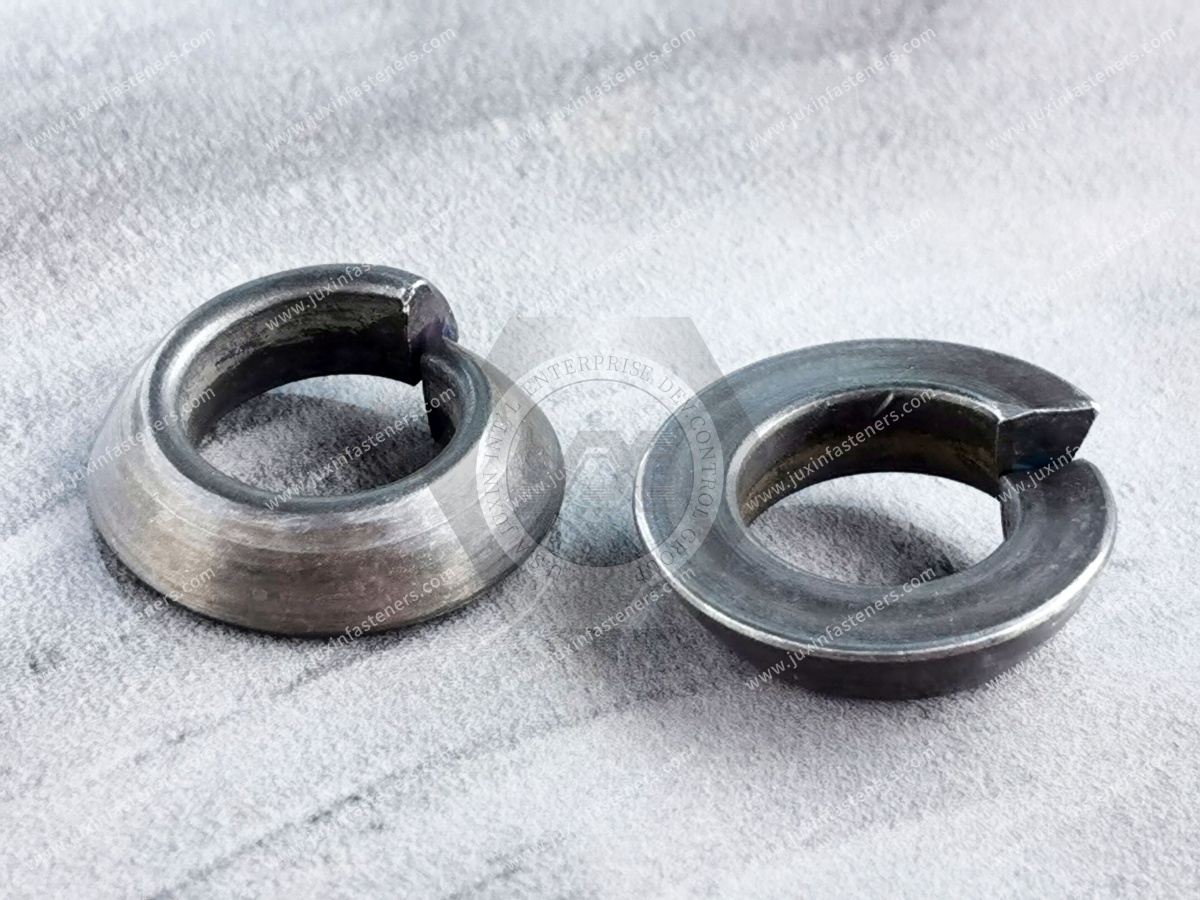
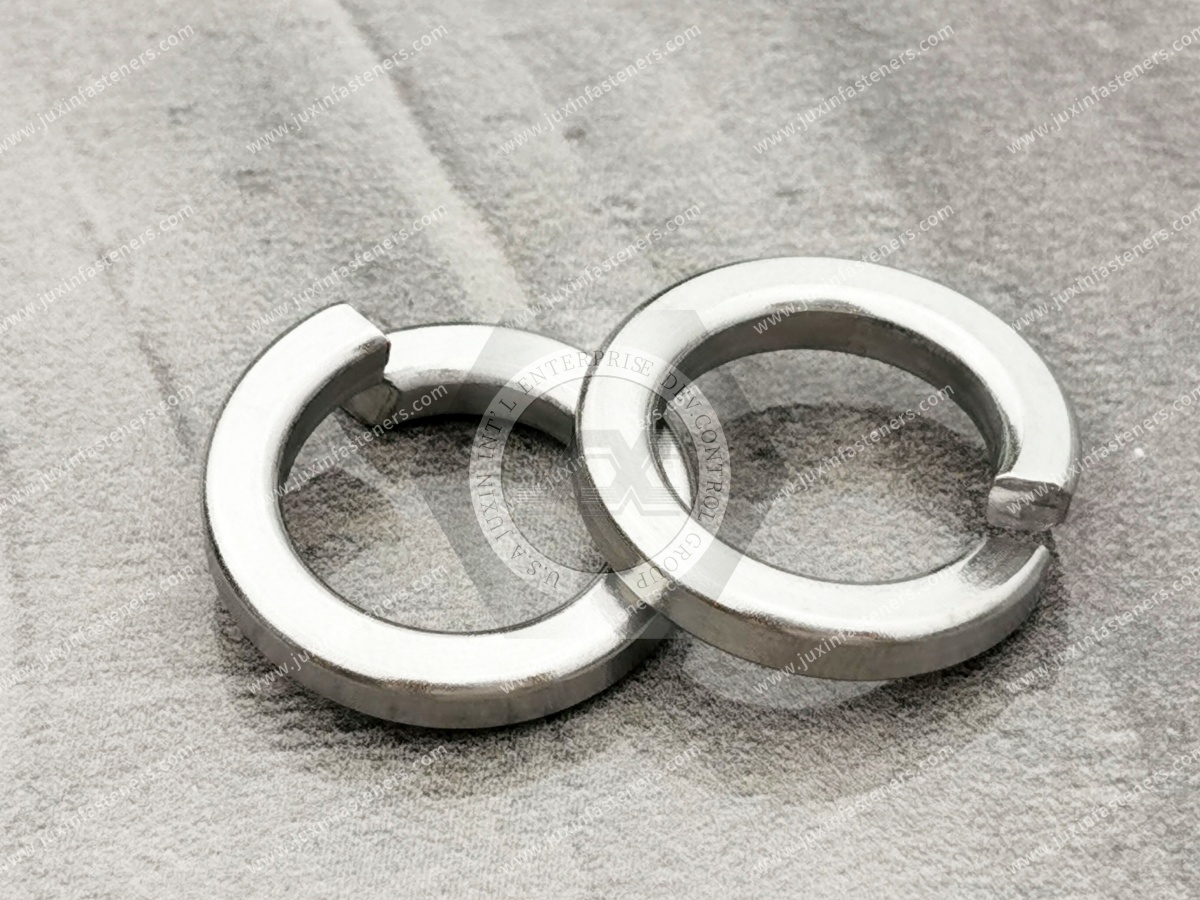
A spring washer is an elastic washer or washer-like component designed to deflect under load.
Depending on its geometry, this elastic behavior may be used to provide:
axial spring force;
limited axial compliance;
clearance control;
tolerance compensation;
bearing preload;
a specified interface in an existing bolted assembly.
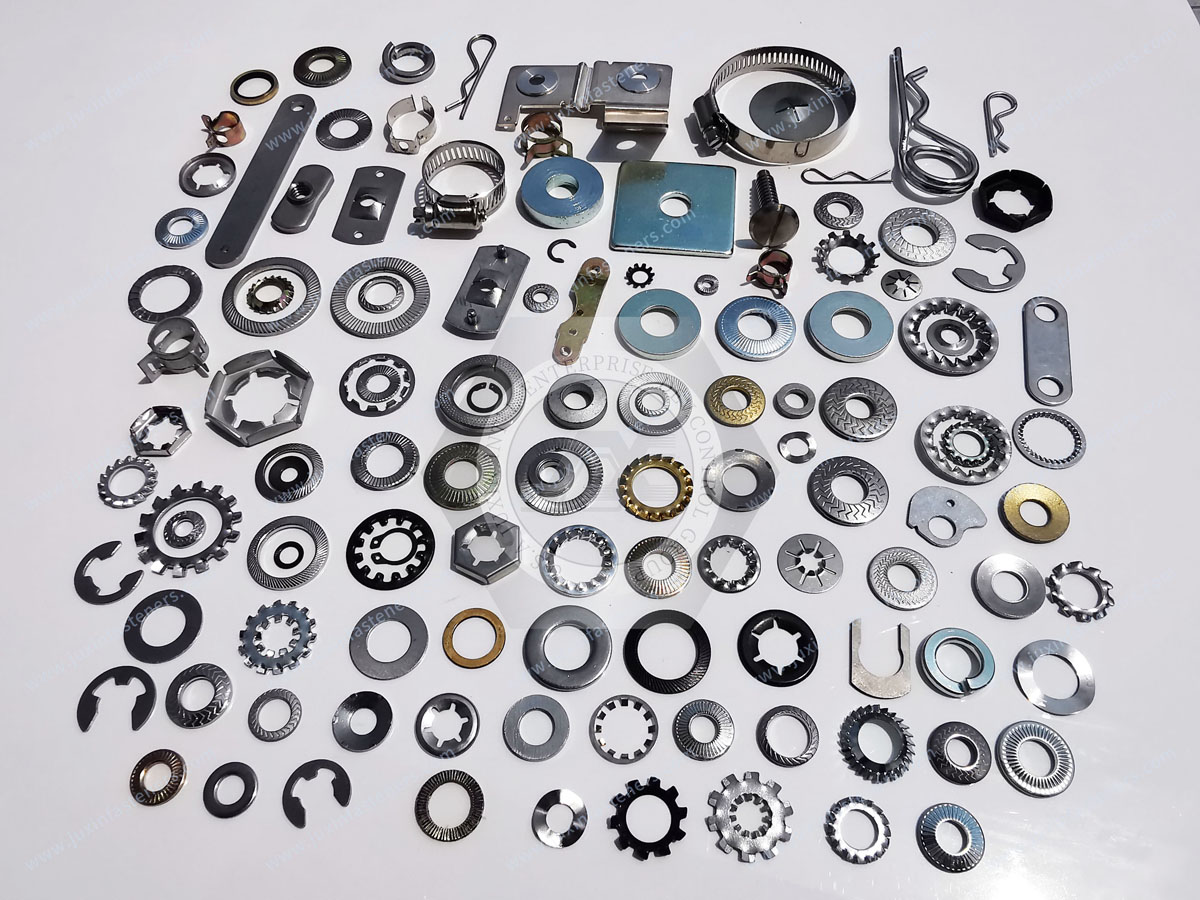
However, the term spring washer covers multiple product types.
A split helical spring lock washer, wave washer and conical disc spring should not be treated as interchangeable components.
Their geometries, force-deflection characteristics and intended functions are different.
Three concepts are frequently mixed together in spring-washer descriptions:
Elasticity means that a component deflects under load and tends to recover its shape.
Locking refers to resistance against unwanted movement or rotation of the threaded fastener.
Damping involves dissipating mechanical energy.
These are not the same physical function.
Therefore:
Elastic Washer ≠ Automatic Locking Device
and:
Elasticity ≠ Vibration Damping
A spring washer should be selected according to the actual engineering requirement rather than assuming that one elastic component provides all three functions.
Not automatically.
This is particularly important for conventional split or helical spring lock washers.
The word “lock” is historically associated with these washer names, but it should not be interpreted as a universal guarantee that the threaded joint will remain locked under every operating condition.
Whether a joint loosens depends on the complete fastening system, including:
initial preload;
transverse movement;
joint stiffness;
bolt stiffness;
thread and bearing friction;
clamp length;
mating surfaces;
external loads;
temperature;
installation method;
locking mechanism.
For vibration-critical joints, engineers should evaluate the loosening mechanism rather than simply adding a split washer.
A split helical washer has a free helical form.
As the fastener is tightened, the washer compresses toward a flatter installed condition.
Once substantially compressed, its remaining elastic travel and its contribution to the complete joint need to be considered in relation to the much larger forces present in the bolted connection.
This is why a split lock washer should not automatically be described as maintaining constant clamping force or providing dependable vibration locking.
The appropriate question is:
What happens to this complete joint under the expected operating loads?
A tightened bolt develops tension, while the clamped components develop compressive force.
That bolted-joint preload is primarily established by the tightening process.
A spring washer may produce its own elastic reaction force, but:
Washer Spring Force ≠ Bolt Preload
The relationship between the washer and the complete joint depends on factors such as:
washer stiffness;
bolt stiffness;
clamped-part stiffness;
installed washer deflection;
tightening method;
interface settlement;
thermal movement.
A small washer should therefore not be assumed to compensate automatically for preload loss in every bolted joint.
If an engineer searches for spring washers for vibration, the first task should be to identify the failure mechanism.
Possible problems include:
rotational self-loosening;
preload loss;
embedment;
thermal expansion;
joint movement;
component clearance;
bearing axial play.
These problems can require different solutions.
Using one product category to solve all of them can lead to incorrect fastener selection.
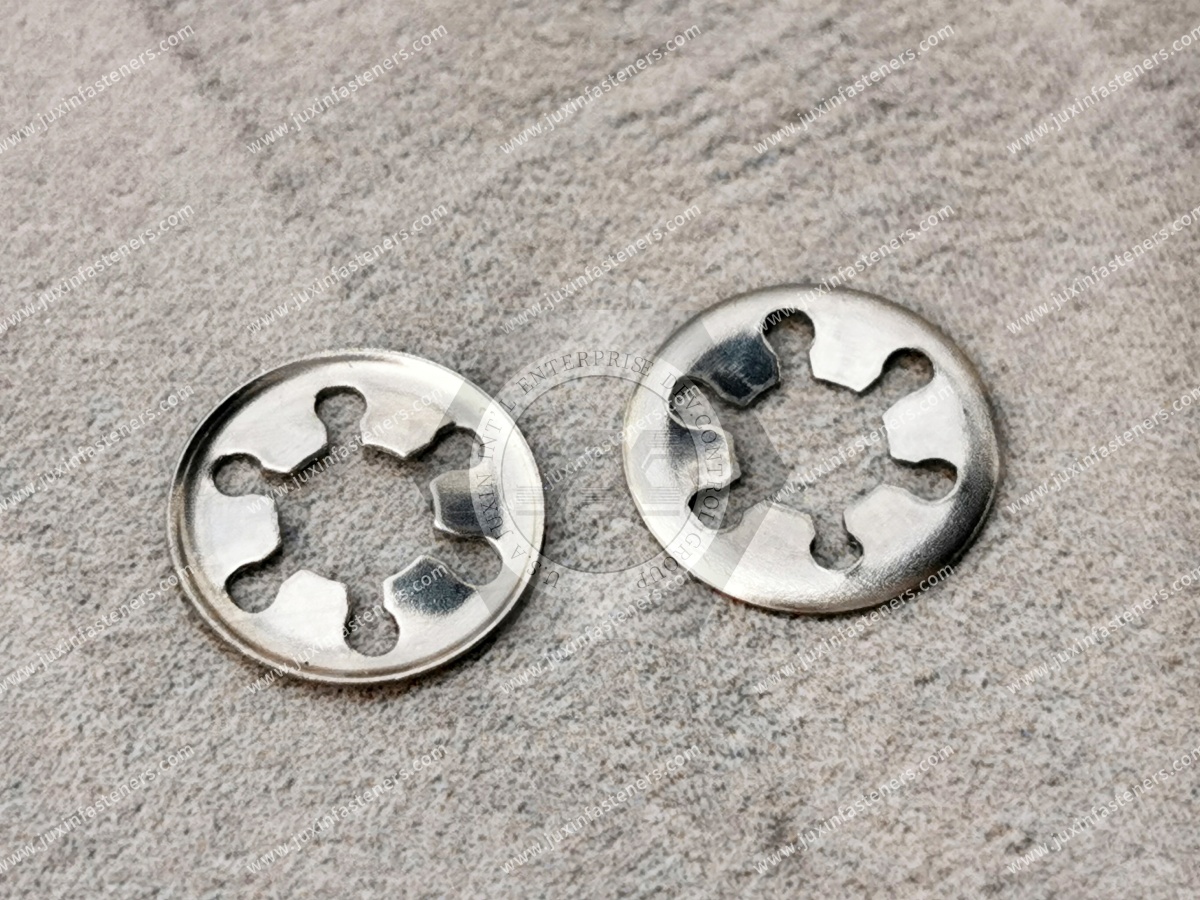
Split or helical spring lock washers remain common industrial products.
They can be found in:
machinery;
equipment housings;
electrical assemblies;
maintenance applications;
legacy equipment;
customer-controlled drawings.
Where the customer specification requires a split spring lock washer, procurement should confirm:
washer dimensions;
mating fastener size;
material;
material condition where specified;
surface finish;
applicable standard;
application requirements.
The washer should be supplied according to the controlled specification rather than promoted with unsupported universal anti-loosening claims.
For relevant inch-series products, ASME B18.21.1 covers dimensional requirements,
physical properties and related test methods for helical spring-lock washers, tooth-lock washers and plain washers within its scope.
The standard can therefore be relevant when an inch-series customer drawing calls for an applicable washer configuration.
However, a dimensional washer standard does not replace joint-level engineering.
The complete fastened assembly still needs to meet its functional requirements.
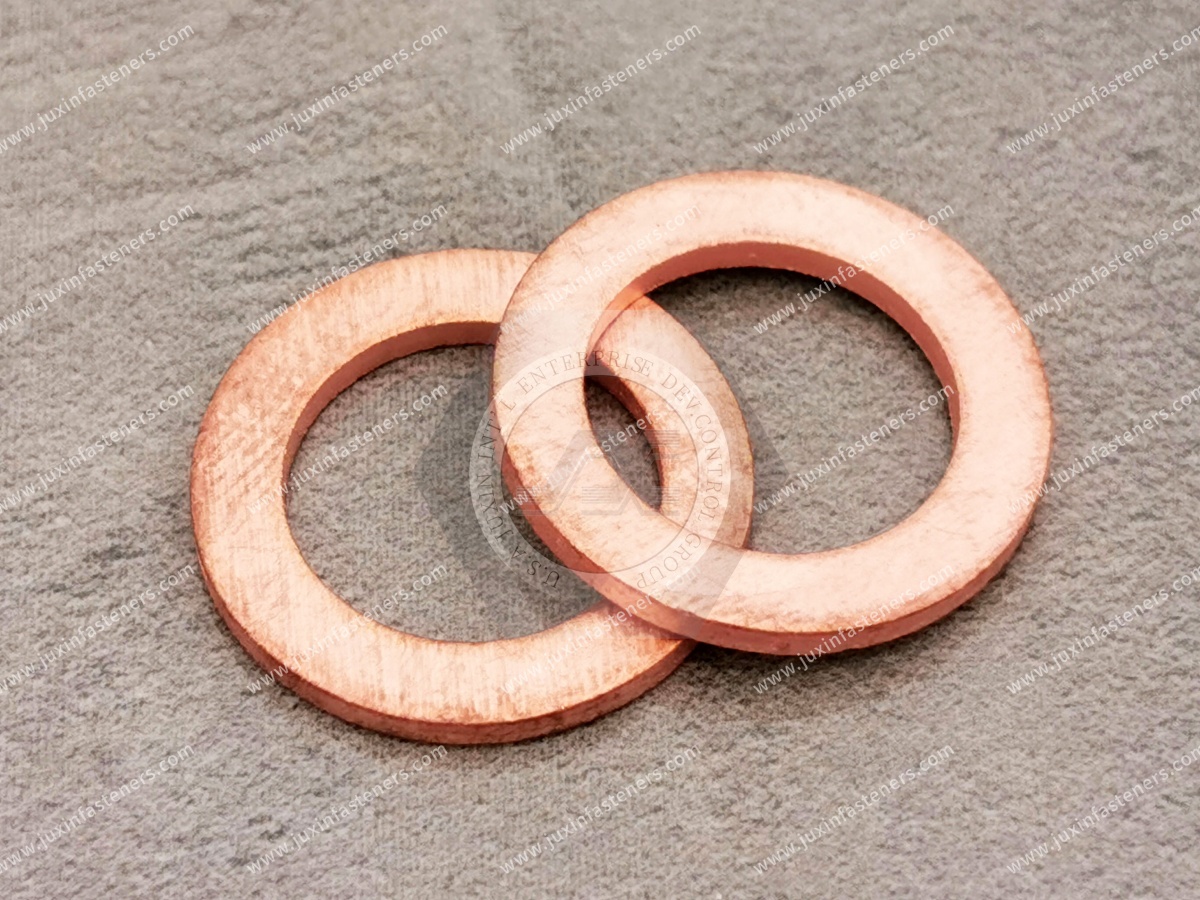
DIN 127 is historically associated with spring lock washers and can still appear on:
legacy equipment drawings;
replacement-part lists;
maintenance documentation;
older machinery;
customer specifications.
However, DIN 127 is a withdrawn standard.
This creates an important procurement distinction.
A customer requesting DIN 127 may be seeking an exact legacy replacement, not necessarily a newly designed fastening system.
Before changing the washer type or specification, determine whether the requirement is:
Legacy Replacement
or:
Engineering Redesign
These should not be treated as the same sourcing task.
Wave washers use one or more formed waves to create axial spring behavior.
Depending on the design, they can be used where an assembly requires controlled axial compliance in a limited space.
Potential applications can include:
electric motors;
bearings;
shafts;
rotating equipment;
precision mechanical assemblies;
industrial equipment.
Their engineering value is primarily related to their load-deflection behavior and installed condition.
They should not simply be described as “better vibration lock washers.”
Consider an assembly containing a bearing or rotating component with a small amount of axial dimensional variation.
A wave washer may be used as an elastic element to maintain contact or accommodate limited variation.
The engineer may need to define:
available axial space;
free height;
installed height;
required force at installed height;
allowable deflection;
operating temperature;
expected life.
This is fundamentally different from selecting a washer to prevent a nut from rotating.
Conical disc springs provide another type of axial spring response.
Depending on their design and arrangement, they can provide substantial spring force within a compact axial envelope.
Selection can involve:
load;
deflection;
diameter;
thickness;
free height;
installed height;
stacking configuration;
material;
temperature;
fatigue requirement.
A disc spring should therefore not be grouped mechanically with a conventional split lock washer simply because both products are sometimes called spring washers.
A flat washer typically performs functions such as:
distributing bearing load;
protecting the mating surface;
providing a controlled bearing interface;
accommodating hole geometry.
A spring washer introduces elastic geometry.
The correct choice depends on the required function.
For a broader washer selection framework, see Industrial Washers: Types, Functions & Selection Guide.
If the engineering requirement is resistance to rotational loosening, a locking fastener may need to be considered.
Depending on the application, options can include:
nylon-insert locknuts;
all-metal prevailing-torque nuts;
thread-locking systems;
other mechanical locking features.
These mechanisms work differently from a spring washer.
For additional selection guidance, see Nylon Insert Locknuts for Anti-Vibration Applications.
Another useful engineering distinction is between:
bearing-interface control
and:
thread-locking control.
A plain washer may address the bearing surface while a locknut addresses rotational resistance.
Trying to make a single spring washer perform both functions can be inappropriate for some joints.
The fastening architecture should be based on the actual failure mode.
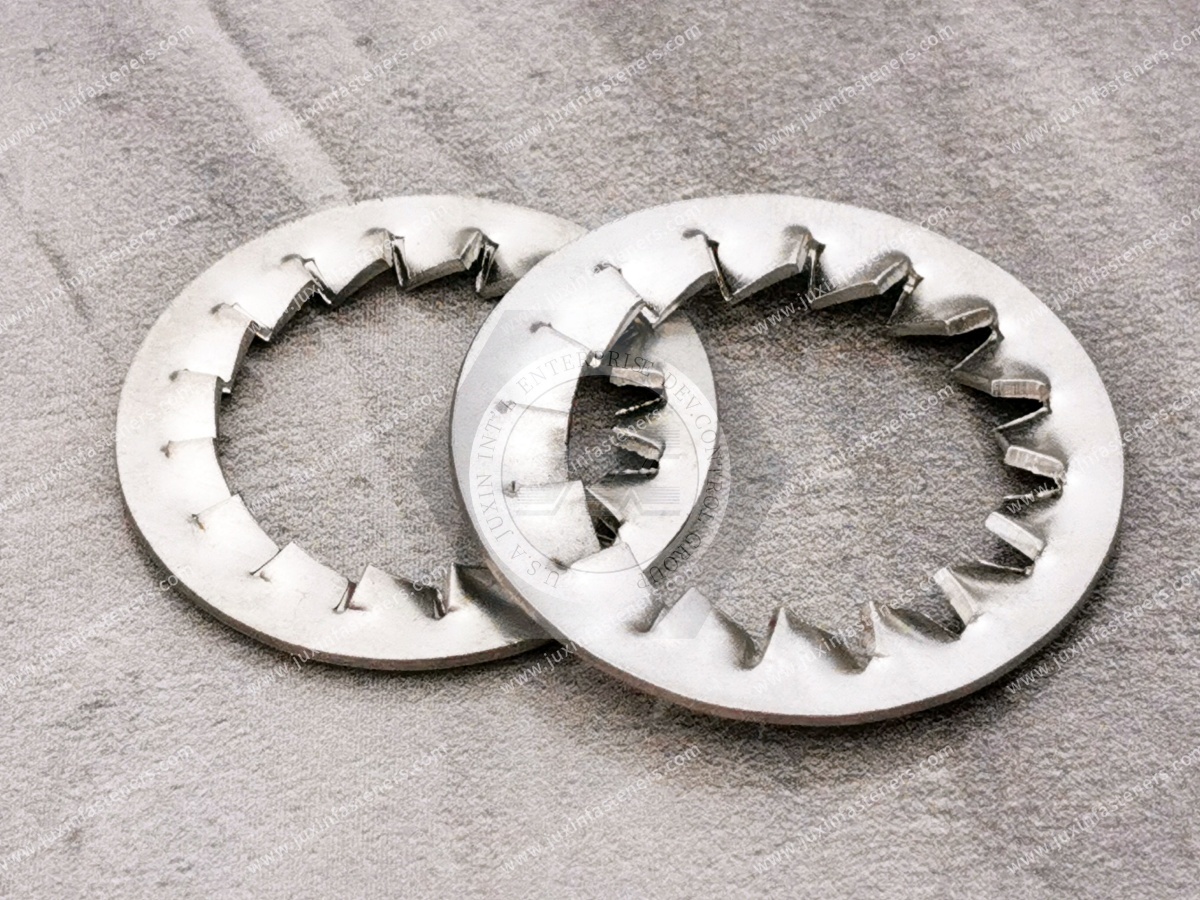
The answer depends on the washer type and complete joint.
An elastic washer with a meaningful force-deflection characteristic can contribute compliance to an assembly.
However, this does not justify a general claim that all spring washers maintain constant clamping force during:
vibration;
thermal cycling;
dynamic loading;
surface settlement.
The washer's spring characteristic must be evaluated relative to the joint stiffness and expected displacement.
If the bolt, washer and clamped components have different thermal expansion behavior, temperature changes can alter joint forces.
Evaluation may require:
bolt material;
clamped-part materials;
grip length;
temperature range;
coefficients of thermal expansion;
joint stiffness;
relaxation behavior;
washer characteristics.
A spring washer alone does not guarantee compensation for thermal expansion.
Contact surfaces in a bolted joint can experience small amounts of settlement after tightening.
Whether an elastic washer can meaningfully compensate depends on its geometry and the complete joint.
A conventional split washer should not automatically be specified as the solution to preload loss from embedment.
For broader joint design considerations, see Washers and Bolts: Fastening Systems Selection Guide.
The original simplified explanation of spring washers often says that they “absorb vibration.”
This needs qualification.
A spring stores and releases mechanical energy.
A damper dissipates energy.
These are different functions.
Some complete mechanical systems may use spring elements as part of vibration-management designs, but the presence of an elastic washer does not by itself establish meaningful damping performance.
Material selection depends on both the washer design and service environment.
Possible material families can include:
carbon steel;
spring steel;
stainless steel;
project-specific alloys.
The selection should consider:
required mechanical behavior;
washer geometry;
material condition;
temperature;
corrosion exposure;
manufacturing process;
customer specification.
The raw material name alone does not define finished washer performance.
Carbon and spring steels can be used for many industrial washer designs.
Where corrosion protection is required, an appropriate coating or surface treatment may be specified.
The engineering chain should be considered as:
Base Material → Material Condition → Washer Geometry → Surface Treatment → Installed Condition → Functional Performance
Changing any part of this chain can change the final component behavior.
Stainless steel may be considered where corrosion resistance is required.
However:
Stainless Steel ≠ Corrosion-Proof
Selection depends on the actual environment, which can include:
moisture;
chloride exposure;
cleaning chemicals;
temperature;
mating materials.
The exact stainless grade should be defined according to the project specification.
Special materials such as titanium or other alloys may be required in specific engineering projects.
These materials should not be presented as universal upgrades.
The project should define:
mechanical requirement;
environment;
corrosion requirement;
weight requirement;
temperature;
applicable specification.
Manufacturing feasibility and availability should be confirmed before quotation.
For carbon or spring steel washers, surface treatment can be an important sourcing parameter.
Depending on the project, requirements may include:
zinc-based coatings;
trivalent chromium passivation;
phosphate-based finishes;
other customer-specified systems.
A procurement specification should identify more than simply “zinc plated.”
Where relevant, define:
coating system;
coating thickness;
passivation;
appearance;
corrosion test;
test duration;
acceptance criteria;
RoHS/REACH requirements.
ASTM B117 is widely referenced for salt spray/fog testing.
However, specifying only:
“Pass ASTM B117”
is incomplete.
The RFQ should also define the required exposure duration and acceptance criteria.
ASTM B117 is a test method, not a universal service-life prediction.
The result should therefore be interpreted according to the actual coating specification and customer requirement.
For certain higher-strength or higher-hardness steel components, some cleaning and electroplating processes can introduce hydrogen embrittlement risk.
The risk depends on factors including:
material;
hardness;
strength;
residual stress;
geometry;
manufacturing process;
coating process;
applied stress.
Where applicable, hydrogen-embrittlement controls should follow the relevant customer or process specification rather than a generic website formula.
A common online recommendation is to compress a spring washer by a fixed percentage.
That is not an appropriate universal rule.
A split washer, wave washer and disc spring have different geometries and force-deflection behavior.
The correct installed condition should come from:
the applicable product design;
engineering calculations;
validated product data;
customer drawings;
application testing.
Dimensional selection can involve:
mating screw or bolt diameter;
washer inside diameter;
outside diameter;
thickness;
free height;
installed height;
bearing area;
available assembly space.
A washer should not be selected only by nominal bolt diameter if the application has additional functional requirements.
Even the correct washer can perform poorly if the complete joint is assembled incorrectly.
Important installation variables may include:
mating fastener;
washer orientation where applicable;
bearing surface;
tightening method;
lubrication;
torque specification;
required preload;
installation sequence.
The washer cannot compensate for uncontrolled assembly conditions.
Torque is commonly used to tighten bolts, but torque and bolt preload are not the same quantity.
A significant portion of tightening torque is affected by friction in the threads and under the bearing surface.
Changing:
washer material;
coating;
lubrication;
bearing surface;
can change friction and therefore influence the torque-preload relationship.
For critical assemblies, changing a washer should be treated as part of the joint design review.
Reuse should not be assumed.
After installation and service, a washer may have experienced:
permanent deformation;
wear;
corrosion;
surface damage;
altered free geometry.
For maintenance or critical applications, the reuse policy should follow the equipment specification or validated maintenance procedure.
Washers are widely used throughout automotive assemblies, but washer selection should follow the specific joint requirement.
Potential non-safety-critical applications can include:
brackets;
covers;
equipment mounts;
electrical assemblies;
accessory structures.
Safety-critical joints such as braking, wheel, suspension or crash-related connections require application-specific fastener engineering and validation rather than generic spring-washer recommendations.
For broader automotive joint selection, see Automotive High-Strength Fasteners: Bolts, Nuts & Clamps.
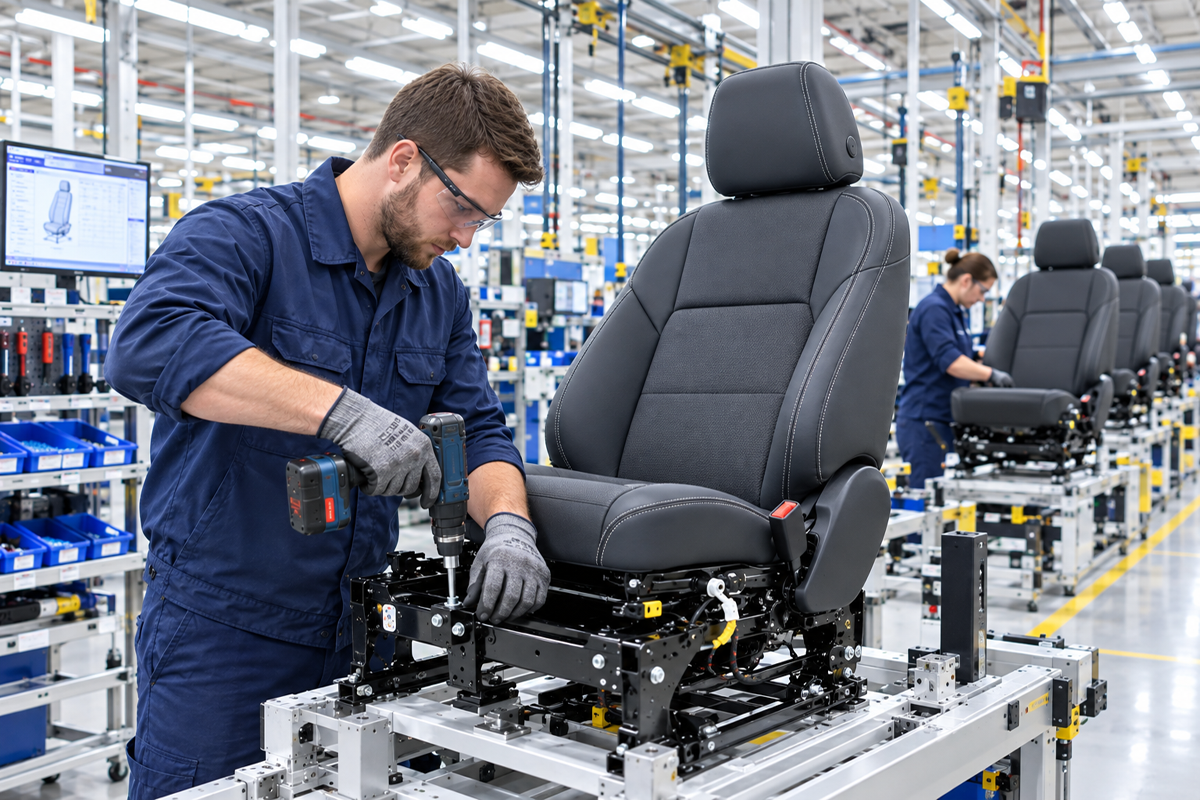
EV systems and electrical equipment can contain many bolted mechanical interfaces.
Possible washer applications can include:
equipment brackets;
auxiliary assemblies;
service covers;
electronics mounting;
enclosure hardware.
However, a generic spring washer should not automatically be treated as:
a grounding component;
an EMI/RFI solution;
a sealing component;
an IP-rated component.
Those functions require separate engineering validation.
Industrial machinery can use washers in:
motors;
pumps;
compressors;
equipment frames;
guards;
covers;
brackets;
service assemblies.
Where vibration is present, engineers should first determine whether the problem is rotational loosening, preload loss, component movement or another failure mode.
That diagnosis should drive the fastening solution.
HVAC systems can use washers in:
air-handling equipment;
fan assemblies;
housings;
service panels;
control equipment;
equipment frames.
Environmental exposure, vibration, maintenance access and material compatibility can all influence selection.
A spring washer should not be specified solely because the equipment contains a motor or fan.
Automation equipment can require compact, repeatable and serviceable fastening systems.
Applications can include:
machine covers;
control enclosures;
sensor brackets;
motor assemblies;
modular equipment.
Available installation space and maintenance requirements can be as important as washer material.
Heavy machinery can expose fasteners to substantial loads, contamination and vibration.
These conditions make complete joint design especially important.
Highly loaded or safety-related joints should be designed and validated according to the actual equipment requirements rather than relying on a generic spring washer as the primary locking strategy.
Railway equipment can contain many different fastened assemblies with very different safety classifications.
A spring washer used on a service cover should not be assumed suitable for a safety-critical structural or running-gear connection.
The drawing, applicable railway specification, joint classification and validation requirements should control component selection.
Aerospace and aviation fastening requires particular caution.
Critical aerospace fasteners can be controlled by specialized drawings, approved hardware, locking methods and qualification requirements.
JUXIN FASTENERS should therefore evaluate aerospace or MRO inquiries according to the exact drawing, material, specification and application classification.
A generic commercial spring washer should not be represented as suitable for flight-critical locking without the required project-specific qualification.
Marine and coastal environments can introduce:
chloride exposure;
moisture;
galvanic interaction;
crevice conditions.
Material and finish selection should therefore consider the complete assembly.
Stainless steel alone does not automatically establish suitability for every marine environment.
| Engineering Need | Primary Question |
|---|---|
| Rotational loosening | What locking mechanism is required? |
| Axial compliance | What force-deflection behavior is needed? |
| Bearing surface protection | Is a plain washer more appropriate? |
| Axial clearance | Would a wave washer suit the assembly? |
| High spring force in limited space | Is a disc spring appropriate? |
| Vibration | What is the actual joint failure mechanism? |
| Corrosion | What material and finish match the environment? |
| Temperature cycling | How does the complete joint respond? |
| Legacy replacement | What does the existing drawing specify? |
| Critical joint | What validation and qualification are required? |
Engineers may search for:
what does a spring washer do;
do spring washers prevent loosening;
spring washer working principle;
split lock washer vibration;
wave washer vs spring washer;
spring washer vs flat washer;
spring washer preload.
Procurement professionals may search for:
spring washer manufacturer;
spring washer supplier;
custom spring washers;
stainless steel spring washers;
split lock washer supplier;
industrial washer supplier;
OEM spring washer manufacturer.
These search journeys should meet at one point:
a controlled engineering specification.
A search query such as:
“spring washer for vibration”
is not yet an RFQ-ready specification.
A better sourcing path is:
Application → Failure Mode → Required Function → Washer Geometry → Mating Fastener → Dimensions → Material → Finish → Installed Condition → Validation → Approved Drawing → Production RFQ
This reduces the risk of purchasing a familiar washer type that does not address the actual joint requirement.
For efficient OEM sourcing, provide as much information as possible about:
washer type;
applicable drawing;
applicable standard;
mating fastener;
dimensional system;
dimensions;
material;
surface treatment;
operating environment;
temperature;
corrosion requirement;
functional requirement;
expected production quantity.
For custom parts, a drawing or representative sample can significantly improve technical evaluation.
When requesting a quotation from JUXIN FASTENERS, provide where applicable:
2D drawing;
3D model;
physical sample;
customer part number;
reference part number;
washer type;
split/helical, wave, curved, disc or custom geometry;
metric or inch system;
applicable standard;
legacy standard if applicable;
mating screw or bolt size;
inside diameter;
outside diameter;
thickness;
free height where relevant;
installed height where relevant;
required force-deflection behavior where relevant;
material;
material grade;
material condition where specified;
surface treatment;
coating thickness where specified;
trivalent chromium requirement where applicable;
RoHS/REACH requirement where applicable;
corrosion test method;
required test duration;
acceptance criteria;
operating temperature;
environmental exposure;
locking requirement;
reuse requirement where applicable;
prototype quantity;
production quantity;
annual demand;
packaging requirements;
labeling requirements;
inspection requirements;
customer-specific specifications.
A spring washer provides elastic deflection under load. Its exact function depends on its geometry. Some are used for axial compliance or clearance control,
while conventional split spring lock washers are historically associated with threaded fastening.
A spring washer should not automatically be assumed to prevent loosening or maintain constant bolt preload.
They should not be treated as a universal vibration-locking solution.
For vibration-critical joints, engineers should evaluate the complete joint and select a locking strategy appropriate to the actual loosening mechanism.
Not always.
“Spring washer” is a broad description of elastic washer geometries. “Lock washer” is often used for products historically intended or named for locking functions.
Product names alone do not establish actual locking performance.
A wave washer is a specific elastic washer geometry generally used to provide axial spring behavior within an assembly.
A conventional split spring lock washer has a different geometry and historically different application.
They should not be treated as interchangeable.
It depends on the washer design and complete bolted joint.
Washer spring force, bolt preload and joint stiffness are different engineering quantities.
The washer's contribution must be evaluated relative to the complete assembly.
DIN 127 is a legacy spring-lock-washer specification and has been withdrawn.
It can still appear on historical drawings and replacement-part requirements, so sourcing should distinguish between exact legacy replacement and engineering redesign.
Reuse depends on the specific washer, installation history and application.
Permanent deformation, wear, corrosion or loss of intended geometry may make reuse inappropriate.
For critical applications, follow the approved maintenance or engineering specification.
Selection depends on washer geometry, mechanical requirement, corrosion environment, temperature, surface treatment and customer specification.
Carbon/spring steels and stainless steels are common material families, while specialty materials may be considered for project-specific requirements.
The most useful change in spring-washer sourcing is moving away from:
Product Name → Purchase
toward:
Engineering Problem → Required Function → Washer Geometry → Material → Finish → Joint Interface → Validation → Approved Specification → Supplier RFQ
This approach gives design engineers, procurement teams and suppliers a common technical basis for evaluating the part.
JUXIN FASTENERS supports OEM and industrial sourcing of washers, screws, bolts, nuts, locking fasteners and custom fastening components for machinery,
automotive equipment, electrical systems, HVAC, automation and other engineered assemblies.
Standard references can be evaluated where applicable, while legacy, custom and drawing-controlled components should be reviewed according to the actual project requirements.
For spring washer and industrial washer RFQs, send your drawing, sample, applicable standard, dimensions, material, surface treatment, application and estimated quantity to:
The objective is not simply to supply a washer called a “lock washer.”
The objective is to identify and manufacture the fastening component that matches the actual joint requirement.
 MORE NEWS
Sep. 25, 2026
Sep. 25, 2026
Sep. 25, 2026
Contact Us
Tel.:
+86 020 8621 0320
+86 020 3121 6067
E-mail:
Technical Support:
Navigation
SEND INQUIREY