
Call Us
+86 136 6007 9809
Call Us
+86 136 6007 9809

Sep. 08, 2023
Flat washers are among the simplest components in a bolted joint, yet incorrect washer selection can affect bearing pressure,
surface damage, fastener installation and the mechanical behavior of the complete assembly.
A washer should not be selected only because its inside diameter fits the bolt.
For engineering and OEM sourcing, important questions include:
What bolt or screw is being used?
What is the fastener property class or specification?
What material is being clamped?
How large is the hole?
Is the parent material relatively soft or hard?
Is a hardened washer required?
What bearing area is needed?
What material and surface treatment are appropriate?
Is the joint structural, mechanical, electrical, automotive or general industrial?
Which ISO, DIN, ASME/ANSI, ASTM or customer specification applies?
The more useful selection path is:
Bolt/Nut → Joint Requirement → Bearing Surface → Hole Geometry → Washer Dimensions → Washer Hardness → Material → Surface Treatment → Validation
JUXIN FASTENERS supplies industrial washers, screws, bolts, nuts and custom fastening components for OEM and drawing-controlled applications.
A flat washer creates an interface between the rotating or loaded fastener surface and the clamped component.
Depending on the joint, it may help:
distribute bearing load over a larger area;
protect the mating surface;
reduce localized indentation;
provide a controlled bearing interface;
bridge an appropriate clearance hole;
support the bolt head or nut on the clamped material;
provide a specified interface required by an engineering drawing.
These functions are different from the locking function sometimes associated with lock washers or prevailing-torque fasteners.
A conventional flat washer should not automatically be described as an anti-loosening device.
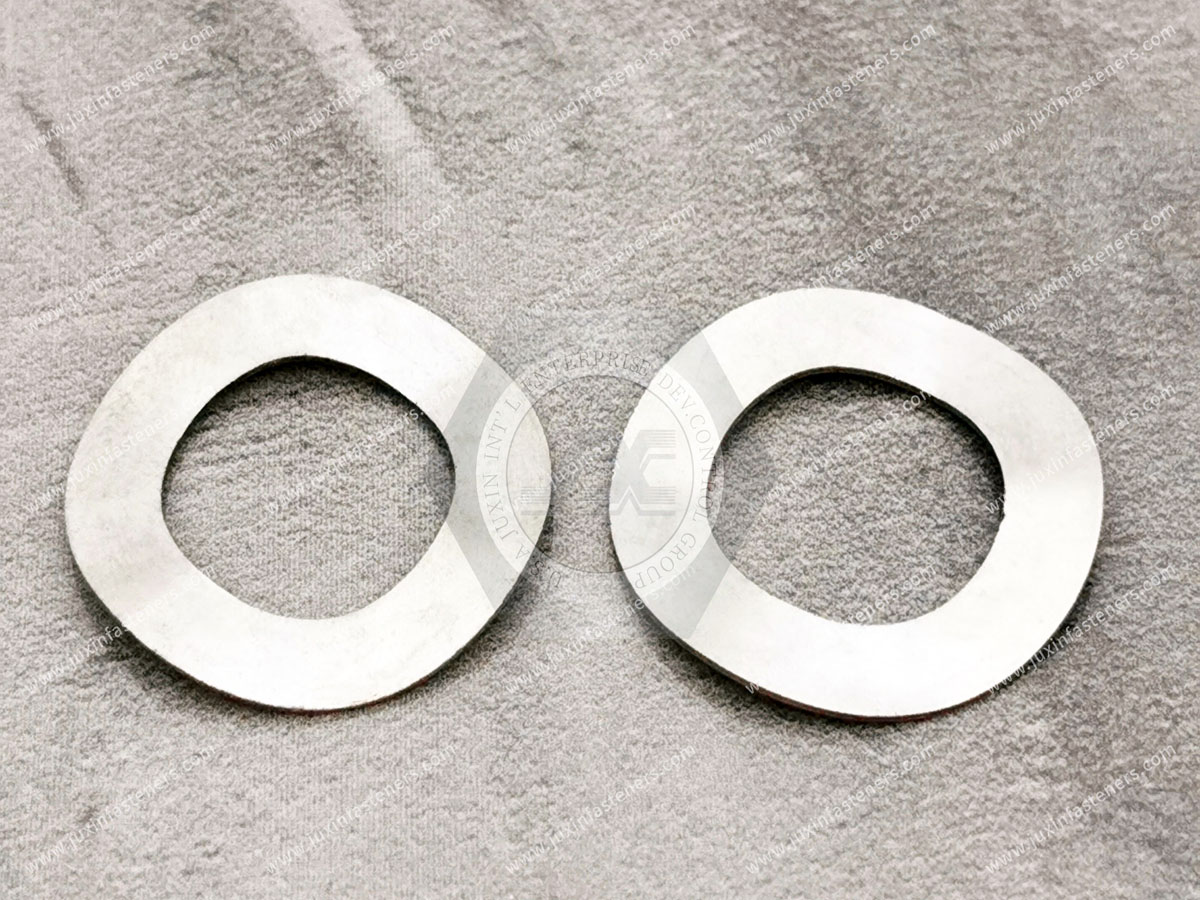
Without a washer, the bearing load from a bolt head or nut acts directly on the surrounding surface.
A suitably sized washer increases the effective bearing area.
This can be particularly important when the clamped material is:
relatively soft;
thin;
coated;
polymeric;
aluminum;
composite or otherwise sensitive to localized bearing pressure.
However, simply using a larger washer does not automatically make the joint stronger.
The washer must still be compatible with:
available installation space;
hole size;
edge distance;
washer thickness;
fastener geometry;
parent material;
expected clamp load.
One of the most important corrections to traditional washer-selection guides is this:
Washer Hardness ≠ Bolt Property Class
Bolt property classes such as 8.8 or 10.9 describe specified mechanical properties of bolts, screws or studs within the scope of the applicable fastener standard.
Washer hardness describes a material or finished-component property of the washer.
They are related during joint design, but they are not interchangeable classifications.
A statement such as:
“Bolt Grade X always requires Washer Grade Y”
should only be made when supported by the applicable washer standard, fastener specification, structural design requirement or customer drawing.
When a highly preloaded fastener bears against a washer, substantial compressive contact stress can develop.
If the washer is not suitable for the joint, possible issues can include:
permanent indentation;
washer cupping;
localized deformation;
embedding into the mating surface;
changes to the bearing interface.
A suitable washer must maintain the required geometry and bearing function under the specified assembly conditions.
But maximum hardness is not automatically the goal.
The required washer properties depend on the applicable standard and complete joint.
Metric washer specifications and historical engineering documentation can include hardness designations expressed in HV, or Vickers hardness.
Terms such as:
100 HV;
200 HV;
300 HV
may therefore appear in washer drawings, specifications and sourcing inquiries.
However, these designations should not be converted into one universal online compatibility table for every bolt and nut.
The actual requirement depends on the washer standard and its edition, dimensions, material, fastener specification and application.
For procurement, the safer rule is:
Do not specify an HV value independently from the governing washer specification unless the drawing intentionally defines it as a separate requirement.
It is tempting to assume:
300 HV = better washer
and:
200 HV = lower-quality washer.
That is not the correct engineering interpretation.
A harder washer may be required for a particular high-preload fastening system, while another assembly may be designed around a different washer specification.
Therefore:
Higher Hardness ≠ Automatically Better Washer
The correct washer is the one that satisfies the applicable joint specification.
High-strength bolts can generate substantial clamp loads.
The bearing interface under the bolt head or nut must therefore be considered as part of the joint.
Selection may involve:
bolt property class or ASTM/SAE specification;
bolt diameter;
preload requirement;
nut specification;
washer standard;
washer hardness;
washer thickness;
hole size;
parent-material strength;
bearing surface;
coating and lubrication.
For broader high-strength fastener selection, see High-Strength Bolts and Nuts.
Metric flat washers can be specified under different ISO standards depending on dimensional series, hardness and application.
The correct standard should be taken from the engineering drawing or selected according to the actual joint requirement.
Engineers should not assume that all metric flat washers with the same nominal bolt size are interchangeable.
Differences can include:
inside diameter;
outside diameter;
thickness;
dimensional series;
hardness;
product requirements.
The standard designation is therefore an important part of an RFQ.
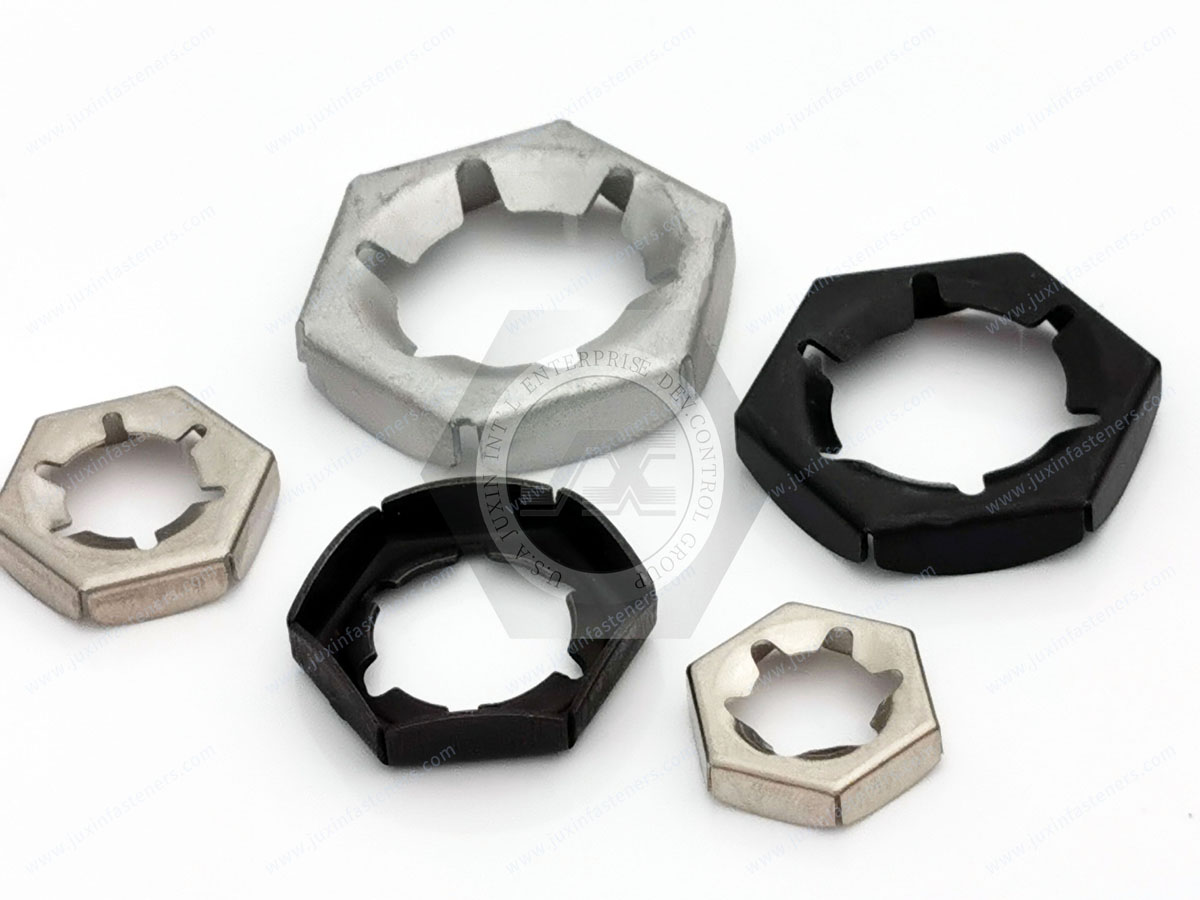
DIN washer designations remain common in industrial drawings and procurement systems.
Where a drawing specifies a DIN washer, procurement should identify:
exact DIN number;
size;
material;
hardness where applicable;
surface finish;
any customer-specific modification.
Do not substitute a washer merely because another product has approximately the same inside and outside diameter.
Dimensional similarity does not automatically establish functional equivalence.
For applicable American mechanical and structural fastening systems, ASTM F436/F436M covers hardened steel washers within its defined scope.
The current ASTM F436/F436M specification includes chemical, mechanical and dimensional requirements for hardened steel washers in specified inch and metric dimensions.
These washers are intended for applicable mechanical and structural use with threaded fasteners covered by the standard's scope.
ASTM F436/F436M should not be treated as a generic standard for every flat washer.
If a customer requires ASTM F436/F436M, the washer should be quoted and manufactured against that specific requirement rather than simply described as a “high-hardness flat washer.”
A flat washer describes a general geometry.
A hardened washer introduces additional mechanical-property requirements according to the applicable specification.
Therefore:
Flat Washer ≠ Automatically Hardened Washer
and:
Hardened Washer ≠ Every High-Strength Fastener Washer
The engineering drawing or applicable standard should control the requirement.
Suppose a high-strength bolt and hardened washer are installed against relatively soft sheet metal.
The washer itself may resist deformation, but the parent material underneath it can still experience:
indentation;
local bearing deformation;
yielding;
pull-through risk depending on geometry and loading.
This creates an important engineering chain:
Bolt → Washer → Parent Material
The joint is not stronger than its critical interface merely because the bolt and washer are high strength.
Washer outside diameter influences the area over which load can be transferred to the clamped surface.
A larger outside diameter can increase bearing area, but that does not mean the largest available washer should always be used.
Engineers also need to consider:
nearby walls;
formed features;
edge distance;
recesses;
counterbores;
surrounding components;
washer thickness;
installation tooling.
Washer geometry must fit the real assembly.
The washer bore must provide appropriate clearance for the mating bolt or screw.
Too little clearance may create assembly problems.
Excessive clearance can reduce the effective bearing area around the hole or create positioning concerns depending on the joint.
Therefore, washer selection should use the specified dimensional standard or drawing rather than an approximate bolt-size match.
Washer thickness affects stiffness, resistance to deformation and installation geometry.
A washer that is too thin for the required bearing condition may deform.
A washer that is unnecessarily thick may create:
packaging problems;
thread-engagement changes;
stack-height changes;
assembly interference.
Thickness should therefore be specified as part of the complete fastening system.
Three washer characteristics are frequently evaluated separately:
Diameter → Bearing Area
Thickness → Section Stiffness and Geometry
Hardness/Material Condition → Resistance to Local Deformation
In reality, they interact.
A sourcing decision based only on hardness ignores geometry.
A decision based only on outside diameter ignores washer stiffness and material.
A professional RFQ should define all relevant parameters.
The original 2023 article described washers as providing anti-loosening effects.
That is too broad.
A conventional flat washer primarily provides a bearing interface.
It should not automatically be expected to stop rotational self-loosening under vibration.
If loosening is the engineering problem, the joint may require evaluation of:
prevailing-torque locknuts;
nylon-insert locknuts;
all-metal locknuts;
thread-locking systems;
mechanical locking methods;
joint preload and stiffness.
For a broader locking comparison, see Nylon Insert Locknuts for Anti-Vibration Applications.
A flat washer and a spring washer have different geometries and intended functions.
A flat washer can provide:
bearing load distribution;
surface protection;
controlled support under a fastener.
A spring washer introduces elastic geometry.
Neither should automatically be described as superior.
The correct component depends on the joint requirement.
A sealing washer is designed around a sealing requirement and may incorporate:
metallic sealing geometry;
bonded elastomeric elements;
soft-metal deformation;
other application-specific sealing features.
A standard flat washer does not automatically provide fluid or environmental sealing.
Therefore:
Flat Washer ≠ Sealing Washer
If leakage control is required, pressure, fluid, temperature, mating surface and sealing material must be evaluated separately.
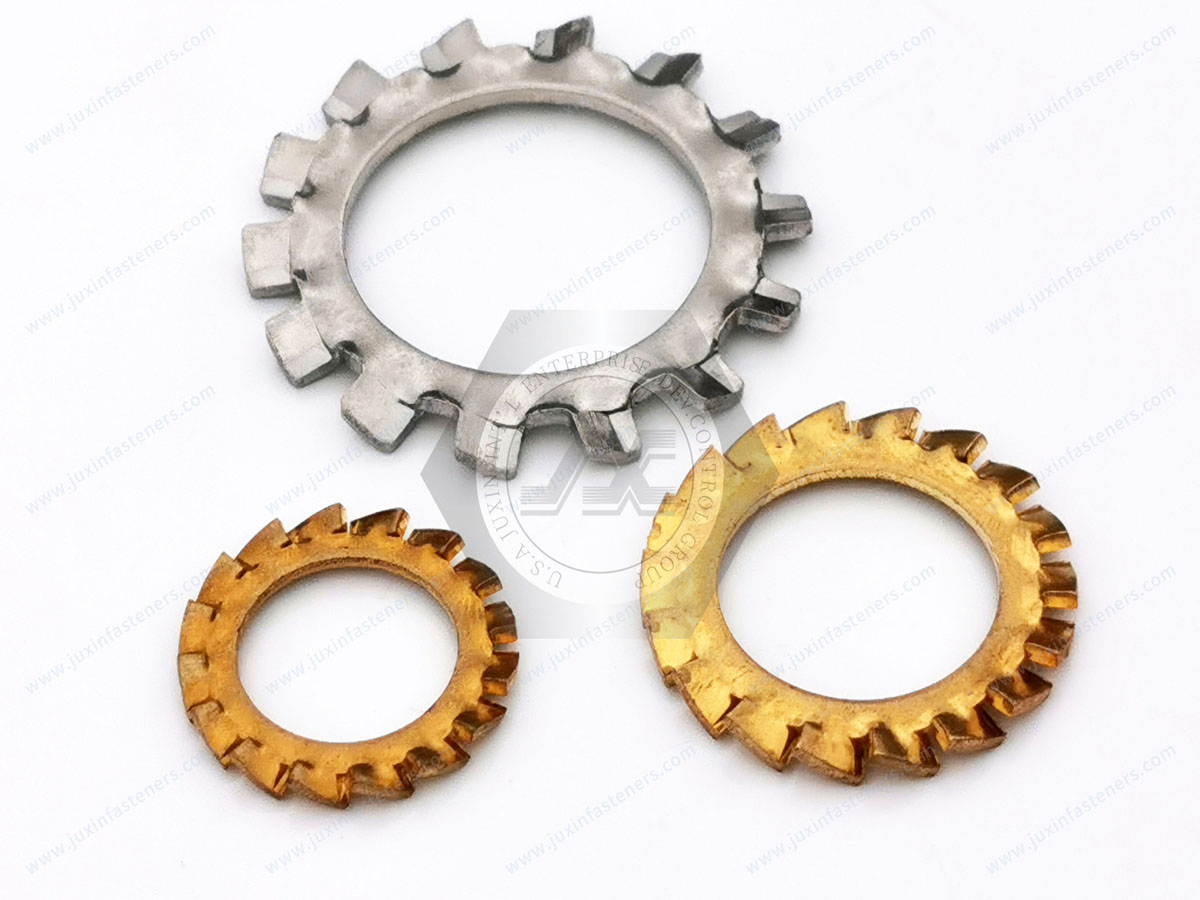
Copper washers are often encountered in sealing-related mechanical systems because copper can provide useful deformation characteristics in appropriate designs.
However, a copper washer should not automatically be assumed to create a leak-free seal.
Performance depends on:
washer geometry;
material condition;
mating surfaces;
installation load;
fluid;
pressure;
temperature;
reuse policy.
A sealing system should be validated as an assembly.
Stainless steel washers may be selected where corrosion resistance is required.
Selection should consider:
stainless grade;
operating environment;
chlorides;
cleaning chemicals;
mating materials;
temperature.
Stainless steel is not universally corrosion-proof.
The specified grade should match the service environment and customer requirement.
Carbon steel washers can provide an economical solution for many industrial fastening systems.
Where corrosion protection is required, a surface treatment may be specified.
Depending on the project, this can include an appropriate zinc-based or other customer-specified coating.
For applicable JUXIN FASTENERS projects, environmentally compliant trivalent chromium zinc systems can be evaluated where required.
Aluminum washers may be considered where weight, material compatibility or specific deformation characteristics are relevant.
However, aluminum is not a universal substitute for steel.
The joint must account for:
material strength;
bearing pressure;
corrosion;
galvanic interaction;
temperature;
application-specific requirements.
Brass and copper-alloy washers may be used for project-specific mechanical, electrical or corrosion requirements.
Electrical conductivity should not be assumed from material name alone to establish an approved grounding system.
Where electrical performance matters, the complete connection must be designed and validated accordingly.
Washer corrosion resistance cannot be evaluated independently from the rest of the joint.
Consider:
washer material;
bolt material;
nut material;
parent material;
coating;
moisture;
chlorides;
chemicals;
galvanic compatibility.
A corrosion-resistant washer installed between incompatible materials may still participate in a problematic galvanic system.
For carbon steel washers, coating requirements can include:
coating type;
coating thickness;
passivation;
appearance;
corrosion-test requirement;
environmental compliance.
Procurement should avoid specifications such as simply:
“zinc plated washer.”
A more controlled specification defines the actual coating requirement and acceptance criteria.
Where salt spray testing is required, ASTM B117 may be specified as the test method.
But ASTM B117 does not provide one universal corrosion-life requirement for washers.
A complete specification should define:
coating system;
test duration;
acceptance criteria;
evaluation method.
Salt spray hours should not be presented as a direct prediction of real-world service life.
The washer is part of the bearing interface during tightening.
Changes in:
coating;
lubrication;
surface roughness;
mating material
can affect friction.
Since friction influences the relationship between applied torque and achieved bolt preload, changing the washer finish can sometimes affect a torque-controlled assembly.
This is especially important when an approved joint is being changed.
A torque wrench controls applied torque.
It does not directly measure bolt tension unless the fastening system is designed and validated around that relationship.
Thread friction and bearing friction consume substantial portions of tightening torque.
The washer therefore participates in the bearing interface.
For critical bolted joints:
Bolt + Nut + Washer + Lubrication + Surface Condition + Tightening Method
should be considered as one system.
When bolts clamp relatively soft materials, localized bearing pressure can become important.
Applications can include:
aluminum components;
polymer parts;
thin sheet;
coated surfaces;
certain composite assemblies.
A suitable washer may increase the bearing area.
However, engineers must still evaluate the parent material rather than assuming the washer eliminates deformation risk.
Thin sheet introduces additional concerns.
Depending on the joint, engineers may need to evaluate:
hole size;
washer outside diameter;
edge distance;
sheet thickness;
bearing pressure;
pull-through behavior;
local deformation.
A washer can redistribute load, but it cannot turn thin sheet into a high-strength structural member.
Some assemblies contain:
oversized holes;
slots;
adjustment features.
In these cases, washer dimensions and thickness become particularly important.
The washer must provide appropriate coverage and bearing support according to the applicable design requirement.
Do not substitute a standard washer without checking the actual hole geometry.
Industrial machinery uses flat washers in many assemblies, including:
equipment frames;
motors;
pumps;
compressors;
gearboxes;
brackets;
guards;
service panels.
Selection depends on load, fastener specification, parent material, environment and maintenance requirements.
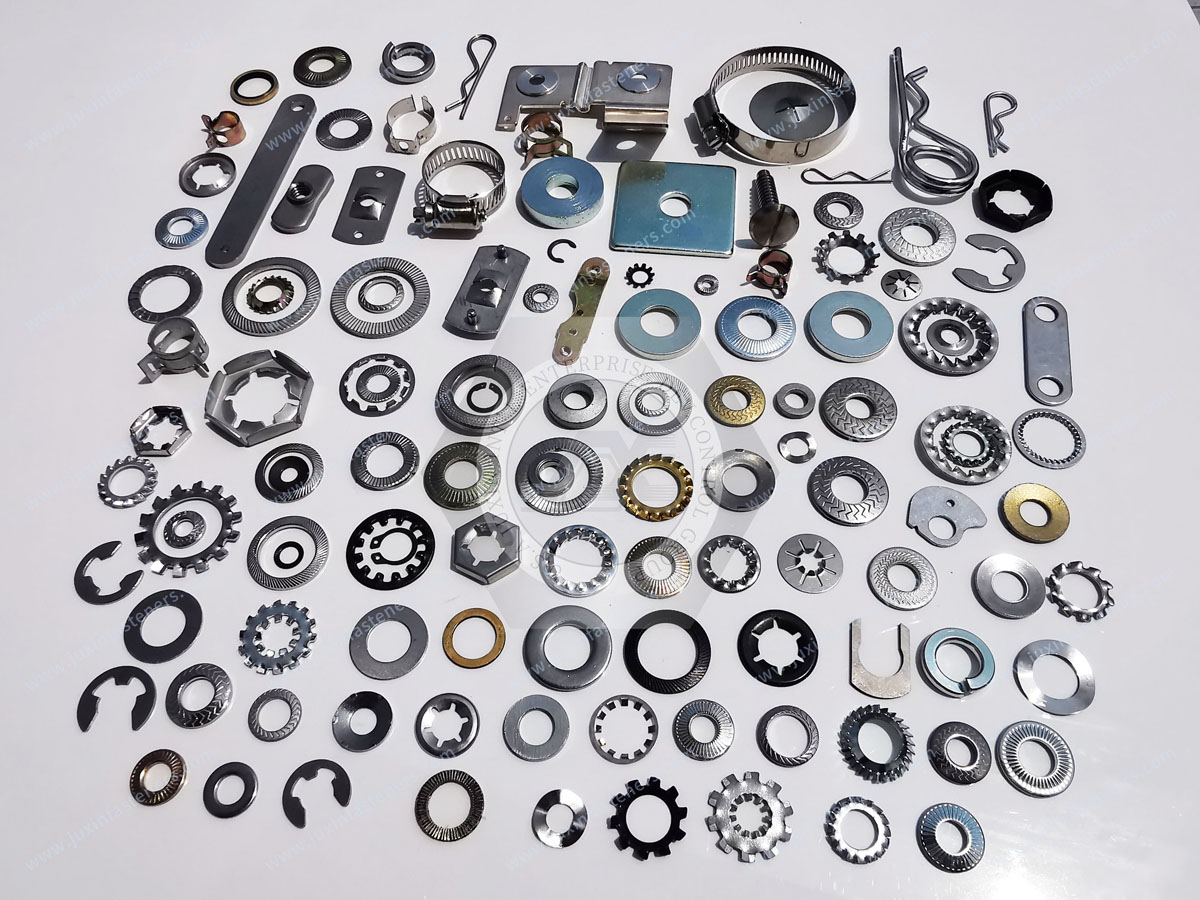
Washers can be used throughout automotive and commercial vehicle assemblies.
Potential applications include:
brackets;
equipment mounts;
chassis-related non-critical hardware;
electrical assemblies;
accessory systems;
sheet-metal structures.
Safety-critical automotive joints require application-specific engineering and validation.
A generic washer should not automatically be specified for wheel, brake, suspension or crash-critical connections.
For broader automotive fastening guidance, see Automotive High-Strength Fasteners: Bolts, Nuts & Clamps.
EV platforms contain numerous mechanical and electrical assemblies that require controlled fastening.
Washer applications can include:
auxiliary brackets;
electronics housings;
equipment supports;
service structures;
enclosure hardware.
A standard washer should not automatically be represented as providing:
IP sealing;
electrical grounding;
EMI/RFI performance;
battery enclosure structural integrity.
Those functions require separate engineering evaluation.
Washers can be used in:
electrical cabinets;
power conversion equipment;
UPS systems;
industrial control enclosures;
power distribution equipment;
equipment frames.
Where electrical continuity or grounding is required, the electrical interface must be separately specified and validated.
A generic flat washer is not automatically a grounding component.

Modern data centers and power electronics systems contain mechanical assemblies requiring serviceable bolted connections.
Possible applications include:
equipment racks;
power-conversion housings;
electrical enclosures;
cooling equipment;
auxiliary mounting brackets.
Washer selection should be based on mechanical joint requirements, material compatibility and service environment.
HVAC assemblies can use washers in:
fan equipment;
air-handling units;
equipment frames;
control cabinets;
service panels;
compressor-related equipment.
Material and coating selection may need to consider humidity, condensation and outdoor exposure.
Automation and robotics equipment can contain:
structural frames;
motor mounts;
covers;
control cabinets;
sensor brackets;
serviceable modules.
Compact assemblies may impose strict outside-diameter and installation-space limits.
Washer selection must therefore consider the actual assembly envelope.
Railway equipment contains many different fastening environments.
Washer requirements can vary between:
equipment cabinets;
interior assemblies;
auxiliary brackets;
machinery;
structural systems.
Safety classification and the applicable railway specification should control component selection.
A general industrial washer should not automatically be presented as suitable for safety-critical railway joints.
Excavators, loaders, mining equipment and other heavy machinery can expose bolted joints to:
high loads;
contamination;
vibration;
outdoor environments;
repeated maintenance.
Washer selection should be coordinated with the bolt, nut, parent material and joint design.
High-strength equipment joints require more than simply choosing the hardest available washer.
Wind and power-generation equipment can contain demanding bolted joints.
For critical structural applications, the complete fastener system should follow the applicable project specification and engineering requirements.
JUXIN FASTENERS should not represent a generic commercial washer as automatically suitable for wind-turbine or power-generation structural joints without reviewing the exact specification.

Marine and coastal environments introduce moisture, chlorides and galvanic-corrosion concerns.
Washer selection should therefore consider:
washer alloy;
bolt and nut material;
parent material;
coating;
chloride exposure;
maintenance environment.
“Stainless steel washer” alone is not a complete marine specification.
Washers may be used in mechanical parts of:
diagnostic equipment;
laboratory equipment;
equipment carts;
housings;
internal brackets;
service panels.
Material and cleaning-environment requirements should be defined by the customer.
A generic stainless washer should not automatically be described as biocompatible, sterile-compatible or medically certified.
A purchasing request often begins with:
“Need M8 flat washer.”
But M8 alone does not define:
washer series;
inside diameter tolerance;
outside diameter;
thickness;
hardness;
material;
coating;
applicable standard;
application.
A professional sourcing process therefore needs more information.
Two washers intended for the same nominal bolt diameter can differ in:
dimensional series;
outside diameter;
thickness;
hardness;
material;
coating;
applicable standard.
Therefore:
Same Bolt Size ≠ Same Washer
This is particularly important when procurement teams consolidate suppliers or replace an existing part number.
An engineer may search:
what washer hardness for high-strength bolts;
200 HV vs 300 HV washer;
how to select flat washer thickness;
flat washer bearing area;
washer for soft material;
hardened washer for high-strength bolts.
Procurement may search:
flat washer manufacturer;
200 HV washer supplier;
300 HV washer supplier;
hardened washer manufacturer;
stainless steel washer supplier;
custom washer supplier.
Both searches should converge on a controlled part specification.
| Engineering Requirement | What to Evaluate |
|---|---|
| General bearing interface | Washer dimensions and material |
| Soft parent material | Bearing area and parent-material deformation |
| High-strength fastener | Applicable washer specification and hardness |
| Oversized/slotted hole | Coverage, thickness and joint requirement |
| Corrosive environment | Material, coating and galvanic compatibility |
| Torque-controlled assembly | Bearing friction and surface condition |
| Electrical assembly | Mechanical and electrical requirements separately |
| Sealing requirement | Dedicated sealing washer/system |
| Thin sheet | Bearing pressure, hole geometry and sheet deformation |
| Structural joint | Applicable structural fastener specification |
| Legacy replacement | Existing drawing and standard |
Instead of:
Bolt Size → Any Matching Washer
use:
Application → Bolt/Nut Specification → Parent Material → Hole Geometry → Required Bearing Area → Washer Standard → Dimensions → Hardness → Material → Surface Treatment → Joint Validation
This gives engineering, quality and procurement teams a common selection framework.
Before requesting a quotation, procurement should identify as much of the following as possible:
washer type;
applicable standard;
bolt/screw size;
washer dimensions;
material;
hardness requirement;
coating;
application;
annual demand.
For drawing-controlled components, the drawing should remain the primary technical reference.
For an efficient quotation from JUXIN FASTENERS, provide where applicable:
2D drawing;
3D model for custom components where relevant;
physical sample;
customer part number;
existing/reference part number;
washer type;
applicable ISO, DIN, ASME/ANSI, ASTM, SAE, EN, BS or customer standard;
standard edition where controlled by the customer;
metric or inch system;
mating bolt/screw diameter;
bolt property class or specification;
nut specification where relevant;
washer inside diameter;
washer outside diameter;
thickness;
dimensional series;
hardness requirement;
HV requirement where applicable;
material;
material grade;
surface treatment;
coating thickness where specified;
trivalent chromium zinc requirement where applicable;
RoHS/REACH requirement where applicable;
corrosion-test method;
test duration;
acceptance criteria;
parent material;
parent-material thickness;
hole diameter;
slot or oversized-hole geometry where applicable;
application;
operating environment;
temperature range where relevant;
tightening requirement where relevant;
sample quantity;
production quantity;
annual demand;
packaging requirements;
labeling requirements;
inspection requirements;
customer-specific specifications.
A flat washer generally provides a controlled bearing interface between a bolt head or nut and the clamped component.
Depending on the design, it can distribute bearing load, protect the mating surface and reduce localized indentation.
A conventional flat washer should not be treated as a dedicated anti-loosening device.
If rotational loosening is a concern, the complete joint and locking method should be evaluated.
HV refers to Vickers hardness.
Requirements such as 200 HV or 300 HV can appear in applicable washer specifications, but they should be interpreted within the governing standard rather than treated as universal washer quality grades.
No.
Higher hardness is not automatically better.
The correct hardness depends on the washer standard, fastener system and joint requirement.
Some high-strength and structural bolting systems require washers meeting specific mechanical and dimensional requirements.
The requirement should come from the applicable bolt/washer standard, structural specification or engineering drawing rather than from bolt strength alone.
Possibly, but material substitution should not be made solely on corrosion resistance.
The washer must meet the required mechanical, dimensional, environmental and joint-interface requirements.
ASTM F436/F436M is a specification for hardened steel washers within its defined inch and metric dimensional ranges and applications.
It should only be specified where its scope matches the fastening system.
No.
A larger outside diameter increases potential bearing area, but installation space, thickness, edge distance, hole geometry, parent material and load path must also be considered.
A conventional flat washer should not automatically be treated as a sealing component.
If fluid or environmental sealing is required, a dedicated sealing system should be specified and validated.
A search such as:
“washer for 10.9 bolt”
is the beginning of an engineering decision, not the complete answer.
A better sourcing path is:
Fastener Requirement → Joint Material → Hole Geometry → Bearing Requirement → Washer Standard → Hardness → Dimensions
→ Material → Finish → Prototype/Validation → Approved Specification → Supplier RFQ → Repeat Supply
This prevents washer selection from becoming a simple diameter-matching exercise.
JUXIN FASTENERS supports OEM sourcing of industrial washers and related fastening components, including screws, bolts, nuts,
locking fasteners and custom mechanical components for machinery, automotive equipment, electrical systems, power equipment, HVAC, automation and other industrial assemblies.
For broader washer-family selection, see Industrial Washers: Types, Functions & Selection Guide.
For complete washer-and-bolt system selection, see Washers and Bolts: Fastening Systems Selection Guide.
For washer RFQs, send your drawing, applicable standard, dimensions, hardness requirement, material, surface treatment, mating fastener and estimated quantity to:
The objective is not simply to supply a washer that fits over the bolt.
The objective is to define the correct bearing interface for the complete bolted joint.

 MORE NEWS
Sep. 25, 2026
Sep. 25, 2026
Sep. 25, 2026
Contact Us
Tel.:
+86 020 8621 0320
+86 020 3121 6067
E-mail:
Technical Support:
Navigation
SEND INQUIREY