
Call Us
+86 136 6007 9809
Call Us
+86 136 6007 9809

Nov. 03, 2023
Stainless steel cotter pins, also known as stainless steel split pins, are mechanical retaining components used to secure clevis pins, shafts, slotted or castle nuts,
linkage pins and other assemblies where positive mechanical retention and corrosion resistance are required.
Their geometry is simple: a formed stainless steel wire creates an eye at one end and two legs that pass through a cross-hole and are bent after installation.
The engineering decision, however, is more complex than simply choosing “stainless steel.”
A stainless cotter pin operates as part of a complete interface:
retention function → mating pin or bolt → cross-hole → cotter-pin diameter → length → stainless grade → mating materials → environment → installation geometry → inspection
For engineers, material selection must account for corrosion environment, ductility, installation, mating components and service conditions.
For procurement teams, terms such as 304, 316, A2, A4, DIN 94 and ISO 1234 should be treated as technical specification inputs rather than interchangeable marketing descriptions.
JUXIN FASTENERS supplies stainless steel cotter pins, stainless steel split pins, DIN 94 split pins and custom retaining components for
OEM and industrial applications based on customer standards, drawings, samples and application requirements.
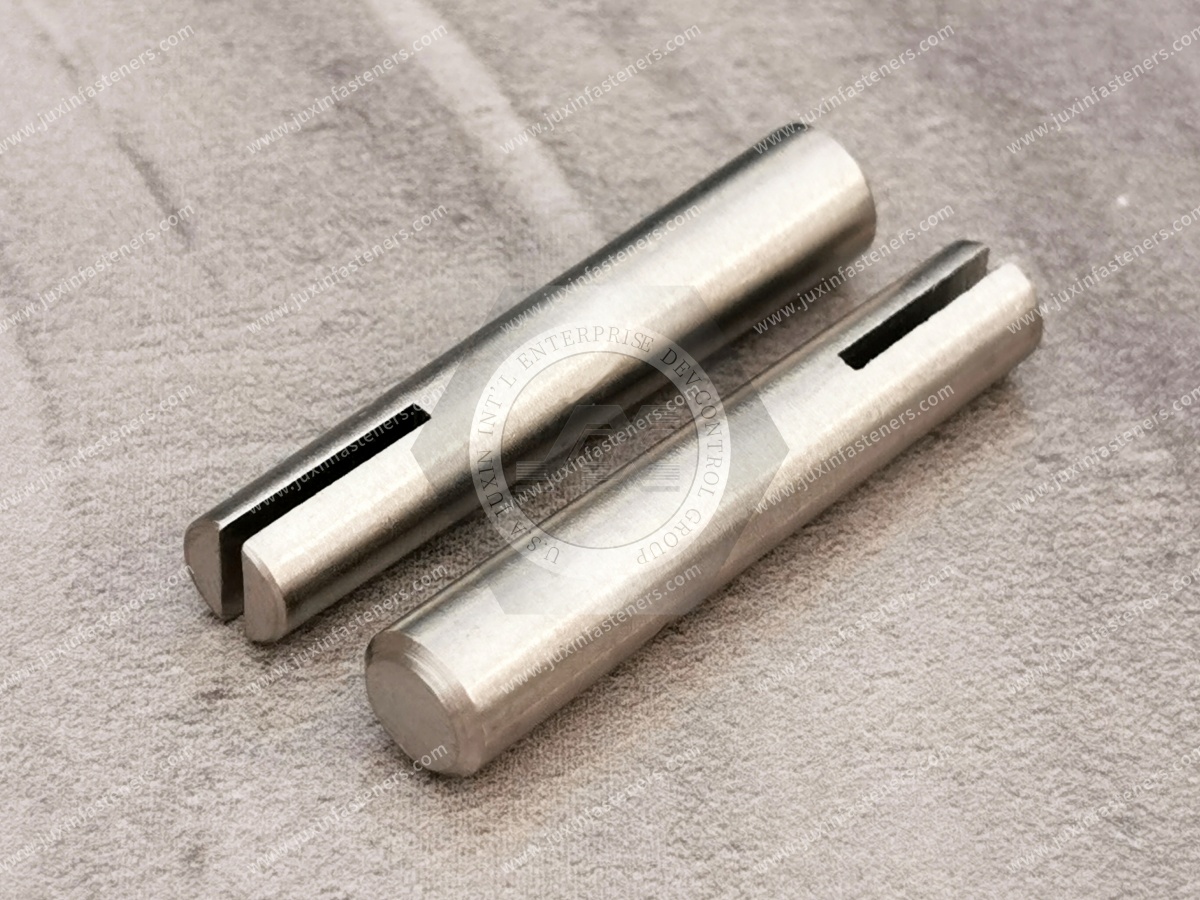
A stainless steel cotter pin is a formed-wire retaining device installed through a cross-hole in another component.
Typical mating components include:
Clevis pins
Cross-drilled bolts
Shafts
Linkage pins
Slotted nuts
Castle nuts
Pivot assemblies
After insertion, the legs are bent into the required installed position so that the cotter pin cannot unintentionally withdraw from the hole.
Its primary purpose is retention.
Depending on the assembly, this may prevent a clevis pin from sliding out, retain a shaft or provide a physical stop that limits unintended rotation of a slotted or castle nut.
Both terms are commonly encountered in international sourcing.
Split pin is widely used in European and international engineering terminology.
Cotter pin is commonly used in North American industrial terminology for this two-leg bent-wire retaining component.
For international OEM sourcing, the safest approach is not to rely on terminology alone.
Specify:
Standard or drawing
Diameter
Length
Material
Surface condition
Application requirements
This prevents confusion with other products that may also use “cotter” or “pin” in their commercial names.
DIN 94 is a widely recognized standard designation associated with split pins.
ISO 1234 covers split pins internationally.
A customer drawing may reference one of these standards or define a proprietary cotter-pin geometry.
When replacing an existing component, purchasing teams should follow the exact drawing or specified standard rather than assuming that all commercially available split pins are automatically interchangeable.
Relevant characteristics can include:
Nominal pin size
Length
Eye geometry
Leg geometry
Material
Surface requirements
Dimensional tolerances
For standard-specific projects, JUXIN FASTENERS can review the requested specification together with the application and sourcing requirements.
The main reason to consider stainless steel is typically environmental compatibility and corrosion resistance, not simply higher mechanical strength.
Stainless steel cotter pins may be appropriate where the assembly is exposed to conditions such as:
Outdoor environments
Moisture
Condensation
Washdown conditions
Certain industrial atmospheres
Road-related environmental exposure
Applications where plated carbon steel is not preferred
Stainless-steel mating assemblies
The actual stainless grade still matters.
“Stainless steel” is a material family, not a complete engineering specification.
For many international fastener applications, stainless materials are commonly discussed using A2 and A4 designations.
At a broad engineering level:
A2 stainless steel is commonly associated with general-purpose corrosion-resistant fastener applications.
A4 stainless steel contains alloying characteristics that can provide improved resistance in certain chloride-containing and more aggressive environments.
This does not mean:
A2 = indoor only
or
A4 = universally marine-proof
The correct choice depends on the actual service environment.
Engineers should consider:
Chloride exposure
Temperature
Humidity
Chemical exposure
Cleaning agents
Mating metals
Crevice conditions
Required service life
Material selection should be based on the assembly environment rather than the material name alone.
Customers may also specify stainless steel using material-grade terminology such as 304 or 316.
These terms are related to, but should not be casually substituted for, every A2/A4 specification without reviewing the actual material requirement.
In practical sourcing discussions:
304-family stainless materials are widely used for general corrosion-resistant applications.
316-family stainless materials may be considered where improved resistance to certain chloride-containing environments is required.
However, the final material should follow the customer drawing, applicable material specification and service conditions.
For custom OEM projects, the material designation should be clearly stated on the RFQ and drawing.
Marine environments can involve chloride concentration, salt spray, wet/dry cycling, crevices and contact with other metals.
Simply specifying 316 stainless steel does not establish that an entire assembly will meet a particular marine corrosion requirement.
The engineer should evaluate:
cotter-pin material + clevis-pin material + shaft or bolt material + retained component + exposure + geometry
A material that performs well in one marine-related environment may behave differently in another.
This is why corrosion decisions should be made at assembly level.
A stainless steel cotter pin is often installed through another metallic component.
If dissimilar metals are electrically connected in the presence of an electrolyte, galvanic interaction may influence corrosion behavior.
Possible combinations can include stainless cotter pins installed with:
Carbon-steel clevis pins
Zinc-coated components
Aluminum components
Stainless shafts
Other metallic assemblies
The relative exposed areas, coating condition, environment and drainage can all influence the result.
Therefore, replacing a plated carbon-steel cotter pin with stainless steel should not automatically be treated as a simple material upgrade.
The complete material interface should be reviewed.
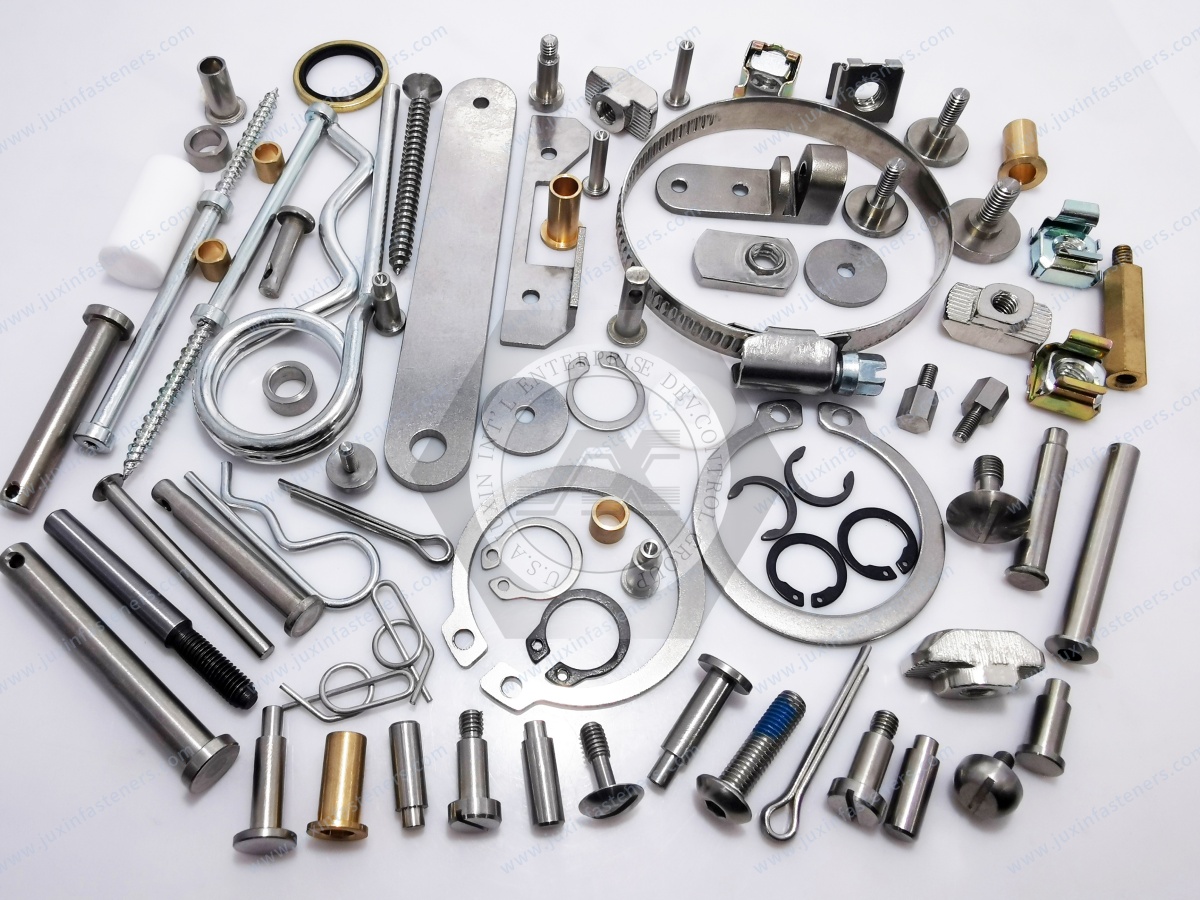
This is an important engineering and procurement decision.
May be considered where:
Corrosion resistance is a major requirement
Stainless compatibility is preferred
The service environment supports the selected grade
A coating-free stainless solution is specified
May be appropriate where:
The environment is compatible with the selected coating system
Cost is a significant consideration
The existing assembly is designed around coated steel
Customer specifications require a particular material/finish combination
Neither option is universally better.
A practical comparison should include:
Environment
Required service life
Mating materials
Installation behavior
Corrosion specification
Cost
Availability
Customer drawing
This decision framework is more useful than simply assuming stainless steel is always the superior choice.
A cotter pin must be bent during installation.
This makes ductility and forming behavior critical material characteristics.
The legs must deform into the required installed position without unacceptable cracking or fracture.
Therefore, specifying a cotter pin only by tensile strength misses an important part of its function.
The material condition should support:
Wire forming during manufacturing
Insertion through the mating hole
Controlled leg bending during installation
Reliable retention after installation
An excessively brittle material condition can be unsuitable even if its nominal strength appears high.
Not necessarily.
The purpose of changing from carbon steel to stainless steel is often related to corrosion behavior or material compatibility.
Mechanical behavior depends on:
Alloy
Material condition
Wire diameter
Geometry
Manufacturing process
Loading mode
The cotter pin should be selected for its required retention function rather than assuming that stainless steel automatically means higher strength.
The cotter pin and mating cross-hole form one functional interface.
The selected diameter must be compatible with the hole while still allowing practical installation.
Engineers should consider:
Cross-hole diameter
Cotter-pin nominal diameter
Dimensional tolerances
Surface condition
Installation access
Required retention
Applicable standard or drawing
A pin that is too large may be difficult to insert or may become damaged.
A pin that is unnecessarily small relative to the hole can create excessive movement.
For standard applications, follow the specified standard and mating-component design.
For custom assemblies, evaluate the hole and pin together.
Length should be selected according to the installed geometry.
Relevant factors include:
Diameter of the clevis pin, shaft or bolt
Width of the retained assembly
Nut geometry where applicable
Cross-hole location
Required leg configuration
Available clearance
Too little protruding length can prevent correct installation.
Excessive length can interfere with adjacent components.
The objective is not to maximize length—it is to achieve the correct installed retention geometry.
A common application uses a cotter pin to retain a clevis pin.
The clevis pin carries or locates the joint according to the assembly design.
The cotter pin passes through the cross-hole near the end of the clevis pin and prevents the clevis pin from unintentionally withdrawing.
This creates an important functional distinction:
Clevis pin = primary joint/pivot component
Cotter pin = retention component
The cotter pin should not be assumed to carry the main shear or pivot load intended for the clevis pin.
When the upcoming JUXIN FASTENERS Clevis Pins technical page is available, engineers can use it together with this page to evaluate the complete pin-and-retainer system.
Another common application combines a cotter pin with a cross-drilled bolt or shaft and a castle or slotted nut.
After the joint is assembled and the appropriate nut slot is aligned with the cross-hole, the cotter pin is inserted and bent.
The installed pin forms a mechanical obstruction that limits unintended nut rotation beyond the available clearance.
The cotter pin does not create the required bolt preload.
The underlying threaded joint must still be correctly designed and assembled.
This distinction is important in safety-related mechanical systems.
Automotive and transportation applications may use stainless steel cotter pins where both positive retention and an appropriate level of corrosion resistance are required.
Depending on the vehicle or equipment design, applications can include:
Steering-related linkages
Suspension-related connections
Clevis joints
Mechanical linkages
Trailer mechanisms
Pin-and-shaft assemblies
The exact material and size should follow the engineering specification.
Stainless steel should not automatically be selected for every automotive cotter-pin application, because coated carbon-steel systems may be specified for other locations.
Agricultural machinery and outdoor equipment can expose retaining components to:
Moisture
Dirt
Fertilizers
Washdown
Seasonal storage
Outdoor weathering
Stainless steel cotter pins may be considered where these conditions make corrosion resistance important.
Typical applications can include:
Clevis joints
Implements
Linkages
Adjustment mechanisms
Equipment attachments
Retaining pins
The stainless grade should be selected according to the actual exposure.
Construction and material-handling equipment can use cotter pins to retain mechanical pins and linkages.
Potential locations include:
Clevis assemblies
Hinged connections
Linkage systems
Control mechanisms
Equipment attachments
Removable shafts
In these systems, the cotter pin generally serves as the secondary retaining element, while the main pin or shaft carries the primary load.
This distinction should be reflected in both design and failure analysis.
Industrial machinery can require stainless steel retaining components where corrosion, washdown or environmental exposure makes ordinary coated steel less desirable.
Applications may include:
Mechanical linkages
Pivot assemblies
Shaft retention
Control mechanisms
Hinges
Equipment guards
Serviceable assemblies
For moving machinery, engineers should also consider the final orientation of the bent legs so that they do not interfere with nearby components.
Stainless components are frequently considered in food-service equipment, HVAC systems and industrial enclosures because these systems can involve moisture, condensation, cleaning or outdoor exposure.
However, specifying a stainless cotter pin does not automatically establish compliance with hygienic, food-contact or other industry-specific requirements.
Where such requirements apply, the complete material, finish and equipment specification must be reviewed.
The cotter pin should be selected according to its actual mechanical and environmental role.
Possibly, but “chemical resistance” cannot be assigned simply from the word stainless.
Compatibility depends on:
Stainless grade
Chemical species
Concentration
Temperature
Exposure duration
Crevice conditions
Mating materials
For chemically aggressive environments, the customer should provide the service conditions or specify the required material.
This is more reliable than assuming 304 or 316 will perform in every chemical application.
A cotter pin and an R-clip can both retain a cross-drilled pin, but their service strategies differ.
A cotter pin is inserted and then plastically bent into its installed position.
An R-clip is designed for convenient insertion and removal without the same permanent leg-bending process.
A designer may consider:
Required security
Frequency of removal
Maintenance strategy
Vibration
Installation access
Risk of accidental disengagement
Where frequent disassembly is required, a purpose-designed reusable retaining device may be more appropriate than repeatedly bending a cotter pin.
A linch pin is another retaining device commonly encountered in agricultural, trailer and equipment applications.
Its locking mechanism differs from a conventional cotter pin.
Linch pins typically incorporate a locking ring or similar feature that secures the pin after insertion.
Cotter pins instead pass through a cross-hole and rely on bent legs for retention.
The two products should therefore be treated as separate pin families with different installation and service requirements.
A cotter pin is a retaining device.
A spring pin is typically installed by interference into a hole and can be used for locating, joining or retaining components depending on the design.
Their installation mechanics are fundamentally different.
A stainless cotter pin should not be replaced by a spring pin simply because both are cylindrical pin products.
A cotter pin undergoes permanent deformation when its legs are bent during installation.
For this reason, a removed cotter pin should not automatically be straightened and reused, particularly in safety-relevant assemblies.
Repeated bending may damage the component or change its condition.
The applicable OEM maintenance procedure or engineering specification should determine replacement requirements.
For many service applications, replacing the removed cotter pin is a practical approach.
A poorly matched pin and cross-hole can create installation or retention problems.
The legs may not provide enough material for the required installed configuration.
The legs may interfere with surrounding components.
Possible contributors include unsuitable material condition, manufacturing defects or excessive deformation.
An inappropriate stainless grade, aggressive environment, crevice condition or galvanic interaction can still create corrosion problems.
Poor leg orientation can reduce retention effectiveness or interfere with moving components.
Straightening and rebending can damage the pin and should not be assumed acceptable.
A stainless cotter pin that looks dimensionally identical to an existing component may still have different material or functional characteristics.
Quality requirements should follow the applicable standard, customer drawing and purchase specification.
Depending on the project, inspection may include:
Pin diameter
Length
Eye geometry
Leg geometry
Material verification
Surface condition
Burr control
Crack inspection
Dimensional inspection
Packaging
Lot identification where required
For material-controlled OEM projects, documentation requirements should be defined during RFQ rather than assumed after production.
Standard DIN 94 or other specified split-pin designs may be suitable where the standard dimensions meet the assembly.
Custom stainless steel cotter pins may be required for:
Non-standard diameter
Special length
Restricted installation space
Customer-specific eye geometry
Special stainless grade
Existing OEM replacement
Drawing-controlled dimensions
Application-specific retention geometry
The decision to customize should be driven by the assembly requirement.
JUXIN FASTENERS supports standard and custom stainless steel retaining components according to customer requirements.
Depending on the part, project support can include:
Drawing review
Sample review
Material selection based on specification
Wire-forming development
Prototype or sample production
Dimensional inspection
Production supply
Customer-specific packaging
For custom components, the manufacturing route is determined by geometry, material, tolerance and production volume.
A second-source project should verify more than overall appearance.
Determine whether the component follows DIN 94, ISO 1234 or a customer-specific design.
Identify the required stainless grade or material specification.
Review diameter, length, eye geometry and any critical custom dimensions.
Understand the clevis pin, bolt, shaft, cross-hole or nut interface where possible.
Confirm why stainless steel was originally specified.
Check fit, insertion and bending behavior in the actual assembly.
Define inspection, material documentation and packaging requirements.
This approach is particularly useful for OEMs and industrial purchasing teams qualifying alternative suppliers.
For accurate quotation and technical review, provide as much of the following information as available:
Product standard
2D drawing
Existing physical sample
Nominal diameter
Length
Stainless steel grade
Material specification where required
Surface condition
Mating cross-hole diameter for custom designs
Clevis pin, bolt or shaft information
Application
Service environment
Corrosion requirement
Inspection requirements
Material documentation requirements
Sample quantity
Production quantity
Estimated annual demand
Packaging requirements
For legacy or second-source components, providing both the drawing and physical sample can improve technical review.
In the context of the conventional two-leg formed-wire product, “cotter pin” is commonly used in North America while “split pin” is widely used internationally.
The actual drawing or standard should still be confirmed.
The decision depends on the environment, customer specification, mating materials and corrosion requirements.
316-family stainless may provide advantages in certain chloride-containing environments, but it is not automatically required for every outdoor application.
They are commonly associated in fastener terminology, but material designations should not be substituted casually on drawing-controlled projects.
Follow the material specification stated by the customer.
They are commonly related in fastener specifications,
but the exact material requirement should be verified rather than assuming every A4 designation is interchangeable with every 316 material specification.
Not necessarily.
Strength depends on material grade, condition and geometry. Stainless steel is often selected primarily for corrosion-related requirements.
When correctly installed through the cross-drilled bolt or shaft and aligned slot, the cotter pin provides a physical retention feature that limits unintended nut movement.
It does not generate the joint's preload.
Reuse should not be assumed, particularly after the legs have been bent and straightened. Follow the applicable engineering or maintenance procedure.
Yes. JUXIN FASTENERS supports standard and drawing-based stainless steel cotter pin and split pin projects according to customer dimensions, material requirements, samples and production quantities.
Selecting a stainless steel cotter pin should not begin and end with “304 or 316?”
A better engineering path is:
retention function → mating component → cross-hole → diameter → length → stainless grade → mating materials → corrosion environment → installation → validation
The procurement path then becomes:
standard/drawing → material specification → sample → fit and installation review → documentation → production control
This approach helps engineers select the appropriate material while helping procurement and supplier-development teams avoid unnecessary or technically inappropriate material substitutions.
JUXIN FASTENERS supplies stainless steel cotter pins, stainless steel split pins, DIN 94 split pins,
custom retaining pins and drawing-based fastening components for automotive, agricultural equipment, construction equipment, industrial machinery and OEM manufacturing.
For standard components, custom dimensions, material-specific projects, existing-part replacement or second-source development, send your drawing, specification or physical sample for technical review and quotation.
JUXIN FASTENERS
FASTENING SOLUTIONS FOR GLOBAL OEMS
Website: www.juxinfasteners.com
Email: info@juxinfasteners.com
 MORE NEWS
Sep. 27, 2026
Sep. 27, 2026
Sep. 27, 2026
Contact Us
Tel.:
+86 020 8621 0320
+86 020 3121 6067
E-mail:
Technical Support:
Navigation
SEND INQUIREY