
Call Us
+86 136 6007 9809
Call Us
+86 136 6007 9809

Jun. 23, 2024
Narrow Cheese Head Slotted Screws: Compact Assembly Design and OEM Industry Applications
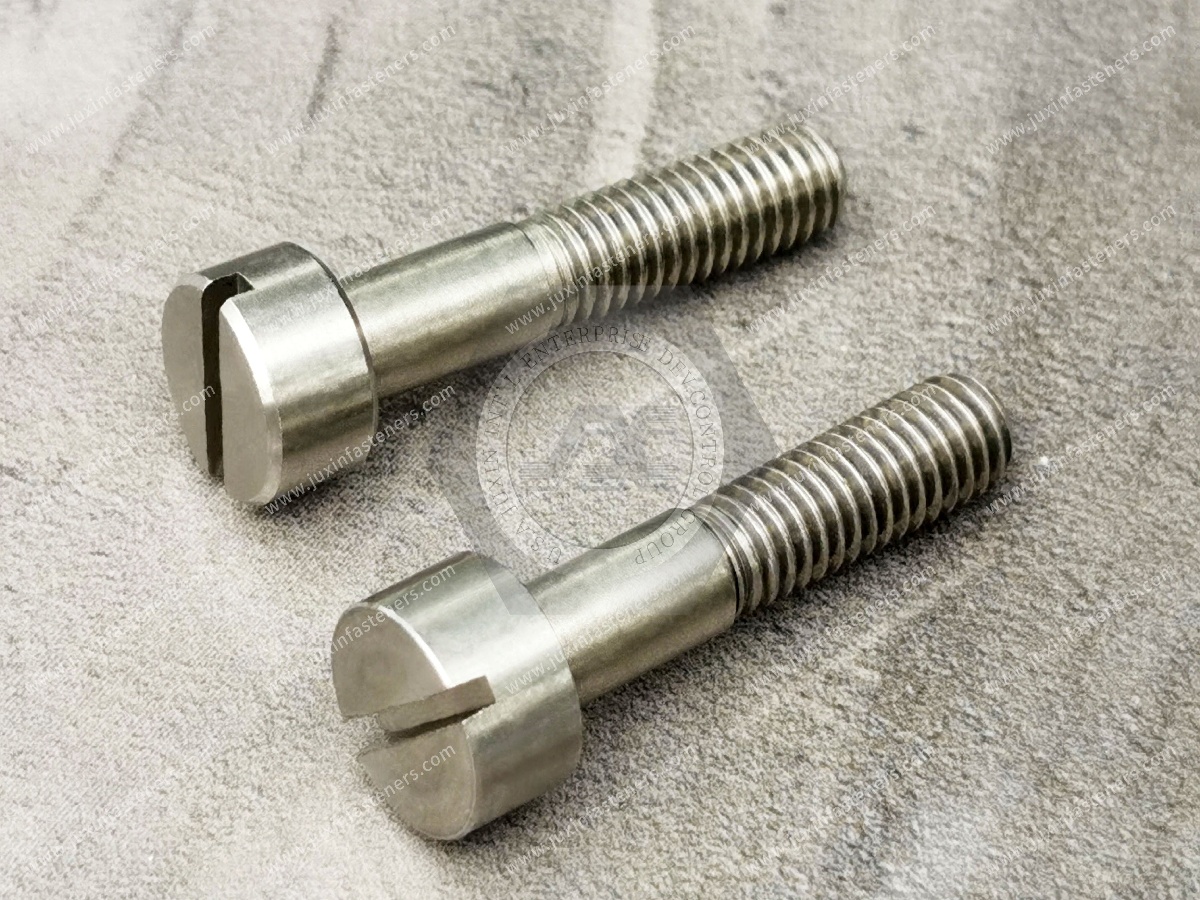
Narrow cheese head slotted screws are externally threaded machine screws featuring a cylindrical head and a straight slot drive.
They are considered for mechanical assemblies where head diameter, radial clearance, access for installation tools and serviceability are important design constraints.
Common related terms include narrow head slotted screws, cylindrical head slotted screws, slotted cheese head screws, DIN 84 screws and ISO 1207 slotted cheese head screws.
However, these names do not always describe identical dimensions.
A specially designed narrow cheese head screw may have a smaller head diameter than a standard cheese head screw of the same nominal thread size.
The actual geometry must therefore be confirmed from the applicable product standard or customer drawing.
For OEM design engineers, the main challenge is balancing limited installation space with adequate head bearing area, driver engagement and thread strength.
For manufacturing engineers and production managers, the fastening system must support repeatable assembly, suitable tooling and efficient inspection.
For purchasing managers and supplier development teams, complete dimensional requirements are essential to prevent unsuitable substitutions and maintain consistent supply.
JUXIN FASTENERS supplies industrial fastening products and supports drawing-based inquiries for precision machine screws and customized threaded components.
This guide explains how narrow cheese head slotted screws can be evaluated for compact assemblies across multiple industrial sectors.
What Is a Narrow Cheese Head Slotted Screw?
A narrow cheese head slotted screw generally consists of three principal features:
Cylindrical head
Straight slot drive
Externally threaded shank
The term "narrow" normally refers to a reduced head diameter or a drawing-specific compact head configuration.
It should not automatically be interpreted as a reduced head height.
Cylindrical Head
The cylindrical head provides a defined bearing surface against the connected component.
Its diameter and height influence:
Radial clearance
Contact pressure
Tool accessibility
Assembly appearance
Interference with surrounding parts
Straight Slot Drive
The straight slot accepts a suitable flat-blade screwdriver.
Driver engagement depends on the slot width, slot depth and screwdriver geometry.
Threaded Shank
The external thread engages with a compatible nut, tapped hole or approved threaded attachment.
The required thread engagement depends on the mating material and applied loading.
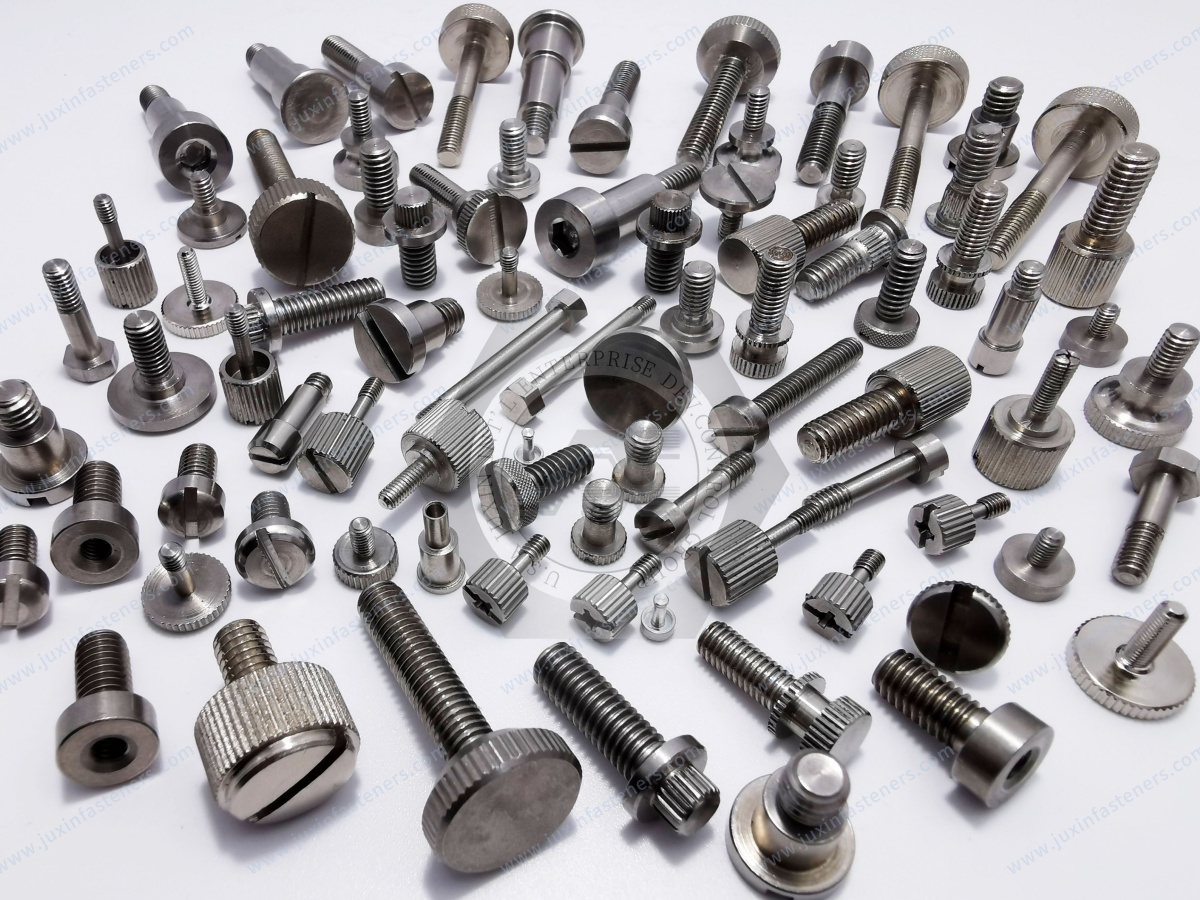
Narrow Cheese Head vs. Standard Cheese Head vs. Low-Profile Head
These configurations should be distinguished during engineering selection.
| Head configuration | Main characteristic | Design consideration |
|---|---|---|
| Standard cheese head | Standardized cylindrical head geometry | Confirm applicable dimensional standard |
| Narrow cheese head | Reduced or drawing-specific head diameter | Check bearing area and driver engagement |
| Low-profile head | Reduced head height | Check drive depth and tightening requirements |
| Pan head | Rounded or slightly domed head geometry | Check clearance and contact geometry |
| Countersunk head | Designed for a compatible countersink | Requires appropriate seating geometry |
Important Engineering Principle
A narrow head is not automatically a low-profile head.
Reducing head diameter can affect bearing pressure.
Reducing head height can affect the available drive geometry.
The correct design depends on the actual assembly.
DIN 84 and ISO 1207: What Engineers Should Verify
DIN 84 is a traditional designation for slotted cheese head screws.
ISO 1207 is the corresponding international dimensional reference for slotted cheese head screws.
These standards are relevant to conventional cheese head screw designs.
However, a specially reduced-diameter narrow head may not conform to the standard head dimensions.
Do Not Assume Dimensional Interchangeability
Before replacing an existing DIN 84 screw with an ISO 1207 product or a custom narrow-head screw, verify:
Nominal thread size
Thread pitch
Head diameter
Head height
Slot width
Slot depth
Overall length
Material
Mechanical properties
Surface treatment
The applicable standard edition and approved drawing should govern the decision.
Related International Standards
Depending on the product, relevant references may include:
| Standard | Relevance |
|---|---|
| DIN 84 | Traditional slotted cheese head screw designation |
| ISO 1207 | Slotted cheese head screw dimensional requirements |
| ISO 261 | General-purpose metric thread plan |
| ISO 965 | Metric thread tolerances |
| ISO 898-1 | Mechanical properties of applicable carbon steel and alloy steel fasteners |
| ISO 3506-1 | Mechanical properties of applicable stainless steel fasteners |
| ISO 4042 | Electroplated coating requirements within its scope |
Other special slotted screw configurations should be evaluated under their own drawings or applicable standards.
A special-purpose screw should not be presented as an ISO 1207 product unless its dimensions and requirements actually conform.
Why Head Diameter Matters in Compact Assemblies
Head diameter affects more than appearance.
It determines the radial space required around the screw and contributes to the underhead bearing geometry.
Limited Radial Clearance
A smaller head diameter may be useful where adjacent components prevent installation of a conventional head.
Examples include:
Instrument housings
Electrical control modules
Compact brackets
Sensor mounting structures
Precision mechanical equipment
Bearing Surface
Reducing head diameter can reduce the available contact area.
For the same clamping load, a smaller effective bearing area may increase average bearing pressure.
A simplified relationship is:
p = F / A
Where:
p = average bearing pressure
F = compressive load
A = effective bearing contact area
Actual contact pressure depends on geometry, surface flatness and material stiffness.
Engineering Limitation
A narrow head should not be selected solely because it fits into a restricted space.
The connected material must also support the required bearing load.
Slot Width, Slot Depth and Driver Engagement
The straight slot is one of the most important functional features of a slotted machine screw.
A suitable screwdriver must engage the slot correctly.
Slot Width
The blade thickness should be compatible with the specified slot.
Slot Depth
Insufficient slot depth may limit effective driver engagement.
Driver Blade Width
The screwdriver blade should be selected to engage the slot appropriately without damaging the head.
Tool Alignment
The tool must approach the screw along a suitable installation axis.
Cam-Out and Slipping
A straight-slot drive is sensitive to tool alignment and applied axial force.
Poor engagement can damage the slot or surrounding components.
Production Engineering Consideration
Slotted screws may be practical for manual assembly and service applications.
However, they are not automatically the preferred choice for high-speed automated fastening.
For automated production, engineers should compare slotted drives with suitable cross-recess, hex socket, hexalobular or other drive systems.
Narrow Cheese Head Screws and Tightening Torque
A screw's head geometry does not independently determine the correct tightening torque.
The required tightening process depends on:
Thread size
Material
Mechanical properties
Mating thread
Bearing surface
Friction conditions
Joint stiffness
Application requirements
Why Excessive Torque Is Dangerous
Excessive tightening may cause:
Slot deformation
Thread stripping
Head damage
Bearing-surface deformation
Damage to delicate components
Why Insufficient Tightening Is Also a Problem
Insufficient preload may permit unwanted joint movement.
Important Limitation
Slotted cheese head screws are not inherently self-locking or vibration-resistant.
Where vibration is significant, the complete joint and any specified locking method must be evaluated.
Materials for Narrow Cheese Head Slotted Screws
Material selection depends on mechanical loading, corrosion exposure and compatibility with adjacent components.
Carbon Steel
Carbon steel may be suitable for general industrial machine screw applications.
The required mechanical properties and coating should be specified.
Stainless Steel
Stainless steel may be considered for humid, corrosion-sensitive or selected clean-equipment applications.
Common material groups include A2 and A4.
The actual grade and mechanical property class must be defined.
Other Materials
Special materials may be considered for drawing-based projects where required.
Manufacturing feasibility and mechanical suitability must be confirmed.
Stainless Steel Is Not Universally Corrosion-Proof
Stainless steel selection should account for the actual environment.
Chlorides, cleaning chemicals and mating materials can affect corrosion behavior.
Surface Treatments and Corrosion Protection
Potential surface treatment approaches include:
Zinc plating
Black oxide
Phosphate coating
Stainless steel passivation
Other drawing-specified finishes
Zinc Plating
May be suitable for selected general industrial applications.
Black Oxide
May be used for specified surface appearance or functional requirements.
It should not automatically be treated as equivalent to a qualified corrosion-protection coating.
Phosphate Coating
May be specified for certain industrial applications.
Its performance depends on the complete treatment system.
Stainless Steel Passivation
Passivation may be specified to improve the condition of suitable stainless steel surfaces.
The applicable process and acceptance requirements should be defined.
Coating and Thread Fit
Coating thickness can affect thread dimensions and assembly compatibility.
Coating and Tightening
Surface treatment may also affect friction.
A coating change may require review of the tightening process.
Thread Engagement in Precision Assemblies
A narrow cheese head screw must engage with a suitable internal thread.
Tapped Steel Components
Engagement requirements depend on thread size, material and loading.
Tapped Aluminum Components
Aluminum internal threads may require additional engagement or a suitable threaded insert.
Plastic Components
Direct threading into plastic requires a screw and boss design appropriate to the polymer and assembly process.
A conventional machine screw should not automatically be used as a thread-forming screw for plastic.
Thin Sheet Metal
Direct tapping may provide insufficient engagement in some sheet metal thicknesses.
Alternative Threaded Attachments
Depending on the design, suitable alternatives may include:
Self-clinching nuts
Blind rivet nuts
Weld nuts
Cage nuts
Threaded inserts
JUXIN FASTENERS supplies these categories of industrial fastening components for suitable applications.
When to Use a Narrow Cheese Head Screw Instead of Another Fastener
A narrow cheese head screw may be appropriate when:
Radial head clearance is limited
A straight-slot drive is required
The application permits the available bearing area
Manual service access is important
The required tightening conditions can be achieved
Consider Another Screw Design When:
High-speed automated installation is required
The available tool access is restricted
A higher drive torque is needed
The head must sit flush with the surface
The assembly requires a different locking strategy
Automotive Industry Applications
Narrow cheese head slotted screws may be considered for selected automotive auxiliary assemblies.
Potential applications include:
Interior equipment
Instrument housings
Sensor mounting brackets
Electrical control modules
Noncritical mechanical accessories
Engineering Considerations
Automotive equipment may experience vibration, temperature changes and repeated maintenance.
The fastener must be evaluated for the specific assembly.
Important Limitation
Braking, steering, suspension and other safety-critical vehicle systems require application-specific fastening specifications.
A general-purpose slotted screw should not automatically be substituted.
Electric Vehicle and EV Battery Pack Equipment
Potential applications include:
Battery management electronics housings
Auxiliary battery enclosure components
Charging equipment control panels
Sensor mounting structures
Power electronics covers
Electrical Isolation
Metal screws are electrically conductive.
Where isolation is required, the complete assembly must incorporate the appropriate insulation design.
Battery Safety
The screw must not compromise electrical clearance, insulation, sealing or enclosure integrity.
Thermal Cycling
Differences in thermal expansion may affect joint behavior.
Engineering Limitation
A narrow cheese head screw is not automatically suitable for primary battery pack structural or safety-critical connections.
Rail Transit Equipment
Rail transit equipment may include compact control systems, instrumentation and electrical enclosures.
Potential applications include:
Control panel components
Instrument housings
Auxiliary equipment brackets
Serviceable electrical assemblies
Vibration Considerations
Rail applications may experience repeated vibration and mechanical loading.
The complete joint must meet the approved equipment requirements.
Supplier Qualification
Rail applications may require additional material, traceability or project-specific documentation.
These requirements must be confirmed rather than assumed.
Aerospace Instrumentation and Equipment
Aerospace-related equipment may use specialized machine screws in approved instrument and auxiliary assemblies.
Potential applications include:
Instrument housings
Test equipment
Ground support equipment
Non-flight-critical precision assemblies
Critical Distinction
A general DIN 84 or ISO 1207 screw is not automatically qualified as an aerospace fastener.
Flight-critical applications require the exact approved aerospace specification, traceability and qualification requirements.
Special Aerospace Standards
Aerospace screw standards should only be cited where the product is actually manufactured and qualified to the specified requirements.
JUXIN FASTENERS can review drawing-based inquiries, but product availability and qualification must be confirmed for each project.
Electrical Cabinets and Power Distribution Equipment
Narrow cheese head slotted screws may be considered for suitable electrical cabinet components.
Potential applications include:
Control panel accessories
Instrument mounting
Auxiliary brackets
Electrical equipment covers
Mechanical mounting features
Electrical Clearance
Fastener placement must not compromise required electrical clearance or insulation.
Thin Sheet Metal
Where direct tapping is unsuitable, a self-clinching nut or another engineered threaded attachment may be preferable.
Maintenance Access
A slotted drive may be useful where a compatible manual tool is specified.
HVAC and Cooling Equipment
HVAC equipment may contain compact electrical and mechanical assemblies.
Potential applications include:
Thermostat housings
Control modules
Sensor brackets
Instrument panels
Auxiliary equipment covers
Environmental Considerations
Moisture
Temperature cycling
Vibration
Corrosion
Service access
Important Limitation
A general slotted machine screw should not automatically be used for pressure-containing or refrigerant-sealing connections.
Medical Equipment
Medical equipment may require compact fastening components for instrument housings and mechanical accessories.
Potential applications include:
Diagnostic equipment
Laboratory instruments
Equipment control panels
Non-patient-contact housings
Serviceable mechanical covers
Material Selection
The actual cleaning, sterilization and corrosion requirements must be evaluated.
Qualification
Medical-device applications may require additional material, cleanliness, documentation and regulatory controls.
A general industrial screw does not independently establish medical-device compliance.
Construction and Building Equipment
Narrow cheese head slotted screws may be relevant to selected building equipment rather than primary structural connections.
Potential applications include:
Building automation controls
HVAC control panels
Electrical accessories
Access-control devices
Instrument housings
Structural Limitation
These screws should not be treated as substitutes for approved structural bolts.
Industrial Machinery
Narrow cheese head slotted screws may be used in suitable compact mechanical assemblies.
Potential applications include:
Precision machine components
Equipment covers
Control panels
Instrument brackets
Serviceable mechanical accessories
Engineering Priorities
Head clearance
Thread engagement
Tool access
Bearing pressure
Maintenance requirements
Robotics and Automation
Robotics systems often contain compact assemblies and densely arranged components.
Potential applications include:
Sensor housings
Control modules
Instrument mounting
Auxiliary covers
Precision brackets
Design Considerations
Available radial clearance
Tool approach direction
Assembly cycle time
Vibration
Serviceability
Automated Assembly Limitation
A slotted drive may require more careful tool alignment than some alternative drive types.
The preferred drive system should be selected according to the actual production process.
Sheet Metal Fabrication
Narrow cheese head slotted screws may be used with suitable threaded attachments in sheet metal assemblies.
Potential applications include:
Instrument panels
Electrical enclosures
Light-duty brackets
Equipment covers
Serviceable housings
Thin Sheet Metal Consideration
Direct tapping may not provide sufficient thread engagement.
Alternative Solutions
Self-clinching nuts
Weld nuts
Blind rivet nuts
Cage nuts
Clip-on nuts
The selection should reflect sheet thickness, material hardness, hole geometry, access and required load.
Industry Application Selection Matrix
| Industry | Potential application | Main engineering concern |
|---|---|---|
| Automotive | Interior instrumentation | Vibration and serviceability |
| EV equipment | Control module housings | Electrical clearance and thermal cycling |
| Battery pack equipment | Auxiliary electronic covers | Insulation and enclosure integrity |
| Rail transit | Control and instrument assemblies | Vibration and qualification |
| Aerospace | Ground support and approved auxiliary equipment | Traceability and specification approval |
| Electrical cabinets | Instrument mounting | Sheet metal engagement and clearance |
| HVAC | Sensor and control housings | Moisture and temperature |
| Medical equipment | Instrument housings | Cleaning and material compatibility |
| Construction equipment | Building control devices | Environmental exposure |
| Machinery | Precision covers and brackets | Tool access and bearing pressure |
| Robotics | Compact sensor assemblies | Clearance and assembly repeatability |
| Sheet metal fabrication | Serviceable panels | Threaded attachment selection |
Special Narrow Cheese Head Screw Designs
Drawing-based custom screws may incorporate special geometry where required.
Possible requirements include:
Reduced head diameter
Modified head height
Custom slot dimensions
Special thread length
Selected material
Drawing-defined surface treatment
Special end geometry
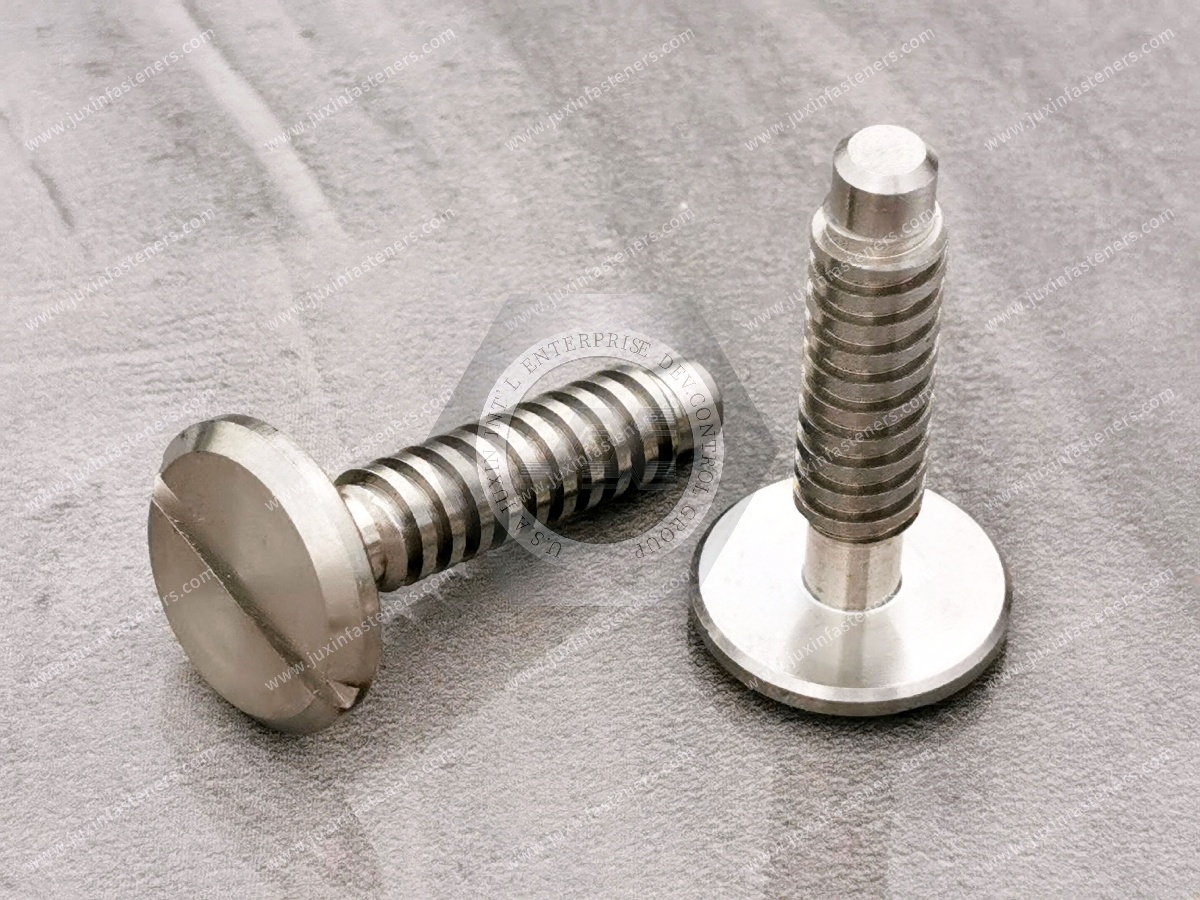
Dog-Point or Extended-Tip Designs
A drawing-specific screw may incorporate a reduced-diameter pilot or dog-point feature.
Such a feature may assist alignment or positioning in an appropriately designed assembly.
However, it does not automatically replace a precision dowel pin.
The positioning function must be evaluated against the actual geometry and loading.
Custom Geometry and Manufacturing Feasibility
Special head dimensions, slots and end features may require additional manufacturing review.
The appropriate production method depends on the design and quantity.
Production Engineering: Slotted Screws in Manual and Automated Assembly
For production managers, the main consideration is whether the fastener can be installed consistently.
Manual Assembly
Slotted screws may be practical where manual access is available and the required torque is appropriate.
Automated Assembly
Automated screwdriving systems must reliably align the driver with the slot.
Tool Engagement
The screwdriver must fit the slot geometry.
Component Handling
Small screws may require suitable feeding, positioning and handling methods.
Inspection
Relevant inspection characteristics may include:
Head diameter
Head height
Slot width
Slot depth
Thread dimensions
Overall length
Surface finish
Rework
Damaged slots and threads should be evaluated according to the approved acceptance criteria.
Production Decision Matrix
| Production concern | Potential issue | Engineering response |
|---|---|---|
| Narrow head diameter | Increased bearing pressure | Verify mating material |
| Shallow slot | Poor driver engagement | Review slot depth |
| Incorrect screwdriver | Slot damage | Specify compatible tool |
| Automated installation | Alignment difficulty | Validate drive system |
| Thin sheet metal | Thread stripping | Evaluate threaded insert or nut |
| Coating variation | Friction change | Review tightening process |
| Limited access | Difficult maintenance | Verify tool clearance |
Common Failure Risks
Slot Damage
May occur when the screwdriver is unsuitable or the tightening load exceeds the drive capability.
Thread Stripping
May result from insufficient engagement or unsuitable mating material.
Bearing-Surface Deformation
May occur where the head contact area is insufficient.
Vibration Loosening
May occur when the complete joint is not designed for dynamic loading.
Corrosion
May affect serviceability and mechanical performance.
Galling
May occur in certain threaded material combinations.
Head Interference
May occur when the screw head does not fit the available assembly space.
Engineering Recommendation
Review the complete joint and assembly process before changing head diameter, material or tightening procedure.
OEM Supplier Qualification for Narrow Cheese Head Slotted Screws
A complete purchasing specification should include:
| RFQ requirement | Information to provide |
|---|---|
| Product drawing | Approved 2D drawing |
| Standard | DIN 84, ISO 1207 or drawing-specific design |
| Thread | Exact designation and pitch |
| Head diameter | Required dimension and tolerance |
| Head height | Required dimension and tolerance |
| Slot width | Required dimension and tolerance |
| Slot depth | Required dimension and tolerance |
| Screw length | Required dimension |
| Material | Approved specification |
| Mechanical properties | Required grade or property class |
| Coating | Surface treatment requirements |
| Application | Equipment and operating conditions |
| Inspection | Acceptance criteria |
| Quantity | Prototype, batch or annual demand |
| Delivery | Target schedule |
Supplier Substitution
A proposed replacement should be evaluated against the complete drawing.
A standard DIN 84 screw may not fit a custom narrow-head application.
Total Installed Cost
Procurement and production teams should consider:
Unit price
Assembly labor
Tooling
Inspection
Rework
Inventory
Packaging
Maintenance
The lowest purchase price does not always provide the lowest installed cost.
Frequently Asked Questions
What is a narrow cheese head slotted screw?
It is a machine screw with a cylindrical head, straight slot drive and a narrow or drawing-specific head configuration.
Is a narrow cheese head screw the same as a low-profile screw?
No. Narrow generally refers to reduced head diameter, while low-profile refers to reduced head height.
Are DIN 84 and ISO 1207 screws identical?
They are related dimensional references, but the applicable standard editions and complete product requirements must be checked before substitution.
Can a narrow cheese head screw replace a standard DIN 84 screw?
Only after confirming head dimensions, bearing area, tool engagement and other application requirements.
Are slotted screws suitable for automated assembly?
They may be used in suitable systems, but driver alignment and installation repeatability must be evaluated.
Do narrow cheese head screws resist vibration?
Not inherently. Vibration resistance depends on the complete joint.
Can these screws be used in automotive equipment?
Yes, in suitable approved assemblies. Safety-critical applications require additional qualification.
Can they be used in EV battery equipment?
Potentially in suitable auxiliary mechanical or electronic assemblies, subject to electrical and mechanical design approval.
Can they be used in medical equipment?
Potentially, but the material, cleaning requirements and applicable qualification must be evaluated.
Can a dog-point screw replace a dowel pin?
Not automatically. The required positioning accuracy and loading must be verified.
Can JUXIN FASTENERS review custom narrow-head screw drawings?
Yes. Drawing-based inquiries can be reviewed for dimensions, material, surface treatment, manufacturing feasibility and quotation.
JUXIN FASTENERS: Narrow Cheese Head Slotted Screws and Custom OEM Fastening Solutions
JUXIN FASTENERS supplies industrial fastening products and supports drawing-based OEM inquiries.
Relevant product categories include:
Narrow cheese head slotted screws
DIN 84 / ISO 1207 slotted cheese head screws
Drawing-specific precision machine screws
Custom threaded components
Self-clinching nuts and studs
Blind rivet nuts
Weld nuts
Cage nuts
CNC-machined fastening components
Specific dimensions, materials, coatings, inspection requirements, MOQ and manufacturing feasibility are confirmed during project review.
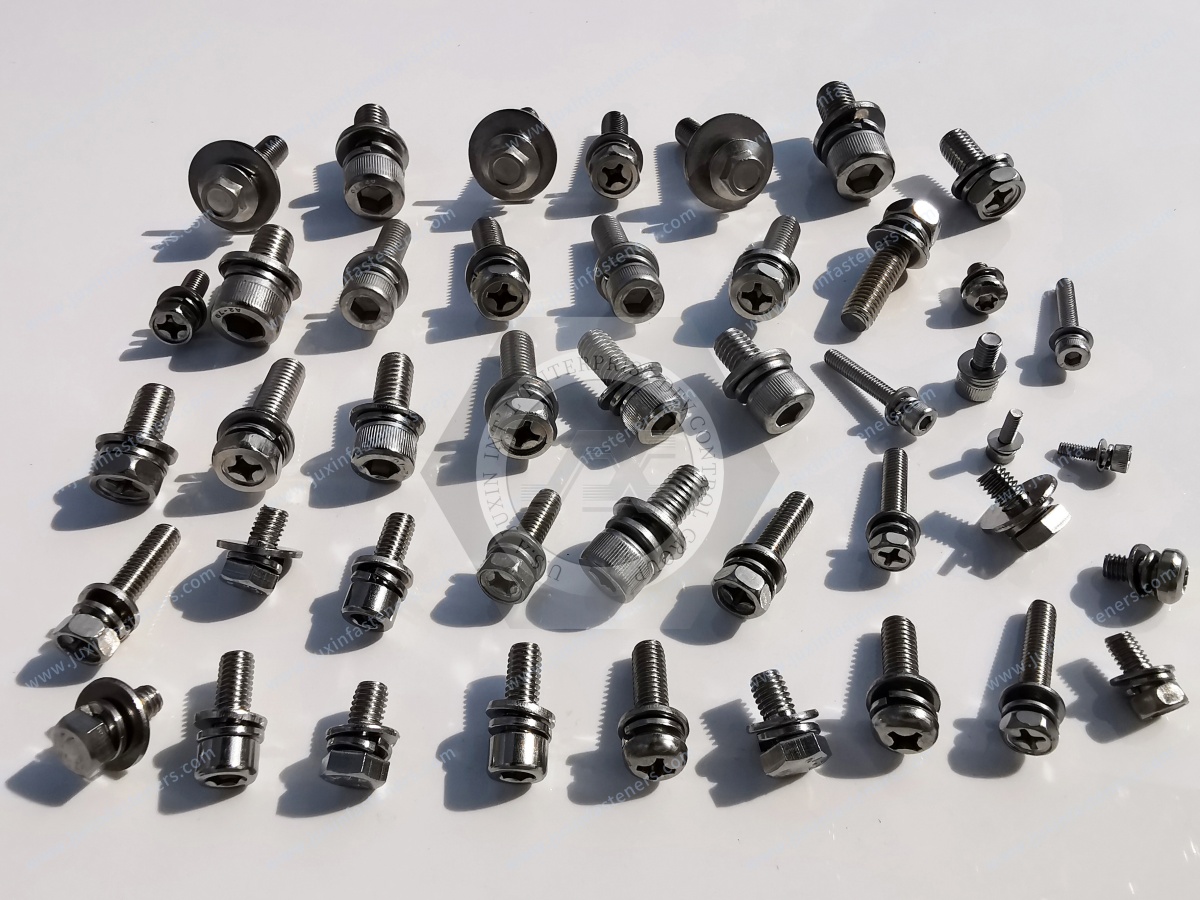
Request a Custom Narrow Cheese Head Slotted Screw RFQ
Are you developing a compact mechanical assembly, electrical cabinet, automotive control module, EV equipment housing, medical instrument,
HVAC controller, robotics system or sheet metal product?
JUXIN FASTENERS welcomes inquiries from design engineers, mechanical engineers, manufacturing engineers, production managers, procurement specialists,
purchasing managers, supplier development teams and supply chain managers.
For an efficient technical review, please provide:
2D drawing or standard + thread designation + screw length + head diameter + head height + slot width/depth + material + mechanical requirements
+ coating + application + inspection requirements + sample quantity + annual purchasing volume + target delivery date
Our team can review the drawing, discuss suitable fastening options, confirm sample arrangements and provide MOQ, lead-time and quotation information.
Company: JUXIN FASTENERS
Website: https://www.juxinfasteners.com/
Email: info@juxinfasteners.com
Send your narrow cheese head slotted screw drawings and RFQ to JUXIN FASTENERS for technical evaluation and quotation.
Contact Us
Tel.:
+86 020 8621 0320
+86 020 3121 6067
E-mail:
Technical Support:
Navigation
SEND INQUIREY



