Call Us
+86 136 6007 9809
Call Us
+86 136 6007 9809

Nov. 20, 2023
Threaded connections used in semiconductor equipment, cleanroom automation, precision electronics,
optical systems and other contamination-sensitive equipment face a different engineering challenge from ordinary industrial fastening.
Mechanical strength alone is not enough.
Engineers may also need to consider:
particle generation during assembly and service;
thread wear after repeated maintenance;
installation debris;
surface cleanliness;
lubricant restrictions;
corrosion products;
packaging cleanliness;
material traceability;
maintenance frequency.
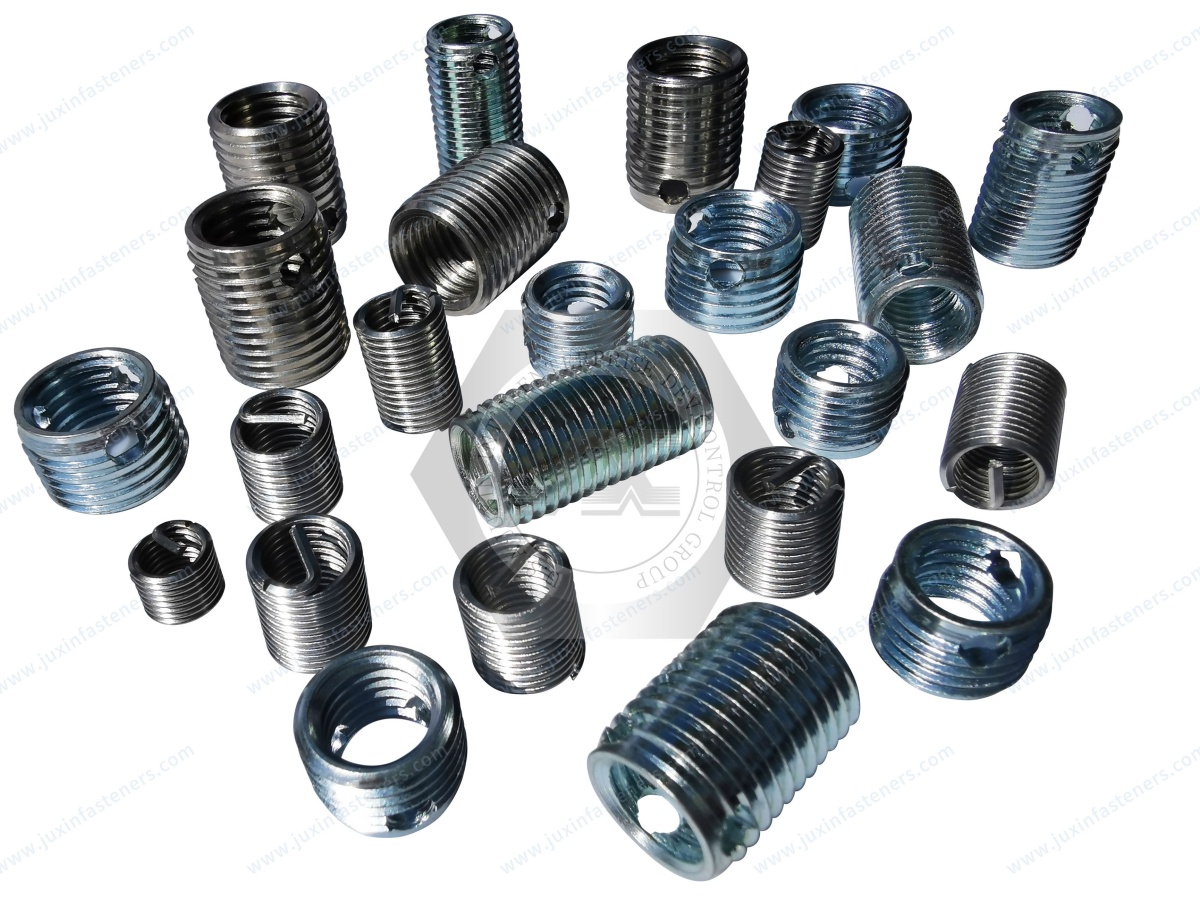
Stainless steel helical inserts, also known as wire thread inserts, screw thread inserts or thread reinforcement inserts,
can provide durable reusable threads in aluminum and other suitable parent materials while helping protect the original tapped hole from repeated screw wear.
However, an important distinction must be made:
A stainless steel helical insert is not automatically “particle-free” simply because it is made from stainless steel.
For semiconductor, cleanroom and other contamination-controlled applications, suitability depends on the complete specification—including insert design, surface condition,
cleaning, packaging, installation method, mating fastener and customer cleanliness requirements.
JUXIN FASTENERS supports OEM customers requiring stainless steel wire thread inserts and engineered thread reinforcement solutions for precision industrial applications.
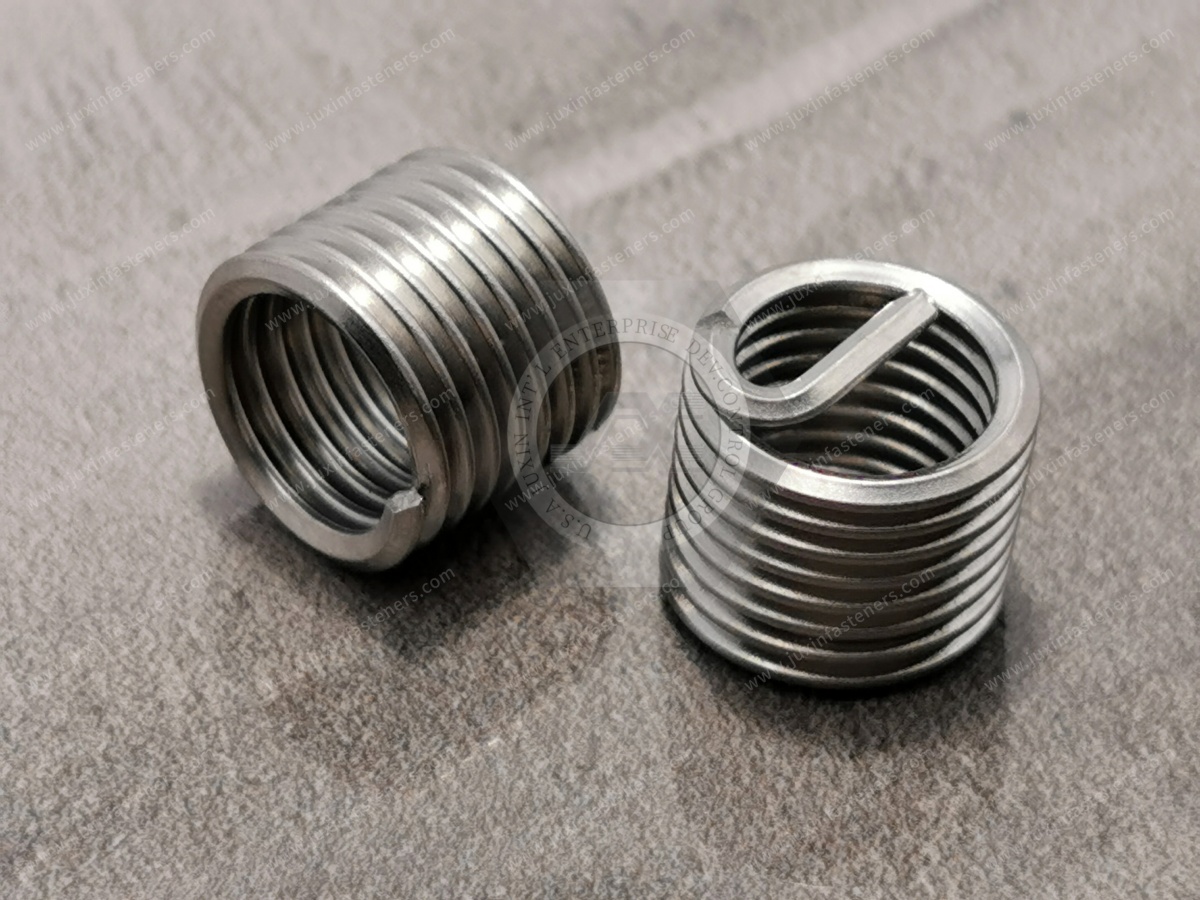
A wire thread insert is a precision-formed helical component installed into a specially prepared STI (Screw Thread Insert) tapped hole.
Once installed, it creates a durable internal thread for the mating screw.
The load path becomes:
Mating Screw → Stainless Steel Wire Insert → STI Parent Thread → Component
instead of:
Mating Screw → Directly Tapped Parent Material
This architecture is particularly valuable when the component is manufactured from aluminum or another material whose internal threads may wear after repeated assembly.
For contamination-sensitive equipment, the engineering objective is not simply to create a stronger thread.
The objective is to create a threaded interface that can provide:
Mechanical Reliability + Repeated Serviceability + Controlled Installation + Appropriate Cleanliness
Cleanroom equipment often contains removable:
access panels;
sensor brackets;
optical assemblies;
process modules;
electrical components;
vacuum-system accessories;
automation modules;
service covers.
When screws are repeatedly installed into directly tapped aluminum, progressive wear can occur.
Possible consequences include:
thread wear;
aluminum debris;
damaged thread flanks;
cross-threading;
loss of fastening consistency;
eventual thread stripping;
component replacement.
A stainless steel thread insert provides a durable interface between the mating screw and the parent component.
This can be especially useful in high-value equipment where the same threaded connection may be opened repeatedly during installation, calibration, preventive maintenance or equipment servicing.
This distinction is critical for engineers and procurement teams.
Calling a fastener particle-free without defining the required cleanliness condition is technically incomplete.
Particle performance can be affected by:
manufacturing residue;
burrs;
surface contamination;
packaging;
transportation;
installation tools;
STI tapping debris;
tang removal;
mating screw condition;
galling;
lubrication;
maintenance procedures.
Therefore, a cleanroom thread-insert specification should define the required condition rather than relying on the phrase “particle-free.”
Depending on the project, an RFQ may need to specify requirements for:
cleaning;
surface condition;
particulate control;
packaging;
lubricant restrictions;
material certification;
lot traceability;
installation procedure;
inspection;
customer-specific cleanroom requirements.
JUXIN FASTENERS recommends that semiconductor and contamination-sensitive customers provide their applicable cleanliness and packaging specification together with the drawing.
Aluminum is widely used in precision equipment because it offers:
low weight;
excellent machinability;
good dimensional versatility;
useful thermal characteristics;
suitability for complex housings and frames.
However, a steel screw engaging directly with an aluminum internal thread can create a durability mismatch.
Repeated maintenance can gradually damage the softer parent thread.
A stainless steel helical insert for aluminum creates a durable reusable thread interface while allowing the primary component to remain lightweight.
This makes the technology particularly useful for:
semiconductor manufacturing equipment;
precision automation;
optical equipment;
electronics manufacturing systems;
analytical instruments;
laboratory equipment;
high-value aluminum housings.
One of the most important design considerations in contamination-sensitive assemblies is what happens after the equipment has been serviced repeatedly.
Consider two configurations.
Steel Screw → Aluminum Thread
Repeated installation may progressively wear the parent thread.
Potential issues include:
material wear;
thread deformation;
debris generation;
declining thread quality;
eventual stripping.
Steel Screw → Stainless Steel Wire Insert → Aluminum Component
The reusable screw interface is provided by the insert rather than directly by the aluminum parent thread.
This does not make the assembly inherently particle-free.
However, when properly specified and installed, it can help protect the parent material from repeated direct screw engagement.
A common mistake is to focus only on the cleanliness of the purchased insert.
For contamination-controlled equipment, installation deserves equal attention.
A typical tanged insert installation may involve:
drilling;
STI tapping;
hole cleaning;
insert installation;
tang removal;
final inspection.
Drilling and tapping can generate chips.
Tang removal can create a loose metallic component.
Installation tools can introduce contamination.
For this reason, engineers designing cleanroom equipment should consider where and how the insert will be installed, not only which insert will be purchased.
Whenever practical, machining, tapping, insert installation and appropriate cleaning may be completed under a controlled manufacturing process before the component enters its final clean assembly environment.
This is an important design decision.
Traditional wire inserts use a tang to drive the insert during installation.
Advantages may include:
established installation technology;
broad industrial availability;
familiar tooling;
wide range of sizes.
However, where the tang must be removed, engineers need to control:
tang break-off;
complete tang removal;
loose metallic debris;
inspection.
Tangless designs eliminate the break-off tang.
For applications where loose tangs or tang-removal debris are undesirable, a tangless design may be worth evaluating.
Potential advantages include:
no tang break-off operation;
reduced risk associated with retained broken tangs;
simplified installation workflow in suitable applications.
The correct choice depends on the customer drawing, approved insert system, installation tooling and project requirements.
Tangless does not automatically mean cleanroom-qualified.
Cleaning, packaging, installation and validation requirements still apply.
Another important distinction is whether the assembly requires normal screw engagement or prevailing torque.
A free-running insert provides a durable internal thread without an intentional prevailing-torque locking feature.
Suitable applications can include:
equipment housings;
access panels;
precision instruments;
automation components;
electronic equipment;
repeatedly serviced assemblies.
A screw-locking insert contains specially formed locking coils designed to create prevailing torque against the mating screw.
Potential applications include assemblies exposed to:
vibration;
dynamic loading;
transportation;
repeated mechanical movement.
The required locking behavior should be defined by the engineering specification.
A locking insert should not automatically be selected simply because vibration exists; engineers must also consider required prevailing torque, screw type, lubrication, temperature and maintenance cycles.
Stainless steel threaded interfaces can be susceptible to galling, particularly under high contact pressure, high tightening speed or repeated dry assembly.
In ordinary industrial equipment, lubricants or anti-seize compounds may sometimes be used to manage friction.
In contamination-sensitive equipment, however, lubricant selection may be restricted.
Lubricants can potentially affect:
cleanliness;
outgassing;
vacuum compatibility;
chemical compatibility;
process contamination.
Therefore:
Never introduce a lubricant into a cleanroom or vacuum-sensitive threaded joint without confirming that it is approved for the application.
Instead, engineers should evaluate the complete fastening system, including:
insert material;
mating screw material;
surface condition;
coating if specified;
tightening speed;
torque requirement;
approved lubrication condition.
Semiconductor equipment combines precision mechanical design with demanding contamination control.
Potential thread-insert locations include:
aluminum equipment frames;
automation modules;
sensor mounting points;
equipment housings;
serviceable covers;
positioning systems;
control modules;
precision brackets.
The value of a wire thread insert is especially high where:
the parent component is expensive + the material is relatively soft + the threaded location is serviced repeatedly.
Protecting the parent thread can reduce the risk of an expensive machined component becoming unusable because of a damaged screw hole.
Precision threaded connections are also important in:
server hardware;
power electronics;
liquid-cooling equipment;
UPS systems;
communication equipment;
networking infrastructure;
electronic control systems.
Aluminum structures are frequently selected for thermal management and weight reduction.
Where panels, modules or components require repeated servicing, stainless steel wire thread inserts can provide more durable threaded interfaces.
Cleanroom-level controls are not necessarily required for every data center application, so the cleanliness specification should always reflect the actual operating environment.
Optical and metrology equipment may contain high-value aluminum components with frequently adjusted or serviced threaded locations.
Potential applications include:
optical mounts;
measurement systems;
laboratory instruments;
positioning equipment;
inspection equipment;
precision housings.
For these applications, thread durability can contribute to long-term serviceability and assembly repeatability.
The insert specification should still be coordinated with the precision, cleanliness and material requirements of the complete system.
Stainless steel wire inserts may also be considered for suitable threaded locations in:
diagnostic equipment;
laboratory instruments;
analytical equipment;
equipment housings;
automation systems.
However, the term medical equipment covers very different regulatory and cleanliness requirements.
A standard industrial wire insert should never be assumed to meet a specific medical-device requirement without review of the applicable customer specification.
Wire thread inserts have established applications in lightweight engineered assemblies where reliable threads are required in aluminum and other parent materials.
However, aerospace projects may specify:
approved insert standards;
specific materials;
surface conditions;
installation procedures;
traceability;
inspection requirements;
approved suppliers.
For aerospace applications, JUXIN FASTENERS recommends sourcing strictly against the governing drawing and technical specification rather than selecting an insert based only on nominal thread size.
Wire thread inserts can serve two different purposes.
The insert is incorporated into the design before the parent thread fails.
Objectives may include:
improved thread durability;
repeated servicing;
protection of aluminum components;
consistent reusable threads.
The insert is used as part of an approved repair process after an original internal thread becomes stripped or damaged.
The objective is to restore the required mating thread while retaining the original component where technically acceptable.
For semiconductor and precision equipment, repair procedures may require additional cleanliness and inspection controls before the component returns to service.
Thread inserts can be engineered in different thread systems, including:
ISO metric threads;
UNC;
UNF;
UNEF;
application-specific thread requirements.
However, thread conversion should not be treated as a universal function of a standard insert.
If an OEM needs to convert between metric and Unified thread systems, the insert and parent thread geometry must be specifically engineered and verified.
Do not assume that a standard reinforcement insert can automatically convert one existing thread system into another.
Depending on the project, wire thread insert requirements may reference:
DIN 8140 for wire thread insert systems;
ISO metric thread specifications;
ASME/ANSI Unified thread requirements;
UNC thread series;
UNF thread series;
UNEF thread series;
aerospace-specific specifications;
OEM engineering drawings.
For semiconductor and cleanroom equipment, these mechanical standards do not by themselves define cleanroom cleanliness.
The customer may therefore need both:
Mechanical Fastener Specification + Cleanliness / Packaging Specification
Stainless steel is commonly used for wire thread inserts because of its combination of:
mechanical strength;
wear resistance;
corrosion resistance;
dimensional stability.
For cleanroom and precision applications, material selection should also consider:
parent material;
galvanic compatibility;
operating temperature;
chemical exposure;
vacuum conditions;
mating fastener;
customer material restrictions.
A stainless steel insert installed into aluminum creates a dissimilar-metal interface.
Where moisture or another electrolyte is present, galvanic corrosion may need to be evaluated.
Engineers should consider:
operating environment;
humidity;
condensation;
cleaning chemicals;
surface treatments;
isolation strategies;
component coatings.
A stainless steel insert being corrosion resistant does not automatically mean the complete aluminum/stainless assembly is immune to corrosion.
For ordinary industrial applications, small differences in surface condition may have limited practical significance.
For precision and contamination-sensitive equipment, they may matter much more.
Project specifications may address:
burr control;
wire surface condition;
residual contamination;
cleaning;
passivation if specified;
packaging;
handling.
These requirements should be communicated during RFQ rather than assumed after production.
Where a customer requires inserts for controlled environments, procurement should clearly specify whether special processing is required.
Possible project requirements can include:
defined cleaning procedure;
controlled drying;
clean packaging;
double-bag packaging;
lot identification;
material certification;
controlled handling;
customer-specific cleanliness criteria.
These are project-specific requirements, not universal characteristics of every stainless steel wire insert.
JUXIN FASTENERS can review customer drawings and cleanliness requirements before quotation.
A cleanroom classification describes the controlled environment.
It does not automatically provide a complete purchasing specification for an individual fastener.
For example, simply writing:
“For cleanroom use”
may not tell the supplier:
allowable particle level;
cleaning process;
packaging requirement;
residue limits;
lubricant restrictions;
inspection method;
acceptance criteria.
Procurement teams should therefore attach the relevant internal cleanliness specification or OEM requirement to the RFQ.
This prevents the supplier and customer from interpreting “cleanroom suitable” differently.
A robust installation process should consider the complete sequence.
Prepare the hole according to the specified insert system.
Use the correct STI tap for the selected wire insert.
Ensure chips and tapping residue are removed according to the component manufacturing procedure.
Verify thread quality where required by the engineering specification.
Use the approved installation tooling.
Avoid damaging the insert or surrounding surface.
For tanged inserts, remove and account for the tang when required.
For contamination-sensitive equipment, ensure the broken tang cannot remain inside the assembly.
Where specified, clean the component according to the approved process.
Verify:
insert depth;
internal thread condition;
installation position;
tang removal where applicable;
visible debris;
specified cleanliness requirements.
Before approving a wire thread insert for a contamination-sensitive assembly, evaluate:
Parent Material
What material will contain the insert?
Thread System
Metric, UNC, UNF or another specified thread?
Service Frequency
How often will the mating screw be removed?
Insert Type
Free-running or screw-locking?
Installation Style
Tanged or tangless?
Installation Location
Will installation occur before or after final component cleaning?
Particle Sensitivity
What contamination level is actually acceptable?
Lubrication
Is lubricant prohibited, restricted or specifically approved?
Vacuum Exposure
Are outgassing requirements applicable?
Cleaning
Does the insert or completed component require special cleaning?
Packaging
Is standard industrial packaging acceptable?
Traceability
What lot or material records are required?
For faster technical review, procurement teams should provide:
thread size and pitch;
insert length;
free-running or locking design;
tanged or tangless requirement;
insert material;
parent material;
quantity;
annual demand;
applicable insert standard;
customer drawing;
cleanliness specification;
cleaning requirement;
packaging requirement;
lubricant restrictions;
material certification requirements;
traceability requirements.
Instead of sending:
“Please quote M5 particle-free inserts.”
A technically useful RFQ would be:
“M5 × 0.8 stainless steel free-running wire thread insert, 1.5D, for aluminum semiconductor equipment.
Special cleaning and double-bag packaging required per attached cleanliness specification. Annual demand 50,000 pcs.”
That gives engineering, quality and procurement teams enough information to determine whether the requirement can be manufactured and validated correctly.
For contamination-sensitive applications, supplier evaluation should go beyond unit price.
Important questions include:
Can the supplier manufacture the required insert geometry consistently?
Can the supplier understand the applicable thread standard?
Can material certification be provided when required?
Can special cleaning requirements be reviewed?
Can customer-specific packaging requirements be controlled?
Can lot traceability be maintained when specified?
Can inspection criteria be documented?
Can samples be supplied for qualification?
Can production requirements remain consistent after approval?
For high-value equipment, a low-cost fastener that fails cleanliness or traceability requirements can create far greater downstream cost than the component itself.
JUXIN FASTENERS supports OEM customers requiring:
stainless steel helical inserts;
wire thread inserts;
free-running thread inserts;
screw-locking thread inserts;
thread reinforcement inserts;
thread repair inserts;
metric wire thread inserts;
Unified inch thread inserts;
drawing-based thread insert solutions;
project-specific cleaning and packaging review.
Applications include:
semiconductor manufacturing equipment;
precision automation;
electronics;
AI data center equipment;
optical equipment;
industrial machinery;
transportation equipment;
railway equipment;
other engineered OEM assemblies.
For contamination-sensitive projects, customers should provide the applicable cleanliness specification for technical review.
This article should sit inside the Threaded Inserts / Precision Fastening content cluster.
Recommended internal links:
What Do Wire Thread Inserts Do?
→ Engineering explanation of thread reinforcement, load transfer and failure prevention.
Stainless Steel Wire Thread Insert Selection Guide
→ Free-running vs locking, insert length and installation selection.
Thread Repair Inserts
→ Solutions for stripped and damaged internal threads.
Threaded Inserts Product Category
→ Commercial product hub for available threaded insert technologies.
Blind Rivet Nuts
→ Thread creation in thin sheet metal where STI tapping is not practical.
Heat-Set Inserts for Plastics
→ Thread reinforcement for thermoplastic components.
Fasteners for Electronics & Electrical Equipment
→ Related fastening solutions for electronic assemblies.
AI Data Center Fastening Solutions
→ Fasteners for server, power, cooling and infrastructure equipment.
Custom Fasteners According to Drawing
→ OEM engineering and RFQ conversion page.
The intended customer journey for this article is:
Cleanroom / Precision Threading Problem
→ Identify Parent Material
→ Determine Thread Reinforcement Requirement
→ Evaluate Particle & Contamination Risk
→ Select Free-Running / Locking
→ Select Tanged / Tangless
→ Define Cleaning Requirements
→ Define Packaging & Traceability
→ Submit Drawing + Cleanliness Specification
→ Engineering Review
→ Sample Qualification
→ Production Supply
This path separates informational traffic from genuine industrial sourcing intent.
If you are sourcing stainless steel wire thread inserts for semiconductor equipment, cleanroom machinery,
precision electronics or contamination-sensitive assemblies, send JUXIN FASTENERS your engineering requirements.
For efficient technical review and quotation, provide:
Thread Size + Pitch + Insert Length + Free-Running/Locking + Tanged/Tangless + Parent Material + Drawing + Cleanliness Requirement + Packaging Requirement + Quantity
For semiconductor and other contamination-controlled projects, please attach your applicable cleanliness, packaging and traceability specification.
This allows our team to evaluate the requirement against the actual project conditions rather than making unsupported assumptions about “particle-free” performance.
JUXIN FASTENERS
Email: info@juxinfasteners.com
Website: www.juxinfasteners.com
Contact Us
Tel.:
+86 020 8621 0320
+86 020 3121 6067
E-mail:
Technical Support:
Navigation
SEND INQUIREY