
Call Us
+86 136 6007 9809
Call Us
+86 136 6007 9809

Aug. 27, 2023
Stainless steel screws are widely used in industrial machinery, electrical equipment, automotive systems, HVAC equipment, marine-related applications,
chemical processing equipment, architectural assemblies, and precision mechanical products where corrosion resistance, mechanical performance, appearance, cleanliness, or long-term environmental stability are important.
However, selecting a stainless steel screw is not simply a matter of choosing “stainless steel” instead of carbon steel.
The correct specification depends on several interacting variables:
Stainless steel grade
Metallurgical family
Mechanical property requirements
Corrosive environment
Temperature
Chemical exposure
Thread configuration
Mating material
Joint design
Installation method
Surface condition
Lubrication
Corrosion compatibility
Dimensional requirements
Inspection requirements
Documentation requirements
Production volume
OEM drawing requirements
A stainless steel screw can have excellent corrosion resistance and still be unsuitable for a particular mechanical joint.
Conversely, selecting a higher-alloy material does not automatically solve problems caused by poor joint design, excessive tightening friction, thread galling, galvanic interaction, or inadequate installation control.
For engineers, the key question is therefore not simply:
“Which stainless steel screw is the most corrosion resistant?”
The better question is:
“Which stainless steel screw material, geometry, thread system and surface condition are appropriate for the complete joint and service environment?”
For procurement teams, the question is equally important:
“Is the supplier specification detailed enough to ensure that the same product can be reproduced consistently throughout the supply chain?”
This guide provides an engineering and sourcing framework for selecting stainless steel screws and related threaded fasteners for industrial OEM applications.
JUXIN FASTENERS supplies stainless steel fasteners and custom threaded components for industrial applications where material, geometry,
dimensional requirements and application conditions need to be evaluated together.
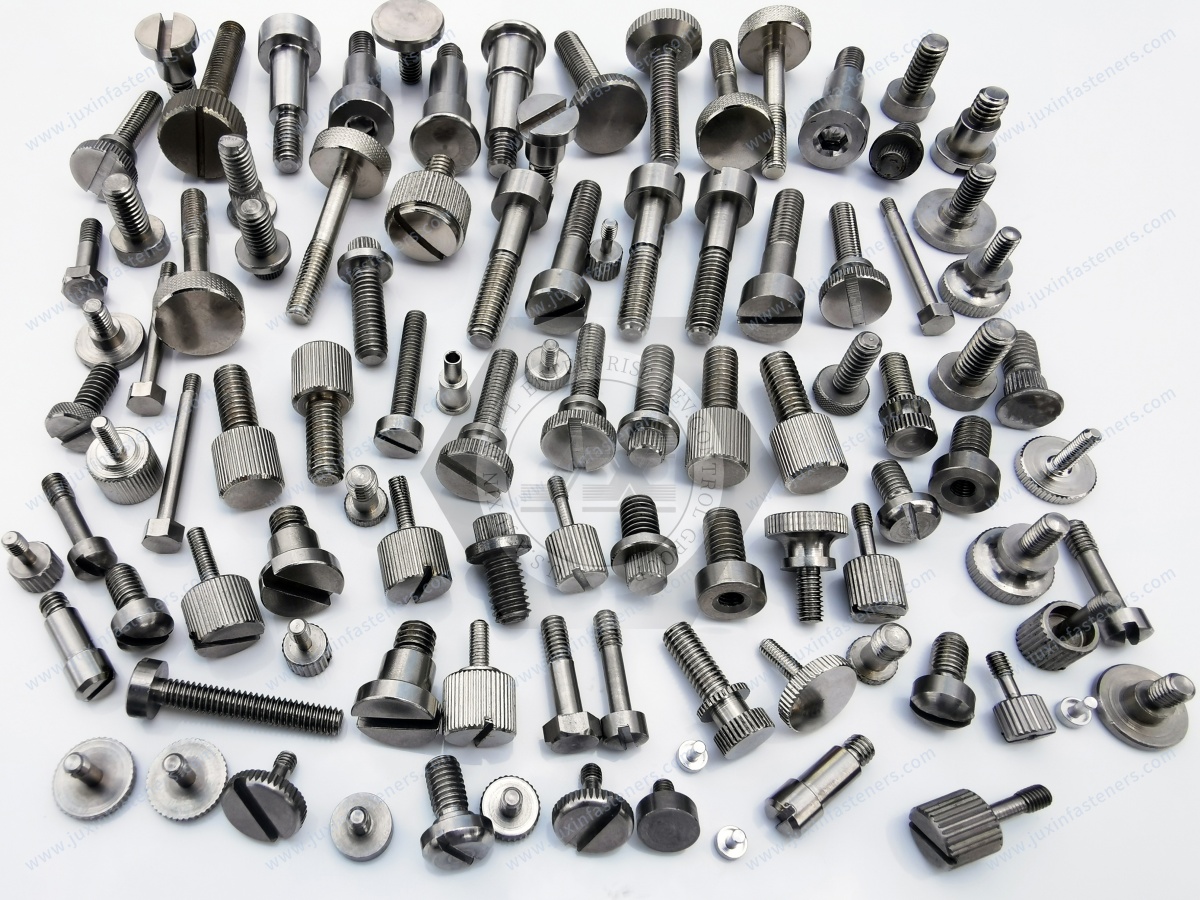
Stainless steel screws are threaded fasteners manufactured from corrosion-resistant stainless steel grades.
Depending on the design, they may include:
Machine screws
Socket head cap screws
Hex socket screws
Pan head screws
Flat head screws
Oval or raised countersunk screws
Hex head screws
Shoulder screws
Self-tapping screws
Thread-forming screws
Set screws
Custom screws
Special threaded components
The term “stainless steel” describes a family of corrosion-resistant steels rather than one single material.
Different stainless steel families can have substantially different:
Corrosion resistance
Strength
Hardness
Ductility
Magnetic behavior
Formability
Machinability
Wear characteristics
Temperature capability
Galling tendency
Therefore, an engineering specification should identify the actual material or applicable fastener grade rather than simply stating “stainless steel.”
The corrosion resistance of stainless steel is strongly associated with chromium.
Chromium enables formation of a thin passive surface film that helps protect the underlying metal from many forms of corrosion.
Additional alloying elements influence the material's behavior.
Important elements include:
Chromium
Nickel
Molybdenum
Nitrogen
Carbon
Manganese
Silicon
The balance of these elements influences corrosion resistance, mechanical properties, manufacturing behavior and suitability for specific applications.
For fastener engineering, metallurgy should therefore be considered together with the applicable product standard.
Austenitic stainless steels are widely used for industrial fasteners because they combine corrosion resistance with useful ductility and formability.
Common families include grades associated with:
304-type stainless steel
316-type stainless steel
Other austenitic grades selected for specific environments or manufacturing requirements
Austenitic stainless steel is frequently considered for:
Industrial machinery
Electrical equipment
Food-processing equipment
HVAC systems
Automotive components
Architectural equipment
Marine-related equipment
Chemical-processing equipment
The correct grade still depends on the actual environment.
304-type stainless steel is commonly selected for general corrosion-resistant applications.
Typical considerations include:
Atmospheric exposure
General industrial environments
Indoor machinery
Electrical enclosures
General equipment assembly
Moderate moisture exposure
However, “304 stainless steel” should not be interpreted as universally suitable for every corrosive environment.
The actual application should be evaluated for:
Chloride exposure
Chemical concentration
Temperature
Crevices
Deposits
Cleaning processes
Wet-dry cycling
Galvanic contact
316-type stainless steel contains molybdenum and is commonly selected when greater resistance to localized corrosion is required compared with common 304-type stainless steel.
Applications may include:
Marine-related equipment
Coastal equipment
Chemical-processing systems
Outdoor industrial equipment
Wet equipment environments
Equipment exposed to chloride-containing conditions
However, even 316-type stainless steel should not be treated as corrosion-proof.
Actual service conditions remain critical.
A2 and A4 are commonly encountered designations within stainless steel fastener specifications.
They should not simply be treated as universal shorthand for every possible 304 or 316 product.
The exact grade, chemical composition, property class and applicable standard should be confirmed from the purchase specification.
For engineering procurement, a useful specification can identify:
Fastener standard + stainless steel grade + property class + dimensions + thread + finish + inspection requirement.
This is more precise than writing only:
“A2 stainless screw.”
ISO 3506 is an important international fastener standard family for corrosion-resistant stainless steel fasteners.
ISO 3506-1:2020 covers mechanical and physical properties of corrosion-resistant stainless steel bolts, screws and studs with specified grades and property classes.
The standard includes austenitic, martensitic, ferritic and duplex stainless steel categories within its scope.
This makes ISO 3506 particularly useful when specifying stainless steel fasteners for international engineering and procurement.
The exact part of ISO 3506 applicable to a product should always be confirmed against the product type.
ASTM F593 provides a North American specification route for stainless steel bolts, hex cap screws and studs within its defined scope.
The active ASTM F593-24 specification covers stainless steel bolts, hex cap screws and studs in specified nominal diameter ranges and alloy groups for applications requiring general corrosion resistance.
It should therefore not be presented as a universal standard for every stainless steel screw configuration.
Product geometry and application must determine the appropriate standard.
ASTM A276/A276M covers stainless steel bars and shapes rather than serving as a universal finished-fastener specification.
This distinction is important in OEM procurement.
A supplier may use stainless steel bar or other raw material that is controlled to a relevant material specification,
while the finished screw itself is controlled according to the applicable fastener or product drawing requirements.
ASTM A276/A276M covers hot-finished or cold-finished stainless steel bars and shapes, including common round, square and hexagonal forms.
Therefore:
Raw-material specification ≠ finished fastener specification.
This distinction prevents incorrect certification requirements from entering an OEM purchasing specification.
Socket head cap screws use a cylindrical head and internal hexagonal drive.
They are often selected where:
Installation space is limited
A compact head is useful
Internal-hex tooling is preferred
Higher accessibility is required around the fastener head
A clean machine design is desired
Common dimensional references may include ISO 4762 / DIN 912 or ASME B18.3, depending on the applicable product and market.
The applicable standard should be confirmed rather than combining multiple standards indiscriminately.
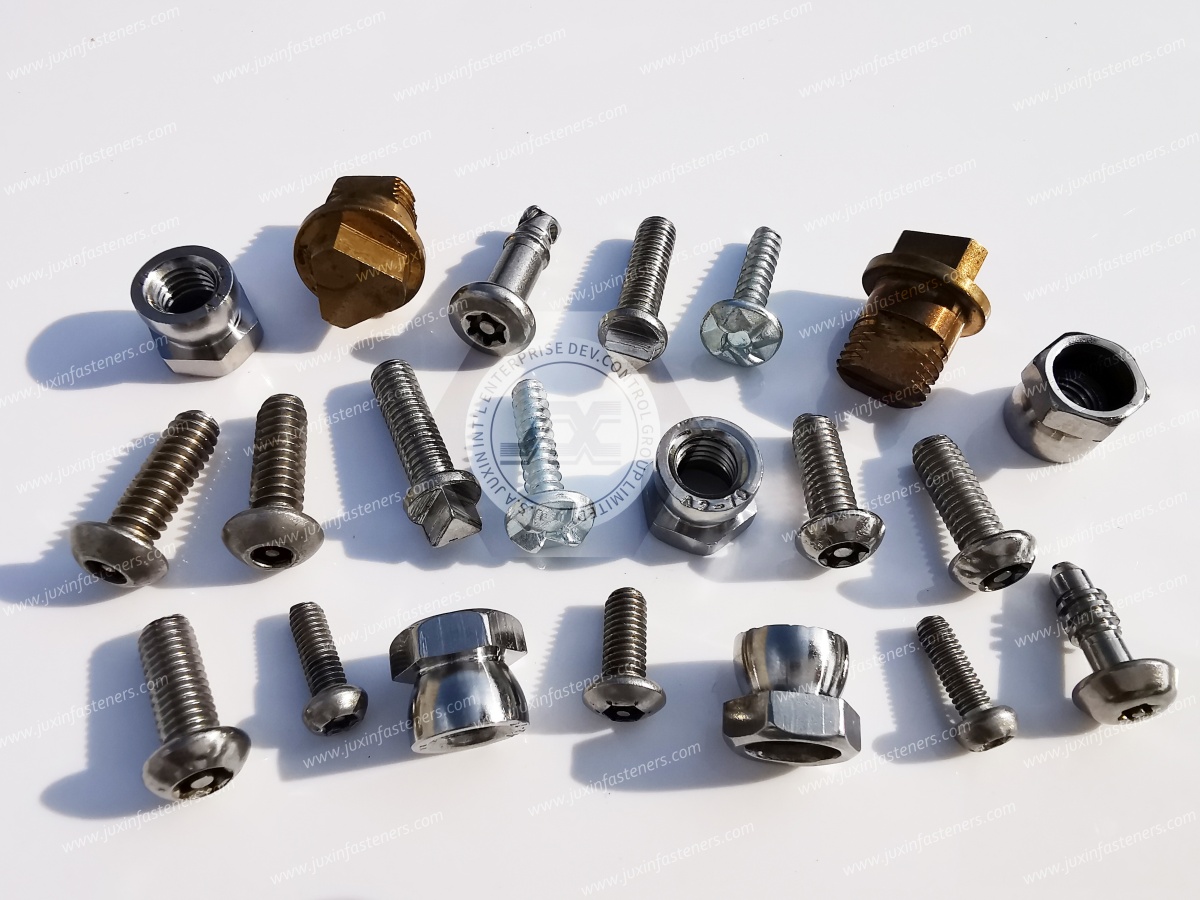
Hex head fasteners use an external hexagonal head for wrench or socket installation.
They are widely used in:
Machinery
Equipment frames
Brackets
Mounting structures
Pump assemblies
Valve assemblies
Industrial enclosures
Automotive components
For procurement, the specification should identify the dimensional standard and the material/property requirements separately.
Flat head or countersunk screws are useful when the fastener head needs to sit approximately flush with the surrounding surface.
Applications can include:
Panels
Covers
Enclosures
Interior components
Machinery housings
Architectural components
The mating material must be considered carefully because countersinking changes the local load-bearing geometry.
Pan head screws provide a relatively broad bearing surface and are widely used in general assembly.
They can be specified with:
Phillips drives
Slotted drives
Internal hex drives
Torx-type drives
Other application-specific drive configurations
Drive selection affects assembly tooling, access, stripping risk and production efficiency.
Machine screws are commonly used with:
Threaded holes
Nuts
Threaded inserts
Captive nuts
Self-clinching nuts
Other internally threaded components
For sheet-metal assemblies, stainless steel machine screws can be combined with suitable threaded fastening systems when direct tapping is not practical.
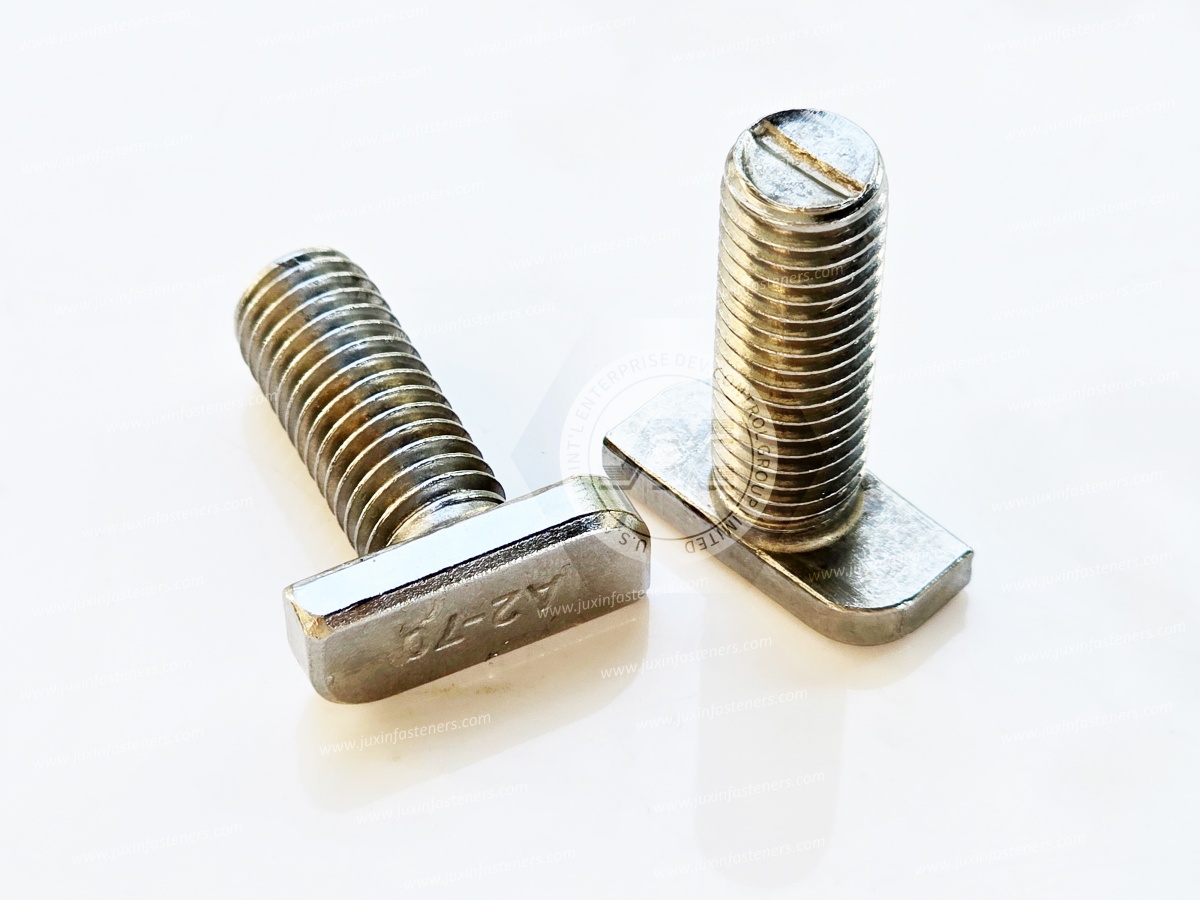
Self-tapping screws create or form their mating thread during installation.
They are commonly considered for:
Sheet metal
Thin metal components
Plastics
Electrical enclosures
HVAC components
Automotive trim
Equipment housings
The screw geometry must match the parent material.
A thread-forming screw suitable for plastic is not necessarily interchangeable with a thread-cutting screw designed for metal.
Plastic assemblies introduce different engineering requirements.
Important considerations include:
Material stiffness
Creep
Stress relaxation
Wall thickness
Boss geometry
Thread profile
Installation torque
Repeated assembly
Temperature
Chemical exposure
The fastener should be evaluated as part of the complete plastic joint.
For broader polymer fastening requirements, see the JUXIN FASTENERS solution:
/solutions/automotive-plastic-fasteners-guide
Set screws are used to secure components without requiring a conventional through-bolt arrangement.
Applications can include:
Shafts
Hubs
Collars
Mechanical adjustment systems
Positioning assemblies
Tip geometry is important.
Possible configurations include:
Flat point
Cone point
Cup point
Extended point
Knurled point
Custom point geometry
The point should be selected according to the shaft or mating surface.
Shoulder screws combine a threaded section with a precision shoulder.
They may be used as:
Pivot pins
Guide elements
Mechanical spacers
Bearing supports
Linkage components
The shoulder diameter, shoulder length, thread length and tolerance can be more important than simply specifying the stainless grade.
OEM applications frequently require custom stainless steel screws rather than catalog-standard fasteners.
Custom requirements can include:
Special head geometry
Special drive
Non-standard length
Reduced head
Extended tip
Shoulder section
Special thread length
Special thread form
Custom under-head geometry
Special point
Modified shank
CNC-machined geometry
A production drawing is normally the most reliable starting point.
Stainless steel fasteners can be considered for selected automotive applications where corrosion resistance, appearance or environmental exposure makes stainless steel appropriate.
Potential applications include:
Exterior trim
Wiper-related components
Brackets
Electrical assemblies
Enclosures
Interior components
HVAC-related assemblies
Special equipment
However, stainless steel should not automatically replace carbon/alloy steel in every high-load automotive joint.
Joint load, strength requirements, galvanic compatibility and assembly conditions must be evaluated.
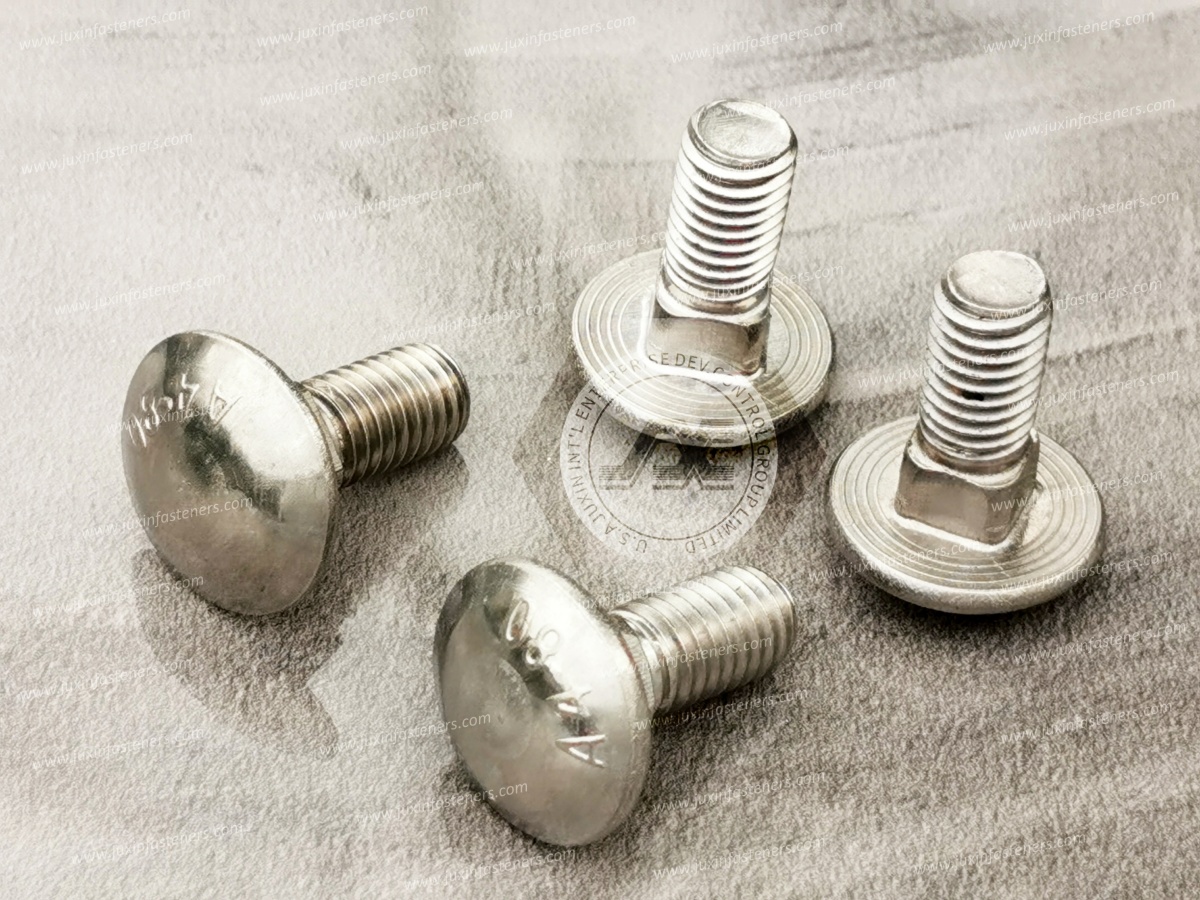
HVAC systems can expose fasteners to:
Condensation
Moisture
Temperature changes
Cleaning chemicals
Outdoor environments
Airborne contaminants
Stainless steel screws may be appropriate depending on the specific system environment.
Thread-forming and self-tapping configurations are commonly considered for sheet-metal housings and duct-related assemblies.
Electrical enclosures often require:
Corrosion resistance
Compact fastening
Repeatable installation
Panel compatibility
Controlled appearance
Long-term mechanical retention
Stainless steel screws may be used with:
Sheet metal
Stainless panels
Aluminum panels
Plastic housings
Threaded inserts
Self-clinching nuts
The complete material combination should be reviewed for galvanic compatibility.
Industrial machinery can combine:
Steel structures
Stainless panels
Aluminum housings
Plastic covers
Precision-machined components
This creates a mixed-material fastening environment.
A screw grade should therefore be selected together with the mating material and environmental exposure.
Marine-related applications often create challenging corrosion conditions.
Important variables include:
Chloride exposure
Salt deposits
Wet-dry cycling
Crevice conditions
Oxygen availability
Galvanic contact
Surface contamination
316-type stainless steel is often considered where increased resistance to localized corrosion is required.
But grade selection alone cannot guarantee service life.
Chemical-processing environments require more than a generic “corrosion resistant” designation.
The engineering review should identify:
Chemical identity
Concentration
Temperature
Exposure duration
Flow conditions
Cleaning chemicals
Process contamination
Potential crevice conditions
Material compatibility should be verified against the actual process environment.
A common procurement mistake is treating corrosion resistance as a simple ranking:
304 < 316 < “premium stainless”.
Real applications are more complicated.
Corrosion can occur through different mechanisms, including:
Uniform corrosion
Pitting corrosion
Crevice corrosion
Galvanic corrosion
Stress-related corrosion mechanisms
Contamination-related corrosion
The same stainless grade can behave differently in different environments.
Therefore, environmental definition should come before grade selection.
The Pitting Resistance Equivalent Number, or PREN, is commonly used as a comparative indicator for localized corrosion resistance in certain stainless steel families.
A commonly used expression is:
PREN = %Cr + 3.3 × %Mo + 16 × %N
PREN can help engineers compare alloy chemistry.
However, it should not be treated as a direct prediction of actual field life.
Service conditions, surface condition, temperature, chloride concentration, crevice geometry and manufacturing history can all influence real corrosion behavior.
316-type stainless steel is frequently chosen for chloride-containing environments because of its molybdenum content.
That does not mean every 316 fastener is automatically suitable for every marine application.
The actual design should consider:
Exposure level
Crevices
Deposits
Surface condition
Fastener geometry
Mating metals
Cleaning regime
Temperature
The correct engineering statement is therefore:
316-type stainless steel may provide improved resistance to certain localized corrosion mechanisms compared with common 304-type stainless steel, but application validation remains necessary.
A stainless steel screw can have excellent corrosion resistance without being the highest-strength fastener available.
Likewise, increasing mechanical strength does not automatically increase corrosion resistance.
Engineering selection should evaluate at least two separate questions:
Can the material survive the environment?
and
Can the fastener satisfy the mechanical requirements of the joint?
Both answers are required.
Where applicable, stainless steel fasteners may be specified using property classes under relevant fastener standards.
For example, ISO 3506-1 defines specified grades and property classes for corrosion-resistant stainless steel bolts, screws and studs.
The exact class should be selected according to:
Fastener geometry
Material family
Product standard
Mechanical requirement
Application
It should not be added to a drawing simply because a higher number appears stronger.
A2-70 and A4-80 are familiar stainless fastener designations.
However, an OEM drawing should not use these designations without confirming:
Applicable standard
Product scope
Stainless steel grade
Dimensions
Mechanical requirements
The designation is part of a larger technical specification.
Thread galling is one of the most important practical issues when assembling stainless steel fasteners.
Galling involves localized adhesion and material transfer between contacting thread surfaces.
It can cause:
Increasing installation resistance
Thread seizure
Surface damage
Assembly stoppage
Fastener removal difficulty
Scrap
Production downtime
The risk can increase under unfavorable combinations of friction, contact pressure, rotational speed, surface condition and material pairing.
Several factors can contribute to galling.
These include:
Similar stainless steel mating surfaces
High installation speed
High friction
High contact pressure
Damaged threads
Poor surface condition
Contamination
Inadequate lubrication
Repeated assembly
Galling is therefore not simply a material problem.
It is an assembly-system problem.
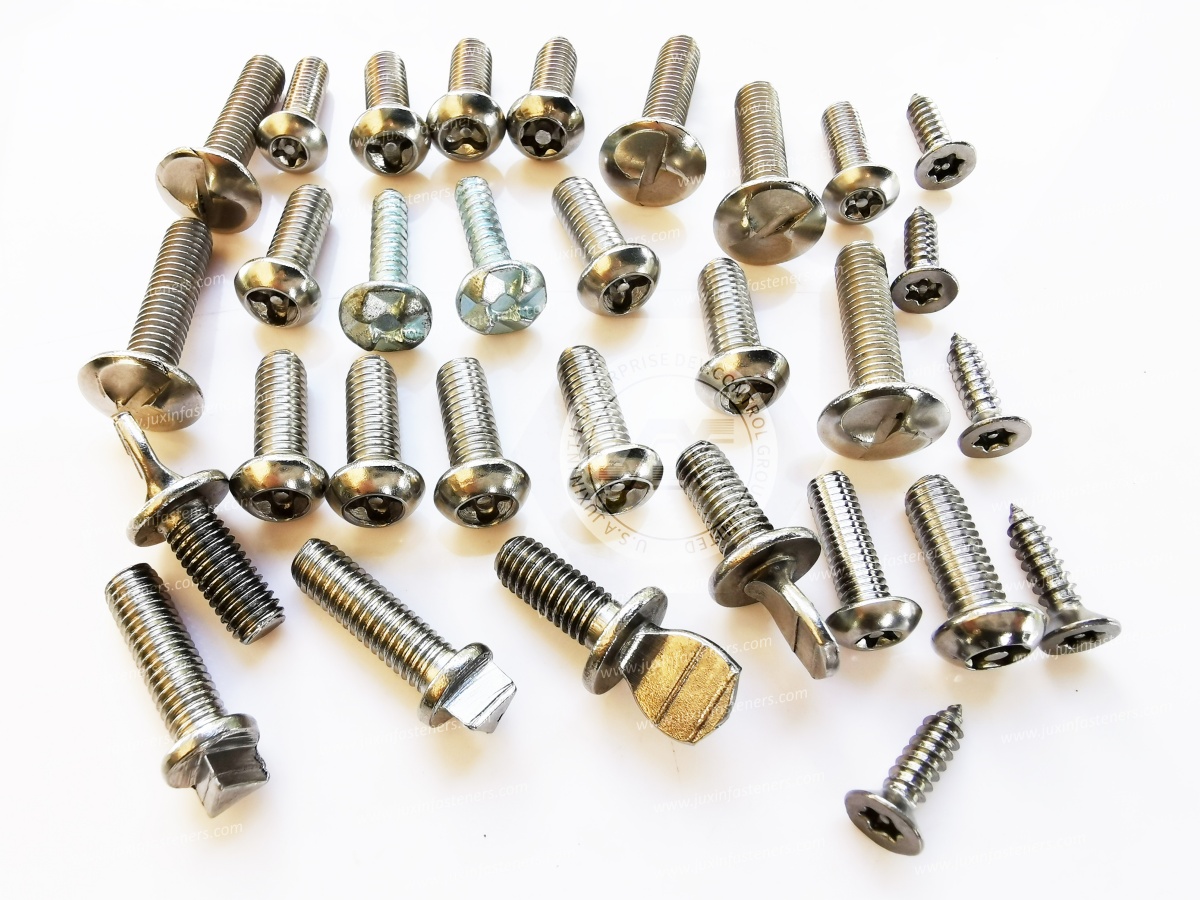
A common purchasing request is:
“Give us an anti-galling coating.”
That is often too vague.
The correct solution may involve:
Material pairing
Thread design
Surface finish
Installation speed
Lubrication
Coating
Assembly tooling
Torque requirements
A coating may help in some applications, but it should be selected against the complete assembly requirement rather than treated as a universal solution.
Lubrication can significantly affect thread friction.
This means it can also affect:
Installation torque
Preload
Repeatability
Galling behavior
Removal torque
Therefore, if a torque specification is provided, the lubrication condition should also be controlled.
A torque number without a defined friction condition may not produce a predictable preload.
This principle is particularly important in stainless steel screw assemblies.
Torque is an installation input.
Preload is the resulting axial force generated in the joint.
The relationship between torque and preload depends strongly on friction.
Factors include:
Thread friction
Under-head friction
Lubrication
Surface finish
Coating
Thread geometry
Installation speed
Therefore, “torque-controlled” does not automatically mean “preload-controlled.”
Surface condition can influence:
Friction
Appearance
Corrosion behavior
Galling
Cleanability
Assembly behavior
Depending on the application, requirements may address:
Natural stainless surface
Polished surface
Passivated surface
Coated surface
Lubricated surface
Special finish
The requested finish should be clearly defined on the drawing or purchase specification.
Passivation is used in appropriate stainless steel manufacturing processes to help optimize the corrosion-resistant surface condition after manufacturing and cleaning.
However, passivation should not be treated as a replacement for correct material selection.
A poorly selected grade cannot simply be transformed into a more corrosion-resistant alloy through passivation.
Stainless steel can be affected by contamination from:
Carbon steel particles
Manufacturing equipment
Improper handling
Abrasive processes
Storage conditions
For demanding applications, manufacturing and handling controls should therefore be considered together with the material specification.
Stainless steel fasteners are often assembled into different metals.
Examples include:
Stainless steel to aluminum
Stainless steel to carbon steel
Stainless steel to zinc-coated components
Stainless steel to copper-containing components
This can create galvanic corrosion concerns depending on the environment and electrical contact.
The fastener should therefore be evaluated as part of the material system.
Aluminum assemblies are common in:
Automotive equipment
Electrical enclosures
Industrial machinery
HVAC equipment
Lightweight structures
When stainless steel screws are installed into aluminum, engineers should consider:
Galvanic compatibility
Thread stripping
Bearing stress
Joint preload
Surface treatment
Environmental exposure
The screw material and aluminum component cannot be evaluated independently.
Thread engagement should be evaluated according to:
Fastener diameter
Thread pitch
Parent material
Material strength
Joint loading
Thread quality
Installation condition
The required engagement should not be reduced to a universal number for every application.
Thin sheet creates a special design challenge.
The limiting factor may be:
Sheet pull-through
Thread stripping
Local bearing stress
Sheet deformation
Fastener head pull-through
Joint separation
In these cases, simply selecting a stronger screw may not solve the actual failure mode.
Consider a high-strength stainless steel screw installed into a thin sheet.
The screw may remain intact while the sheet deforms or strips.
This means:
Fastener strength ≠ joint strength.
The complete load path must be considered.
Washers can be used to:
Increase bearing area
Distribute load
Protect softer materials
Reduce local surface damage
Support specific joint designs
Washer selection should consider:
Material
Outside diameter
Inside diameter
Thickness
Hardness
Corrosion compatibility
Flange-head fasteners incorporate an integrated bearing surface.
Potential advantages include:
Larger bearing area
Reduced need for a separate washer
Compact assembly
Controlled head geometry
However, flange dimensions should be selected according to the parent material and joint requirement.
Countersunk screws are useful where a near-flush surface is required.
But countersinking removes material from the mating component.
Engineers should therefore review:
Countersink angle
Countersink depth
Remaining material thickness
Head bearing area
Load direction
The drive system affects assembly performance.
Common options include:
Phillips
Slotted
Internal hex
Torx-type
External hex
Custom drives
For production assembly, the drive should be selected based on:
Tool access
Installation torque
Automation
Stripping resistance
Operator handling
Tool availability
Procurement sometimes treats the drive as cosmetic geometry.
For production engineering, it is not.
Drive geometry affects:
Tool engagement
Installation speed
Tool life
Assembly access
Fastener damage
Automation compatibility
Therefore, drive selection should be part of the manufacturing specification.
Automated assembly can introduce additional requirements.
These may include:
Consistent dimensions
Controlled thread condition
Drive repeatability
Surface consistency
Feedability
Tool access
Lubrication control
The fastener should be evaluated against the actual assembly equipment.
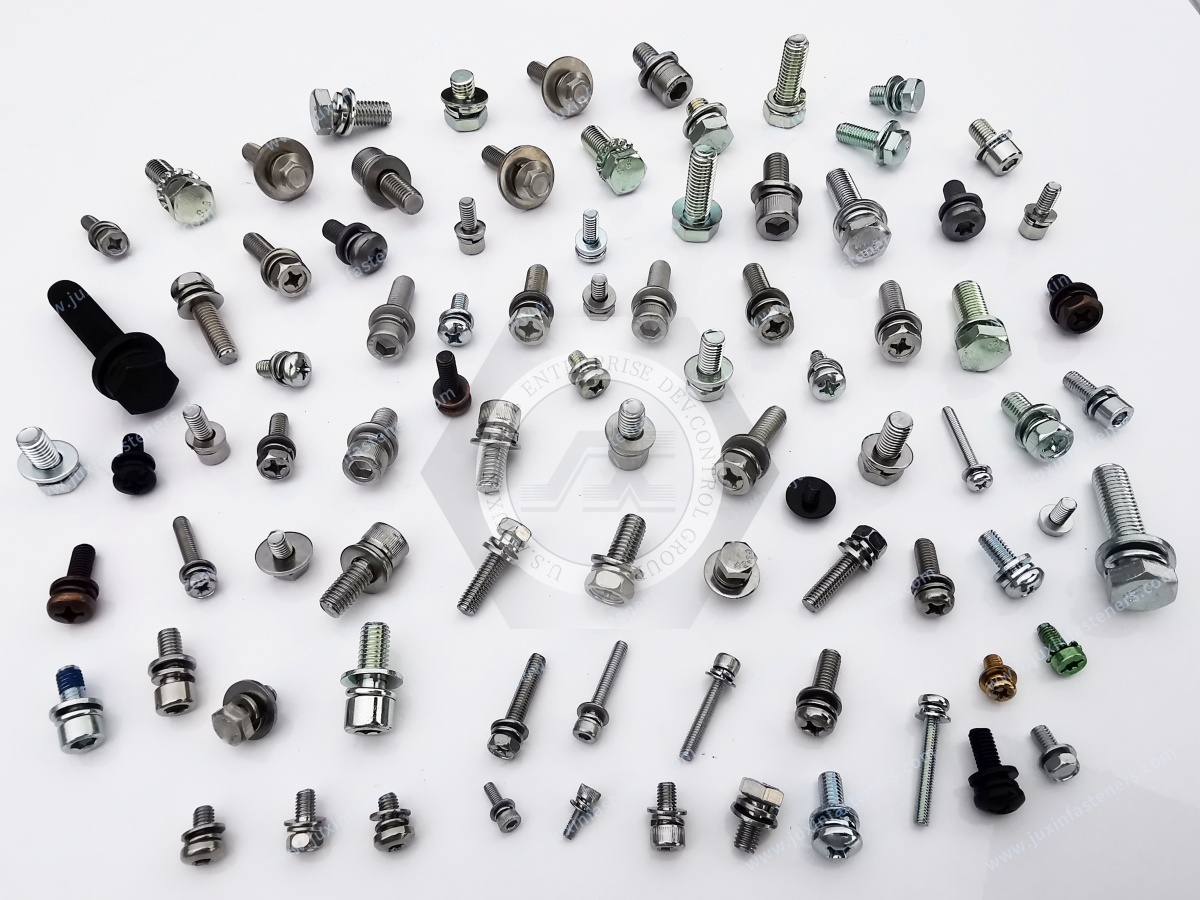
Manual assembly has different requirements.
Operators may require:
Easy drive engagement
Good visibility
Accessible head geometry
Reduced galling risk
Appropriate installation torque
Controlled tool selection
A fastener that performs well in automated assembly may not provide the same usability in manual installation.
Electrical equipment may use stainless steel screws in:
Enclosures
Brackets
Panels
Grounding-related structures
Mounting systems
Cable-management components
However, electrical conductivity and grounding performance should be designed and validated at the assembly level.
A stainless steel screw should not automatically be described as a grounding solution without application-specific verification.
Industrial enclosures frequently combine:
Sheet metal
Stainless steel
Aluminum
Plastic
Sealing components
Fastener selection should therefore consider:
Panel thickness
Threaded interface
Environmental exposure
Sealing arrangement
Corrosion compatibility
Maintenance requirements
Machine guards may require:
Corrosion resistance
Repeated maintenance
Accessible installation
Panel retention
Vibration resistance
Fastener selection should consider the actual joint rather than simply specifying a stainless screw by appearance.
Pumps and valves can experience:
Moisture
Chemicals
Pressure-related vibration
Thermal cycling
Repeated maintenance
Stainless steel screws or bolts may be selected where their material and mechanical properties fit the application.
The complete pressure boundary remains an assembly engineering issue rather than a property of the screw alone.
Stainless steel fasteners may be used in processing environments where corrosion resistance and cleanable surfaces are important.
Selection may involve:
Material grade
Surface condition
Head geometry
Crevice avoidance
Cleaning chemicals
Exposure conditions
The actual equipment hygiene requirements should be defined by the end application.
Architectural assemblies may prioritize:
Appearance
Corrosion resistance
Surface finish
Head geometry
Long-term outdoor exposure
Stainless steel fasteners are commonly considered where appearance and corrosion resistance are both important.
A polished stainless steel screw may look appropriate for an outdoor application.
But appearance does not establish:
Alloy grade
Mechanical class
Corrosion performance
Surface condition
Product standard
Procurement should always specify the technical requirements separately from cosmetic requirements.
Head geometry determines how the fastener interacts with the joint.
Important variables include:
Head diameter
Head height
Bearing surface
Drive depth
Head angle
Under-head radius
Fillet geometry
These dimensions can affect assembly access and local stress.
When a screw is tightened, the underside of the head transfers load into the mating component.
If the bearing area is too small for the parent material, local deformation may occur.
This is particularly important for:
Aluminum
Plastics
Thin sheet
Painted surfaces
Soft materials
Thread pitch influences:
Thread engagement
Installation behavior
Adjustment
Load distribution
Tapping requirements
Material interaction
Fine and coarse threads should be selected according to the application and applicable dimensional standard.
Fine threads can provide useful characteristics in certain applications, including:
Smaller pitch
More threads over a given engagement length
Fine adjustment
Specific mechanical joint requirements
However, they may be more sensitive to contamination or damage in some environments.
Coarse threads are widely used for general-purpose mechanical fastening.
They can offer practical benefits in:
General assembly
Sheet-metal applications
Manufacturing environments
Repeated installation
Less-than-ideal handling conditions
The correct choice depends on the actual application.
For OEM production, dimensional tolerance should be defined where it affects:
Assembly fit
Thread engagement
Clearance
Interchangeability
Appearance
Functional performance
Not every dimension needs the same tolerance level.
Over-specifying every dimension can increase manufacturing cost without improving the product.
A vague purchase description such as:
“M6 stainless steel screw”
leaves too many variables undefined.
A production-ready specification may need to identify:
Product standard
Head style
Drive
Diameter
Pitch
Length
Material
Property class
Finish
Special coating
Lubrication
Inspection
Packaging
Drawing revision
Better specification quality reduces supplier interpretation risk.
A practical engineering sequence is:
Application → Environment → Load → Parent Material → Stainless Family → Grade → Property Class → Geometry → Thread → Surface Condition → Assembly Method → Inspection
This sequence is more reliable than beginning with a catalog part number.
Identify what the fastener actually does.
Examples:
Structural attachment
Panel retention
Bracket mounting
Shaft positioning
Enclosure fastening
Cover attachment
Mechanical adjustment
Electrical equipment assembly
Document:
Indoor or outdoor
Humidity
Chlorides
Chemicals
Temperature
Cleaning
Salt exposure
Condensation
Contamination
Identify:
Tensile loading
Shear loading
Combined loading
Vibration
Fatigue
Preload
Repeated assembly
Impact
Joint separation risk
The mating component may be:
Carbon steel
Stainless steel
Aluminum
Brass
Plastic
Composite
Sheet metal
This can significantly affect fastener selection.
Possible families include:
Austenitic
Ferritic
Martensitic
Duplex
Other specialized stainless systems
The fastener standard and application should determine which families are appropriate.
Grade selection should reflect:
Corrosion requirements
Mechanical requirements
Manufacturing process
Availability
Cost
Application validation
304-type and 316-type stainless steels are common reference points, but they are not the only possibilities.
Specify:
Head
Drive
Shank
Point
Thread
Shoulder
Length
Special geometry
Identify:
Metric or inch
Nominal diameter
Pitch
Thread length
Internal or external thread
Coarse or fine pitch
Applicable dimensional standard
Possible requirements may include:
Standard stainless finish
Passivation
Polishing
Lubrication
Special coating
Customer-defined finish
The exact requirement should be documented.
Identify whether the screw will be installed:
Manually
With torque tools
With angle-controlled equipment
With automated screwdrivers
At high speed
Repeatedly
This information is particularly important for stainless steel because of galling risk.
A screw that performs acceptably during slow manual assembly may behave differently during high-speed automated installation.
Increased rotational speed can influence:
Frictional heating
Surface interaction
Galling tendency
Torque behavior
Therefore, assembly process information should be included in the RFQ when galling or torque repeatability is important.
If lubrication is required, the RFQ should identify:
Lubricant type
Application location
Whether it is factory-applied
Whether it is compatible with the assembly
Whether it affects torque requirements
A generic request for “lubricated threads” may not be sufficiently precise.
Although stainless steel is corrosion resistant, coatings may still be used for specific engineering purposes.
Potential objectives include:
Friction control
Galling reduction
Appearance
Electrical characteristics
Wear behavior
Additional environmental protection
Coating selection should be application-specific.
A coating can change:
Thread friction
Torque-tension behavior
Fit
Electrical contact
Surface hardness
Assembly characteristics
Therefore, changing the coating can change the mechanical behavior of the complete joint.
A replacement coating should not be approved only because it has similar corrosion-test results.
Depending on the application, inspection may include:
Dimensional inspection
Thread inspection
Visual inspection
Material verification
Mechanical property verification where applicable
Surface condition verification
Inspection requirements should be based on the product specification.
Thread inspection may address:
Major diameter
Minor diameter
Pitch diameter
Thread pitch
Thread length
Thread gauge acceptance
The exact inspection method should correspond to the applicable thread standard and drawing requirement.
For critical applications, procurement may require verification of the supplied stainless steel material.
Documentation may include material identification and test documentation where contractually required.
The required document level should be agreed before production.
Positive Material Identification may be considered for applications where material verification is important.
However, PMI should not be claimed as automatically performed on every production batch unless it is part of the confirmed inspection plan.
The correct approach is to specify it where required.
Where a product standard defines mechanical requirements, testing should be performed according to the applicable standard and agreed inspection plan.
The exact tests depend on:
Product type
Material grade
Property class
Standard
Customer specification
A mature OEM procurement package may include:
Approved drawing
Material specification
Product standard
Property class
Surface specification
Inspection requirements
Packaging requirements
Certificate requirements
Revision level
Traceability requirements where applicable
The supplier should receive the complete specification before quotation whenever possible.
This is one of the most important procurement distinctions.
For example:
ASTM A276/A276M can describe stainless steel bar material.
ASTM F593 covers specified stainless steel bolts, hex cap screws and studs within its scope.
ISO 3506-1 specifies mechanical and physical properties for specified corrosion-resistant stainless steel bolts, screws and studs.
These standards serve different purposes.
A good RFQ should therefore state exactly which requirement applies to:
raw material, finished fastener, dimensions, mechanical properties, or inspection.
For procurement teams, the goal is not simply to identify a low unit price.
The supplier should be evaluated against:
Specification understanding
Material consistency
Dimensional consistency
Production capability
Inspection capability
Communication
Documentation
Packaging
Change control
Production continuity
This is particularly important for custom stainless steel screws.
Supplier development teams should ask:
Can the supplier manufacture the required geometry?
Can the supplier work with the specified stainless grade?
Is the drawing sufficiently complete?
Are special processes identified?
Are inspection requirements clear?
Can samples be produced?
Can production requirements be scaled appropriately?
Can changes be controlled?
These questions are more useful than evaluating suppliers only by catalog breadth.
Engineers typically search for:
Stainless steel grade
Mechanical properties
Corrosion resistance
Thread geometry
Galling
Torque
Joint design
Dimensional standards
Material compatibility
Procurement teams typically search for:
Stainless steel screw supplier
OEM manufacturer
Custom screw manufacturer
Material availability
Drawing-based quotation
Production capability
Inspection documentation
Packaging
Supply continuity
A commercially useful B2B page needs to address both audiences.
The engineer needs technical certainty.
The procurement manager needs commercial clarity.
A strong RFQ package connects both.
For example:
Engineer requirement: 316-type stainless steel, socket head, metric thread, defined length and property class.
Procurement requirement: annual volume, packaging, inspection documentation, delivery location and drawing revision.
The supplier can then quote against the same technical baseline.
JUXIN FASTENERS supports industrial customers requiring stainless steel screws and related threaded components.
Potential product categories include:
Stainless steel machine screws
Socket head screws
Custom screws
Stainless steel bolts
Stainless steel studs
Stainless steel set screws
Stainless steel shoulder-type components
Stainless steel CNC-machined threaded components
Product selection is based on the actual drawing, material requirement and application.
Some stainless steel components cannot be efficiently produced as standard cold-formed screws.
CNC machining may be appropriate for:
Special geometries
Low-to-medium volume custom components
Precision turned parts
Shoulder features
Special thread configurations
Complex dimensional requirements
For related machining applications, see:
/solutions/stainless-steel-cnc-machining-parts
When the application requires higher mechanical strength rather than primarily corrosion resistance, stainless steel may not always be the most appropriate material.
JUXIN FASTENERS also provides industrial high-strength fastener solutions.
Related solution:
/solutions/high-strength-bolts-and-nuts
Material selection should follow the actual load and environment rather than assuming stainless steel is always the preferred option.
Automotive assemblies can contain multiple material systems.
These may include:
Steel
Stainless steel
Aluminum
Engineering plastics
Rubber
Composite materials
Fastener selection should therefore consider the complete joint.
For broader automotive bolt and nut applications:
/solutions/industrial-automotive-bolts-and-nuts
Stainless steel threaded and precision fastener components can be considered for applications where:
Moisture exposure is significant
Compact components are required
Corrosion resistance matters
Appearance is relevant
Repeated environmental exposure occurs
The final material and geometry should be defined by the customer drawing and application.
Electric vehicles and electrical equipment can contain:
Battery enclosures
Electronic modules
Brackets
Cooling systems
Cable routing
Structural panels
Different components may require completely different fastening technologies.
For blind fastening requirements in EV applications, see:
/solutions/ev-blind-rivet-nuts-high-reliability-fastening
Stainless steel screws can be combined with polymer components.
However, the joint must account for:
Plastic creep
Stress relaxation
Thread stripping
Temperature
Moisture
Chemical exposure
Boss geometry
For broader plastic fastening solutions:
/solutions/automotive-plastic-fasteners-guide
A useful engineering decision tree is:
What is the load?
↓
What is the environment?
↓
What is the parent material?
↓
What stainless steel family is appropriate?
↓
What grade and property class are required?
↓
What screw geometry is needed?
↓
What thread system is required?
↓
How will the screw be installed?
↓
What surface condition is required?
↓
What inspection and documentation are required?
This process is more reliable than selecting a fastener from a material name alone.
A stainless steel screw does not work alone.
The mating component may be:
Stainless nut
Carbon steel nut
Aluminum threaded hole
Brass insert
Plastic insert
Self-clinching nut
Threaded hole
The mating material influences:
Thread wear
Galling
Strength
Corrosion compatibility
Installation behavior
Therefore, the RFQ should identify both sides of the threaded joint where relevant.
The correct stainless steel screw is the one that satisfies the complete system requirement.
A practical selection matrix should consider:
| Requirement | Engineering Question |
|---|---|
| Environment | What will the fastener be exposed to? |
| Corrosion | Is localized corrosion a concern? |
| Load | What mechanical forces act on the joint? |
| Parent material | What material receives the load? |
| Grade | Which stainless family is appropriate? |
| Geometry | What head and drive are required? |
| Thread | Metric or inch? Coarse or fine? |
| Assembly | Manual or automated? |
| Friction | Is torque/preload control important? |
| Galling | Are similar stainless surfaces mating? |
| Finish | Is passivation, lubrication or coating required? |
| Inspection | What must be verified? |
| Documentation | What certificates are contractually required? |
A useful OEM RFQ should include:
2D drawing
3D model where available
Drawing revision
Product name
Fastener type
Head style
Drive type
Diameter
Thread pitch
Thread length
Overall length
Material grade
Property class where applicable
Surface condition
Coating or lubrication requirement
Mating material
Application environment
Assembly method
Special inspection requirements
Documentation requirements
Sample quantity
Estimated annual volume
Packaging requirement
Delivery destination
Target production schedule
The most efficient commercial process is:
Application
→
Environment
→
Load Requirement
→
Parent Material
→
Stainless Grade
→
Fastener Geometry
→
Thread Specification
→
Surface Condition
→
Assembly Method
→
Inspection Requirement
→
Drawing Review
→
Sample
→
Production RFQ
This allows engineering and procurement teams to evaluate the same technical information.
For a drawing-based inquiry, please provide as much of the following information as available:
2D drawing
3D model
Material requirement
Stainless steel grade
Product standard
Property class
Thread specification
Surface treatment
Special finish
Application
Mating material
Assembly method
Quality requirements
Inspection requirements
Annual quantity
Initial order quantity
Delivery location
If some information is not yet finalized, the engineering requirement can still be discussed before the final purchase specification is issued.
A drawing allows the supplier to evaluate the complete product rather than guessing from a product name.
For example:
“Stainless steel screw”
does not define the product sufficiently.
A drawing can establish:
Geometry
Dimensions
Tolerances
Thread
Head
Drive
Material
Finish
Special features
This reduces quotation ambiguity.
For custom stainless steel screws, sample evaluation can help confirm:
Dimensional fit
Thread engagement
Drive compatibility
Assembly behavior
Surface condition
Application suitability
The customer's validation procedure should determine whether additional functional testing is required.
Once the sample is approved, the production specification should be controlled by:
Drawing revision
Material specification
Approved sample
Inspection requirements
Packaging requirements
Change-control process
This creates a stronger basis for repeat purchasing.
More requirements do not automatically mean better procurement.
A useful specification is:
Complete
Relevant
Measurable
Traceable where required
Appropriate to the application
Unnecessary requirements can increase cost and supplier confusion.
The objective should be technical clarity, not specification complexity.
Long-term sourcing should consider:
Stable product definition
Material consistency
Approved drawing
Controlled revisions
Defined inspection
Packaging consistency
Clear communication
Production repeatability
This helps engineering and purchasing teams maintain the same product specification across future orders.
Avoid these common mistakes:
Choosing material only by appearance
Treating all stainless steels as equivalent
Treating 304 and 316 as interchangeable
Assuming higher corrosion resistance means higher mechanical strength
Using a raw-material standard as the finished-fastener standard
Ignoring the mating material
Ignoring galling
Specifying torque without considering friction
Ignoring thin-sheet behavior
Treating PREN as a service-life guarantee
Requesting unspecified “special coating”
Using incomplete RFQ descriptions
A robust stainless steel screw specification should answer five basic questions:
What is the screw?
What is it made from?
What does it connect?
What environment will it experience?
How will it be installed and inspected?
If these questions are answered clearly, engineering and procurement teams can usually communicate much more effectively with potential suppliers.
Stainless steel screws provide an important fastening option for applications requiring corrosion resistance and suitable mechanical performance.
The correct selection should consider:
Metallurgy
Grade
Property class
Corrosion mechanism
Environment
Joint loading
Parent material
Thread design
Head geometry
Surface condition
Galling
Installation method
Inspection
Documentation
The most important principle is:
Do not select stainless steel screws by material name alone. Select the complete fastening system.
JUXIN FASTENERS supports OEM and industrial customers requiring stainless steel screws, threaded fasteners and custom fastening components.
Our product-oriented sourcing approach can support requirements involving:
Stainless steel screws
Machine screws
Socket head screws
Custom screws
Stainless steel bolts
Stainless steel studs
Set screws
Shoulder-type fasteners
CNC-machined stainless steel components
Custom threaded components
Applications may include:
Industrial machinery
Automotive components
Electrical equipment
HVAC systems
Industrial enclosures
Marine-related equipment
Chemical-processing equipment
Architectural equipment
General OEM assemblies
The final material, geometry, standard and inspection requirements should always be established from the customer application and specification.
For OEM sourcing, procurement development or engineering evaluation, send JUXIN FASTENERS your drawing and available technical requirements.
Please include:
2D drawing
3D model if available
Material requirement
Stainless grade
Product standard
Thread specification
Surface treatment or finish
Application environment
Mating material
Assembly method
Quality/documentation requirements
Required quantity
Our team can then review the product definition and determine the appropriate manufacturing and quotation route.
Email: info@juxinfasteners.com
Website: www.juxinfasteners.com
For stainless steel screw sourcing, custom threaded fasteners and OEM industrial fastening programs, contact JUXIN FASTENERS with your drawing or technical specification.
 MORE NEWS
Sep. 25, 2026
Sep. 25, 2026
Sep. 25, 2026
Contact Us
Tel.:
+86 020 8621 0320
+86 020 3121 6067
E-mail:
Technical Support:
Navigation
SEND INQUIREY