Call Us
+86 136 6007 9809
Call Us
+86 136 6007 9809

Jul. 12, 2024
Stainless Steel Screw Standards: ISO, DIN, ASTM and ASME Specifications for OEM Fasteners
Stainless steel screws are used in industrial machinery, electrical equipment, automation systems, automotive assemblies,
food-processing machinery and many other OEM products.
However, specifying a stainless steel screw requires more than selecting a material grade and nominal diameter.
An industrial fastener specification may involve several different standards governing:
Material classification
Mechanical properties
Head geometry
Drive configuration
Thread dimensions
Dimensional tolerances
Surface condition
Inspection requirements
No single ISO, DIN, ASTM or ASME standard defines every characteristic of every stainless steel screw.
For example, a socket head cap screw may be specified using one standard for product geometry, another for stainless steel mechanical properties and a separate thread specification.
This distinction matters because two screws described as “M6 stainless steel socket head screws” may not have identical mechanical properties,
head dimensions, thread tolerances or surface requirements.
For design engineers, the correct combination of standards helps establish dimensional compatibility and joint performance.
For manufacturing engineers and production managers, clear specifications support consistent assembly, tooling compatibility and repeatable inspection.
For procurement and supplier development teams, standards provide a common technical basis for quotations, supplier comparisons and approved substitutions.
This guide explains the most relevant international standards for stainless steel screws and shows how to apply them to OEM design, manufacturing and purchasing decisions.
Juxin Fasteners supplies industrial fastening components and supports inquiries for standard and drawing-based stainless steel screws.
How Are Stainless Steel Screw Standards Organized?
International fastener standards serve different purposes.
A complete product specification may require several standards to be applied together.
| Standard category | What it primarily defines | Typical example |
|---|---|---|
| Material and mechanical properties | Stainless steel groups and mechanical performance | ISO 3506-1 |
| Product dimensions | Head shape, drive and product geometry | ISO 4762 |
| Thread geometry | Thread profile and dimensions | ISO metric thread standards |
| Thread tolerances | Permitted thread dimensional variation | ISO 965 series |
| Inch-series fasteners | Product dimensions and related requirements | ASME B18.3 |
| Unified threads | UNC/UNF thread requirements | ASME B1.1 |
| Stainless steel fastener specifications | Material and mechanical requirements for specified products | ASTM F593 |
| Surface treatment | Chemical passivation requirements | ASTM A967/A967M |
Engineering Principle
A material standard does not automatically establish head dimensions.
A dimensional standard does not automatically establish every mechanical property.
A surface-treatment standard does not automatically establish corrosion performance in every service environment.
The applicable requirements must be combined correctly.
ISO 3506: Mechanical Properties of Stainless Steel Fasteners
The ISO 3506 series addresses mechanical properties of corrosion-resistant stainless steel fasteners.
Different parts of the series cover different fastener categories.
ISO 3506-1
ISO 3506-1 is relevant to bolts, screws and studs with specified grades and property classes.
It provides requirements relating to stainless steel fastener material groups and mechanical properties.
Why ISO 3506 Matters
A stainless steel screw may have the correct head geometry and thread size but still fail to meet the intended mechanical requirements if the wrong property class is selected.
A2 Stainless Steel Fasteners
A2 is a stainless steel material group used in ISO fastener specifications.
It is commonly associated with 304-type austenitic stainless steels.
However, A2 should not automatically be interpreted as an exact designation for every 304 material specification.
A4 Stainless Steel Fasteners
A4 is another stainless steel material group, commonly associated with molybdenum-containing austenitic stainless steels such as 316-type materials.
The exact chemical and mechanical requirements depend on the applicable standard.
Property Classes
Common examples include:
A2-50
A2-70
A2-80
A4-70
A4-80
These are examples of standardized designations, not a statement that every product is available in every class.
Understanding A2-70
A2 identifies the material group.
70 identifies a specified mechanical-property class.
The complete designation is more informative than simply stating “304 stainless steel.”
Important Limitation
The property class must be interpreted according to the applicable standard and product requirements.
It should not be assumed that every stainless steel screw has the same strength because it belongs to the same material group.
A2 vs. A4 Stainless Steel Screws
| Specification factor | A2 group | A4 group |
|---|---|---|
| General material family | Austenitic stainless steel | Austenitic stainless steel |
| Common commercial association | 304-type materials | 316-type materials |
| Corrosion behavior | Suitable for many general environments | Improved resistance in certain aggressive environments |
| Mechanical requirements | Depend on property class | Depend on property class |
| Interchangeability | Requires engineering verification | Requires engineering verification |
Engineering Insight
Selecting A4 instead of A2 does not automatically guarantee a stronger screw.
Mechanical-property class and corrosion resistance are separate considerations.
ISO 4762 and DIN 912: Stainless Steel Socket Head Cap Screws
Socket head cap screws are widely used in industrial machinery and automation equipment.
ISO 4762 defines dimensions for hexagon socket head cap screws.
DIN 912 is a widely recognized historical product designation associated with this screw type.
Typical Applications
Industrial machinery
Automation equipment
Mechanical fixtures
Robotics
Precision equipment
Manufacturing machinery
Product Characteristics
Cylindrical head
Internal hexagonal drive
Defined head and socket geometry
Specified metric dimensions
Why the Standard Matters
A socket head cap screw must fit within the available head clearance and accept the correct driver.
The head diameter, head height and socket dimensions affect installation compatibility.
Engineering Considerations
Head clearance
Tool access
Thread engagement
Material grade
Mechanical-property class
Tightening procedure
DIN 912 vs. ISO 4762
DIN 912 and ISO 4762 are closely related in common commercial usage.
However, procurement teams should not assume that every historical DIN 912 product is fully interchangeable with
every ISO 4762 product without checking the applicable edition and requirements.
OEM Drawing Recommendation
When developing a new specification, identify the exact product standard and edition where required.
For replacement parts, verify the original approved drawing before changing the standard reference.
Important Mechanical Distinction
The socket head geometry does not automatically determine the screw's mechanical-property class.
A stainless steel ISO 4762 screw must also meet the specified material and mechanical requirements.
ISO 4017 and DIN 933: Fully Threaded Hexagon Head Screws
Hexagon head screws are widely used in machinery, equipment frames and mechanical assemblies.
ISO 4017 specifies dimensions for fully threaded hexagon head screws.
DIN 933 is a widely recognized historical designation for fully threaded hexagon head screws.
Typical Applications
Industrial machinery
Equipment frames
Mechanical brackets
Outdoor equipment
General engineering assemblies
Product Characteristics
External hexagon head
Wrench or socket installation
Fully threaded shank according to the product specification
Standardized dimensional requirements
Engineering Considerations
Wrench clearance
Bearing surface
Thread engagement
Joint loading
Material and property class
Corrosion environment
DIN 933 vs. ISO 4017
These designations are commonly associated with similar product types.
However, historical and current dimensional requirements should be reviewed before approving a substitution.
Important Procurement Insight
A quotation for “DIN 933 stainless steel M8” is not necessarily complete.
The buyer should also identify the required material group, property class, length, thread specification and any additional inspection requirements.
DIN 7984: Low-Head Hexagon Socket Screws
DIN 7984 is associated with hexagon socket head cap screws having a reduced head height.
These products are considered when vertical head clearance is limited.
Potential Applications
Compact machinery
Precision instruments
Electronic equipment
Automation assemblies
Selected automotive equipment
Why Low-Head Geometry Matters
A reduced head height can help a screw fit within a restricted installation envelope.
However, changes in head geometry can influence drive engagement and permissible tightening conditions.
Engineering Limitations
A low-head socket screw should not automatically replace a standard ISO 4762 socket head cap screw.
Even when the nominal thread size is identical, the head geometry and mechanical suitability may differ.
Design Review Checklist
Confirm:
Head diameter
Head height
Socket dimensions
Tool clearance
Mechanical-property requirements
Required preload
Important Design Principle
Reduced head height is a geometric benefit, not proof of equivalent mechanical performance.
Other Common Stainless Steel Screw Product Standards
Different head styles require different product specifications.
Button Head Screws
ISO 7380-1 is relevant to metric hexagon socket button head screws.
ISO 7380-2 covers the collar variant.
These designs may be used where rounded head geometry is desirable.
Pan Head Screws
Cross-recessed pan head screws are associated with recognized international product specifications, including legacy ISO 7045 references.
The current applicable product standard should be confirmed.
Flat Head / Countersunk Screws
Countersunk screws require matching head and countersink geometry.
The applicable standard depends on the drive type and product design.
Flange Head Screws
Flange head screw specifications depend on the actual head geometry and product standard.
The presence of a flange does not automatically establish vibration resistance.
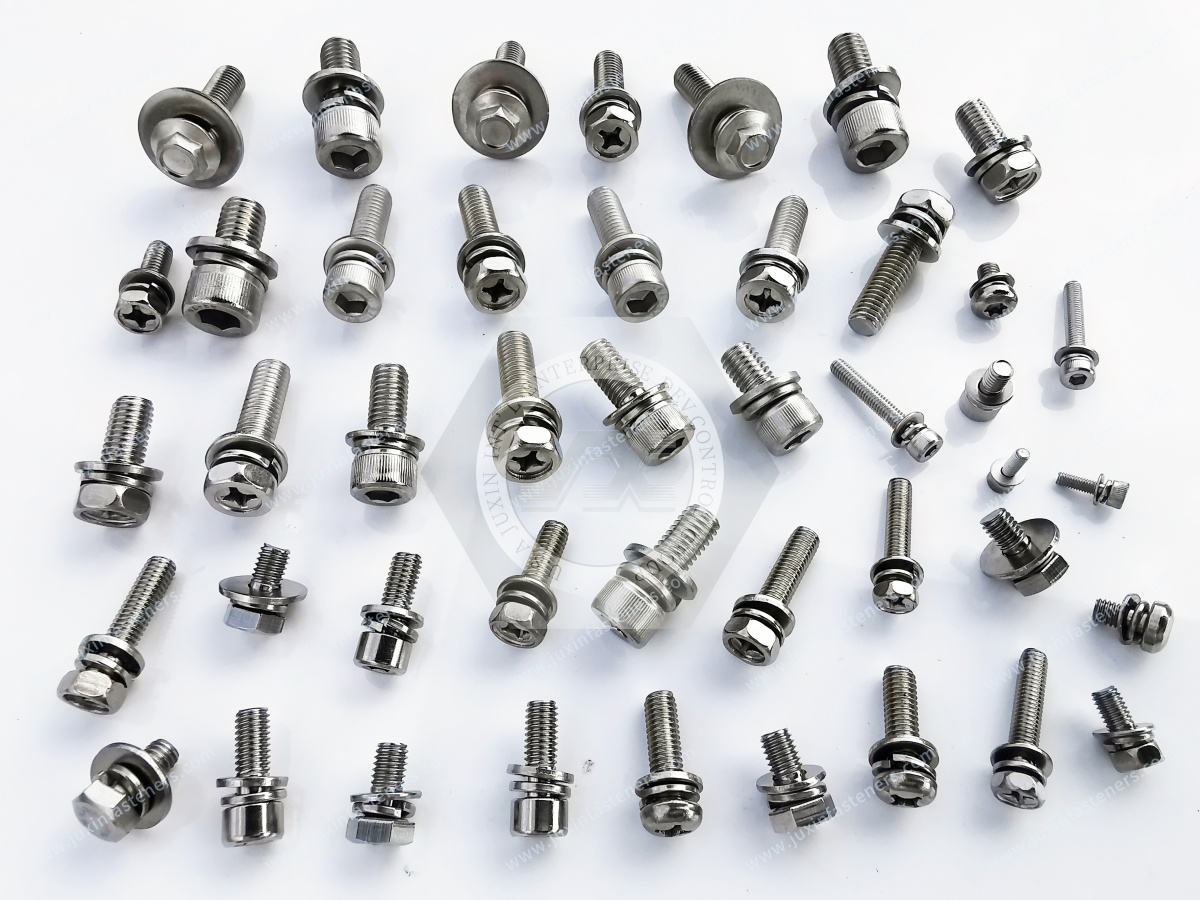
SEMS Screws
SEMS screws are preassembled screw-and-washer combinations.
The complete assembly should be specified, including screw geometry, washer type, material and retention requirements.
Engineering Principle
The product standard must match the actual head and drive design.
A standard for one screw type should not be applied to a different product merely because the nominal thread diameter is the same.
ASTM F593: Stainless Steel Bolts, Hex Cap Screws and Studs
ASTM F593 is relevant to specified stainless steel bolts, hex cap screws and studs.
It is particularly important in certain North American procurement contexts.
Why ASTM F593 Matters
The standard provides requirements for specified stainless steel fastener products, including relevant material and mechanical characteristics.
Important Limitation
ASTM F593 should not automatically be applied to every stainless steel screw type.
Its scope must be checked against the actual product.
ASTM F594: Stainless Steel Nuts
ASTM F594 addresses specified stainless steel nuts.
It may be relevant when developing a complete stainless steel bolted joint.
Joint Compatibility
A screw and nut should be selected as a compatible assembly.
Consider:
Thread specification
Material
Mechanical properties
Thread fit
Galling risk
Corrosion environment
Important Engineering Insight
Using a stainless steel screw that meets one standard does not automatically guarantee compatibility with any stainless steel nut.
ASME B18.3: Socket Screws and Related Products
ASME B18.3 is relevant to certain inch-series socket screw products.
It is commonly encountered in North American industrial equipment and replacement-part specifications.
Typical Applications
Machinery
Industrial equipment
Mechanical fixtures
Maintenance components
OEM assemblies
Why ASME Standards Matter
North American equipment may use inch-series screw dimensions and Unified threads.
These are not directly interchangeable with metric screw specifications.
Important Procurement Distinction
An ISO metric socket head screw and an ASME inch-series socket screw may look similar but have different thread and dimensional requirements.
Metric vs. UNC/UNF Thread Standards
Thread compatibility is one of the most important requirements in international fastener procurement.
ISO Metric Threads
Metric threads are specified using millimeter-based designations.
Examples include:
M4
M5
M6
M8
The thread pitch must be confirmed.
ISO 965
The ISO 965 series addresses tolerances for ISO general-purpose metric screw threads.
Unified Threads
UNC and UNF are Unified inch-series thread systems.
ASME B1.1 is relevant to Unified inch screw threads.
UNC
Unified National Coarse threads.
UNF
Unified National Fine threads.
British Thread Systems
Legacy British thread systems include:
BSW
BSF
These must be identified separately where applicable.
Critical Compatibility Rule
Metric, UNC, UNF, BSW and BSF threads are not directly interchangeable.
A nominal diameter conversion does not establish compatibility.
Example
M6 and 1/4-inch threads have different nominal dimensions and thread specifications.
They should not be treated as direct substitutes.
Engineering Recommendation
When replacing an existing screw, verify the actual thread designation rather than estimating the thread size from appearance.
International Thread Specification Matrix
| Thread system | Typical designation | Main requirement |
|---|---|---|
| ISO metric | M6 × 1 | Metric diameter and pitch |
| UNC | 1/4-20 UNC | Inch diameter and threads per inch |
| UNF | 1/4-28 UNF | Inch diameter and threads per inch |
| BSW | Specified BSW thread | British Whitworth profile and pitch |
| BSF | Specified BSF thread | British fine-thread requirements |
Important Note
The examples above illustrate different thread systems. They are not interchangeable specifications.
Stainless Steel Screw Material Grades vs. Product Standards
One of the most common specification mistakes is confusing material grade with product geometry.
Material Grade
Examples:
304 stainless steel
316 stainless steel
18-8 stainless steel
A2 stainless steel material group
A4 stainless steel material group
Product Standard
Examples:
ISO 4762
ISO 4017
DIN 7984
ISO 7380-1
ASME B18.3
Mechanical-Property Specification
Examples include relevant ISO 3506 property classes or applicable ASTM requirements.
Why This Matters
A screw described as “316 stainless steel” does not automatically define:
Head shape
Drive type
Thread tolerance
Length
Mechanical-property class
Surface treatment
OEM Specification Principle
A complete industrial screw specification must identify all required characteristics.
Passivation and Surface Treatment Standards
Surface treatment is separate from material classification and product geometry.
ASTM A967/A967M
ASTM A967/A967M addresses chemical passivation treatments for stainless steel parts.
ASTM A380/A380M
ASTM A380/A380M provides practices for cleaning, descaling, pickling and passivation of stainless steel.
What Passivation Does
Depending on the process and material, passivation can help remove free iron contamination and support the natural passive surface condition.
What Passivation Does Not Guarantee
Passivation does not automatically:
Increase tensile strength
Prevent thread galling
Eliminate all corrosion
Establish a particular service life
Make an unsuitable material suitable for every environment
Black Finishes
Black oxide or other black finishes may be specified for appearance or particular functional requirements.
Their actual corrosion behavior depends on the treatment.
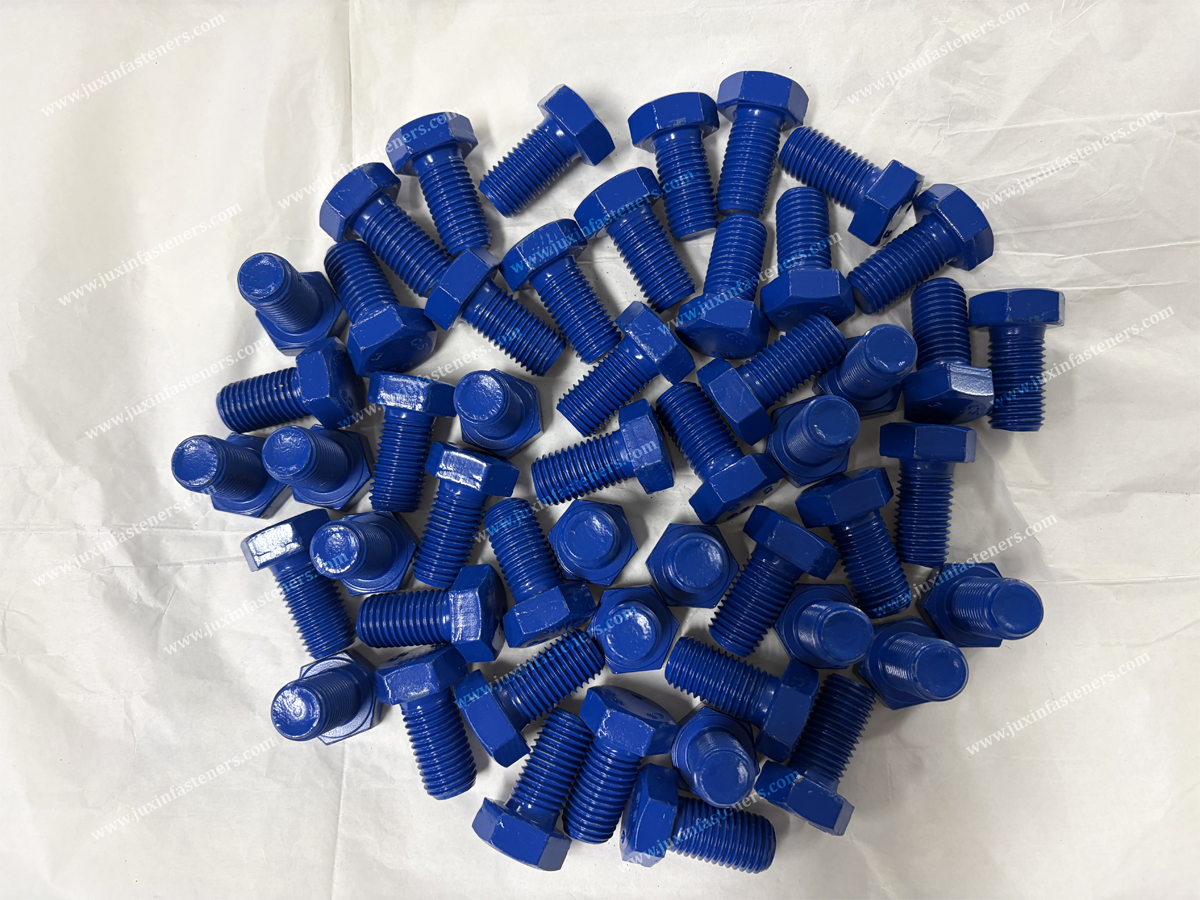
PTFE-Containing Coatings
Certain PTFE-containing coatings may be used to modify friction or other surface characteristics.
However, the coating system must be compatible with the operating environment and assembly requirements.
Important Assembly Consideration
A coating that changes friction may also change the torque-preload relationship.
The tightening process should therefore be evaluated when coatings or lubricants are introduced or changed.
How Standards Affect Mechanical Reliability
A fastener that meets the correct dimensional standard may still be unsuitable for the intended joint.
Mechanical reliability depends on the complete assembly.
Joint Loading
Evaluate:
Tensile loading
Shear loading
Preload
Vibration
Temperature
Thread Engagement
The required engagement depends on the screw and mating material, thread geometry and loading conditions.
Torque and Preload
Tightening torque is influenced by friction and does not directly equal preload.
Thread Galling
Austenitic stainless steel threaded connections may experience galling.
This should be considered during material selection and assembly-process development.
Head Geometry
Different head designs may have different tightening limitations.
Important Engineering Principle
Compliance with a product standard does not eliminate the need for joint-level engineering validation.
Stainless Steel Screws for Industrial Applications
Industrial Machinery and Automation
Typical product considerations include:
ISO 4762 socket head screws
ISO 4017 hexagon head screws
Suitable stainless steel property classes
Engineering Priorities
Joint loading
Tool access
Thread engagement
Assembly consistency
Maintenance
Electrical and Electronic Equipment
Potential products include:
Pan head screws
Button head screws
Socket head screws
SEMS screws
Engineering Priorities
Head clearance
Drive compatibility
Electrical clearance
Dimensional consistency
Assembly efficiency
Automotive and EV Equipment
Potential applications include:
Electronic module housings
Auxiliary brackets
Equipment assemblies
Manufacturing fixtures
Engineering Priorities
Vibration
Corrosion environment
Mechanical properties
Assembly repeatability
Approved product specifications
Important Limitation
A stainless steel fastener should not automatically replace an approved high-strength or safety-critical automotive fastener.
Food-Processing Equipment
Potential applications include:
Commercial kitchen machinery
Beverage equipment
Food-processing systems
Equipment housings
Engineering Priorities
Corrosion resistance
Cleaning compatibility
Hygienic design
Material documentation
Surface condition
Medical and Laboratory Equipment
Potential applications include:
Laboratory instruments
Diagnostic equipment housings
Nonimplantable mechanical assemblies
Engineering Priorities
Material identification
Surface cleanliness
Corrosion resistance
Dimensional consistency
Product-specific qualification
Marine and Coastal Equipment
Potential applications include:
Instrument enclosures
Marine electronics
Coastal machinery
Auxiliary equipment
Engineering Priorities
Chloride exposure
Crevice corrosion
Galvanic compatibility
Material selection
Maintenance
Important Limitation
316 stainless steel is not universally suitable for every marine environment.
How to Specify Stainless Steel Screws for OEM Drawings
A technically complete drawing should identify the applicable requirements without ambiguity.
Product Geometry
Specify:
Head style
Drive type
Nominal diameter
Thread designation
Length
Applicable product standard
Material and Mechanical Properties
Specify:
Stainless steel material group or grade
Mechanical-property class
Applicable material standard
Thread Requirements
Specify:
Thread system
Pitch
Tolerance
Thread length
Surface Requirements
Specify:
Passivation, if required
Other finishes, if required
Surface acceptance criteria
Inspection Requirements
Define:
Dimensional inspection
Material verification
Mechanical testing, where required
Functional checks
Documentation
Important Drawing Principle
Do not rely on a general description such as “stainless steel screw, standard type.”
The approved drawing should identify the exact technical requirements.
Common Specification Errors in International Fastener Procurement
Using DIN and ISO Designations as Automatic Equivalents
Historical and current standards may have differences that require review.
Specifying Only the Stainless Steel Grade
Material grade does not define the complete screw.
Omitting the Mechanical-Property Class
The same material group may be associated with different mechanical-property requirements.
Confusing Metric and Inch-Series Threads
Similar nominal diameters do not establish compatibility.
Replacing Standard Socket Head Screws with Low-Head Designs
Head geometry and mechanical suitability may differ.
Assuming Passivation Guarantees Corrosion Resistance
Passivation does not compensate for unsuitable alloy selection or joint design.
Approving Alternative Suppliers Based Only on Appearance
Dimensional, material and mechanical requirements must be verified.
Supplier Development Insight
A lower-priced alternative fastener may create higher total cost if it causes assembly problems, rework or product failures.
Supplier comparisons should therefore use the complete approved specification.
OEM Supplier Qualification and Quality Control
For recurring industrial procurement, a supplier qualification process may include:
Specification Review
Confirm the exact applicable standards and drawing requirements.
Material Verification
Review the required material documentation or appropriate testing.
Dimensional Inspection
Verify critical product dimensions and thread requirements.
Mechanical Verification
Confirm specified mechanical properties where required.
Surface Condition
Review surface treatment and cleanliness requirements.
Functional Assembly
Evaluate tooling compatibility, thread fit and installation performance.
Sample Approval
Where appropriate, approve representative samples before recurring production.
Change Control
Establish a process for reviewing material, dimensional or manufacturing changes that could affect the approved product.
Production Manager's Perspective
A fastener that meets a nominal product description may still create assembly problems if the actual drive geometry,
thread fit or surface condition differs from the approved component.
Consistent production requires clear specifications and appropriate acceptance controls.
Practical OEM RFQ Example
A complete inquiry might identify:
Product: Hexagon socket head cap screw
Product standard: ISO 4762
Thread: M6 × 1
Length: As specified on the drawing
Material/property class: A2-70, where suitable for the application
Surface condition: As specified
Inspection: According to agreed drawing and purchase requirements
Quantity: Sample and production quantities to be provided
This example illustrates specification structure only. It does not establish suitability for any particular joint.
Frequently Asked Questions
What standard applies to stainless steel screws?
The applicable standards depend on the product.
ISO 3506 may define mechanical properties, while standards such as ISO 4762 or ISO 4017 define specific product geometries.
What is ISO 3506?
It is a series of standards addressing mechanical properties of corrosion-resistant stainless steel fasteners.
What is the difference between A2 and A4 stainless steel screws?
A2 and A4 are different stainless steel material groups.
Their corrosion characteristics differ, while mechanical properties also depend on the specified property class.
Is A2 stainless steel the same as 304?
A2 is commonly associated with 304-type stainless steels, but it should not automatically be treated as an exact substitute for every 304 specification.
Is A4 stainless steel the same as 316?
A4 is commonly associated with 316-type materials, but the applicable standard and exact requirements must be checked.
What is DIN 912?
DIN 912 is a historical designation commonly associated with hexagon socket head cap screws.
What is ISO 4762?
ISO 4762 specifies dimensions for hexagon socket head cap screws.
Are DIN 912 and ISO 4762 interchangeable?
They are closely related, but the applicable editions and technical requirements should be reviewed before substitution.
What is DIN 933?
DIN 933 is a historical designation for fully threaded hexagon head screws.
What is ISO 4017?
ISO 4017 specifies dimensions for fully threaded hexagon head screws.
What is DIN 7984?
DIN 7984 is associated with low-head hexagon socket screws.
Can DIN 7984 replace ISO 4762?
Not automatically. Head geometry and mechanical requirements must be reviewed.
What is ASTM F593?
ASTM F593 addresses specified stainless steel bolts, hex cap screws and studs.
What is ASTM F594?
ASTM F594 addresses specified stainless steel nuts.
What is ASME B18.3?
ASME B18.3 covers certain inch-series socket screw products.
Are metric and UNC screws interchangeable?
No. Metric and Unified inch-series threads are different systems.
Does ISO 3506 define screw head dimensions?
No. Head dimensions are established by the applicable product standard.
Does passivation increase stainless steel screw strength?
No. Passivation is a surface treatment and does not automatically increase mechanical strength.
What information is needed for a stainless steel screw RFQ?
The drawing or product standard, material, property class, thread, dimensions, surface requirements, inspection criteria, quantity and delivery requirements.
Juxin Fasteners: International Standard and Custom Stainless Steel Screws
Juxin Fasteners supplies industrial fastening components for international OEM customers.
Relevant product families include:
Stainless steel socket head screws
Stainless steel hexagon head screws
Stainless steel button head screws
Stainless steel pan head screws
Stainless steel flange head screws
Stainless steel machine screws
Stainless steel nuts
Custom threaded components
Drawing-based CNC-machined parts
For projects involving ISO, DIN, ASTM or ASME requirements, the exact applicable standard, material grade,
mechanical-property class and dimensional specification should be identified in the customer's drawing and RFQ.
Specific product availability, material options, surface treatments, inspection requirements, samples, MOQ and delivery schedules are confirmed during project review.
Request an OEM Stainless Steel Screw Quotation
Are you sourcing stainless steel screws to ISO, DIN, ASTM or ASME specifications?
Do you need to replace a legacy DIN-designated screw, verify an ISO product standard, qualify an alternative supplier or source a custom stainless steel fastener?
Juxin Fasteners welcomes inquiries from design engineers, mechanical engineers, structural engineers, manufacturing engineers,
production managers, procurement specialists, purchasing managers, supplier development teams and supply chain managers.
For technical review and quotation, please provide:
2D drawing or applicable product standard + screw type + head and drive geometry + thread designation + length + stainless steel grade
+ mechanical-property class + surface-treatment requirements + inspection criteria + sample quantity + production quantity + packaging requirements + target delivery schedule.
For replacement projects, include the original approved drawing or standard designation and identify any proposed deviations.
Company: Juxin Fasteners
Website: https://www.juxinfasteners.com/
Email: info@juxinfasteners.com
Send your stainless steel screw drawings and OEM RFQ to Juxin Fasteners for technical review and quotation.
Contact Us
Tel.:
+86 020 8621 0320
+86 020 3121 6067
E-mail:
Technical Support:
Navigation
SEND INQUIREY