
Call Us
+86 136 6007 9809
Call Us
+86 136 6007 9809

Jul. 12, 2024
Stainless Steel Self-Tapping Screws: Sheet Metal Fastening, Material Selection and OEM Assembly Guide
Stainless steel self-tapping screws are used to create threaded connections in sheet metal, aluminum,
selected plastics and other suitable materials without requiring a separately tapped internal thread.
They are widely considered for electrical enclosures, HVAC equipment, industrial machinery covers, appliance assemblies and corrosion-sensitive OEM products.
Their primary advantage is the ability to combine thread creation and fastening into a practical assembly operation.
However, selecting a self-tapping screw requires more than choosing a stainless steel grade, head style and nominal diameter.
The correct screw must be compatible with the mating material, pilot-hole geometry, material thickness, installation equipment and required joint performance.
A screw that works in thin aluminum sheet may not be suitable for hardened steel.
A corrosion-resistant stainless steel screw may also be unable to drill through a particular steel substrate without a properly engineered drill point or installation process.
For design and mechanical engineers, the main priorities are thread formation, joint strength, corrosion resistance and dimensional compatibility.
For manufacturing engineers and production managers, the priorities include consistent installation torque, driver engagement, assembly cycle time, tool wear and reduced rework.
For procurement and supplier development teams, the challenge is sourcing screws that meet the approved drawing and perform consistently in production.
This guide explains how to select stainless steel self-tapping screws for industrial applications and how to avoid common engineering and purchasing mistakes.
Juxin Fasteners supplies industrial fastening components and supports inquiries for standard and drawing-based stainless steel self-tapping screws.
What Is a Stainless Steel Self-Tapping Screw?
A stainless steel self-tapping screw is a threaded fastener designed to create or cut a mating thread during installation into a suitable material.
Unlike a conventional machine screw, which generally engages an existing internal thread,
a self-tapping screw can establish its own thread in an appropriately prepared hole or compatible substrate.
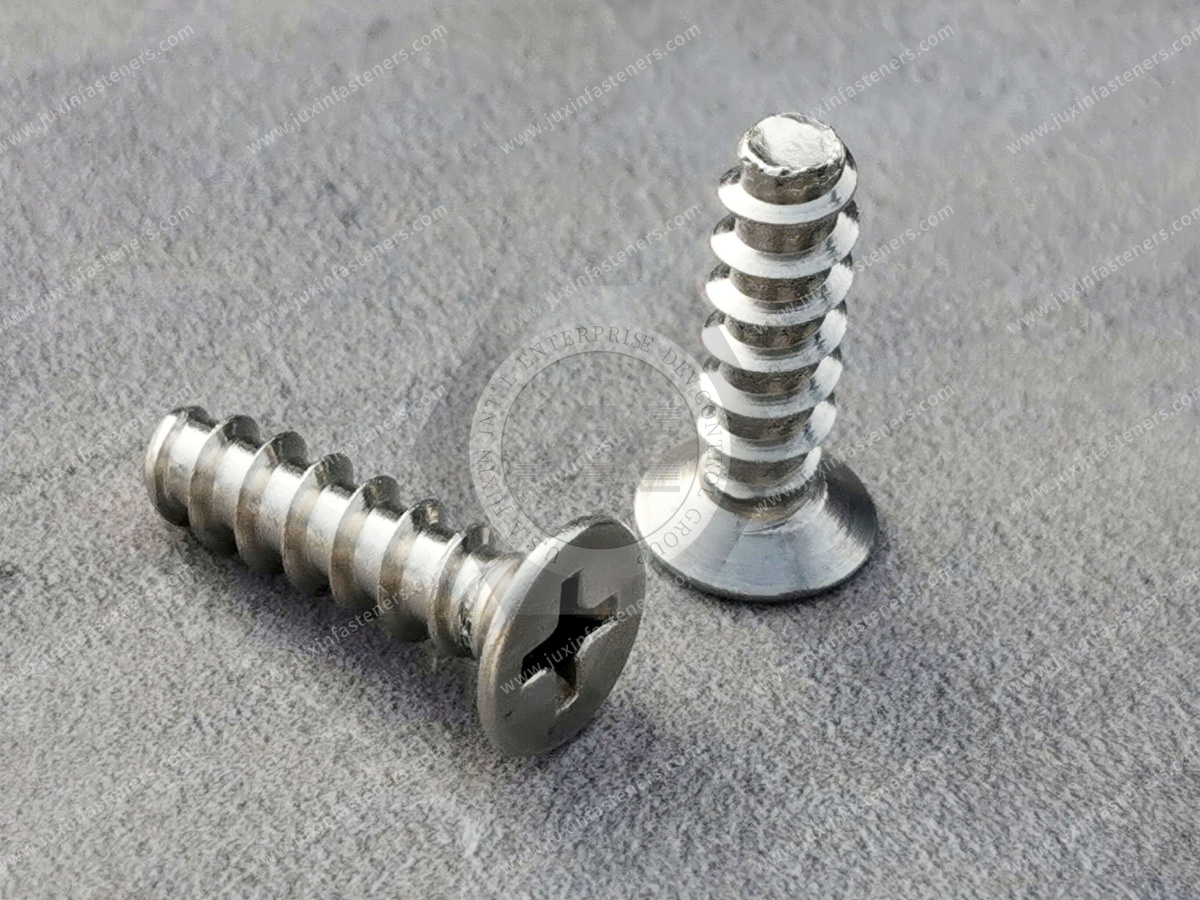
Depending on the screw design and application, the process may involve:
Thread forming
Thread cutting
Displacement of mating material
Engagement with a preformed pilot hole
Important Distinction
Self-tapping does not necessarily mean self-drilling.
Many self-tapping screws require a pilot hole.
The required hole depends on the screw geometry and mating material.
Typical Applications
Sheet metal covers
Electrical cabinets
HVAC equipment
Industrial enclosures
Appliance assemblies
Aluminum panels
Selected plastic components
Engineering Principle
The screw and mating material must be designed as a compatible fastening system.
Self-Tapping vs. Self-Drilling Screws: What Is the Difference?
These terms are sometimes used interchangeably in product listings, but they describe different functions.
Self-Tapping Screws
A self-tapping screw creates a mating thread during installation.
Depending on the design, a pilot hole may be required.
Self-Drilling Screws
A self-drilling screw has a drill-point geometry intended to produce a hole in a suitable substrate before the threaded portion engages.
It combines drilling and thread creation in a single installation sequence.
Thread-Forming Screws
Thread-forming screws create mating threads primarily by displacing material.
The resulting performance depends on the substrate, screw geometry and installation conditions.
Thread-Cutting Screws
Thread-cutting screws remove material as they create mating threads.
They may be used where the substrate and design favor a cutting process.
Comparison
| Screw type | Primary function | Pilot-hole requirement |
|---|---|---|
| Self-tapping screw | Creates a mating thread | Depends on design |
| Thread-forming screw | Forms a thread by material displacement | Commonly requires a prepared hole |
| Thread-cutting screw | Cuts a mating thread | Depends on design and substrate |
| Self-drilling screw | Drills a hole and creates a thread | May eliminate separate drilling within rated capability |
Critical Engineering Limitation
A self-drilling screw is not automatically suitable for every metal thickness or hardness.
Drill-point geometry, screw material, substrate hardness and installation conditions determine drilling capability.
Why Stainless Steel Self-Drilling Screws Need Special Attention
Stainless steel offers corrosion resistance, but drilling performance is a separate material and geometry requirement.
Certain stainless steel alloys and heat-treatment conditions may not provide the same drilling capability as appropriately hardened drill-point materials.
For drilling into steel, some screw designs use specially engineered drill points or composite constructions.
Procurement Warning
Do not assume that a screw labeled “304 stainless steel self-drilling” can drill through any steel sheet.
Request confirmation of:
Substrate material
Substrate hardness
Maximum drilling thickness
Drill-point construction
Installation method
Applicable test or acceptance requirements
Engineering Insight
Corrosion resistance and drilling capability must be validated independently.
304, 18-8 and 316 Stainless Steel Self-Tapping Screws
Material selection affects corrosion behavior, thread-forming capability and mechanical suitability.
18-8 Stainless Steel Sheet Metal Screws
18-8 is a broad commercial designation commonly associated with certain chromium-nickel austenitic stainless steels.
It is often encountered in fastener catalogs.
However, 18-8 should not automatically be treated as a complete specification for every 304 stainless steel product.
Typical Applications
Indoor equipment
Electrical enclosures
Machinery covers
Appliance components
General sheet metal assemblies
304 Stainless Steel Self-Tapping Screws
304 stainless steel is commonly considered for general corrosion-resistant fastening applications.
Potential Advantages
Useful corrosion resistance
Suitable appearance for exposed hardware
Broad industrial application range
Limitations
304 is not immune to corrosion in aggressive chloride environments.
Its mechanical and thread-forming suitability must be evaluated for the actual mating material.
316 Stainless Steel Self-Tapping Screws
316 stainless steel contains molybdenum and generally offers improved resistance to certain localized corrosion mechanisms compared with 304.
Potential Applications
Coastal equipment
Outdoor enclosures
Marine-related instrumentation
Chemical-processing equipment
Selected washdown machinery
Important Limitation
316 is not universally suitable for all chemical or marine conditions.
It should not automatically be assumed to provide greater drilling capability or higher mechanical strength than 304.
Material Selection Matrix
| Operating condition | Material consideration | Additional verification |
|---|---|---|
| General indoor equipment | 304 or suitable 18-8 | Thread engagement and assembly |
| Outdoor electrical enclosure | 304 or 316 depending on exposure | Moisture and galvanic compatibility |
| Coastal equipment | 316 may be considered | Chloride and crevice conditions |
| Aluminum sheet assembly | Application-specific stainless grade | Galvanic interaction and stripping |
| Steel sheet assembly | Application-specific screw design | Substrate hardness and tapping capability |
| Food-processing machinery | 304 or 316 depending on cleaning conditions | Hygiene and chemical compatibility |
Important Material Note
A2 and A4 are stainless steel fastener material groups used in relevant ISO specifications.
They should not automatically be treated as exact substitutes for every 304 or 316 material requirement.
Common Stainless Steel Self-Tapping Screw Head Types
Head style influences bearing area, tool access, appearance and assembly performance.
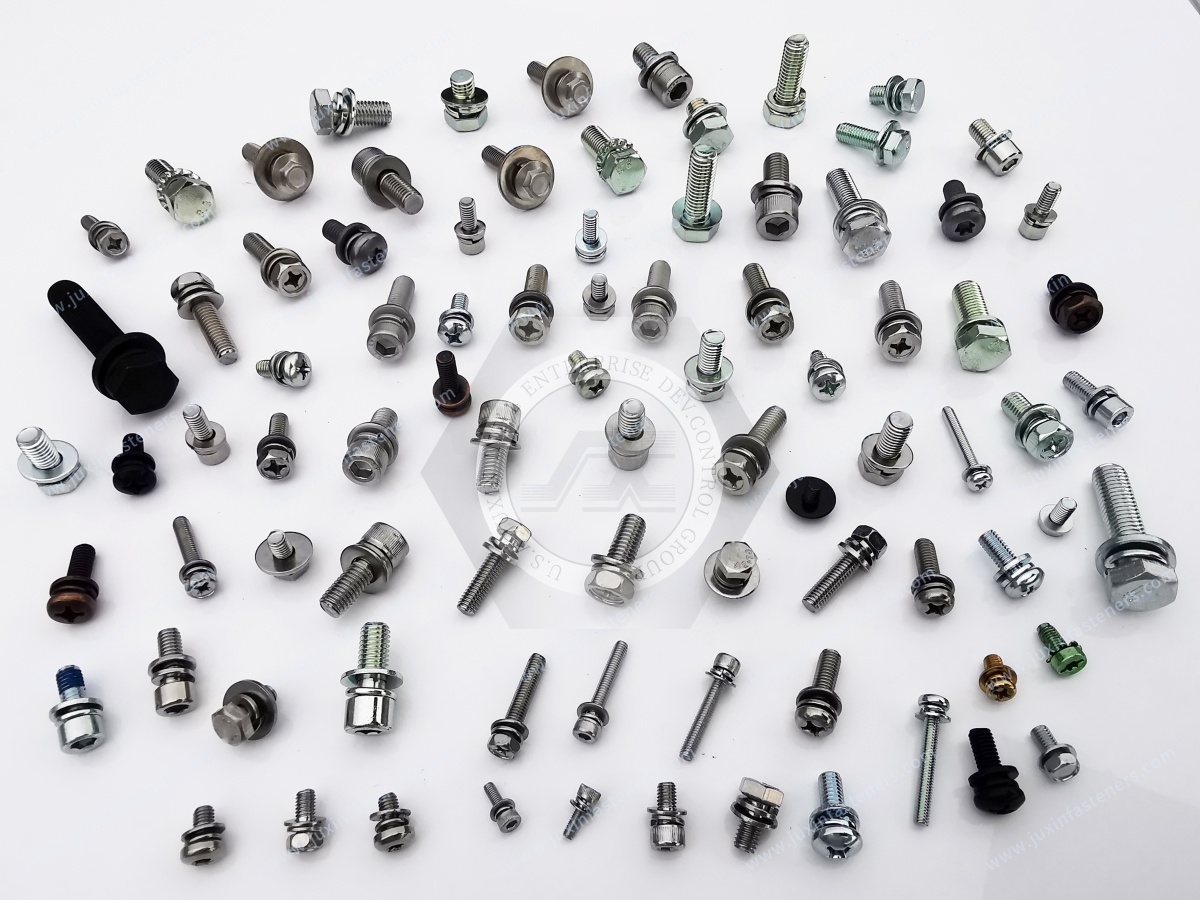
Phillips Pan Head Self-Tapping Screws
Pan head tapping screws are commonly used in equipment panels and sheet metal assemblies.
Potential Applications
Electrical cabinets
Control panels
HVAC housings
Machinery covers
Engineering Considerations
Driver engagement
Head clearance
Bearing area
Installation torque
Surface damage
Phillips Rounded Head Sheet Metal Screws
Rounded or domed head designs may be selected for visible assemblies.
The exact geometry should be identified using an applicable standard or drawing.
Engineering Considerations
Head projection
Driver access
Panel contact
Appearance requirements
Flat Head / Countersunk Self-Tapping Screws
Countersunk self-tapping screws are considered where a flush or reduced-protrusion surface is required.
Potential Applications
Equipment covers
Instrument panels
Selected machinery assemblies
Important Design Limitation
A countersunk head requires a compatible countersink geometry.
In thin sheet metal, countersinking can reduce the remaining material available for thread engagement or local support.
Engineering Recommendation
Evaluate the complete sheet geometry before selecting a countersunk tapping screw.
Hex Washer Head and Flanged Hex Head Tapping Screws
Hex washer head screws incorporate a bearing surface beneath the head.
Potential Applications
Equipment housings
Metal panels
HVAC equipment
Industrial assemblies
Potential Advantages
External hex drive access
Enlarged bearing surface
Suitability for certain production installation methods
Important Limitation
A flange does not automatically prevent loosening or eliminate the need for joint validation.
Self-Drilling Hex Washer Head Screws
These designs are common in certain metal fastening applications.
However, their drilling capability must be confirmed for the actual substrate and screw construction.
How to Select the Correct Screw Head
| Design requirement | Head consideration |
|---|---|
| General equipment panel | Pan head |
| Flush surface | Countersunk head |
| External wrench or socket access | Hex head |
| Larger bearing surface | Hex washer or flange head |
| Visible rounded appearance | Rounded or domed head |
| Combined drilling and fastening | Suitable self-drilling configuration |
Pilot-Hole Design for Stainless Steel Self-Tapping Screws
Pilot-hole design is one of the most important factors affecting self-tapping screw performance.
Why Pilot-Hole Size Matters
If the pilot hole is too small, installation torque may become excessive.
Potential problems include:
Screw breakage
Thread damage
Driver damage
Excessive material displacement
Assembly difficulty
If the pilot hole is too large, thread engagement may be inadequate.
Potential problems include:
Thread stripping
Reduced holding performance
Loose connections
Inconsistent assembly
What Determines Pilot-Hole Size?
Relevant factors include:
Screw nominal diameter
Thread geometry
Thread pitch
Substrate material
Substrate hardness
Material thickness
Required thread engagement
Important Engineering Principle
There is no universal pilot-hole diameter that is correct for every self-tapping screw of the same nominal size.
Pilot-hole dimensions should follow the screw design, supplier technical data and validated assembly requirements.
Thin Sheet Metal: Thread Engagement and Stripping Risk
Thin sheet metal presents a particular fastening challenge.
The available material thickness limits the number of threads that can engage the screw.
Potential Failure Modes
Internal thread stripping
Screw pull-out
Panel deformation
Local tearing
Screw breakage
Loss of clamp load
Engineering Considerations
Review:
Sheet thickness
Material grade
Screw diameter
Thread pitch
Pilot-hole geometry
Edge distance
Joint loading
Why More Torque Is Not Always Better
Increasing tightening torque does not necessarily improve joint reliability.
If the internal threads in the sheet metal strip, the joint may lose its intended holding capability.
Alternative Fastening Solutions
Where sheet thickness is insufficient for reliable direct tapping, engineers may consider:
Self-clinching nuts
Self-clinching studs
Blind rivet nuts
Weld nuts
Threaded inserts
Through-bolted connections
The correct alternative depends on material, access, loading and manufacturing requirements.
Engineering Insight
When a thin-sheet joint repeatedly strips, changing to a larger screw is not always the best solution.
A threaded insert or captive threaded component may provide a more suitable connection architecture.
Self-Tapping Screws in Aluminum and Dissimilar Metal Assemblies
Aluminum is widely used in industrial equipment and enclosures.
Stainless steel tapping screws may be considered for aluminum components, but several factors require evaluation.
Thread Strength
Aluminum thread strength depends on alloy, temper, thickness and thread engagement.
Galvanic Corrosion
Stainless steel and aluminum can form a galvanic couple when electrically connected in the presence of a suitable electrolyte.
The corrosion risk depends on the environment and joint configuration.
Installation Torque
Excessive tightening may damage aluminum threads.
Engineering Recommendation
Evaluate both mechanical thread engagement and environmental compatibility.
Production Consideration
A screw that performs adequately during manual prototype assembly may behave differently in a powered production line.
Self-Tapping Screws for Plastics and Composite Components
Some self-tapping screw designs are intended for plastics.
However, not every sheet metal tapping screw is suitable for polymer components.
Engineering Considerations
Polymer type
Boss geometry
Pilot-hole diameter
Wall thickness
Thread-forming behavior
Stress relaxation
Repeated assembly
Important Limitation
A conventional sheet metal screw should not automatically replace a screw specifically designed for plastics.
For production assemblies, the correct thread geometry should be selected and validated.
Installation Torque, Drive Engagement and Assembly Reliability
Self-tapping screw installation includes both thread creation and final tightening.
These stages can have different torque requirements.
Thread-Creation Torque
The torque required to form or cut the mating thread.
Seating Torque
The torque associated with bringing the screw head into contact with the joint.
Stripping Torque
The torque at which the internal thread or another part of the connection may fail.
Why the Relationship Matters
A reliable assembly process requires a suitable operating window between the torque needed for installation and the torque that causes damage.
Important Limitation
A single generic torque value should not be applied to all stainless steel self-tapping screws.
Torque must be established for the actual screw, substrate, joint geometry and installation process.
Common Assembly Problems
Driver cam-out
Screw breakage
Thread stripping
Cross-threading
Misalignment
Incomplete seating
Panel deformation
Manufacturing Engineering Recommendations
Evaluate:
Driver bit compatibility
Tool alignment
Installation speed
Torque or torque-angle control
Hole quality
Screw feeding
Operator access
Production Manager's Perspective
The true production cost of a self-tapping screw includes more than the purchase price.
A screw that causes frequent driver replacement, stripping or rework may be more expensive in the completed assembly.
Repeated Removal and Reinstallation
Self-tapping screws are often selected for assemblies that may need maintenance.
However, repeated removal and reinstallation can affect the mating threads.
Potential Risks
Thread wear
Reduced holding strength
Cross-threading
Misalignment
Loss of engagement
Engineering Recommendation
If frequent disassembly is expected, consider whether a permanent threaded insert, self-clinching nut or other reusable threaded connection would be more appropriate.
Stainless Steel Self-Tapping Screws for Electrical Enclosures
Electrical enclosures commonly use sheet metal fastening systems.
Potential Applications
Control cabinets
Outdoor electrical boxes
Communication equipment
Equipment covers
Instrument housings
Engineering Priorities
Corrosion resistance
Panel thickness
Thread engagement
Assembly consistency
Serviceability
Electrical clearance
Important Consideration
For enclosures requiring repeated maintenance, the use of self-tapping screws should be evaluated against alternative captive or reusable threaded fastening systems.
HVAC Equipment and Industrial Machinery
Potential applications include:
HVAC housings
Duct accessories
Equipment panels
Machinery covers
Auxiliary brackets
Engineering Priorities
Sheet thickness
Corrosion environment
Installation access
Assembly speed
Maintenance frequency
Production Consideration
Where screws are installed in large quantities, consistent hole preparation and controlled installation can reduce rework.
Food-Processing and Commercial Kitchen Equipment
Potential applications include:
Equipment housings
Machinery panels
Commercial kitchen equipment
Beverage equipment
Engineering Priorities
Corrosion resistance
Cleaning chemical compatibility
Hygienic design
Surface condition
Crevice avoidance
Material Considerations
304 and 316 stainless steel may be considered depending on the operating environment.
Important Limitation
A stainless steel material designation alone does not establish food-contact compliance or hygienic suitability.
Medical and Laboratory Equipment
Potential applications include:
Laboratory instruments
Equipment housings
Nonimplantable mechanical assemblies
Testing equipment
Engineering Priorities
Material documentation
Surface cleanliness
Dimensional consistency
Joint reliability
Product-specific qualification
Important Limitation
General industrial self-tapping screws should not automatically be considered suitable for regulated medical applications.
Automotive and EV Equipment
Potential applications include:
Interior equipment
Electronic module housings
Auxiliary brackets
Manufacturing fixtures
Engineering Priorities
Vibration
Corrosion exposure
Thread engagement
Assembly repeatability
Mechanical security
Important Limitation
Self-tapping screws should not automatically replace approved high-strength or safety-critical vehicle fasteners.
Marine and Outdoor Equipment
Potential applications include:
Outdoor electrical enclosures
Coastal instrumentation
Marine-related equipment
Selected outdoor machinery
Engineering Priorities
Chloride exposure
Galvanic compatibility
Material grade
Crevice conditions
Maintenance
316 Stainless Steel
316 may offer improved resistance to certain localized corrosion mechanisms compared with 304.
However, it is not immune to corrosion and should not be assumed suitable for every marine environment.
International Standards for Stainless Steel Self-Tapping Screws
The applicable standard depends on the screw type, thread geometry and intended application.
ISO 1478
ISO 1478 is relevant to tapping screw threads.
ISO 7049
ISO 7049 is associated with cross-recessed pan head tapping screws.
ISO 7050
ISO 7050 is associated with cross-recessed countersunk flat head tapping screws.
ISO 15480
ISO 15480 is relevant to certain hexagon washer head drilling screws.
ASME B18.6.3
ASME B18.6.3 covers certain machine screws, tapping screws and metallic drive screws.
Important Standards Distinction
Not all self-tapping screws use the same thread geometry.
The applicable standard must match the actual product.
Metric and Inch-Series Threads
Metric tapping screw designations and Unified machine screw threads should not be treated as interchangeable.
UNC and UNF threads are different from ISO metric threads.
Legacy BSW and BSF threads are also separate systems.
Engineering Recommendation
Use the exact screw standard and thread specification shown on the approved drawing.
Surface Treatments and Corrosion Protection
Stainless steel self-tapping screws may require specific surface conditions.
Passivation
Chemical passivation may be specified to address free iron contamination.
ASTM A967/A967M is relevant to chemical passivation treatments for stainless steel parts.
PTFE-Containing Coatings
Certain coating systems may modify friction or other surface characteristics.
Their suitability depends on the application.
Black Finishes
Black finishes may be used for appearance or specified functional requirements.
However, a black finish does not automatically improve corrosion resistance.
Important Assembly Consideration
Surface treatments and lubricants may change installation friction.
Where tightening performance is critical, the assembly process should be validated.
How to Specify Stainless Steel Self-Tapping Screws for OEM Production
A complete specification should identify both the screw and the mating material.
Screw Geometry
Define:
Head style
Drive type
Nominal diameter
Thread geometry
Overall length
Point configuration
Material
Specify:
Stainless steel grade
Mechanical requirements
Relevant material documentation
Mating Material
Identify:
Material type
Material grade
Thickness
Hardness, where relevant
Surface treatment
Hole Design
Specify:
Pilot-hole diameter
Hole tolerance
Hole preparation
Edge distance, where relevant
Installation Requirements
Define:
Installation method
Tooling
Torque or other process limits
Functional acceptance criteria
Quality Requirements
Identify:
Dimensional inspection
Material verification
Surface inspection
Functional assembly testing
Documentation
Commercial Requirements
Provide:
Sample quantity
Production quantity
Packaging
Target delivery schedule
OEM Supplier Substitution Checklist
Before replacing an approved self-tapping screw, verify:
| Specification | Why it matters |
|---|---|
| Thread geometry | Determines mating-thread formation |
| Point design | Affects penetration and installation |
| Material grade | Influences corrosion and mechanical behavior |
| Head geometry | Affects bearing and clearance |
| Drive configuration | Determines tooling compatibility |
| Surface condition | Influences friction and corrosion |
| Pilot-hole compatibility | Affects installation and stripping |
| Installation performance | Determines production reliability |
Procurement Insight
Two screws with the same nominal diameter, length and head appearance may not perform identically.
The thread and point geometry can be critical differences.
Custom Stainless Steel Self-Tapping Screws for OEM Applications
Standard catalog screws may not suit every application.
Drawing-based customization may be considered for:
Special head geometry
Nonstandard lengths
Specific point configurations
Application-specific thread forms
Material requirements
Surface finishes
Assembly constraints
Manufacturing Considerations
Depending on the design, screw manufacturing may involve:
Head forming
Thread rolling or forming
Point formation
Machining
Surface finishing
Inspection
The appropriate production method depends on the screw geometry, material and required quantity.
Important Procurement Principle
A custom screw should be quoted against a complete drawing and agreed acceptance criteria.
Frequently Asked Questions
What is a stainless steel self-tapping screw?
It is a screw designed to create a mating thread during installation into a suitable material.
Do stainless steel self-tapping screws need pilot holes?
Many do. The requirement depends on the screw type, point geometry and mating material.
Are self-tapping and self-drilling screws the same?
No. Self-tapping refers to thread creation, while self-drilling refers to a screw's ability to drill its own hole within its intended capability.
Can 304 stainless steel self-drilling screws drill steel?
Not automatically. Drilling capability depends on screw construction, drill-point design and substrate properties.
Are 316 stainless steel self-tapping screws stronger than 304?
Not necessarily. Mechanical performance depends on the specific material and manufacturing condition.
Can self-tapping screws be used in aluminum?
Yes, in suitable designs. Thread engagement, installation torque and galvanic compatibility must be evaluated.
Can self-tapping screws be reused?
Reuse suitability depends on thread condition, mating material and joint requirements.
Are stainless steel self-tapping screws vibration-resistant?
Not automatically. Vibration resistance depends on the complete joint design and any specified locking features.
What causes self-tapping screw threads to strip?
Possible causes include oversized pilot holes, insufficient material thickness, excessive torque and unsuitable thread geometry.
Can self-tapping screws replace machine screws?
Only after verifying the mating material, joint loading, thread engagement and assembly requirements.
Are 304 stainless steel screws suitable for outdoor use?
They may be suitable in certain environments, but chloride exposure and other conditions must be evaluated.
When should 316 stainless steel be considered?
316 may be considered where improved resistance to certain localized corrosion mechanisms is required.
What information is needed for a custom self-tapping screw RFQ?
A drawing, screw geometry, material, mating substrate, thickness, hole design, installation requirements, quantities and delivery schedule.
Juxin Fasteners: Stainless Steel Self-Tapping Screws and OEM Sheet Metal Fastening Solutions
Juxin Fasteners supplies industrial fastening components for international OEM customers.
Relevant product families include:
Stainless steel self-tapping screws
Stainless steel sheet metal screws
Stainless steel self-drilling screws
Stainless steel pan head screws
Stainless steel countersunk screws
Stainless steel hex washer head screws
Stainless steel machine screws
Custom threaded fasteners
Drawing-based OEM fastening components
For projects involving special thread geometry, drill-point requirements, corrosion-resistant materials or automated assembly,
the complete technical requirements should be included in the customer's RFQ.
Specific material options, point designs, drilling capabilities, surface treatments, samples,
MOQ, inspection requirements and delivery schedules are confirmed during project review.
Request an OEM Stainless Steel Self-Tapping Screw Quotation
Are you sourcing stainless steel self-tapping screws for electrical enclosures, industrial sheet metal, HVAC equipment, outdoor machinery or OEM production?
Do you need to replace an existing screw, evaluate a different thread design, reduce stripping problems or qualify a new supplier for bulk production?
Juxin Fasteners welcomes inquiries from design engineers, mechanical engineers, structural engineers, manufacturing engineers, production managers,
purchasing specialists, procurement managers, supplier development teams and supply chain managers.
For technical review and quotation, please provide:
2D drawing or applicable screw standard + head and drive style + thread geometry + nominal diameter + length + point design + stainless steel grade
+ mating material + material thickness + pilot-hole dimensions + installation requirements + surface treatment + inspection criteria
+ sample quantity + production quantity + packaging requirements + target delivery schedule.
For self-drilling applications, please also specify the substrate hardness, required drilling thickness and installation conditions.
Company: Juxin Fasteners
Website: https://www.juxinfasteners.com/
Email: info@juxinfasteners.com
Send your stainless steel self-tapping screw drawings and OEM RFQ to Juxin Fasteners for technical review and quotation.
Contact Us
Tel.:
+86 020 8621 0320
+86 020 3121 6067
E-mail:
Technical Support:
Navigation
SEND INQUIREY



