
Call Us
+86 136 6007 9809
Call Us
+86 136 6007 9809

Jul. 10, 2024
Stainless Steel Thumb Screws: Knurled Head Designs, Tool-Free Fastening and OEM Applications
Stainless steel thumb screws are manually operated threaded fasteners designed for assemblies that require convenient adjustment,
periodic removal or access without conventional screwdriving tools.
Unlike ordinary machine screws, which typically require a screwdriver, hex key or wrench, a thumb screw uses a head geometry that can be gripped and turned by hand.
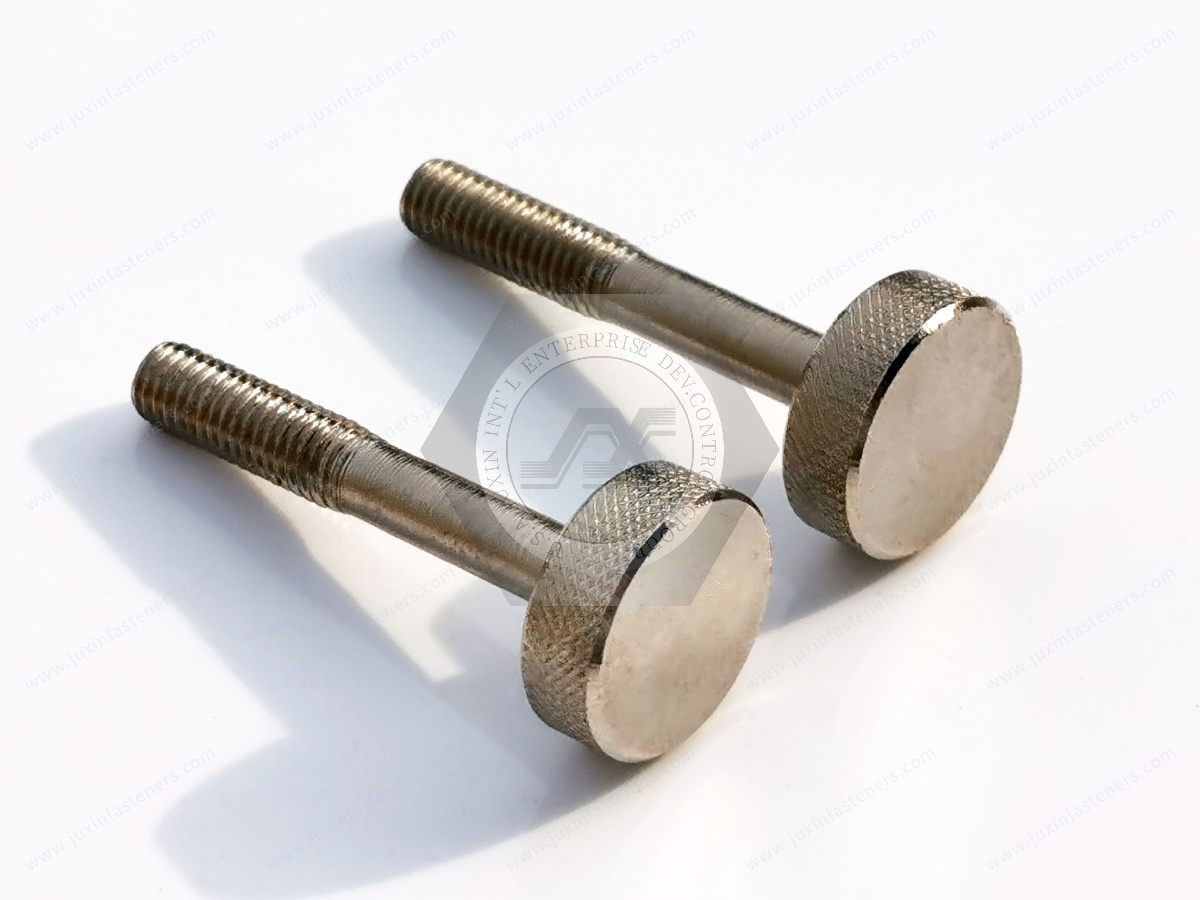
Many industrial thumb screws incorporate a knurled cylindrical head to improve finger engagement. Other designs use different manual gripping features.
These fasteners are particularly useful in equipment where operators or maintenance personnel must regularly open covers, adjust fixtures or secure removable components.
However, a thumb screw is not simply a conventional screw with a larger head.
Head diameter, head height, knurl geometry, available finger clearance,
thread engagement and the required clamping force all influence whether a thumb screw will function reliably in the finished assembly.
For design engineers, the main challenge is achieving convenient manual operation without compromising mechanical security.
For manufacturing engineers and production managers, the priorities include assembly accessibility, installation consistency, reduced tool handling and prevention of lost components.
For purchasing and supplier development teams, a complete specification is essential when sourcing standard or drawing-based stainless steel thumb screws for repeat production.
This guide examines the design, material selection, application limitations and OEM procurement requirements of stainless steel thumb screws.
Juxin Fasteners supplies industrial fastening components and supports inquiries for standard and custom knurled head thumb screws.
What Is a Stainless Steel Thumb Screw?
A stainless steel thumb screw is a threaded fastener designed to be tightened and loosened manually.
The head provides a gripping surface that allows the user to apply turning force without relying on a conventional installation tool.
Common characteristics include:
A manually grippable head
A threaded shank
A specified stainless steel material
Head geometry designed for finger access
Dimensions suitable for the intended joint
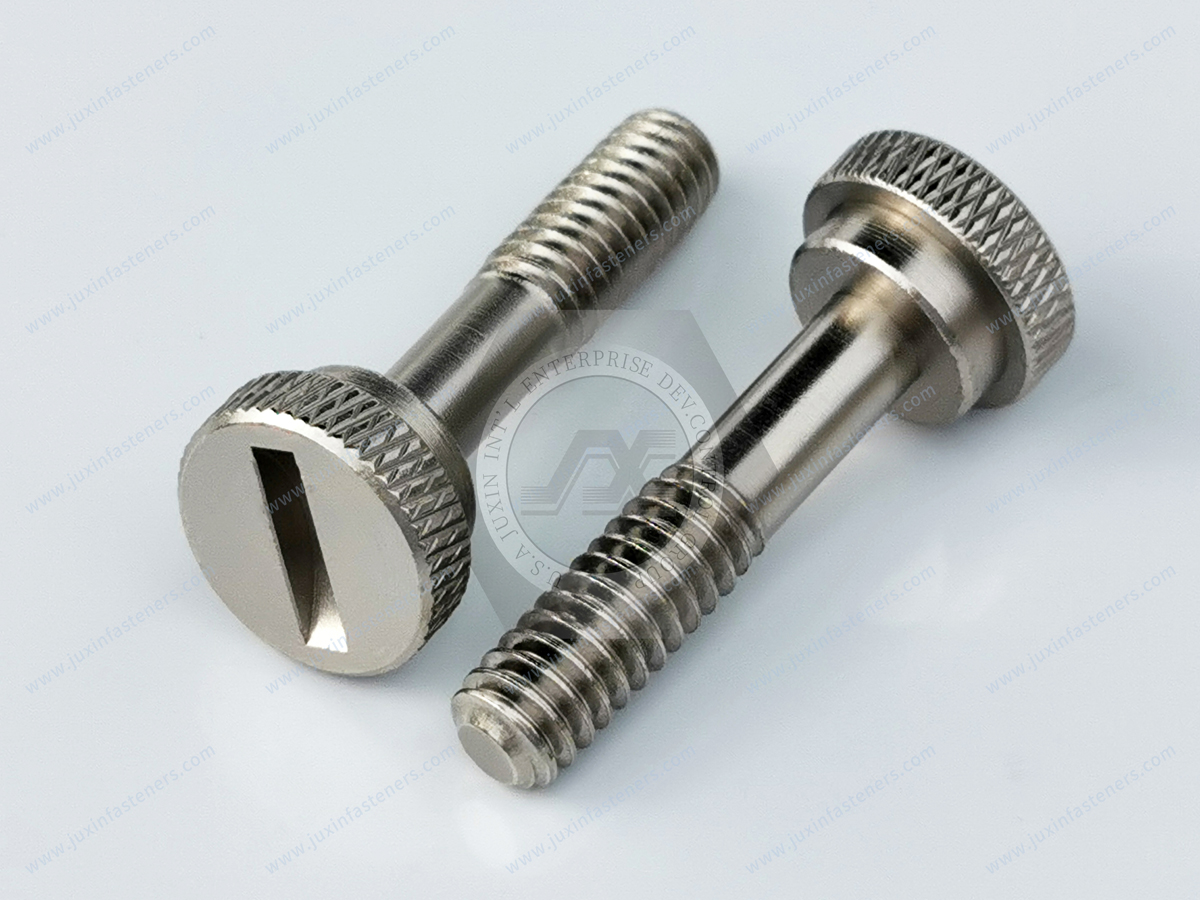
Knurled thumb screws use a textured head surface to improve grip.
Depending on the design, the knurl may be straight, diamond-patterned or another specified profile.
Typical Uses
Thumb screws are commonly considered for:
Removable equipment covers
Instrument panels
Adjustment fixtures
Inspection access points
Laboratory apparatus
Electrical enclosures
Industrial machine accessories
Important Engineering Distinction
A thumb screw is primarily a manual fastening solution.
It should not automatically be treated as a high-preload structural fastener, a vibration-resistant locking screw or a safety-rated guard-retention component.
The complete application must be evaluated.
Why Use Knurled Head Thumb Screws Instead of Conventional Machine Screws?
The main advantage is convenient manual operation.
Tool-Free Access
Thumb screws can simplify operations that require repeated access.
For example, an instrument cover may need to be removed periodically for inspection or calibration.
A manually operated fastener can reduce the need to locate and use a separate screwdriver.
Reduced Tool Handling
In suitable production or maintenance operations, thumb screws may reduce tool changes and handling steps.
However, the actual benefit depends on the workstation, operator access and required fastening force.
Convenient Adjustment
Thumb screws may be useful for fixtures requiring occasional repositioning or adjustment.
Improved Serviceability
A removable component secured by thumb screws may be easier to access during routine maintenance.
Potential Limitations
Manual fastening also introduces tradeoffs:
Limited tightening force
Operator-to-operator variation
Potential accidental loosening
Finger clearance requirements
Possible interference with nearby components
Risk of dropped or lost screws
Design Principle
Choose thumb screws when manual accessibility is a genuine functional requirement—not simply because they are easier to turn.
Stainless Steel Thumb Screw Head Types
Head geometry is one of the most important selection factors.
The head must provide adequate grip while fitting within the available assembly space.
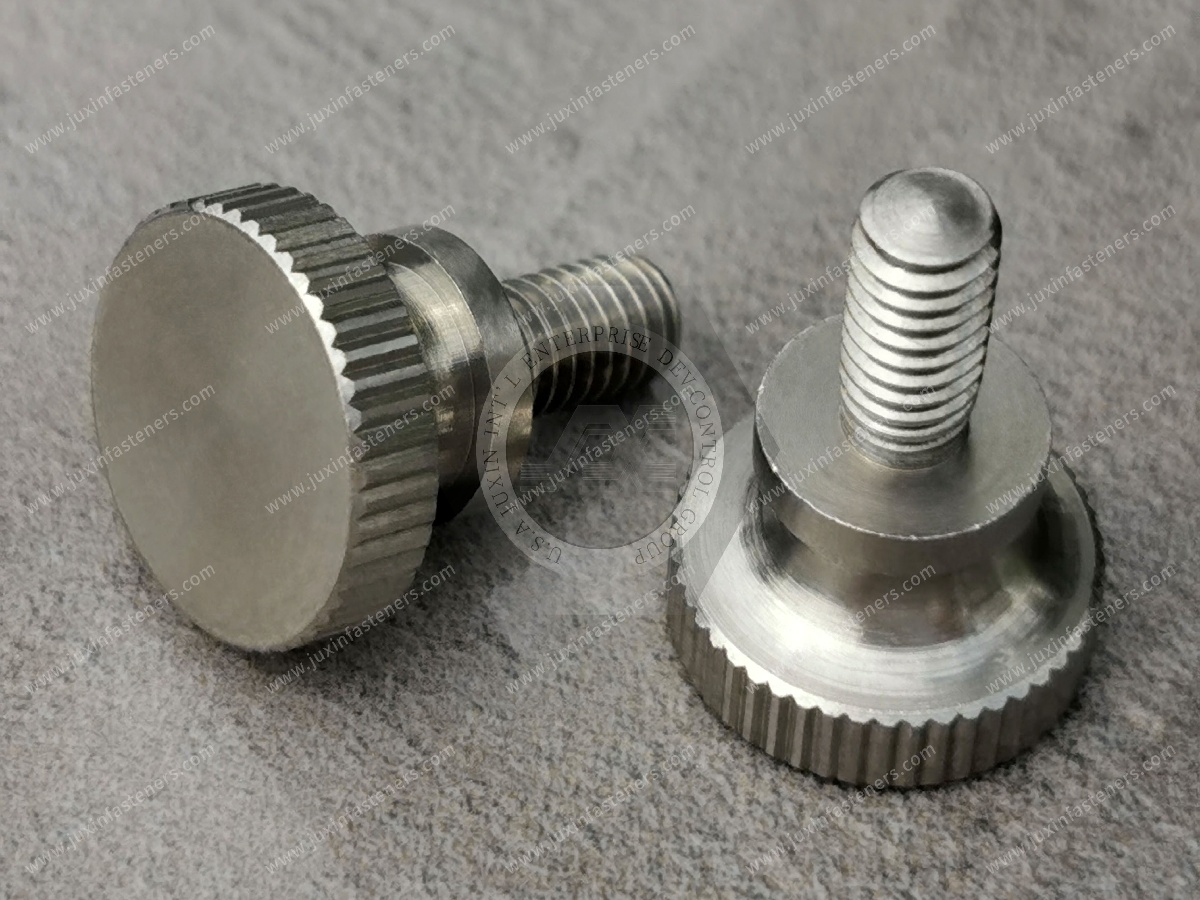
Low-Profile Knurled Head Thumb Screws
Low-profile thumb screws have a relatively short head height.
They are useful where protrusion must be limited.
Potential Applications
Electronic equipment
Control panels
Instrument housings
Compact machinery
Equipment covers
Engineering Advantages
Reduced protrusion
Compact appearance
Potentially better clearance around surrounding components
Design Limitations
A low-profile head may provide less finger contact area than a taller head.
Manual operation can become difficult when:
The head is recessed
Nearby walls obstruct finger access
Gloves are required
The head diameter is small
Repeated tightening is necessary
Engineering Recommendation
Do not select a low-profile head based only on available vertical clearance.
Confirm that an operator can actually grip and rotate the head in the installed position.
Raised Knurled Head Thumb Screws
Raised head designs provide a more accessible gripping surface.
They may be considered for equipment requiring frequent manual operation.
Potential Applications
Laboratory instruments
Testing fixtures
Inspection equipment
Removable machine accessories
Engineering Advantages
Improved access to the gripping surface
Easier manipulation in certain assemblies
Potentially more comfortable repeated operation
Design Limitations
A raised head can interfere with nearby components or protrude into operator-access areas.
Head geometry should therefore be evaluated against equipment clearance and safety requirements.
High-Profile Knurled Head Thumb Screws
High-profile thumb screws provide a taller gripping section.
Potential Applications
Industrial fixtures
Mechanical adjustment assemblies
Equipment requiring repeated access
Selected machine accessories
Potential Advantages
More gripping surface
Improved manual access
Potentially greater operator-applied turning force, depending on geometry and conditions
Important Limitation
A taller head does not automatically guarantee a particular tightening torque or clamping force.
Manual torque depends on head diameter, grip, operator capability, surface condition and other factors.
Head Geometry Comparison
| Head design | Main advantage | Main design concern |
|---|---|---|
| Low-profile knurled head | Reduced protrusion | Limited finger access |
| Raised knurled head | Accessible gripping surface | Increased head clearance |
| High-profile knurled head | Larger gripping area | Protrusion and interference |
| Custom knurled head | Application-specific geometry | Drawing and inspection requirements |
How Head Diameter and Knurl Design Affect Manual Tightening
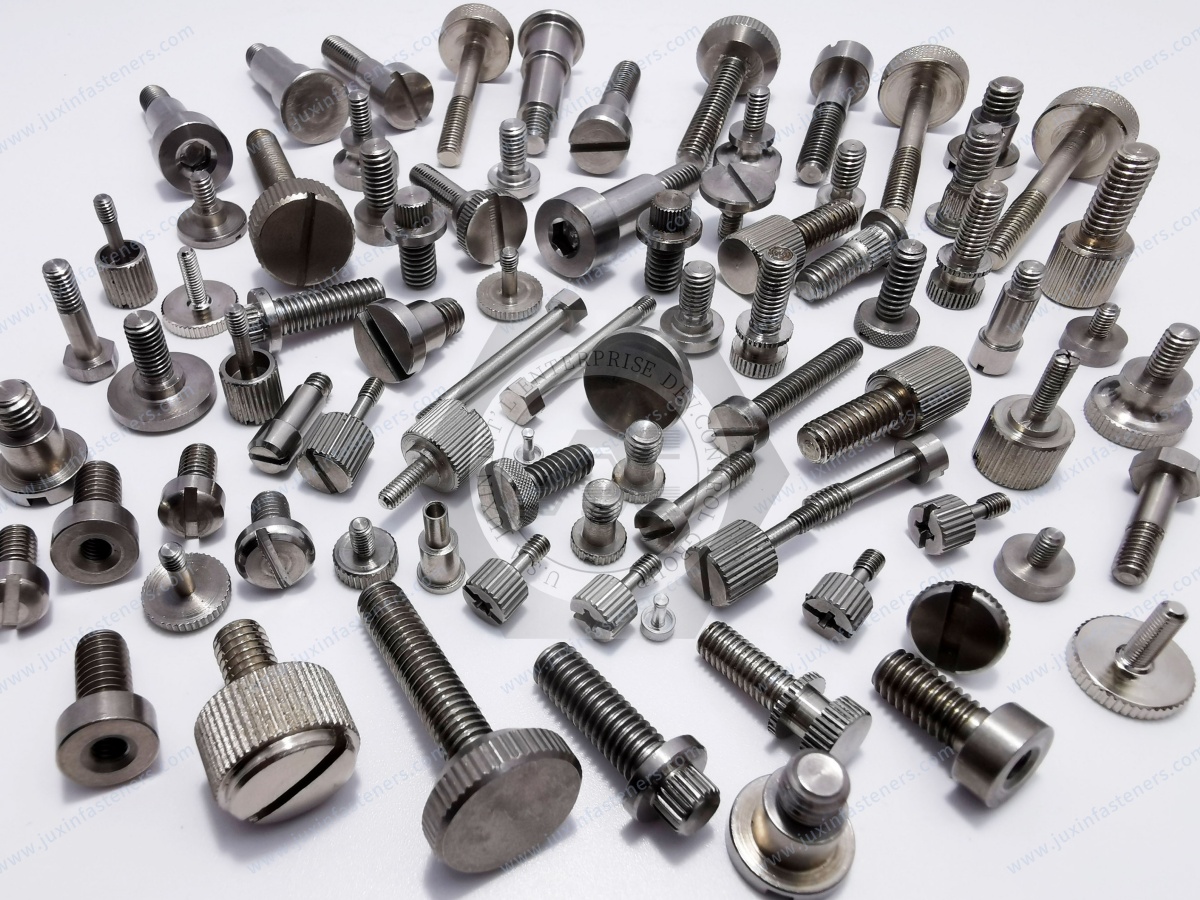
Head diameter and knurl geometry directly influence how easily a thumb screw can be operated.
Head Diameter
A larger head diameter may provide greater leverage for manual turning.
However, it also requires more surrounding space.
Head Height
A taller head may improve finger engagement.
However, it may increase protrusion or interfere with adjacent components.
Knurl Pattern
Knurling provides a textured gripping surface.
The actual performance depends on:
Knurl profile
Knurl depth
Head diameter
Surface condition
Operator grip
Glove use
Sharp Knurling vs. Operator Comfort
A more aggressive knurl may improve grip in certain conditions but can also be uncomfortable during repeated use.
For frequently operated equipment, the knurl should be evaluated for both functional grip and handling comfort.
Production Engineering Insight
If a thumb screw is difficult to operate in the finished product, changing only the stainless steel grade will not solve the problem.
The head geometry and available finger access should be reviewed first.
Stainless Steel Thumb Screw Materials: 18-8, 304 and 316
Material selection affects corrosion resistance, manufacturing characteristics and mechanical suitability.
18-8 Stainless Steel Thumb Screws
18-8 is a broad commercial designation commonly associated with certain chromium-nickel austenitic stainless steels.
It is frequently used in fastener catalogs.
However, 18-8 should not automatically be treated as a complete 304 material specification.
Typical Selection Context
General industrial machinery
Electrical equipment
Laboratory fixtures
Equipment covers
Indoor instruments
Engineering Considerations
Moisture exposure
Cleaning chemicals
Thread galling
Mechanical requirements
Surface condition
304 Stainless Steel Thumb Screws
304 stainless steel is commonly selected for general corrosion-resistant industrial applications.
Potential Applications
Food-service machinery
Electrical cabinets
Industrial automation
Equipment housings
General mechanical assemblies
Important Limitation
304 stainless steel is not immune to corrosion, especially in aggressive chloride-containing environments or unfavorable crevice conditions.
316 Stainless Steel Thumb Screws
316 stainless steel contains molybdenum and generally provides improved resistance to certain forms of localized corrosion compared with 304.
Potential Applications
Coastal equipment
Marine-related instruments
Chemical-processing equipment
Outdoor machinery
Selected pharmaceutical equipment
Important Limitation
316 is not universally resistant to all chemicals or saltwater conditions.
Material suitability must be evaluated against the actual environment.
Material Selection Matrix
| Operating environment | Material consideration | Engineering check |
|---|---|---|
| General indoor equipment | 304 or suitable 18-8 | Mechanical and cleaning requirements |
| Industrial machinery | 304 or another specified grade | Load, galling and maintenance |
| Outdoor equipment | 304 or 316 depending on exposure | Moisture, chlorides and crevices |
| Coastal equipment | 316 may be considered | Chloride conditions and joint design |
| Chemical-processing equipment | Application-specific alloy selection | Chemical compatibility |
| Laboratory equipment | 304 or 316 depending on conditions | Cleaning and surface requirements |
Important Material Distinction
A2 and A4 are stainless steel fastener material groups used in relevant ISO standards.
They should not automatically be treated as complete substitutes for every 304 or 316 material specification.
Metric and Inch-Series Stainless Steel Thumb Screws
Thumb screws may be specified using metric or inch-series threads.
Metric Thumb Screws
Common metric designations include:
M3
M4
M5
M6
M8
These are examples of nominal thread sizes, not a claim that every configuration is available.
The actual pitch and thread tolerance must be specified.
Unified Inch-Series Thumb Screws
Depending on the project, inch-series thumb screws may use:
UNC threads
UNF threads
British Thread Systems
Legacy British thread systems may include:
BSW
BSF
These must be specified separately where required.
Critical Compatibility Rule
Metric, UNC, UNF, BSW and BSF threads are not directly interchangeable.
Similar nominal diameters do not establish compatibility.
Thread Engagement
Manual fastening still requires adequate thread engagement.
The required engagement depends on:
Screw material
Mating material
Thread size
Applied loading
Joint geometry
Frequency of assembly
Engineering Insight
A thumb screw that is easy to grip but has inadequate thread engagement can still fail during use.
Captive Thumb Screws vs. Standard Thumb Screws
A standard thumb screw can usually be completely removed from its mating thread.
A captive thumb screw is designed to remain retained in a panel or assembly when loosened.
Why Captive Designs Matter
Captive designs may help:
Reduce lost screws
Simplify maintenance
Improve component control
Support repeated access
Reduce loose-part handling
Potential Applications
Electrical enclosures
Instrument panels
Equipment access covers
Service panels
Industrial machinery
Important Design Considerations
A captive thumb screw may require:
A specific panel hole
A retaining feature
A shoulder or reduced-diameter section
A compatible receptacle or threaded component
Defined installation and retention requirements
Important Distinction
A standard knurled thumb screw is not automatically a captive panel screw.
Retention must be designed into the complete assembly.
OEM Procurement Recommendation
If the screw must remain attached to the panel when loosened, state this explicitly in the RFQ and provide the panel geometry.
Manual Tightening Force, Clamp Load and Vibration
Thumb screws are often selected for convenience, but their mechanical limitations must be understood.
Manual Tightening Torque
The torque applied by hand varies with:
Head diameter
Head height
Knurl geometry
Operator grip
Glove use
Surface condition
Manual tightening is generally less controlled than a validated powered or torque-controlled installation process.
Clamp Load
Clamp load depends on more than turning torque.
Thread friction, bearing friction, material condition and joint geometry influence the relationship between torque and preload.
Vibration
A conventional thumb screw should not automatically be described as vibration-resistant.
Vibration and transverse joint movement can contribute to loosening when the joint design is unsuitable.
Potential Engineering Measures
Depending on the application, designers may evaluate:
Suitable prevailing-torque features
Compatible locking components
Captive retention
Appropriate joint preload
Alternative fastening systems
Any locking solution must be validated for the actual application.
Safety-Critical Applications
Thumb screws are generally unsuitable as an unverified substitute for engineered structural fasteners or safety-critical guard-retention systems.
Equipment safety requirements may require a specific retention mechanism, tool-controlled access or other safeguards.
Thread Galling and Repeated Adjustment
Austenitic stainless steel threaded connections may be susceptible to galling.
This is particularly relevant when thumb screws are repeatedly installed and removed.
Potential Contributing Factors
Stainless steel material pairing
Thread condition
Misalignment
Excessive force
Surface friction
Contamination
Engineering Considerations
For repeated manual adjustment, evaluate:
Mating thread material
Thread fit
Engagement length
Surface condition
Suitable lubrication where permitted
Expected adjustment frequency
Important Limitation
Passivation alone does not prevent thread galling.
Manufacturing Insight
If repeated adjustment is a central function, the design should be evaluated over the expected operating cycle rather than only during initial assembly.
Stainless Steel Thumb Screws for Industrial Machinery and Automation
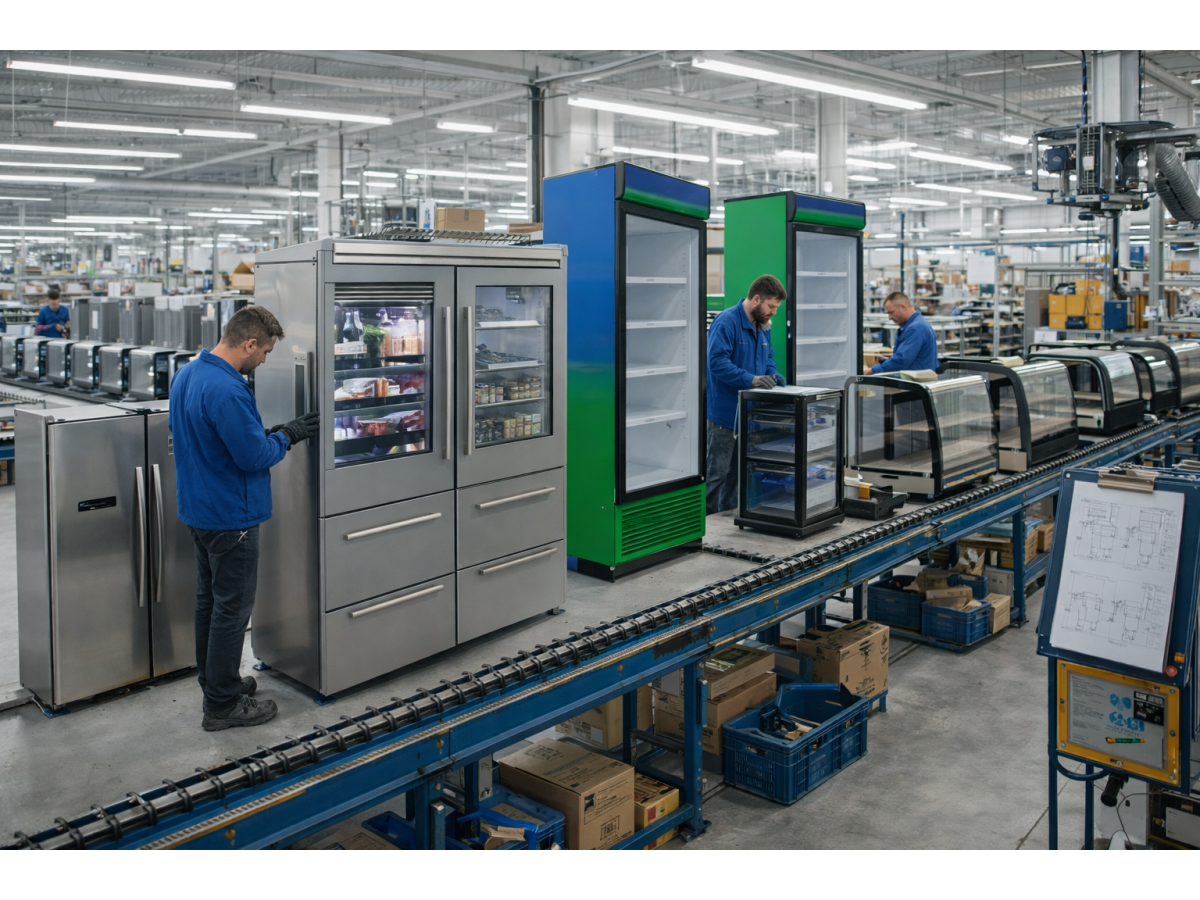
Industrial equipment often includes components that require periodic access or repositioning.
Potential Applications
Machine accessory covers
Inspection panels
Adjustment fixtures
Setup components
Non-safety-critical removable guards or covers, where permitted by the equipment design
Engineering Priorities
Manual accessibility
Repeatable positioning
Thread engagement
Maintenance frequency
Vibration conditions
Production Benefits
In suitable applications, tool-free operation may simplify changeovers or maintenance.
However, the actual benefit depends on the required fastening force and equipment design.
Food-Processing and Commercial Kitchen Equipment
Potential applications include:
Removable equipment panels
Maintenance covers
Selected machinery accessories
Commercial kitchen equipment
Engineering Priorities
Corrosion resistance
Cleaning chemicals
Hygienic design
Surface finish
Crevice avoidance
Ease of cleaning
304 and 316 Stainless Steel
These materials may be considered according to the actual operating environment.
Important Limitation
A knurled surface can create cleaning challenges because of its texture.
For hygiene-sensitive equipment, the knurl geometry and location should be evaluated carefully.
A stainless steel material designation alone does not establish food-contact compliance.
Electrical Enclosures and Electronics
Electrical equipment may require periodic access for inspection or maintenance.
Potential Applications
Control panels
Instrument covers
Telecommunications equipment
Electrical cabinets
Electronic equipment housings
Engineering Priorities
Finger clearance
Panel thickness
Captive retention
Electrical clearance
Mechanical security
Maintenance frequency
Captive Thumb Screw Consideration
Where a loose screw could be dropped into sensitive equipment, a captive design may be preferable.
Important Limitation
Tool-free access is not appropriate for every electrical enclosure.
Access-control and electrical safety requirements must be evaluated.
Medical and Laboratory Equipment
Potential applications include:
Laboratory instruments
Diagnostic equipment housings
Testing fixtures
Nonimplantable mechanical assemblies
Engineering Priorities
Surface cleanliness
Corrosion resistance
Repeated adjustment
Dimensional consistency
Product-specific qualification
Important Limitation
A stainless steel thumb screw should not automatically be described as sterilizable or suitable for regulated medical applications.
The complete material, surface and device requirements must be verified.
Automotive and Transportation Equipment
Potential applications include:
Interior service-access components
Testing equipment
Adjustment fixtures
Selected auxiliary assemblies
Engineering Priorities
Vibration
Mechanical retention
Operator access
Environmental exposure
Serviceability
Important Limitation
A manually tightened thumb screw should not automatically be selected for vibration-critical or safety-critical vehicle joints.
Construction and Architectural Equipment
Potential applications include:
Decorative access panels
Instrument covers
Building-service equipment
Selected removable hardware
Engineering Priorities
Outdoor corrosion
Appearance
Accessibility
Tamper risk
Mechanical security
Engineering Selection Guide: How to Specify a Thumb Screw
A practical selection process should begin with the intended function.
Define the Access Requirement
Determine whether the component must be:
Adjusted frequently
Removed periodically
Opened for inspection
Retained when loosened
Select the Head Geometry
Evaluate:
Head diameter
Head height
Knurl profile
Finger clearance
Protrusion limits
Choose the Material
Review:
Corrosion environment
Cleaning chemicals
Mechanical requirements
Mating material
Galling risk
Specify the Thread
Confirm:
Nominal diameter
Pitch
Thread tolerance
Thread length
Engagement requirements
Review the Joint
Evaluate:
Required clamp load
Vibration
Repeated adjustment
Accidental loosening
Safety requirements
Determine Whether Captive Retention Is Required
If the screw must remain attached to the panel, define the retention mechanism.
Define Inspection Requirements
Specify critical dimensions, material verification and functional acceptance criteria.
Thumb Screw Selection Matrix
| Application requirement | Recommended design priority |
|---|---|
| Limited head clearance | Low-profile head |
| Frequent manual adjustment | Accessible raised or high-profile head |
| Repeated maintenance | Thread durability and serviceability |
| Risk of lost screws | Captive retention |
| Coastal equipment | Corrosion-resistant material selection |
| Automated equipment | Accessibility and mechanical security |
| Hygiene-sensitive machinery | Cleanability and surface geometry |
| Vibration exposure | Joint locking and retention evaluation |
Custom Stainless Steel Thumb Screws for OEM Manufacturing
Standard thumb screws may not fit every industrial assembly.
Custom designs may be required for:
Nonstandard head diameters
Special head heights
Specific knurl patterns
Extended or reduced thread lengths
Shoulder features
Captive retention
Special surface requirements
Application-specific dimensional tolerances
Drawing-Based Engineering Requirements
A complete drawing should define:
Head diameter
Head height
Knurl profile
Thread designation
Thread length
Overall length
Shoulder geometry, if applicable
Material grade
Surface finish
Critical tolerances
Surface Treatment Considerations
Depending on the material and application, a project may specify:
Chemical passivation
Polishing
Other suitable surface finishes
Black finishes or special coatings should only be specified where their technical suitability has been established.
Manufacturing and Inspection Considerations
Knurled head thumb screws may involve different manufacturing routes depending on geometry, volume and requirements.
Potential considerations include:
Head forming
Machining
Knurl production
Thread formation
Surface finishing
Dimensional inspection
The appropriate manufacturing route should be evaluated for the specific product.
Important Procurement Principle
A custom thumb screw should be quoted against a complete drawing and agreed acceptance requirements rather than a general product description.
OEM Procurement and Supplier Qualification
For recurring production, purchasing teams should evaluate both technical suitability and supply consistency.
Material Specification
Identify the actual stainless steel grade.
Dimensional Requirements
Confirm the critical dimensions and tolerances.
Knurl Requirements
Define the required pattern and functional grip characteristics.
Thread Compatibility
Specify the correct metric or inch-series thread.
Functional Requirements
Identify:
Manual operation
Captive retention
Repeated adjustment
Vibration conditions
Required clamp load
Quality Requirements
Define:
Material verification
Dimensional inspection
Surface condition
Functional checks
Documentation
Commercial Requirements
Provide:
Sample quantity
Production quantity
Packaging
MOQ expectations
Target delivery schedule
Supplier Substitution Review
Before approving an alternative thumb screw, verify:
Head diameter
Head height
Knurl geometry
Thread designation
Material
Retention function
Surface condition
Assembly compatibility
Total Assembly Cost Considerations
The lowest unit price is not always the lowest total cost.
A suitable thumb screw design may influence:
Tool handling
Maintenance time
Assembly accessibility
Lost-component risk
Rework
Replacement frequency
These factors should be evaluated according to the actual production and service process.
Frequently Asked Questions
What is a stainless steel thumb screw?
It is a manually operated threaded fastener designed for convenient tightening and loosening without conventional screwdriving tools.
What is a knurled head thumb screw?
It is a thumb screw with a textured head surface intended to improve finger grip.
What is the difference between low-profile and high-profile thumb screws?
Low-profile designs reduce protrusion, while taller heads may provide more gripping area.
The correct choice depends on available space and manual access.
Are stainless steel thumb screws suitable for high torque?
They are primarily designed for manual operation.
High-preload or torque-critical joints require appropriate engineering evaluation.
Do thumb screws resist vibration?
Not automatically. Vibration resistance depends on the complete joint and any specified locking mechanism.
Can thumb screws be used for machine guards?
Only where the complete equipment design and applicable safety requirements permit their use.
What is the difference between a standard thumb screw and a captive thumb screw?
A standard thumb screw can generally be removed completely.
A captive thumb screw is designed to remain retained in the assembly when loosened.
Are 304 stainless steel thumb screws corrosion-resistant?
304 offers useful corrosion resistance in many environments but is not immune to corrosion.
When should 316 stainless steel thumb screws be considered?
316 may be considered for certain chloride-containing or more aggressive environments, subject to application-specific evaluation.
Can stainless steel thumb screws experience galling?
Yes. Galling may occur in certain stainless steel threaded connections, particularly during repeated assembly.
Are metric and UNC thumb screws interchangeable?
No. Metric and UNC threads are different systems and are not directly interchangeable.
Can thumb screws be customized?
Custom thumb screws may be developed according to a drawing specifying head geometry, knurl, thread, material, dimensions and functional requirements.
What information is needed for an OEM thumb screw quotation?
A drawing or standard, material grade, head dimensions, knurl specification, thread designation, length, surface requirements, quantity and delivery requirements.
Juxin Fasteners: Stainless Steel Thumb Screws and Custom Manual Fastening Solutions
Juxin Fasteners supplies industrial fastening components for international OEM customers.
Relevant product categories include:
Stainless steel thumb screws
Knurled head thumb screws
Low-profile thumb screws
Custom manual adjustment screws
Stainless steel machine screws
Custom threaded components
Drawing-based CNC-machined parts
For applications requiring captive retention, specific knurl geometry, special material grades or repeated adjustment,
the functional requirements should be included in the customer's drawing and RFQ.
Product availability, custom dimensions, material grades, surface treatments, samples, MOQ, inspection requirements and delivery schedules are confirmed during project review.
Request a Custom Stainless Steel Thumb Screw Quotation
Are you sourcing stainless steel thumb screws for industrial equipment, electrical enclosures, laboratory instruments or OEM production?
Do you need a low-profile knurled head, a raised gripping head, a custom thread length or a captive manual fastening solution?
Juxin Fasteners welcomes inquiries from design engineers, mechanical engineers, manufacturing engineers, production managers,
purchasing specialists, procurement managers, supplier development teams and supply chain managers.
For technical review and quotation, please provide:
2D drawing or applicable standard + thumb screw head style + head diameter and height + knurl requirements + thread designation
+ thread length + overall length + stainless steel grade + captive retention requirements (if applicable) + operating environment
+ surface finish + inspection criteria + sample quantity + production quantity + packaging requirements + target delivery schedule.
For supplier replacement projects, include the existing approved specification and identify any proposed deviations.
Company: Juxin Fasteners
Website: https://www.juxinfasteners.com/
Email: info@juxinfasteners.com
Send your stainless steel thumb screw drawings and OEM RFQ to Juxin Fasteners for technical review and quotation.
Contact Us
Tel.:
+86 020 8621 0320
+86 020 3121 6067
E-mail:
Technical Support:
Navigation
SEND INQUIREY



