
Call Us
+86 136 6007 9809
Call Us
+86 136 6007 9809

Jul. 29, 2022
When a component needs a permanent threaded stud but the back side of the workpiece cannot be reached, a conventional nut-and-bolt assembly or welded stud may not be practical.
Blind rivet studs provide a mechanical fastening solution for these situations. They are installed from one accessible side of the workpiece and create a fixed external threaded fastening point without requiring access to the rear side.
For engineers and procurement teams, the value of a blind rivet stud is not simply the fastener itself. It is the ability to integrate a threaded mounting point, positioning function, and one-sided installation process into thin-wall, hollow, enclosed, or difficult-to-access assemblies.
JUXIN FASTENERS supplies blind rivet studs and related blind fastening solutions for industrial, automotive, HVAC, electrical, machinery, and sheet metal applications.
| Unique designs of blind rivet nuts and studs, Even more uses are opened up by blind rivet studs in specially designed product variants, Captive screw with spacer function; on request, we can manufacture studs with the same options as the blind rivet nuts (zinc-nickel surface treatments, stainless steel with unique surface treatments, studs with unique chamfer end geometry): Blind rivet stud, coarse thread for assembly of plastic components by pushing or tapping into place. | 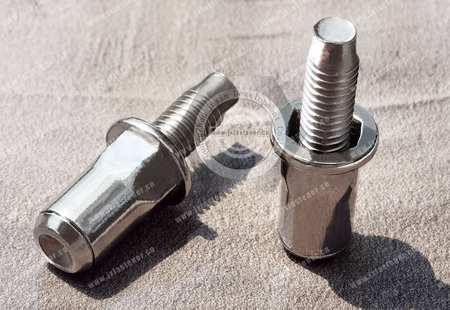 |
Applications Refrigeration plant, ventilation systems, air conditioning equipment, securing panels and hoses to vehicle chassis, rails in switch cabinets, exhausts, or electrical components in motor vehicles. | 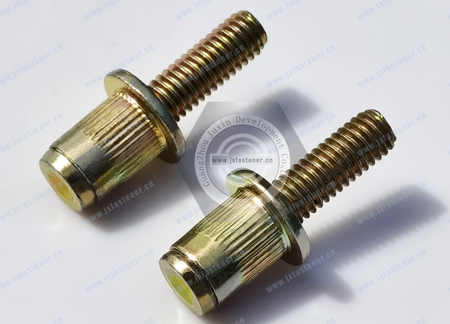 |
A blind rivet stud is a threaded fastening element designed to be installed through a prepared hole from one side of a component.
During installation, the rivet body is deformed on the blind side of the workpiece. This creates a mechanical clamping section that retains the stud in the material while leaving an external thread available for attaching another component.
The basic concept combines two functions:
Blind riveting — mechanically securing the fastener to the base material
Threaded stud mounting — providing an external thread for subsequent assembly
This makes blind rivet studs particularly useful where a conventional welded stud, self-clinching stud, or through-bolt cannot be easily installed.
They are also known in some industrial searches as blind rivet screws or blind rivet bolts, although terminology can vary by market and application.
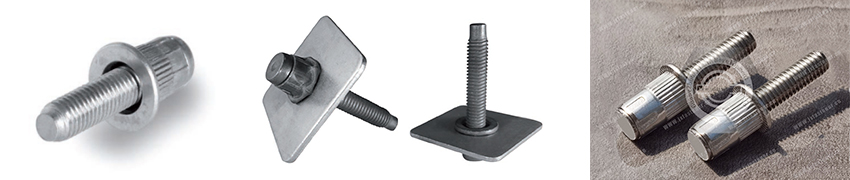

The primary reason to select a blind rivet stud is accessibility.
If the rear side of a sheet metal component, tube, enclosure, profile, or housing is inaccessible, installing a conventional nut or bolt may require additional openings, fixtures, welding operations, or assembly access.
A blind rivet stud allows the fastening point to be created from the accessible side.
One-sided installation
The fastener can be installed where only the front side of the component is accessible.
Suitable for thin-wall structures
Blind rivet studs can provide a threaded mounting point where the parent material is not suitable for directly creating a conventional thread.
No welding heat
Unlike welded studs, installation does not introduce welding heat into the component.
Useful on finished surfaces
When the mounting hole and process are properly designed, the fastener can be installed without requiring a post-welding finishing operation.
Fast assembly
The installation process can be integrated into manual or production assembly operations using suitable setting equipment.
Serviceable connection
The external thread provides a reusable fastening point for subsequent component installation or maintenance.
Design flexibility
Blind rivet studs can be considered for enclosed structures, overlapping components, hollow sections, and assemblies where rear-side access is restricted.
Technical specification: The clamping torque MA depends on the connected materials and the strength class of the screw. The clamping torque and the axial proof load F should be tested for each application and adjusted to suit the specific requirements. Resistance to thermal ageing*of the elastomeric part (TPV) | 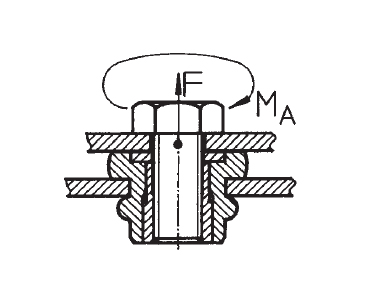 |
Choosing the correct fastening technology depends on the material, available access, joint loads, installation sequence, and production process.
| Fastening Method | One-Sided Access | Welding Heat | Threaded Mounting Point | Typical Use |
|---|---|---|---|---|
| Blind Rivet Stud | Yes | No | External thread | Thin-wall and enclosed assemblies |
| Weld Stud | Usually requires welding access | Yes | External thread | Fabricated metal structures |
| Self-Clinching Stud | Normally requires press access | No | External thread | Sheet metal production |
| Through Bolt & Nut | Usually No | No | Bolt connection | Accessible two-sided assemblies |
| Tapped Hole | Yes | No | Internal thread | Materials with sufficient thickness |
The important question for an engineer is therefore not simply “Which fastener is strongest?”
A better question is:
Which fastening method provides the required connection while fitting the available material thickness, access conditions, installation process, and assembly sequence?
Blind rivet studs become particularly attractive when one-sided access and a permanent external thread are both required.
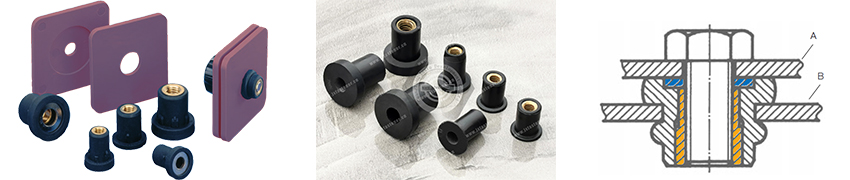
Thin sheet metal often presents a basic engineering problem: there may not be enough material thickness to create a sufficiently useful threaded mounting point directly in the parent material.
A blind rivet stud can move the threaded connection away from the limitations of the thin sheet.
Typical design situations include:
Thin steel sheet
Aluminum sheet
Metal enclosures
Hollow profiles
Tubular structures
Formed sheet metal components
Electrical cabinets
HVAC housings
Automotive body and chassis components
Machinery covers and brackets
The fastener is installed through a prepared hole, and the blind-side portion deforms during setting.
For production engineers, the hole diameter, material thickness, grip range, stud geometry, head configuration, and installation method should be evaluated together rather than selecting the fastener by thread size alone.
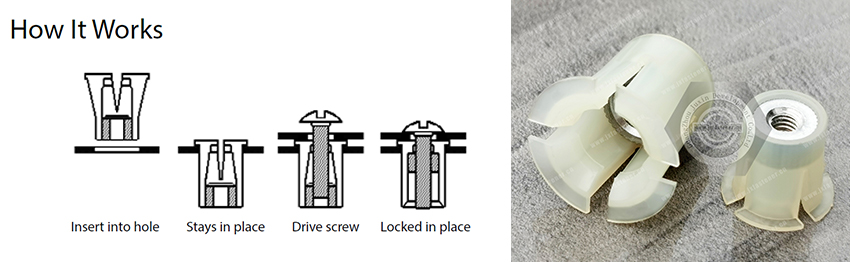
A typical blind rivet stud installation follows a simple sequence:
The workpiece is manufactured with the specified pilot hole.
The hole should be compatible with the selected blind rivet stud design and the material thickness.
The blind rivet stud is connected to the appropriate installation mandrel or setting system.
The fastener is inserted into the prepared hole from the accessible side.
The installation tool applies the required setting action, deforming the blind-side portion of the rivet body against the rear surface of the workpiece.
After setting, the installation equipment is removed and the external threaded stud remains fixed to the component.
A bracket, panel, rail, cover, hose support, electrical component, or other part can then be positioned onto the exposed thread.
This installation concept is particularly useful where the rear side of the assembly is enclosed or inaccessible.
One of the less obvious advantages of blind rivet studs is their ability to help with component prepositioning.
Consider a large bracket or panel that is difficult for an operator to hold in position while starting multiple fasteners.
A properly positioned blind rivet stud can act as a fixed mounting point.
The mating component can first be placed over the stud and supported in position before the remaining fastening points are tightened.
This can be useful for:
Large panels
HVAC covers
Vehicle brackets
Electrical enclosure components
Machinery guards
Heavy or oversized assemblies
Components installed in concealed locations
This is more than a fastener-selection issue. It can influence the assembly sequence and operator handling requirements of the product.
Automotive structures frequently combine thin sheet metal, restricted access, coated surfaces, brackets, panels, and components that must be installed efficiently.
Blind rivet studs can be considered for applications such as:
Vehicle chassis components
Brackets and supports
Underbody components
Interior and exterior panels
Electrical components
Cable and hose supports
Exhaust-related mounting components
Automotive sheet metal assemblies
For automotive engineers, selection should consider the actual joint environment, material combination, installation process, vibration conditions, corrosion requirements, and required load performance.
Where welding would introduce heat or require additional processing, a mechanically installed blind rivet stud may provide a more flexible manufacturing route.
Related solution: Automotive Fasteners & Engineered Body Hardware
HVAC and refrigeration equipment often uses sheet metal housings, panels, brackets, ducts, supports, and internal components.
Many of these structures provide access from only one side during assembly.
Blind rivet studs can provide mounting points for:
Panels
Brackets
Hoses
Tubing supports
Electrical components
Internal rails
Covers and service components
The one-sided installation principle is particularly useful when the rear side of a sheet metal housing becomes inaccessible after the enclosure is formed.
Electrical cabinets and control enclosures frequently require mounting points for rails, brackets, covers, cable management components, and electrical hardware.
Blind rivet studs can be considered where:
The cabinet wall is relatively thin
Rear-side access is restricted
The enclosure is already formed
Welding is undesirable
A fixed external threaded mounting point is required
The ability to create a fastening point without opening the opposite side of the enclosure can simplify assembly design.
Industrial equipment frequently contains guards, covers, brackets, panels, housings, and internal components that are difficult to access after assembly.
Blind rivet studs can support applications such as:
Machine covers
Protective guards
Mounting brackets
Service panels
Cable supports
Pneumatic and hydraulic hose supports
Electrical components
Internal structural accessories
For machinery designers, the key benefit is often assembly accessibility rather than simply fastener strength.
A connection that can be installed from one side can reduce the need for temporary fixtures or rear-side access during production.
Blind rivet studs can be engineered in different material and surface-treatment configurations depending on the application.
JUXIN FASTENERS can evaluate requirements such as:
Carbon steel
Stainless steel
Thread size
Metric or other thread requirements where applicable
Head configuration
Stud geometry
Corrosion environment
Base material
Required grip range
Installation conditions
For applications requiring higher corrosion resistance, specialized surface treatments may also be considered.
JUXIN FASTENERS has experience supplying fastener solutions involving zinc-nickel plating, zinc-based finishes, stainless steel materials, and other application-specific surface treatments.
The correct finish should be selected according to the actual environment, substrate, mating components, and customer specification rather than simply choosing a coating by name.
Not every application should use the same blind rivet stud geometry.
Depending on the assembly, engineers may need to consider:
The thread must match the mating component and required fastening system.
Head geometry influences seating, surface contact, clearance, and assembly requirements.
Different body configurations can affect installation behavior and resistance to rotation or movement.
The fastener must be suitable for the actual thickness of the material being clamped.
Steel, aluminum, plastic, and other substrates may require different fastener configurations and installation considerations.
The finish should be selected based on corrosion exposure, appearance, substrate compatibility, and customer requirements.
For OEM applications, JUXIN FASTENERS can evaluate application-specific stud designs where a standard catalog configuration does not provide the required assembly solution.
Blind fastening is not limited to conventional steel sheet applications.
Industrial products increasingly combine:
Steel and plastic
Aluminum and plastic
Metal and composite materials
Coated metal components
Molded housings with metal mounting structures
Blind rivet fastening technologies can provide a mechanical alternative where conventional welding is unsuitable because the assembly contains heat-sensitive materials.
For plastic applications, however, the fastener should be selected according to the actual plastic type, wall thickness, hole design, clamping requirements, installation force, and expected environmental conditions.
The fastener should not be treated as an isolated component; the fastener + hole + substrate + installation process + mating component should be evaluated as one joint system.
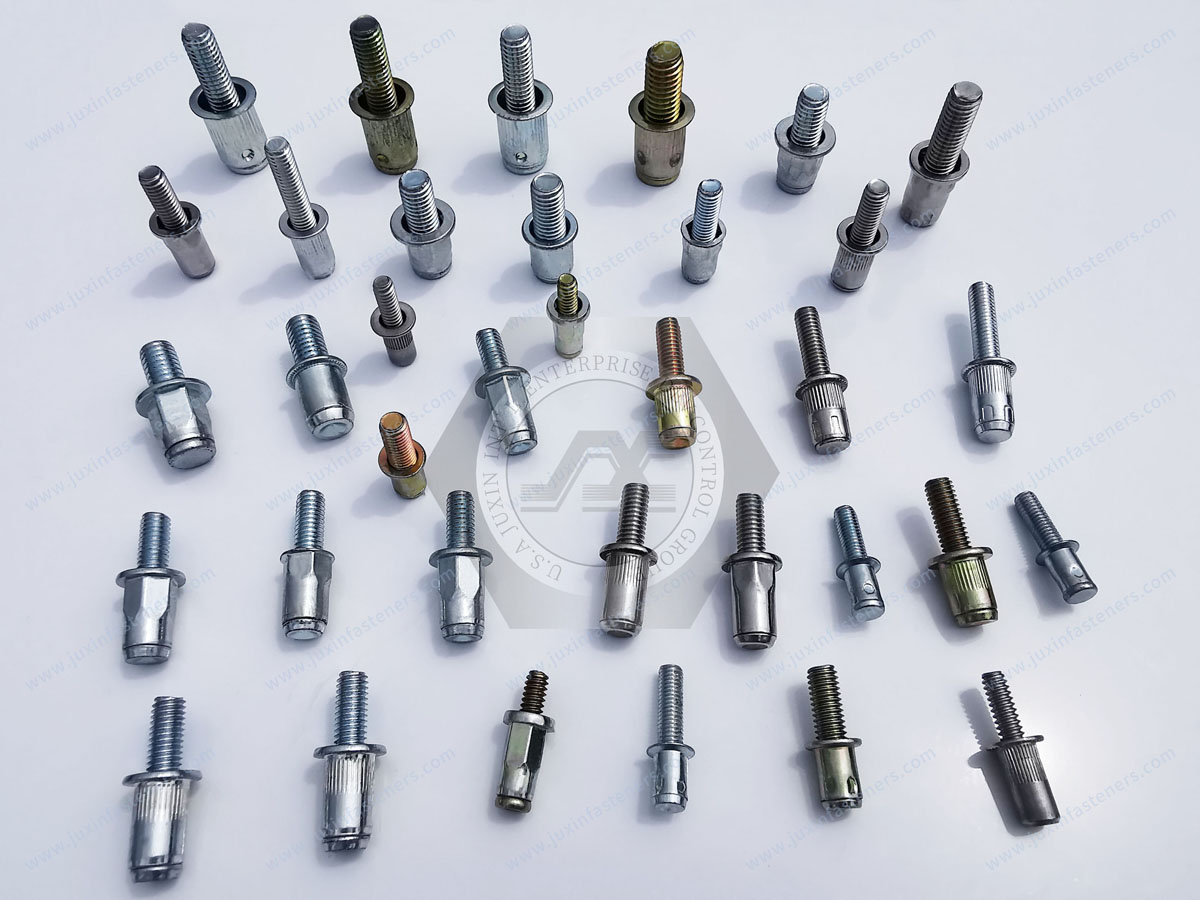
For procurement and engineering teams, the most important information is usually not just the thread size.
Before selecting a blind rivet stud, confirm:
Base material — steel, stainless steel, aluminum, plastic, composite, or mixed material
Material thickness — including the actual grip range
Hole diameter — based on the selected fastener design
Available access — confirm that installation is possible from the accessible side
Thread specification — metric or required alternative thread
Head geometry — based on surface and clearance requirements
Required load performance — axial, shear, vibration, or application-specific requirements
Corrosion environment — indoor, outdoor, automotive, industrial, or other conditions
Installation equipment — manual, pneumatic, battery-operated, or production tooling
Assembly sequence — determine whether the stud will also function as a positioning feature
Service requirements — determine whether the joint needs to be disassembled during maintenance
Customer specifications — drawings, material requirements, surface treatment, inspection, and packaging requirements
For critical applications, installation parameters and joint performance should be validated on the actual component rather than relying only on nominal fastener specifications.
A blind rivet stud is particularly worth considering when several of the following conditions apply:
Only one side of the component is accessible
The base material is relatively thin
A permanent external thread is required
The component is hollow or enclosed
Welding is undesirable
The component is already coated or finished
A bracket or panel needs to be prepositioned
The assembly contains difficult-to-reach fastening locations
The production process benefits from quick mechanical installation
A removable component must be mounted onto a fixed threaded point
If the application instead requires an internal thread, a blind rivet nut may be more appropriate.
If the sheet metal can be accessed by a press during manufacturing, a self-clinching stud or self-clinching fastener may also be worth comparing.
If welding is already integrated into the manufacturing process and access is suitable, a weld stud may provide a better production solution.
The correct choice depends on the complete assembly process.
JUXIN FASTENERS supplies industrial fastening solutions for OEM manufacturers, distributors, engineering companies, and procurement teams.
Our blind rivet stud solutions can be evaluated for:
Thin sheet metal assemblies
Hollow profiles
Enclosures and housings
Automotive components
HVAC and refrigeration equipment
Electrical cabinets
Industrial machinery
Equipment panels
Brackets and supports
Plastic and mixed-material assemblies
Applications with restricted rear-side access
Depending on the application, JUXIN FASTENERS can evaluate standard blind rivet studs as well as application-specific configurations, including material, thread, geometry, and surface-treatment requirements.
For OEM projects, drawings, samples, annual quantities, material requirements, and application conditions can be reviewed together before final product selection.
A blind rivet stud should not be selected only by searching for an M5, M6, or M8 threaded component.
For engineers, the more important question is:
Can the fastener create a reliable threaded mounting point within the actual material, access, installation, and assembly conditions?
For procurement teams, the next question is:
Can the supplier consistently provide the required configuration, quality, surface treatment, packaging, and production support?
JUXIN FASTENERS approaches blind rivet stud sourcing from both perspectives.
The objective is not simply to supply a threaded rivet stud. It is to provide a fastening solution that fits the customer's product design, manufacturing process, and supply-chain requirements.
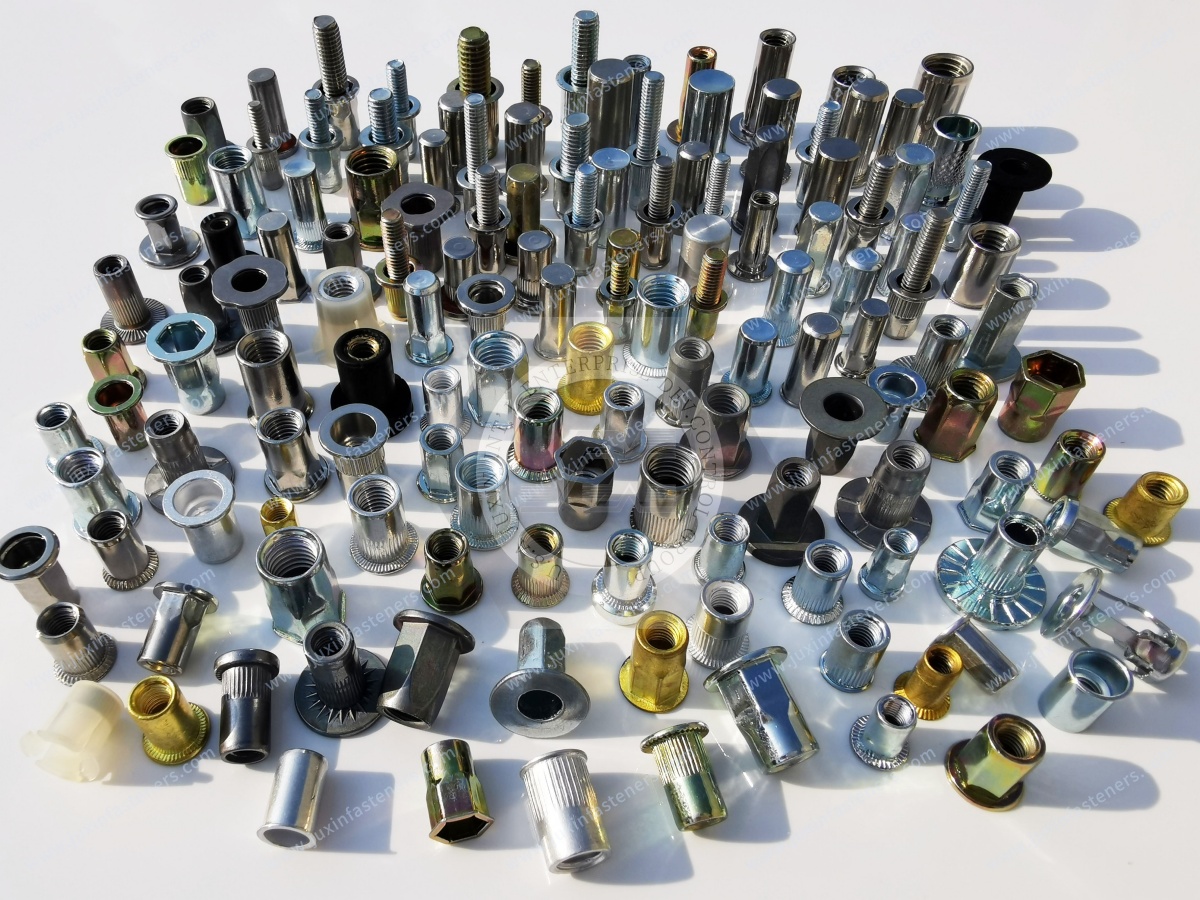
If you are sourcing blind rivet studs, blind rivet screws, threaded rivet studs, or one-sided fastening solutions, send JUXIN FASTENERS your drawing, thread specification, material thickness, base material, required surface treatment, estimated quantity, and application information.
Our engineering and sourcing team can review the requirements and recommend a suitable blind fastening configuration.
Email: info@juxinfasteners.com
JUXIN FASTENERS — Industrial Fasteners for OEM Engineering and Global Supply.
 MORE NEWS
Sep. 25, 2026

Sep. 25, 2026
Sep. 25, 2026
Contact Us
Tel.:
+86 020 8621 0320
+86 020 3121 6067
E-mail:
Technical Support:
Navigation
SEND INQUIREY