
Call Us
+86 136 6007 9809
Call Us
+86 136 6007 9809

Aug. 15, 2026
Expansion Bolt Solutions for Steel Structures and Metal Fabrication
Engineering Guide to Steel-to-Concrete Anchoring, Fabricated Base Plates, Structural Brackets and OEM Fastening Solutions
Steel structures and fabricated metal components require reliable connections to supporting foundations, walls and other structural elements.
In industrial buildings, commercial facilities, equipment installations and infrastructure projects, steel brackets, fabricated frames, handrails,
platforms and support assemblies may need to be connected to existing concrete.
Expansion bolts, mechanical concrete anchors and other post-installed fastening systems can provide practical solutions for suitable steel-to-concrete connections.
However, the engineering performance of the connection depends on more than the nominal diameter or tensile strength of an individual anchor.
The steel fixture, base plate, welds, anchor group, concrete substrate and installation conditions must work together to transfer the required loads.
For structural engineers, design engineers, metal fabricators, manufacturing engineers, production managers and industrial procurement teams,
anchor selection should therefore consider both structural performance and fabrication efficiency.
Juxin Fasteners supplies industrial fastening components for steel fabrication, construction, machinery, infrastructure and OEM applications.
Our product range includes expansion bolts, concrete anchoring hardware, structural fastening components, bolts, nuts,
washers, rivet nuts, welding nuts, self-clinching fasteners and drawing-based custom components.
This guide explains the engineering and commercial considerations involved in selecting expansion bolt solutions for steel structures and metal fabrication.
What Are Expansion Bolts for Steel Structures?
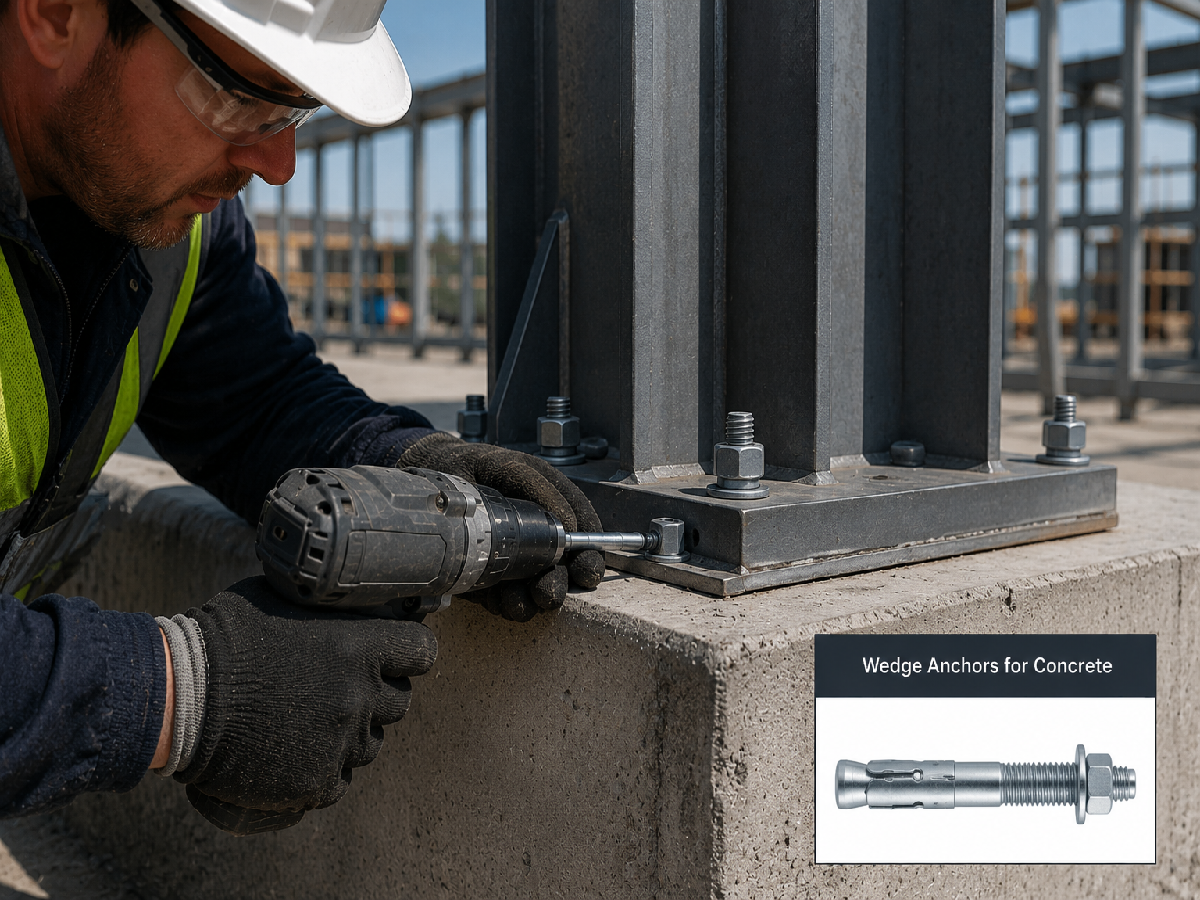
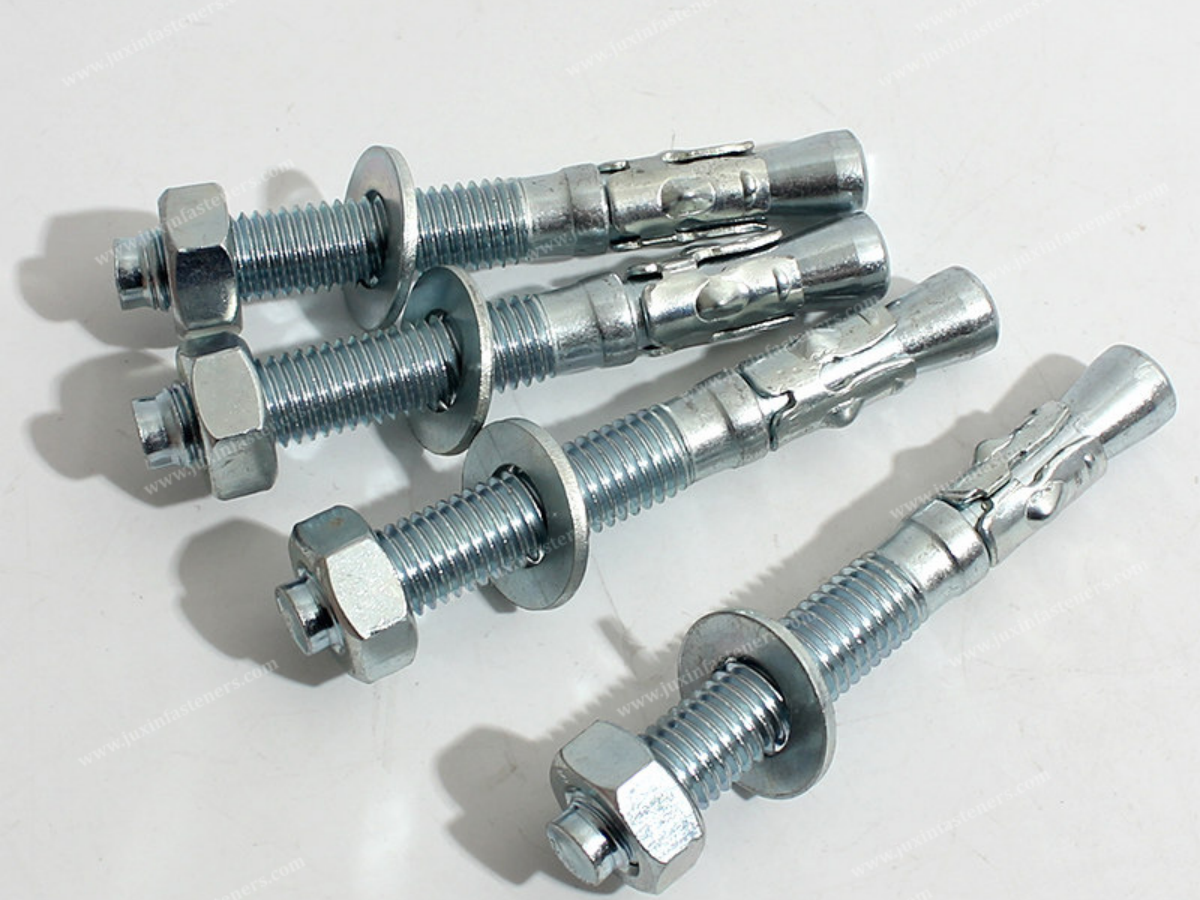
Expansion bolts are mechanical anchors designed to secure suitable fixtures to qualified base materials through a product-specific expansion mechanism.
Depending on the anchor design, the assembly may include:
Threaded stud or bolt
Expansion sleeve or clip
Tapered cone or wedge
Nut and washer
Product-specific setting components
The expansion mechanism engages the surrounding concrete according to the manufacturer's installation instructions.
This allows applicable tensile and shear forces to be transferred from the attached steel fixture into the concrete.
Common International Product Terms
Engineers and industrial buyers may search for:
Expansion bolts for steel structures
Steel-to-concrete anchors
Mechanical concrete anchors
Steel base plate anchors
Steel bracket concrete anchors
Wedge anchor bolts
Sleeve expansion anchors
Post-installed structural anchors
Fabricated steel support anchors
Heavy-duty concrete anchors
Steel column base plate anchors
Metal fabrication fastening components
These terms describe related products and applications but do not establish technical equivalence.
Different anchor designs may have different expansion mechanisms, embedment requirements, installation procedures and technical qualifications.
Important Engineering Boundary: Steel-to-Concrete vs. Steel-to-Steel Connections
A fundamental distinction in structural fastening is the difference between connecting steel to concrete and connecting steel to steel.
Steel-to-Concrete Connections
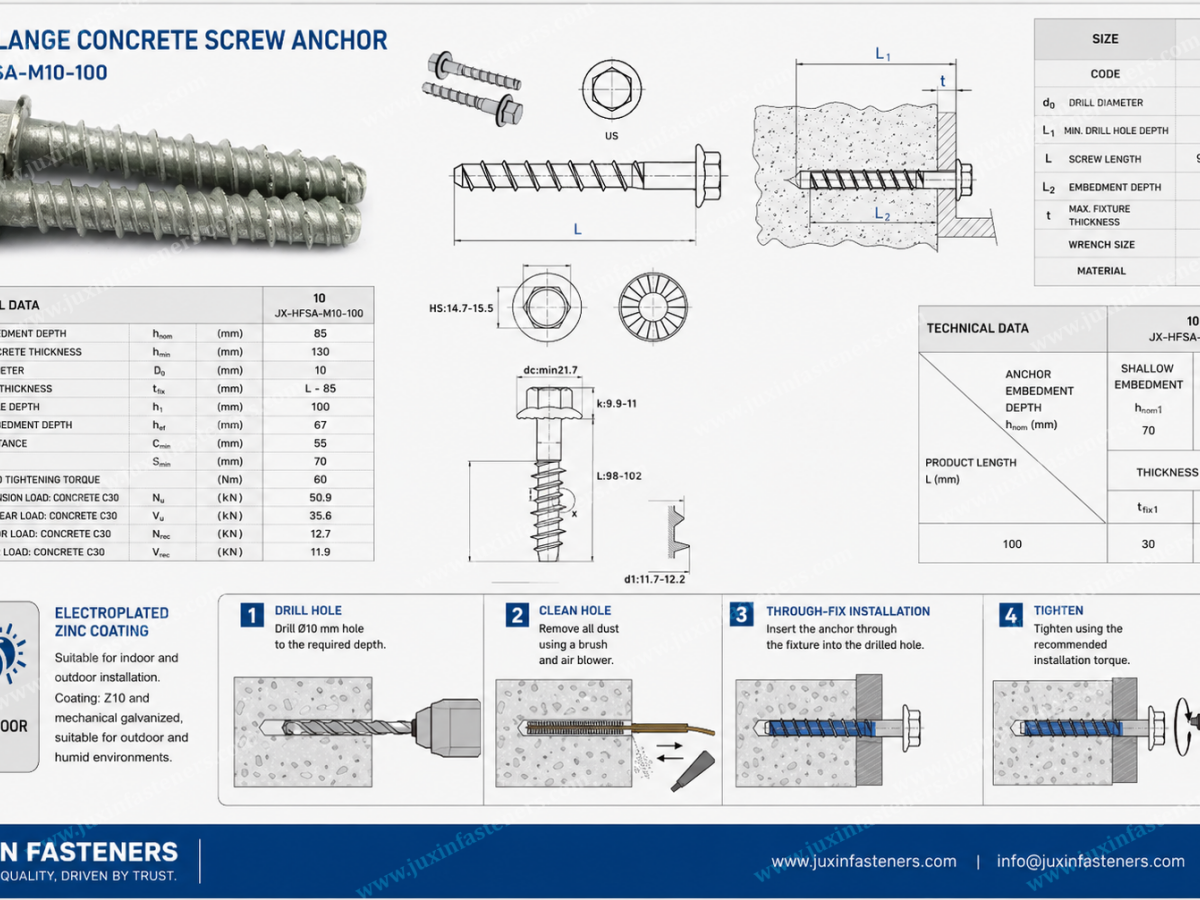
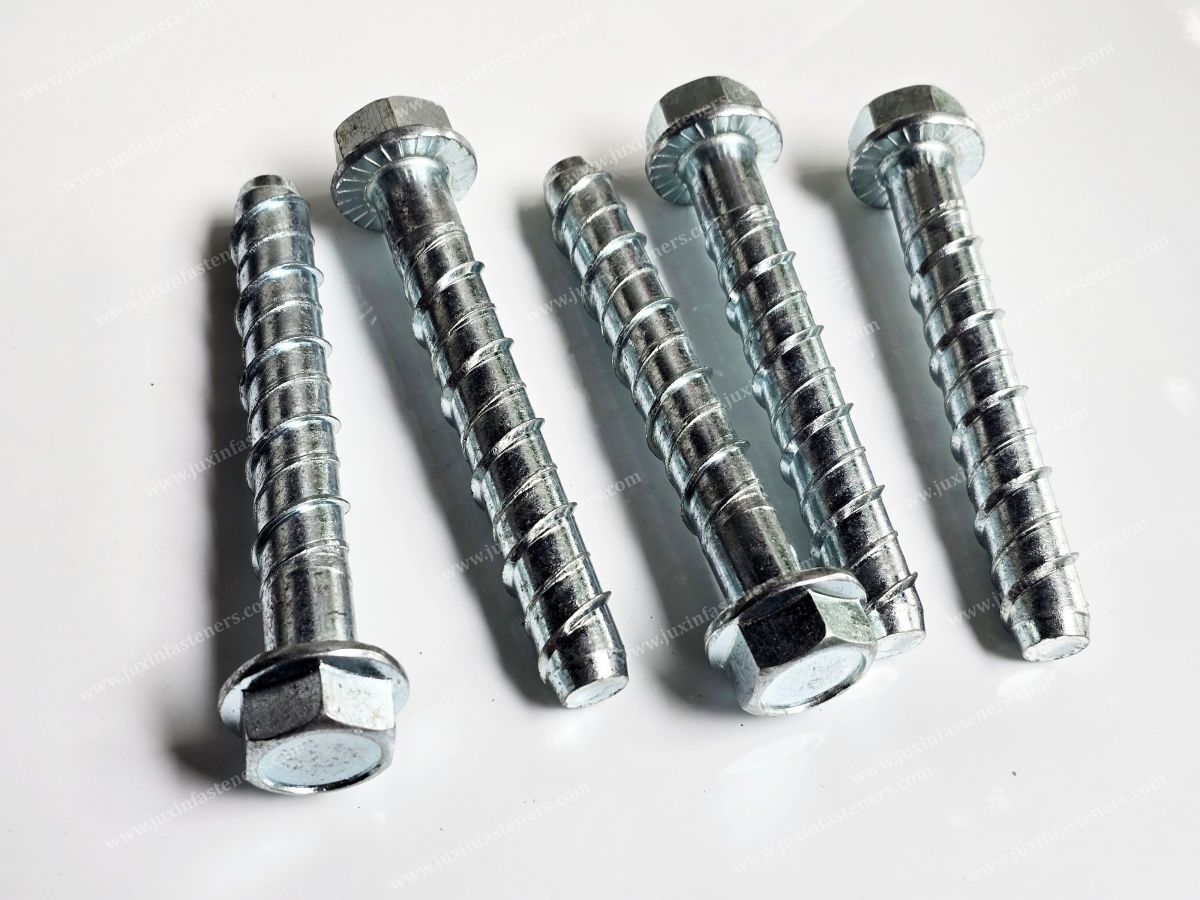
These may use qualified expansion anchors, bonded anchors, concrete screw anchors, undercut anchors or cast-in foundation bolts.
Steel-to-Steel Connections
These commonly use specified structural bolts, nuts, washers, welded joints or other engineered connection systems.
A concrete expansion anchor is not a general substitute for a structural bolt used between steel members.
For example, a steel beam-to-column connection and a steel column base plate connection require different design approaches.
Information Gain: The Connection Interface Determines the Fastener Category
The same fabricated steel assembly may contain both steel-to-steel connections and steel-to-concrete connections.
The procurement specification should distinguish these fastening categories instead of grouping all components under a generic description such as structural bolts.
Applications in Steel Structures and Metal Fabrication
Potential applications include:
Steel brackets
Fabricated support frames
Equipment platforms
Handrails
Safety barriers
Access structures
Selected steel column base plates
Machinery support frames
Pipe support brackets
Cable tray supports
Industrial service structures
Fabricated equipment supports
The selected anchoring system must be suitable for the actual loads, substrate, installation geometry and applicable project requirements.
Steel Fabrication Application Matrix
| Application | Typical connection | Main engineering consideration |
|---|---|---|
| Steel support bracket | Steel-to-concrete | Eccentric loading and anchor group |
| Fabricated base plate | Steel-to-concrete | Plate stiffness and force transfer |
| Industrial platform | Steel support to foundation | Structural loading and serviceability |
| Handrail base | Steel post to concrete | Lateral loads and edge distance |
| Stair support | Fabricated steel to concrete | Connection forces and access |
| Equipment support frame | Steel base to concrete | Vibration and foundation conditions |
| Pipe bracket | Steel bracket to concrete | Support reactions and movement |
| Cable tray bracket | Steel support to concrete | Repeated installation and loading |
| Safety barrier | Steel base to concrete | Impact and system requirements |
Expansion Bolts for Steel Brackets
Steel brackets are widely used in industrial and commercial construction.
Potential applications include:
Equipment supports
Pipe brackets
HVAC support structures
Cable supports
Service frames
Selected reinforcement assemblies
Auxiliary safety equipment
A bracket may transfer vertical loads, horizontal loads and bending moments into its anchoring system.
Anchor Diameter
The selected diameter must be compatible with the anchor design and structural requirements.
Effective Embedment
The effective embedment influences concrete anchoring resistance.
Concrete Strength
The substrate must satisfy the product's technical requirements.
Edge Distance
Anchors installed near concrete edges may be limited by concrete breakout or splitting.
Anchor Spacing
Closely spaced anchors may interact through the surrounding concrete.
Load Direction
The bracket may impose tension, shear or combined loading.
Installation Procedure
The specified drilling, cleaning and setting requirements must be followed.
Information Gain: Bracket Eccentricity Can Govern Anchor Selection
A bracket carrying a load away from the wall or supporting surface creates an eccentric connection.
The resulting moment can increase tension in part of the anchor group.
Selecting an anchor based only on the supported component's weight may therefore underestimate the required connection performance.
Steel-to-Concrete Load Transfer
A simplified connection load path is:
Fabricated steel member → weld or bolted fixture connection → steel base plate → anchor group and bearing interface → concrete substrate.
Each component influences the overall behavior.
Steel Member
Transfers loads from the supported structure.
Welded Connection
Transfers forces between the steel member and the base plate where welding is specified.
Base Plate
Distributes contact forces and transfers anchor forces.
Anchor Group
Resists the relevant tension and shear effects.
Concrete
Provides the substrate resistance required for the anchoring system.
Information Gain: A Strong Anchor Cannot Compensate for a Weak Base Plate or Weld
An anchor with a high published resistance may still form part of an inadequate connection if the steel plate, weld, concrete or installation geometry is insufficient.
Structural design should evaluate the complete load path.
Base Plate Design for Steel Structures
Steel base plates are common in fabricated structural assemblies.
Potential applications include:
Steel support columns
Equipment frames
Industrial platforms
Handrail posts
Stair supports
Structural brackets
Base Plate Thickness
Plate thickness influences stiffness and deformation.
Anchor Hole Position
Hole locations affect anchor spacing and edge distance.
Weld Geometry
Weld size and configuration influence force transfer.
Contact Conditions
The base plate may bear directly on concrete or through a specified grout or bearing interface.
Anchor Group Layout
The arrangement must accommodate the design forces and installation constraints.
Rigid and Flexible Base Plates
A rigid-base-plate assumption may be used in certain design methods.
However, real plates deform under loading.
Where relevant, flexible plate behavior can influence anchor force distribution.
Information Gain: Base Plate Flexibility Can Change Anchor Demand
A flexible base plate may concentrate forces differently from an idealized rigid plate.
Simply increasing anchor diameter does not resolve all base plate deformation issues.
The engineer should coordinate plate thickness, weld design, anchor layout and concrete resistance.
Anchor Group Tension and Shear
Steel-to-concrete connections may experience several loading conditions.
Direct Tension
Forces tending to pull the fixture away from the concrete.
Direct Shear
Forces acting parallel to the concrete surface.
Combined Tension and Shear
Simultaneous actions that require appropriate interaction checks.
Bending Moment
A moment may create nonuniform tension among anchors.
Torsion
Certain asymmetric assemblies may generate torsional effects.
Repeated Loading
Some industrial installations experience cyclic or dynamic forces.
Anchor Group Behavior
The load carried by an individual anchor depends on the complete connection geometry and stiffness.
Information Gain: Four Anchors Do Not Necessarily Provide Four Times the Capacity of One Anchor
Closely spaced anchors may share a concrete breakout region.
Edge distance, spacing, concrete thickness and plate behavior can influence the capacity of the group.
Anchor groups must be evaluated as complete connections.
Concrete Edge Distance and Steel Bracket Installation
Steel brackets are often installed close to slab edges, concrete columns or narrow supporting members.
This creates potential design limitations.
Concrete Breakout
Tension or shear may cause failure of a concrete region surrounding the anchor.
Concrete Splitting
Expansion forces and substrate geometry may contribute to splitting under unsuitable conditions.
Limited Member Thickness
The available concrete thickness may restrict anchor selection.
Reinforcement
Drilling must account for existing reinforcement and embedded services.
Installation Access
Steel geometry may obstruct drilling and setting tools.
Information Gain: Bracket Geometry Should Be Reviewed Before Fabrication
If the base plate is fabricated with anchor holes too close together or too near a concrete edge, the completed steel component may require redesign.
Early coordination between the structural engineer and fabricator can prevent expensive site modifications.
Expansion Bolts for Metal Fabrication Projects
Metal fabricators often manufacture steel assemblies in workshops before installation on site.
These assemblies may include:
Welded steel brackets
Fabricated frames
Support plates
Mounting flanges
Structural support assemblies
Industrial access structures
Equipment bases
Post-installed concrete anchors can provide flexibility when connecting suitable fabricated components to existing concrete.
However, workshop dimensions and site conditions must be coordinated.
Fabrication Drawings
Should identify relevant connection dimensions and tolerances.
Base Plate Hole Patterns
Must match the approved anchor arrangement.
Welded Assembly Distortion
Welding can influence the final geometry of a fabricated component.
Surface Coating
Coating requirements should be considered before finalizing fit and assembly details.
Site Installation
The completed steel assembly must permit drilling, anchor insertion and setting.
Information Gain: Anchor Installation Access Is a Fabrication Design Requirement
A fabricated bracket may satisfy dimensional requirements but still be difficult to install if the welds, gussets or steel members obstruct the anchor setting tool.
The required tool envelope should be considered during the fabrication design stage.
Fabricated Base Plate Hole Tolerances
Hole diameter and positional tolerances affect assembly and installation.
Anchor Clearance
The fixture-hole clearance must be compatible with the selected anchor system.
Hole Position
Hole patterns must correspond to the approved anchor layout.
Plate Distortion
Fabrication processes may change hole alignment.
Coating Thickness
Certain coatings can influence fit.
Site Tolerances
Existing concrete conditions may introduce installation constraints.
Slotted Holes
Slots should not be introduced without engineering review.
Information Gain: A Larger Clearance Hole Is Not Automatically Harmless
Increasing a fixture-hole diameter or introducing a slot may affect shear transfer, washer bearing or the evaluated connection configuration.
The final hole geometry must be compatible with the approved anchoring system.
Expansion Anchors for Handrails and Safety Structures
Handrails, access platforms, stairs and safety barriers require reliable mechanical connections.
Potential applications include:
Handrail base plates
Stair support brackets
Access platform supports
Industrial safety barriers
Maintenance structures
Guarding assemblies
Lateral Loading
Handrails may experience horizontal loads.
Overturning
A tall post can create significant moments at its base.
Concrete Edge Distance
Handrail posts are frequently located near slab edges.
Corrosion
Outdoor installations require suitable materials and protective finishes.
Impact
Certain barriers may require specific impact performance.
Safety Requirements
The complete assembly must satisfy applicable structural and safety requirements.
Information Gain: Handrail Anchorage Is Often Controlled by Moment and Edge Conditions
A handrail base plate may appear lightly loaded in terms of vertical weight.
However, lateral forces applied above the base create an overturning moment.
This can generate significant anchor tension, especially near a concrete edge.
Critical Safety Boundary
General-purpose expansion bolts should not automatically be specified for life-safety barriers, fall-protection systems or impact-rated structures.
Such installations require appropriate engineering and product qualification.
Expansion Bolts for Industrial Platforms and Access Structures
Industrial facilities may use fabricated steel platforms and access structures.
Potential applications include:
Equipment platforms
Maintenance walkways
Access stairs
Service frames
Auxiliary support structures
Structural Loading
Loads may include personnel, equipment and maintenance activities.
Vibration
Industrial environments may introduce repeated loading.
Connection Geometry
Platform supports may transfer significant moments into the foundation.
Corrosion
Exposure conditions influence material selection.
Inspection
Connections may require periodic maintenance access.
Engineering Information Gain: Platform Anchorage Must Be Coordinated With the Entire Structure
The anchor design is only one part of platform safety.
Steel members, welded connections, bracing, base plates and concrete foundations must also be evaluated.
Pipe Supports and Cable Tray Brackets
Fabricated steel supports are common in industrial plants.
Potential applications include:
Pipe brackets
Cable tray supports
Conduit support frames
Utility brackets
Equipment service structures
Pipe Support Loads
Pipe weight, contents, thermal movement and operational forces may influence the support design.
Cable Tray Loads
Cable weight and future loading allowances may influence the required support capacity.
Bracket Eccentricity
Cantilevered supports can generate anchor tension.
Repeated Installation
Large projects may contain numerous similar bracket assemblies.
Information Gain: Standardized Bracket Designs Can Reduce Fabrication and Installation Variation
For repeated support assemblies, standardized hole patterns, approved anchor schedules and installation procedures may improve consistency.
However, the approved configurations must reflect the actual load and substrate conditions.
Mechanical Expansion Anchors vs. Other Connection Systems
Different applications may require different fastening approaches.
| Connection system | General use | Main consideration |
|---|---|---|
| Mechanical expansion anchor | Qualified post-installed steel-to-concrete connection | Expansion and substrate conditions |
| Concrete screw anchor | Qualified direct-thread concrete fixing | Hole and engagement requirements |
| Bonded anchor | Qualified adhesive anchoring | Hole preparation and curing |
| Undercut anchor | Specialized mechanical anchoring | Product-specific setting |
| Cast-in foundation bolt | Planned concrete foundation connection | Construction sequence and design |
| Structural steel bolt assembly | Steel-to-steel connection | Applicable steel connection requirements |
| Welded steel connection | Steel-to-steel fabrication | Weld design and execution |
Mechanical Expansion Anchors
May provide a practical solution for suitable post-installed steel fixtures.
Cast-In Foundation Bolts
May be appropriate for new structural foundations.
Bonded Anchors
May be considered where the actual product and project conditions permit.
Structural Bolts
Are used for applicable steel-to-steel connections and should not be confused with concrete expansion anchors.
Information Gain: Post-Installed Anchors Are Not Automatic Substitutes for Cast-In Foundation Bolts
A steel column originally designed with cast-in foundation bolts should not be converted to a post-installed expansion-anchor connection without engineering review.
Cracked Concrete and Anchor Qualification
The concrete condition influences anchor selection.
Cracked Concrete
Some mechanical anchors are qualified for cracked concrete.
Uncracked Concrete
Other anchors may have qualifications limited to uncracked concrete.
Existing Concrete
Retrofit installations may involve uncertain concrete strength, cracking or previous drilling.
Concrete Member Thickness
The available thickness must satisfy the anchor's requirements.
Reinforcement
Drilling must not damage critical reinforcement.
Information Gain: Product Qualification Must Match the Actual Installation
A product's qualification for one concrete condition, embedment or anchor configuration does not establish suitability for all possible installations.
Steel Structure Expansion Anchor Dimensions
Important dimensional parameters include:
Nominal anchor diameter
Overall anchor length
Thread designation
Fixture thickness
Effective embedment
Drill diameter
Drill depth
Anchor spacing
Concrete edge distance
Nut and washer configuration
Nominal Diameter
Identifies the anchor size but does not independently establish connection resistance.
Effective Embedment
Is a product-specific design parameter and should not be confused with overall length.
Fixture Thickness
The steel base plate and any specified intermediate layers affect anchor length selection.
Installation Torque
Torque-controlled anchors require the approved setting procedure.
Dimensional Selection Matrix
| Parameter | Engineering importance | Common error |
|---|---|---|
| Diameter | Anchor geometry | Selecting by size alone |
| Overall length | Fixture compatibility | Ignoring plate thickness |
| Effective embedment | Concrete resistance | Confusing length and embedment |
| Hole diameter | Expansion mechanism | Using an incorrect drill |
| Edge distance | Concrete breakout | Installing too close to an edge |
| Anchor spacing | Group interaction | Ignoring shared breakout regions |
| Fixture-hole clearance | Shear transfer and fit | Unapproved hole enlargement |
| Setting torque | Proper expansion | Applying generic bolt torque |
Corrosion Protection for Steel Structure Anchors
Steel structures may operate in indoor, outdoor, coastal or industrial environments.
Zinc-Plated Carbon Steel
May be suitable for selected protected indoor applications.
Hot-Dip Galvanized Systems
Certain anchor systems are available in qualified hot-dip galvanized configurations.
Coating compatibility with threads and expansion components must be considered.
Stainless Steel Anchors
Suitable stainless steel systems may be considered where enhanced corrosion resistance is required.
304 Stainless Steel
May be appropriate for certain exposure conditions.
316 Stainless Steel
May provide improved resistance in some environments but is not immune to all corrosion mechanisms.
Coating Compatibility
The steel fixture and anchor assembly should be evaluated together.
Corrosion Selection Matrix
| Environment | Potential concern | Selection approach |
|---|---|---|
| Dry indoor structure | Atmospheric corrosion | Suitable protected steel |
| Outdoor steel platform | Rain and humidity | Qualified outdoor protection |
| Coastal steel structure | Chloride exposure | Appropriate corrosion-resistant system |
| Industrial processing plant | Chemical pollutants | Exposure-specific material |
| Mixed-metal assembly | Galvanic corrosion | Material compatibility review |
| Frequently washed equipment | Moisture and cleaning agents | Suitable material and coating |
Information Gain: The Steel Fixture and Anchor Should Be Treated as a Corrosion System
A galvanized steel bracket connected with an anchor having a different coating or material may require compatibility review.
The durability of the complete assembly cannot be determined from the base plate coating alone.
Relevant Material and Coating Standards
Depending on the product, applicable references may include:
ISO 898-1 for mechanical properties of specified carbon and alloy steel fasteners
ISO 3506 for mechanical properties of applicable stainless steel fasteners
ISO 4042 for electroplated fastener coatings
ISO 10684 for applicable hot-dip galvanized fasteners
ISO 9227 and ASTM B117 for laboratory salt spray testing
These standards do not independently establish concrete anchoring resistance.
Hydrogen Embrittlement
Certain hardened or high-strength steel fasteners may be susceptible to hydrogen embrittlement.
Material selection, heat treatment and coating processes should be evaluated where relevant.
Information Gain: Steel Strength Is Not the Same as Anchor System Resistance
A high-strength threaded stud does not automatically make the complete expansion anchor suitable for a high-load structural connection.
Concrete breakout, expansion behavior, embedment and installation conditions may govern.
Installation Requirements for Steel-to-Concrete Anchors
The manufacturer's installation instructions and project specifications govern installation.
Confirm the Anchor Product
Verify the exact model, size, material and technical qualification.
Inspect the Concrete
Check the substrate condition and installation location.
Verify the Steel Fixture
Confirm the base plate dimensions, hole pattern and installation access.
Check Anchor Geometry
Verify:
Edge distance
Anchor spacing
Concrete thickness
Fixture thickness
Effective embedment
Installation orientation
Drill the Hole
Use the specified drill diameter and depth.
Prepare the Hole
Follow the product's hole-cleaning requirements.
Install the Anchor
Use the approved setting sequence.
Apply the Specified Setting Procedure
For torque-controlled anchors, use the required torque and tools.
Inspect the Connection
Verify the specified acceptance criteria.
Important Installation Limitation
Do not assume that every expansion anchor permits impact-wrench setting or the same installation torque.
Installation Quality-Control Matrix
| Checkpoint | Purpose |
|---|---|
| Anchor identification | Prevent incorrect substitution |
| Concrete condition | Verify substrate suitability |
| Base plate hole pattern | Confirm geometric compatibility |
| Anchor spacing | Maintain approved layout |
| Edge distance | Address concrete breakout risk |
| Drill diameter | Support correct expansion |
| Hole depth | Meet installation requirements |
| Hole preparation | Follow product instructions |
| Setting procedure | Activate anchor correctly |
| Inspection records | Support traceability |
Common Problems in Steel Structure Anchoring
Incorrect Anchor Selection
May result in unsuitable performance for the substrate or loads.
Insufficient Embedment
May reduce concrete anchoring resistance.
Incorrect Edge Distance
May increase concrete breakout or splitting risk.
Base Plate Deformation
May alter anchor force distribution.
Unapproved Hole Enlargement
May affect the intended connection behavior.
Welded Assembly Distortion
May create alignment problems.
Corrosion
May reduce durability.
Uncontrolled Substitution
May invalidate the approved engineering assumptions.
Information Gain: Installation Problems Often Begin in the Fabrication Drawing
A base plate with unsuitable hole spacing, insufficient installation clearance or incompatible fixture thickness may create problems before the anchors reach the construction site.
Early drawing review can reduce rework.
International Engineering Standards and Product Qualification
EN 1992-4 — Design of Fastenings for Use in Concrete
EN 1992-4 provides European design provisions for applicable concrete fastening systems.
ACI 318 Chapter 17
ACI 318 Chapter 17 provides anchoring-to-concrete design provisions for applicable projects.
ACI 355.2
ACI 355.2 addresses qualification of post-installed mechanical anchors in concrete.
EN 1993-1-8
EN 1993-1-8 provides design provisions for applicable steel joints.
EN 1090-2
EN 1090-2 addresses technical requirements for the execution of steel structures.
AISC 360
AISC 360 provides structural steel building design requirements for applicable projects.
European Technical Assessments
An ETA may provide product-specific assessed characteristics for a concrete anchor.
ICC-ES Evaluation Reports
An ICC-ES report may provide product-specific evaluation information under stated conditions.
Critical Qualification Boundary
Compliance with a steel fastener material standard does not automatically establish qualification of a mechanical anchor for structural concrete applications.
An approval issued for another manufacturer's anchor cannot be used to qualify a different product.
Metric and Inch-Based Structural Fasteners
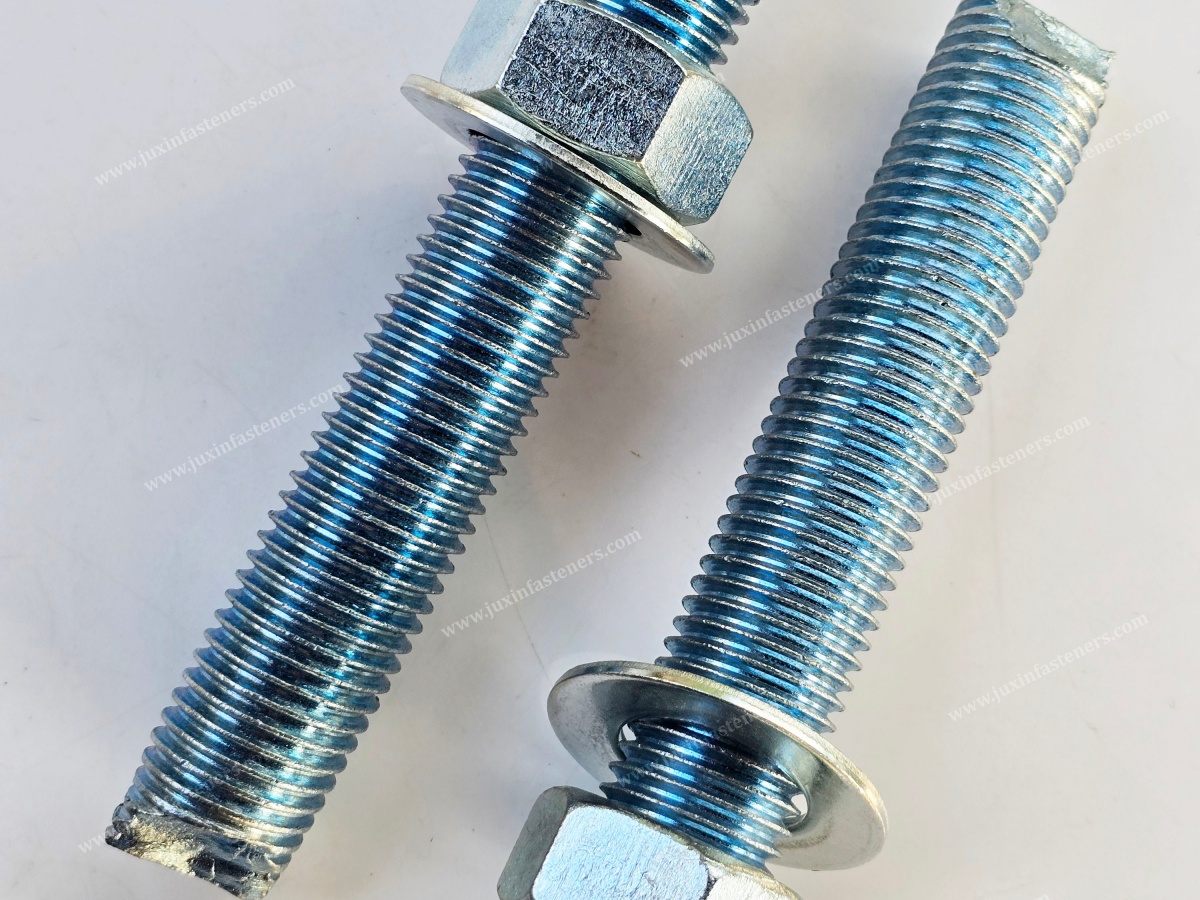
Steel fabrication projects may use metric or inch-based threaded components.
The exact thread designation must be specified.
Metric, UNC, UNF, BSW and BSF threads are not directly interchangeable.
Dimensional conversions are reference values only.
Manufacturing Engineering and Production Efficiency
Metal fabrication production teams require repeatable processes.
Drawing Control
Approved drawings should identify relevant dimensions and tolerances.
Hole Pattern Consistency
Stable hole locations support assembly.
Welding Distortion Control
Fabrication procedures should consider dimensional changes.
Coating Compatibility
Coatings should be considered when defining fit and assembly.
Part Identification
Clear identification helps prevent component mixing.
Packaging
Project-specific packaging can improve installation logistics.
Inspection
Defined acceptance criteria support consistent quality.
Information Gain: Fabrication Efficiency Begins With Anchor-Compatible Drawings
A standard anchor size is not enough to ensure efficient installation.
The base plate must also have suitable hole geometry, access clearance and fixture thickness.
Coordinating these requirements before fabrication can reduce site modifications and assembly delays.
Procurement Requirements for Steel Fabrication Fasteners
Procurement teams should distinguish technical requirements from commercial requirements.
Technical Specifications
Anchor type
Product drawing
Diameter
Length
Thread designation
Material
Mechanical properties
Surface finish
Installation requirements
Quality Requirements
Dimensional inspection
Thread inspection
Material verification
Coating requirements
Batch consistency
Product identification
Inspection documentation
Commercial Requirements
Sample quantity
Initial order quantity
Annual forecast
MOQ expectations
Packaging
Lead time
Delivery schedule
Repeat-order planning
Supplier Qualification Matrix
| Requirement | Procurement purpose |
|---|---|
| Product drawing | Verify dimensions |
| Anchor mechanism | Prevent incorrect substitution |
| Concrete qualification | Support engineering approval |
| Material specification | Verify required properties |
| Coating specification | Address environmental exposure |
| Installation instructions | Support site consistency |
| Inspection criteria | Support quality control |
| Traceability | Support project records |
| Change control | Protect approved configurations |
Information Gain: Anchor Substitution Is an Engineering Change
Two expansion anchors may have the same nominal diameter and overall length but different expansion mechanisms,
embedment requirements, installation torques and technical qualifications.
A purchasing substitution should be reviewed against the complete engineering specification.
OEM Customization and Drawing-Based Fastening Components
Metal fabricators and equipment manufacturers may require:
Special fastener dimensions
Metric or inch threads
Material specifications
Surface finishes
Special nuts and washers
Custom threaded components
Equipment-specific fastening assemblies
Packaging and identification requirements
Technical feasibility must be confirmed for each request.
Important Limitation
Changing the geometry, material, coating or expansion mechanism of a qualified anchor may affect its evaluated performance.
A customized product must not automatically be represented as retaining an existing ETA, ICC-ES report or other technical approval.
Why Source Industrial Fasteners from Juxin Fasteners?
Juxin Fasteners has more than 20 years of experience in international industrial fastener supply.
Our fastening portfolio includes:
Expansion bolts
Concrete anchoring hardware
Structural fastening components
Bolts and screws
Nuts and washers
Rivet nuts
Welding nuts
Self-clinching fasteners
Custom threaded components
Drawing-based OEM fasteners
We welcome technical and commercial inquiries involving:
Product drawings
Dimensions and tolerances
Material requirements
Surface finishes
Steel fabrication applications
Inspection specifications
Packaging
Bulk procurement
Delivery planning
Specific product availability, customization feasibility, technical documentation, MOQ and lead times must be confirmed for each inquiry.
For safety-critical structural anchoring, the required product qualification and engineering approval remain essential.
Frequently Asked Questions About Steel Structure Expansion Bolts
Can expansion bolts be used for steel structures?
Suitable mechanical anchors may be used for steel-to-concrete connections where the substrate, loading and installation conditions meet the project requirements.
Can expansion bolts connect steel beams together?
Concrete expansion anchors are not general substitutes for structural bolts used in steel-to-steel connections.
What anchors are used for steel base plates?
Depending on the application, engineers may consider qualified mechanical anchors, bonded anchors, concrete screw anchors or cast-in foundation bolts.
Can expansion bolts be used for handrails?
Suitable anchors may be used for engineered handrail connections where the complete assembly satisfies applicable structural and safety requirements.
Are expansion bolts suitable for industrial platforms?
They may be considered where the platform loads, foundation and anchor qualification support their use.
What is effective embedment?
Effective embedment is a product-specific design parameter used in concrete anchoring calculations.
Why is edge distance important?
Insufficient edge distance can reduce resistance to certain concrete failure modes.
Can larger fixture holes be used?
Fixture-hole dimensions must be compatible with the approved anchor configuration and connection design.
Are galvanized expansion bolts suitable for outdoor steel structures?
Certain qualified galvanized anchor systems may be suitable for specified outdoor environments.
Can expansion bolts be used in cracked concrete?
Some mechanical anchors are qualified for cracked concrete. Others are not.
Can one anchor brand replace another?
Only after the required engineering and documentation review.
Can Juxin Fasteners review OEM steel fabrication fastening requirements?
Yes. Drawing-based industrial fastening inquiries can be reviewed for technical and commercial feasibility.
Steel Structure Expansion Bolt RFQ Checklist
For efficient technical review and quotation, provide the following information where available.
Product Information
Anchor type
Existing product reference
Technical drawing
Nominal diameter
Overall length
Thread designation
Material
Surface finish
Nut and washer configuration
Steel Fabrication Information
Fabricated assembly drawing
Base plate dimensions
Plate thickness
Hole pattern
Weld configuration
Fixture-hole diameter
Installation access
Required tolerances
Concrete Information
Concrete strength
Cracked or uncracked condition
Concrete thickness
Edge distance
Anchor spacing
Reinforcement constraints
Existing or new construction
Engineering Requirements
Tensile load
Shear load
Combined loading
Bending moment
Dynamic or seismic requirements
Effective embedment
Required technical qualification
Applicable engineering standard
Installation Requirements
Drill diameter
Hole depth
Hole preparation
Setting procedure
Installation tools
Inspection requirements
Commercial Requirements
Sample quantity
Initial order quantity
Annual forecast
MOQ expectations
Packaging
Required lead time
Delivery destination
Request Expansion Bolts and OEM Fastening Solutions for Steel Structures
Juxin Fasteners welcomes inquiries from structural steel fabricators, metal fabrication companies, industrial equipment manufacturers,
steel structure contractors, system integrators, structural engineers, design engineers, manufacturing engineers, production managers,
supplier development teams and international procurement professionals.
Whether your project requires expansion bolts, concrete anchoring hardware, structural fastening components,
nuts, washers or drawing-specific OEM fasteners, reliable selection begins with understanding the connection geometry, substrate, loading conditions and fabrication requirements.
Send us your drawings, product specifications, material requirements, surface treatment details, quantities and delivery requirements for technical and commercial review.
For safety-critical structural connections, include the required engineering and product qualification documentation.
Company: Juxin Fasteners
Website: https://www.juxinfasteners.com/
Email: info@juxinfasteners.com
Reliable Steel Structure Installation Requires Coordinated Connection Design, Suitable Concrete Anchoring,
Controlled Fabrication, Verified Installation and Consistent Industrial Fastener Supply.
 MORE NEWS


Oct. 13, 2026
Contact Us
Tel.:
+86 020 8621 0320
+86 020 3121 6067
E-mail:
Technical Support:
Navigation
SEND INQUIREY