
Call Us
+86 136 6007 9809
Call Us
+86 136 6007 9809

Mar. 30, 2026
Tamper-Resistant Torx Button Head Screws: Stainless Steel, Drive Design and OEM Applications
Industrial equipment, transportation systems, electrical enclosures and public infrastructure often require fastening systems that discourage unauthorized access while allowing controlled maintenance.
Conventional Phillips, slotted and hex-drive screws can generally be removed using widely available tools.
In exposed or access-controlled equipment, this may increase the risk of casual tampering, unauthorized disassembly or vandalism.
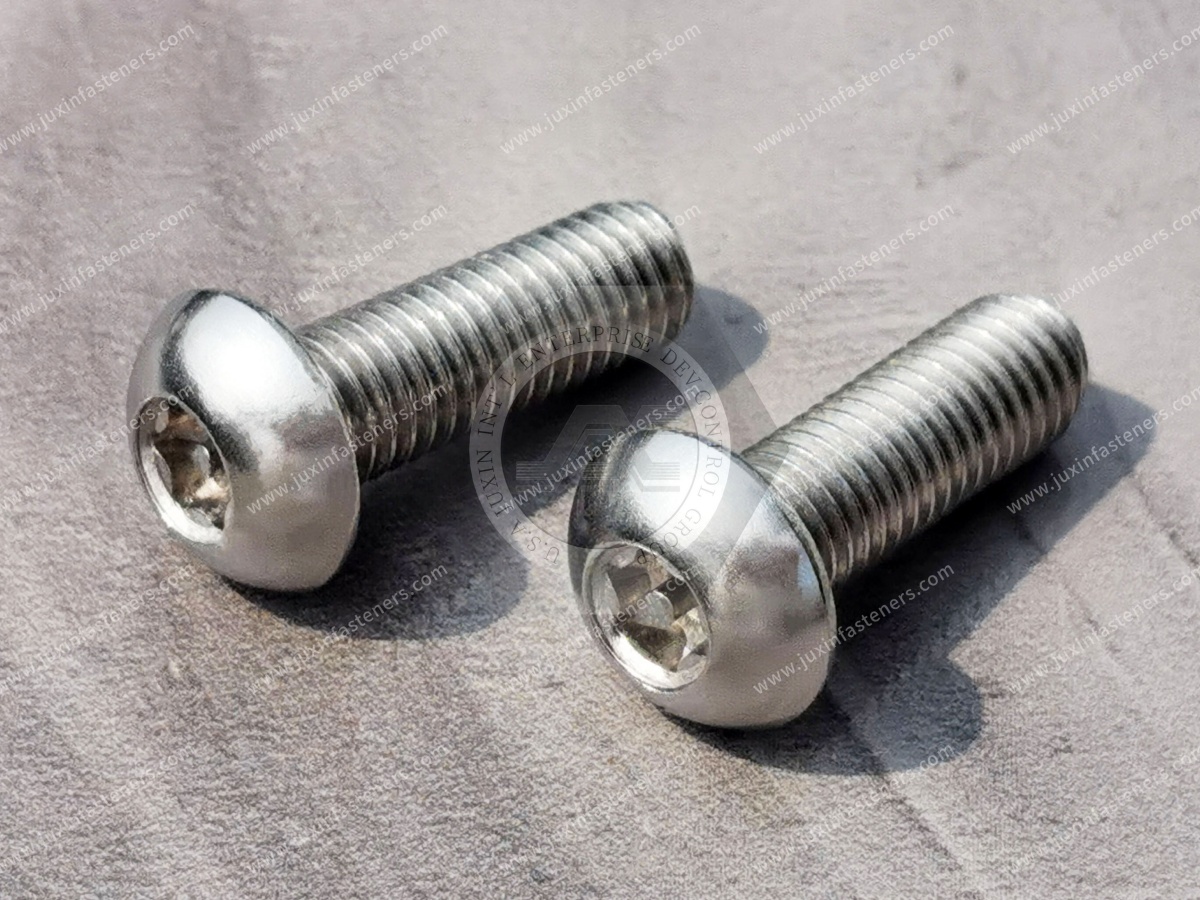
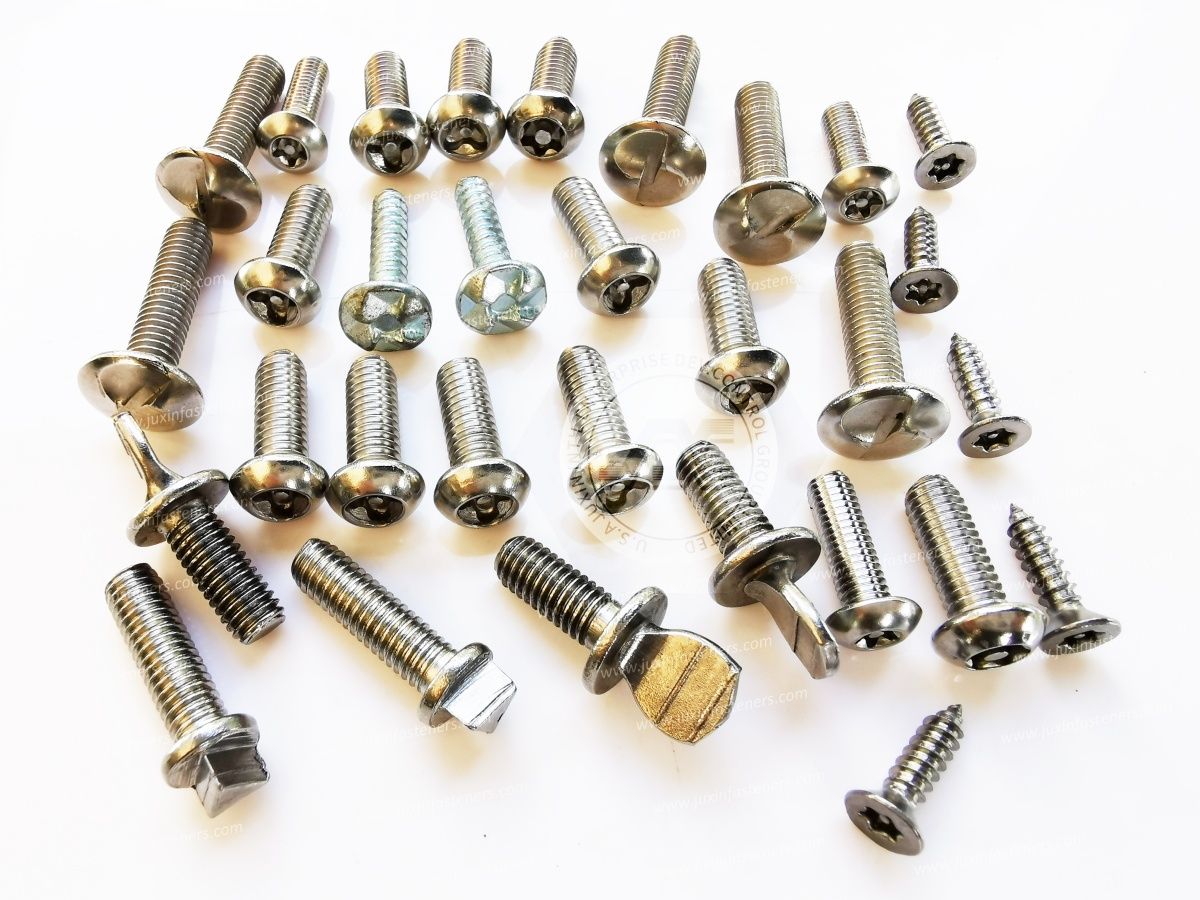
Tamper-resistant Torx button head screws, also known as pin-in Torx security screws, security Torx button head screws or six-lobe pin security screws,
use a six-lobe internal drive with a central security pin.
The center pin prevents an ordinary solid-tip six-lobe driver from fully engaging the recess.
Installation and authorized removal require a compatible security driver with a corresponding center hole.
The rounded button head provides a relatively low-profile fastening option for visible equipment panels and other suitable assemblies.
Stainless steel versions may also offer corrosion resistance appropriate to selected indoor and outdoor environments.
However, effective security fastening requires more than a specialized drive recess.
Design engineers must evaluate screw dimensions, material grade, mating threads, clamp load, head clearance and maintenance access.
Manufacturing engineers and production managers must consider security bit availability, installation torque, driver wear, automated assembly compatibility and production consistency.
Purchasing and supplier development teams must verify the exact drive geometry, drawing requirements, material specifications, inspection criteria, production quantities and supply conditions.
Juxin Fasteners welcomes OEM inquiries for stainless steel tamper-resistant Torx screws and drawing-specific industrial security fasteners.
What Is a Pin-in Torx Security Screw?
A pin-in Torx security screw uses a six-lobe recess containing a raised central pin.
The drive is commonly described in industrial purchasing terminology as:
Tamper-resistant Torx screw
Security Torx screw
Pin-in Torx screw
Torx pin security screw
Six-lobe pin security screw
Tamper-resistant six-lobe screw
These terms generally describe the same drive concept, although exact dimensions and tooling compatibility must still be verified.
How the Security Drive Works
A conventional six-lobe driver has a solid center.
The central pin inside a security screw prevents this ordinary driver from entering the recess correctly.
A compatible security bit has a center hole that accommodates the pin while engaging the six-lobe drive surfaces.
This provides a practical barrier against removal using ordinary screwdrivers.
Important Security Limitation
Pin-in Torx screws are tamper-resistant, not absolutely tamper-proof.
Compatible security bits are commercially available, and determined attackers may use specialized or destructive removal methods.
The security drive should therefore be considered one element of a broader equipment access-control strategy.
When Pin-in Torx Screws Are Appropriate
These screws may be useful when:
Equipment is accessible to the public
Unauthorized maintenance must be discouraged
A panel requires periodic authorized servicing
A visually unobtrusive head is preferred
Production assembly requires repeatable driver engagement
Corrosion-resistant material is specified
When They May Not Be Appropriate
Alternative fasteners may be preferable when:
Emergency access must be possible without a special tool
Tool control cannot be maintained
A flush surface is required
The button head cannot provide the required bearing geometry
A higher-strength head configuration is necessary
The security feature creates unacceptable maintenance delays
The final choice should reflect both the security objective and the equipment's service requirements.
Security Torx Drive Geometry and Driver Compatibility
The six-lobe recess and central pin must be manufactured accurately to support consistent installation.
Critical Drive Characteristics
Six-lobe recess profile
Recess depth
Central pin diameter
Central pin height
Concentricity between the pin and drive
Head material and hardness
Driver engagement depth
Why Drive Geometry Matters
A recess that is too shallow may reduce effective driver engagement.
An oversized central pin may interfere with the security bit.
An undersized or damaged pin may reduce the intended tamper-resistant function.
Poorly formed drive lobes may increase the risk of bit slipping or recess damage.
Driver Compatibility
Security Torx bits are commonly identified by nominal drive sizes, often using a T-size designation.
However, the T-size alone does not establish that every security bit will fit every screw.
The center-hole dimensions and recess geometry must also be compatible.
Engineering Recommendation
For drawing-specific OEM projects, verify screw and driver compatibility using actual production samples before releasing the assembly process.
Tamper Resistance vs Vibration Resistance
These are different engineering functions.
Tamper Resistance
The security recess discourages removal using ordinary tools.
Vibration Resistance
Resistance to screw loosening depends on joint design, preload, friction, stiffness, transverse loading and any specified locking feature.
A pin-in Torx recess does not inherently provide a prevailing-torque locking function.
Engineering Recommendation
Where vibration resistance is required, evaluate the complete threaded joint and specify a validated locking method if necessary.
Button Head Design: Advantages and Limitations
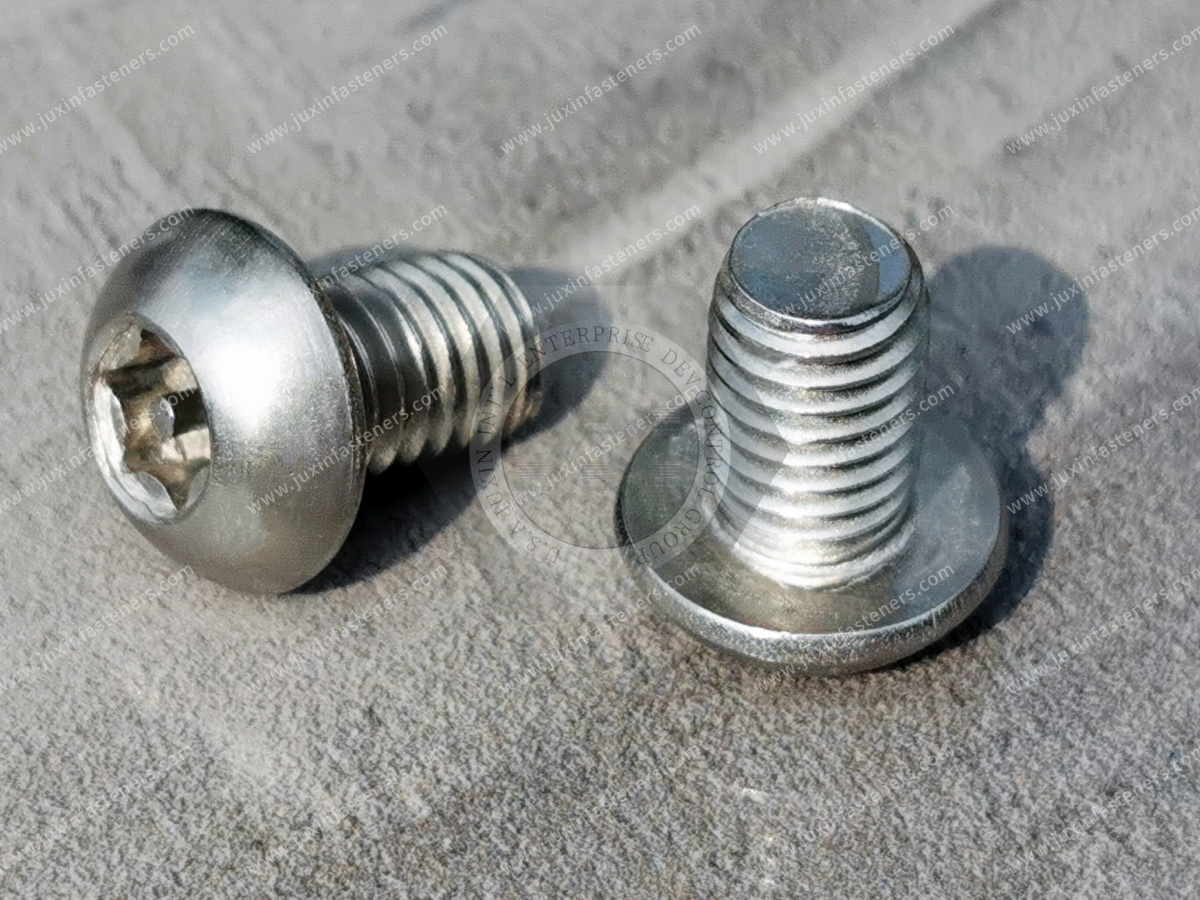
A button head has a rounded external profile with an internal drive recess.
Compared with some other head styles, it can offer a compact appearance and reduced protrusion.
Potential Advantages
Smooth external profile
Relatively low head height
Suitable appearance for visible equipment
Reduced snagging compared with taller head designs
Compatibility with selected panel and enclosure assemblies
Important Design Limitations
A button head is not flush with the mounting surface.
It still protrudes above the component unless the surrounding design provides a recess.
Button head screws may also have different drive engagement and tightening limitations compared with socket head cap screws of the same nominal thread size.
Engineering Considerations
Head diameter
Head height
Under-head bearing area
Recess depth
Edge clearance
Tool access
Available tightening torque
Mating component material
Engineering Recommendation
Do not substitute a button head screw for another head style based only on thread diameter and length.
Head geometry and joint requirements must also be reviewed.
Stainless Steel Material Selection for Security Torx Screws
Stainless steel selection affects corrosion behavior, mechanical properties, cost and assembly performance.
Two common material families for stainless steel fasteners are A2 and A4.
A2 / 304 Stainless Steel Security Screws
A2 stainless steel is commonly associated with 304-family austenitic stainless steel.
It may be suitable for many indoor and selected outdoor applications.
Potential Applications
Industrial equipment
Electrical enclosures
Public information panels
Indoor transportation equipment
General machinery covers
Engineering Considerations
Exposure to moisture
Cleaning chemicals
Surface contamination
Mechanical property class
Mating fastener material
A4 / 316 Stainless Steel Security Screws
A4 stainless steel is commonly associated with 316-family austenitic stainless steel.
Its molybdenum-containing alloy composition can provide improved resistance to certain chloride-containing environments compared with many A2 materials.
Potential Applications
Coastal equipment
Marine-adjacent installations
Outdoor infrastructure
Selected chemical processing environments
Industrial equipment exposed to moisture and contaminants
Important Corrosion Limitation
A4 / 316 stainless steel is not immune to pitting, crevice corrosion or stress corrosion cracking.
Suitability depends on chloride concentration, temperature, oxygen availability, surface condition and other environmental factors.
Mechanical Properties and ISO 3506
ISO 3506-1 is relevant to the mechanical properties of specified corrosion-resistant stainless steel bolts, screws and studs.
Material grade and mechanical property class are separate requirements.
For example, specifying A2 or A4 alone does not fully define the screw's mechanical performance.
Engineering Recommendation
Confirm the required stainless steel grade and property class against the application drawing and applicable specification.
Stainless Steel Thread Galling
Stainless steel threaded connections may experience galling, particularly under unfavorable tightening conditions.
Potential contributing factors include:
High contact pressure
Inadequate lubrication
Excessive tightening speed
Rough or damaged threads
Material pairing
Repeated assembly
Where appropriate, engineers may evaluate compatible lubrication, surface treatment or material combinations.
Any lubricant must be considered when establishing tightening torque because it changes friction.
Carbon Steel and Alloy Steel Alternatives
Some security screw applications may require different strength, coating or cost characteristics.
Carbon steel and alloy steel options may be evaluated where appropriate.
Engineering Considerations
Required mechanical property class
Heat treatment
Surface coating
Corrosion environment
Hydrogen embrittlement risk where applicable
Head and drive strength
For applicable carbon steel and alloy steel screws, ISO 898-1 may be relevant to mechanical property requirements.
Material Comparison
| Material option | Potential benefit | Main engineering consideration |
|---|---|---|
| A2 / 304 stainless steel | General corrosion resistance | Environment and property class |
| A4 / 316 stainless steel | Improved resistance in selected chloride exposures | Cost and corrosion limitations |
| Coated carbon steel | Strength and cost options | Coating performance and corrosion |
| Alloy steel | Selected higher-strength applications | Heat treatment and environmental protection |
Specific availability and suitability must be confirmed for each OEM requirement.
Thread Size, Length and Dimensional Requirements
A security screw must match the mating thread and provide appropriate engagement.
Metric Threads
ISO 261 and the ISO 965 series may be relevant to metric thread dimensions and tolerances.
Unified Inch Threads
ASME B1.1 covers Unified inch screw threads, including UNC and UNF.
Metric-to-Inch Nominal Diameter References
| Metric thread | Approximate nominal diameter |
|---|---|
| M3 | 0.118 in |
| M4 | 0.157 in |
| M5 | 0.197 in |
| M6 | 0.236 in |
| M8 | 0.315 in |
| M10 | 0.394 in |
These are diameter conversions for reference only.
Metric, UNC, UNF, BSW and BSF thread systems are not directly interchangeable.
Specific inch-thread or special-thread availability must be verified.
Other Dimensional Requirements
Nominal screw diameter
Thread pitch
Screw length
Threaded length
Head diameter
Head height
Recess size
Central pin geometry
Under-head bearing surface
Surface finish
Engineering Recommendation
Provide a complete drawing for nonstandard security screws, particularly when the recess geometry or central pin dimensions differ from an established product design.
Industrial Applications of Tamper-Resistant Torx Button Head Screws
Automotive Interior and Vehicle Equipment
Security screws may be considered for selected vehicle components where controlled access is useful.
Potential applications include:
Interior electronic housings
Selected trim attachments
Serviceable equipment panels
Auxiliary vehicle accessories
License plate fastening systems where permitted
Engineering Priorities
Assembly tool compatibility
Appearance
Vibration-related joint design
Service access
Material selection
Important Limitation
Security screws should not be assumed suitable for safety-critical automotive joints without application-specific engineering approval.
Railway and Rail Transit Equipment
Railway and public transit systems may contain accessible equipment that requires controlled maintenance.
Potential applications include:
Passenger equipment panels
Station information systems
Selected train interior components
Signal equipment enclosures
Maintenance access covers
Engineering Priorities
Tamper resistance
Tool control
Vibration
Corrosion
Maintenance procedures
Important Limitation
Railway applications may be subject to additional safety, fire, vibration and operator-specific requirements.
The screw's security drive does not independently establish compliance with these requirements.
Highway and Transportation Infrastructure
Outdoor infrastructure often requires fastening systems that discourage casual vandalism.
Potential applications include:
Road signs
Traffic signal housings
Public transport equipment
Outdoor monitoring enclosures
Selected roadside information systems
Engineering Priorities
Weather exposure
Corrosion resistance
Authorized maintenance
Head accessibility
Long-term serviceability
Power Distribution and Energy Equipment
Selected covers and non-current-carrying auxiliary components may require controlled access.
Potential applications include:
Electrical cabinet covers
Solar equipment enclosures
Monitoring systems
Outdoor control boxes
Selected energy infrastructure accessories
Engineering Priorities
Electrical safety
Environmental exposure
Corrosion
Maintenance access
Joint integrity
Important Clarification
A tamper-resistant screw does not independently provide electrical insulation, protective bonding or safe isolation.
Electrical equipment safety must be addressed through the complete design.
Public Infrastructure and Municipal Equipment
Publicly accessible equipment may benefit from security fasteners that discourage casual disassembly.
Potential applications include:
Street lighting housings
Public information boards
Outdoor fitness equipment
Transit station fixtures
Public equipment enclosures
Selected urban infrastructure components
Engineering Priorities
Tamper resistance
Corrosion exposure
Maintenance access
Appearance
Replacement compatibility
Important Commercial Consideration
The security benefit should be balanced against the need to maintain compatible tools across multiple maintenance locations.
Industrial Machinery and Automation Equipment
Industrial manufacturers may use security screws for selected equipment covers and access-controlled components.
Potential applications include:
Packaging machinery
Automation equipment
Industrial control housings
Instrument enclosures
Serviceable equipment panels
Selected machine covers
Engineering Priorities
Installation consistency
Authorized servicing
Vibration
Screw tightening
Maintenance procedures
Machine Guarding Considerations
For machine guards and other safety-related components, the fastening arrangement must be assessed against applicable machinery safety requirements.
ISO 14120 may be relevant to the design and construction of fixed and movable guards.
A security screw should not be substituted for a specified guard fastening system without engineering validation.
Marine and Harsh-Environment Equipment
Selected marine-adjacent and outdoor industrial assemblies may require stainless steel security screws.
Potential applications include:
Outdoor equipment housings
Marine instrumentation covers
Coastal monitoring equipment
Remote energy systems
Selected process equipment enclosures
Engineering Priorities
Corrosion exposure
Material grade
Thread galling
Maintenance access
Environmental compatibility
Engineering Recommendation
For severe environments, evaluate corrosion resistance using the actual exposure conditions rather than relying on the stainless steel designation alone.
Installation Torque and Driver Engagement
Correct installation is important for both joint performance and drive integrity.
Security Bit Selection
The bit must match the six-lobe recess and accommodate the central security pin.
Driver Alignment
Poor alignment can increase local contact stress and damage the recess.
Installation Torque
Tightening torque must be established for the actual joint.
Relevant variables include:
Screw diameter
Material property class
Thread engagement
Surface condition
Lubrication
Under-head friction
Joint stiffness
Required clamp load
Important Clarification
There is no universal tightening torque that applies to every security Torx button head screw.
A torque value suitable for a conventional socket head screw should not automatically be applied to a button head security screw.
Production Assembly Considerations
Manufacturing engineers should evaluate:
Bit engagement
Tool accessibility
Driver wear
Screw feeding
Installation cycle time
Recess damage
Torque consistency
Operator training
Engineering Recommendation
Validate the screw, security bit and installation tool as a complete production system.
Manual vs Automated Assembly
Manual Assembly
May be suitable for:
Lower production volumes
Maintenance operations
Large equipment installations
Applications requiring flexible access
Automated or Semi-Automated Assembly
May be considered for:
Repetitive OEM production
High-volume equipment manufacturing
Controlled torque processes
Consistent assembly stations
Important Limitation
A security recess may require special tooling and may not be compatible with every automated screwdriving system.
Tool compatibility must be verified before production release.
Maintenance and Authorized Removal
One advantage of pin-in Torx screws over one-way security screws is that they are intended to permit authorized removal using a compatible tool.
This can support maintenance procedures where equipment access must be controlled but not permanently prevented.
Maintenance Planning
Identify the correct security bit
Maintain approved tool availability
Prevent driver wear
Define screw replacement criteria
Establish safe access procedures
Record any special tightening requirements
Engineering Recommendation
Do not treat a tamper-resistant drive as a substitute for an equipment lockout or access-control procedure.
Security Drive Comparison
| Drive type | Removal characteristics | Main design consideration |
|---|---|---|
| Phillips | Ordinary screwdriver | Common tooling |
| Standard six-lobe | Ordinary matching six-lobe bit | Driver engagement |
| Pin-in Torx | Matching security bit required | Controlled access and serviceability |
| One-way drive | Conventional removal intentionally difficult | Limited serviceability |
| Triangular security drive | Matching specialized driver required | Tool availability |
| Other proprietary security drives | Design-specific tooling | Compatibility and sourcing |
Engineering Recommendation
Choose the drive based on the required level of tamper deterrence, maintenance frequency and tool availability.
Common Failure Modes and Engineering Prevention
| Failure mode | Potential cause | Recommended evaluation |
|---|---|---|
| Security pin breaks | Driver interference or excessive loading | Review bit fit and pin geometry |
| Drive recess rounds | Incorrect bit or excessive torque | Review tool engagement |
| Screw head fractures | Excessive tightening or inadequate strength | Review head geometry and property class |
| Thread strips | Incorrect engagement or excessive torque | Review mating thread |
| Joint loosens | Inadequate preload or vibration | Evaluate joint design |
| Stainless threads gall | Friction and unfavorable material pairing | Review assembly process |
| Corrosion occurs | Unsuitable material or exposure | Review grade and environment |
| Maintenance is delayed | Security tool unavailable | Improve tool control |
| Production defects increase | Driver wear or installation variation | Improve process monitoring |
Quality Control for Security Torx Button Head Screws
Security screws require both conventional fastener inspection and drive-specific inspection.
Dimensional Inspection
Potential characteristics include:
Thread dimensions
Screw length
Head diameter
Head height
Recess dimensions
Central pin geometry
Surface finish
Material and Mechanical Verification
Depending on the application:
Material specification
Mechanical property class
Hardness or mechanical testing
Coating requirements
Corrosion evaluation
Functional Drive Inspection
Potential checks include:
Security bit fit
Driver engagement
Central pin clearance
Recess integrity
Installation performance
Assembly Validation
Where relevant:
Tightening trials
Repeated installation and removal
Vibration testing
Corrosion exposure
Joint load testing
Important Qualification Principle
A security screw may meet dimensional requirements but still perform poorly if the mating security bit or installation process is incompatible.
Information Gain: Security Tool Compatibility Is a Supply Chain Requirement
For conventional screws, purchasing teams often focus on dimensions, material and price.
For security screws, driver compatibility is an additional sourcing risk.
If replacement screws use a slightly different recess or center pin geometry, existing maintenance tools may no longer fit correctly.
This can create:
Assembly interruptions
Maintenance delays
Tool replacement costs
Increased risk of drive damage
Supplier substitution problems
Engineering Recommendation
Include security bit compatibility in supplier qualification and engineering change control.
Total Installed Cost and Lifecycle Considerations
The lowest screw purchase price does not necessarily produce the lowest total fastening cost.
Relevant cost elements include:
Screw purchase cost
Security driver cost
Tool maintenance
Installation labor
Inspection
Scrap and rework
Maintenance access
Replacement screws
Corrosion-related service costs
Information Gain: Compare Cost per Accepted Assembly
A useful production metric is:
Total relevant fastening, installation, inspection and rework costs ÷ accepted assembly quantity
For publicly accessible equipment, the lifecycle assessment may also consider the cost of unauthorized removal and maintenance procedures.
Engineering Recommendation
Compare fastening alternatives using both production and service requirements.
Custom OEM Security Torx Screws
Some OEM applications require drawing-specific dimensions or material specifications.
Potential custom requirements include:
Nominal thread diameter
Thread pitch
Screw length
Head diameter
Head height
Security recess geometry
Central pin dimensions
Material grade
Mechanical property class
Surface finish
Packaging
Engineering Recommendation
Provide a complete technical drawing, particularly when a special recess, head profile or material requirement is specified.
Supplier Qualification and Bulk Procurement
Supplier development and procurement teams should evaluate both technical and commercial factors.
Technical Evaluation
Drawing compliance
Material grade
Mechanical properties
Thread accuracy
Security recess dimensions
Driver compatibility
Surface finish
Inspection requirements
Production Evaluation
Dimensional consistency
Drive geometry repeatability
Installation compatibility
Inspection documentation
Traceability where required
Engineering change control
Commercial Evaluation
Prototype quantity
MOQ
Annual demand
Unit pricing
Tooling requirements
Lead time
Packaging
Supply continuity
Specific commercial terms must be confirmed for each RFQ.
OEM RFQ Checklist
| RFQ item | Information to provide |
|---|---|
| Product drawing | Part number and revision |
| Screw type | Pin-in Torx button head or specified design |
| Thread | Metric or inch designation |
| Dimensions | Diameter, length and head geometry |
| Security drive | Recess size and center pin requirements |
| Driver compatibility | Required bit or tool specification |
| Material | A2, A4, carbon steel or specified grade |
| Mechanical properties | Required property class |
| Surface finish | Coating or treatment |
| Mating component | Material and thread engagement |
| Loading | Clamp load and service requirements |
| Vibration | Operating conditions |
| Environment | Humidity, chloride exposure or chemicals |
| Installation | Manual or automated |
| Testing | Dimensional, functional or specified tests |
| Samples | Prototype quantity |
| Annual demand | Volume forecast |
| MOQ | Commercial confirmation |
| Lead time | Required schedule |
| Packaging | Bulk or production-compatible |
Frequently Asked Questions
What is a tamper-resistant Torx button head screw?
It is a screw with a rounded button head and a six-lobe drive containing a central security pin.
What is the difference between standard Torx and security Torx?
Security Torx includes a center pin that prevents an ordinary solid-tip six-lobe driver from fully engaging the recess.
Are pin-in Torx screws completely tamper-proof?
No. They discourage casual removal but can be removed with compatible security tools or other methods.
Can security Torx screws be removed for maintenance?
Yes. Authorized removal is possible with a compatible security bit, provided the screw and drive remain serviceable.
Are security Torx screws vibration-resistant?
The drive recess does not inherently prevent loosening. Vibration resistance depends on the complete joint design.
Is 316 stainless steel suitable for coastal installations?
It may offer improved corrosion resistance compared with many 304-family materials, but suitability must be assessed for the actual environment.
Are button head security screws flush with the surface?
No. Button heads have a rounded profile that protrudes above the mounting surface.
Can pin-in Torx screws be used in automated assembly?
Potentially, but the screw, security bit and installation equipment must be validated together.
Can these screws use UNC or UNF threads?
Drawing-specific inch-thread requirements can be reviewed. Availability must be confirmed, and inch and metric thread systems are not interchangeable.
What information is required for a bulk OEM quotation?
Provide the drawing, thread specification, material, head and drive geometry, installation requirements, annual demand and delivery schedule.
Juxin Fasteners: Stainless Steel Security Torx Screw Solutions
Juxin Fasteners welcomes inquiries for industrial security fasteners and custom OEM fastening components.
Relevant product categories include:
Tamper-resistant Torx button head screws
Stainless steel pin-in Torx security screws
Security Torx flat head screws
Security Torx pan head screws
One-way security screws
Other drawing-specific security screws
Custom OEM fastening components
Specific materials, dimensions, mechanical properties, drive requirements, MOQ and delivery schedules require confirmation.
Request a Tamper-Resistant Torx Screw Quotation
Are you developing industrial equipment, electrical enclosures, transportation systems,
public infrastructure or outdoor machinery requiring controlled-access fastening?
Juxin Fasteners welcomes inquiries from:
Design engineers
Mechanical engineers
Structural engineers
Manufacturing engineers
Production managers
Purchasing specialists
Procurement managers
Supplier development teams
Supply chain managers
For technical review, please provide:
Product drawing + thread specification + screw dimensions + head geometry + security recess size + center pin requirements
+ material grade + mechanical property class + surface finish + mating component + installation torque requirements
+ operating environment + inspection criteria + prototype quantity + annual demand + packaging + delivery schedule.
Our team can review the requirements and confirm suitable product options, technical feasibility and quotation conditions.
Company: Juxin Fasteners
Website: https://www.juxinfasteners.com/
Email: info@juxinfasteners.com
Send your tamper-resistant Torx security screw drawings and OEM RFQ to Juxin Fasteners for technical confirmation and quotation.
Contact Us
Tel.:
+86 020 8621 0320
+86 020 3121 6067
E-mail:
Technical Support:
Navigation
SEND INQUIREY



