
Call Us
+86 136 6007 9809
Call Us
+86 136 6007 9809

Nov. 05, 2023
In heavy-duty mechanical engineering, automotive manufacturing, and structural design, maintaining joint integrity under extreme tensile and shear stresses is a critical challenge. For procurement managers and structural engineers alike, selecting the right components can mean the difference between seamless operational reliability and costly structural failure. Among the most vital yet frequently miscategorized fastening elements in industrial distribution is the hexagonal joint nut (also specified in global commercial procurement as a hexagon fitting nut).
This technical guide provides an in-depth analysis of the structural advantages, manufacturing methodologies, international standards, and cross-industry applications of the premium hexagonal joint nut.
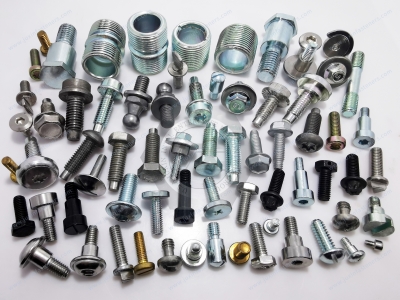
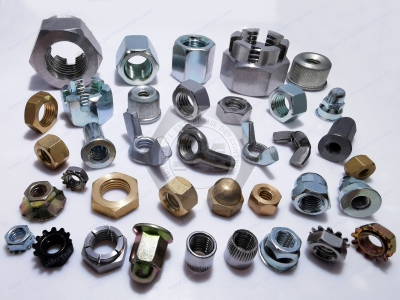
A hexagonal joint nut is a precision-engineered standard fastener designed to couple two or more mechanical components, establishing an exceptionally secure, high-clamp-load joint. Its geometry features a classic six-sided external profile, providing an optimal balance between maximum torque transmission and minimal clearance requirements during wrenching tools integration.
In specific modular tool assemblies and heavy-duty hardware setups, these components are widely known as spinner head fittings or spinning head couplings. In these specialized industrial contexts, they serve as the mandatory companion component required to link a drive mechanism or handle to a matching modular turning head. Without this stable coupling interface, the entire spinner head assembly remains completely non-functional.
Engineers often compare spinning head couplings to traditional screwdriver sockets, but they are structurally optimized to withstand much higher rotational and axial forces associated with heavy turning head fittings. By combining a standardized drive tool with a robust hexagonal joint nut, manufacturers can create a highly efficient spinner sleeve configuration. This modular engineering approach drastically reduces overall production costs compared to fabricating single-piece, solid spinner sleeves, while maintaining identical torque transmission capabilities.
The mechanical performance and structural durability of a hexagonal joint nut are directly derived from its manufacturing process. High-quality industrial fasteners utilize advanced production techniques to ensure superior grain flow alignment and exceptional fatigue resistance.
Industrial-grade hexagonal joint nuts are typically produced using either a specialized cold pier stamping process or precision CNC machining:
The Cold Heading Stamping Process: This high-productivity method plastically deforms the raw metal grain structure under immense pressure without heat. The localized cold-working directly fortifies the six corners of the hexagon shape, rendering them remarkably stronger, highly resistant to thread stripping, and secure under extreme tightening torque. Through this streamlined manufacturing workflow, stamped hexagon nuts achieve lower production costs, higher productivity rates, and significantly longer component service lives.
Precision Machining: For specialized, small-batch requirements or custom geometric dimensions, high-precision turning, milling, and grinding are deployed to meet tight dimensional tolerances down to the micrometer level.
The choice of raw material determines the optimal environment in which the fastener can safely operate. Standard commercial manufacturing relies on three core alloy groups:
Carbon Steel: Exceptional general-purpose tensile strength; often heat-treated for standard machinery and structural utilities.
Alloy Steel: Designed for extreme high-load and fatigue-critical applications, making it perfect for complex powertrain assemblies.
Stainless Steel: The premier choice for highly corrosive environments, chemical processing, and marine infrastructure.
Global industrial procurement demands absolute component interchangeability. To support international distribution, heavy machinery supply chains, and cross-border engineering projects, high-performance fasteners must be manufactured in accordance with strict global, national, and sector-specific standards:
| Standard System | Regional & Sector Scope | Primary Engineering Focus |
| American Standards (ANSI/ASME) | North America / Global Oil & Gas Systems | Inch-series threads, heavy hex profiles, and high-tensile material classes (ASTM). |
| German Standards (DIN) & EN | Europe / International Heavy Machinery | Metric fine/coarse threads with strict dimensional compliance for automated assembly lines. |
| Japanese Industrial Standards (JIS) | Asia / Automotive & Electronics Supply | Compact head profiles and optimized precision for space-constrained electronics housing. |
| National / Sector Standards | Power Grid, Hydraulic & Water Infrastructures | Sector-specific regulatory compliance, high pressure, and strict electrical conductivity controls. |
Due to their ability to withstand massive tensile and shear forces, hexagonal joint nuts are deployed across critical sectors worldwide:
Automotive Manufacturing: Utilized across critical high-vibration zones, including wheel assemblies, engine blocks, heavy-duty transmissions, and interior automotive seat fastening solutions. They guarantee joint stability under constant dynamic cyclic loading.
Mechanical Engineering & Machinery: Serves as the primary connection element for heavy rotating machinery, industrial bearings, high-torque gears, and power drive shafts.
Construction & Structural Engineering: Deployed as heavy-duty high-strength rail fasteners and structural connectors to secure heavy steel frameworks, concrete reinforcement ties, and transport infrastructure.
Aerospace & Defense: Engineered to stringent tolerances using specialized alloy steel and stainless steel to join structural components in commercial aircraft, rockets, and guidance systems.
Electronics & Enclosures: Employed to firmly anchor external structural housings with sensitive internal electronic assemblies, preventing EMI shielding gaps or grounding failures.
Achieving a reliable, lifelong connection requires adhering to strict operational protocols during both manufacturing and installation:
Material Preparation: Choosing fully certified, high-quality steel wire rods or bar stock as the raw material to ensure the complete elimination of sub-surface metallurgical flaws.
Precision Processing: Controlling stamping and secondary turning/milling parameters to guarantee precise thread tolerances (such as ISO 6H or ANSI 2B/3B).
Surface Treatment: Executing advanced electro-galvanizing, hot-dip galvanizing, or specialized anti-friction spray coatings to maximize long-term anti-corrosion properties.
Rigorous Inspection: Deploying automated optical sorting, proof-load testing, and thread-go/no-go gauging to ensure 100% compliance with standard requirements.
Engineering Installation Note: To completely eliminate joint relaxation or thread stripping, engineers must specify precise tightening torque based on the nut's material grade. Always utilize calibrated torque wrenches or wrench plugs to avoid over-tightening or under-tightening. Regular inspection intervals should be scheduled in dynamic or high-vibration applications to verify residual clamp load and guarantee site safety.
For more than two decades, Juxin Fasteners has been an industry leader in manufacturing high-precision industrial hardware. We provide a comprehensive product portfolio ranging from premium heavy-duty thread insert nuts and high-strength rail fasteners to premium automotive fastener screws and a massive selection of industrial plastic fasteners.
Our veteran engineering team offers extensive, end-to-end technical support for structural design, material selection, and custom geometric tailoring to solve your toughest fastening challenges.
Accelerate your procurement and development cycles. Use our interactive Product Finder tool on our corporate website, download our complete Product Catalog, or submit your custom engineering drawings to get custom, application-specific parts tailored exactly to your project metrics.
Corporate Website:
Direct Engineering Inquiry: info@juxinfasteners.com
 MORE NEWS
Sep. 27, 2026
Sep. 27, 2026
Sep. 27, 2026
Contact Us
Tel.:
+86 020 8621 0320
+86 020 3121 6067
E-mail:
Technical Support:
Navigation
SEND INQUIREY