
Call Us
+86 136 6007 9809
Call Us
+86 136 6007 9809

Apr. 21, 2026
Threaded Inserts for Medical Devices: Precision Fastening Solutions for Medical Equipment OEMs
Medical equipment manufacturers increasingly use engineered plastics in diagnostic instruments, laboratory systems,
patient-monitoring equipment, electronic enclosures and serviceable equipment housings.
Plastic components can reduce weight, enable complex molded geometries, provide electrical insulation and simplify product assembly.
However, these components often require reliable threaded connections for covers, mounting brackets, internal electronics and removable assemblies.
When a plastic component must be assembled repeatedly or support a defined mechanical load, directly formed plastic threads may not provide the required serviceability.
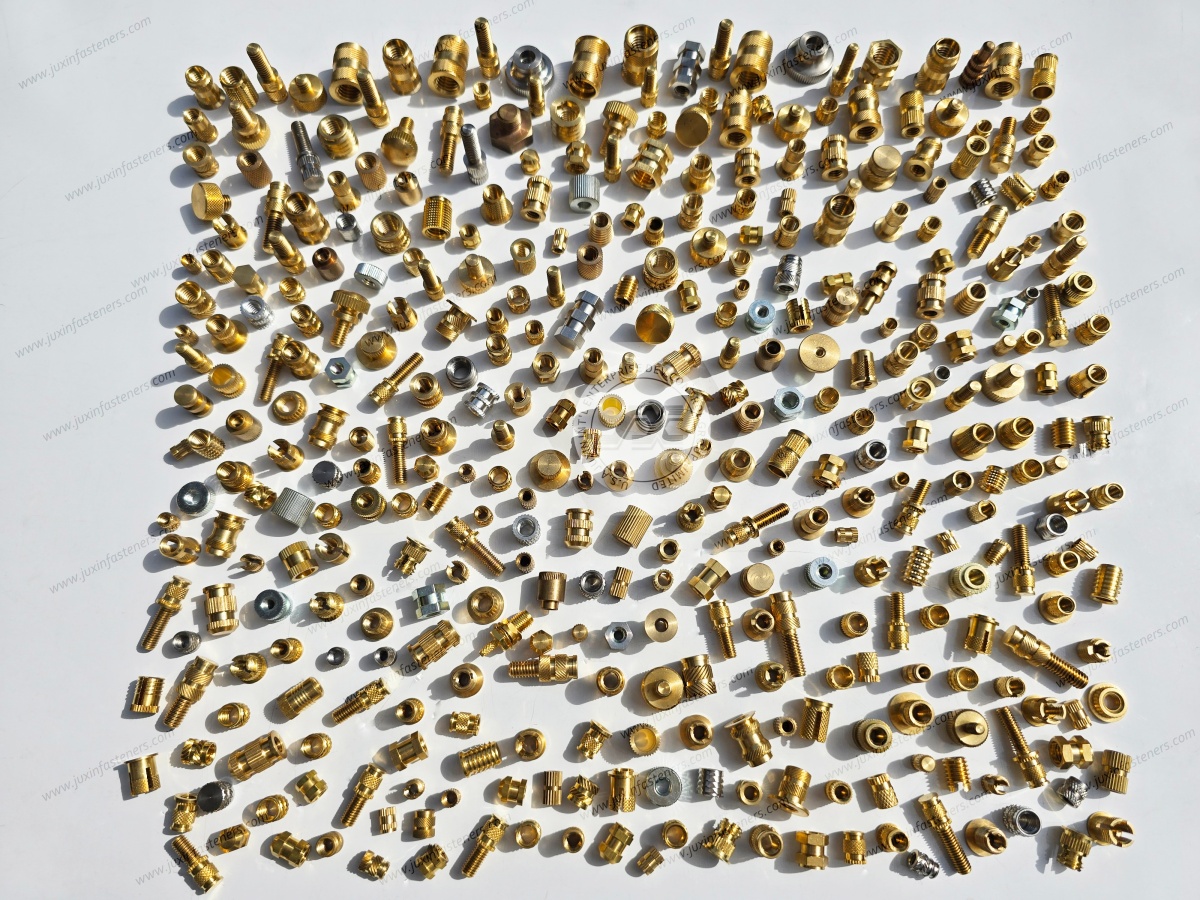
Threaded Inserts for Medical Devices, also known as Thread Insert Nuts for Medical Equipment, provide a metallic internal thread within a properly designed plastic component.
They can support reusable fastening, controlled assembly and durable threaded engagement when the insert geometry, polymer, installation process and joint design are correctly matched.
For medical equipment OEMs, the engineering challenge extends beyond selecting a thread size.
The complete assembly may need to meet specific requirements for mechanical reliability, cleaning exposure,
dimensional consistency, traceability, service access and controlled design changes.
These requirements vary considerably between a non-patient-contact equipment cover and a component used in a patient-contacting or sterile medical device.
JUXIN FASTENERS supplies industrial threaded inserts and custom fastening components for OEM plastic assemblies.
This guide focuses on the engineering and procurement considerations relevant to medical equipment manufacturers evaluating precision threaded inserts for plastic housings and related components.
What Are Threaded Inserts for Medical Devices?
A threaded insert is a metallic component installed into a plastic part to provide a reusable internal screw thread.
The insert typically contains:
A precision internal thread
External knurls, grooves, undercuts or other retention features
A defined outside diameter and overall length
A geometry compatible with a specified installation method
The internal thread engages a mating screw or bolt.
The external geometry transfers the applied load into the surrounding plastic.
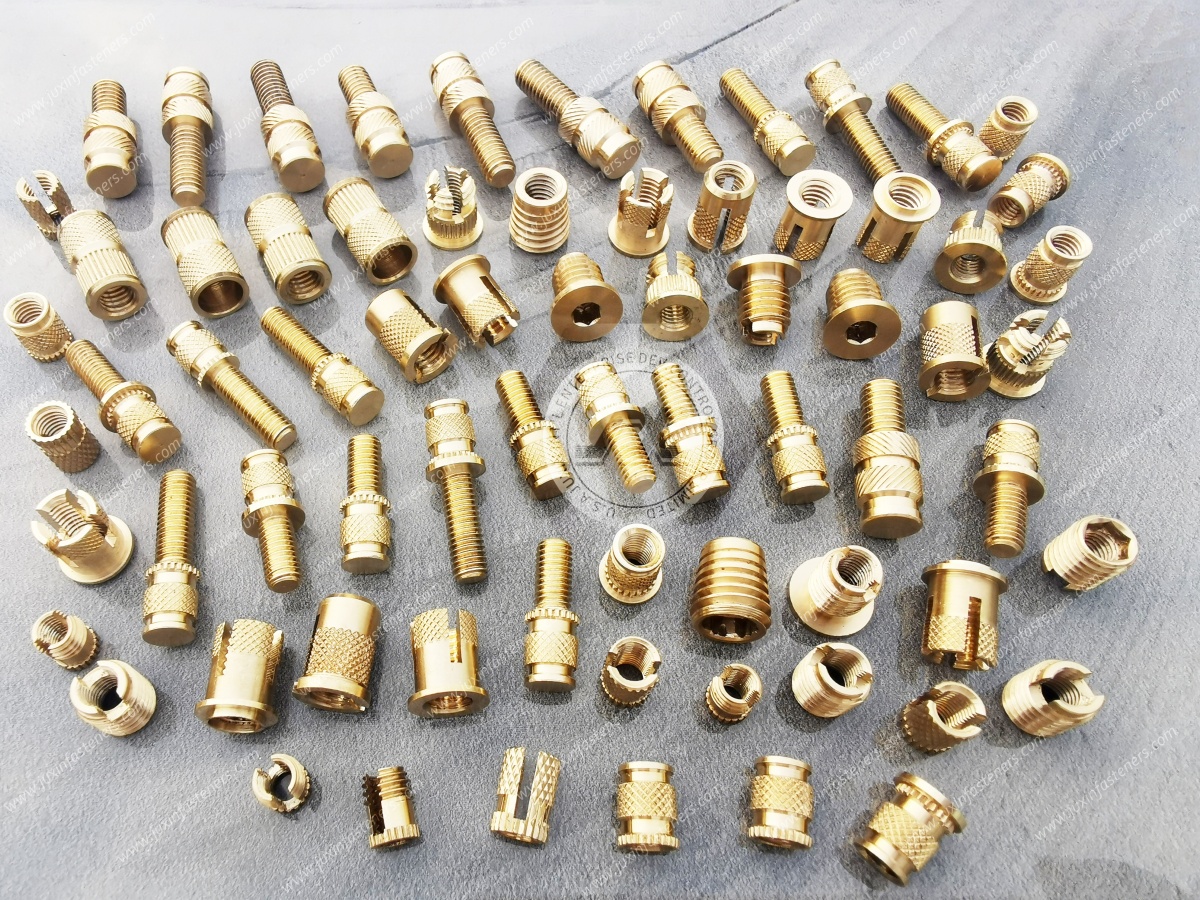
Common Product Names
Threaded Inserts for Medical Devices
Medical Equipment Threaded Inserts
Thread Insert Nuts for Plastics
Precision Brass Threaded Inserts
Stainless Steel Threaded Inserts
Heat-Set Threaded Inserts
Ultrasonic Threaded Inserts
Molded-In Threaded Inserts
Press-In Threaded Inserts
Custom Threaded Bushings
These terms describe related products, but the individual designs are not necessarily interchangeable.
An insert intended for heat installation may have different external geometry and hole requirements from a press-in insert with the same internal thread.
Where Are Medical Equipment Threaded Inserts Used?
Threaded inserts may be considered for selected plastic components in:
Diagnostic equipment housings
Laboratory instrument enclosures
Patient-monitoring equipment covers
Medical imaging equipment auxiliary housings
Electronic control modules
Serviceable equipment panels
Non-patient-contact instrument handles
Equipment mounting brackets
Medical equipment accessories
Their suitability must be evaluated according to the device's intended use and risk classification.
Important Application Boundary
A threaded insert suitable for a medical equipment enclosure is not automatically suitable for an implant,
a patient-contacting instrument, a sterile fluid pathway or a life-support-critical mechanical connection.
Such applications require additional engineering, biological, regulatory and manufacturing evaluation.
Why Medical Equipment Manufacturers Use Threaded Inserts
Plastic housings may need to be opened during manufacturing, calibration, inspection, repair or scheduled maintenance.
A metal threaded insert can provide a durable mating thread for these operations.
Potential Advantages
Reusable metallic internal threads
Reduced wear during repeated screw installation
Controlled threaded engagement
Compatibility with conventional machine screws
Improved serviceability
Options for automated installation
Design flexibility for molded plastic components
Important Limitations
A threaded insert does not automatically guarantee:
Sterility
Biocompatibility
Corrosion resistance in every cleaning environment
Resistance to every disinfectant
Retention after unlimited sterilization cycles
Protection against plastic boss cracking
Prevention of screw loosening
Compliance with medical device regulations
The actual requirements must be established by the OEM for the intended device.
Choosing the Right Insert Installation Method
The preferred installation method depends on the plastic material, required mechanical performance, component geometry and manufacturing process.
Heat-Set Threaded Inserts
Heat-set inserts are installed into suitable thermoplastic components after molding.
A controlled heating system transfers heat through the insert, softening the surrounding polymer.
The insert is pressed into the prepared hole.
The plastic flows around the external retention features and solidifies during cooling.
Potential Advantages
Reusable metallic threads
Controlled post-mold installation
Suitable retention when correctly designed and installed
Compatibility with selected automated systems
Medical Equipment Applications
Diagnostic instrument housings
Plastic electronic enclosures
Serviceable equipment covers
Laboratory equipment components
Critical Process Variables
Insert temperature
Insertion force
Insertion speed
Hole diameter
Hole depth
Tool alignment
Final installation depth
Cooling conditions
Engineering Limitation
Conventional heat-set installation depends on softening thermoplastic and is generally unsuitable for fully cured thermosetting plastics.
Ultrasonic Threaded Inserts
Ultrasonic insertion uses mechanical vibration to generate localized heating at the metal-plastic interface.
The surrounding thermoplastic softens and engages the insert's retention features.
Potential Advantages
Short installation cycles in suitable applications
Localized heating
Compatibility with selected automated equipment
Controlled insertion when the process is validated
Important Process Variables
Ultrasonic amplitude
Applied force
Installation travel
Process time
Tooling alignment
Horn design
Plastic material
Component support
Why Ultrasonic Installation Is Not Always Better
Cycle time and mechanical performance depend on the actual insert, polymer and equipment.
The preferred process should be established through engineering evaluation and production trials.
Molded-In Threaded Inserts
Molded-in inserts are positioned inside the mold before plastic injection or forming.
The plastic flows around the insert and retains it after cooling or curing.
Potential Advantages
Integration into the molding operation
No separate post-mold insertion step
Compatibility with selected thermoplastic and thermoset applications
Useful for suitable production volumes
Manufacturing Considerations
Insert positioning
Mold tooling
Core-pin design
Plastic flow
Thread protection
Mold cycle time
Scrap risk
Tooling maintenance
Why Molded-In Does Not Automatically Mean Hygienic
Molding an insert into plastic does not establish a sterile, cleanable or sealed assembly.
External gaps, exposed threads, molding defects and the overall component geometry may still create areas where residues accumulate.
Cleanability must be evaluated at the finished-assembly level.
Press-In Threaded Inserts
Press-in inserts are installed mechanically into a prepared hole without intentionally melting the plastic.
They may be suitable for selected softer plastics and load requirements.
Potential Advantages
Simple installation process
No thermal insertion equipment
Compatibility with selected automated presses
Limitations
Incorrect interference can cause cracking, deformation or inadequate retention.
Self-Tapping Threaded Inserts
Self-tapping inserts engage the plastic through external threads or cutting/forming features.
They may be suitable for selected thermoplastics and thermosets.
Important Considerations
Installation torque
Hole diameter
Material hardness
External thread geometry
Boss strength
Installation alignment
The correct installation method should be determined by the actual component design rather than by a general ranking of insert types.
Medical Equipment Insert Selection Matrix
| Requirement | Initial engineering approach |
|---|---|
| Reusable thread in thermoplastic housing | Evaluate heat-set or ultrasonic inserts |
| Insert integrated during molding | Evaluate molded-in inserts |
| Simple mechanical installation | Evaluate suitable press-in inserts |
| Cured thermoset component | Evaluate molded-in or compatible mechanical inserts |
| Frequent maintenance access | Prioritize thread durability and assembly consistency |
| Cleaning or disinfection exposure | Evaluate metal, resin and finish compatibility |
| Automated production | Evaluate feeding, installation monitoring and cycle time |
| Controlled supplier qualification | Define drawings, inspection records and change control |
This matrix supports initial evaluation and does not replace device-specific validation.
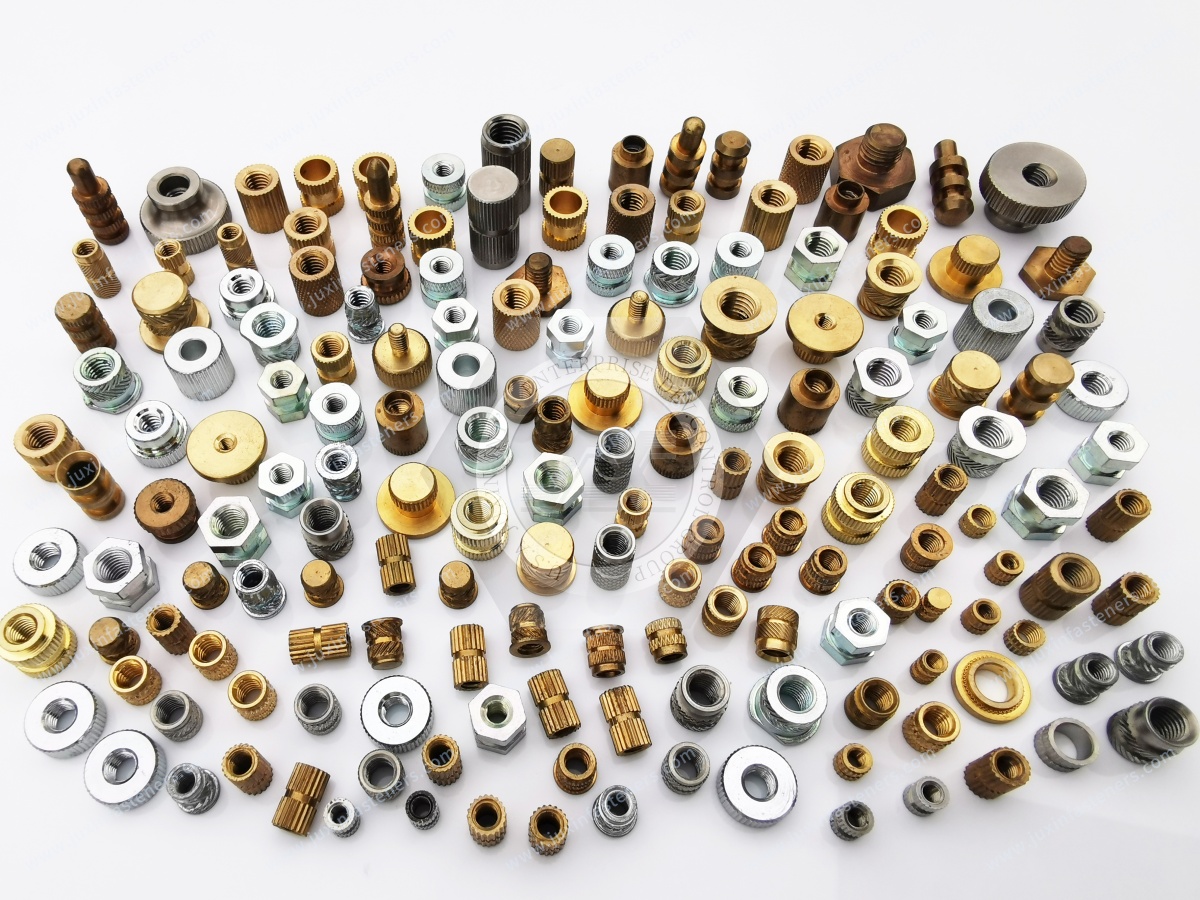
Brass Threaded Inserts for Medical Equipment
Brass is widely used for threaded inserts in plastics because of its machinability and thermal conductivity.
Potential Advantages
Good machinability
Useful heat transfer during thermal insertion
Durable metallic internal threads
Compatibility with various retention geometries
Corrosion resistance in many environments
Material Selection Considerations
Brass alloys differ in chemical composition, mechanical properties and lead content.
Some free-machining brass alloys contain lead.
Medical equipment OEMs should specify the required alloy and any relevant material restrictions.
Important Compliance Principle
A brass insert should not be described as medical-grade, lead-free or biocompatible solely because it is made from brass.
Material documentation and suitability must be established for the specific application.
Stainless Steel Threaded Inserts for Medical Equipment
Stainless steel may be selected where corrosion resistance, cleaning exposure or particular mechanical properties justify its use.
Potential Advantages
Corrosion resistance in suitable environments
Durable metallic threads
Compatibility with selected cleaning conditions
Availability of different material grades
Why Stainless Steel Grade Matters
Different stainless steel grades have different corrosion resistance and mechanical properties.
The actual grade must be specified.
Cleaning and Disinfection Compatibility
Stainless steel is not immune to every chemical environment.
Certain chlorides and aggressive cleaning agents can damage some stainless steel grades.
The selected material must be evaluated against the actual cleaning chemicals, concentrations, exposure times and temperatures.
Stainless Steel Is Not Automatically Biocompatible
Biological safety depends on the finished device, material composition, surface condition, exposure route and intended use.
It cannot be established solely from a generic stainless steel designation.
Carbon Steel and Aluminum Alternatives
Carbon steel and aluminum may be considered for selected noncritical medical equipment assemblies.
The selection should account for:
Mechanical requirements
Corrosion exposure
Cleaning chemicals
Surface treatment
Thread durability
Installation compatibility
Cost
Why Material Selection Must Be Application-Specific
A stronger or more corrosion-resistant metal does not automatically create a stronger joint in plastic.
The surrounding polymer may remain the limiting component.
Plastic Materials Used in Medical Equipment
Medical equipment housings and components may use a variety of polymers.
Polycarbonate (PC)
May be selected for certain housings requiring dimensional stability or impact performance.
Chemical exposure and residual stress must be considered.
ABS and PC/ABS
Common in various electronic and equipment housings.
Compatibility with cleaning chemicals and installation processes requires evaluation.
Polypropylene (PP)
May be selected where its chemical and molding characteristics are suitable.
Its stiffness and creep behavior must be considered.
Polyamide (PA6 and PA66)
Used in selected engineered components.
Moisture absorption may influence dimensions and mechanical behavior.
PEEK and Other High-Performance Polymers
May be considered for applications requiring particular thermal or chemical properties.
Insert installation methods must be compatible with the specific material.
Thermoplastic Polyurethane (TPU)
May be used in flexible components, but it is not automatically suitable for conventional high-retention threaded insert designs.
Material stiffness and local support must be evaluated.
Material Grade Versus Polymer Name
A generic polymer designation does not establish:
Biocompatibility
Sterilization compatibility
Cleaning resistance
Mechanical retention
Regulatory suitability
The actual resin grade, additives and finished-device requirements matter.
Precision Boss Design for Medical Plastic Components
The plastic boss supports the insert and transfers loads into the component.
Its design can determine whether the assembly performs reliably.
Hole Diameter
The hole must match the selected insert and installation method.
An oversized hole can reduce retention.
An undersized hole can create excessive stress, flash or cracking.
Hole Depth
The hole must provide sufficient space for the insert and any displaced material.
The mating screw must not bottom out.
Boss Outside Diameter
The boss requires sufficient surrounding plastic to resist installation and service loads.
Boss Height
The boss must accommodate the insert while maintaining the required structural geometry.
Ribs and Reinforcement
Ribs may improve local support when correctly designed.
Poor rib geometry can create molding defects or stress concentrations.
Molded Knit Lines
Weak knit lines near the boss may reduce retention and component strength.
Molded Versus Drilled Holes
Molded holes may provide favorable local material characteristics.
Drilled holes may be suitable in selected applications but require dimensional and surface-quality control.
Industry Design Reference
SPIROL's published guidance for certain heat-set and ultrasonic inserts recommends a minimum hole depth equal to the insert length plus two thread pitches.
It also discusses boss outside diameters approximately two to three times the insert diameter as a starting point for certain designs.
These values are not universal specifications.
Final dimensions must follow the selected insert design and be validated using the actual polymer.
Why Universal Tolerances Should Be Avoided
A fixed hole tolerance or wall thickness cannot be applied reliably to every threaded insert.
The required dimensions depend on:
Insert geometry
Internal thread size
Outside diameter
Plastic resin
Filler content
Molding conditions
Installation method
Mechanical requirements
Precision Means Verified Fit, Not an Arbitrary Small Tolerance
Specifying unnecessarily tight dimensions may increase tooling and inspection cost without improving assembly performance.
The correct tolerance is one that supports the required fit and process capability.
Preventing Insert Misalignment
Insert misalignment can cause poor screw engagement, uneven loading and assembly difficulties.
Possible Causes
Incorrect hole position
Molded component warpage
Poor insertion-tool alignment
Inadequate component fixturing
Incorrect insert feeding
Excessive installation force
Tooling wear
Design and Process Controls
Define the required insert axis and position
Establish relevant drawing datums
Control the molded hole geometry
Support the plastic component during installation
Use suitable insertion tooling
Verify installed position and depth
Review process variation during pilot production
Why Position Accuracy Must Be Application-Specific
A universal positioning tolerance cannot be assigned to all medical equipment threaded inserts.
The allowable variation depends on the mating component, screw clearance, assembly function and approved drawing.
Pull-Out Strength and Torque-Out Resistance
These are separate characteristics.
Pull-Out Resistance
Describes resistance to axial removal from the plastic.
Torque-Out Resistance
Describes resistance to rotation within the plastic.
Thread Strength
Describes the metallic internal thread's ability to withstand the specified loading.
Boss Strength
Describes the surrounding plastic's ability to transfer the applied forces.
Why Published Test Values Require Caution
Mechanical performance depends on the actual resin, boss design, installation conditions and test method.
Catalog values should not be treated as guaranteed results in a different OEM assembly.
Recommended Validation
Test production-representative inserts installed into production-representative molded components.
Evaluate the actual load directions and assembly conditions.
Screw Engagement and Jack-Out Prevention
Incorrect screw length or mating-component geometry can damage the insert or surrounding plastic.
Screw Bottoming-Out
A screw that reaches the bottom of the hole may create unwanted axial force.
Jack-Out
An unsuitable joint geometry can cause the insert to be displaced or pulled from the plastic.
Engineering Controls
Correct screw length
Adequate hole depth
Suitable mating-part clearance
Correct insert seating
Appropriate headed or unheaded design
Defined joint load path
Why Metal-to-Metal Torque Values May Be Unsuitable
The presence of a metallic thread does not mean the surrounding plastic can tolerate the same tightening conditions as an all-metal joint.
Assembly torque should be validated for the complete connection.
Plastic Creep and Long-Term Clamp Load
Plastics may deform under sustained loading.
At elevated temperatures, creep and stress relaxation may affect the joint's clamping force.
A threaded insert does not automatically prevent this behavior.
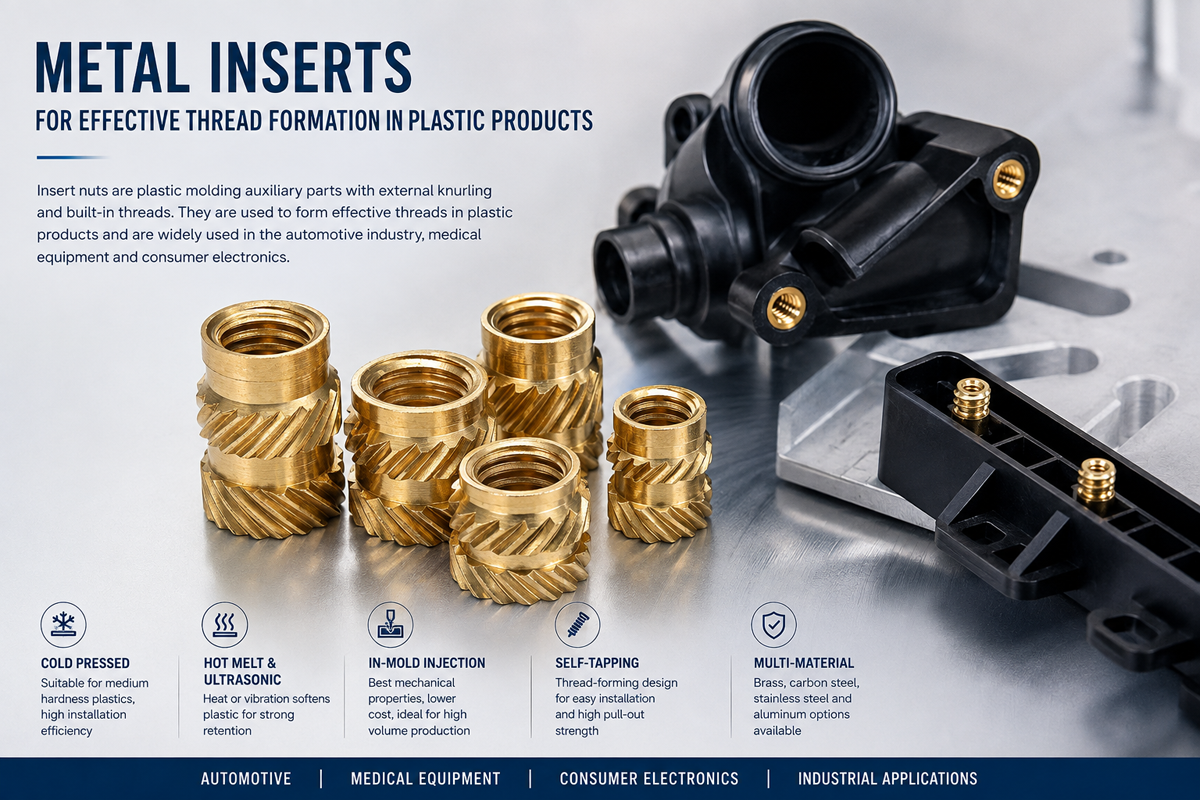
Compression Limiters
Where appropriate, a separate compression limiter can provide a controlled compressive load path.
The threaded insert and compression limiter serve different functions.
The insert provides the internal thread.
The limiter helps manage compressive loading.
Why This Matters in Medical Equipment
Equipment covers, support brackets and serviceable housings may experience sustained screw preload.
The design should account for the polymer's long-term behavior.
Cleaning, Disinfection and Sterilization Compatibility
Medical equipment may be exposed to cleaning agents, disinfectants or sterilization processes.
However, not all medical equipment components are sterilized.
Cleaning
Removes contamination and residues using defined methods.
Disinfection
Reduces microorganisms according to the intended process and effectiveness requirements.
Sterilization
Uses a validated process intended to achieve a defined level of microbial inactivation.
These processes are not interchangeable.
Material Compatibility Questions
Which cleaning or disinfecting agents will be used?
What concentrations and exposure times are expected?
What temperatures will the component experience?
Will the device undergo repeated processing?
Will moisture accumulate around the insert?
Can the plastic develop environmental stress cracking?
Can the metal corrode or discolor?
Can residues remain in inaccessible spaces?
Sterilization Methods
Depending on the medical device, processing may involve steam, ethylene oxide, radiation or other methods.
Each method introduces different material and process considerations.
Important Engineering Limitation
An insert that performs well before processing may not maintain identical retention after repeated exposure.
Compatibility must be validated for the actual material combination and finished assembly.
Why Molded-In Inserts Do Not Guarantee Cleanability
A molded-in insert may eliminate a separate installation step, but it does not automatically eliminate gaps, crevices or inaccessible surfaces.
The finished design must be assessed for cleaning access and residue retention.
Surface Finish and Contamination Considerations
Surface condition can affect both assembly and cleanliness.
Potential concerns include:
Machining residues
Burrs
Loose particles
Plating defects
Corrosion products
Packaging contamination
Residues from installation
Inspection and Cleaning Requirements
If the OEM requires a specific cleanliness level, the requirement should be defined in the purchasing specification.
Possible controls may include:
Visual inspection
Defined cleaning processes
Particle or residue testing
Packaging requirements
Handling requirements
Traceability
Such controls must be agreed and verified rather than assumed.
Medical Device Risk Management and Supplier Responsibilities
Medical device manufacturers must assess risks according to the intended use and regulatory requirements of the finished device.
A threaded insert supplier can support this process through accurate product specifications, material information and agreed quality documentation.
However, supplying a fastener for medical equipment does not automatically make the fastener a certified medical device.
ISO 14971:2019
Provides a framework for medical device risk management.
The device manufacturer determines how the threaded connection contributes to the overall risk assessment.
ISO 10993-1:2025
Addresses biological safety evaluation of medical devices within a risk management process.
It is relevant where the device's intended contact and exposure conditions require biological evaluation.
A non-patient-contact equipment housing does not automatically require the same biological evaluation as an implantable or patient-contacting component.
ISO 13485:2016
Defines quality management system requirements for medical devices and related regulatory purposes.
Supplier qualification and purchasing controls may be influenced by the medical device manufacturer's quality system.
United States FDA QMSR
The FDA Quality Management System Regulation became effective on February 2, 2026.
It incorporates ISO 13485:2016 by reference into the relevant medical device quality system regulatory framework.
Important Compliance Distinction
These standards and regulations describe requirements or frameworks relevant to medical device manufacturers and their supply chains.
Their mention does not mean JUXIN FASTENERS claims ISO 13485 certification,
FDA approval, medical device registration or product-specific biological compliance.
Any required supplier certification, testing or documentation must be confirmed for the actual project.
Medical Equipment Assembly Validation
A precision threaded insert should be evaluated as part of the complete assembly.
Design Verification
Confirm that the selected insert and boss geometry meet the specified dimensional and mechanical requirements.
Installation Process Validation
Identify critical parameters and determine how they will be controlled.
Mechanical Testing
Evaluate pull-out, torque-out and other relevant load conditions.
Environmental Testing
Where required, assess cleaning exposure, temperature, humidity and repeated service conditions.
Functional Testing
Verify the assembled component performs its intended function.
Change Control
Evaluate changes to:
Insert material
Insert geometry
Surface treatment
Plastic resin
Molding process
Installation equipment
Assembly process
Supplier or manufacturing location
The medical device OEM should determine which changes require additional qualification.
Production Quality Control
A suitable quality plan should cover the insert, plastic component and installation process.
Incoming Insert Inspection
Depending on the approved drawing:
Internal thread size
Thread pitch and tolerance
Overall length
Outside diameter
Knurl geometry
Head or flange dimensions
Material grade
Surface condition
Burrs and visible defects
Plastic Component Inspection
Verify critical hole and boss dimensions.
Installation Monitoring
Control the relevant installation parameters.
Post-Installation Inspection
Check insert presence, position, depth and visible damage.
Mechanical Verification
Perform agreed testing according to the approved plan.
Documentation
Maintain required records and traceability according to the purchasing agreement and applicable quality requirements.
Why 100% Inspection Is Not a Universal Requirement
Inspection frequency and methods should be defined according to application risk, customer requirements and process capability.
A general claim of complete inspection is not a substitute for a documented control plan.
Automated Assembly for Medical Equipment
Automated insert installation may improve repeatability and reduce manual handling.
Potential Equipment Features
Controlled insertion travel
Temperature monitoring
Force monitoring
Position verification
Automatic feeding
Error detection
Process data recording
The available features depend on the selected equipment.
Why Automation Does Not Prove Retention Strength
A machine may complete an insertion cycle without achieving the required plastic engagement.
Mechanical testing and process qualification remain necessary.
Production Manager Priorities
Cycle time
First-pass acceptance
Equipment uptime
Feeding reliability
Changeover time
Scrap and rework
Inspection effort
Tooling wear
Cost per accepted assembly
Why Process Stability Matters
A short cycle time is not beneficial if it increases boss cracking, insert misalignment or inconsistent retention.
The production process should be optimized for accepted assembly quality.
Common Failure Modes in Medical Equipment Threaded Inserts
Insert Rotation
Investigate knurl engagement, hole dimensions and assembly torque.
Insert Pull-Out
Investigate retention geometry, plastic boss strength and applied axial load.
Boss Cracking
Investigate excessive interference, resin properties, wall thickness and installation conditions.
Misalignment
Investigate molded hole position, fixturing and insertion-tool alignment.
Incorrect Installation Depth
Investigate travel control, process settings and tooling wear.
Thread Damage
Investigate mating screw specification and assembly conditions.
Corrosion or Discoloration
Investigate metal grade, surface finish and chemical exposure.
Loss of Clamp Load
Investigate plastic creep, stress relaxation and joint load path.
Contamination or Residues
Investigate manufacturing cleanliness, installation and packaging controls.
Recommended Failure Investigation
Separate potential insert defects from plastic molding defects and installation-process variation.
Compare failed and accepted components.
Measure critical dimensions.
Review the material specification.
Evaluate the actual failure mode.
Confirm corrective actions through testing.
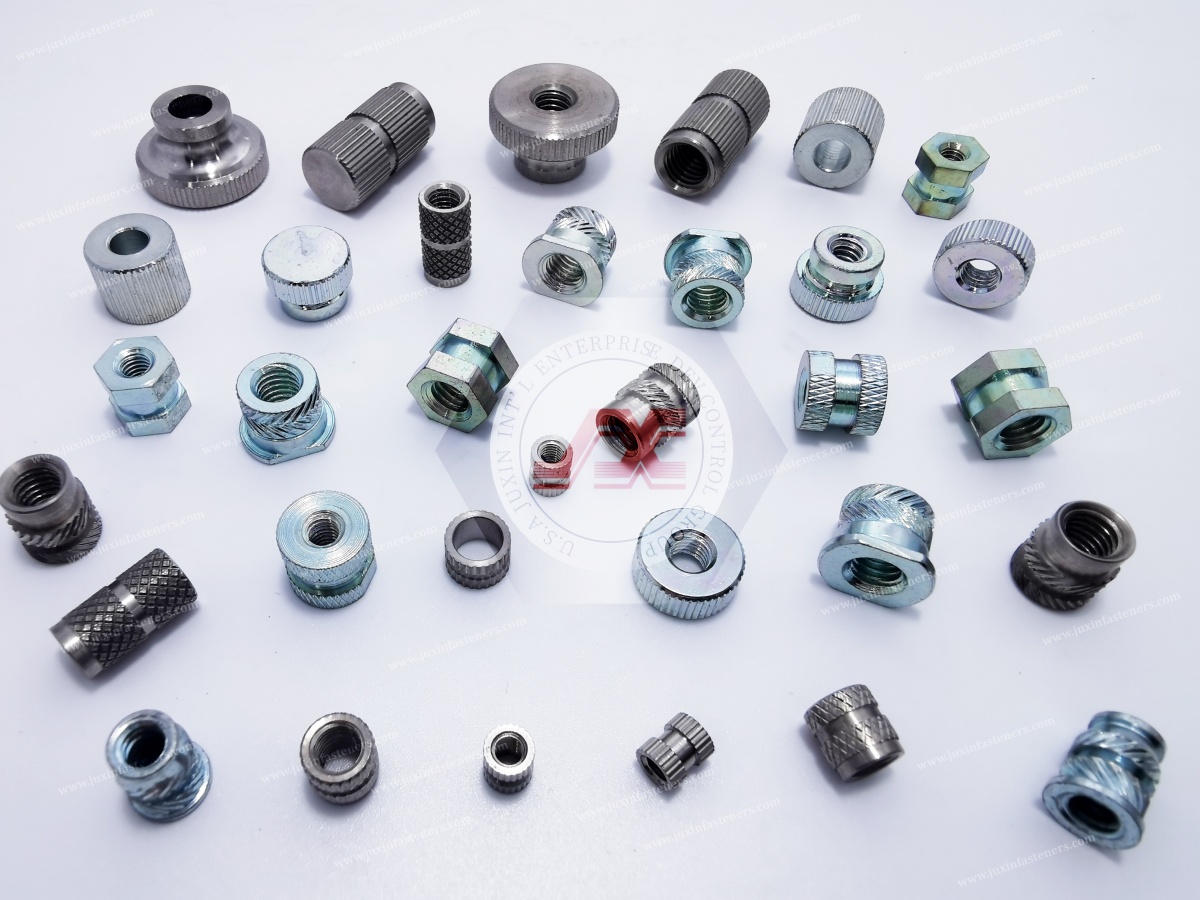
International Thread Standards
Threaded inserts for plastics are generally specified through product drawings, internal thread standards,
material specifications and application-specific testing requirements.
There is no single universal ISO or DIN product standard covering every heat-set, ultrasonic, molded-in, press-in and self-tapping insert geometry.
ISO 261
Defines general-purpose metric screw thread series.
ISO 965 Series
Addresses ISO metric screw thread tolerances.
ASME B1.1
Covers Unified inch screw threads, including UNC and UNF.
Material Standards
Applicable ASTM and EN material standards may be used when they match the selected alloy and product form.
Customer Drawings
The approved engineering drawing should define critical dimensions, tolerances and material requirements.
Metric Thread Examples
M2 × 0.4
M2.5 × 0.45
M3 × 0.5
M4 × 0.7
M5 × 0.8
M6 × 1.0
M8 × 1.25
Unified Inch Thread Examples
2-56 UNC
4-40 UNC
6-32 UNC
8-32 UNC
10-24 UNC
10-32 UNF
1/4-20 UNC
These are examples of thread designations, not confirmation of availability in every insert design.
Metric, UNC, UNF, BSW and BSF are different thread systems and should not be treated as directly interchangeable.
Custom Precision Threaded Inserts for Medical Equipment OEMs
Standard catalog inserts may not fit every medical equipment component.
Drawing-based customization may be evaluated for:
Internal thread size and pitch
Overall length
Outside diameter
Knurl configuration
Undercut geometry
Head or flange design
Pilot geometry
Blind or through-thread configuration
Material grade
Surface treatment
Dimensional tolerances
Automatic feeding requirements
Why Custom Geometry May Be Necessary
A diagnostic equipment housing may have limited boss space.
A laboratory instrument may require frequent service access.
A monitoring-device enclosure may have specific cleaning exposure.
An automated production line may require a particular feeding orientation.
The insert should be selected according to the actual component design and production requirements.
Medical OEM Supplier Qualification
Supplier development teams should evaluate more than the nominal thread size and unit price.
Technical Evaluation
Approved drawing
Material grade
Thread specification
External retention geometry
Installation method
Critical tolerances
Required mechanical performance
Quality Evaluation
Inspection methods
Material documentation
Traceability
Nonconforming product controls
Change notification
Required test records
Commercial Evaluation
Prototype quantity
Minimum order quantity
Price breaks
Lead time
Production planning
Packaging
Delivery requirements
Supply continuity
Why Second-Source Qualification Requires Testing
Two inserts with the same internal thread may have different outside diameters, knurls, materials and installation requirements.
A proposed replacement should be evaluated using the actual plastic component and assembly process.
Total Installed Cost
The lowest insert unit price does not necessarily produce the lowest finished-assembly cost.
The total cost may include:
Insert material
Molding complexity
Installation equipment
Assembly cycle time
Scrap
Rework
Inspection
Packaging
Supplier qualification
Change management
A slightly different insert geometry may improve feeding or reduce installation difficulties,
but the benefit must be verified in the actual production process.
JUXIN FASTENERS Precision Threaded Insert Solutions
JUXIN FASTENERS supplies industrial threaded inserts and related fastening components for plastic assemblies.
Relevant product families include:
Brass Heat-Set Threaded Inserts
Ultrasonic Threaded Inserts
Molded-In Threaded Inserts
Press-In Threaded Inserts
Self-Tapping Threaded Inserts
Stainless Steel Threaded Inserts
Carbon Steel Threaded Inserts
Aluminum Threaded Inserts
Headed and Unheaded Inserts
Tapered Threaded Inserts
Custom Threaded Bushings
Specific material grades, dimensions, finishes, inspection arrangements and commercial terms require project-level confirmation.
Related JUXIN FASTENERS Products
Custom Threaded Inserts for OEM Plastic Components
These resources can support initial product selection and drawing-based evaluation.
Frequently Asked Questions
What are threaded inserts for medical devices?
They are metallic threaded inserts evaluated for use in plastic components of medical equipment, subject to the device's specific engineering and regulatory requirements.
Are all threaded inserts used in medical equipment medical-grade?
No. Material suitability and compliance must be established for the intended application.
Are stainless steel inserts biocompatible?
Not automatically. Biological safety depends on the material, finished device and intended contact conditions.
Can brass inserts be used in medical equipment?
They may be suitable for selected applications, subject to material restrictions, corrosion exposure and OEM requirements.
Which inserts are suitable for medical equipment housings?
Heat-set, ultrasonic, molded-in, press-in and self-tapping inserts may be considered depending on the plastic and application.
Can threaded inserts withstand sterilization?
Compatibility must be evaluated for the specific metal, polymer, processing method and expected exposure cycles.
Does insert molding make an assembly sterile?
No. Insert molding is a manufacturing process and does not establish sterility.
What causes insert misalignment?
Possible causes include hole-position variation, poor fixturing, incorrect feeding or installation-tool misalignment.
What causes plastic boss cracking?
Possible causes include excessive interference, insufficient surrounding material, resin properties or installation conditions.
What is the difference between pull-out and torque-out resistance?
Pull-out resistance concerns axial removal, while torque-out resistance concerns rotation in the plastic.
Can a threaded insert prevent loss of screw preload?
Not automatically. Plastic creep and joint geometry can affect preload retention.
Does every medical equipment insert require ISO 10993 testing?
No. Biological evaluation depends on the finished device's intended contact and risk assessment.
Does JUXIN FASTENERS claim ISO 13485 certification?
No certification claim is made in this article. Any required supplier qualification or documentation must be confirmed for the specific project.
Can a custom insert be evaluated from a customer drawing?
Yes. JUXIN FASTENERS welcomes drawing-based technical and commercial inquiries.
OEM RFQ — Threaded Inserts for Medical Equipment
JUXIN FASTENERS welcomes inquiries from medical equipment OEMs, diagnostic instrument manufacturers,
laboratory equipment manufacturers, design engineers, manufacturing engineers, production managers, procurement specialists and supplier development teams.
For technical evaluation and quotation, please provide the following information where applicable.
Insert Drawing and Specifications
2D engineering drawing
3D CAD model where available
Internal thread size and pitch
Metric or Unified inch thread designation
Outside diameter
Overall length
Knurl and undercut geometry
Head or flange configuration
Material grade
Surface treatment
Critical tolerances
Plastic Component Information
Resin grade
Filler content
Hole diameter and tolerance
Hole depth
Boss diameter and height
Wall thickness
Mating component geometry
Installation Requirements
Heat-set, ultrasonic, molded-in, press-in or self-tapping method
Installation equipment
Required installation depth
Automatic feeding requirements
Production cycle considerations
Performance and Environmental Requirements
Pull-out resistance
Torque-out resistance
Assembly tightening torque
Repeated assembly requirements
Cleaning chemicals
Disinfection or sterilization exposure, if applicable
Temperature and humidity
Vibration
Required inspection and testing
Medical Equipment Quality Requirements
Intended application and relevant contact conditions
Required material documentation
Traceability requirements
Cleanliness or packaging requirements
Supplier change-control requirements
Required quality agreements or inspection records
Commercial Requirements
Prototype or sample quantity
Initial order quantity
Estimated annual demand
MOQ expectations
Delivery schedule
Packaging requirements
Company: Juxin Fasteners
Website: https://www.juxinfasteners.com/
Email: info@juxinfasteners.com
Contact JUXIN FASTENERS with your drawings and application requirements to discuss precision brass threaded inserts,
stainless steel threaded inserts, heat-set inserts, ultrasonic inserts and custom OEM threaded fastening solutions for medical equipment plastic components.
Reliable medical equipment fastening begins with the correct insert geometry, compatible plastic material, controlled installation process and clearly defined product requirements.
Contact Us
Tel.:
+86 020 8621 0320
+86 020 3121 6067
E-mail:
Technical Support:
Navigation
SEND INQUIREY



