
Call Us
+86 136 6007 9809
Call Us
+86 136 6007 9809

Mar. 29, 2026
Threaded Inserts for Electrical Equipment: Plastic Enclosures, Insulation Design and OEM Assembly
Electrical and power equipment manufacturers increasingly use engineered plastic housings, polymer covers,
insulating supports and lightweight enclosures to meet product design, manufacturing and service requirements.
These components may require durable internal machine threads for removable covers, mounting brackets, electronic modules and other mechanical interfaces.
However, direct threading into plastic can become a limiting factor when the assembly requires repeated maintenance, controlled screw tightening or higher local load capacity.
Threaded inserts for electrical equipment provide metal internal threads within compatible plastic components, creating fastening points that can support serviceable and repeatable assemblies.
Potential applications include:
Electrical control boxes
Power distribution equipment
Switchgear-related housings
Circuit breaker enclosure components
Industrial automation systems
PLC and electronic control housings
Solar inverter equipment
Energy storage system enclosures
Power electronics assemblies
Industrial instrument housings
For mechanical and design engineers, the primary considerations include insert geometry, polymer compatibility, boss design, screw engagement and joint performance.
For electrical equipment designers, an additional concern is the effect of conductive metal inserts on insulation distances, electrical clearances and product safety.
For manufacturing engineers and production managers, the selected insert must be compatible with molding, installation equipment, assembly speed and quality control.
For procurement and supplier development teams, the decision involves drawing conformity, material specification,
inspection requirements, custom configurations, production cost and dependable sourcing.
Juxin Fasteners welcomes inquiries for standard and customized threaded inserts used in suitable electrical and industrial equipment applications.
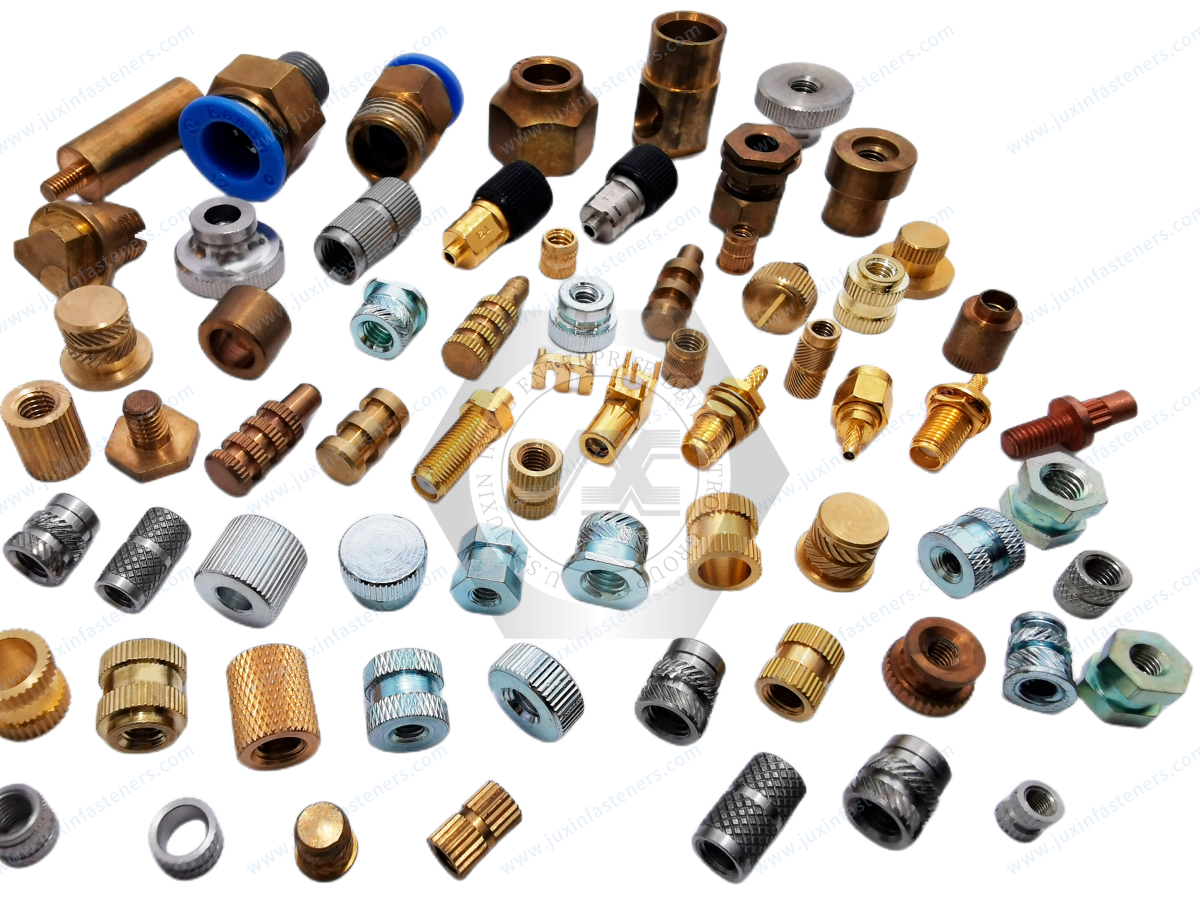
Why Electrical Equipment Manufacturers Use Threaded Inserts
Electrical equipment frequently requires access for:
Inspection
Maintenance
Wiring adjustments
Component replacement
Product upgrades
Service operations
Direct plastic threads may experience wear or damage after repeated screw installation.
Metal threaded inserts can provide a more durable internal thread when correctly integrated into the plastic component.
Potential Benefits
Reusable internal machine threads
Improved thread wear resistance
More consistent screw engagement
Suitable attachment points for removable components
Greater flexibility in mechanical assembly
Potential reduction in plastic thread damage
Important Engineering Limitation
A metal insert does not automatically increase the strength of the entire plastic component.
The surrounding polymer, boss geometry and loading conditions may still determine the limiting performance.
The Load Path
Mating screw → Metal insert thread → External retention features → Plastic boss → Housing structure
If the plastic boss cracks or creeps, the joint can fail even when the insert's internal thread remains undamaged.
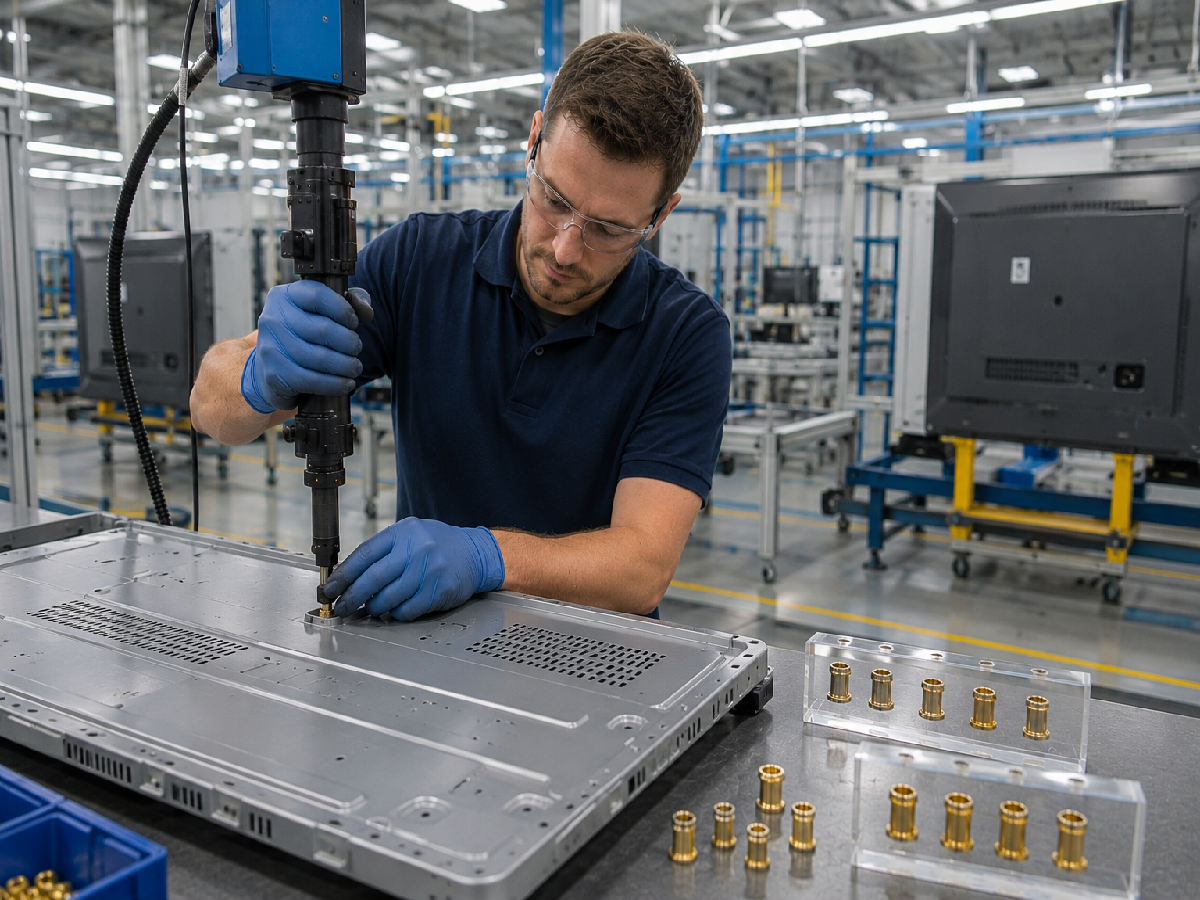
Electrical Safety: Conductive Inserts, Creepage and Clearance
Electrical equipment requires more than mechanical fastening reliability.
Metal inserts are electrically conductive components.
Their placement can affect insulation design when located near energized conductors or electrical terminals.
Clearance Distance
Clearance is the shortest distance through air between conductive parts.
Creepage Distance
Creepage is the shortest distance along the surface of an insulating material between conductive parts.
The required distances depend on the applicable equipment standard and operating conditions.
Why Threaded Inserts Matter
A metal insert embedded in a plastic housing may introduce a conductive feature closer to an energized component.
Potential design concerns include:
Reduced electrical clearance
Reduced creepage distance
Unintended conductive paths
Exposed insert surfaces
Screw penetration toward energized components
Moisture or contamination around the fastening point
Engineering Recommendation
Electrical insulation requirements must be evaluated at the complete equipment level.
Do not assume that a plastic housing remains electrically equivalent after a conductive insert is added.
Relevant Standards
Depending on the equipment:
IEC 60664-1: Insulation coordination for equipment within its scope
IEC 60529: Degrees of protection provided by enclosures
IEC 61439 series: Low-voltage switchgear and controlgear assemblies where applicable
IEC 62368-1: Safety requirements for applicable audio/video, information and communication technology equipment
These standards serve different purposes.
They should be selected according to the actual product category rather than treated as universal requirements for every threaded insert.
Important Safety Limitation
A threaded insert is a mechanical component.
It should not be represented as independently certifying an electrical enclosure or guaranteeing insulation safety.
Threaded Insert Types for Electrical Equipment
Electrical and power equipment manufacturers may evaluate several insert designs.
Heat-Set Threaded Inserts
Heat-set inserts are installed into suitable thermoplastics using controlled heat and insertion force.
The polymer softens and flows around the insert's external retention features.
Potential Applications
ABS electrical housings
Polycarbonate enclosures
Selected nylon components
Electronic control boxes
Communication equipment housings
Key Design Considerations
Polymer grade
Pilot hole geometry
Installation temperature
Insertion depth
Boss dimensions
Cooling behavior
Press-In Threaded Inserts
Press-in inserts are installed through mechanical insertion into a compatible hole.
Potential Applications
Plastic covers
Electrical instrument housings
Equipment panels
Serviceable control modules
Key Design Considerations
Insertion force
Hole tolerance
Boss wall thickness
Insert alignment
Plastic cracking risk
Self-Tapping Threaded Inserts
Self-tapping inserts have external cutting or thread-forming features that create engagement in a compatible prepared hole during installation.
The insert already contains an internal machine thread.
Important Technical Distinction
A self-tapping insert does not normally create both its internal and external threads during installation.
Its internal thread is manufactured into the insert.
Potential Applications
Suitable plastic housings
Industrial equipment covers
Repair applications
Selected low-volume assemblies
Key Design Considerations
Pilot hole dimensions
Installation torque
Polymer compatibility
Chip generation where applicable
Boss strength
Alignment
Mold-In Threaded Inserts
Mold-in inserts are positioned within the mold before injection.
The polymer flows around their external geometry during molding.
Potential Applications
Selected high-volume electrical housings
Industrial power equipment components
Plastic mounting structures
Custom molded assemblies
Key Design Considerations
Insert positioning
Mold retention
Polymer flow
Cooling shrinkage
Insert movement
Inspection and scrap risk
Important Limitation
Mold-in inserts do not universally provide the highest pull-out or torque-out resistance.
Performance depends on the specific insert, polymer, geometry and molding process.
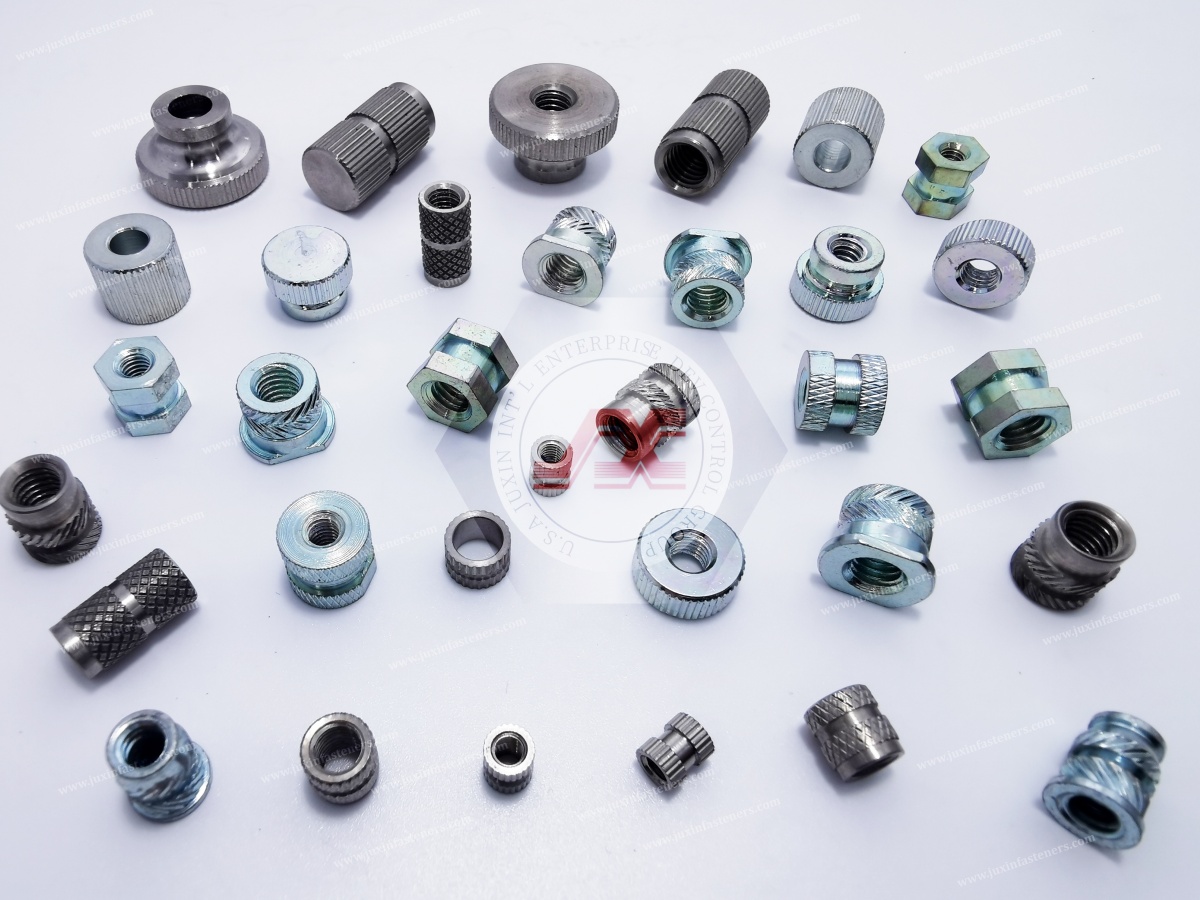
Brass Threaded Inserts for Plastic Electrical Enclosures
Brass threaded inserts are widely considered for thermoplastic components because they combine machinability, useful corrosion behavior and durable internal threads.
Potential Applications
Electrical control boxes
Sensor housings
Electronic equipment covers
Communication equipment
Selected switchgear-related plastic components
Common Plastic Materials
ABS
PC
PA6
PA66
Selected glass-filled thermoplastics
Engineering Considerations
Brass alloy
External knurl geometry
Internal thread specification
Pilot hole dimensions
Installation method
Thermal exposure
Surrounding polymer strength
Important Correction: Brass Does Not Eliminate Plastic Creep
Brass can provide a durable metal internal thread, but it does not prevent the surrounding polymer from creeping under sustained load.
Long-term joint performance depends on the complete insert-to-plastic interface.
Heat Transfer During Installation
Brass has useful thermal conductivity, which can be advantageous in some heat-set processes.
However, installation temperature and energy must still be controlled for the actual polymer.
Electrical Conductivity
Brass is electrically conductive.
Its placement must be considered in insulation and electrical safety design.
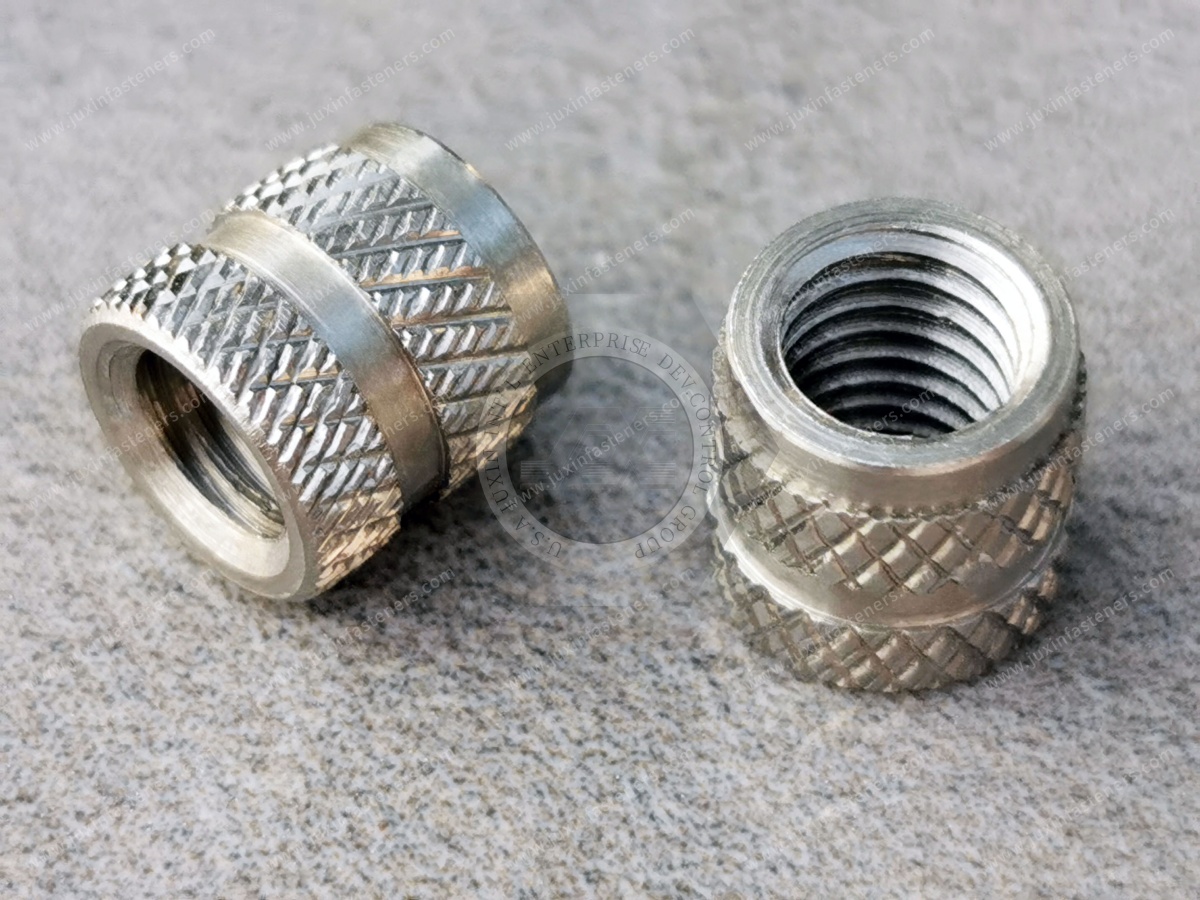
Stainless Steel Threaded Inserts for Electrical Equipment
Stainless steel inserts may be selected where corrosion resistance or specific mechanical requirements are important.
Potential Applications
Outdoor electrical equipment
Solar power equipment
Industrial automation systems
Selected marine-related electrical housings
Corrosion-sensitive industrial components
Candidate Materials
Depending on the specification:
304-type stainless steel
316-type stainless steel
Engineering Considerations
Stainless steel grade
Corrosion environment
Insert geometry
Installation force or temperature
Mating screw compatibility
Thread galling
Electrical conductivity
Important Limitation
Stainless steel does not provide universal corrosion resistance.
It also remains electrically conductive and must be considered in the insulation design.
Aluminum Threaded Inserts for Lightweight Equipment
Aluminum inserts may be considered where weight is an important design factor.
Potential Applications
Portable electrical equipment
Lightweight control modules
Transportation electronics
Selected equipment housings
Engineering Considerations
Aluminum alloy
Internal thread strength
Insert retention
Installation behavior
Corrosion exposure
Mating screw material
Important Limitation
Lower density does not automatically make aluminum the best material for a plastic threaded insert.
The complete joint must satisfy mechanical and environmental requirements.
Material Comparison
| Selection factor | Brass | Stainless steel | Aluminum |
|---|---|---|---|
| Density | Relatively high | Relatively high | Low |
| Internal thread durability | Design-dependent | Design-dependent | Design-dependent |
| Corrosion behavior | Alloy/environment-dependent | Grade/environment-dependent | Alloy/environment-dependent |
| Heat-set suitability | Common for suitable designs | Product/process-dependent | Product/process-dependent |
| Electrical conductivity | Conductive | Conductive | Conductive |
| Typical selection driver | Machinability and thread durability | Corrosion requirements | Weight reduction |
Plastic Material Compatibility
Electrical enclosures may use several thermoplastics.
The selected insert and installation method must match the actual polymer grade.
ABS
Often used in electrical and electronic housings.
Considerations
Heat sensitivity
Boss geometry
Hole dimensions
Repeated assembly
Local cracking
PC (Polycarbonate)
Used in selected impact-resistant housings and protective components.
Considerations
Residual molding stress
Environmental stress cracking
Heat exposure
Insert interference
PA6 and PA66
Used in industrial and electrical engineering components.
Considerations
Moisture absorption
Dimensional variation
Creep
Thermal exposure
Reinforcement
Glass-Filled Nylon
Used in selected reinforced structural or insulating components.
Considerations
Fiber orientation
Local anisotropy
Mold flow
Boss cracking
Installation compatibility
POM
Used in selected precision mechanical components.
Considerations
Retention geometry
Thermal processing
Dimensional stability
Insert compatibility
Important Engineering Principle
An insert design qualified for one polymer should not automatically be approved for another polymer.
Even different grades of the same polymer family may require different installation parameters.
Boss Design and Pilot Hole Engineering
The plastic boss surrounding the insert must support the intended loads.
Pilot Hole Diameter
The hole must match the selected insert geometry and installation method.
Oversized Holes
May cause:
Reduced retention
Insert rotation
Misalignment
Reduced pull-out resistance
Undersized Holes
May cause:
Excessive insertion force
Boss cracking
Plastic distortion
Insert damage
Boss Outside Diameter
The boss must provide sufficient surrounding material.
However, there is no universal boss-to-insert diameter ratio that guarantees performance across all polymers and insert types.
Boss Wall Thickness
Insufficient wall thickness may cause cracking.
Excessive wall thickness may introduce molding defects or dimensional instability.
Hole Depth
Blind holes must provide enough space for:
Insert length
Installation movement
Required clearance
Mating screw penetration
Screw Bottoming
A screw that bottoms against the hole or insert can create unintended axial loading.
Engineering Recommendation
Verify screw length and engagement in the complete assembled condition.
Insert Height and Flush Installation
Some electrical enclosures require flush-mounted inserts.
Other designs may intentionally use:
Raised flanges
Recessed inserts
Defined stand-off geometry
Specific bearing surfaces
Important Correction
An insert does not always need to be flush or slightly below the plastic surface.
The correct installed height depends on the mating component, load path, assembly clearance and electrical insulation requirements.
Electrical Safety Check
Where conductive inserts are near energized components, verify the resulting creepage and clearance distances.
Pull-Out, Torque-Out and Assembly Torque
Three different performance characteristics must be distinguished.
Pull-Out Resistance
Resistance to axial extraction of the insert from the plastic.
Torque-Out Resistance
Resistance to rotation of the insert within the plastic.
Screw Tightening Torque
Torque applied to the mating screw during assembly.
These characteristics are related but not interchangeable.
Engineering Recommendation
Specify each required characteristic separately.
Do not use a generic torque value without defining the insert, polymer, installation and mating screw conditions.
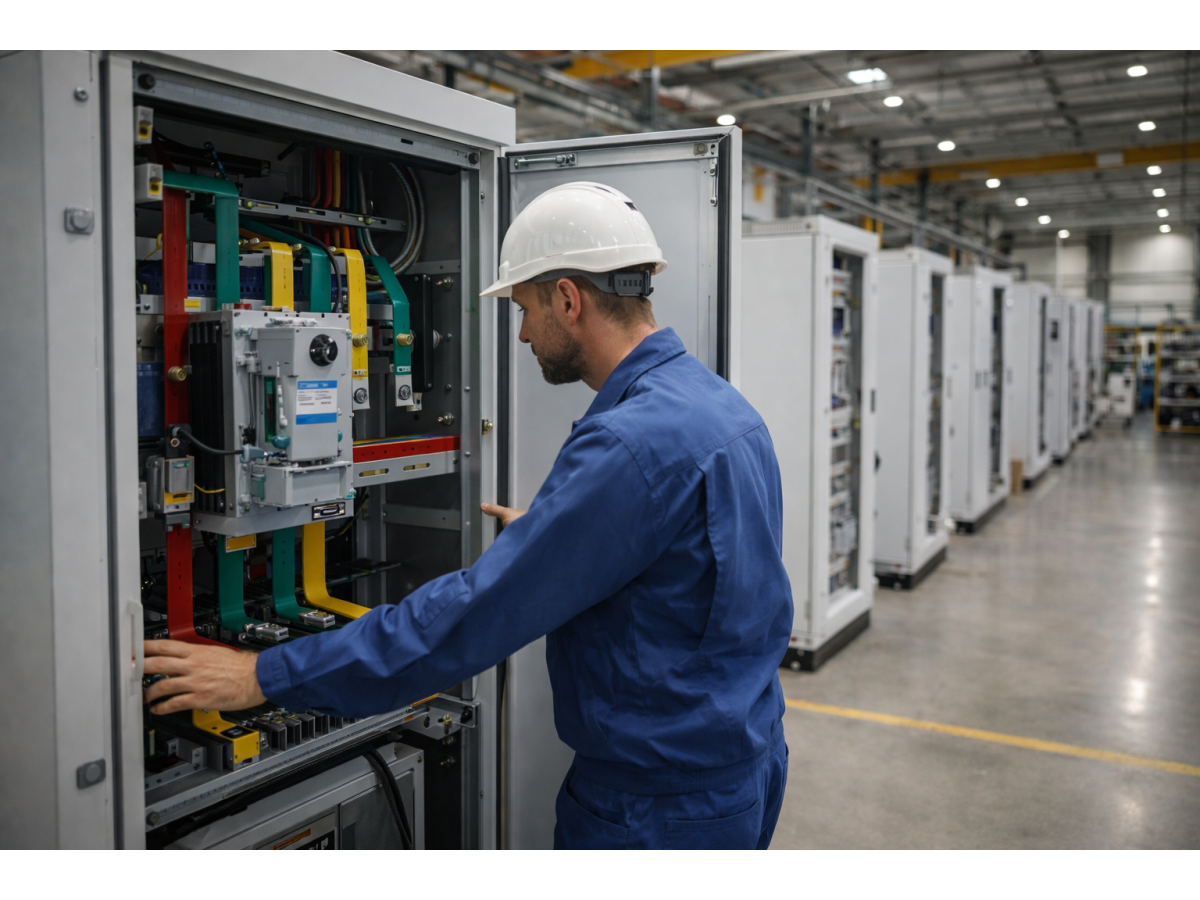
Common Threaded Insert Failure Modes
| Failure mode | Possible cause | Recommended action |
|---|---|---|
| Insert rotates | Inadequate external engagement | Review knurl geometry and installation |
| Insert pulls out | Weak boss or insufficient retention | Review load path and boss design |
| Boss cracks | Excessive interference or thin wall | Review hole and insertion method |
| Thread strips | Excessive screw torque or inadequate engagement | Review thread and tightening process |
| Insert misaligns | Poor positioning or tooling | Improve installation alignment |
| Plastic creeps | Sustained load and temperature | Evaluate polymer and long-term loading |
| Insert protrudes | Incorrect depth control | Review installed height |
| Electrical clearance decreases | Conductive insert placed too close to live parts | Reassess insulation design |
| Enclosure leaks | Unqualified fastening or sealing interface | Validate enclosure sealing system |
Manufacturing Engineering and Production-Line Assembly
Electrical equipment manufacturers may produce thousands of plastic housings or enclosure components.
A threaded insert must therefore be evaluated for production consistency.
Heat-Set Installation
Relevant variables include:
Temperature
Insertion force
Insertion speed
Depth
Cooling
Tool wear
Press-In Installation
Relevant variables include:
Insertion force
Hole dimensions
Alignment
Boss support
Tool condition
Self-Tapping Installation
Relevant variables include:
Pilot hole
Installation torque
Alignment
Chip control where relevant
Boss stress
Mold-In Installation
Relevant variables include:
Insert placement
Mold retention
Polymer flow
Cooling shrinkage
Cycle time
Defect detection
Production Manager's Evaluation
A production manager should compare:
Installation cycle time
Tooling requirements
Automation compatibility
Operator requirements
Inspection
Scrap
Rework
Maintenance
Production yield
Information Gain: Electrical Enclosure Production Has Two Different Quality Boundaries
The first is mechanical:
Does the insert remain securely retained during assembly and service?
The second is electrical:
Does the installed insert preserve the required insulation and enclosure safety characteristics?
A mechanically acceptable threaded insert may still be unsuitable if it compromises electrical clearance or creates an unintended conductive path.
Engineering Lesson
Mechanical and electrical design reviews should be coordinated before production release.
Electrical Enclosure Sealing and Environmental Protection
Outdoor electrical equipment may require protection against dust, moisture and environmental exposure.
Threaded inserts may be used in housings that are designed to meet specified ingress-protection requirements.
However, an insert does not independently guarantee enclosure sealing.
Potential Leakage Paths
Around the insert
Through a mounting hole
At a cover gasket
Along a mating screw interface
Through damaged housing material
IEC 60529
IEC 60529 defines enclosure ingress-protection classifications.
An IP rating applies to the tested enclosure configuration under specified conditions.
Engineering Recommendation
Validate the complete enclosure sealing system, including fastener locations and assembly conditions.
Power Distribution and Switchgear Applications
Power distribution and switchgear equipment may use threaded inserts in suitable polymer components.
Potential applications include:
Insulating support structures
Protective covers
Control housings
Auxiliary equipment mounts
Instrument panels
Engineering Priorities
Electrical insulation
Thermal exposure
Mechanical retention
Assembly torque
Serviceability
Customer-specific qualification
Important Limitation
Threaded inserts should not be assumed suitable for live electrical terminals, high-current conductor joints or safety-critical insulating barriers without the required design and qualification.
Industrial Automation and PLC Equipment
Potential applications include:
PLC housings
Sensor enclosures
Control modules
Robotics electrical equipment
Machine control panels
Engineering Priorities
Compact boss design
Repeatable installation
Maintenance
Vibration
Dimensional consistency
Renewable Energy and Energy Storage Systems
Potential applications include:
Solar inverter housings
Energy storage control enclosures
Battery management electronics housings
Power conversion equipment
Auxiliary mounting brackets
Engineering Priorities
Thermal cycling
Corrosion
Insulation
Environmental sealing
Production quality
Important Limitation
A threaded insert suitable for an auxiliary plastic housing should not automatically be used for a high-voltage or high-current electrical connection.
Power Electronics and Thermal Management Equipment
Power electronics systems may contain:
Plastic control housings
Sensor modules
Auxiliary covers
Cooling equipment enclosures
Insulating supports
Engineering Priorities
Temperature exposure
Differential thermal expansion
Electrical clearance
Vibration
Material compatibility
Service access
Information Gain: Metal-to-Plastic Thermal Expansion Can Affect Long-Term Retention
Metal inserts and polymers generally expand and contract differently.
Thermal cycling can change interface stresses and retention behavior.
Engineering Recommendation
Evaluate the complete joint across the expected operating temperature range.
OEM Procurement: Standard vs Custom Threaded Inserts
A purchasing team may receive quotations for threaded inserts with the same nominal internal thread size.
However, they may differ in:
External geometry
Knurl pattern
Body length
Flange design
Material
Installation method
Surface finish
Dimensional tolerances
Important Procurement Principle
Two inserts with the same M4 or M5 internal thread are not necessarily interchangeable.
The external retention design and plastic housing geometry must also match.
Custom OEM Insert Considerations
Drawing-specific requirements may include:
Special body length
Custom knurl geometry
Flange dimensions
Nonstandard external features
Material specification
Surface finish
Installation compatibility
Feasibility and availability must be confirmed against the actual drawing.
Total Installed Cost
The total cost of a threaded attachment point includes more than the insert purchase price.
Potential Cost Elements
Insert cost
Installation equipment
Tooling
Assembly labor
Cycle time
Inspection
Scrap
Rework
Quality documentation
Total Installed Cost per Accepted Assembly = (Insert Cost + Installation Cost + Tooling Allocation + Inspection Cost + Scrap and Rework Cost) ÷ Accepted Assembly Quantity
This framework helps production and procurement teams evaluate alternatives using representative manufacturing data.
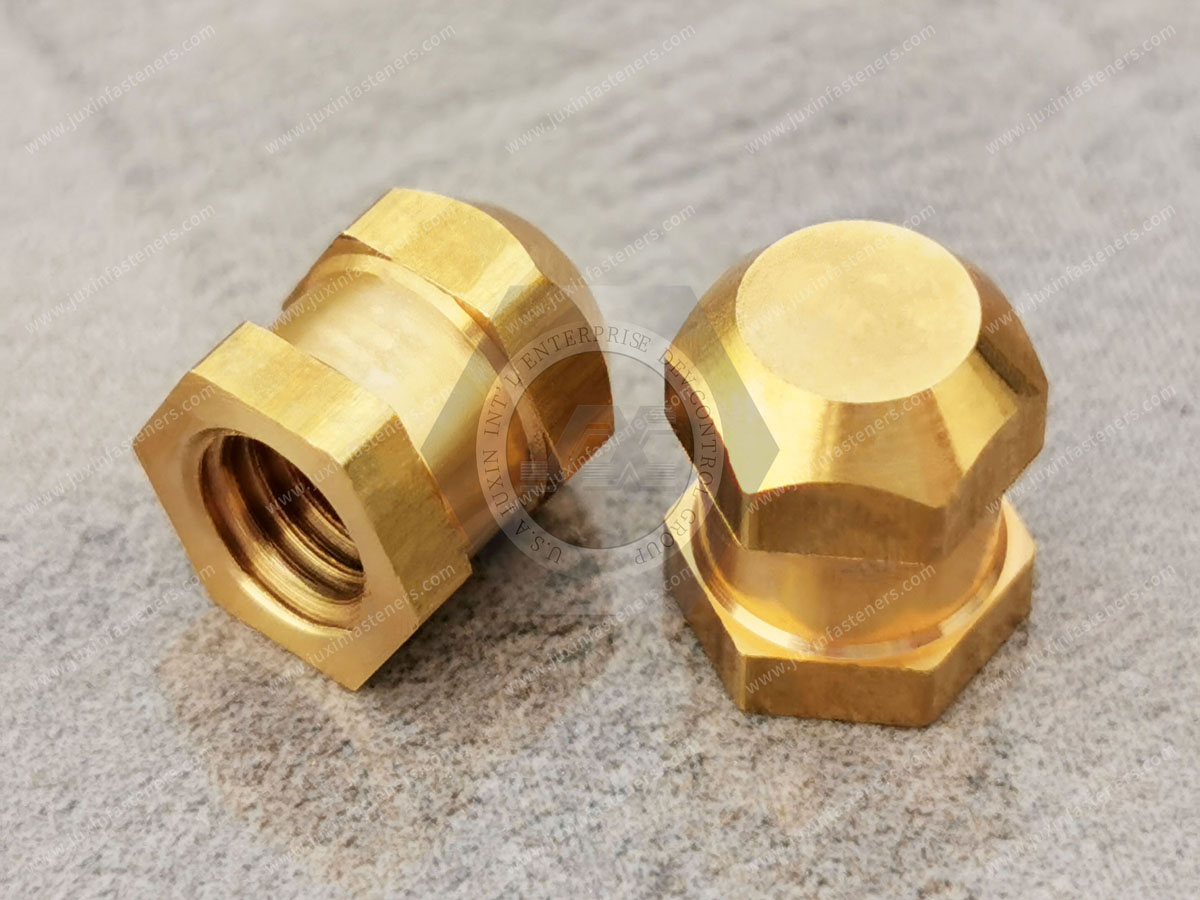
Relevant International Standards
Depending on the application:
ISO 261: General-purpose metric screw thread plan
ISO 965 series: ISO metric screw thread tolerances
ASME B1.1: Unified inch screw threads
IEC 60664-1: Insulation coordination for equipment within its scope
IEC 60529: Enclosure ingress-protection classifications
IEC 61439 series: Low-voltage switchgear and controlgear assemblies where applicable
IEC 62368-1: Applicable electronic equipment safety requirements
These references do not independently establish threaded insert pull-out strength, torque-out resistance or approval for a particular electrical product.
Metric and Inch Thread Selection
Threaded inserts may be specified with metric or unified inch internal threads.
For nominal diameter reference only:
M3 ≈ 0.118 inch
M4 ≈ 0.157 inch
M5 ≈ 0.197 inch
M6 ≈ 0.236 inch
These are nominal diameter conversions, not interchangeable thread specifications.
Metric, UNC, UNF, BSW and BSF threads are not directly interchangeable.
OEM RFQ Checklist for Electrical Equipment Threaded Inserts
| RFQ item | Information to provide |
|---|---|
| Insert drawing | Part number and revision |
| Thread designation | Metric or unified inch |
| Insert material | Brass, stainless steel or aluminum |
| Installation method | Heat-set, press-in, self-tapping or mold-in |
| External geometry | Knurl, flange and body dimensions |
| Plastic material | Resin grade and reinforcement |
| Boss geometry | Diameter, height and wall thickness |
| Pilot hole | Diameter, depth and tolerances |
| Installed height | Flush, recessed or raised |
| Mechanical requirements | Pull-out and torque-out |
| Mating screw | Thread, length and tightening conditions |
| Electrical requirements | Clearance, creepage and insulation constraints |
| Environmental requirements | Temperature, moisture and chemical exposure |
| Sealing requirements | Where applicable |
| Quality documentation | Customer-specific requirements |
| Prototype quantity | Sample demand |
| Annual volume | Forecast quantity |
| MOQ | Commercial confirmation |
| Lead time | Required delivery schedule |
| Packaging | Bulk or protected packaging |
Frequently Asked Questions
Why are threaded inserts used in electrical enclosures?
They provide durable internal machine threads in compatible plastic components, supporting removable covers, mounting points and repeated assembly.
Are brass inserts suitable for electrical housings?
They may be suitable for compatible plastic housings, but their electrical conductivity must be considered in the insulation design.
Do brass threaded inserts prevent plastic creep?
No. The surrounding polymer can still creep under sustained load.
Can stainless steel inserts be used outdoors?
They may be suitable for corrosion-sensitive applications, subject to grade selection and environmental validation.
Are mold-in inserts always stronger than heat-set inserts?
No. Retention depends on insert geometry, polymer, boss design and manufacturing conditions.
Can self-tapping inserts be installed in plastic?
Yes, when the insert and pilot hole are designed for the selected plastic and installation process.
Do threaded inserts affect electrical clearance?
They can. Conductive inserts and mating screws must be considered when determining insulation distances.
Do threaded inserts make an enclosure waterproof?
No. The complete enclosure sealing system must be validated.
Can threaded inserts be used in power electronics equipment?
They may be suitable for mechanical housing and auxiliary mounting applications, subject to electrical and mechanical requirements.
What information is required for an OEM quotation?
Provide the insert drawing, polymer, boss geometry, installation method, mechanical requirements, electrical constraints, quality requirements and production forecast.
Juxin Fasteners: OEM Threaded Inserts for Electrical and Power Equipment
Juxin Fasteners welcomes inquiries for standard and custom threaded inserts used in suitable plastic electrical enclosures and industrial equipment.
Relevant product categories include:
Brass threaded inserts for plastic
Stainless steel threaded inserts
Aluminum threaded inserts
Heat-set threaded inserts
Press-in threaded inserts
Self-tapping threaded inserts
Mold-in threaded inserts
Custom OEM threaded insert designs
Specific material grades, geometries, available sizes, manufacturing feasibility, inspection documentation,
MOQ and delivery schedules require confirmation against customer drawings.
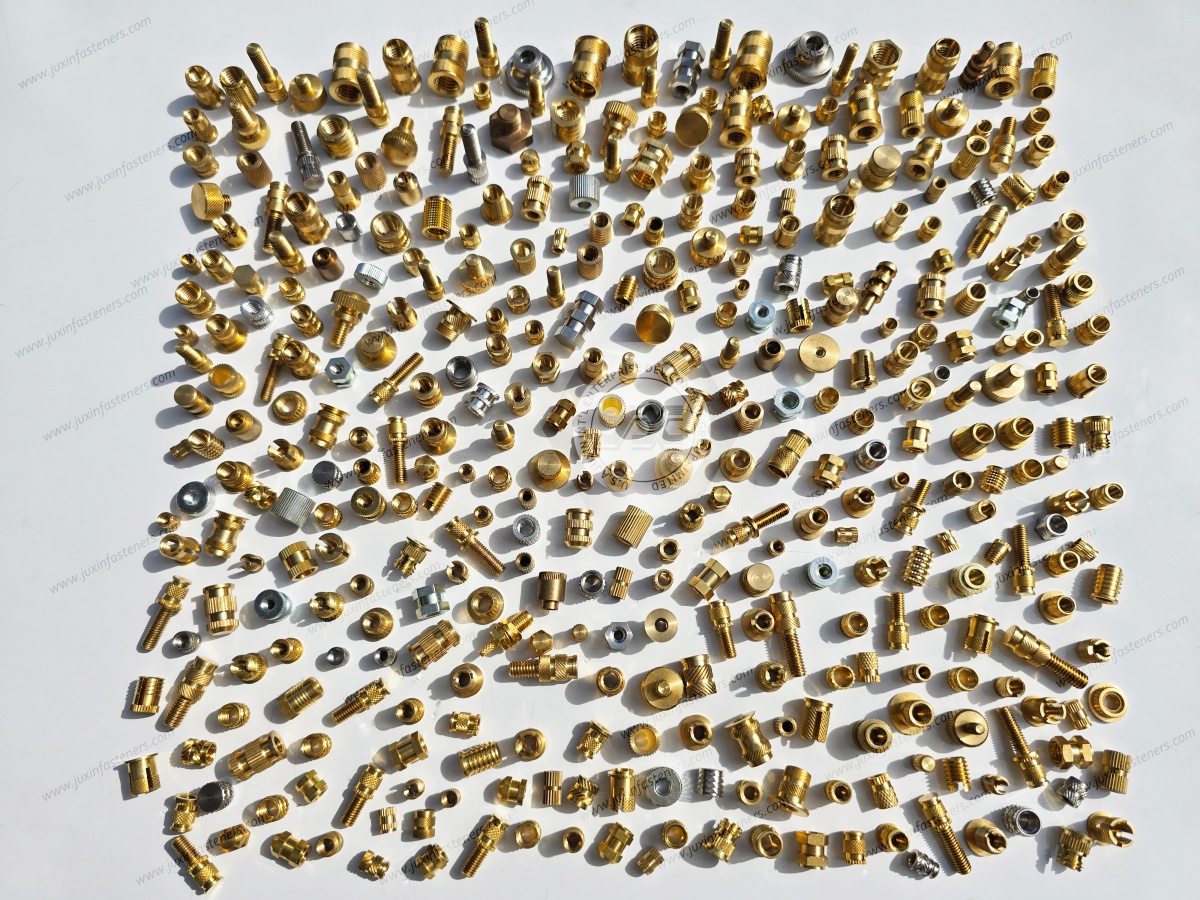
Request an OEM Electrical Equipment Threaded Insert Quotation
Are you designing a plastic electrical enclosure, sourcing brass inserts for a control housing,
developing power electronics equipment or evaluating alternative threaded insert suppliers for production?
Juxin Fasteners welcomes drawing-based inquiries from electrical equipment design engineers, mechanical engineers, manufacturing engineers,
production managers, purchasing specialists, procurement managers, supplier development teams and supply chain managers.
Please provide:
Insert drawing + thread designation + insert material + polymer grade + boss geometry + pilot hole dimensions
+ installation method + mechanical requirements + electrical insulation constraints + environmental conditions
+ quality documentation + prototype quantity + annual volume + packaging + delivery schedule.
Our team can review the supplied information and confirm available product options, technical feasibility and quotation conditions.
Company: Juxin Fasteners
Website: https://www.juxinfasteners.com/
Email: info@juxinfasteners.com
Send your electrical equipment threaded insert drawings and OEM RFQ to Juxin Fasteners for technical confirmation and quotation.
Contact Us
Tel.:
+86 020 8621 0320
+86 020 3121 6067
E-mail:
Technical Support:
Navigation
SEND INQUIREY



