
Call Us
+86 136 6007 9809
Call Us
+86 136 6007 9809

Sep. 06, 2023
Overview of Washers and Bolts in Fastening Systems
When designing bolted connections, selecting the right washer is as crucial as choosing the proper bolt. Washers are often used to reduce friction, distribute surface pressure, prevent leakage, and isolate sensitive materials. Incorrect selection can lead to plastic deformation, reduced preload, and even component failure.
The performance of a washer is commonly measured by hardness (HV) rather than tensile or yield strength. This is because the small size of washers makes conventional tensile testing impractical. Hardness correlates with mechanical strength, making it a reliable indicator for industrial applications.
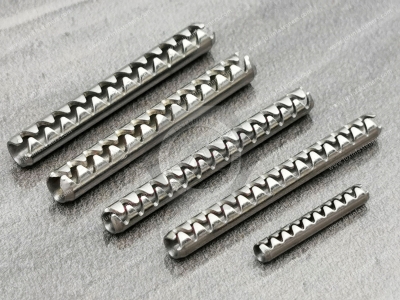
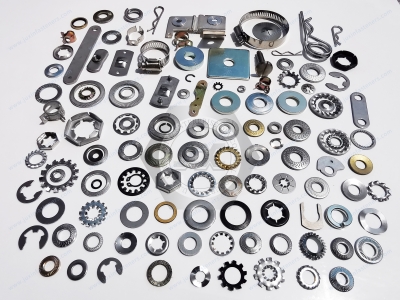
Key Features and Functions
1. Flat Washers
Purpose: Distribute compressive stress from bolt heads or nuts over a larger surface area, preventing material crushing.
Function: Protects the surface of connected parts, reduces friction, and prevents direct metal-to-metal contact.
Installation: Place a flat washer between the bolt head or nut and the mounting surface before tightening.
Industrial Tip: Use washers with higher hardness (e.g., 300HV instead of 200HV) for high-performance bolts (grade 10.9 or higher) to avoid plastic deformation under heavy loads.
2. Spring Washers
Purpose: Prevent loosening due to vibration or dynamic loading.
Function: After flattening, spring washers exert continuous elastic force, maintaining thread friction and resisting rotation.
Installation: Position between bolt head/nut and connected surface with the sharp angle facing the contact surface to maximize anti-rotation effect.
3. Load Distribution & Preload Management
Flat washers prevent excessive compressive stress on softer materials, while spring washers maintain preload under dynamic and thermal cycling.
Proper washer selection ensures stable clamping force, avoids premature loosening, and reduces the risk of surface damage.
Installation Guidelines
Select Appropriate Washer Material & Hardness: Consider bolt grade, load, and connected material.
Position Correctly: Place flat washers under bolt heads or nuts; install spring washers with the angled side contacting the surface.
Tighten to Specification: Use a torque wrench to ensure proper preload; washers help distribute pressure evenly.
Verify Fit: Ensure washers do not shift or deform under load, particularly in dynamic or vibration-heavy applications.
Applications Across Industries
1. Automotive Industry:
Securing chassis, engine mounts, body panels, and suspension components.
Prevents loosening under vibration and high torque conditions.
2. Machinery & Industrial Equipment:
Bolted joints in conveyors, presses, and heavy-duty machinery.
Protects delicate surfaces and distributes load on thin-walled materials.
3. Electrical & Electronics:
Mounting control panels, enclosures, and delicate instruments.
Prevents over-compression and maintains secure connections.
4. Aerospace & Marine Applications:
High-strength fasteners in fuselages, hulls, and decking.
Washers improve load distribution and corrosion resistance, especially in saltwater or high-vibration environments.
5. Construction & Structural Engineering:
Bolted frameworks, HVAC systems, and pipelines.
Ensures long-term stability and reduces maintenance requirements.
Why Washers Are Critical in Fastening Systems
Prevent Surface Damage: Flat washers protect painted, coated, or brittle materials.
Maintain Bolt Preload: Spring washers resist loosening due to vibration or dynamic loads.
Distribute Load Evenly: Reduces the risk of crushing thin or low-strength materials.
Enhance Safety & Reliability: Correct pairing of bolts and washers prevents joint failure in critical applications.
For high-quality washers, bolts, and nuts or technical support for structural design, contact us:
Email: adelajonly@gmail.com
Website: www.juxinfasteners.com
 MORE NEWS
Contact Us
Tel.:
+86 020 8621 0320
+86 020 3121 6067
E-mail:
Technical Support:
Navigation
SEND INQUIREY