Call Us
+86 136 6007 9809
Call Us
+86 136 6007 9809

Jun. 11, 2024
Fixed vs. Floating Weld Nuts: Alignment, Tolerance and OEM Assembly Design
A threaded attachment point that looks correct on an engineering drawing may become difficult to assemble when several manufactured components are brought together.
Hole-position variation, formed-sheet tolerances, welded bracket distortion and fixture variation can all affect the alignment between a bolt and its mating nut.
In industrial manufacturing, these conditions can lead to cross-threading, excessive installation force, rework and production-line interruptions.
Two fastening approaches are commonly considered when designing welded or captive threaded connections: fixed weld nuts and floating nut assemblies.
Although both provide a retained threaded attachment point, they solve different engineering problems.
A fixed weld nut establishes a defined thread position on the workpiece.
A floating nut assembly permits controlled movement of the threaded element within a retaining structure, allowing limited compensation for positional variation.
Understanding this difference is important for structural engineers, mechanical designers, manufacturing engineers and production managers developing repeatable OEM assemblies.
JUXIN FASTENERS supplies standard weld nuts and drawing-based industrial fastening components.
Where a project requires floating threaded attachment hardware, the complete assembly design and manufacturing feasibility must be reviewed against the customer's specifications.
What Is a Fixed Weld Nut?
A fixed weld nut is an internally threaded fastener welded directly to a suitable metal workpiece.
After welding, its threaded axis is intended to remain in a defined position relative to the base component.
Typical fixed weld nut designs include:
Hexagonal weld nuts
Square weld nuts
Round weld nuts
Drawing-based projection weld nuts
Fixed weld nuts may be used in:
Sheet metal assemblies
Automotive brackets
Machinery frames
Equipment housings
Industrial enclosures
Advantages of Fixed Weld Nuts
When properly designed and installed, fixed weld nuts can provide:
A defined thread location
Permanent retention of the nut
Access for subsequent one-sided bolt installation
Compatibility with suitable automated welding processes
Reduced handling of loose nuts during final assembly
Engineering Limitation
Because the thread position is fixed, positional errors in the mating parts cannot be corrected by movement of the nut.
The assembly must accommodate the combined manufacturing tolerances.
What Is a Floating Weld Nut?
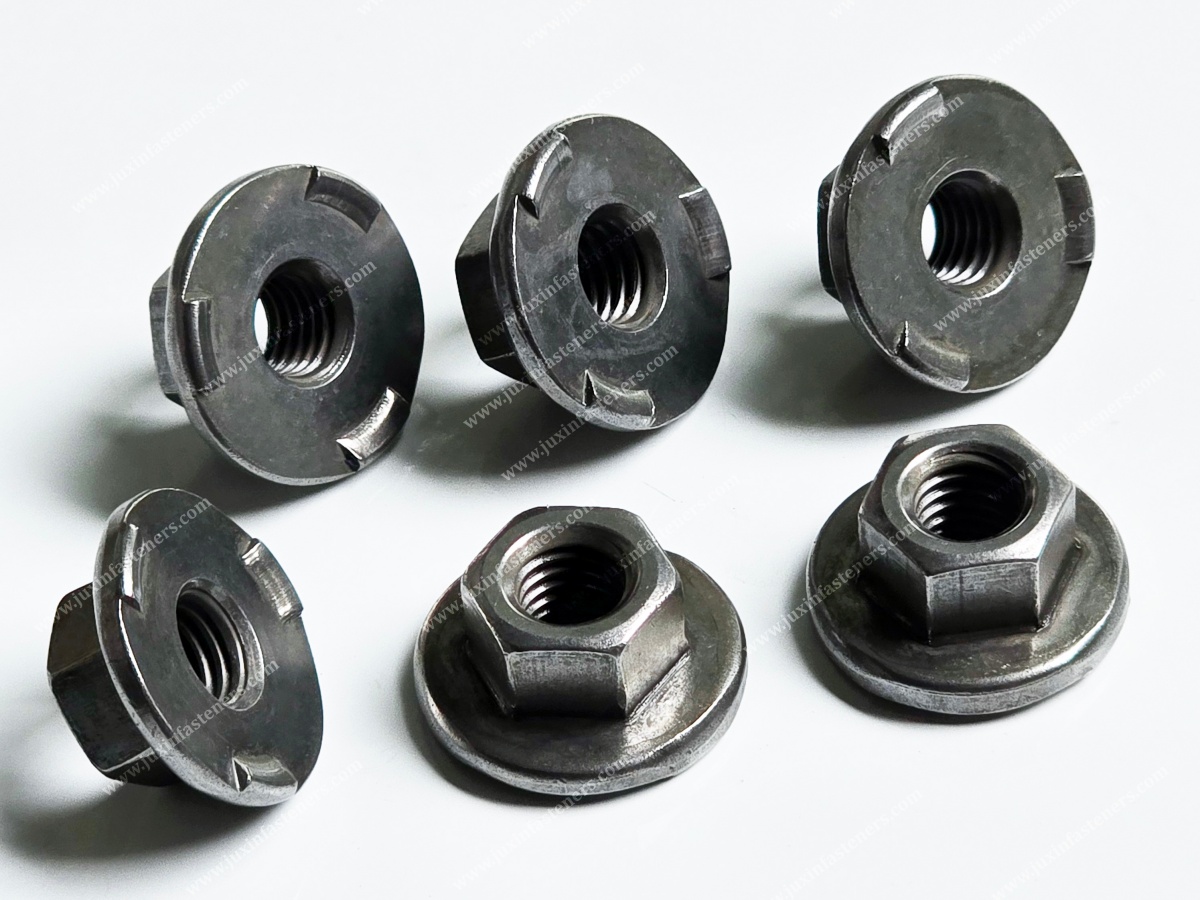
A floating nut assembly contains an internally threaded element that can move within a defined range relative to its supporting structure.
In a weldable floating nut arrangement, a retaining cage, carrier or other mounting component may be welded to the workpiece while the nut remains movable within that structure.
The exact design depends on the assembly.
Important Technical Distinction
A floating nut is not normally created by welding a conventional nut directly to the panel and expecting the welded nut to move afterward.
The floating function requires a suitable retention and clearance arrangement.
How Floating Nut Assemblies Work
A typical design may include:
A threaded nut
A retaining cage or carrier
A mounting structure
Defined lateral clearance
Features that retain the nut during handling and assembly
The nut can move within its permitted range before the mating bolt is fully tightened.
Engineering Benefit
This movement can help accommodate limited positional differences between mating holes and threaded attachment points.
Important Limitation
Floating capability does not correct every assembly error.
The movement range, engagement geometry and final joint requirements must be defined.
Fixed vs. Floating Weld Nuts: Engineering Comparison
| Design factor | Fixed weld nut | Floating nut assembly |
|---|---|---|
| Thread position | Defined by welded nut location | Limited movement within retention structure |
| Alignment compensation | Minimal inherent compensation | Possible within specified float range |
| Component complexity | Usually simpler | Usually more complex |
| Installation | Direct welding of suitable nut | Installation of retaining assembly |
| Production considerations | Nut location and weld quality | Retention, float clearance and mounting quality |
| Common failure concern | Hole misalignment | Binding, excessive movement or retention failure |
| Selection basis | Controlled geometry and repeatability | Defined tolerance compensation requirement |
When a Fixed Weld Nut Is the Better Choice
Fixed weld nuts are often appropriate when:
Hole-position tolerances are sufficiently controlled
The mating component is accurately located
The welding fixture provides repeatable positioning
The assembly does not require adjustment
A simpler fastening arrangement is preferred
Example: Fabricated Equipment Bracket
A bracket with a welded nut may be assembled to a mating component using a bolt.
If the bracket and mating hole positions are controlled within the available assembly clearance, a fixed weld nut may provide an efficient solution.
Engineering Recommendation
Use a fixed weld nut when the complete tolerance analysis demonstrates that the mating bolt can engage reliably.
When a Floating Nut Assembly Is the Better Choice
Floating nut assemblies may be considered when:
Several manufactured parts contribute to positional variation
The assembly includes large sheet metal structures
Hole alignment cannot be controlled economically by fabrication alone
Limited lateral adjustment is required during installation
The design can accommodate the additional component complexity
Example: Large Equipment Panel
A large panel may be attached to a fabricated frame using multiple bolts.
Manufacturing variation across the panel and frame can create local hole misalignment.
A properly designed floating nut arrangement may provide controlled positional compensation.
Engineering Recommendation
Specify the required float range rather than requesting a generic "floating nut."
Tolerance Stack-Up: The Main Reason to Consider Floating Nuts
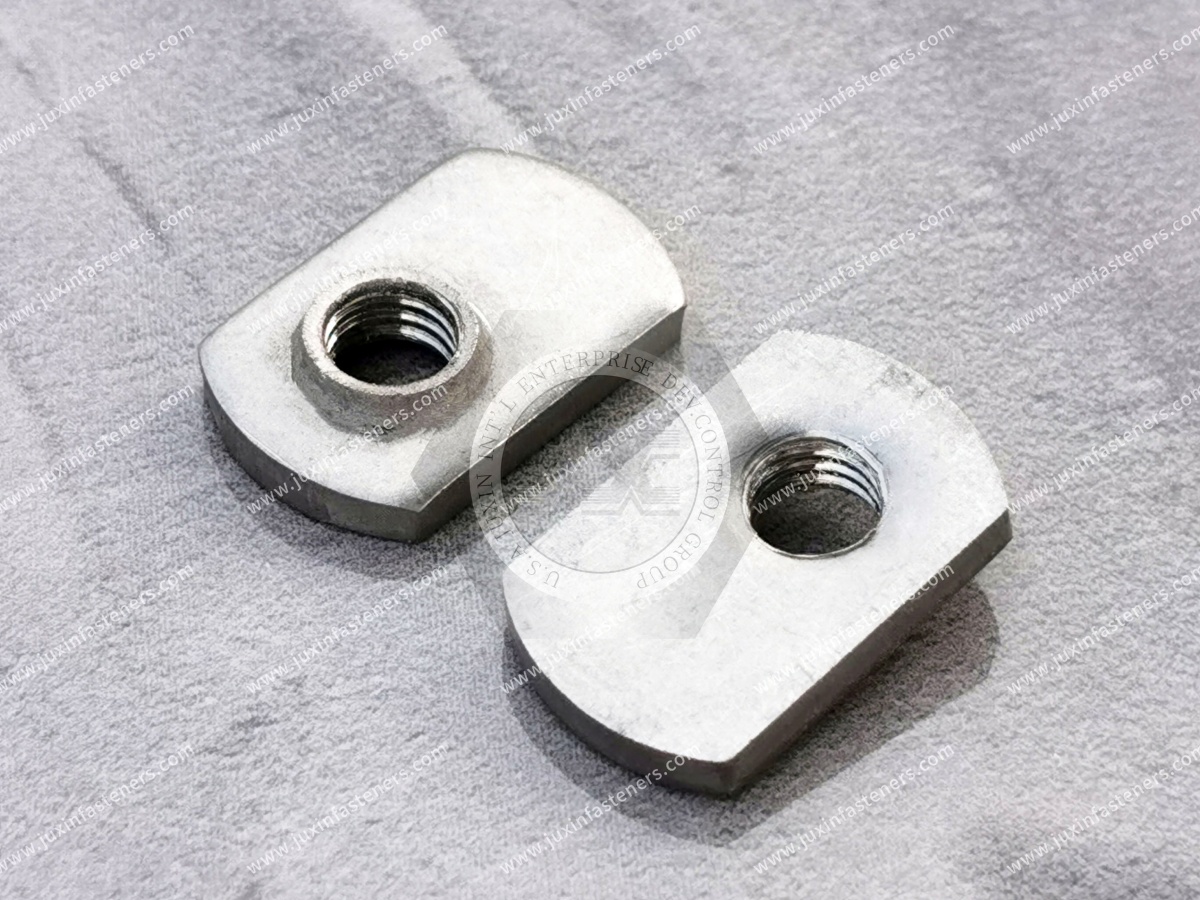
Tolerance stack-up occurs when dimensional variations from multiple components influence the final assembly condition.
For a bolted connection, relevant contributors may include:
Hole-position tolerances
Sheet metal forming variation
Welding distortion
Bracket positioning
Fixture variation
Component assembly sequence
Fixed Nut Arrangement
With a fixed nut, the threaded axis is constrained by the nut installation position.
The mating bolt must reach that axis through the available clearance and component alignment.
Floating Nut Arrangement
With a floating nut, the threaded axis can move within the designed retention clearance.
This may reduce the sensitivity of assembly to certain positional variations.
Important Engineering Principle
The required float range should be determined from the actual tolerance analysis.
An excessively large float range may introduce new assembly or retention problems.
How to Calculate the Required Alignment Allowance
A useful engineering approach is to identify the positional contributors between the mating bolt hole and the nut axis.
These may include:
Panel hole location
Frame hole location
Welded carrier position
Forming variation
Fixture location
The designer should then determine the expected relative misalignment using the project's established tolerance-analysis method.
Engineering Recommendation
Evaluate worst-case and statistical tolerance conditions where appropriate.
Do not assume that nominal CAD alignment guarantees production assembly.
Floating Nut Movement Direction
Floating assemblies may allow movement in one or more lateral directions.
The permitted motion depends on the retaining structure.
Important Design Questions
Is movement required in one direction or two?
What is the maximum permitted travel?
Must the nut remain centered before bolt engagement?
Can the nut rotate inside the carrier?
How will the bolt locate the thread during assembly?
These questions should be resolved before finalizing the drawing.
Floating Nut Retention
The retaining structure must keep the threaded element in place during manufacturing, transportation and assembly.
Potential retention concerns include:
Nut escape
Cage deformation
Excessive clearance
Restricted movement
Damage during handling
Engineering Recommendation
Specify retention requirements and any necessary inspection criteria.
Thread Engagement and Bolt Installation
Both fixed and floating arrangements require appropriate thread engagement.
Relevant factors include:
Thread size
Thread tolerance
Bolt length
Available engagement
Assembly access
Installation angle
Applied tightening torque
Cross-Threading Risk
If the bolt enters the nut at an unsuitable angle, the threads may become damaged.
Floating capability can assist alignment in some situations, but it does not eliminate cross-threading risk.
Production Recommendation
Evaluate bolt presentation, installation tooling and access to the threaded connection.
Weld Nut Geometry and Standard Products
Standard fixed weld nuts may be specified using established product standards.
DIN 928 Square Weld Nuts
DIN 928 identifies a standardized square weld nut family.
DIN 929 Hexagonal Weld Nuts
DIN 929 identifies a standardized hexagonal weld nut family.
These products are appropriate for applications where their dimensions, material and welding features meet the design requirements.
Important Distinction
DIN 928 and DIN 929 do not automatically define a complete floating nut assembly.
A floating design requires additional geometry and retention requirements.
Square vs. Hexagonal Fixed Weld Nuts
The choice depends on:
Available space
Welding geometry
Workpiece material
Thread size
Nut dimensions
Assembly loading
Production equipment
Engineering Recommendation
Do not assume that square or hexagonal geometry alone guarantees superior installed torque resistance.
Stud Weld Nuts vs. Weld Studs
The terms "stud weld nut" and "weld stud" may be confused in commercial descriptions.
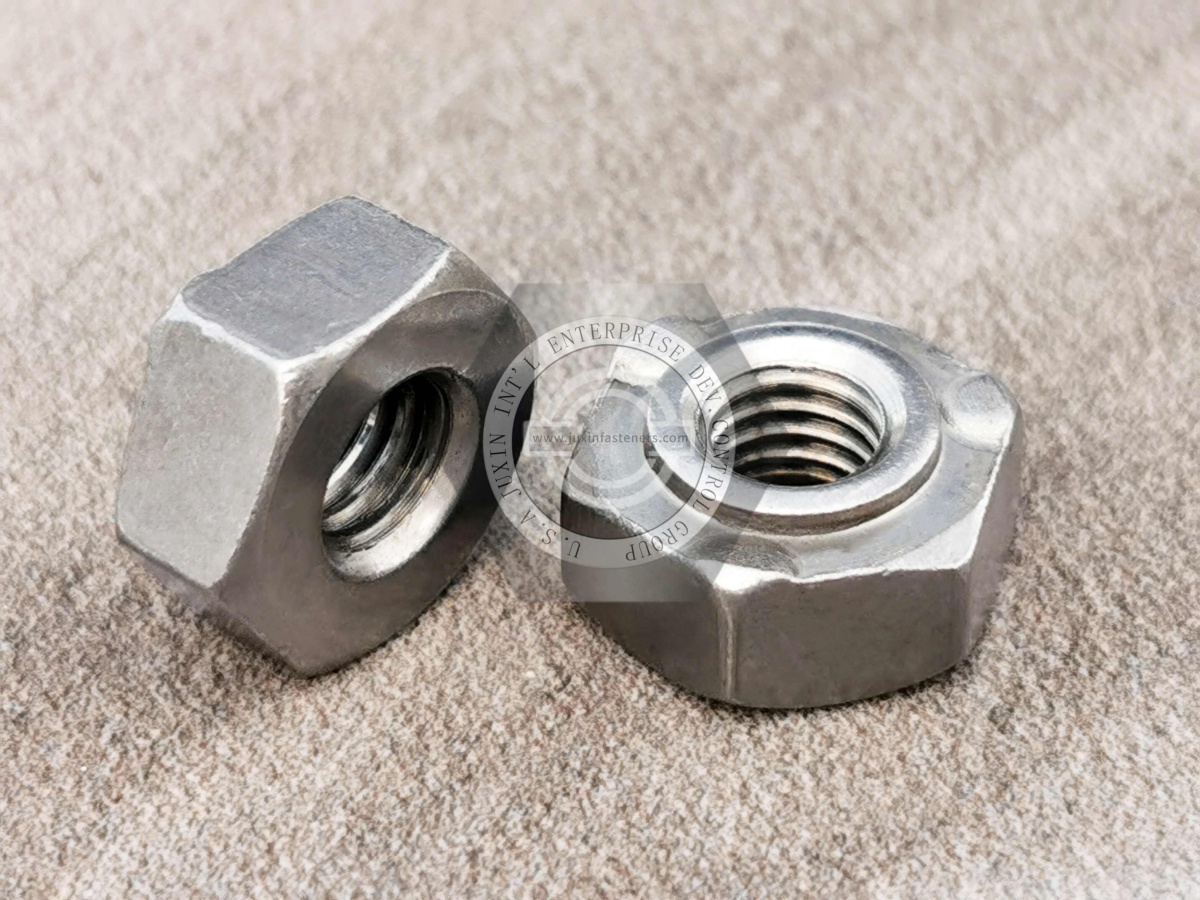
A weld stud is generally an externally threaded or otherwise shaped component designed for stud welding or another specified joining process.
A weld nut is an internally threaded component designed for welded attachment.
Some specialized threaded assemblies may combine multiple features, but their geometry and joining method must be established from the drawing.
Important Procurement Recommendation
Do not substitute a weld stud for a weld nut based on an ambiguous product name.
Confirm whether the customer requires internal or external threads.
What About Load Weld Nuts?
"Load weld nut" is not a sufficiently precise universal product designation for engineering procurement.
If a supplier uses this term, the buyer should request clarification.
The actual requirement may involve:
Higher joint loading
A different nut geometry
Modified welding projections
A reinforced mounting structure
Customer-specific welded hardware
Engineering Recommendation
Specify the required mechanical performance and approved drawing rather than relying on a marketing term.
Welding Methods for Fixed and Floating Assemblies
Resistance Projection Welding
Commonly used for suitable fixed weld nuts and selected mounting structures.
Other Welding Methods
Depending on the design, alternative welding processes may be considered.
Important Technical Distinction
Projection welding is a resistance welding process.
Robotic welding describes automation and does not identify a separate weld formation mechanism.
Floating Assembly Installation
For floating designs, the welding process must attach the intended mounting structure without preventing the threaded element from moving.
Critical Manufacturing Risk
Weld spatter, excessive heat or deformation may restrict the intended floating clearance.
Engineering Recommendation
Validate the complete assembly after welding, including movement and thread functionality.
Base Material and Sheet Thickness
The workpiece material affects welding feasibility and installed joint performance.
Potential materials include:
Carbon steel sheet
Stainless steel sheet
Other suitable weldable metals
Thin Sheet Metal
Potential concerns include:
Local deformation
Burn-through
Insufficient weld formation
Restricted space for mounting features
Thicker Components
May require different welding conditions and joint geometry.
Engineering Recommendation
Define the actual base-material specification and thickness range.
Carbon Steel and Stainless Steel Fastening Components
Carbon steel may be appropriate for many general industrial applications.
Stainless steel may be selected where corrosion resistance is important.
Important Material Distinction
The corrosion resistance of a stainless steel nut does not automatically establish the corrosion resistance of the entire welded assembly.
Material compatibility, welding condition and environmental exposure must be evaluated.
Copper and Copper-Alloy Considerations
Copper-based components may be used in selected electrical applications, but conventional resistance welding compatibility cannot be assumed.
A copper nut is not automatically a suitable substitute for a steel projection weld nut.
Engineering Recommendation
Review the material and joining process for any nonstandard alloy design.
Joint Strength and Mechanical Performance
The installed fastening system must withstand the intended service loads.
Potential performance requirements include:
Nut torque resistance
Pull-out resistance
Push-out resistance
Thread strength
Fatigue performance
Retention integrity
Fixed Weld Nut
The welded nut and workpiece form the primary attachment arrangement.
Floating Nut Assembly
The retention structure, nut and mounting joint collectively determine performance.
Important Engineering Distinction
A floating design introduces additional components and load-transfer interfaces.
The complete assembly should be evaluated.
Vibration Resistance
A welded nut does not automatically prevent loosening of the mating bolt.
Vibration performance depends on the complete bolted joint.
Relevant factors include:
Bolt preload
Joint stiffness
Service loading
Thread engagement
Locking features where specified
Engineering Recommendation
Evaluate bolt loosening separately from weld nut attachment strength.
Common Failure Modes
| Failure mode | Fixed weld nut concern | Floating assembly concern |
|---|---|---|
| Hole misalignment | Bolt cannot engage | Float range insufficient |
| Nut rotation | Weld failure | Retention or anti-rotation failure |
| Nut separation | Weld fracture | Mounting or cage failure |
| Thread damage | Distortion or cross-threading | Cross-threading or binding |
| Assembly difficulty | Fixed-axis mismatch | Nut difficult to locate |
| Corrosion | Welded joint exposure | Crevice and multi-component exposure |
| Production variation | Weld position variation | Float clearance and retention variation |
Production-Line Efficiency
Manufacturing engineers should evaluate how the fastening arrangement behaves during actual assembly.
Fixed Weld Nut Production
Important controls include:
Nut feeding
Nut orientation
Welding fixture accuracy
Weld quality
Thread inspection
Floating Nut Assembly Production
Additional controls may include:
Carrier installation
Nut retention
Movement verification
Clearance inspection
Thread alignment
Production Manager Considerations
A floating assembly may reduce certain alignment-related problems.
However, it may also introduce:
More components
Additional handling
Increased inspection requirements
Higher unit cost
Engineering Recommendation
Compare the total installed cost and assembly reliability rather than only the fastener price.
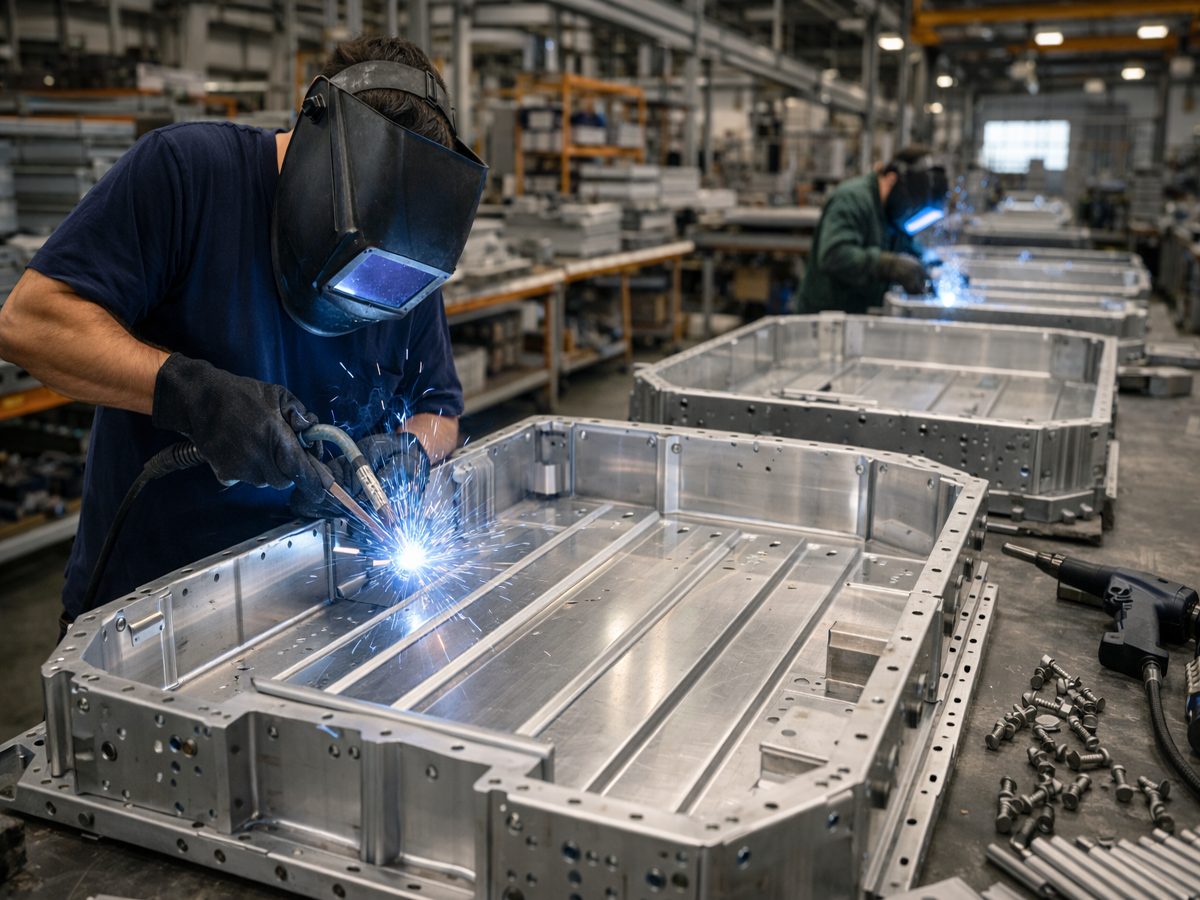
Automotive and EV Applications
Fixed weld nuts are used in suitable:
Body-related brackets
Seat-support assemblies
Equipment mounting points
Battery enclosure support structures
Fabricated metal components
Floating nut assemblies may be considered where controlled positional adjustment is required.
Important Limitation
Automotive safety-related or battery-system applications require project-specific engineering validation.
Industrial Machinery
Potential applications include:
Machine frames
Equipment covers
Automation equipment
Service panels
Fabricated support structures
Fixed nuts may suit accurately positioned brackets.
Floating arrangements may be useful where several mating parts contribute to assembly variation.
Electrical Cabinets and Enclosures
Potential applications include:
Control cabinets
Distribution equipment
Industrial enclosures
Equipment support brackets
Engineering Considerations
Sheet thickness
Hole alignment
Assembly access
Corrosion exposure
Service requirements
Construction and Agricultural Equipment
Large fabricated structures may create alignment challenges.
Potential applications include:
Equipment panels
Support brackets
Protective covers
Serviceable assemblies
Engineering Recommendation
Select the fastening arrangement according to the actual loading and fabrication tolerances.
HVAC and Refrigeration Equipment
Potential applications include:
Equipment housings
Service panels
Support structures
Floating arrangements may be considered where sheet metal assemblies require limited adjustment.
Marine and Coastal Equipment
Stainless steel fastening components may be considered for suitable corrosion-exposed applications.
However, the complete assembly must be evaluated for:
Material compatibility
Crevice corrosion
Weld condition
Environmental exposure
Custom OEM Floating Nut Assemblies
Standard fixed weld nuts may not provide the required adjustment capability.
A custom floating design may involve:
Threaded nut geometry
Retaining cage design
Mounting features
Defined float range
Anti-rotation features
Material selection
Surface treatment
Customer-specific tolerances
Engineering Recommendation
Provide a complete assembly drawing, not only the nut drawing.
Drawing Requirements
For floating assemblies, useful drawing information includes:
Thread designation
Nut dimensions
Carrier dimensions
Float range
Movement direction
Retention requirements
Mounting method
Material specifications
Surface condition
Inspection criteria
Metric and Inch Threads
Fixed and floating threaded assemblies may use metric or inch threads according to the approved design.
Metric threads may reference applicable ISO thread standards.
UNC and UNF threads may reference ASME B1.1.
Important Compatibility Rule
Metric, UNC, UNF, BSW and BSF thread systems must not be treated as directly interchangeable.
Supplier Qualification
Procurement and supplier-development teams should verify the actual product requirements.
For Fixed Weld Nuts
Approved drawing or standard
Material
Thread specification
Welding features
Dimensional tolerances
Surface condition
For Floating Nut Assemblies
Complete assembly drawing
Nut retention
Float range
Anti-rotation function
Mounting geometry
Inspection requirements
Commercial Review
MOQ
Sample quantity
Annual purchasing volume
Lead time
Packaging
Delivery schedule
Second-Source Qualification
A replacement fixed weld nut should be evaluated for welding compatibility.
A replacement floating assembly should additionally be evaluated for movement, retention and dimensional compatibility.
Important Procurement Recommendation
Do not approve a second-source component based only on nominal thread size.
Frequently Asked Questions
What is the difference between a fixed weld nut and a floating weld nut?
A fixed weld nut has a defined thread position after welding. A floating nut assembly allows controlled movement of the threaded element within its retaining structure.
Can a floating nut compensate for hole misalignment?
Yes, within its specified movement range and subject to the complete assembly design.
Is a floating nut directly welded to the workpiece?
In many floating arrangements, the retaining structure is attached while the nut remains movable. The exact configuration depends on the design.
Are DIN 928 and DIN 929 floating weld nuts?
No. They identify standardized square and hexagonal weld nut families, not complete floating nut assemblies.
Can a fixed weld nut replace a floating nut assembly?
Only after evaluating positional tolerances, assembly requirements and joint performance.
Does a floating nut improve vibration resistance?
Not automatically. Vibration resistance depends on the complete bolted joint.
What is a stud weld nut?
The term can be ambiguous. The drawing should clarify whether an internally threaded weld nut, externally threaded weld stud or special combined component is required.
What does "load weld nut" mean?
It is not a sufficiently precise universal product designation. The required geometry and mechanical performance should be defined.
Can floating nut assemblies be automated?
Potentially, if the component design, feeding, mounting and inspection processes are suitable.
What information is required for a floating nut RFQ?
The complete assembly drawing, thread specification, float range, materials, mounting method, retention requirements, quality criteria and purchasing volume.
JUXIN FASTENERS: Fixed Weld Nuts and Drawing-Based OEM Fastening Solutions
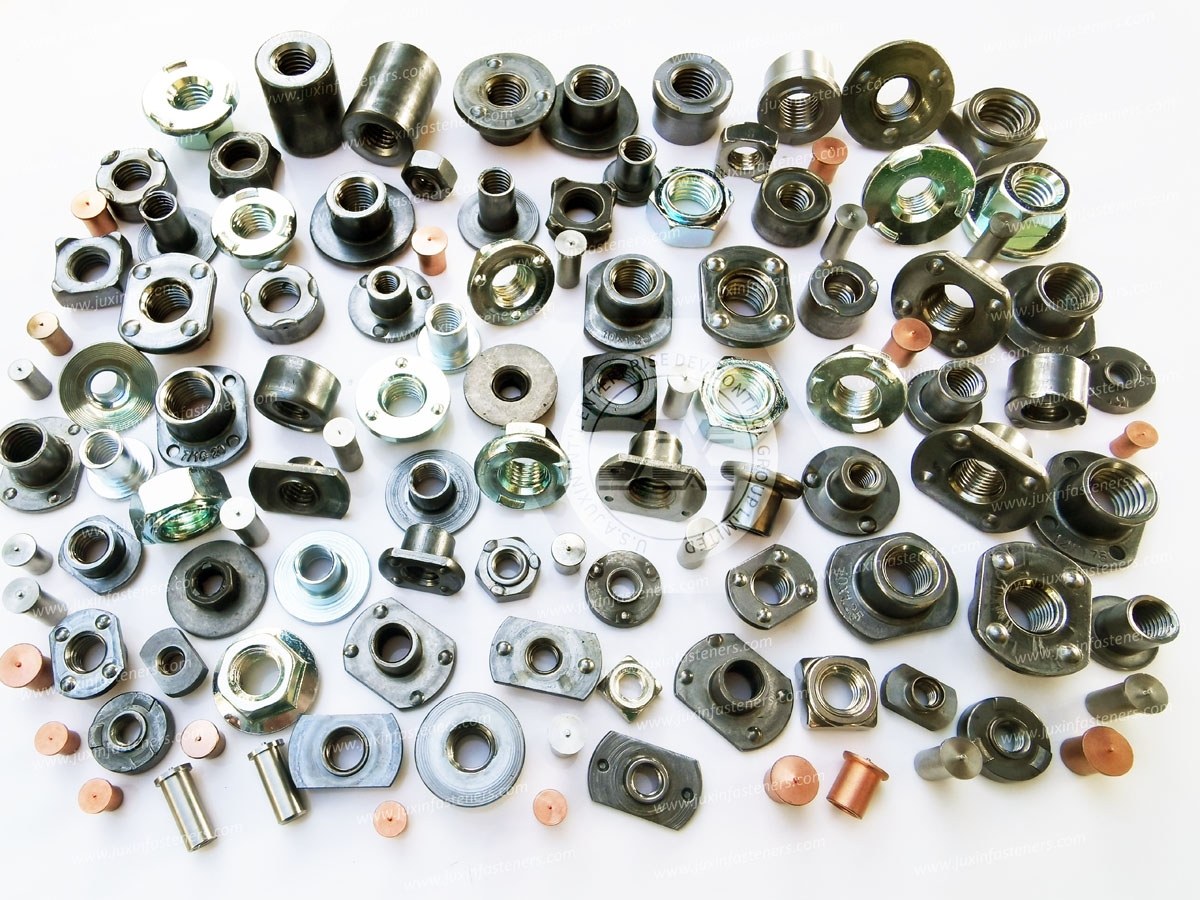
JUXIN FASTENERS supplies industrial weld nuts and drawing-based fastening components for OEM manufacturing.
Relevant product families include:
DIN 928 square weld nuts
DIN 929 hexagonal weld nuts
Fixed weld nuts
Stainless steel weld nuts
Carbon steel weld nuts
Custom weld nuts
Drawing-based threaded fastening components
For projects requiring floating nut assemblies, customers can submit complete drawings for technical and commercial feasibility review.
Product availability, manufacturing methods and quality requirements should be confirmed for each project.
Request an OEM Weld Nut Design Review and RFQ
Are you evaluating a fixed weld nut or floating threaded fastening arrangement for an OEM assembly?
JUXIN FASTENERS welcomes technical inquiries from mechanical engineers, structural engineers, manufacturing engineers, production managers, procurement specialists and supplier-development teams.
For efficient review, provide:
Assembly drawing + thread specification + base material and thickness + required alignment tolerance + mounting method + mechanical performance requirements + annual purchasing volume
For floating assemblies, include the required float range and retention details.
These details help determine the appropriate fastening arrangement and support an informed quotation.
Company: JUXIN FASTENERS
Website: https://www.juxinfasteners.com/
Email: info@juxinfasteners.com
Send your fixed weld nut or floating nut assembly drawings to JUXIN FASTENERS for technical evaluation and OEM quotation.
Contact Us
Tel.:
+86 020 8621 0320
+86 020 3121 6067
E-mail:
Technical Support:
Navigation
SEND INQUIREY